
SEBASTIANO del PIOMBO. - S. Luciani, known as S. del P., painter, b. probably in Venice ca. 1485, d. in Rome on 21 June 1547.
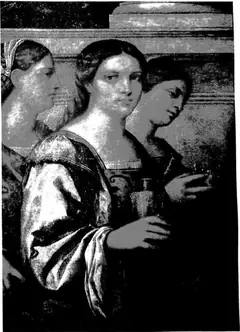
The erroneous reading of an inscription on the Pietà formerly Layard, now in the National Gallery in London, led to that painting and certain others which, like it, display Cimaesque characteristics being considered an early work of his; and a first apprenticeship in Cima's workshop was therefore assumed. This supposition has now fallen away, since it has been recognized that the painting does not belong to him. The youthful works painted in Venice (the organ shutters of S. Bartolomeo, datable to ca. 1508, and the altarpiece of St. John Chrysostom, slightly later) show him to be plainly Giorgionesque, with a tendency to emphasize formal values that was perhaps nourished by the presence in Venice of Fra Bartolomeo in 1508. In 1511 he was brought to Rome by Agostino Chigi, for whom he frescoed in a loggia of the Farnesina the lunettes with scenes drawn from Ovid's Metamorphoses. These are works still wholly Venetian; but immediately afterwards his relations with the Roman artistic world become evident. A Raphaelesque reflection is revealed in a large group of portraits: the so-called Fornarina of the Uffizi, of 1512; the Portrait of Card. Ferry Carondelet in the Thyssen Coll. in Lugano; that of Card. Ciocchi del Monte, in Dublin, etc.; and at the same time the influence of S. on the Urbinate's new Venetian coloristic vision is manifest.
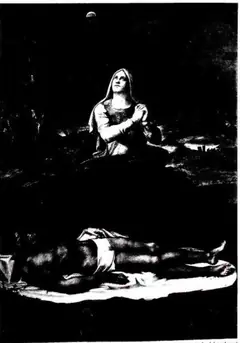
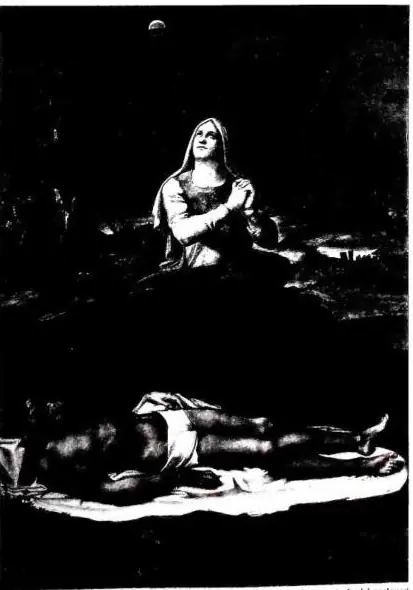
But more vivid and decisive are his relations with Michelangelo, in the Deposition of the Hermitage (1516), where the landscape and the tonal atmosphere are still Venetian. The masses, violently displaced, have a marked plastic definition; in a masterpiece of slightly later date, the Pietà of Viterbo, the contrast between his fundamental Venetian training and the Michelangelesque influence is even more intense. So intense that one may suppose that Michelangelo had a part in it, if not by supplying the cartoon, as Vasari would have it, at least by suggesting the dramatic nudity of the design. The correspondence between S. and Michelangelo likewise testifies to their artistic relations, nourished also by the atmosphere of rivalry with Raphael; in competition with whom S. painted the Resurrection of Lazarus for Card. Giulio de' Medici (now in the National Gall. of London), exhibited in the Vatican in 1519. To these years belong also the paintings in the chapel in S. Pietro in Montorio (commissioned from him in 1516 and completed, after long interruptions, in 1524) and the Visitation of the Louvre. Immediately after Raphael's death he began the altarpiece with the Nativity of the Virgin in S. Maria del Popolo, another most important stage in S.'s mannerist direction, where a cultural solution to the encounter between two contrary figurative visions is still attempted. This work occupied many years of his life (it was completed after his death by Salviati, in 1554) and is his last vast composition.
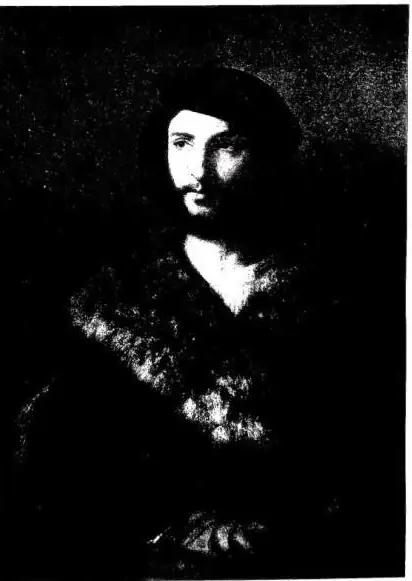
After 1525, the date of the Flagellation of Viterbo, he painted almost only portraits, set upon a monumental module (Clement VII unshaven, in the National Museum of Naples; Andrea Doria, in the Doria Coll. of Rome; Clement VII, in the Pinacoteca of Parma, ca. 1530, etc.) and variations on the theme of the Christ Carrying the Cross (Madrid, Prado; Budapest, Andrassy Coll.; Leningrad, Hermitage, of 1537), reworking an iconographic type that would be taken up in the pietistic art of Morales. Only for a brief trip to Venice, in 1526, did he leave Rome, where in 1531 he held the office of the Piombatura Pontificia (whence the nickname); after which, according to Vasari, he attended to painting little and listlessly. Of works between 1539 and 1547, the year of his death, only a Christ Carrying the Cross in the convent of S. José in Avila, dated 1544, is attributed to him. - See pl. XIII.
Bibliography5 works
Emma Zocca