
« REGINA CAELI ». - Antifona maggiore con cui la Chiesa saluta e prega la S.ma Vergine associandola al trionfo della Risurrezione per la quale essa è divenuta la Regina del cielo e l'interceditrice universale. La R. c. si recita al termine dell'Ufficio divino durante il tempo pasquale (da Compieta del Sabato Santo a Nona del sabato dopo Pentecoste). L'autore è ignoto, ma viene attribuita a papa Gregorio V (sec. x).
Si compone di quattro stichi a ritmo accentuativo, dei quali i primi due con rima baciata (a, a) e con l'accento tonico principale sulla 1ª, 4ª e 7ª (il quia del 2º verso è da considerarsi come anacrusi o avviamento), il terzo equivale a due quaternari accoppiati con assonanza (exit, ixit); il quarto, un settenario con accento sulla 1ª e sulla 6ª, fa a sé. In tal maniera l'Alleluia, al termine d'ogni verso, si considera come un ritornello che serve a fondere il breve carme in un'unica rima.
Nell'antichità fu usata come antifona processionale; poi come antifona pasquale ai cantici evangelici (Benedictus e Magnificat), uso rimasto nell'Ufficio votivo de S. Maria in sabbato; quindi come antifona mariana al termine dell'Ufficio divino, dapprima (secondo la testimonianza di Giovanni da Parma, del 1249) presso i Francescani, poi, nel 1350 (ad Avignone, sotto Clemente VI), nel Breviario della Curia romana. L'uso vigente fu regolato dalla riforma di Pio V (1568). Come antifona al Magnificat dell'ottava di Pasqua, la R. c. si ritrova nell'Antifonario di S. Pietro (sec. XII) edito da I. M. Tommasi (Opera omnia, ed. A. F. Vezzosi, IV, Roma 1749, p. 100). Con tropo (come a commento) si ha nell'Antifonario del convento di Rivoli, in uso fino alla Rivoluzione Francese (cf. S. Bäumer, Hist. du Brév., I, Parigi 1905, p. 422 sg.), e nel cod. 314 del monastero di Engelberg (fol. 74; cf. K. Young, The Drama of the medieval Church, I, Oxford 1933, p. 662).
La melodia gregoriana originale, del sec. x, è di 1º tono, meno ricca ma devota; quella in uso, di 6º tono, facile e solenne, tenera e gioiosa, è del sec. XIII: nella sua forma semplificata, del sec. XVII. Secondo la leggenda (Durando, Ration. div. off., VI, 89, 3) la R. c. sarebbe stata cantata da tre voci angeliche mentre un angelo sull'alto della Mole Adriana rinfonderava la spada insanguinata al termine della litania septiformis ordinata da s. Gregorio Magno per la liberazione dalla peste del popolo romano (cf. Divina Commedia, Par., XXIII, 127-129; Benedetto XIV dispose che la R. c. sostituisse la recita dell'Angelus (v.) durante il tempo pasquale (20 apr. 1742; cf. AAS, 25 [1933], p. 71 sg.).
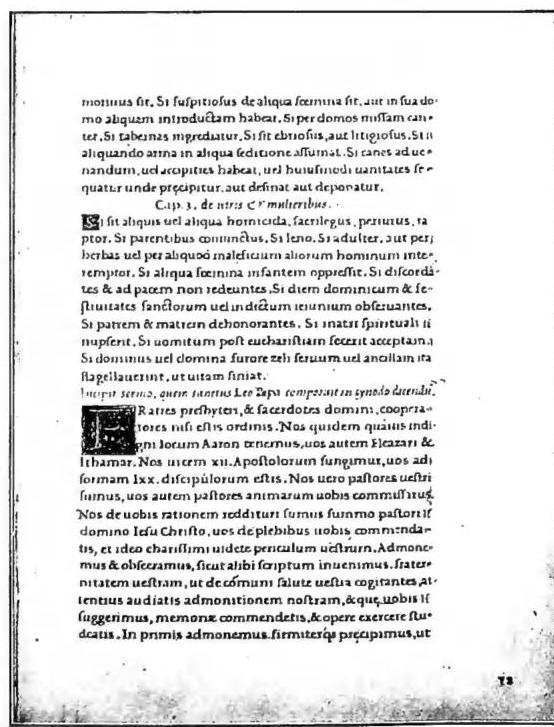
(fot. Enc. Catt.)