
GOLUBOVICH, GIROLAMO. — Friar Minor, born in Constantinople on 7 February 1865 to a family originating from Ragusa, died in Florence on 9 January 1941. G. is the historian of the Franciscan East and, in particular, of the Custody of the Holy Land. At the age of twelve, in 1879, he was taken by his mother on pilgrimage to the Holy Places, where he remained, entering the Seraphic College of Ain-Karin.
On 24 September 1881 he donned the Franciscan habit at the Convent of Nazareth, changing his name from Antonio to Girolamo. Ordained a priest on 18 June 1888, he was charged with reorganizing the new library of the Convent of S. Salvatore in Jerusalem, one of the richest in Palestine. It was precisely in this first work that he revealed his vocation as a historiographer of the Custody of the Holy Land; nevertheless, for several years he seemed destined to pursue the path of apostolate in the Custody’s various missions. Thus, in 1889 he was sent to Cyprus, in 1893 to Aleppo in Syria, and in 1894 to Alexandria in Egypt and Port Said, later returning to Cyprus as parish priest of Limassol. In 1898 he was sent to Turin, where he presided over the Holy Land section at the Exhibition of Sacred Art. He ended his properly missionary life with the superiorship of the mission in Constantinople (1902–1904).
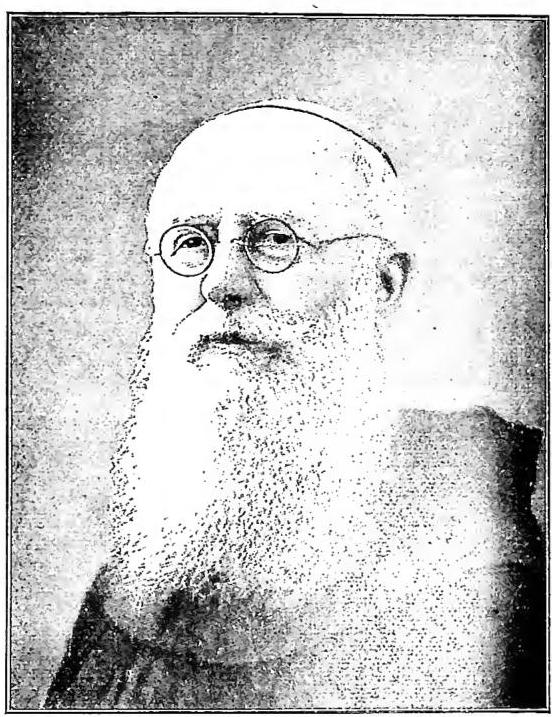
(from In memoria del molto ricche p. G. G. O.F.M., Florence BBL. inv. f. 1.)
GOLUBOVICH, GIROLAMO – PORTRAIT.
He was assigned to the College of S. Bonaventura at Quaracchi (Florence), and despite the work he had to undertake together with the other Fathers for the editions then in progress, in 1906 he was able to publish the first volume of his Library. G. was also the first director of the Archivum Franciscanum historicum (v.), an office which he relinquished shortly thereafter in order to devote himself to his research.
In 1930 he undertook the reprinting of Wadding’s Annales Minorum, by then extremely rare. He introduced corrections and additions, particularly with regard to the missions, making it truly a new edition, completed in Florence in 1935 (25 folio volumes).
In the final years of his life G. left two polemical writings asserting the authenticity of the Holy Cenacle of Jerusalem and of the paternal home of s. Francesco in Assisi: The Holy Cenacle, Its Authenticity and Its Divine Prerogatives (Florence 1938); The Historicity of the Paternal Home of s. Francesco d’Assisi, Today “Chiesa Nuova,” and the Popular Legend of the “Stalletta” (ibid. 1941).