
ICOMOGRAPHY. — From the documents of the trial of G. d'A. it is known that she never had herself portrayed: there is therefore no image that faithfully reproduces her facial features. Among the oldest representations, probably contemporary, is a tapestry of German origin, preserved in the Museum of Orléans, in which G. d'A.'s arrival at the castle of Chinon, where she is welcomed by Carlo VII, is depicted. From the fifteenth century onward, however, sculptors, painters, and engravers exalted G.'s divine mission; in fact, in a painting of the period she appears beside the Virgin and S. Michele, with shield, standard, and halo. G.'s standard is reproduced, together with the flag and the pennon, in a manuscript of 1484 (Paris, National Library, ms. frg. no. 5054); the motto was « Jesus Maria »; golden lilies on a white field and God blessing. In the sixteenth and seventeenth centuries G. d'A. often appears either as an ancient heroine or as a lady with a plumed hat, sword, and cuirass.
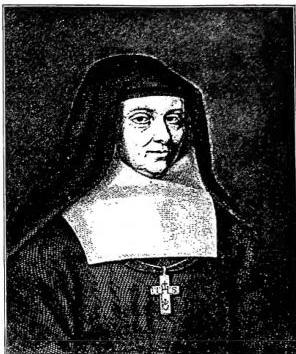
Thus in a 1581 panel in the Museum of Orléans and in a tondo by the Lorraine painter Deruet from the seventeenth century, located in Nancy. Among the numerous works of the nineteenth century, mention may be made of the statues by Chapu (Luxembourg Museum) and by Rude (Louvre), in which the young G. d'A. is listening to the heavenly voices; the painting by Ingres in the Louvre and the bronze bas-reliefs by M. Vital - Dubray for the statue of G. d'A. in Orléans.