
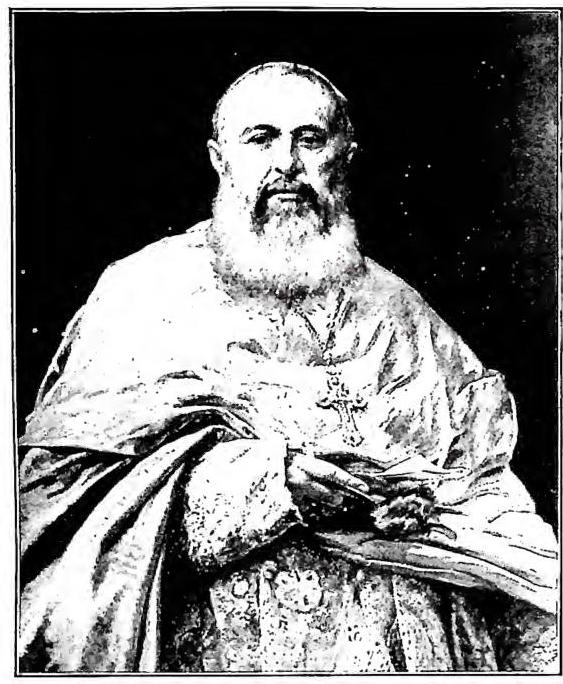
LAVIGERIE, CHARLES-MARTIAL. - Cardinal, b. at Huire, near Baiona, on Oct. 13, 1825, d. in Algeri on Nov. 25, 1892. Ordained priest on June 2, 1849, he was for three years a professor at the Sorbona; then, following the advice of Fr. de Ravignan, he accepted the directorship of the schools of the Orient. This gave him the opportunity to undertake a charitable expedition
Upon arriving in Rome, he was appointed auditor of the Rota, then consultor to the Commission for Oriental Rites, and shortly after bishop of Nancy. In 1867 he accepted the French government's proposal for his appointment as archbishop of Algiers, with the intention "of making Algeria the cradle of a Christian nation, of spreading the light of the Gospel and carrying it beyond the deserts, to the center of the immense continent."
Fighting with strength, he secured freedom of apostolate among the Muslims of Algeria, and Napoleon III had to yield to his projects. To carry out a discreet yet effective ministry among these peoples, L. founded two missionary congregations: that of the White Fathers and of the White Sisters. He sent his missioners, across the Sahara, toward Timbuktu; on two separate occasions he made martyrs of them. The White Fathers were to reach the Sudan only in 1895, following in the wake of the French army.
L. had better fortune in the apostolic expeditions toward equatorial Africa, and it is his enduring glory to have opened the center of the African continent to the Gospel, where the first White Fathers arrived in 1879.
His pastoral cares were also directed toward those closest to him; in the archdiocese of Algiers he had numerous churches built and established many religious communities; in Tunisia, he revived the ancient see of Carthage, built the cathedral in Tunis and the basilica of St. Louis in Carthage. He became primate of Africa. But the East called to him once again: the French government offered him the custody of the sanctuary of St. Anne in Jerusalem. Thus seminaries were founded, in which the White Fathers dedicate themselves to the formation of the Greek-Melkite clergy.
As a reward for his many services rendered to the Church, in 1882 he was created a cardinal of the Holy Roman Church by Pope Leo XIII. His word, so authoritative and powerful, was used by him to preach a du-
double anti-slavery campaign. Leo XIII could affirm of him that he had been one of the men most deserving of Catholicism and civilization.
Giovanni B. Canet