
TABERNACLE (TENT) OF MEETING (Heb. ’ōhel, usually followed by mē’ēdh: “tent of meeting”). — A dismantlable and transportable sanctuary (Septuagint: σκηνὴ τοῦ μαρτυρίου; Vulg. Tabernaculum testimoni or foederis) constructed at God’s command by Moses for the worship of the people of Israel and used until the construction of the Temple of Jerusalem.
It was probably preceded by a sacred tent (Ex. 33:7-11), a temporary sanctuary which Moses had transported outside the camp as a punishment for the worship of the golden calf. Whenever Moses went there, the cloud rested at its entrance, and the people prostrated themselves at the entrances of their tents. In Ex. 16:33-34, there is mention of a place “before Jahweh” called ha-ēdhuth (“precept,” perhaps referring to the tablets of the Law), where an ’ōmer of manna was kept; it is not clear whether this should be identified with the temporary tent just mentioned or with the T.
The description of the T. is found in Ex. 25-27; its execution ibid., 36-38; its erection and consecration ibid. 40 (cf. Fl. Josephus, Antiq. Iud., III, 6). Its principal craftsman was Beselcel (v.), son of Hur, of the tribe of Judah, assisted by Ooliab, son of Achiamech, of the tribe of
Dan; for this purpose they were filled with the spirit of God (Ex. 31:1-11; 36-38). God showed Moses its model on Sinai. The people contributed through spontaneous offerings, and 29 talents of gold (1,400 kg) and 730 shekels, 100 talents of silver (4,300 kg) and 1,775 shekels were used. It consisted of the court and the T., or tent, with its furnishings.
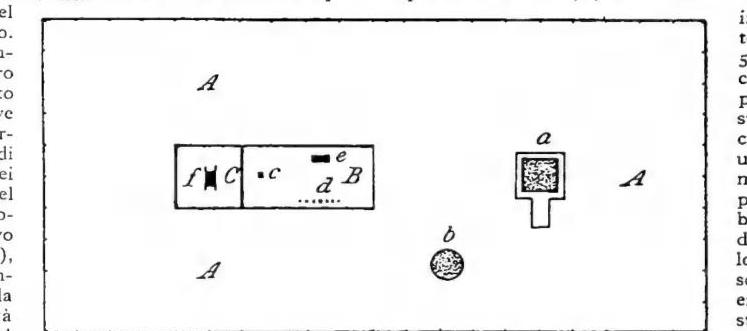
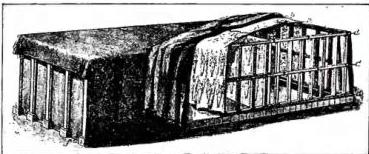
(from J. Hastings, A Dictionary of the Bible, IV, Edinburgh 1909, p. 661)