
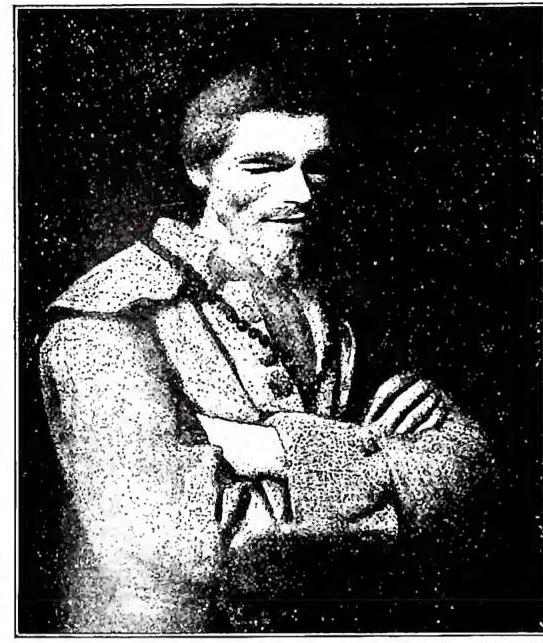
BENEDICT JOSEPH LABRE, Saint. - Born at Amettes (Artois) on 26 March 1748. At the age of twelve he was sent to Erin, to a priest uncle, and there he matured the idea of entering the great Trappist abbey of Mortagne in Normandy. Opposed by his uncle and his family, he asked the Charterhouses of Artois to be received on trial; but he met with nothing but refusals. Returning to his first intention, in the autumn of 1767 he went on foot to the great Trappist abbey in Normandy, but was not accepted there. After further refusals he was finally admitted as a postulant in the Cistercian abbey of Sette Fonti, in the Bourbonnais. He had to leave it after a few months, because he was assailed by indescribable spiritual torments and in the grip of an exhaustion that made his life feared for. Having recovered somewhat in health, in July 1770 he undertook the journey to Italy, with Rome as his destination. It was then that his vocation as a pilgrim to the sanctuaries of Italy and Europe was clearly and surely revealed to him. Having entered Piedmont, he wrote from Chieri a letter to his parents, which constitutes his testament and bears his last farewell. He was at Loreto, at Assisi, and then at Rome on 3 December of that year. Having left Rome after the Easter festivities, he passed through Loreto again, went down into Apulia, into the kingdom of Naples, into Sicily. Having crossed the Alps, he passed through Germany,
France, Spain. He reappeared in Provence, then went back up the Rhone as far as Nancy; he came down again and crossed Switzerland, and visited the sanctuary of Einsiedeln. Having returned to Italy, he reached Rome for Easter of 1774. Here he lived almost uninterruptedly for the rest of his life; after 1777 he did not leave it except for the annual pilgrimages to Loreto, at Easter time. He was devoted principally to the Forty Hours: among the churches he visited in Rome, his favorite was that of the Madonna dei Monti. Reduced to absolute destitution, he died on 16 April 1783. After three days of triumphal honors and extraordinary miracles, on the evening of Easter he was buried in his favorite church, where his remains are still venerated today.
Pius IX beatified him on 7 May 1860, and Leo XIII canonized him on 8 December 1881. His feast is celebrated on 16 April.
Bibliography6 works
Lorenzo Bracaloni