Machine translation of the 1948–1954 Italian original. The original text is authoritative.
COMB. – From the Latin pecten, it is an instrument made of bone, ivory, boxwood, or another material, equipped with one or two rows of closely set teeth, used for cleaning the head or arranging the hair.
The use of the comb is extremely ancient, and it was not infrequently made into an object finely carved and adorned with precious stones. Some combs originating in Egypt (6th century) bear sacred scenes such as Daniel among the lions (the comb of Akhmin), the resurrection of Lazarus, and the healing of the man born blind (the comb of Antinoe). The comb was also a liturgical instrument frequently used in the Middle Ages: it was employed 1) by bishops and celebrating priests, who arranged their hair before approaching the altar, and 2) in the consecration of a bishop (cf. Pontificale Romanae Curiae of the 13th century, ed. M. Andrieu, Le Pontifical romain au moyen âge, II, Vatican City 1940, pp. 354–68; Durando di Mende, Rationale Divinorum Officiorum, IV, 3); the Roman Pontifical still prescribes an ivory one, but this prescription is no longer observed (Tit. XIII, de consecratione electi in episcopum, §§ v, xxxii; cf. the Commentarius of G. Catalani, I, Paris 1850, pp. 297–98, 350). The act of combing one’s hair was accompanied by a prayer that varied according to the Churches. In Paris, for example, the following prayer was recited, preceded by the rubric: « Episcopus vel sacerdos, missarum solemnia celebraturus, dum se pectinat dicat: Intus exteriusque caput nostrum totumque corpus et mentem meam tuus, Domine, purget
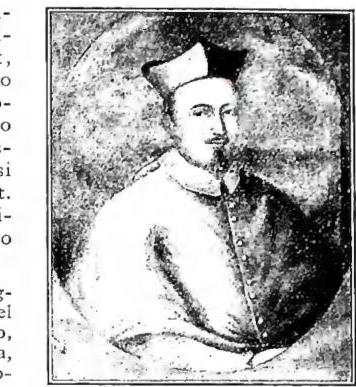
(phot. E. Trillini) PETRUCCI, PIER MATTEO – Contemporary portrait – Jesi, Chapter Hall of the Cathedral.and cleanse it » (ancient pontifical of Paris cited by Leclercq; the prayer is almost identical to that in the Ordo praeparationis ad Missam of cod. Ottob. Vat. lat. 27, f. 8° [15th century]). In order not to soil the vestments, the celebrant’s shoulders were covered with a kind of shoulder cape (tobalia, pectinarium, peignoir, pettenaturo in old Italian). Liturgical combs are often mentioned in church inventories (cf. V. Gay, Glossaire archéologique du moyen âge et de la renaissance, II, Paris 1928, p. 218), and numerous examples, some finely worked, are still preserved in church treasuries and museums. It will suffice to recall a few of the most characteristic: the comb found at Chiusi in 1880, now in the Museo Sacro of the Vatican Library (5th century); the so-called comb of Teodolinda at Monza (7th century); the comb of s. Eberardo at Cologne (8th century); the comb of the Cathedral of Trier (9th century); the comb of Gozzelino, bishop of Toul (922–62), now in the cathedral of Nancy; and the comb called that of s. Lupo, but dating from the 11th century, preserved in the cathedral of Sens.
BIBL.: Ducange, Glossarium mediae et infimae latinitatis, VI, Paris 1938, pp. 236–37; E. Molinier, Musée national du Louvre. Catalogue des ivoires, ibid. 1896, pp. 51–52 (lists the combs of the Carolingian and Romanesque periods); H. Leclercq, Peigne, in DACL. XIII, II, cols. 2932–50; E. Lesne, Hist. de la propriété ecclésiastique en France. III. L’inventaire de la propriété. Eglises et trésors des églises (sec. VIII-XI), Lille 1936, p. 237; the works cited under V. AVORIO. A. Pietro Frutaz
Cite this article
“PETTINE.” Enciclopedia Cattolica, vol. IX (1952), p. 783. Azione Romana digital edition, https://azioneromana.com/article/pettine.