
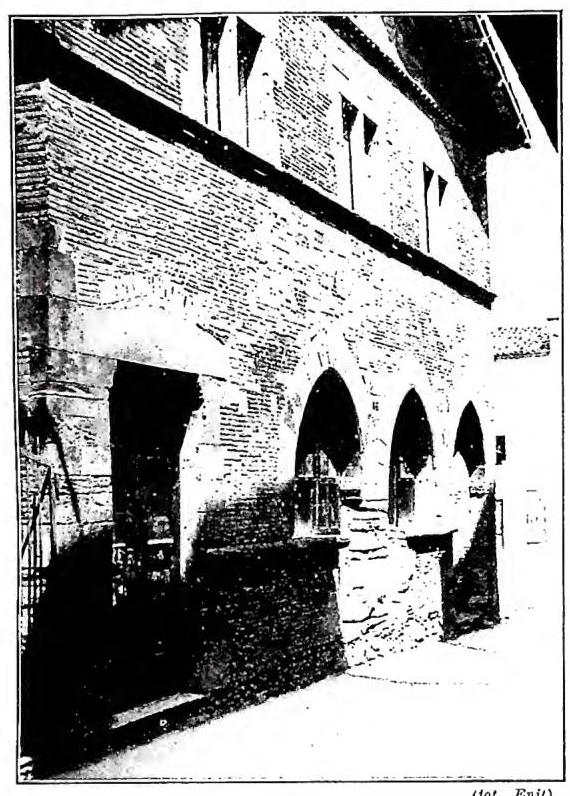
LANCIANO, ARCHDIOCESE of - City and archdiocese in the province of Chieti. It has an area of 26,216 sq km with a population of 192,344 inhabitants, of whom 190,925 are Catholics; it has 37 parishes with 121 diocesan priests and 100 regulars, a seminary, 16 male religious communities and 33 female ones (1949).
It is not possible, as certain ancient historians would have it, to assign the diocese of L. (Anxanum) to the 7th century. Above all, historical sources are completely lacking before the 10th century, when there is record in 973 of the foundation of the Benedictine abbey of S. Giovanni in Venere (Cottineau, II, col. 2720). In 1515 L. was subject to the episcopate of Chieti; but in that same year, on 27 June, Leo X elevated it to an episcopal see. The first bishop, Angelo Maccafani, vigorously opposed the reaction on the part of the archbishops of Chieti. In 1526 Clement VII elevated the church of Chieti to a metropolitan see, making the bishop of L. a suffragan. The struggle continued unabated. It was not enough that the second bishop was Card. Egidio Canisio da Viterbo, who died barely 8 months later; L. claimed independence and succeeded in obtaining it in 1562, with its learned bishop Leonardo Marini, a Genoese Dominican who, protected by Philip II of Spain, obtained from Pius IV the archiepiscopal dignity, though without suffragans. Thus all disputes were cut short and peace came to reign between the two cities. Among the subsequent prelates there was no lack of figures distinguished for virtue and learning, among whom, worthy of mention, are Fra' Antonio di S. Michele of the Friars Minor, delegate in Spain during the war against the Turks, and the munificent Fra' Francesco Romezio, a Spanish Carmelite. In 1818 Pius VII suppressed the diocese of Ortona and united it with L., but subsequently Gregory XVI, on 15 Feb. 1834, restored its see, nevertheless assigning its administration to the archbishop of L., who takes the title of L. and Ortona.
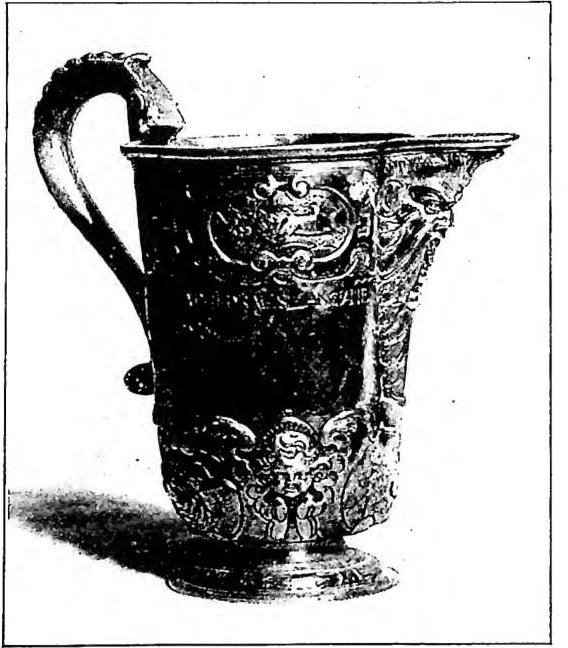
The Cathedral is dedicated to Mary Most Holy Assumed into heaven. From 1834 the archbishop of L. was appointed perpetual administrator of Ortona, united with L. from 24 Nov. 1945.
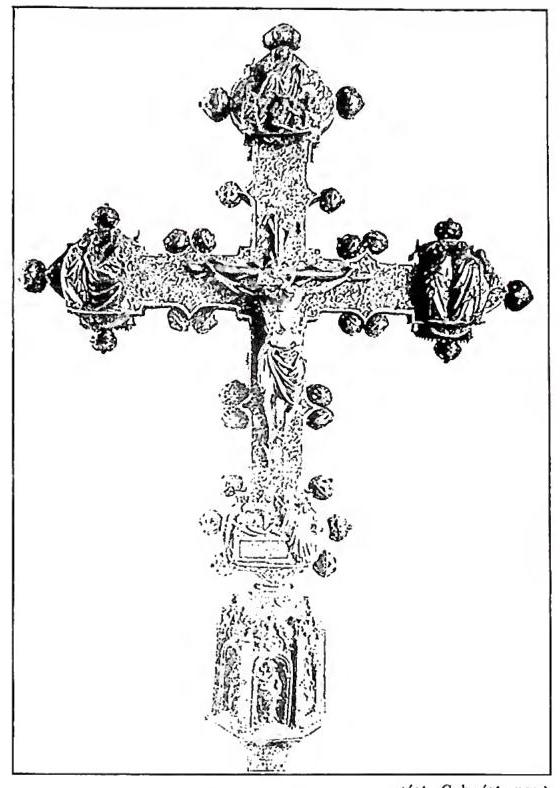
Monuments. - The Gothic left a broad imprint on the churches of L. The Cathedral, begun in 1389, preserves almost nothing of the ancient structure beneath the neoclassical forms it received in the restorations of 1785-88; the facade is unfinished, the bell tower Baroque, the interior with a single nave neoclassical. More intact, however, is the church of S. Maria Maggiore (1227), despite the remodellings of the 14th and 16th centuries. The best part is the facade with its two portals surmounted by rose windows, of which the left one is valuable (work of F. Perrini, dating to 1317), for the lintel with strong reliefs within a triangular pediment and the sculptures of excellent workmanship. Two of the three internal naves have vestiges of the ancient structure, divided by sturdy pillars. The church preserves a silver cross chased and enamelled by Nicola da Guardiagrele in 1422. Other Romanesque-Gothic memories are preserved by the churches of S. Francesco and S. Lucia (the portals), S. Nicola di Bari (15th century and a bell tower of the late Romanesque) and those of S. Biagio (12th century), with rough Romanesque forms and a battlemented bell tower, and S. Agostino, which, besides the portals and the rose window of a Gothic in Apulian forms, houses three most precious reliquaries of the 15th century. Finally, noteworthy near L. is the very ancient abbey of S. Giovanni in Venere, which arose with the famous and very wealthy Benedictine monastery (now destroyed) in 973, whose abbots enjoyed the favors of the popes and emperors, before the fatal decline began in the 14th century. Today, the church, in its Romanesque guise, lives on only in memories.
Bibliography7 works
Pasquale Testini