
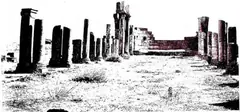
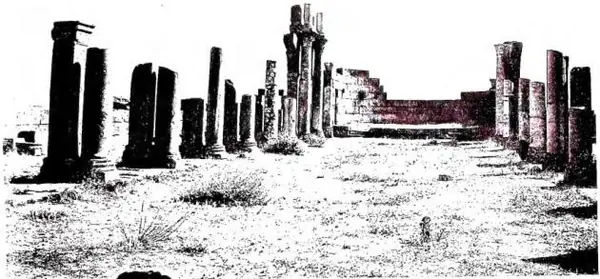
TEBESSA. - Theveste, a city and ancient diocese located in proconsular Africa, present-day Algeria, is today a titular see.
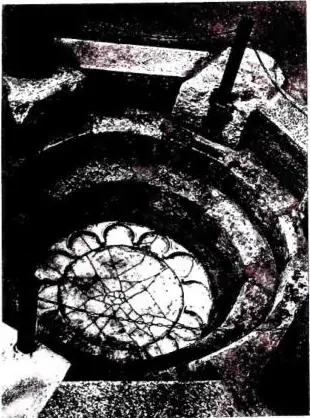
From the beginning of the reign of Tiberius until the Flavians, T. was the headquarters of the III Legion Augusta. In 508 T. was occupied by the Vandals, as attested by an inscription (CIL, VIII, 16516; S. Gsell, Les monum. ant. de l'Algérie, II, Paris 1901, p. 273, n. 1). Around 535 another inscription documents that T. "a fundamentis aedificata est" by the Byzantine commander Solomon (CIL, VIII, 16507). At that time the city was fortified, enclosed by walls with 14 towers and three gates (Ch. Diehl, L'Afrique byzant., Paris 1896, pp. 186-90). Among the known bishops of T., the first is Lucius, present at the Council of Carthage of 256, condemned to the mines of Sigus in 257 and then buried in the areas of Faustus at Carthage; a Romulus Tebestianus was bishop in 348; in 411 at the Conference of Carthage the bishop was Urbicus; of Palladius, who was bishop for 12 years, the epitaph survives (CIL, VIII, 2009); Felix was bishop in 484. In the year 883 T. was still an episcopal see. Among the martyrs of T. the best known are: Maximilian, martyred on 12 March 295, whose remains were brought to Carthage by the matron Pompeiana and deposited near those of St. Cyprian (BHL, 5813; H. Delehaye, Les Passions des mart. et les genres litt., Brussels 1921, pp. 104-10). Crispina, wealthy, noble, a mother of a family, born at Tagura, was martyred at T. in the time of the proconsul Anullinus on December 5, 304. St. Augustine repeatedly sings her praise (In Psalm., 120 and 137; PL 37, 1616-17; 1775, 1777, 1783; Sermo 286, 2; PL 38, 1298; Sermo 354, 5; ibid., 39, 1565; De virgin., 44, in CSEL, 41, 5, 3, p. 290; P. Franchi de' Cavalieri, Osservaz. sopra gli atti di s. Crispina, in Nuove note agiogr. [Studi e testi, 9], Rome 1902, pp. 21-35; 79-80). Near T. an inscription was found reading: «(memoria) Sanctae Crispinae martiris» (P. Monceaux, Enquête sur l'épigr. chrét. d'Afrique, Paris 1908, no. 337). In front of the monumental entrance of the great basilica in 1944 a staircase was discovered leading down to a depth of 9 m. into a gallery more than 200 m. long, reaching a triconch chapel with a light-well and many tombs; in the floor are two formae, one with the mosaic inscription of a Gaudentia; in the apse two raised tombs form an altar. In the walls of the gallery the loculi are closed with tiles, one with a marble slab bearing the inscription «SVREIA IN PACE». The foundations of the basilica blocked the galleries of the hypogeum. Beneath the eastern triconch chapel a Christian cemetery was found, in which was read the mosaic inscription within a wreath commemorating «XI K(al). Ian(uaria) memoria sanctorum Heracli, Donati, Zebrocis, Secundiani, Victoriani, Publiciae, Meggenis» and below it «Novellus diaconus votum»; to the left of the wreath one reads «Donatus lector in pace»; to the right «Victor diaconus in pace» and above «Ieta memoriam si quia violaverit viola(b)it illum Deus». The great building discovered in 1858 on the road between T. and Sicca Veneria was explored between 1888-92; being outside Solomon's citadel it was enclosed within a solid trapezoidal wall flanked by towers, 180 m. long by 90 m. wide. A great staircase led to a quadriportico with columns having Corinthian bases and capitals, with a fountain in the center; through three doors one entered the basilica, divided into three naves by piers with columns in front of them; above there rose a second order. The end of the central nave was closed by a series of vertical slabs with small piers, with a free passage in the center 1.20 m. wide. At the end of the apse the base for the cathedra was found; the whole floor was of geometric mosaics. To the right of the basilica is a baptistery and a staircase of 12 steps leads into a room with three apses, with a floor of ornamental mosaics, walls faced with marble and vaults with mosaics of glass tesserae. There were found four sculpted piers adorned with vine branches, fish, etc. In front of the left apse a mosaic was found with a male orant and an inscription of the year 508; near the staircase the marble sarcophagus was found, with three allegorical figures variously interpreted (S. Gsell, Musée de T., Paris 1902; G. Wilpert, La chiesa rom. nel Sarcofago di T., in Riv. arch. crist., II [1934], pp. 249-64; id., Sarcofagi, III, pp. 57-62).
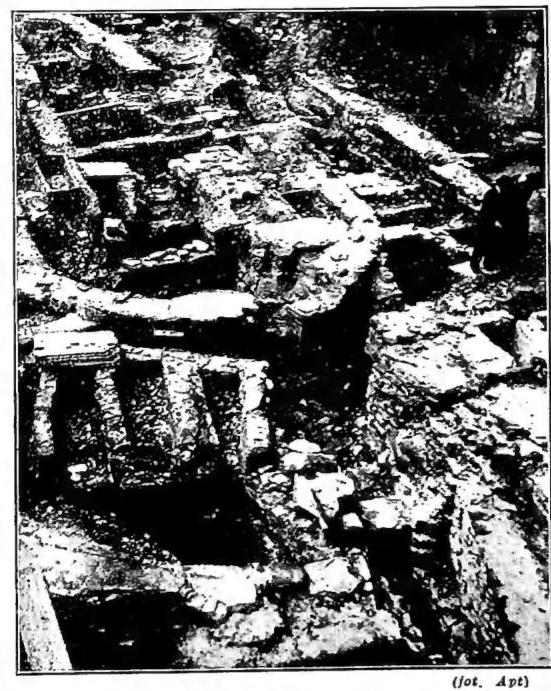
TEREI, saints, martyrs - The excavations in the «martolet» (1945). On the right the architect L. Blondel points to the site of one of the pits, where Bishop Theodulus of Octodurus would have deposited the bones of the martyrs of Agaunum, according to the account of Eucherius. The apse is that of the basilica built by St. Sigismund (515) - St-Maurice.
A series of rooms surrounded all the rest of the basilica, which is attributed by some to Bishop Palladius, whose tomb was found in a wing near the triconch chapel; the porticoes surrounding it and the great access avenue of about 52 × 7.50 m. are assigned to a second period, to which would belong the great rectangular square of 55 × 42 m. with a portico of a double order of columns. To a third period are attributed the staircases leading above the atrium and to the galleries over the minor naves, the hall to the southwest of the triconch chapel and the rooms surrounding the basilica.
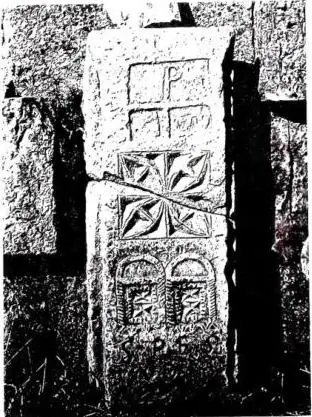
Ch. Diehl held that in the 6th century a monastery had been built near the basilica (Nouv. Arch. des Missions scient., 4 [1893], pp. 331-32; S. Gsell, Monum. ant., cit., II, p. 280 ff.). L. Leschi has pointed out that beneath these Christian tombs, which he considers rather of the 4th than of the 5th century, lies a pagan burial ground (Bull. arch. du Comité, 1945, p. XXII, and Fasti arch., 1 [1946-48], p. 360). There are many Christian sepulchral inscriptions. The most used formula is «hic requiebit bonae memoriae»; the other «hic in pace requiescit» is also found. An inscription commemorated the martyr Miggin of Madauros. Also noteworthy are: the inscription of «Palladius episc(opus)» (S. Gsell, Inscript. lat. de l'Algérie, Paris 1922, no. 3420); «Mensa Ponti presbiteri» (ibid., no. 2980; another «presbiter», ibid., no. 3425); of «Quodvultdeus presb.» (ibid., no. 3421). A «Liberatus clericus» died at the age of 12 (ibid., no. 3426; G. B. De Rossi, in Bull. arch. crist., 1879, pl. 9, 3); «Martiliana virgo Deo sacrata» (S. Gsell, op. cit., no. 3430). One commemorates a «Castimonialis Victoria»; in the surroundings of T. at Henchir-el-Hamarcha the singular formula «neminem debere morti meae invidendo laborare. Et tu in Christo resurges. Ego Caste sanctimoniale vixit annis 36» (CIL, VIII, 10689). Two primicerii: a Donatus (S. Gsell, op. cit., no. 3433) and a Johannes (ibid., no. 3434). From a fortified chapel at the present Henchir-el-Sour comes the inscription commemorating the works carried out there in the time of the emperor Heraclius (S. Gsell, Le Musée de T., Paris 1902, p. 43). In the surroundings of T. at Henchir-Djenen Krouf was found the inscription: «III idus iunias natale sancti Varagi et comitum eius» (P. Monceaux, Inscr. chrét. du cercle de T., in Recueil des notices et mém. de la Soc. archéol. de Constantine, 42 [1908], p. 243 ff.). At the place called Old T. (T. Kalia), a church with three apses was found. - See pl. CXXXVI.
Bibliography5 works
Enrico Josi