Machine translation of the 1948–1954 Italian original. The original text is authoritative.
NATALE (Dies natalis). — The Romans commemorated the dead on the day of their birth; indeed, we read that « Privatae feriae vocantur sacrorum propriorum, velut dies natalis »; thus, the Chronograph (v.) of 354 preserves the natales Caesarum (CIL, I, p. 356). Christians, on the other hand, have always commemorated the day of earthly death. An exception is the date of 25 December, on which the Church of Rome has celebrated the birth of the Redeemer since the first half of the 4th century.
The day of martyrdom is the ἐμέρα γενέθλιος, the true dies natalis of the martyrs (v. MARTIRIO E MARTIRE). St. Pier Crisologo teaches the faithful that the n. of the saints is not that of their human birth on earth, but their birth from earth into heaven (Sermo 129: PL 52, 555). Therefore, in the Hieronymian Martyrology and in the Sacramentaries, the anniversary day to be commemorated is called n. In the Acts of SS. Perpetua and Felicita, the author begins the account of the day of their martyrdom with the expression: « inluxit dies victoriae illorum et processerunt de carcere in amphitheatrum quasi in caelum » (P. Franchi de Cavalieri, La Passio SS. Perpetuae et Felicitatis, 5 Supplem. del Röm. Quartalschr. [Rome 1896], p. 138). The deacon Pontius likewise writes of the day of the martyrdom of Bishop St. Cyprian of Carthage: « illuxit denique dies ille, ille promissus, ille divinus » (CSEL, 3, 3, pp. cvii, 16).
The Calendar of the Church of Carthage contains the dies nataliziorum Martyrum (G. B. De Rossi, L. Duchesne, Martyrologium Hieronymianum, in Acta SS. Novembris, II, p. LXX). In a homily on the n. of St. Cyprian, St. Augustine teaches how the Church « natales vocet pretiosas martyrum mortes ». And he adds: « Where today can one find, I do not say in our city, but throughout Africa and even in the
(courtesy of Msgr. A. P. Frutaz)
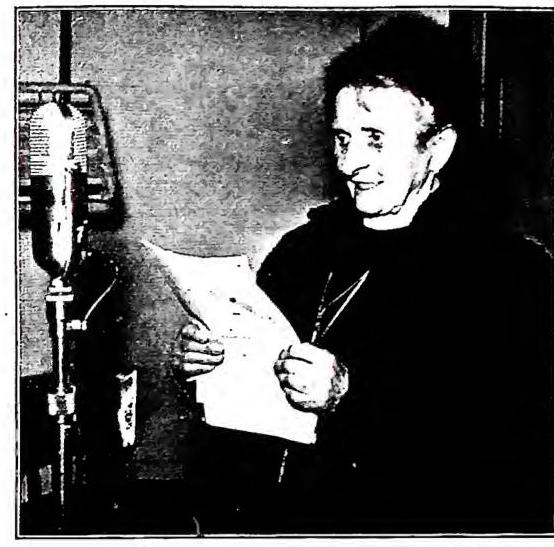
NATALE – The mastery of the red pen – in everyday life signora Eugenia Barruero – immortalized by Edmondo De Amicis in Cuore, was invited by RAI to address all the pupils of Italy’s Elementary Schools, urging them to perform a good deed on the occasion of Christmas (11 Dec. 1930).
overseas regions, not only a Christian, but also a pagan or Jew or even a heretic who does not celebrate with us the natale of the martyr Ciprian? And what does this mean, brothers? We do not know when Ciprian was born, but since on this day he suffered martyrdom, today we celebrate his n. We would not, however, celebrate the day of his birth even if we knew II. For on that day he contracted original sin; on this day, instead, he conquered every sin (Sermo 310: PL 38, 1412–13). These ideas were later repeated also in a homily on the n. of s. Eusebius, bishop of Vercelli, formerly attributed to s. Ambrose (PL 17, 745). On a small marble slab found in the cemetery of Priscilla was written the date VI idus iulias natale sanctorum martyrum, with the names of the seven martyrs commemorated on the same day in the depositio martyrum (E. Le Blant, D'un nouveau monument relatif aux fils de Ste Felicité, in Mél. d'archéol. et d'hist., 8 [1888], pl. VIII). In S. Paolo, the baker Bitalis was buried on 11 Feb. 401 on the day natale domnes Siteritis (s. Sotere: V. Diehl, Inscr. latin. christ. veteres, Berlino 1925, no. 2115); in Salona, an inscription gives 18 Apr. as the n. Septimi martyris, that is, of the martyr deacon Septimius (id., loc. cit., no. 2116). On one capital of the basilica of Djemila, natale domni Claudi is commemorated on 1 Oct., and on another day natale domni Pascenti (id., loc. cit., no. 2117). Near Tebessa there is an inscription indicating 11 June as the natale sancti Varagi or Guaragi and of his companions (id., loc. cit., no. 2118). A. Bosio read in a cemetery on the Via Salaria the epitaph of a Principalis, buried natale s. Susti (s. Sisto II), that is, on 6 Aug. (id., loc. cit., no. 2121). Of a deceased person buried in the Agro Verano it is said that he died natale sancti Laurenti (id., loc. cit., no. 2122), as is read in the Hieronymian Martyrology on 10 Aug.: natale sancti Laurenti. A certain Felicitas was buried on the day natale domnes Theclae (id. loc. cit., no. 2123); a Pascasius died on the day ante natale domni Asteri (id., loc. cit., no. 2124). Tertullian already attests the practice in his own time of commemorating the anniversary of the dead, calling it a birthday celebration: oblationes pro defunctis pro nataliciis annua die facimus (De corona, 3: PL 2, 99); s. Ambrose writes that we Christians forget the day of birth of the dead, but solemnly venerate that of their death (De fide resurrectionis, 5: PL 16, 1516). In the inscription of a Claudia Agrippina in the cemetery of Callistus one reads cuius dies inluxit, exactly as in the
(courtesy of mons. A. P. Frutaz)
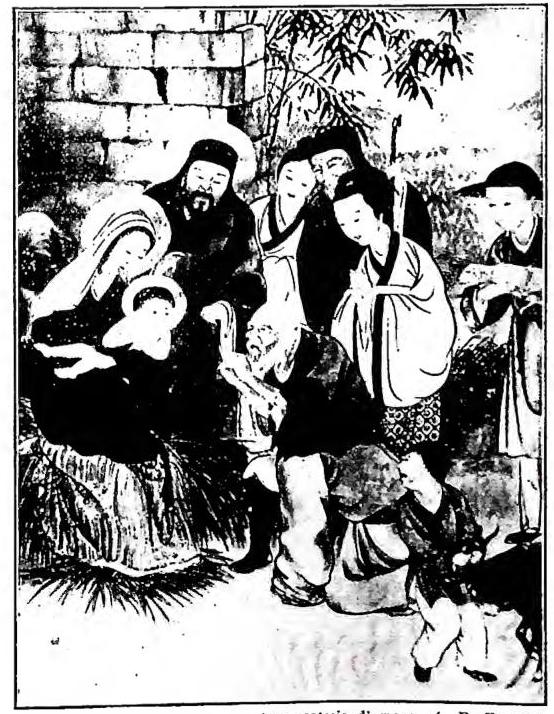
NATALE - Nativity of Luca Ch'en (Collection of the House of Savoy).
Passio ss. Perpetuae et Felicitatis and in the life of St. Cyprian (G. B. De Rossi, Paralipomeni del cimitero di Callisto, in Bull. di archeol. crist., 3rd series, 6 [1881], pp. 160–61). F. de Winghe read in S. Maria Maggiore the epitaph of a Lorenzo, of whom it is said that on the day of his death natur est in aeternum (id., Inscr. Chr. Urbis Romae, I, Rome 1861, no. 36).
Cite this article
“NATALE (DIES NATALIS).” Enciclopedia Cattolica, vol. VIII (1952), p. 991. Azione Romana digital edition, https://azioneromana.com/article/natale-dies-natalis.