
STROSSMAYER, JOSIP JURAJ. - Bishop b. at Osiek (Croatia) on 4 Nov. 1815, d. on 8 Apr. 1905 at Djakovo.
He studied philosophy and theology at Budapest and Vienna; ordained a priest in 1838, he was successively chaplain in his native diocese, professor and director of the Augustineum College in Vienna, and then court chaplain. Appointed bishop of Bosnia and Sirmium with his seat at Djakovo in 1849, preconized and consecrated in 1850, he governed the diocese until his death. He soon became the central figure in the religious, cultural and political life of Croatia. Between 1866 and 1882 he built at Djakovo the monumental cathedral of St. Peter in Romanesque style.
He also contributed to the restoration of the basilica of St. Clement in Rome and raised the Croatian chapel in the basilica of Loreto. The institution of the Yugoslav Academy of Sciences and Arts (1867), known for a certain period as the Croatian Academy, of the Picture Gallery and of the Croatian University of Zagreb (1874), all founded by him, greatly benefited the cultural progress of the Croatian people. With equal munificence S. contributed to the publication of Theiner's Monumenta Slavorum meridionalium, of the collections of Croatian folk songs, as well as of the Macedonian ones edited by the brothers Miladinov, and of very many other works, while he maintained at his own expense Franciscan clerics from the Turkish Bosnia of that time and supported every noble initiative in favor of his people. An intrepid champion of Croatia's sovereign rights, he promoted and supported a general reorganization of the Austro-Hungarian Empire on a federal basis, with equal rights and duties for all peoples, despite the conflicts with the imperial authorities.
S. thought of the union of the separated Slavs with the Catholic Church, conceived as unitas in diversitate, on the basis of charity and mutual respect for rite, language and traditional rights. To this end, as well as for the other problems of Eastern Europe, he collaborated closely with Leo XIII and in 1881 led a delegation of representatives of all the Slavs to thank the Pontiff for the encyclical Grande munus. He further defended the Glagolitic liturgy, interceded with the Holy See for the edition of the Slavic liturgical books, supported the unionist movement of Macedonia and cultivated the friendship of the philosopher Vladimir Solovyov, who was in the vanguard for the rapprochement of Russia with Rome. Also noteworthy are the steps taken by S. with Bismarck to put an end to the Kulturkampf in Germany and the Memorandum to Tsar Alexander II on the question of Russia's Concordat with the Holy See in 1876, a Memorandum that led to the preliminary agreement of 1882 and finally to the Concordat itself of 1905. He obtained little, on the other hand, in Serbia, whose territory he governed as apostolic administrator from 1851 to 1896.
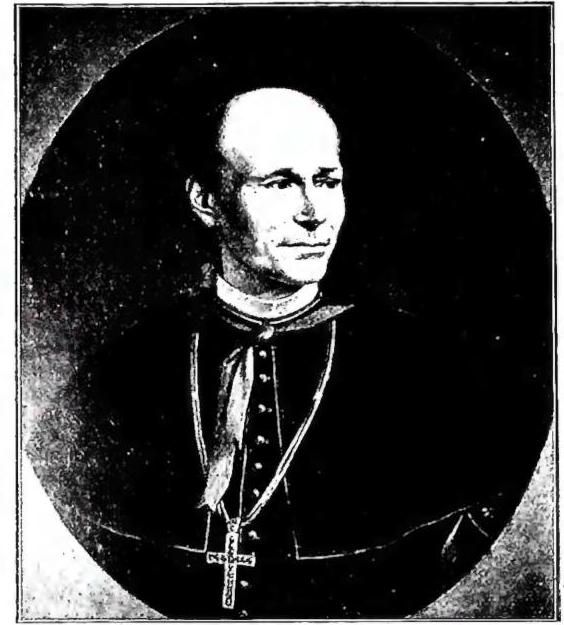
At the Vatican Council he delivered two orations De doctrina catholica and three others De disciplina ecclesiastica, De vita et honestate clericorum and De infallibilitate Romani Pontificis. Together with Dupanloup, Haynald and Schwarzenberg he was one of the leaders of the opposition to the definition of the dogma of infallibility, fearing that it would make more difficult the return of the separated brethren to unity, but he submitted and loyally defended the doctrine of infallibility. In a pamphlet « Papa e Vangelo » by a bishop at the Vatican Council (Florence 1870) there appeared an apocryphal speech of his due to the apostate Juan Augustin de Escudero. It was also made use of by the sect of the « Old Catholics », constituted in 1922 through the work of the government of Belgrade.
Bibliography5 works
Stefano Draganović