
SASSARI, Diocese of. - It has a population of 149,000 inhabitants, all Catholics, distributed in 39 parishes served by 110 diocesan priests and 48 regulars; it has a seminary, 10 male religious communities and 1 female one (Ann. Pont. 1952, p. 370).
Also called "Turritana," from the first residence of the bishop, which was Turris Libisonis, a port and ancient Roman colony. Epigraphic titles and notable archaeological remains reveal its importance. It is credible that in the Constantinian age an organized Christian community existed there, but the first historically certain bishop is Felix de Turribus, who on 1 February 384 took part in the Conference of Carthage, under Huneric, king of the Vandals. The diocese (Turritana civitas) then reappears in the Register of St. Gregory the Great (590), who forwarded the petitions of Bishop Mariniano to the exarch of Africa and, through his apocrisiary, to the court of Constantinople. It is known that the great Pontiff urged the magister militum and the defensor to take steps to avert the dangers of invasion.
The Byzantine inscription on a massive marble architrave discovered in 1927 near the ruins of the ancient city, now in the left nave of the basilica of S. Gavino, extols the heroic naval victory won in the waters of Torres over the Lombards and other barbarians, between 680 and 717, in the opinion of the critics, or, according to the acceptable manuscript tradition, in 695. At the beginning of the 8th century, hordes of Arabs, having overcome Byzantine resistance and already effective masters of the coasts of Africa and Spain, began to raid the coastal cities of Sardinia, which nevertheless they were never able to dominate permanently. Torres, among the most tormented cities, began to decline perhaps in the 8th century.
As soon as the barbarian period was over, after the defeat of the pirate king Mugahid, the cathedral Basilica was erected, between the 11th and 12th centuries, to the glory of St. Gavino and his companion martyrs; it is the first, in size, of the medieval churches and one of the most grandiose monuments of the dawning Romanesque evolution of art. It has three naves; the central one is supported by six cut-stone pillars and 22 monolithic columns coming from the ruins of Roman buildings and, as Romanesque-Byzantine decorative elements suggest, from the old Christian church of Turris. A very important feature, which is very rarely found in Italian churches, is that of the two terminal apses of the central nave, and there are many planimetric differences between the two likewise opposed apses of S. Pietro in Civate (Como) and of S. Pietro in Grado near Pisa.
In the diocese dwelt the Benedictines of Montecassino, the Vallombrosans, the Camaldolese and the Cistercians. In 1073, in a letter of Gregory VII, Constantine of Castro, promoted from the cathedral of Bosa, appears with the title of archbishop. From the Turritan metropolitan depended the episcopal sees of Ampurias, Bisarcio, Castro, Bosa, Ottana, Ploaghe, Torres, villages that took the name of cities.
In the territory of the diocese of Torres, meanwhile, before the year 1000, about 40 Christian communities had been organized under the title of chapels, cures, and plebanias. The most populous was the plebania of S. Nicola di S., about 20 km from Torres, with its beautiful Romanesque church (11th-12th centuries). Around it the autonomous commune was formed, with its own statutes, which later became the center of the diocese. In fact the bishop resided there, for greater safety and pastoral needs ("propter guerrarum et piratorum pericula"). The plebanial church on 24 September 1278 was divided into 5 parishes.
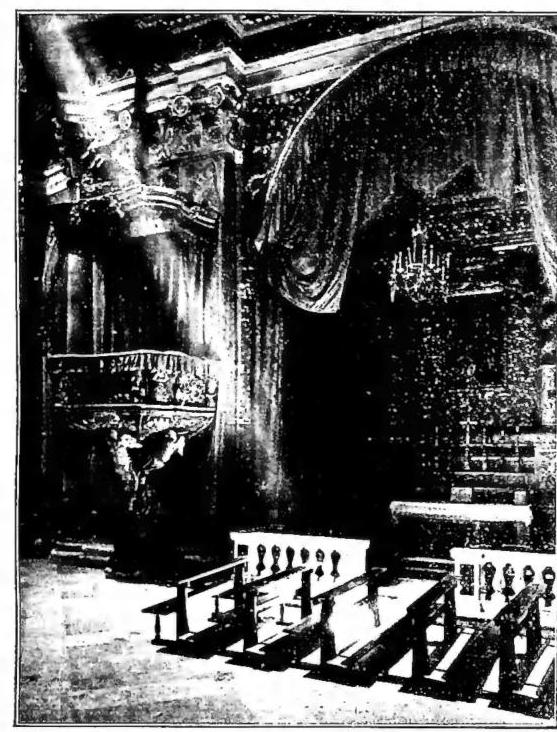
On 5 April 1441, with the bull Super universas of Eugene IV, Archbishop Pietro Spano obtained the transfer of the see from the basilica of S. Gavino to the church of S. Nicola di S. This was enlarged and transformed, with its facade in grandiose Baroque style of 1714. It has been recently restored. With the bull Aequum reputamus of 8 December 1503, Julius II aggregated to the metropolitan church of S. the dioceses of Ploaghe and of Torres, whose Cathedral is one of the most complete and graceful constructions of Tuscan artists of the 14th century. Under the dependence of the archbishop of S. passed the great abbeys of the Most Holy Trinity of Saccargia, Camaldolese, a jewel of architecture, and S. Maria di Paulis, Cistercian.
In the territory of the diocese there also remain S. Michele di Plaiano, not yet restored, and S. Michele di Salvenero, both Vallombrosan. The unions mentioned were carried out under Archbishop Salvatore Alepus (1524-1566). Born in Valencia, and appointed apostolic administrator when barely twenty years old, he took an active part in the Council of Trent. He turned to St. Ignatius of Loyola to obtain some fathers and open a "Studio" in S. He visited the diocese repeatedly and held synods, initiating there the disciplinary reforms approved in the first two conciliar periods at Trent. He took care to improve the solemn liturgy of the basilica of Torres, reprinting the proper Office of St. Gavino, rendered into the vernacular in the 16th century in a short poem that remains the best in Sardinian dialect literature.