
HUS, JAN. — Religious agitator, founder of Hussitism and of the Czech national Church, b. ca. 1370 at Husinec in southern Bohemia to humble parents, and executed at Constance in Switzerland on 6 July 1415.
After his initial studies, having enrolled at Prague in the faculty of arts, H. obtained the baccalaureate in artibus in 1393, that in theology in 1394, and the degree of master of arts in 1396. In 1401–1402 he was dean of the faculty of philosophy, and in the semester of 1402–1403 rector of the University of Prague. In 1400, the year in which he had been ordained a priest, he had begun preaching in the church of St. Michael, with growing success, so that in 1402, with the approval of King Venceslao, he obtained the pulpit of the great chapel intended for sermons in the Czech language, called Bethlehem. Endowed with excellent qualities, an impetuous dialectician, with lively and effective speech, H. began to become one of the most influential representatives of the Czech nation.
The subjects he addressed were above all the reform of the clergy and the moral and religious elevation of the people, in this receiving strong support from King Venceslao IV and from the young and zealous archbishop of Prague, Zbynek of Hasenburg, who in the period 1403–1407 entrusted him, together with Stanislao of Znaim, with lecturing to ecclesiastics at the periodical gatherings of the clergy. From 1404 he also began to teach courses in theology at the University.
In those years the heretical doctrines of Wyclif had begun to spread through Bohemia, brought from England by Girolamo of Prague. The rivalries between Germans and Czechs found expression on this occasion in the fact that, while the Czechs Stanislao of Znaim and Palec showed themselves to be supporters of these doctrines, the German masters had 45 articles drawn from his works condemned. H. at first maintained a neutral and conciliatory attitude; but little by little he turned toward the Wyclifite error. As early as 1405, in his speeches and writings, statements more or less contrary to orthodox doctrine could be noticed. In 1408 the archbishop began to realize this, and, having been vigorously urged by Innocent VII (true Pope) to eradicate the heresy, forbade him to preach against the clergy—a prohibition H. did not observe, arguing rather in the treatise De arguendo clero (1408) that unworthy priests ought to be publicly reprimanded. Nationalistic issues became mixed with religious ones. The dissension between Germans and Czechs sharpened the situation; H., making himself the champion of Czech claims and studying the national language, which from 1405 onward he used alongside Latin in his works, acquired prestige and influence of the first order. He also composed religious hymns and undertook the reform of Czech orthography (for every sound unknown to Latin he proposed a letter with the addition of a diacritical mark, and this reform was handed down to posterity: cf. De ortographia bohemica, ed. Sembera, Vienna 1857).
In 1408, as the Western Schism continued, Venceslao IV opted for neutrality between Gregory XII and Benedict XIII (antipope), and the Czech masters did likewise, while the archbishop, the higher clergy, and the Germans had adhered to Gregory XII (true Pope). The University was drawn into the question and decided it by 3 votes (those of the Bavarian, Saxon, and Polish nations) against 1 (that of the Czechs) in favor of Gregory, thereby siding with the archbishop. The King then issued a decree (Kutenberg, 18 January 1409) by which he reversed the proportions of votes at the University, assigning three to the Czech nation and one to the others, thus once again securing a Czech majority; but the Germans, in protest, left Prague and, withdrawing to Leipzig, founded the new University there. H., who in his preaching had supported the Czech point of view, was elected by them once again in October of that year (1409) as rector of the University. From then on his relations with the archbishop became strained, and when the latter placed Prague under interdict, he supported the King against the archbishop. The archbishop therefore appealed to Alexander V (antipope), elected at Pisa, who ordered that H. be forbidden to preach in churches that were not public, and that proceedings be taken against Wyclif’s errors. His works were in fact condemned. But H. appealed in the name of the University to John XXIII (antipope), arguing that heretical books could appropriately be read (De libris haereticorum legendis). On 16 July 1410, however, the archbishop had ca. 200 Wyclifite manuscripts burned in the courtyard of his palace and condemned H. to banishment; but he continued to preach, and, since he did not appear before the Roman inquisitor, Cardinal Oddone Colonna (later Martin V), he was excommunicated by the Pope, by a sentence of February 1411 read on 15 March in almost all the churches of Prague. Although the condemnation was directed against H. as a rebel and not as a heretic, he nevertheless adhered more strongly thereafter to Wyclif’s doctrines and, casting off all restraint, together with the University vehemently opposed the indulgences promulgated by John XXIII, as though they were simony, provoking disturbances in the city and countryside in which several people lost their lives.
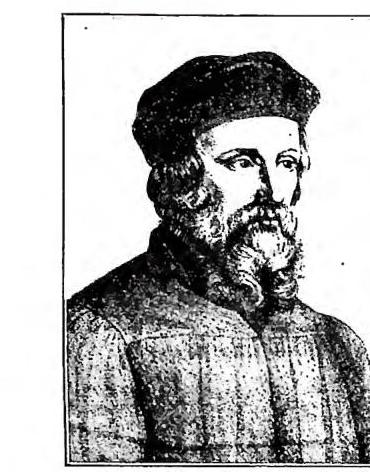
H.’s principal errors, condemned at the Council of Constance, lay predominantly in the field of ecclesiology. According to H., the Church is the society of the predestined, and consequently the reprobate do not belong to it; s. Peter was not the head of the Church, while papal dignity is an earthly thing derived from that of Caesar. According to H., ecclesiastical obedience is an invention of the priests against the express authority of Scripture; ecclesiastical censures are a means used by the clergy to subject the laity and prepare the way for Antichrist; the office of preacher is received as a mandate in priestly ordination itself, so that it may and must be exercised despite the express prohibition of the pope or another prelate, nor can excommunication prevent II. H. held many errors concerning the authority and rights of the pontiff and of the other prelates. He made authority dependent upon one’s personal moral state. Thus, if the pope becomes avaricious, he is the vicar of Judas Iscariot. Christ, without so many monstrous heads, would govern his Church much better through the true disciples scattered throughout the world. No one has authority, nor can anyone be lord of a city, prelate, or bishop, when he is in mortal sin (cf. Denz-U, 627-56).
While the agitations and disturbances were spreading, H. himself incited the king of Poland to rebel against the Pope, defending Wyclifite doctrines (Defensio articuloum Wyclef), until he was forced to leave Prague and withdrew to Kozi in southern Bohemia. There, in 1413, his Tractatus de Ecclesia appeared, whose first 10 chapters were taken almost entirely from the propositions of the English heretic; by detaching many populations from Rome, exalted by his sermons, it gave rise to the movement later called Hussitism. These disorders
(“Works of H.”), 3 vols., ibid. 1865–68. For the history of H. and knowledge of his thought: Johannis H. et Hieronymi Pragensis, martyrum Christi, historia et monumenta (edited by Flavio Ibrico), Nuremberg 1558; F. Palacký, Documenta Mag. Joh. Hustii vitam, doctrinam, causam illustrantia, Prague 1869; K. Kroft, Novéjil Bodáni o H. a hustii husitském, ibid. 1915; V. Novotný, M. Jan H., Život a dílo (life and work), 2 vols., ibid. 1919–1921; V. Kybal, Učení Mistra 2. Husa (“The doctrine of J. H.”), 3 vols., ibid. 1923–27; J. Loserth, H. und Wyclif, zur Genesis der husitischen Lehre, ibid. 1884, 2nd ed. Munich 1925; F. Struna, J. H. Sein Leben und sein Werk, ibid. 1927; K. Kašpar, H. und die Früchte seiner Wirksamkeit, Warnsdorf 1929; B. Spáčil, Učení M. Jana Hustí, Brunn 1931; Pastor, I, pp. 166–68; J. Sedlák, Tractatus causam Mgr. Joannis H. e parte catholica illustrantes, Brunn 1931; B. Ráček, Českovecenské dějiny, Prague 1948, pp. 170–240. Arnaldo M. Lans