

FRASCATI, Diocese of. - The suburbicarian diocese of F. in the province of Rome comprises the north-western zone of the Latian hills and over an area of 150 sq km counts: 50,000 inhabitants, of whom 49,950 are Catholics; 17 parishes, 28 secular priests, 75 religious; a minor seminary (1948); patrons Sts. Philip and James the apostles; feast on 1 May.
F. is the heir of nearby Tusculum, which was the seat of a principality of the Prisci Latini and, having become a municipium, remained a faithful ally of Rome. In the early Middle Ages Tusculum was famous as the fief of origin of the counts of Tusculum, who, between the 10th and 12th centuries, dominated Rome and gave many popes to the church. In 1191 Tusculum was completely razed to the ground by the Romans and a large part of the population, including the bishop, went to swell that existing around the two churches of S. Maria and S. Sebastiano "in Frascata". Nevertheless F. remained a place of modest importance, which in 1410 was granted by John XXIII to Giovanni and Nicola Colonna. In 1500 it became a domain of the Holy See.
The bishop of F. is one of the cardinals of the Order of Bishops, who in the earliest times were reassigned to Labicum, whence, in 1111, the bishop Bovo moved to Tusculum. With the destruction of that city the episcopal see was transferred to F., its first cardinal bishop becoming Nicola de Romania (1205). Among the prelates mention should be made of: Egidio, sent by John XII to Poland in 964; Giacomo de Vitry (1228), a learned opponent of the Albigensians; Pietro Giuliani (1273), architect of Gregory IX and later pope John XXI; Berengario di Fredol (1309), collaborator of Boniface VIII, in the Liber sextus decretalium; Baldassare Cossa (1419), formerly John XXIII, after his submission to Martin V; Bessarion (1449); Alessandro Farnese (1519), later Paul III; Giov. Pietro Carafa (1550) later Paul IV; Lorenzo Corsini (1725).
later Clement XII; Enrico Benedetto duke of York (1761-1807), who donated to the library of the Seminary a rare collection of books; Bartolomeo Pacca (1818); Francesco Saverio Castiglione (1821), later Pius VIII.
MONUMENTS
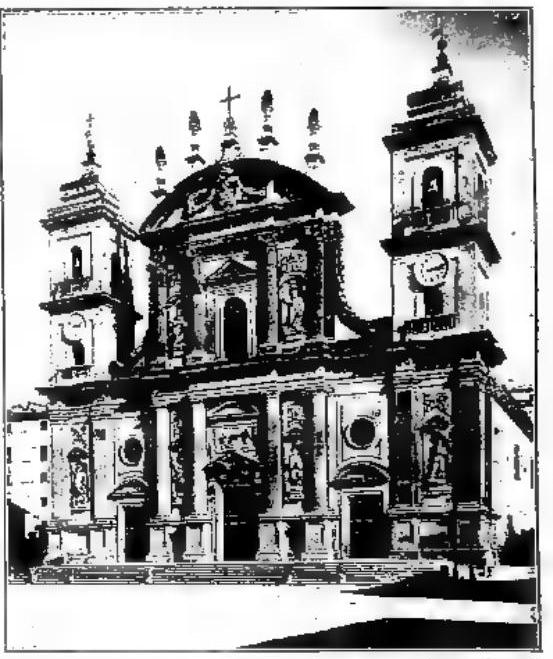
In Tusculum there survive, besides the polygonal walls, the ruins of a theatre, of the amphitheatre, of a cistern and of a portico. The Cathedral was designed by C. Rainaldi and by P. De Rossi (17th century), with a façade (1697-1700) by G. Fontana and frescoes by A. Pozzo, as in the vault of the Gesù, built by Pietro da Cortona. Also to be noted are the church of S. Maria, already existing in the 9th century; the episcopium, begun under Pius II; the church of the Capuchins (16th century). The great attraction of F. is constituted by its celebrated villas, of which the best known is the villa Aldobrandini. - See plate CXIII.

Bibliography12 works
Alberto Galetti