
MEDICINE. — By m. is meant any expression of defense against evil, whether based on empirical knowledge or the product of interpretation and speculation undertaken to combat diseases, alleviate their painful symptoms and, in one way or another, account for the nature of the illness.
From this point of view, the healing art includes both the crudest empiricism, characteristic of primitive peoples and of those in our countryside, and sorcerous practices, and recourse to the preternatural and the supernatural, and, finally, that body of knowledge which constitutes the heritage of present-day science. Here we find ourselves.charset
MEDICINA - Hippocratic Oath - Vatican Library, cod. Urb. Greek 64, fol. 166 (11th century).
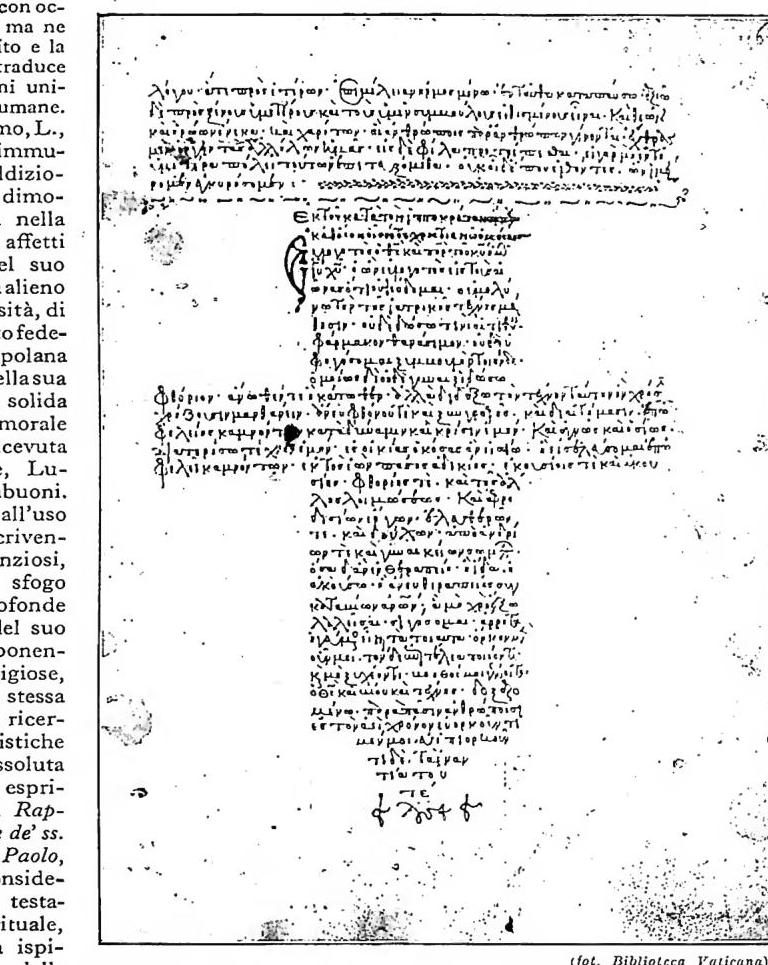
Originally, the interpretation of pathological phenomena and of the consequent effort to ward them off was framed within a religious and animistic concept. Thus diseases were interpreted as the effect of divine punishment or anger, when they were not personified as mysterious, invisible entities, yet perceptible in their grievous effects.
The naturalistic interpretation of biological and physiopathological phenomena began in the 6th century B.C. in the Italian schools (Bruttium, Sicily), especially through the work of Alcmaeon of Croton and Empedocles of Agrigentum. At that time the principle of biological experiment arose, and in the first attempts at investigation (v. ANATOMIA; FISIOLOGIA) the first biological law of isonomy was formulated, establishing the basis of health in the harmony and proportion of the parts constituting the organism. Practical m. also received a considerable impetus at Croton through Democedes. Medical biological doctrine, through the concept of the Empedoclean element, was transformed into the humoral principle in the school of Cos, where Hippocrates (v. 460 B.C), delineating the perfect figure of the physician, morally and professionally laid the foundations of true m. The clinic arose, and with it semiotics; the first medical books were written and subsequently collected under the overall designation Corpus Hippocraticum. From Greece m. passed to Alexandria, where Herophilus and Erasistratus founded two celebrated schools. Since these were devoted chiefly to anatomical and physiological study, a reaction followed in the rise of the empirical school (3rd century B.C.), through the work of Philinus of Cos and Serapion of Alexandria. This school, abandoning all doctrine, based itself on the celebrated tripod: autopsy, analogy, historicon. After some time the Alexandrian schools degenerated, becoming corrupted by magic.
In Rome, m. was chronologically connected with the Greco-Alexandrian period. Arising from indigenous elements of empiricism and magical and religious interpretation, Rome for six hundred years had no recognized physicians, relying on domestic m., invocations to the indigenous gods (Etruscan and Latian), and legal provisions concerning public health. Cato the Elder was an exponent of domestic m. In 290 B.C. the cult of Aesculapius was introduced from Greece, and shortly thereafter the first im-
(courtesy of H. E. Mons. P. Paschini)
MEDICINA - Plaque presented to the Abbey of Montecassino by the 1930 Medical Congress, the work of A. Mistruzzi.
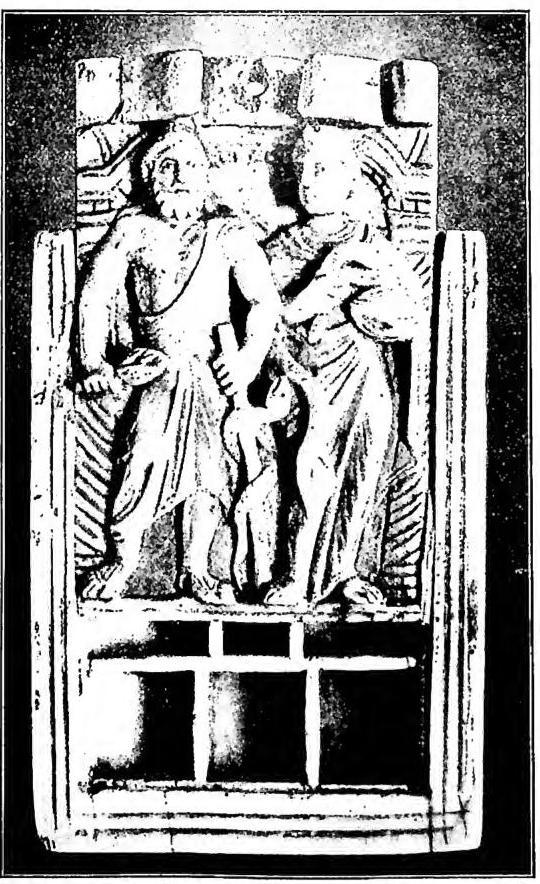
The foundation of these schools dates approximately from 50 B.C. to A.D. 100. The Roman element is represented by Celsus, author of De re medica (A.D. 25–35), and by Pliny, more a naturalist than a physician. The highest expression of m. in the Roman age is found in Galen (v. 138–201), an eclectic who gathered together whatever was sound in the various doctrinal systems and formed one that remained unassailable for fifteen centuries and more. Meanwhile, in the East, medicine continued through the Byzantine schools, whose representatives included Oribasius, Aëtius, Alexander, and Paul (4th–7th centuries).
In the West, after the brief interlude of the Kingdom of Theodoric, during which, thanks to Cassiodorus (v.), m. too flourished, culture became dispersed. It can nevertheless still be found in the monastic schools, where herb gardens were cultivated, monk-infirmarians were trained, and infirmaries and hospitals were opened. «Physics», that is, also m., was studied in the cathedral schools as well. This movement of monastic (v. MONACHISMO) and clerical m. did not last long (7th–10th centuries) and ended with the rise of lay m., whose best-known example was the Salernitan school, clerical at first and subsequently lay. It first became known around the 10th century, and its period of splendor ended in the 13th century with the rise of the universities. Every medical and surgical discipline was cultivated there with great distinction; among its finest representatives were the archbishop Alfano, Guarimpeto the deacon, Pietro the cleric, the monk Costantino l’Africano, the families of the Plateri and the Ferrari, the surgeons Ruggero and Rolando, the ophthalmologists Zaccaria and Benvenuto Grafeo, and the urologists Ursone, Gille de Corbeil, and Mauro.
Nor were women lacking: the midwife Trotule, Abella, Calenda, etc. The best-known work was the Regimen Salernitanum. Contemporary with the Salernitan school was that of Montpellier, which was its rival and likewise had excellent practitioners, although it enjoyed less fame.
In parallel, the Arab school was developing in the East, likewise continuing classical culture through the schools that the Nestorians and the school of Athens, closed by Justinian, had founded in Syria, Mesopotamia, and Persia. The Arabs advanced therapeutics and alchemy, which gave rise to pharmacy, and wrote important works that became fundamental in the West when Arabism was introduced there, especially through the work of Costantino l’Africano. Its principal representatives were Mesue the Elder and Sempione the Elder (9th–10th centuries) in the first period; Rhazes (850–923), Avicenna (980–1037), and Abulcasis (1013–1106) in the second; and Averroës (1126–98), Avenzoar (1113–62), and Maimonides (1135–1204) in the third. Arabism entered Europe particularly through the schools of Montpellier and Padua.
With the rise of the universities, m. found its most natural and secure expansion. The school of Bologna was famous; Taddeo degli Alderotti (1223–95), the founder of the clinical method, taught there, as did Torrigiano dei Torrigiani (d. 1327), Buono, Dino, and Tommaso del Garbo. The anatomist Mondino de’ Liuzzi (1270–1326) introduced the anatomical study of the cadaver there; Ugo and Teodorico de’ Borgognoni (1205–98) taught and practised surgery there, introducing important modifications in the treatment of wounds.
The school of Padua, with its Averroistic tendencies, was as renowned as the Bolognese school; Pietro d’Abano (1250–1316), the S. Sofia family, the Dondi dell’Orologio, and others taught there. In Italy, surgery had its foremost representatives in Guido Lanfranchi (13th–14th centuries) and Guglielmo da Saliceto (1210–77), in addition to the aforementioned Teodorico.
Abroad, the schools of Montpellier became famous, and Arnaldo da Villanova (1235–1315), one of the advocates of freedom of scientific thought alongside Ruggero Bacone (1214–92), taught there. Foreign surgeons included Henry de Mondeville, Guy de Chauliac (born in 1300), Jean Yerman, and others.
The Renaissance announced itself through the revision of the classics, anatomy (v.), and through the discovery of the circulation of the blood (v. FISIOLOGIA). In m., Teofrasto Paracelso (1493–1541) revolutionized old thought by establishing the chemical-biological concept, while G. Fracastoro (1478–1553) gave the first account of the microbial world in his De contagion et contagiosis morbis. Also worthy of mention are F. Ingrassia (1510–80), G. B. Codronchi (1547–1628), and F. Fedele for forensic medicine; G. Cardano (1501–76) for psychiatry and criminology; and G. Mercuriale, G. Trunconi, O. F. Ferrari, and others for pediatrics. Surgery boasts the names of A. Paré (1510–90), M. Santo (born in 1488) for the operation for bladder stones, C. Bartisch for ophthalmology (1583), B. Maggi for amputations, and others. In obstetrics, Caesarean section on a living woman was introduced.
The true scientific renaissance began in the 17th century, principally through the work of G. Galilei and the establishment of the experimental method. Anatomy broadened its scope through microscopic investigation (v. ANATOMIA), and physiology laid its first foundations. In m., two orientations emerged, iatrochemical and iatromechanical, headed respectively by G. B. von Helmont (1577–1644), F. de la Boe (1614–72), S. Santorio (1561–1636), and A. Borelli (1608–79), while the Hippocratic clinical approach was revived by T. Sydenham (1624–89). Physicians worthy of remembrance include G. Baglivi (1668–1707), L. Bellini (1643–1704), G. M. Lancisi (1654–1720), and others. Pathological anatomy began; surgery was renewed in the treatment of wounds through the work of C. Magati (1579–1647). Surgeons also worthy of remembrance are M. A. Severino (1580–1656), P. E.
Dionis (d. 1718), and F. Hildanus (1560–1634). In obstetrics, the invention of forceps by P. Chamberlen (1647) and the work of F. Mauriceau (1637–1709), S. Mercuri, and others are notable. In psychiatry, P. Zacchia (1584–1659) should be remembered; he was principally a forensic physician and the author of the first systematic treatise in that field. In dermatology, D. Cestoni (1637–1718) and G. C. Bonomo discovered the parasitic origin of scabies (the mite); in therapeutics, the antipyretic action of cinchona bark (1640), on which subject F. Toti wrote his celebrated work, was established. B. Ramazzini (1633–1714) founded occupational hygiene. F. Folli devised the system of blood transfusion (1654), and the technique of intravenous injection was introduced into practice.
Old medical thought, not yet defeated, resurfaced in the 18th century in the work of the animist G. E. Stahl (1660–1734), and in part in that of F. Hoffmann (1660–1742). From the latter, through W. Cullen (1712–90) and G. Brown (1735–88), arose the concept of the importance of the nervous system in determining vital phenomena, leading ultimately to G. Rasori’s subversive theory of stimulus and counterstimulus (1766–1837), which opposed Hippocratic humoralism. Thus the conflict that constituted the crisis between the old thought and the modern emerged. A return to ancient concepts appeared in the astrologism of F. Mesmer (1734–1815), mixed with intuitions concerning magnetism, while S. Hahnemann (1755–1843) homeopathy (v.) in clear opposition to official m. Through the work of G. B. Mongagni, pathological anatomy took its place alongside clinical medicine.
The Hippocratic approach was followed by E. Boerhaave (1668–1738) and von Swieten (1700–72), while in Italy D. Cotugno and G. B. Borsieri (1725–87) distinguished themselves. In semeiotics, it should be remembered that, through the work of L. Auenbrugger, percussion was introduced (1781). Surgery progressed through the work of A. Scarpa (1752–1832), G. A. Brambilla (1728–1800), who was a military surgeon, J. and W. Hunter, P. Port, L. Heister, etc. Obstetrics developed especially in France through the work of N. Puzos (1686–1753), A. Levret (1703–80), and G. Palfyn (1650–1730). In Italy, P. Assalini (1759–1840) and F. Asdrubali (1756–1832) should be remembered; in England, W. Hunter and W. Smellie. Ophthalmology was perfected especially in the operation for cataracts (G. Daviel and A. Maitre Jean). The treatment of the mentally ill became humanitarian through the efforts of V. Chirurgi (1759–1820), while F. Pinel (1745–1826) studied insanity more theoretically and G. Gall (1758–1828) phrenology (v.). The organization of public hygiene found a tenacious advocate in P. Frank (1745–1821), author of a treatise on political medicine. Hydrotherapy spread and became established, while electrotherapy was taking its first steps. Preventive medicine acquired a valuable weapon against smallpox epidemics in vaccination, discovered by E. Jenner (1749–1823) in 1796. In this way, medicine was moving toward the definitive systematization that was to take place in the nineteenth century.
The development of pathological anatomy, increasingly closely linked with clinical medicine; the establishment of microbiological science in its modern sense; advances in semeiotics; the conscious application of antisepsis and the discovery of asepsis; the introduction of surgical anesthesia; the refinement of technique; the multiplication of instruments; the development of allied sciences; and many other factors caused medicine finally, in the nineteenth century, to emancipate itself from a past to which it was still, even without realizing it, so closely bound.
Apart from the developments in biology, physiology, and anatomy, which contributed greatly to the development of medicine, two fields in particular were the architects of its new life: pathological anatomy and microbiology. For its part, clinical medicine derived valuable benefits from auscultation, introduced by G. Laënnec (1781–1826) with the stethoscope, and from the various laboratory examinations which, begun with Cotugno in the preceding century, received their official beginning with Bright and Fehling. In 1895 G.
Roentgen (1845–1923) discovered X-rays, opening a new field for investigation. Bacteriology was raised to the status of a science by L. Pasteur (1822–95), building on the earlier discoveries of microbes, for which A. Bassi (1773–1856) had priority. R. Koch (1843–1910) was responsible for perfecting the technique and discovering numerous pathogenic agents, including that of tuberculosis. Pathological anatomy had advocates such as Laënnec, R. Virchow (1821–1902), founder of cellular pathology, Cruveilhier, Charcot, etc.
Studies of immunity began with E. Metchnikoff (1845–1916), H. Buchner, and E. Behring (1854–1917); through the efforts of the latter, they led to the discovery of serum therapy. Meanwhile, clinical medicine could boast the illustrious names of G. Laënnec, G. Skoda, G. N. Corvisart, F. Broussais, R. Bright, M. Bufalini, S. Tommasi, G. Baccelli, A. Cardarelli, A. De Giovanni, A. Murri, and C. Forlanini, whose name is associated with the treatment of pneumothorax (1882); modern neuropsychiatry recognized M. Charcot (1845–93) as its principal founder, while C. Lombroso (1836–1909) founded modern criminology; dermatology arose in the schools of F. Hebra (1815–80) and P. Unna (1850–1929), while F. Ricord (1799–1880) established the classic distinction between gonorrhea and syphilis. Surgery benefited from the discovery of antisepsis, implemented by E. Bottini (1837–1905) and J. Lister (1827–1912), though it had already been anticipated in obstetrics by J. F. Semmelweis (1818–65), and from anesthesia through the experiments of O. Wells (nitrous oxide), Jackson and Morton (ether), and Simpson (chloroform). As a consequence of Pasteur’s studies, antisepsis gave way to asepsis, while pharmacology entered a distinctly experimental field; the injection syringe was devised by Pravaz in 1851, and G. Baccelli revived the use of intravenous injections in 1890. P. Ehrlich’s studies of arsenobenzols opened the way to the new field of chemotherapy, of which sulfonamides are the most recent achievement. Endocrinology, which has now attained such importance, originated in 1889 with Brown-Séquard’s experiments in rejuvenating guinea pigs by injecting testicular extracts. The development of hydrotherapy is linked to the name of V. Prassnitz (1799–1851); in 1898 the Curie couple discovered radium, while electro-roentgen therapy was undergoing greater and more effective development. Preventive medicine developed in the field of antimalarial prophylaxis through G. B. Grassi’s discovery of the transmitting agent, the anopheline mosquito, and through the description of the life cycle of the malarial parasite in birds (R. Ross) and in humans (Grassi).
Contemporary medicine marks a return to the Hippocratic tendency, to such an extent that it has been called neo-Hippocratic. On the other hand, the high degree of perfection attained by technique and by the sciences allied to medicine provides clinical medicine with such assistance that its task has become considerably easier and more limited. The fundamental bases of twentieth-century medicine are still those of the end of the preceding century, with the addition of a broader knowledge of physiopathological phenomena; meticulous investigation of pathological-anatomical findings and subtle experimentation in the fields of general pathology and clinical medicine permit a more exact interpretation of the pathogenesis of morbid phenomena. Meanwhile, advances in bacteriology and ongoing studies of ultraviruses open new horizons to general biological knowledge, offer broad possibilities for modifying certain classical etiological and pathogenetic concepts, and provide effective means of treatment with sera and vaccines. At the same time, parasitology is shedding ever more light on obscure aspects of the transmission of certain diseases and on knowledge of the causal agent and the intermediate host, making the struggle against parasitic diseases easier and more effective.
On these foundations, pathological knowledge and the therapeutic means available for diseases of the blood, its morphological elements, and the hematopoietic organs (bone marrow, spleen, lymphatic glands), previously very limited, have made a great leap forward. Similarly, diseases of the renal system have become much better known through advances in chemical-biological knowledge and improved functional examination. Framed within the modern concept of “allergy,” bronchial asthma, pollinosis, food intolerances, urticaria, anaphylactic crises, serum sickness, and idiosyncrasies reveal a common pathogenetic basis; diseases of the organs with internal secretion (v. ENDOCRINE, GLANDOLE, GLANDOLE) have opened a new horizon for the study of pathology and constitution. Alongside these, the so-called deficiency diseases, vitamins (v.), have assumed ever greater importance; knowledge of them is expanding day by day and revealing unsuspected horizons.
Surgery, owing to the high degree of perfection attained by its investigative and operative instruments and by technical refinement, is venturing into increasingly daring procedures in the neurological, pulmonary, and circulatory fields.
Prophylaxis and hygiene, enriched by the assistance of microbiology, parasitology, climatology, and epidemiology, succeed in preventing the spread of infectious diseases; while therapy, equipped with increasingly effective means, extending to antibiotics (penicillin, streptomycin, chloramphenicol, etc.) in continuous development, is achieving victory over a broad range of infectious diseases.