
EASTERN ASIA, CIVILIZATION OF. – The peoples who constituted the civilization of Asia and wove its historical fabric are China in the east, India in the south, and Iran in the southwest, through which country the influence of the Arab-Semitic civilization flourishing in Mesopotamia subsequently penetrated into Central Asia.
The Siberian north, inhabited by primitive Mongoloid peoples (Samoyeds, Ostyaks, Tungus, Yakuts, Chukchi), was, from the middle of the sixteenth century, brought under the firm and despotic rule of Russia by Ivan the Terrible, and had no influence on the territories farther south.
India, through Buddhism, brought to Asia the feeling of compassion for all beings, sensitivity in the face of the pain of life, and the apostolate of peace and gentleness, which its art expressed so well and disseminated throughout Asia, from Mongolia to Korea, Japan, Indochina, and the Insulindia.
Medieval Iran, through the theocratic centralization brought to the country by victorious Arab Islam, gave the Mongolian peoples a unity of vision and ensured that today only two religions predominate more broadly throughout the immense territory: Buddhism and Islam.
The movements of history in Asia and their reflections in Europe all begin in its central region, Mongolia (v.), inhabited by nomadic peoples devoted to pastoralism, whom the scarcity of pasture caused by periodic drought drives in great waves toward the east, west, and south against the neighboring peoples, destroying them in order to restore the land to the pastoral regime, useful for their immense herds.
I. CHINESE DYNASTIES
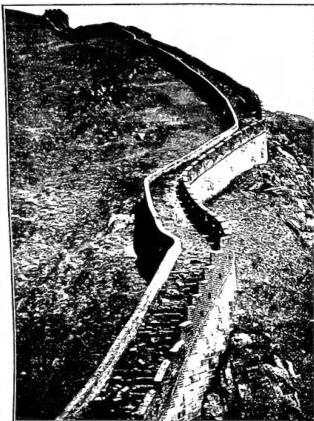
The Chinese descended to populate the fertile alluvial soil of the lower basin of theFiume Giallo, entering it from the northwest and finding it already occupied by aboriginal peoples: Miao, Lolo, etc., whom they confined within narrow boundaries in the south of the country. They brought with them certain elements of the civilization of metals acquired from the Near East through Turkestan; once they had reached the country, however, these elements were able to develop autonomously and to be preserved in a traditional form, given China’s separation from the rest of the world by the mountains and the Great Wall that bound it to the West, and by the sea that closed it off to the East. This separation fixed it in a constant conservatism and at times drove it almost to horror of everything foreign.
Without taking into account the traditional chronology of China based on the succession of the imperial dynasties—a tradition that heroicizes the founding sovereigns of the first dynasties (Iᵃ and IIᵃ), to whom are attributed the institution of agriculture, the raising of livestock, navigation, writing, the calendar, metallurgy, and the norms for the administration of the State—it is only with the final centuries of the IIIᵃ dynasty (Ciou, 1122–256 B.C.) that one proceeds on the solid ground of history. During this dynasty, despite the internal rebellions of individual feudal kings, which led to the period being called that of the “warring kingdoms,” Chinese thought developed, dominated, from the economic-social point of view, by the idea that the human order must be in harmony with that of nature, which in turn is regulated by the Lord of Heaven; and, from the ethical point of view, by the teaching of a group of philosophers: Confucius, Mongtu, Meit, Chuangtze, who applied this idea to the political and social life of the country.
After the IIIᵃ dynasty had faded away without glory, following several decades of intense struggles against the local princes, the IVᵃ dynasty (Ts'inn, 255–207 B.C.) established itself. Under the duke Ceng, who assumed the epithet Scehuangti (= first emperor), it defeated feudalism and founded the centralized Chinese Empire, which from 221 B.C. endured through 23 dynasties and innumerable reversals of fortune until 1912. The unification of the territory was followed by that of the administration, the incorporation into the State of most of southern China, and the construction of the Great Wall against the incursions of the Huns (Hiong-nou), ancestors of the nomadic Turks and Mongols. Yet to its discredit was the destruction of the classical books, out of hatred for the literati who, in opposition to the reforms introduced, extolled the ancient tradition of the country. A civil war followed, led by Liupang, which brought about the sovereign’s suicide and, with Liupang himself, the beginning of the Vᵃ dynasty (earlier Han; 202 B.C.–A.D. 8). The greatest figure of this dynasty was Wu-ti, who acted against the Huns in Upper Mongolia, advanced into eastern Turkestan, then the heart of Asia, inhabited by peoples of Indo-European stock and traversed by the famous “silk road,” along which caravans had traveled since the time of the Roman Empire, carrying silk westward and exchanging it for products that came up from Syria and India toward China; he annexed Kansu and extended his rule over Corea and Tonchino. Within the country there was a revival of literature as a reaction against the obscurantism of the Ts'inn, a renewal of commerce, and the introduction of Buddhism, which had entered from the west through Afghanistan and Turkestan. At first received with distrust as contrary to Chinese ideas concerning the family and the social order, it was later widely welcomed and introduced into the country the models of Greco-Buddhist art.
The VIᵃ dynasty (later Han, 25–220), founded by Liusiu, a descendant of the Han who had placed himself at the head of periodically resurgent brigandage, lived amid battles and fierce rivalries—the three kingdoms: lesser Han, which lasted 45 years and is regarded as the VIIᵃ dynasty, Wei, and Wu—until in 280 the whole country was once again united by Semayen, founder of the VIIIᵃ dynasty (Western Ts'inn, 265–316). It was a period of terrifying rebellions. In 311 the Huns occupied the capital Lo-yang, forcing the dynasty to take refuge in Pechino, where the national Empire of southern China was established, while in the north ephemeral foreign rulers, Hunnic (= Turkish) or Mongol, succeeded one another. It was precisely during these troubled times that Buddhism, which had entered China from the West as early as the second century B.C., continued its peaceful penetration of the country, where missionaries arrived both by the land route through Turkestan and by sea, landing at Canton and Nanchino.
The IXᵃ–XIIIᵃ dynasties (419–589) are called respectively those of the south and of the north, and followed one another without boasting any particular merit toward the country. During the sixth century the Turks (= strong) appeared for the first time on the stage of Asia under their own historical name. At China’s expense they founded an Empire that encompassed Mongolia (552) and western Turkestan (565), and controlled central Asia from the Great Wall to the frontier of Sāsānid Persia.
The greatest dynasty in Chinese history is the XIVᵃ (T'ang, 618–907), which under Tai-tsong the Great (627–49) once again united all China under its scepter, taking back from the Turks their conquests in Mongolia and Turkestan. It had Singanfu as its capital, favored Taoism, and was benevolent toward the Nestorian missionaries, whose activity is commemorated in the memorial stele known precisely as that of Singanfu, erected in 781. It contains an exposition of the fundamental points of the Christian religion, a record of the introduction of Christianity into the city (635), due to the work of the Nestorian monk A-lo-pen, and of the favorable reception accorded him by the emperor Tsitsong.
The third T'ang emperor, Kao-tsong (650–83), occupied Corea, and Hinan-tsong (712–56) extended the authority of the Empire as far as Tashkent in western Turkestan, near the river Sirdaria. Under him came the golden age of literature and art, which produced the Buddhist statues of Long-men and T'ienlong-chen. Buddhism, ever more flourishing, felt the need to gain a deeper knowledge of the original texts of its faith and, with the pilgrim Huang-tsang (600–64), traveled as far as India to bring back the texts of the Mahāyāna school.
By now the Muslim Arabs, already masters of Syria and Egypt, invaded still-Mazdean Persia, defeated it in the battles of Qādisijjah (637) and Nihāwand (640), and bent it to Islam, which it accepted in the Shīʿite form, in opposition to the official Sunnism of the Umajjadi; then, at the beginning of the eighth century, they crossed Central Asia, reaching the frontier of Chinese Turkestan and forming a powerful bloc that offered the vanquished a common language and religion.
It was also to Persia, through the spread of Manichaeism, that the conversion to Manichaeism (v. MANIA) of the Uighur Turks is owed. They occupied Mongolia from 744 to 840 and left near Turfan, already rich in valuable works of Buddhist art, Manichaean paintings whose Iranian provenance is evident.
II. THE MONGOL CONQUEST
When the T’ang dynasty fell in 907, China again sank into anarchy; the so-called “Five Minor Dynasties” XVᵃ–XIXᵃ (907–60) followed one another in the north, while in the south small provincial kingdoms succeeded each other, until the XXᵃ Sung dynasty (960–1280) restored Chinese unity under T’aitsu. This, however, had to yield beneath the blows of the great Mongol invasion led by Temugin, known as Genghis Khan, who, after unifying Mongolia, occupied northern China with Peking (1213), eastern Turkestan (1218), and Ḥwārīzm, and sent (1220) his two lieutenants Gehe and Sabutai, with 25,000 horsemen, on a raid through western Asia and eastern Europe as far as the Crimea and the Danube; but he was unable to overcome the resistance of Japan (1274–81; V. GIAPPONE). This raid, besides bringing into contact peoples who had previously been unaware of one another, was of particular benefit to Islam, since under Timūr (Tamerlane) it succeeded in exalting the unifying force of Islām, animated by ardent Semitic faith against the secular indifferentism of the Mongols. He gave them a religious law, to which the sovereign himself was subject, as well as a Muslim culture and art with schools and mosques, from which the religion of Muhammad radiated eastward and westward, albeit adapted to indigenous traditions and superstitions.Tamerlane was responsible for the invasion of India (1398–99), already won to Islam in 711; his descendant Bābar founded the Mughal Empire, which lasted from 1526 until the English conquest in 1858 (v. INDIA).
Genghis Khan’s Mongol army descended like an avalanche upon China and overwhelmed the Sung dynasty, which had ruled for 320
years and had promoted historical studies and the fine arts, especially painting and ceramics, which at that time attained heights never again reached.
The XXI dynasty was Mongol (Yūan, 1280–1368), founded by Qubilai Khan, son of Ogōdāi, himself the son of Genghis Khan. He quickly assimilated the culture of the Chinese, whose splendor he appreciated; he was benevolent toward the people, received Marco Polo with honor, and Marco Polo remained for many years at the Mongol court in the capacity of imperial ambassador. As a tolerant Mongol, he respected the followers of the four “prophets”: Jesus, Moses, Muhammad, and Buddha; he welcomed Catholic missionaries, including Giovanni da Montecorvino (1333), who became the first archbishop of Peking. On the contacts between the Church and the Mongols, V. CINA.
But the dynasty’s foreign origin Japan (v.) aroused a national reaction, at the head of which stood the former bonze Ciuyuang, who, under the name of T’aitsu, became the founder of the XXIIᵃ dynasty (Ming, 1368–1644).
T’aitsu favored Confucianism, China’s traditional religion, over Buddhism, and reformed the code and the court ritual. His successor was responsible for transferring the capital from Nanking to Peking and for constructing the Grand Canal between Peking and southern China; Hsientsung (1463) repaired the Great Wall, the historic bulwark—though not always an effective one—against the Mongols.
III. EUROPEAN PENETRATION
In the 16th century the penetration of Europeans into China began. In 1557 the Portuguese established themselves in Macao; in 1582 Fr. Ricci landed in this city, and in 1601 proceeded to Peking, where he died in 1610. Ten years later the Tatars (Mongols) crossed the northern frontier, advanced into Liaotung and Shansi, and gave Peking over to flames and plunder: the last emperor of the Ming dynasty committed suicide (1643).The last dynasty, the 23rd, succeeded the Ming; it was of Manchu origin (Ts’ing, 1644–1912). The finest ruler of this dynasty was Kang-hsi (1662–1722), who has been called the Louis XIV of China. Intelligent, prompt in his decisions, and well disposed toward Catholics—until alienated from them by the “question of the rites,” which was being debated among the Catholic missionaries of the various religious Orders (v. MALABARICI)—and the author of a dictionary, he nevertheless failed to…
Thus, due to the importation of opium—rightly prohibited by the Chinese government in the name of social hygiene, against the commercial greed of the English—a war ensued, which ended in 1842 (only to resume in 1848), with the occupation of Hong Kong by England and the dismantling of the forts of Canton.
This humiliation, exacerbating the anti-European sentiment of the Chinese, led to the rebellion known as the T'ai p'ing (=great peace), led by the fanatical visionary Hang-Sieu-Ts'iuang, who established his capital in Nanjing and, over the course of 15 years, devastated 16 provinces and cost the lives of 20,000,000 people. The rebellion also turned anti-European when foreigners, seeing themselves directly threatened, lent their support to the Manchu dynasty and, in 1864, put an end to the uprising, which ultimately opened China's doors to Europe, also imposing the exchange of diplomatic missions between Beijing and the European capitals.
Twenty years later, the Sino-Japanese War (1894-95) broke out, ending for China with the loss of Korea, Taiwan, and the Liaodong Peninsula. In 1900, the xenophobic Boxer movement began (fueled by the dowager empress Tsehai, though it was originally anti-dynastic), leading to the massacre of thousands of Christians and provoking the armed intervention of European powers, with severe economic and political consequences for China. Eight years later, the elderly empress died, and with her, the last imperial dynasty came to an end.
IV. THE CHINESE REPUBLIC
Indeed, three years later, the socialist Sun Yat-sen, who had completed his studies in England and America, seized the opportunity of a popular revolt against Manchu troops to return to China, where on 14 February 1912, in the name of the Nationalist Party (Kuomintang), the Chinese Popular Republic was proclaimed. After a brief regency by Sun Yat-sen, Yuan Shikai was declared president; however, for attempting to restore the monarchy in his own favor, he was forced to disappear from the political scene (1916). Japan, taking advantage of the internal turmoil in China, contested between Northern and Southern factions, declared war on China in 1937, occupying Beijing, Nanjing, and the coastal cities. Subsequently, profiting from World War II, it disrupted American and European possessions in Southeast Asia to its own advantage: the Philippines, Hong Kong, Singapore, the Dutch East Indies (1941-45), along with other pre-war territories.The Chinese Communists, who had remained on the sidelines during World War II, not without their usual double-dealing, after Japan's defeat, with Russian support and under the leadership of Mao Zedong, invaded all of continental China, forcing the Nationalist government to retreat to Formosa and proclaiming the Communist Democratic Republic in 1950. However, by drastically applying the Bolshevik principle and method of nullifying the individual before state power—a principle entirely contrary to the habits of a people boasting an ancient civilization and noble culture—it ultimately transformed the initial sympathy it had been greeted with into hatred.
World War II marked the revolt of Asian civilization against Europe in the Far East; in India, which, following Gandhi's tenacious action, gained independence from British domination; in Annam, which rose against the French; and in Indonesia (1949), which rebelled against the Dutch. A new chapter has begun for the history and civilization of Asia.