
BRINDISI, ARCHDIOCESE OF. - B., a city of Apulia, is situated at the bottom of a deep inlet, which presents two branches inland: the intervening spur is occupied by the built-up area; the western branch forms the harbour, which is very well sheltered. Its foundation is extremely ancient and is attributed to Diomedes or to the Cretans. It lies at the end of the Via Appia; of the two columns that marked its limit, one is intact, while of the other there remain the pedestal and a stump, now in Lecce. At B. the Via Traiana also ends, which starts from Benevento and joins the Egnatian Way at Aeca. A maritime emporium well known since ancient times, it was a rival of Taranto; conquered by the Romans, it became a colony and then a municipium and constituted the principal port of Rome's communications with the East. After the fall of the Roman empire it was successively the prey of the Goths, the Saracens and the Byzantines, all drawn by the importance of its geographical position; it was the goal and theatre of struggle especially between Byzantines and Normans. Robert Guiscard, having conquered it in 1660, gave it to his brother Geoffrey. From the Normans it passed to the Swabians, and Frederick II, who adorned it with numerous buildings, ceded it to Manfred. Having passed under Aragonese rule, it was, in 1500, ceded to the Spaniards and remained under their domination until the 18th century, when they were replaced by the Bourbons.
In a maritime centre as important as B., colonies or groups of Easterners certainly could not be lacking, who, as elsewhere, were able to spread the Gospel; but precise and certain information on the origin of the episcopate is lacking; it must be held as certain that the bishop Leucius was the first of the Brundisian series; traditions make him a citizen of Alexandria of the 4th-5th century, others even a disciple of St. Peter. Leaving the latter aside as unfounded, we can accept the former as regards the date, but not as regards the circumstances accompanying it. Some other bishop is attested for us in the following centuries. What happened to B. as a consequence of the Lombard invasion cannot be precisely determined; but the Byzantine dominion was able to continue even under the Carolingians without changes of character.
Following the first Saracen invasions (9th century) the bishop of B. had to withdraw into the interior of the country to fix his residence in the city of Oria, better fortified and easier to defend; unlike other places, no trace is found in this age at Oria of a Greek bishop. The bishop Theodosius laboured much to restore the religious organization disturbed by the Muslim invasion. At the end of the 10th century, as is supposed, the Byzantine authority strove to withdraw from the Latin bishop of Oria every jurisdiction over the coast and especially over B. Withdrawn by the Norman occupation from Greek influence, B. presents itself to us as a Latin archbishopric without suffragans. In 1088 Urban II consecrated its new Cathedral. Oria too with its territory remained included in the diocese of B. until 8 May 1591, when it was erected into an independent diocese, while that of Nardò had been erected as early as 1413. The diocese of Ostuni was given in perpetual administration to the archbishop of B. in 1821. Although B. had remained for a long time under Byzantine dominion, without however having Greek bishops, the Greek rite, though without having preponderance, was widely diffused and had churches in which it was officiated, such as St. Basil, St. Andrew the Apostle, St. James the Greater. It began to decline under the Norman dominion, but traces of it nevertheless remained until the 13th century in certain liturgical ceremonies and, later, the influx of Greek and Albanian populations made it revive to such an extent that the church of St. Peter was assigned to this rite.
Among the archbishops of B. are to be remembered: G. Pietro Carafa (Paul III), Cardinal Girolamo Aleandro, humanist and nuncio in Germany, Francesco Aleandro, G. Bovio, translator of the works of St. Gregory of Nyssa.
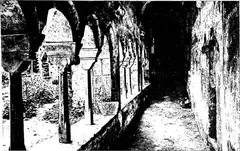
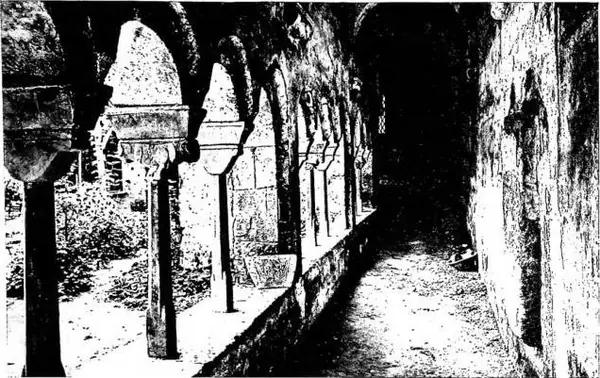
B. has numerous remains of hydraulic constructions and Roman walls and an important group of medieval monuments, among which: the Swabian-Aragonese castle, the church of St. Mary of Casale, in Romanesque style, with a baldachin portal and, in the interior, frescoes by Rinaldo da Taranto; the church of St. Benedict, in a mixed Byzantine and Gothic style, the church or Rotunda of St. John, now an archaeological museum, the Cathedral dedicated to St. Theodore, restored after the earthquake of 1743. Christian epigraphy is limited to a few tomb stones of a Christian necropolis.
Among the oldest and most important abbeys are St. Andrew, belonging to the Benedictine Order, and St. Mary (Benedictine nuns), founded in 1090 by Count Geoffrey and his wife.
The present diocese, with 15 communes in the province of B. and one (Locorotondo) in the province of Bari, has an area of 1103 sq. km. and a population of 188,000 inhabitants, of whom 187,000 are Catholics. The parishes number 33, with 126 diocesan priests and 26 regulars (1948).
Bibliography8 works
Noemi Crostarosa Scipioni
ART
While in the countryside of Brindisi the Basilians were hollowing out crypts and painting them with frescoes, the Benedictine Order was building the church of St. Benedict in 1080.
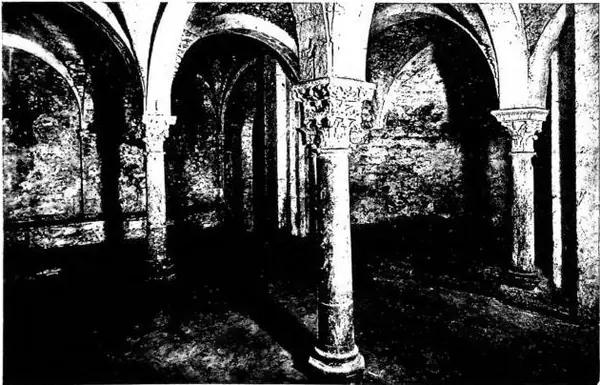
Perhaps older is the round temple of St. John at the Sepulchre, now used as a civic museum. From the 13th century is the church of the Crucifix, with a single-pointed facade adorned with small arches and a large rose window with an archivolte; inside are two wooden sculptures: the Crucifix, which legend says was brought from Jerusalem by a Venetian gentleman, and a Madonna and Child. Of great architectural interest is the church of the Trinity which stands above the crypt of St. Lucia; this crypt, divided into three small naves by small columns with acanthus-leaf capitals, is adorned with 12th-century frescoes, among which a St. Nicholas blessing is notable. From 1322 is the church of St. Paul, with a single nave and a Baroque interior. In the early 14th century Philip of Anjou and his wife Catherine of Constantinople founded the church of St. Mary of the Casale. The single-pointed facade, divided by round pilasters and decorated at the top with small arches, has a rich two-tone decoration and geometric designs that are a characteristic element of the medieval monuments of Brindisi. Along the sides run horizontal bands of light and gray carparo stone. Inside, moreover, in the form of a Latin cross, there is a single nave with a transept and a rectangular apse; a recent restoration (1926) reopened the ogival single-lancet windows and the minor portals that had been walled up in the Baroque remodeling of the 18th century. The frescoes were brought to light in 1911. On the counter-facade wall the Last Judgment is depicted. It is a still Byzantine-style painting of the 14th century signed by a Rinaldo da Taranto. In 1619 Duke Maximilian of Bavaria had the church of St. Mary of the Angels built on the site of the birthplace of St. Lawrence of Brindisi, of a sober Baroque style also in its interior. The ancient Cathedral, of which some fragments remain along with two epigraphs commemorating the founding bishop Ballardo and Roger II, was rebuilt together with its bell tower at the end of the 18th century. In it are preserved a very beautiful 16th-century choir carved in walnut and the antependium of the high altar, embossed in silver, from 1704. - See Pl. VIII.
Bibliography5 works
Maria Luceri