
PIETRO CANISIO, saint, Doctor of the Church. — Born at Nijmegen (the Netherlands) on 8 May 1521, died at Freiburg on 21 December 1597. The son of the burgomaster Jakob Kanis, P. was sent to Cologne at the age of fifteen to study law. Having obtained the degree of bachelor of arts and a doctorate in philosophy (1540), he devoted himself to theology and in 1543 entered the Society of Jesus, the first among the Germans to do so, after making the spiritual exercises under the guidance of b. Fabro at Mainz. In 1546 he was ordained a priest. In the meantime he had published the works of s. Cyril of Alexandria (1546), followed by those of s. Leo the Great (1547). From 1547 to 1580 C. held offices and undertook important and fruitful missions and legations for the strengthening of the Catholic Church, which was under attack from the Protestant revolution. Having taken part as theologian to the bishop of Augsburg in the Council of Trent in 1547, he remained there until its suspension and transfer to Bologna, then going to Rome, where he received from s. Ignatius his final formation in the spirit.
He was in Messina for the foundation of that University (1549), and was recalled from there at the request of Paul III, who, acceding to the desire of Duke William IV of Bavaria, had decided that the Jesuits should assume the teaching of theology at the University of Ingolstadt. Before leaving, C. made his solemn religious profession in Rome (4 September 1549). At the University of Bologna he obtained his doctorate in theology. On arriving in Germany, he found himself involved in the most pressing issues of the age, carrying out for many years a varied activity as preacher, catechist, writer, diplomat, mediator, and papal delegate. On 26 November 1549 he began his lectures on the Sacraments. On 18 October 1550 he was unanimously elected rector of the University of Ingolstadt. In 1552 he moved to Vienna. The condition of the Church in Austria was even more grievous than in Bavaria. Discipline had declined among the clergy and in the monasteries, while the nobility imposed apostate pastors on the population. Soon C., together with his companions, brought about a profound change in this state of affairs. Meanwhile, invited to contribute to the foundation of the German College, which s. Ignatius had conceived in Rome, C. sent it its first twenty-two young men in April 1544. In 1556 the Saint went to Bohemia and founded in Prague the Jesuit college and a house for poor students. Having become provincial of Upper Germany in the following years, he founded colleges at Munich (1559), Innsbruck (1562), Dillingen (1563), and Würzburg (1567). He was no less tireless in the ministry of the word. During the four years he lived in Vienna, he taught not only from the university chair but also from the pulpit. More than 260 parishes in Lower Austria lacked a pastor; the Saint sought to make up for this deficiency and during Lent in 1553 he travelled on the ice, preaching from one church to another. In 1558 he was in Augsburg, with immense success in conversions to the faith and many vocations among the young, and at that time received a laudatory brief from Pius IV. In 1563 he returned there and delivered approximately 240 sermons in twenty-one months. On 20 June 1571, after thirteen years, he was relieved of the office of provincial and assigned to Innsbruck as permanent court preacher. More than 100 sermons that he delivered there up to 1573 survive in manuscript. C.’s apostolate as an orator was considerable; he travelled through Bavaria, Fran-
(caption from W. Schaman, Das wahre Gesicht der Heiligen, Munich 1561, p. 189) PIETRO CANISIO, saint, Doctor of the Church — Engraving by D. Custos.
conia, Alsace, the Rhineland, Westphalia, Bohemia, Austria, Switzerland, Belgium, the Netherlands, and Italy, delivering approximately 2,000 sermons there. Twice he appeared before Charles V to prevent the archbishop of Cologne, Hermann of Wied, from drawing the faithful toward Protestantism. In 1556 he was among the theologians summoned by Emperor Ferdinand to the Diet of Regensburg to settle the religious dissensions, and in 1557 and 1559 he was at Worms and Augsburg. When the Council of Trent reopened in 1562, he was recalled there by Cardinal Hosius; in 1566
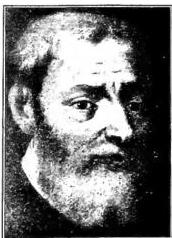
PIETRO FOURIER, saint — Portrait — Villesur-Illon (Vosges), Castle.
he went to Augsburg with Cardinal Commendone, legate of Pius V, and in 1576, by order of Gregory XIII, accompanied the legate Morone to the Diet of Regensburg. Much was owed to him if the outcome of those negotiations was favorable. Pius V chose him as adviser on important matters and decided to make him a cardinal. But the Saint’s death prevented this. C. spent his final years in Switzerland (1580–97) and founded the College of St. Michael at Freiburg. Struck in 1591 by a severe attack that deprived him of the free use of his limbs, he lived increasingly withdrawn from the world. Pius XI canonized him on 21 May 1925, also proclaiming him a Doctor of the universal Church. Feast day: 27 April.
Of the thirty-eight works he wrote, the most widely circulated is the Catechism (1555) in Latin, in three different versions: Summa doctrinae christianae (1555), for educated persons. In 211 questions and answers (later 222) it sets forth the whole of Catholic doctrine, with precision and clarity, emphasizing the Catholic truths and practices that were most opposed and attacked. In 1566 Emperor Ferdinand imposed it throughout all his domains, and Philip II did likewise in the Netherlands. It was soon translated into all the languages of the Catholic world and adopted in very many dioceses; Cathechismus parvus catholicorum (1558), for students, with 122 questions and answers; Cathechismus minor (1556), for children and the people, in 59 questions and answers. At the author’s death the editions had risen to more than 200, and translations had been made into twelve languages. In 1571 the first volume of his refutations of the Magdeburg Centuries appeared: Commentaria de verbi Dei corruptelis I. De Johanne Baptista (Dillingen 1571); then II. De Maria virgine incomparabili (Ingolstadt 1577), in five books, which won the acclaim of the learned men of the time. Among the minor works should be mentioned: Notae in evangelicas lectiones, 2 vols., 1591–93, his prayer book for students, and the first printing of the Litany of Loreto (Dillingen 1558).
Among the foundations and works established in honor of the Saint, Innsbruck (v.); and the Canisiuswerk, an Austrian society for the cultural formation of priests and the promotion of vocations, founded in 1918 by Joseph Moser, with its headquarters in Vienna and its own journal « Volkseele », are important.