
INSTITUTE OF THE BLESSED VIRGIN MARY (ENGLISH LADIES). — Founded at St-Omer (Belgium) in 1609 WARD, MARY (v.), both for the education of English girls of the nobility, who had emigrated or were subsequently destined to emigrate in order to pursue their formation in safety from persecution, and for carrying out missionary activity in their homeland against the «Reformation». To achieve this purpose, it was required that the I. should have a character and a system of life different from those of the religious communities already in existence. Ward, following the principles laid down in the Constitutions and methods of s. Ignatius, desired: 1) exemption from enclosure; 2) a Superior General for the entire I., who would depend solely on the Holy See and neither on the Bishops nor on any religious Order; 3) the division of the members into two grades: the teaching Religious and the coadjutrix Sisters. Such initiatives took on, for those times, a character of bold innovation and were the cause of many hardships and contradictions.
Paul V granted (1616) benevolent protection, strongly recommending the institution to the bishop of St-Omer; Gregory XV in 1623 gave Ward permission to open a house in Rome with public schools and free classes for the poor. Meanwhile the I. began to prosper, with new houses in Liège, Cologne, Trier, Naples, Vienna, Pressburg; but opposition grew more bitter, both because of the aforementioned no-
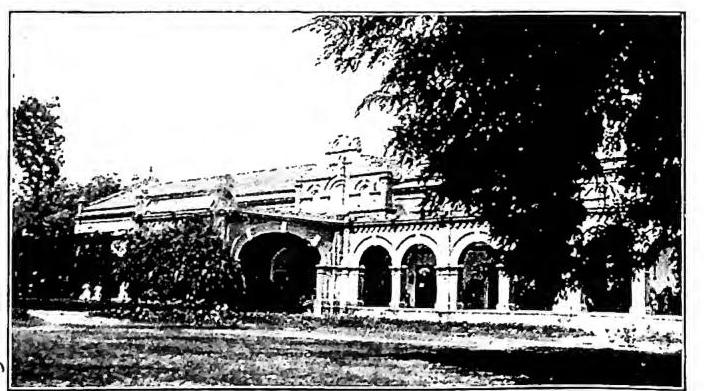
At present the I., of pontifical right, is divided into five autonomous branches with their respective superior generals: Rome, 164 houses and approximately 4,000 religious women, in Germany, England, Romania, Italy, India, Brazil, Chile, Argentina, Spain, and North America; St. Pölten, 15 houses and 804 religious women, in Austria, Hungary, and Italy; Mainz, 10 houses and 352 religious women, in Prussia and Hesse; Rathfarnham (Ireland), 68 houses and 1,456 religious women in Ireland, Gibraltar, Spain, England, India, Africa, Australia, and Mauritius; Toronto (Canada), 20 houses and 472 members.