
LORENZO da BRINDISI, Saint. — Capuchin, born at Brindisi on 22 July 1559, died at Belém near Lisbon on 22 July 1619. He entered the novitiate of the Venetian province at Verona on 18 February 1575. He preached throughout his life, served as lector of sacred sciences (1587–90), and held the offices of provincial minister of Tuscany (1590–92), of the Veneto (1594–96), and of Liguria (1613–16). He was commissary general in Bohemia and Austria (1599–1602, 1606–10) and in Bavaria-Tyrol (1611–13), and served repeatedly as definitor general and as minister general (1602–1605). Pius VI declared him Blessed on 23 May 1873; he was canonized by Leo XIII on 8 December 1881. His feast is celebrated on 23 July.
I. LIFE
From his youth he distinguished himself by mystical fervor and rigorous asceticism. Of quick intellect, he was eager for knowledge, especially in Scripture; yet he maintained that he had received from the Blessed Virgin a singular knowledge of the Hebrew and Aramaic languages. He constantly employed his learning in apostolic action, beginning with successful preaching immediately after his priestly ordination in 1583; his last Lenten course he delivered in Milan the year before his death (1618). Through the ministry of the word—in Italian, German, and Hebrew, adapted to various audiences of the faithful, religious, Protestants, and Jews—in Italy, Bohemia, Austria, and Germany, he widely disseminated and elucidated Catholic truth. Because of his expertise in Hebrew language and culture, from 1584, at the behest of Gregory XIII, he gave apologetic and exegetical lectures to the Jews of Rome, which he continued for three years under Clement VIII; he also engaged in controversy with them in various other Italian cities and in Prague.In 1599 he established and led in Austria-Bohemia the first band of Capuchins, requested by Archbishop Zbyněk Berka of Prague for the restoration and defense of the faith against Protestant sects. He founded convents in Vienna, Graz, and Prague, centers of his activity. At the Battle of Stuhlweissenburg (Alba Regalis) in Hungary (9–14 October 1601), where imperial forces under Emperor Rudolf II confronted the Turkish army of Mehmed III, he entered the fray with ardor, rallying the soldiers to victory, to which his leadership was largely credited. In the religious sphere of politics he championed a vigorous defense of Christian communities against Protestant encroachments. He induced the Imperial Council of Rudolf II to punish the sedition of the Lutherans of Donauwörth (1607); in the same year he confronted the Lutheran preacher Paul Leiser before the court; this episode was later recounted in the Lutheranismi Hypotyposis (3 vols.), composed in little more than a year. Later (September 1610) he clashed with another Protestant minister of the Duke of Saxony over the veneration of the Blessed Virgin. He worked successfully toward the formation of a League of Catholic states against the Protestant Union, securing, after an embassy to Madrid, the support of Philip III (1609–10). He remained in Munich at the court of Duke Maximilian of Bavaria, serving as apostolic nuncio and ambassador of the King of Spain. In the Commentariorum de rebus Austriae et Bohemiae (Rome 1610), St. Lawrence candidly recounted his own achievements in those regions and in Bavaria. Returning to Italy in 1613, he labored, among other tasks, at the behest of Paul V, to avert a war already begun between Spain and Savoy over the succession to Mantua. His final and arduous mission took him, despite grave illness, from Naples (October 1618–July 1619) to Belém (Lisbon) to Philip III, to defend the nobility and people of the Kingdom of Naples against the abuses and misconduct of the viceroy Pedro Girón, Duke of Ossuna.
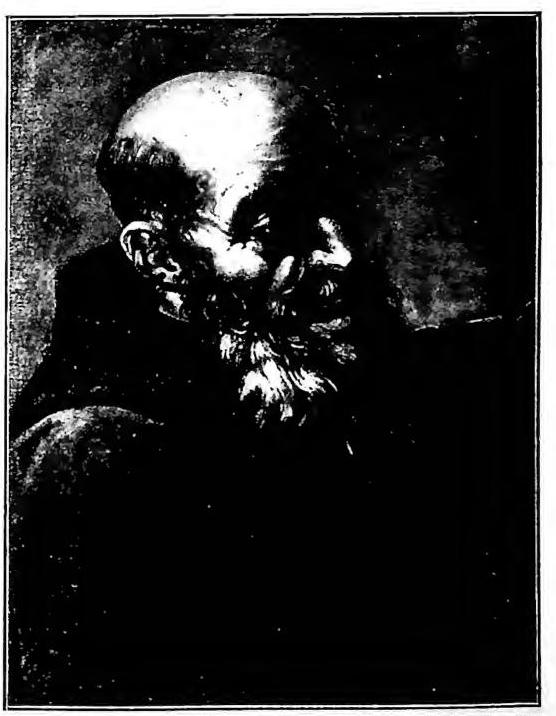
II. WRITINGS AND DOCTRINE
Among the Opera Omnia (9 vols., Padua 1928–44), the following are noteworthy: 1) Explanatio in Genesim. This work comprises commentary on only the first 11 chapters of Genesis; it demonstrates his mastery of rabbinic and patristic-scholastic literature, enabling him to discuss various opinions with authority. It expounds diverse theological and philosophical themes (e.g., original justice, free will, creation, divine omnipresence and immutability). Modern exegesis can still profit from this work, which ranks among the best of its time. 2) Oratorio. This constitutes the predominant part of his output (9 volumes out of the 13 in the complete edition) and includes the Quadragesimale primum, Quadr. secundum, Quadr. tertium, Adventus, Domenicalia, Sancto- rale, Mariale; in a total of 658 sermons and fragments, arranged in polished Latin, one finds the doctrinal rather than practical material of Laurence’s preaching, which he adroitly adapted to varying circumstances. 3) Mariale. For its theological content, this deserves a separate place among preaching collections. The first section contains 60 sermons arranged by the author according to a coherent plan; the second gathers another 24 discourses on Marian liturgical feasts. Drawing on biblical and traditional sources, St Laurence develops the principles that have since become fundamental to Mariology: the primary principle of the divine motherhood of the Blessed Virgin Mary, and secondary principles concerning her singularity in grace, privileges, glory, and worship; her fittingness, excellence, and analogy or likeness to Christ. This is regarded as one of the most complete and original treatises on Mariology. 4) Lutheranismi Hypotyposis, in three volumes, which delineates the true physiognomy—both in its essential and characteristic traits and in its historical and doctrinal genesis—of the whole of Lutheranism, considering it in the person of its founder (introductory section), in Lutheran doctrine and sect (central section), and in that of its adversary P. Leiser (complementary section).Ilarino da Milano