Machine translation of the 1948–1954 Italian original. The original text is authoritative.
REFRIGERIO. — In Greek, ἀνάφυξις means refreshment, relief, banquet. Among the Romans it is found in this sense as: refrigeratio aestate (Cicero, De senectute, 14, 46), refrigeratur (id., Pro Roscio, 6), and again: umbris aquisive refrigerari salubrius (De senect., 16, 57) and refrigerationem quaerentes (Pliny, Nat. hist., 21, 46). In the Christian sense it means relief from a place of punishment or eternal joy in paradise.
In this symbolic meaning it is already found used in the Old Testament (Ps. 65, 11; Sap. 4, 7; Ier. 6, 16); in the New Testament, the parched rich man asks Lazarus ut refrigeret linguam (Lk. 16, 24). St Paul writes: Det misericordiam Dominus Onesiphori domui; quia saepe
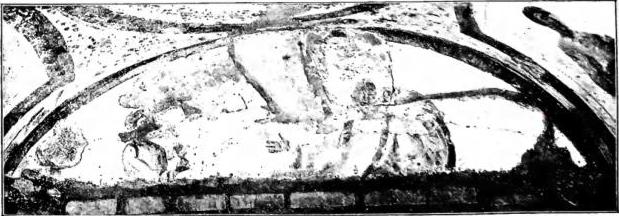
me refrigeravit (II Tim. 1, 16); Tertullian: spe aeterni refrigerii (De monogamia, 10: PL 2, 942). Cicero indicates that among the Greeks, on the very day of the funeral, the relatives of the deceased gathered for a banquet. The Etruscans and Romans continued this custom, as is attested by a large series of monuments. In an inscription from Praeneste, for example, the deceased himself asks: peto ego Syncratus a bonis (vobis) universis sodalibus ut sine bile refrigeretis (CIL, XIV, 3323). In the inscription of a Hostilius Flaminius discovered at Feltre, dated 23 August 323, a sum is left to two colleges, which memoriam eius refrigerare debebunt. In the Passio SS. Perpetuae et Felicitatis we read: quid utique non permititis nobis refrigerare... et refrigerandi cum eis? (ed. P. Franchi de' Cavalieri, in Röm. Quartalsch., 10 [1896], p. 136). Tertullian uses the expression r. several times (Adversus Marcionem, 3, 24 and 4, 34; De anima, 33 and 58; De idolatria, 13; De resurr. carnis, 17 and 43; De testimonio animae, 4); but the most notable passage is the one in which he indicates that the Christian wife prays for her deceased husband: pro anima eius orat et refrigerium interim adpostulat ei, et in prima resurrectione consortium, et offert annuis diebus dormitionis eius (De monogamia, 10: PL 2, 992). The r. is found invoked in a series of Christian inscriptions. Among the dated inscriptions, one may recall one from Pretestato of 291 (E. Josi, Le iscrizioni datate del cimitero di Pretestato, in Riv. di arch. crist., 12 [1935], p. 23, n. 2); another, now in the Lateran Museum, from the year 363 (G. B. De Rossi, Inscr. christ., I, Roma 1857, p. 88, n. 158); and one from the year 506 in the cemetery « inter duas lauros » (N. Bull. arch. crist., 24-25 [1918-19], p. 106). The following expressions are also found: in pace et in refrigerium (E. Diehl, Inscr. lat. chr. veteres, Berlino 1925-31, n. 2722); spiritus in refrigerium, in S. Agnese (ibid., n. 3407); refrigeret nos qui omnia potest, from Marseille (ibid., n. 2020); Deus Christus omnipotens refrigeret spiritum tuum, in Pretestato; huius anima refrigerat (ibid., n. 1102); bene refrigera (G. B. De Rossi, Roma sotterr., III, Roma 1877, p. 353, tav. 28, n. 22); mensum cum titulo refrigerationis, in Africa (CIL, VIII, 20780); spiritus tuus in bono refrigeret (G. B. De Rossi, Bull. arch. crist., 5 [1894], p. 145); τὸ πνεῦμα τοῦ καλῶς ἀνάφυξις in Panfilo (E. Josi, Descriz. del cimitero di Panfilo, in Riv. arch. crist., 3 [1926], p. 98, fig. 23), at Syracuse (P. Orsi, in Notizie Scavi, 1895, p. 514). And again: Domino suo Twefilo et dominae Pontianeti merentibus in refrigerio (E. Josi, Il cimitero di Panfilo, in Riv. arch. crist., 1 [1924], p. 98, fig. 52); Dom(inus) refr(igeret) spir(itum) tuum (ibid., p. 65, fig. 16). In the Museum of Palermo, on a cippus from Marsala, there is a scene of a man reclining on the «clinè» and holding a cup in his hand (5th century B.C.). In the cemetery « inter duas lauros » a man seated on a cathedra is painted extending his hand toward the cup offered by a woman (G. P. Kirsch, Pitture ined. di un arcosolio del cimit. dei SS. Pietro e Marcellino, in Riv. di arch. crist., 7 [1930], p. 38, fig. 4). This is the funeral banquet in which the deceased participates, not in the real sense, but in the symbolic sense, that is, by participating in the heavenly banquet. In the same cemetery a deceased woman is also seen in the act of grasping the poculum; her name is written « Binkentia » and not « Quintia » (Wilpert, Pitture, tav. 107, 1). The same subject is repeated on a marble slab from S. Lorenzo al Verano and on another now in Anagni (Th. Klauser, Die Kathedra im Totenhult der heidnisch. und christl. Antike, Münster 1927, tav. 22, 1 and 2). The cathedrae carved into the tufa discovered in the Cimitero maggiore of Via Nomentana, in Callisto, in Panfilo, and « inter duas lauros » were not intended for the living, but for the dead, who were imagined to be present at the funeral banquet (Th. Klauser, loc. cit.). Such a custom must also have been in force among the people of Israel, since we read: Panem tuum et vinum tuum super sepulturam tusti constituit et noli ex eo manducare et bibere cum peccatoribus (Tob. 4, 18). In the syncretistic hypogeum of the Via Appia, where the priest Sabazius adorned the tomb of his wife Vibia, she is first seen on trial before Pluto (Dispater) and Aeracura; then she is introduced (inductio Vibies) by the angelus bonus to participate in the banquet of the blessed bonorum iudicio iudicati (Wilpert, Pitture, pp. 362–63, tav.
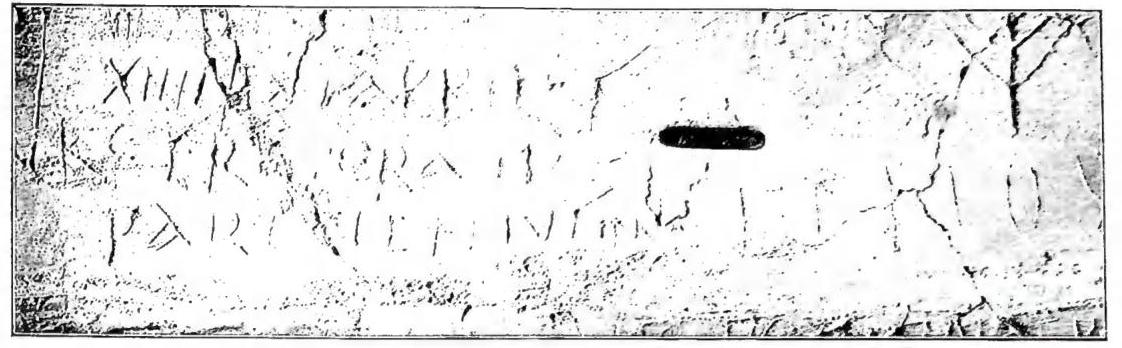
REFRIGERIO — Graffito of the tricia attesting to the r. performed by a certain Parthenius (2nd half of the 3rd century) — Rome, cemetery of S. Sebastiano.
132). Tertullian states: inopes quousque refrigerio isto invamus (Apolog., 39), as does Paolino di Nola: refrigerare inopem de copia sua (Epist., 25 in CSEL, 16, p. 232). In the Actus Petri cum Simone, too, it is observed that after Paolo’s departure for Spain non fuisse neminem de fratribus ad quem refrigerare (ed. R. A. Lipsus, I, Lipsia 1891, pp. 51, 27), and mention is made of a widow quae ad Marcellum refrigerabat (ibid., pp. 52, 31). In the oratory « ad sanctorum coctum », perhaps earlier than 325, after the celebration of the divine Sacrifice, a modest meal for the poor and the unfortunate is mentioned (PG 20, 1272). S. Agostino denies that the agapes were a continuation of pagan rites, because agapes enim nostrae pauperes pascunt, sive frugibus, sive carnibus (Contra Faustum, 20, 21: PL 42, 284). Tertullian explains the meaning of the term « agape »: ἀγάπη, id quod dilectio penes Graecos est; quantiscumque sumptibus constet, inecrum est pietatis facere sumptum (Apolog., 39). The rite of the refrigerium was therefore a funerary rite, and as such was performed on the occasion of a death or an anniversary; it was celebrated all the more for the honoring of martyrs at their tombs. Commodianus urges: si refrigerare cupis animam, ad martyres i (Instructiones, II, Carm. 17, 19). Particularly characteristic in this regard is the letter of Paolino di Nola, in which the bishop relates that at the banquet offered by Pammachius on the occasion of the death of his wife Paolina at S. Pietro, the basilica, with its five naves, was insufficient to contain the guests, who spread out outside the basilica. But the practice is ancient, as attested by the graffiti discovered at S. Sebastiano in the tricia, an open-air area with a pergola terrace, built in a funerary setting from the age of Vespasian, in a place intended for public burial, above several family monuments, one of which had certainly passed into Christian ownership. The graffiti demonstrate that pilgrims used to come to this tricia, having journeyed from afar to
perform the rite of the r. and fulfill a vow of theirs (votum is promisit refrigerium) in honor of Pietro and Paolo or of Paolo and Pietro, indeed at the side of Pietro and Paolo (at).
The hundreds of invocations, all without exception addressed in Greek or Latin to the two Apostles, were written between the second half of the 3rd century and the beginning of the 4th century and represent the earliest group of pious Roman pilgrims. Among the most significant graffiti are: Dalmatius votum is promisit refrigerium; At Paulo et Petro refrigeravimus; Petro et Paulo Tomius Coelius refrigerium feci; XIII Kal. apriles refrigeravi Parthenius in Deo et nos in Deo omnes (P. Styger, Il sepolcro apostol. dell'Appia, in Dissertaz. della Pont. accad. rom. di arch., 2nd series, 13 [1918], pp. 33–36). S. Agostino explains that the Church permitted the celebration of banquets in honor of the martyrs in order to divert converts from the popular banquets customarily held during pagan festivals; vel non simili sacrilegio, quamvis simili luxu celebrarentur (Ep., 29, 11: PL 33, 118). Indeed, s. Gregorio Taumaturgo instituted such banquets to prevent the Christians of Neocesarea from attending pagan festivals (Gregorio Nisseno, De vita s. Gregorii Thaumaturgi: PG 46, 954). Paolino di Nola speaks of pilgrims who spent the night singing sacred hymns and drinking wine beside the tomb of s. Felice (Carmen 27, Natale IX de S. Felice: PL 61, 661). S. Ambrogio recalls illi qui calices ad sepulcrum martyrum deferunt atque illic ad vesperam bibunt et aliter exaudiri posse non credunt (De Elia et ieiunio, 17: PL 14, 754). And Zenone, bishop of Verona in the 4th century, speaks of banquets held beside the dead and at the tombs of the martyrs (Tractat., XV, 1: PL 11, 366). Fiorentino. Fortunato and Felice in Priscilla wrote in 375 ad calicem benimus (G. B. De Rossi, in Bull. arch. crist., 5th series, 1 [1890], p. 79). An inscription from Dougga (Tunisia) recalls the symposium held by Mammario, Granio, and Elpideforo at Thugga beside the tomb of sancti ac beatissimi martyres
REFRIGERIO - Uomo assiso in cattedra che stende la mano verso un calice offerto da una donna. Affresco del sec. IV - Roma, cimitero « inter duas lauros » (SS. Pietro e Marcellino).
(M. Monceaux, L'inscription des martyrs de Dougga et les bouquets des martyrs en Afrique, in Bull. arch. du comité des travaux histor., 1908, pp. 87-104). I banchetti per i defunti e per onorare i martiri degenerarono tanto che s. Ambrogio li aveva proibiti quia illa quasi parentalia superstitioni gentilium esseum similima (s. Agostino, Confess., VI, 2) e s. Agostino avverte che in honorem beatissimorum martyrum non solum per dies solemnes... sed etiam quotidie celebrentur (Ep., 12, 3; Pl. 33, 91). S. Gregorio Magno cercò pure di adattarsi per gli Angli convertiti (Ep. 76 ad Melitum; Pl. 77, 1215). Nell'opuscolo De duplici martyrio scritto nel sec. IV si legge: an non videmus ad martyrum memorias christianum a christiano cogi ad ebritatem? (Pl. 4, 895). S. Agostino nella sua lettera 22 parla di in cymiteris ebratates et luxuriosa convivia, non solum honores martyrum a carnali et imperire plebe credi soleni, sed etiam solatia mortuorum (Pl. 33, 92). Nella lettera scritta nel 392 da Agostino, ancora semplice presbitero, ad Aurelio vescovo di Tagaste si legge che quoniam de basilica beati apostoli Petri, quotidianae vinolentiae proferebantur exempla, dixi Aymno audisse non saepe esse prohibitum (Ep., 20, 10; Pl. 33, 119).
BIBL.: A. Audollent, Refrigerare, in Mélang. offerts à L. Havet, Parigi 1909, pp. 595-99; id., Iterum refrigerare, in Strena Bulliciana, Zagabria 1924, p. 285; P. De Labriolle, Refrigerium, in Bull. d'anc. littér. et d'archiol. chrét., 2 (1912), p. 219; F. Grossi Gondi, Il «refrigerium» celebrato in onore dei ss. Apostoli Pietro e Paolo nel sec. IV ad catacumbas, in Röm. Quartalschr., 29 (1915), pp. 221-49; id., Il rito funebre del «refrigerium» al sepolcro apostol. dell'Appia, in Dissertaz. della Pontif. occad. rom. di archeol., 2ª serie, 14 (1920), pp. 261-77; A. M. Schneider, Refrigerium, Friburgo in Br. 1928; G. Brusin, Epicrafe aquilei con «refrigerium», in Miscellanea P. Paschini, I, Roma 1948, pp. 69-76.
Cite this article
“REFRIGERIO.” Enciclopedia Cattolica, vol. X (1953), p. 376. Azione Romana digital edition, https://azioneromana.com/article/refrigerio.