
BIBLICAL ARCHAEOLOGY. - The science of biblical antiquities, that is, of the civilization of the Hebrew people during the time of the Old and New Testaments.
CONTENTS:
I. Notions and sources
II. History of B. A. - III. Results and value.I. NOTIONS AND SOURCES
1. Understood in the sense of the given definition, biblical archaeology is nearly equivalent to the history of ancient Israelite-Judaic culture ("Kulturgeschichte"). This idea is reflected in nearly all Catholic works on biblical archaeology, which expound the profane (private and public life) and religious (sacred places, sacred persons, worship, feasts) antiquities of the Israelites, drawing primarily from biblical and related literary sources, and illustrating them by means of material remains ("monuments") either still visible or recovered through excavations.2. In the narrower sense, used by modern scholars, biblical archaeology is the science of biblical antiquities insofar as these are revealed by ancient Palestinian "monuments."
By "monuments" here are meant all material remains of Israelite-Judaic culture: buildings and other constructions, works of art (statues, paintings, mosaics), inscriptions, utensils of practical life (clothing, tools, ornaments, vessels, especially ceramic ware), tombs, coins. The monuments of Palestine itself from the Israelite-Judaic period are primarily in question; but since this region was in close cultural contact with neighboring countries (Egypt, Phoenicia, Mesopotamia), biblical archaeology must also take into account research conducted in those regions, as well as the pre-Israelite culture of Palestine itself. By investigating and analyzing all these elements, biblical archaeology provides a new source for the description of biblical life and civilization, which, being independent of Sacred Scripture, constitutes a valuable aid to the exegesis of the sacred books and to biblical history.
II. HISTORY OF BIBLICAL ARCHAEOLOGY – 1. Having suffered repeated and severe devastations throughout its history, Palestine has seen nearly all the monuments of Israelite-Judaic culture disappear. Therefore, before the commencement of scientific excavations, the description of ancient Palestinian culture could only be based on literary sources from authors who knew it from firsthand experience, before it was definitively destroyed by the Arab invasion (636). These sources include, besides Sacred Scripture, the commentaries of the Mišnah and the Talmūd, the works of Philo (ca. 25 B.C. – 42 A.D.) and Flavius Josephus (ca. 37–103 A.D.), Eusebius’ Onomasticon (ca. 325), translated into Latin and completed by St. Jerome (ca. 390), the Itineraria of pilgrims, particularly the Eurdigalense (333), the Peregrinatio Aetheriae (Silviae; ca. 394), the Anonymous (v.) Piacentino (ca. 570), the Breviarius de Hierosolyma (5th or 6th century), Adamnanus (Arculfus, v.), De locis sanctis (ca. 670), and finally the works of St. Jerome, especially the Epistula ad Marcellam (ep. 46) and the Epitaphium s. Paulae (ep. 108). However, apart from Sacred Scripture, these works illustrate almost exclusively the final cultural period (Roman-Byzantine) of Palestine; for earlier periods, the Bible remained, until the era of excavations, nearly the sole source from which the "Biblical Archaeologies" and "Biblical Dictionaries" of past centuries could draw.
The earliest works on biblical antiquities were compiled by B. Ugolini (v.) in the Thesaurus antiquitatum sacrarum, in 34 volumes (1744–69). Among Catholic works, notable examples include C. Sigonio, De Republica Hebraeorum (1583); B. Arias Montano, Antiquitatum Iudaicarum (1593); G. St. Menocchio, De Republica Hebraeorum (1648); among Protestants: H. Relandus, Antiquitates sacrae Veterum Hebraeorum (1708); id., Palaestina ex monumentis veteribus illustrata, in 2 volumes (1714). In the 19th century, numerous manuals were published by both Catholic (e.g., J. M. A. Scholz, D. B. Haneberg, P. J. Schegg, A. Schäfer) and Protestant authors (W. M. L. de Wette, H. Ewald, C. F. Keil, W. Nowack).
2. A new phase in biblical archaeology began with scientific excavations, which commenced in Palestine only in 1867, whereas in Egypt and Mesopotamia they had already been undertaken, with notable results, several decades earlier. After the initial attempts in Jerusalem, which yielded little promise, more solid results were achieved following the introduction in 1880 by Fl. Petrie (d. 1942) of the stratigraphic method and chronological dating through pottery. From that time onward, archaeological research was promoted at an ever-increasing pace by scientific associations established in various nations.
The principal associations that have contributed significantly to archaeological research in Palestine include: the Palestine Exploration Fund (1865), Deutscher Verein zur Erforschung Palästinas (1877), American School of Oriental Research (1900, reorganized in 1921), Deutsches Evangelisches Institut für Altertumskunde des Hl. Landes (1900), British School of Archaeology (1919–20), Oriental Institute of the University of Chicago (1919), Palestine Oriental Society (1920), Jewish Palestine Exploration Society (1920). On the Catholic side, contributions to archaeological exploration were made by: the École Biblique de Saint-Étienne of the Dominicans (1892), the Oriental Institute of the Görres Society (1908), the Pontifical Biblical Institute (1927), the Biblical School of the Flagellation College of the Franciscans and the Custody of the Holy Land, as well as various religious orders and congregations residing in Palestine, such as the Assumptionists, the White Fathers, the Fathers of the Sacred Heart of Bétharram, the Salesians, the Sisters of Our Lady of Sion, and the Dames of Nazareth. Italy was represented by an archaeological mission first directed by Giacomo Guidi and later by R. Bartoccini, which, from 1927 onward, excavated the acropolis of 'Ammān (Philadelphia).
After the 1914–18 war, excavations in Palestine expanded enormously. Gradually, nearly all the most important sites west of the Jordan and many in Transjordan were investigated.
Of particular importance for their results are the excavations at Gezer (R. A. St. Macalister, 1902–1905; 1907–1909), Megiddo (G. Schumacher, 1903–1905; Oriental Institute, 1925 onward), Jericho (E. Sellin and C. Watzinger, 1907–1909; J. Garstang, 1930–36), Samaria (G. Reisner et al., 1900–10; J. W. Crowfoot, 1931 onward), Shechem (E. Sellin, 1913–14; 1926–28; 1934), Beth Shean (Pennsylvania University Museum, 1921–33), Tell Beit Mirsim = Qirjath Sepher [?] (W. F. Albright and Kyle, 1926 onward), Tell en-Nasbeh (W. F. Badé, 1926–35), Tell el-Far'a = Saruhen [?] (Fl. Petrie, 1927–29), Tell ed-Duwer = Lachish (J. L. Starkey, 1933 onward), Et-Tell = Ai (J. L. Marquet-K. Krause, 1933–35). Research was also repeatedly conducted in the subsoil of Jerusalem, particularly on the southeastern hill (Ophel).
The investigation of Christian monuments was notably advanced by the Dominicans of Saint-Étienne in Jerusalem (L. H. Vincent, F.-M. Abel). Significant excavations in Transjordan were carried out at Jerash (from 1928 onward) and at Teleilat Ghassul (Pontifical Biblical Institute, from 1929 onward).
3. The methodology of Palestinian excavations has been refined, particularly with regard to more careful observation of stratigraphy and, consequently, relative chronology, the precise description of discovered objects, the technique of preserving them (through photography, models, and casts, as well as their arrangement in dedicated museums), and their interpretation by comparing different excavations with one another and with analogous extra-Palestinian excavations. Finally, improvements have been made in the keeping of excavation journals and the reporting of findings in publications. As a result, the outcomes of excavations conducted with such rigorous methods can be accepted with confidence and serve as a basis for chronological and historical discussions.
BIBL.:
For general works: H. Vincent, Canaan d'après l'exploration récente, Paris 1907; id., Jérusalem antique, Paris 1912–14; F.-M. Abel, Géographie de la Palestine, 2 voll., Paris 1933–38; W. F. Albright, The Archaeology of Palestine, London 1949; R. de Vaux, Les institutions de l'Ancien Testament, Paris 1958–60; for the history of excavations: G. A. Reisner, Excavations at Samaria, Cambridge 1924; J. Garstang, Joshua-Judges, London 1931; W. F. Albright, The Excavation of Tell Beit Mirsim, 3 voll., New Haven 1932–43; L. H. Vincent - F.-M. Abel, Emmaüs, Paris 1932; for methodology: W. F. Albright, The Excavation of Tell Beit Mirsim, vol. I, New Haven 1932; R. de Vaux, L'archéologie et les manuscrits de la mer Morte, London 1961; for the history of biblical archaeology: H. Gressmann, Altorientalische Texte zum Alten Testament, Leipzig 1926; A. Bea, De archaeologia biblica, Roma 1939; A. Parrot, Archéologie mésopotamienne, Paris 1946–53.
A. P.
III. RESULTS AND VALUE
1. Recent excavations first and foremost provide a concrete idea of the cultural phases undergone by Palestine and show how it fits into the general framework of human culture.Human remains found in W. el-'Amlid (F. Turville-Petre, 1925-26), in the Ṣuqbah cave near Ramleh (D. Garrod, 1928), in the caves of Carmel near 'Atlit (D. Garrod, 1928-34), and in a cave on G. Qafzeh (Mount of the Precipice) near Nazareth (R. Neuville, 1934), prove that Palestine was already inhabited by Paleolithic man (Palaeanthropus palaestinus, of the Neanderthal type). A more recent Paleolithic race has been found in various locations in Palestine. The Mesolithic, represented by the "Natufian" (found in a cave of W. Naṭūf near Lydda), is encountered in several caves. Whether one can speak of a Neolithic period in Palestine is controversial; some believe that from the Mesolithic one passes directly to the Chalcolithic (Eneolithic). The latter is found particularly at Teleilat Gassul ("Ghassulian"), in stratum VIII of Jericho, and, in a slightly more recent form, at Beisan and Megiddo. Comparison with analogous cultures in Egypt and Mesopotamia allows the Palestinian Chalcolithic to be dated to the 5th and 4th millennia, up to around 3200 B.C.
The subsequent cultural phases of the Bronze and Iron Ages, distinguished mainly by the technique and morphology of pottery, are found in many sites. The Bronze Age is divided into three periods in Palestine, chronologically determined as follows: Bronze I (Early): ca. 3200-2000; Bronze II (Middle): 2000-1600; Bronze III (Late): 1600-1200. Similarly, the Iron Age (1200-300 B.C.) is divided into: Iron I (1200-900), Iron II (900-600), Iron III or the Persian period (600-300). In the upper strata of many older cities, the Hellenistic culture (300-50 B.C.), the Roman (50 B.C.-350 A.D.), and the Byzantine (350-636) are then represented. The invasion of the Muslim Arabs (636) opens a new era that no longer concerns biblical archaeology.
The various archaeological strata also reveal foreign influences on Palestine and the succession of new populations (invasions). In the Bronze I period, the predominant ethnic element is that of the "Canaanites," who were then overwhelmed around 1900 B.C. by a new, more powerful stratum (called "Western Semites" or, commonly, "Amorites"); during the course of Bronze II, an influx of Hurrians, Arameans, and "Hyksos" is noted; in Bronze III, the Egyptian domination, re-established in Palestine after the defeat of the Hyksos, was disrupted by the invasions of nomadic peoples (Habiru), who were later succeeded by the Israelites. The beginning of Iron I (ca. 1200) is characterized by a notable cultural decline, undoubtedly due to the occupation of the country by the Israelites, who only slowly assimilated the cultural elements found in their new homeland and later underwent new influences, especially from Phoenicia (architecture), Egypt (artifacts of art, ivory, pottery), and, later, from the conquering nations (Neo-Babylonians, Persians, Hellenized Syrians, Romans).
2. This overview demonstrates the importance of recent archaeological research, first and foremost for the history of the people of Israel and their ancestors. The biblical narratives fit without difficulty into the general cultural and ethnic framework now known through excavations; only in a few cases do doubts and difficulties remain (e.g., regarding the date of the fall of Canaanite Jericho and the capture of Ai ['Aj]; cf. Jos. 8). Recent archaeological discoveries thus provide an imposing confirmation of the truth of biblical history considered in its general outlines. As for individual historical facts, excavations prove their possibility more than their reality, since inscriptions that would allow the exact dating of discovered monuments are almost completely lacking in Palestine to date. Nevertheless, a certain number of biblical facts have also been confirmed by excavations: for example, the excavations at Tell el-Heleifi (v. ASIONGABER) near the Gulf of 'Aqabah show Solomon's efforts to establish a commercial port (I Reg. 9, 26); the ivory objects found in Samaria confirm I Reg. 22, 39 and Am. 3, 15; 6, 4; the letters of Lachish (18 documents, mostly fragments, written on potsherds) illustrate some narratives from the book of Jeremiah. The archaeological confirmation of such secondary elements is particularly important for the reliability of Israelite historiography. All in all, recent discoveries have effectively contributed to overcoming the historical skepticism professed by modern rationalistic criticism.
Exegesis also greatly benefits from excavations. Since a large part of the most important places mentioned in the Bible are now known not only in general but in the various periods of their history through excavations, the interpretation of the relevant biblical texts is facilitated or sometimes corrected. The numerous objects and tools of daily life brought to light by excavations concretely illustrate what the Bible says about the customs, practices, trades, utensils, and writing of the Israelites, so that treatises on biblical archaeology are enriched with valuable material independent of literary sources, and thus of the highest confirmatory value. For the history of the Israelite religion, excavations provide rich material that illustrates the nature and extent of foreign cults practiced in Palestine, the idolatrous and superstitious practices of the Israelites themselves, and the religious prescriptions of the Mosaic law.
SUMMARY:
I. Concept
II. Object, method, divisions
III. Importance and utility
IV. Sources, aids, criticism
V. Topography
VI. Specific questions and approaches.I. CONCEPT
The word was frequently used from Thucydides onward. Dionysius of Halicarnassus published in 7 B.C. the Ρωμαϊκή Ἀρχαιολογία, that is, the ancient history of Rome, and in the same sense Josephus Flavius titled his work on the ancient history of the Jews Ἰουδαϊκή Ἀρχαιολογία. The Latins used antiquitates instead, and thus Varro’s Antiquitates rerum humanarum et divinarum was a history of sacred and profane antiquity. Conversely, antiquarius for the Latins was synonymous with librarius (a lover and copyist of old books). Throughout the Renaissance and Baroque periods, only the Latin terms antiquitates and antiquarius were in use to designate the study of antiquity, but with a very broad meaning, increasingly including the science of institutions and monuments. However, it seems that Jacob Spon, as early as 1685 (preface to Miscellanea eruditae antiquitatis), had the precise idea of a special science which he called archaeographia and defined as « declaratio sive notitia antiquorum monumentorum, quibus veteres sui temporis religionem, historiam, politicam aliasque tum artes tum scientias propagare posterisque tradere studuerunt ». He also provided a division into various branches, which, however, did not gain traction.In the 17th century, the use of the Greek term archaeologia was revived in England (Archaeologiae Atticae by Rous in 1637), and in 1770 the Society of Antiquaries of London began publishing the periodical Archaeologia, while in 1799 the first Handbuch der Archaeologie by J. F. Siebenkees appeared in Nuremberg. However, until now, the term archaeology retained the universal meaning of the study of all antiquity, both literary and monumental.
With the reconstitution of the Pontifical Roman Academy of Archaeology by Pius VII in 1816 (previously called the Roman Academy of Antiquities and History), the term archaeology effectively designated the study of monuments in opposition to that of written documents. This concept was later theoretically affirmed by Gerhardt in his Grundzüge der Archaeologie (Principles of Archaeology) in 1833.
He defined archaeology as « that half of the universal science of classical antiquity which is based on monuments », in opposition to the other half, based on documents of a literary nature. According to this definition, Christian archaeology will be « the science of Christian antiquity according to non-literary monuments ».
It is worth noting briefly that today archaeology is sometimes confused with the « history of ancient art », whereas the object of art history is the works of man insofar as they present artistic qualities. In Germany, the term « archaeology of art history » has been in use since the 18th century, meaning the study of material objects (realia) that must be discussed in art history.
II. SUBJECT, METHOD, DIVISIONS
The material subject consists of all those ancient artifacts which can reveal something about Christian antiquity. These may also be pagan (i.e., the work of non-Christians), Aricanda (v.) and the Arch of Constantine; a fortiori, they may be Judaic, syncretistic, or simply heretical. Often they are written monuments; archeology excludes from its field only those written on paper, parchment, and papyrus, as well as those with a markedly literary character as such (such as the res gestae of Augustus inscribed on the temple of Ancyra and the epistle of St. Athanasius ad monachos preserved in painted form in an Egyptian hermitage), leaving them as the proper subject of philology. The formal subject of archeology is the study of these monuments insofar as they can reveal something about the life and culture of the ancient Christians qua Christians. The study of monuments, even Christian ones, that have nothing specifically Christian about them (such as the basilica and baths of Constantine) or that illustrate the life of the ancients in general and not precisely as Christians belongs instead to pagan archeology in general.Literary documents often enter indirectly into the study of archeology insofar as they provide information about monuments or aid in their correct understanding. In this sense, they can be considered auxiliary sources of archeology.
The direct or principal sources are primarily places of worship, funerary monuments, many objects of domestic use, and those of liturgical use. Their topography, architecture, iconography, epigraphy, and use are studied in particular.
The method for the study of Christian archeology is that proper to historical and philological sciences. It begins with the search for monuments through topographical studies and excavation practice; the study proper concerns the authenticity of the monument, that is, its ancient origin, its original purpose, its aim, meaning, and age, and finally its preservation or possible restoration. This applies both to individual monuments and to entire classes or complexes of monuments. Proper aids are bibliographies and archeological inventories.
Various divisions exist. Spon, already cited, recognizing the great freedom in this field, stated: « Mihi praecipue octo statuendae scientiae videntur, iuxta totidem subiecta, nummos (numismatographia), lapides (epigrammatographia), aedificia (architectonographia), statuas (iconographia statuas picturas musivaque opera describit), toremmata (toremmatographia), manuscripta (bibliographia) instrumentaque omnis generis (angeographia) ».
Today, the most common divisions are geographical (Eastern and Western; of India, Africa, Gaul, etc.) and intrinsic, according to the various branches into which this science is subdivided for the convenience of study (architecture, sculpture, painting, epigraphy, topography, glyptics, numismatics, etc.).
Much debated is the question of the chronological limits of our science. Its first masters and founders (De Rossi, Garrucci, Kraus), followed by many others, judged that it should end with the 6th century. Le Blant extended it by a century in his collection of Christian inscriptions of Gaul; others propose the year 726, when the iconoclastic struggle broke out. In our opinion, although the problem merits a somewhat different solution according to the various branches of Christian archeology, the limitation proposed by De Rossi should nevertheless be considered more accurate. With the death of Gregory the Great (604), the ancient age truly ends in the West in its cultural and artistic manifestations, and in the East, the last impulses of the powerful Justinianic renaissance fade, while the Arab invasion soon marks a decisive turning point.
III. IMPORTANCE AND UTILITY
The importance of Christian archaeology within the framework of sacred studies, particularly, emerges from what has been said above. The role of monuments in understanding antiquity is often decisive, especially regarding private life and the evolution of a people’s artistic qualities. Even institutions and major public events frequently receive striking illumination or at least crucial clarifications, particularly topographical ones, from them. For these general reasons, Christian archaeology has always been held in the highest esteem by ecclesiastical authorities and, especially since the end of the 18th century, repeatedly praised, encouraged, and effectively promoted. One need only consider the establishment of a museum of Christian archaeology (1757), the aforementioned Pontifical Roman Academy of Archaeology, the Pontifical Commission of Sacred Archaeology (1852)—the official body for excavation and preservation of ancient monuments—and, in particular, the grand patronage undertaken by Pius IX in support of De Rossi’s excavation and study of Rome’s great cemeteries. These great traditions were revived by Pius XI, who, with generous resources and the motu proprio of December 11, 1925, founded Christian Archaeology (v.) and renewed the life of the two older pontifical institutions, the Academy and the Commission.This keen interest in Christian archaeology is explained in particular because it was regarded as a science of great apologetic value. The monuments of Christian antiquity, as Pius XI states in the cited motu proprio, « are witnesses as venerable as they are authentic of the faith and religious life of antiquity, and at the same time primary sources for the study of Christian institutions and culture from the earliest times, closest to the apostolic age ». However, one must not entertain the illusion that such monuments can provide a complete apology for all the Church’s dogmas. Although, since the second half of the 18th century, Christian archaeology has often been studied especially in relation to a theology based on monuments, and various works have been attempted in that direction, it is certain that neither did the early Christians intend, nor were they able, to express in inscriptions, for example, or in paintings and sculptures, the majority of dogmas, nor is it possible to find them in the monuments that have come down to us. They testify only to those truths that it was natural to manifest in monuments, most of which were funerary: seeking others in them is mostly very risky or at least devoid of certain results.
One must never forget that the true sources of Christian doctrine are quite different: the living ecclesiastical magisterium, Scripture, and the writings of the Fathers. Monuments, more than a locus theologicus, generally serve as an illustration of the articles of faith. Nevertheless, it cannot be denied that Christian archaeology can provide proper proofs for certain Catholic theses, such as the judgment and retribution immediately after death, the communion of saints, the validity of prayers of the living for the dead and vice versa, the existence of purgatory, the cult of the holy martyrs, the coming of St. Peter to Rome and his preeminent position in the Church, and the ancient use of certain Sacraments such as Baptism and the Eucharist. However, in this matter, it is necessary to weigh expressions carefully, since in the general religious syncretism of the pre-Nicene era, one often risks taking as specifically Christian dogmatic terminology what also belongs to Stoic, Neoplatonic, or mystery religious currents. In every name, in every epithet, in every inscription that reveals a noble religious sentiment, one wishes to see the Christian monument; in every tomb furnished with some singular sign, one wishes to discern the sepulcher of a martyr. Christian symbolism, like the exegesis of certain theologians and preachers, becomes the art of extracting from any monument whatever one desires. Since often more attention is paid to external resonances than to the true meaning of a monument, one contents oneself with reading probabilities and seems to seek more to accumulate than to discern, more to multiply so-called proofs than to weigh them. This defect, highly visible in older archaeological apologetics, is not absent even in the most modern treatments of that kind.
IV. SOURCES, AIDS, CRITICISM
The sources of archaeological studies would primarily be the monuments themselves; however, these are rather considered as the object of study, and the term "sources" refers to those ancient literary documents that assist in their investigation. Such are the Acts of the Martyrs, especially the Roman ones, which provide much information, generally reliable, about their tombs and sanctuaries; the same can be said of calendars and various related documents that flowed into the vast compilation of the Martyrologium Hieronymianum, often furnished with useful topographical indications; something can also be gleaned from liturgical books such as sacramentaries and lectionaries. Most important sources are the writings of the Fathers, who often describe certain churches and their decoration (e.g., Eusebius for Constantinian buildings, Prudentius for many Spanish and Roman monuments, Paulinus for Nola, etc.). Particularly, the official biography of the Popes (Liber Pontificalis) is an inexhaustible source of information on the churches and cemeteries of Rome.Those who, beginning in the 4th century, went on pilgrimage to the celebrated sanctuaries of Christendom, especially in the Holy Land and Rome, left us curious notes on what they had observed there. From the 6th century onward, alongside these so-called itineraries, collections of monumental and hagiographic inscriptions were also formed in the same manner, which, at least in part, copied and confused among themselves in various ways, have reached us together with the former.
In the 11th century, the famous dispute over precedence in dignity between the Vatican and Lateran basilicas gave rise to various precious descriptions of them, such as the Liber de sanctis sanctorum, the Liber de ecclesia Lateranensi, and the description of St. Peter’s by Pietro di Manlio, in which we find the first index of the catacombs of Rome in nineteen entries. To the same century belong the various editions
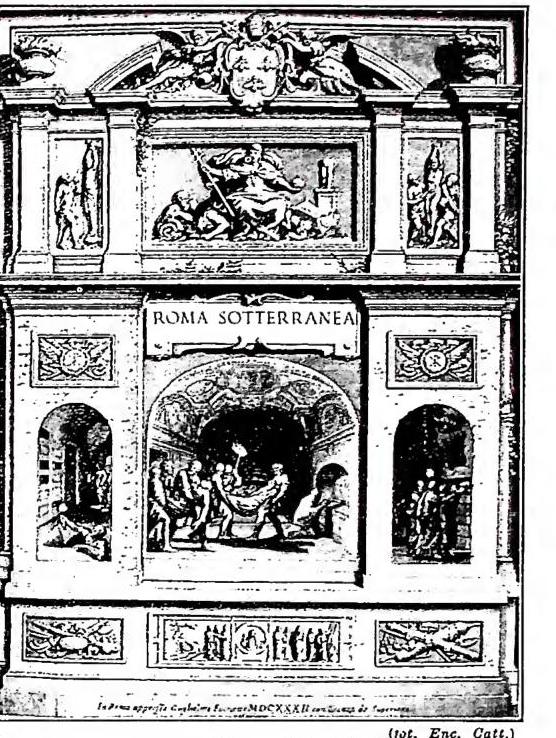
Among the aids for the study of Christian archaeology, the most valuable remains the practice of excavation itself; nothing is more instructive or can replace II. Excavation is mostly occasional, rarely conducted intentionally with a pre-established plan; in such cases, it can be quite dangerous to follow a preconceived thesis.
The discovered monuments should, if possible, be suitably arranged where they were found; when moved elsewhere, they generally lose part of their eloquence. When this is not feasible, especially due to lack of security, they are usually transported to museums; but then a diligent excavation journal and an exact catalogue of individual objects with their provenances become all the more necessary. Many monuments in our museums have lost much of their importance precisely due to the lack of such an "identity card." For those who are too far from museums or when monuments cannot be transported, photography, surveys, casts, and scale reconstructions now serve as good surrogates for personal study. Plaster casts are particularly recommended for sculptures, while paper or transparent casts are best for inscriptions. In any case, these must always be accompanied by an accurate on-site description. Unfortunately, it is often forgotten today that the direct study of originals cannot be replaced without significant disadvantages for scholarship. Nevertheless, such collections of casts, photographs, etc. (such as those annexed to the University of Berlin and the École des Hautes Études in Paris) offer great advantages for teaching. Other powerful aids include specialized libraries, such as that of the Pontifical Institute of Christian Archaeology, congresses (the IV held in Rome in 1938), and combined teaching courses for the training of specialists (as in the aforementioned Pontifical Institute in Rome). Two highly useful initiatives also exist in Rome: the Pontifical Academy of Archaeology, which in fact deals predominantly with Christian matters, and the Society for Christian Archaeology Conferences, aimed at fostering the exchange of views among specialists.
Archaeological criticism must often begin with authenticity, that is, the examination of the antiquity of the object itself. Many coins and small objects, especially precious ones, were forged in Italy in past times, and it is not always easy to judge the authenticity, for example, of gems and cameos; today, Oriental objects, for which there is great demand, are mostly forged. The most refined forgers often content themselves with reworking genuinely ancient pieces. Of utmost importance is always the place of origin of a monument, especially for objects that tend to travel widely, such as fabrics, silverware, miniatures, and the like. In the absence of historical data, stylistic arguments are readily employed, and the same is usually done when determining the age of a monument. However, one often falls into a vicious circle, attributing a monument to a certain age and country based on its resemblance to others that were in turn dated or geographically situated solely on stylistic considerations. It must always be kept in mind that very similar artistic phenomena often occur in vastly different places and ages, and that the location where a monument is found (unless it is a museum or collection) always counts as its place of origin, unless there is probative evidence to the contrary.
Another fundamental part of criticism is exegesis or the interpretation of the monument—whether it is Christian or not and what its meaning is. The question becomes complicated and often insoluble when the monument is partially lost and one must therefore divine what is missing. The comparative method is generally employed, and for this reason, knowledge of philology and the pagan world can never be sufficiently recommended to the Christian archaeologist.
V. TOPOGRAPHY
Rome is by far the most important center, and for its churches, catacombs, epigraphs, institutions, and various collections, it alone equals nearly all the rest of the West. In the rest of Italy, besides many minor catacombs, the following are noteworthy: Naples for its large catacombs, museum, and some ancient churches; Nola for the complex of monuments in honor of S. Felice; Syracuse for its museum and large catacombs (with minor ones at Palazzolo, Modica, and elsewhere); Spoleto with the Basilica of the Savior and the nearby Temple of Clitunno; Bolsena and Chiusi for their catacombs; Ravenna for its grand buildings from the 5th and 6th centuries (sarcophagi and mosaics); Albenga with its baptistery; Milan for the Basilica of S. Ambrogio and the complex of S. Lorenzo; Aquileia for its museum and Basilica; Parenzo for its Basilica; Salona for its churches and necropolises.In France, beyond the cemeteries of Arles, only meager remains of ancient buildings or scattered groups of sarcophagi survive;
in Spain, the necropolis of Tarragona and the nearby rotunda of Centcelles, similar to Rome’s S. Costanza, have proven extremely important; in Germany, the most notable monument is the cathedral of Trier; at Xanten, Mainz, and Cologne, numerous remains of very ancient churches and necropolises have been found; the museums of Berlin, Paris, and London preserve rich collections of Paleochristian objects and monuments. In the Danubian countries, there is a small catacomb at Pecs and remains of small churches (as is the case almost everywhere in the Balkans). Worth noting are the basilicas of Thebes, Nicopolis, Athens, the baptistery of Butrint, and the largely preserved monuments of Corfu, Thessaloniki, and Constantinople with their famous mosaics, which have begun to be studied. Asia Minor is rich in inscriptions, especially in Phrygia; ruins of churches are found everywhere, among them the grandiose three basilicas of Ephesus and the sanctuary of S. Tecla at Meriamlik (Cilicia). Mesopotamia became famous for the synagogue and church with baptistery at Dura Europa. In northern Syria and the Hauran, ruins of a great number of churches survive, some still with their superstructures; particularly curious is the sanctuary of S. Simeone Stilita near Antioch. Palestine is extremely rich in remains of sanctuaries that, from the 4th and 6th centuries onward, covered nearly the entire region; however, these are only miserable ruins or completely transformed. Better preserved are the countless figured floor mosaics, among which the famous topographic map of Madaba and many rather late inscriptions; we also recall the complexes of the Holy Sepulcher and the sanctuaries of the Mount of Olives, Emmaus, Bethlehem, Mamre near Hebron, the multiplication of the loaves on the Sea of Tiberias, and the eleven churches of Gerasa. Egypt, besides ruins of monasteries that may be very ancient, preserves small catacombs near Alexandria and large necropolises at Bawit (near Antinoë, with paintings) and El-Kharga (Great Oasis), as well as the grand complex of the sanctuary of S. Mena; a rich collection of Coptic antiquities is housed in Cairo. Cyrenaica retains some painted hypogea and important remains of churches at Apollonia and Ptolemais; similarly, in Tripolitania, there are important necropolises at 'Ain Zara and Ngila and ruins of churches at Leptis and Sabratha. Tunisia has revealed an infinite number of small ancient churches and tombs, often with mosaics and inscriptions. Important are the catacombs of Hadrumetum and the basilicas of Thelepte and Ammaedara. Carthage preserves ruins of six great Basilicas and a museum rich in Christian antiquities; in Algeria, among many others, the centers of Tebessa, Tipasa, and Cuicul are noteworthy.
VI. PARTICULAR QUESTIONS AND DIRECTIONS
In past centuries, great fervor surrounded the debate over the "signs of the martyrs' tombs." Today, it is generally accepted that only those historically attested or bearing evident signs of veneration (graffiti with invocations from the faithful, ornamental works) are considered as such. Many questions also arose regarding the "origin and purpose of the catacombs": it is now certain that they were almost entirely excavated by the Christians themselves for funerary purposes, in terrains of light calcareous nature; rarely were pre-existing sandstone quarries later adapted as cemeteries; exceptionally were individual pagan hypogea incorporated into catacomb complexes. The catacombs served properly as cemeteries and (at least underground) never as dwellings or hiding places for Christians during persecutions; they were used for public acts of worship only during the feasts of the martyrs buried within them.1. The legal title by which the Church possessed its own properties—such as churches, houses, and cemeteries—from at least the beginning of the 3rd century is still vigorously debated; it seems this occurred through a kind of practical tolerance. What is the origin of the basilical type, which at least for us represents the first form of churches after Constantine? It was probably an adaptation of the architecture of the civil basilica (including sumptuous private palaces) to the practical needs of Christian worship, with few and non-essential modifications. The derivation from the development of funerary mausolea is unconvincing; too uncertain in its monumental foundations is the attempt to present it as a progressive evolution—
(propr. E. Joni)
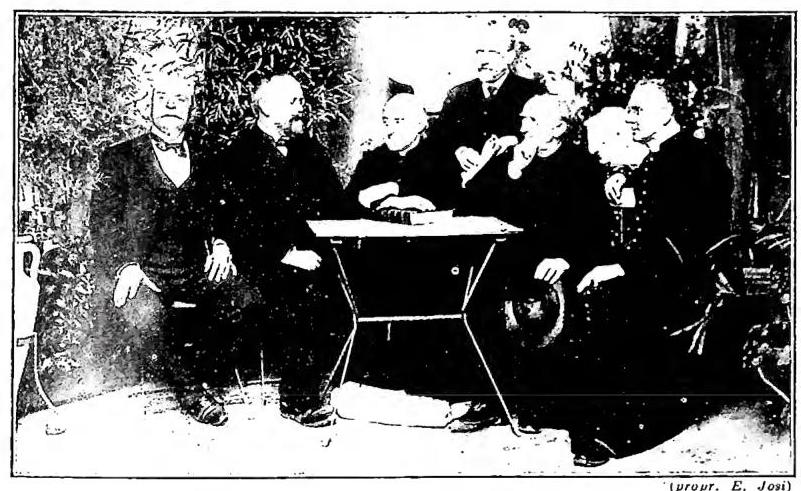
CHRISTIAN ARCHAEOLOGY - Members of the presidency of the 2nd Congress of c. a., 1900: from left to right: G. Gatti, M. Müller, L. Duchesne, O. Marucchi, A. De Waal, Fr. Bulié.
3. Did St. Peter and St. Paul truly come and die in Rome? Few Protestants and rationalists now pose this question, especially after the marvelous results of the excavations at San Sebastiano and St. Peter’s. However, the problem remains open regarding the nature of the memoria in catacumbas (tradition of a dwelling of the apostles? primitive burial? later temporary translation? or none of the above?) and the history of the relics of the apostles (including their heads), nor will it perhaps ever be resolved.
A particularly delicate point, by which the quality of an archaeologist can often be tested, is that of distinguishing what is Christian from what is pagan. No fixed and uniform criterion exists, nor can one hope to find II. According to the various materials and countries, special criteria must be formed; unfortunately, the works that exist on this subject are scarce and mostly amateurish. It is also necessary to consider the possibility of syncretistic or heretical productions. Unfortunately, this convenient formula or alibi of heresies has often been abused to dispose of singular monuments of uncertain origin and exegesis.
4. The problem of dating is no less difficult. Where positive historical or epigraphic data were lacking, in the past, great arbitrariness—if not outright fantasy—was generally employed. It was the merit of De Rossi to have established solid criteria for the study of catacombs and inscriptions; for buildings, however, we are still far from real progress, and the consequences are felt especially in research outside and far from Rome. The same applies to small objects of the instrumentum, where vague stylistic inductions are often relied upon, whereas it would be appropriate to do something similar to what has been achieved for terra sigillata of the 1st and 2nd centuries. For paintings and sculptures, after the fundamental works of Wilpert, only now are attempts being made to seek more precise and positive canons.
5. The serious problem of symbolism also remains open. There is now agreement in rejecting the method of those who, in past times, saw symbols everywhere in artistic productions, as in Scripture, and as a kind of cryptotheology (Wilpert still exaggerates somewhat in this regard), as well as an affectedly universal historicism (Styger). However, it is very difficult to define the limits and correct exegesis in individual cases, and often even the nature of the symbolism at play—whether traditional pagan or new Christian. Indeed, one must remember that
there existed a rich syncretistic pagan symbolism, and likewise bear in mind that the Church Fathers, in their symbolic expositions, proceed in a highly personal manner or draw from strictly literary sources, rather than from the treasury of common conceptions among the Christian people. In such cases, even their testimonies, though accumulated, are of little value.
6. Another highly obscure problem is the origin of individual iconographic themes. Iconological questions are still almost entirely in their infancy. It should finally be determined how much Christians took from pagan iconography and how much they innovated on their own in different countries and eras; even on such celebrated themes as the orante and the Good Shepherd, clarity has yet to be achieved. It should also be determined whether and to what extent Christian artists were animated by a concern for portraiture, not so much in representations of private individuals as in those of saints, apostles, and even Jesus and Mary. Perhaps too much importance has been given to this problem by historians of Christian art in search of novelty.
7. The dilemma Orient or Rome, posed at the beginning of this century with audacity and almost with arrogance by Strzygowski (who, however, deserves credit for having broadly introduced the knowledge of Eastern monuments into our studies), has already preoccupied—and perhaps excessively—several scholars (e.g., Kaufmann and Wulff, authors of well-known manuals). But it is ultimately as unreasonable as the error it seeks to correct. A sounder criterion is now gaining ground: that of not a priori denying anyone the right to sit at the banquet of Christian art, which should instead be conceived as one of those open feasts so dear to the ancient Greeks. Rather, in these investigations of artistic ontogeny, one should always maintain scrupulous attention to chronology and a certain respect for geography, so as not to fall into the error of supposing, for example, that monuments of the 4th or 5th century were inspired by artistic schools whose productions survive only from a century or two later, or of making artistically interdependent regions that were at opposite ends of the then-known world.
The international congresses of c. a. have always proven very useful: the 1st in Split in 1894, presided over by F. Bulić, where general interests and particular themes were addressed, as in the 2nd in Rome in 1900, directed by L. Duchesne; the 3rd in Ravenna in 1932, presided over by G. P. Kirsch and C. Ricci, with reports on the most recent discoveries related to c. a.; the 4th in Rome in 1938, presided over by P. Paschini, which dealt with places of worship.
BIBL.:
Per i congressi: Atti del I Congresso internazionale di a. c., Spalato 1894; Atti del II Congresso, Roma 1900; Atti del III Congresso, Ravenna 1932; Atti del IV Congresso, Roma 1938. Per i problemi generali: O. Marucchi, Manuale di a. c., Roma 1923; J. Wilpert, Roma sotterranea, Roma 1903; A. De Waal, A. c., Friburgo 1909; P. Styger, Die altchristliche Grabeskunst, Monaco 1927; J. Strzygowski, Orient oder Rom, Lipsia 1901; C. M. Kaufmann, Handbuch der a. c., Friburgo 1913; O. Wulff, Altchristliche und byzantinische Kunst, Berlino 1914; G. B. De Rossi, La Roma sotterranea cristiana, Roma 1864-1877.
A. Ferrua
topografici per Roma sono raccolti da R. Valentini e G. Zucchetti, Codice topografico della città di Roma, II, Roma 1942; III, ivi 1946, IV in corso di stampa; per l'Oriente cf. K. Krumacher, Byzantinische Literatur, Monaco 1897, pp. 409-27. Specialmente sulla storia e fonti letterarie V. F. Piper, Einleitung in die monumentale Theologie, Gotha 1867. Sulle varie Rome Sotterranea e l'attività del Wilpert V. A. Ferrua, in La Civ. Catt., (1938, II), p. 510 sgg. e 3 [1938], p. 309 sgg.; buone nozioni generali di metodica e critica in Grossi Gondi, op. cit., e in Sulle soglie dell'arte, Roma 1912. Sul valore apologetico dell'a. si possono leggere buone osservazioni di L. Jalabert, Epigraphie, in DFC, I, coll. 1404-57. Una topografia dei monumenti cristiani antichi è stata data già dal Kraus nel suo dizionario cit., e poi aggiornata dal Kaufmann in fronte al suo Handbuch cit. da cui la prese il Leclercq, per il suo Manuel cit. Gli atti del III (Città del Vaticano 1934) e del IV (ivi 1940, 1948) Congresso di a. c. rappresentano un essenziale contributo in questo campo; buono anche l'ultimo capitolo del Ferretto cit. Un lessico biografico e topografico di a. c. riempirebbe una lacuna molto sentita.