SORRENTO, ARCIDIOCESI DI

SORRENTO, ARCIDIOCESI di. - Città e arcidiocesi in provincia di Napoli.

It has an area of 133 km² with a population of 72,320 inhabitants, all Catholic, distributed across 39 parishes, served by 141 diocesan priests and 75 religious, and has a seminary, 14 male religious communities and 43 female ones (Ann. Pont. 1953, p. 406). The only suffragan diocese is Castellammare di Stabia. The cathedral is dedicated to SS. Philip and James; the patron saint of the archdiocese is St. Antoninus the Abbot, whose feast is celebrated on 14 February.

I. HISTORY

The date of the establishment of the diocese is very uncertain, but certainly very ancient. A Christian inscription dates to the year 527, and on 19 March various martyrologies (Acta SS. Martii, III, Paris 1865, p. 278) attribute a group of martyrs later considered African.

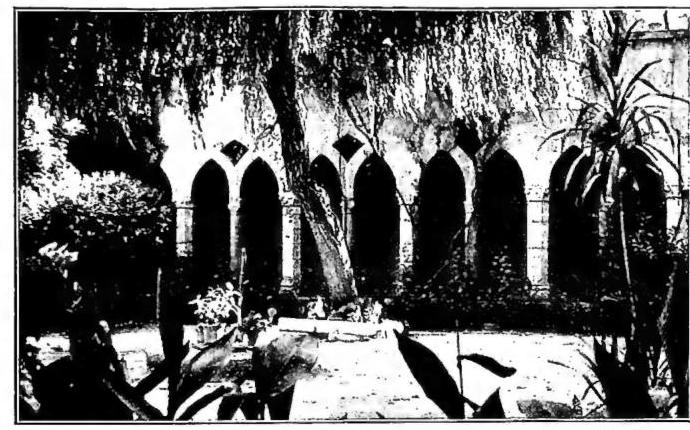
SORRENTO, ARCHDIOCESE OF – Cloister of St. Francis – Sorrento.

A Life of St. Antoninus (BHL, 582) attributed to the 9th century has preserved the names of the first four bishops, all saints venerated as protectors of the city: Renatus on 6 October (Acta SS. Octobris, III, Paris 1868, p. 380), Athanasius on 26 January (ibid. Ianuarii, III, 1863, p. 347), Baculus on the 39th (ibid., p. 565) and Valerius on the 16th (ibid. Ianuarii, II, 1863, p. 393). In another Life written before the year 1000 (BHL, 7115-18), probably inspired by the French legend of Angers (7th century) about St. Maurilius, an anonymous figure is placed before St. Renatus, who has no reason to exist even though he was accepted by ancient local historians. The period of the episcopate of St. Renatus remains obscure: both Lanzoni (I, p. 247) and Kehr (Italia Pont., VIII, Berlin 1935, p. 407) incline towards the 5th century. The fifth in the series and the first historically attested is Rosarius, who was among the signatories of the Synod of Symmachus in 499; after him, for a century, no further information is available. From 591 to 600 there is mention of a Johannes (Jaffé-Wattenbach, 1112; 1259; 1587; 1773), followed by an anonymous bishop (ibid., 1774) deposed by Gregory the Great for unfitness for office. The same Pope ordered the subdeacon Antonius to investigate, together with the bishop of Naples Fortunatus, the conduct of the priest Amandus, who would be the true successor of Johannes. After him, Iacinctus is present in 680 at the Roman Council of St. Agatho. At this point the Sorrentine catalogue becomes incomplete: the vicissitudes of the city, plagued by Saracen raids, destroyed all memory of the prelates, and it is necessary to reach the 9th century to find the account of the arrival in Sorrento of the famous St. Antoninus, summoned from Montecassino to the monastery of St. Agrippinus, of which he was abbot until about 830. At his death the people elected him patron saint of the city.

At the end of the 9th century mention is made of Stephanus, brother of St. Athanasius, bishop of Naples, both prominent figures in the struggle between Emperor Louis II and Duke Sergius II of Naples, nephew of the two prelates and protector of the Muslims. Involved in these painful events, Athanasius first had to take refuge in Sorrento because of his opposition to his nephew’s policy (871), but a few years later (c. 876) Stephanus was forced into perpetual exile, despite the intercession of many and the unsuccessful one of John VIII with Prince Guaifer (Jaffé-Wattenbach, 3074). Throughout the 10th century only the names of two bishops named Sergius are known, and it is debated whether they were two distinct persons or rather one and the same – as most seem to incline – namely that Sergius who was transferred to Naples around 990 and thus created archbishop, or Sergius I mentioned in the Sorrentine diptychs. The last known of the series of bishops of Sorrento was Maraldus, already a cleric and vestryman of Duke Guaimar in 993-94, then bishop in 1005.

The date when the Sorrentine diocese was elevated to metropolitan status cannot be precisely determined. Among the hypotheses, the most probable seems to be that of Capasso (v. Memorie, cited in bibliography, pp. 55-57) followed by Cortese (v. op. cit. in bibliography, p. 25). If in 1005 the name of a bishop is attested and conversely in 1059 there is a “Johannes archiepiscopus” who subscribes to the Benevento Synod (Jaffé-Wattenbach, 561), and six Sorrentine diptychs attribute the promotion to a Pope John, it is likely that this promotion should be placed between 1024 and 1032, i.e. under John XIX. It should be noted, however, that in the Book of the Confraternity of Matthew of Salerno, written in the 11th-12th century, Maraldus is considered the first archbishop of Sorrento (Fonti per la storia d'Italia, LVI, 234). In any case, John is certainly the first historically known archbishop: it is also known that in 1071 he attended the consecration of the church of Montecassino performed by Alexander II (Jaffé-Wattenbach, 586). With the dignity of archbishop, the diocese of Sorrento had as its suffragans the episcopal sees of Stabiae, Vico Equense and Massa Lubrense; at present, however, only the first remains under its jurisdiction.

After John, the Sorrentine catalogue is almost complete. Alferius, already archdeacon of the cathedral, consecrated by Celestine III (1191), is remembered for having obtained from Pope Innocent III the privilege of obedience from the suffragan bishops and abbots, both ecclesiastical and secular, of the diocese: however, he was later suspended by the same Pope on the charge of having participated in favour of Otto IV and of simony. Peter, transferred from Carinola in 1252 at the request of the Chapter, incurred excommunication together with his colleagues for having participated in the coronation of Manfred, the Swabian enemy of Alexander IV; a sentence later confirmed by Clement IV. Franciscus Remolynus (1501), a Spaniard, elected governor of Rome and later cardinal, passed the archbishopric to his nephew Gilbertus (or Gilbert) who was present at the Fifth Lateran Council of Julius II (1512-17). His successor, Fr. Philippus Strozza of the noble Florentine family, was taken prisoner in the sack of Rome in 1527 and barely managed to free himself with a heavy ransom and thanks to Cardinal Colonna; but he then resigned in 1530 in favour of Florens Coquerel of the diocese of Arras. Bartholomeus Albanus, transferred from Sessa in 1552, died in Rome in the same year (1558) in which hordes of Saracens razed the already flourishing city to the ground. His successor Julius Paveri (1558) attended the Council of Trent and was vicar general of Naples; Antonius de Pezzo (1642) held a synod in 1654 and carried out various restorations in the city’s churches; Philippus Anastasius (1609), a distinguished theologian, founder of the new seminary and reorganiser of the diocese, persecuted and driven out for 20 days, was recalled to his see and honoured by Clement XI and Benedict XIII, who appointed him Patriarch of Antioch.

Of the suffragans, in the reform of Pius VII (1818), only Castellammare di Stabia remained under Sorrento; the others, deprived of the episcopal dignity, were incorporated into the territory of the archdiocese.

II. MONUMENTS

Under the Roman Empire Sorrento was rich in grand monuments; in addition to the temples of Venus, Ceres and Cybele, it had baths, a circus, a theatre, and even a Pantheon. Much was dispersed in the Middle Ages, but for Sorrento the most severe blow was dealt by Saracen fleets, which ravaged the coastline.

Of the surviving monuments, the basilica of St. Antoninus, built on the site of an oratory over the saint’s tomb, preserves little of its original state after the Baroque remodelling. Apart from the portal on the right side (11th century), the interior has ancient columns remodelled in past centuries, the crypt also rebuilt in 1700 and good paintings by Giacomo Del Po (1678) and G. B. Lama (1734) depicting episodes from the life of St. Antoninus and the history of Sorrento. The cathedral, rebuilt in the 15th century and again more recently, has three naves supported by pillars. The interior preserves fine works from the past: a Gothic crozier, the archiepiscopal throne and the marble pulpit of 1573, a Nativity scene (panel of the 15th century), a Madonna by Silv. Buono (1582), a 15th-century bas-relief with the Redeemer and the Apo

Article illustration
(fol. Emit)
Sorrento, archdiocese of – Cloister of St. Francis – Sorrento.

In the first chapel on the right are large paintings on the ceiling of the main nave by Niccolò and Onofrio Malinconico and Giacomo del Po (1685), depicting four Sorrentine martyrs and four patron bishops. The bell tower portal has two pairs of ancient columns and various fragments; other notable remains of the ancient cathedral are preserved in the 18th-century Museo Corrale, including two plutei adorned with confronted pegasuses and hippogriffs with trunks and vines, six panels decorated with the Swabian eagle or birds, lions and monsters, fragments of the ambo and screens, and various other materials perhaps from the 13th century. Among the other churches of S[orrento], notable are that of S. Francesco with the medieval cloister of the ancient convent and the other of S. Baculo, now of the Virgin of the Rosary, built on the site of the Roman Pantheon.

Bibl.: Ph. D'Anastasio, *L'Inchiostriorese in Sorrentinorum ecclesia sticis* (selecta antiqua, Rome 1731); G. Maldacena, *Storia di S.*, Naples 1841; B. Capasso, *Topografia stor. archeol. della penisola sorrentina*, 1836; idem, *Memorie stor. della Chiesa sorrentina*, 1836; idem, *Monumenti ad Neapolitani ducatus historiam pertinenti*, 1836; idem, *P. B. Gams, Series episcoporum*, 1836.

A suspension (s.) entails that the cleric cannot attain any dignity, office, ecclesiastical benefice, pension, or other ecclesiastical post; nor can he be promoted to Orders. However, promotion to Orders remains valid in any case, while the other penal effects, if the suspension was imposed by sentence, are connected with invalidity (can. 2283). Likewise, a cleric struck by a suspension that prohibits the administration of the Sacraments and Sacramentals may, notwithstanding, lawfully confer them if, for any reasonable motive (on which he is not bound to inquire), the faithful request them; this does not apply, however, in the case of a suspension incurred by a specific sentence, unless the requesting faithful are in danger of death: in this latter case, indeed, the suspended cleric may absolve from sins and, in the absence of other ministers, administer the other Sacraments and Sacramentals (cann. 2284 and 2263). It must also be carefully noted that a suspension imposed by sentence of the competent superior and entailing the prohibition of exercising jurisdiction (both in the internal and external forum) renders the prohibited acts themselves invalid (for example, sacramental absolutions in confession); whereas before the sentence it renders them illicit, except as stated regarding cases of direct request by the faithful within and outside danger of death, but not invalid.

As for the effects of suspension imposed on a community or college of clerics, it should be noted that according to can. 2285 § 1, they may affect either the clerics who committed the offense, the community as such, or both cumulatively. Suspension imposed in these cases on individual clerics entails the effects enumerated above according to the circumstances (can. 2285 § 2); that imposed on the community as such entails the prohibition of exercising all and singular the spiritual rights that pertain to it as such, both during and after the moral offense (ibid. § 2); that imposed possibly on both clerics and the community combines all these effects (ibid. § 4).

Suspension is a penalty that does not prohibit the reception of the Sacraments. This explains why clerics and priests, even if suspended, for example, from celebrating Mass, may, if they wish, receive Holy Communion; however, in such cases it is evident that they must first have confessed the offenses committed (can. 2285).

III. SUSPENSIONS IN THE CODE OF CANON LAW

The following suspensions are reserved to the Holy See and, since they are latae sententiae, are incurred ipso facto by the mere violation of the canonical norm to which they are attached: 1) general suspension for consecrating bishops and for bishops (or priests) who consecrate a priest as bishop without apostolic mandate; likewise for the newly consecrated (can. 2370); 2) general suspension for clerics (but not if they are bishops) who have promoted to Orders or have allowed themselves to be symbolically promoted to them, or have thus administered and received other Sacraments (can. 2371); 3) suspension a divinis for those who have been ordained by an excommunicated, suspended, or interdicted person by sentence, or by a notorious apostate, heretic, or schismatic (can. 2372); 4) suspension for one year from conferring Orders for one who has ordained another’s subject without the dimissorial letters of the relevant Ordinary; for one who has ordained his own subject who has resided in another territory for a time presumed sufficient, according to can. 993, nn. 4 and 994, to contract an impediment if the proper norms for such cases have not been observed; for one who has promoted to major Orders without the canonical title required by can. 974 § 1, n. 7; and finally for one who has ordained another’s subject even with the permission of his superior unless the circumstances of can. 966 obtain (can. 2373); 5) general suspension at the discretion of the Holy See for religious clerics in sacred Orders if their profession has been declared invalid due to fraud in its emission (can. 2387); 6) general suspension for religious clerics if they have been lawfully dismissed from the religious state for offenses that do not entail infamy of law, deposition, or degradation, and in any case for lesser offenses than those contemplated in can. 646 (apostasy from the Catholic faith, attempted civil marriage, flight with a woman or, respectively, a man; can. 671, n. 1); 7) partial suspension against Chapters and other communities according to can. 2394.

Reserved to the local Ordinary is the suspension from office incurred by the cleric who has brought before a lay judge a person enjoying the privilege of the forum, but of lower rank than cardinals, the Legates of the Holy See, the major officials of the Roman Curia in their proper offices, his own Ordinary, a bishop, an abbot or prelate *nullius*, and the supreme superiors of religious orders of pontifical right (can. 2341). Reserved to the major superior is the general suspension incurred by a religious in sacred Orders who has fled from the religious state (can. 2386).

The non-reserved suspensions contemplated in the Code of Canon Law are the following:
1) suspension for one month from the celebration of Mass for religious superiors who have sent their subjects to be ordained by a bishop other than their own (can. 2410); this suspension, which is in the form of a vindictive penalty, must be observed for the entire month unless an appeal is favorably accepted by the Holy See;
2) suspension a divinis for the priest who has heard sacramental confessions without jurisdiction (can. 2366);
3) suspension from hearing confessions for one who has absolved reserved sins without the proper power (can. 2366);
4) suspension from the Order received without or with false testimonial letters, or before having reached the canonical age, or skipping previous Orders (can. 2374);
5) suspension a divinis for the cleric who has resigned and delivered into the hands of secular persons the office, benefice, or ecclesiastical dignity with which he is invested (can. 2400);
6) suspension from jurisdiction for an abbot or prelate *nullius* who does not receive episcopal blessing within three months of his appointment (in cases where this is required) from a bishop (can. 2402);
7) suspension a divinis for the capitular vicar who, contrary to the canonical prescriptions of can. 958 § 1, n. 3, has issued dimissorial letters for ordinations (can. 2409).

IV. Cessation of the penalty

A penalty inflicted in the form of a censure ceases only with absolution granted by the competent authority after the offender has repented of the crime for which it was incurred (can. 2248 § 1). Absolution from a censure cannot be denied to one who, having repented, requests it, although he may in turn be punished with a penalty having the force of a vindictive punishment (can. 2248 § 2). Once absolved from a censure, it does not revive unless what was prescribed by the superior under the precise threat of relapse is observed (can. 2248 § 3). Absolution from a censure may be given in the external forum (and then it is also valid for the internal forum), or solely for the internal forum, whether sacramental or extra-sacramental (can. 2251). However, one who is subject to several penalties may be absolved from one or more of them without necessarily being absolved from all (can. 2249 § 1). A penalty inflicted as a vindictive punishment ceases with its expiation, that is, when the time for which it was imposed has elapsed, or, if it was inflicted indeterminately or in perpetuity, by dispensation of the competent ecclesiastical authority (can. 2236 § 1-2 and 2289).

It should be carefully noted that one who, being suspended from the exercise of a sacred Order (from the subdiaconate upwards), whether by a censure or by a vindictive penalty, nevertheless exercises its power, even on a single occasion, becomes ipso facto irregular for delinquency with all its consequences (can. 985 n. 7).

Bibl.: cf. the treatises *De poenis*, *De censuris*; and in particular: G. Cavigioli, *De censuris latae sententiae*, Torino 1919; P. Ceato, *Censurae vigentes*, Padova 1921; A. Cipollini, *De censuris latae sent.*, Torino 1925; R. Salucci, *Il dir. penale secondo il CIC*, Subiaco 1926-30; G. Stocchiero, *Dir. penale della Chiesa e dello Stato*, Vicenza 1932; M. Pistocchi, *De suspensione ex informata conscientia*, Torino 1933; F. Roberti, *De delitti et poenis*, Roma s. a., nn. 372-971; F. Cappello, *De censuris*, Torino 1950, nn. 495-564. Lorenzo Simeone