
ESTE, HOUSE OF. - It descended from a branch of the Obertenghi, of Lombard origin. ALBERTO AZZO II (d. 1097), great-grandson of Marquis Oberto I, who lived in the 10th century, established his residence in the fief of E. and is therefore considered the progenitor of the Este. His firstborn, adopted as a believed heir by his uncle Guelph III of Carinthia and named Duke of Bavaria by Henry IV, continued the Guelph house under the name Guelph IV. From the other son, Folco, descended the Italian branch, which with his son OBEZZO (d. 1193) moved to Ferrara, where the Este disputed civic supremacy with the Ghibelline Torelli. Obezzo I was succeeded by his grandson AZZO VI (d. 1212), who first sided with Otto IV, then, after the latter's excommunication, adhered to Innocent III and received from him the task of accompanying Frederick II to Germany. Of his sons, ALDOBRANDINO (d. 1215), in conflict with Padua, lost the castle of E.; BEATRICE I was a nun and blessed (v.); the other son AZZO VII (d. 1264), having succeeded his brother, fought against Frederick II, took part in the battle of Parma, and was proclaimed podestà by the Ferrarese, thus laying the foundations of the lordship. He headed the league that in 1259 defeated Ezzelino. A natural daughter of his, BEATRICE II (v.), married Andrew II, king of Hungary. Azzo VII, his son Rinaldo having predeceased him, was succeeded by the latter's natural son OBEZZO I (d. 1403), who was an ally of Charles of Anjou and in 1288-89 took possession of Modena and Reggio. His daughter BEATRICE became the wife of Nino, judge of Gallura, and then of Galeazzo Visconti (v. Dante, Purg., VIII, vv. 73-81). With the other son, AZZO VIII (d. 1308), a period of decline began.
A league of opposing lords made him lose Modena and Reggio. At his death the disputes over the succession allowed the Angevin to occupy Ferrara in the name of Clement V, who left it to him in custody. But in 1317 the Ferrarese rebelled, recalling the nephews of Azzo VIII and their cousins, Rinaldo, Niccolò and Obezzo, who adhered to the Ghibelline party. After the unfortunate descent of Louis the Bavarian, RINALDO (d. 1335) came to an agreement with the Pope and received Ferrara back from him as a fief of the Church. In 1336 OBEZZO II (d. 1352), participating in the league against John of Bohemia, recovered Modena, of which his son ALDOBRANDINO (d. 1361) received the investiture from Charles IV. Aldobrandino was succeeded by his brother NICCOLÒ II (d. 1388), and the latter by the other brother ALBERTO (d. 1393), who was an ally of Gian Galeazzo Visconti and of Venice against the Carraresi. Alberto founded the University of Ferrara in 1391. His natural son NICCOLÒ III (d. 1441) consolidated the family's power. A dissolute and cruel prince (having discovered an affair between his wife Parisina Malatesta and his stepson Ugo, he put both to death), but a very shrewd ruler, after the death of Gian Galeazzo Visconti he expanded his domains, and in the wars between Filippo Maria Visconti and Venice, skillfully maneuvering among the contenders, he managed to preserve them. He was succeeded by his natural son LEONELLO (d. 1450), a disciple of Guarino, who reformed the Ferrarese Studio and made the city one of the major cultural centers of the Renaissance. There followed another natural son of Niccolò, BORSO (d. 1471), who like his brother was an enlightened patron of the arts, and succeeded in obtaining from Frederick III the title of Duke of Modena and from Paul II, in 1471, that of Duke of Ferrara. Under his name is known one of the richest codices in the world: the Bible of Borso, executed by his commission at Ferrara between 1455 and 1461, today in the Estense Library of Modena (cf. G. Treccani degli Alfieri, La Bibbia di Borso d'Este, Milan [1942]). Borso was succeeded by ERCOLE I (d. 1503), legitimate son of Niccolò III, who in the war with Venice lost the Polesine and during the descent of Charles VIII remained neutral. Of Ercole's children, BEATRICE was the wife of Ludovico il Moro; ISABELLA, wife of Francesco II Gonzaga, Duke of Mantua, was widely famed for her refined culture; IPPOLITO (v. below) was a cardinal. The other son ALFONSO I (v. ALFONSO I d'ESTE, duke of FERRARA) married in second nuptials Lucrezia Borgia, by whom he had IPPOLITO II (v. below), a cardinal. He was succeeded by the son of his first wife Anna Sforza, ERCOLE II (d. 1559), who was reconciled with the Church at the time of Paul III and was later an ally of Paul IV against Spain. By his wife Renata of France Ercole had LUIGI (v. below), a cardinal, LUCREZIA, wife of Francesco Maria della Rovere, Duke of Urbino, and ELEONORA, both famous for their relations with Tasso, and ALFONSO II (v. ALFONSO II d'ESTE, duke of FERRARA). With him the legitimate succession of Niccolò III became extinct; and by his designation he was to be succeeded by CESARE (d. 1628), son of a bastard of Alfonso I, but Urban VIII refused to recognize him and made war on him. Cesare entrusted the negotiations to Lucrezia, Duchess of Urbino, who stipulated the convention of Faenza (1598) whereby Ferrara passed to the Church, and Cesare withdrew to Modena. Here he was succeeded by his son ALFONSO III (d. 1644), who was the father of RINALDO, cardinal and bishop of Reggio. Alfonso, after the death of his wife Isabella of Savoy, became a friar and abdicated in favor of his son FRANCESCO I (d. 1658), who fought first for Spain and then for France, always hoping to recover Ferrara. Francesco's son, ALFONSO IV (d. 1662), was a general of Louis XIV. By a niece of Mazarin he had MARIA BEATRICE, who became the wife of the Duke of York, later James II of England, and FRANCESCO II (d. 1694), who founded the University of Modena and the Estense Library. Francesco, having died without heirs, was succeeded by his uncle RINALDO (d. 1737), who renounced the purple in order to marry Charlotte of Brunswick. His son FRANCESCO III (d. 1780), after having commanded the Spanish army, came to an agreement with Austria, and by accepting the office of governor-general of Lombardy and consenting to the marriage of his niece Maria Beatrice with Archduke Ferdinand, marked the end of the duchy's independence. His son ERCOLE RINALDO (d. 1803) had to leave Modena in 1796 and died in exile at Turin. He had married Maria Teresa, believed heir of Alberico Cibo, last duke of Massa and Carrara. His two male sons having predeceased him, the duchy passed to BEATRICE (d. 1829). The Treaty of Vienna assigned it to Beatrice's son, FRANCESCO IV (d. 1846), who at his mother's death also received Massa and Carrara. Francesco IV was succeeded by FRANCESCO V, deposed in 1860.
Bibliography8 works
IPPOLITO I d'E., cardinale. - Born in Ferrara on 20 Nov. 1479 to Ercole I and Eleonora d'Aragona, died in Ferrara on 2 Sept. 1520. Still a boy, he received the archbishopric of Strigonia (Esztergom), in Hungary. At fourteen he was created cardinal deacon with the title of St. Lucia in Silice. In 1496 he was appointed archbishop of Milan, and in 1503, by Pius III, bishop of Ferrara. He later held the bishoprics of Narbonne and Modena and the abbey of St. Maria di Pomposa. In 1497 he obtained the exchange of the see of Strigonia for that of Agria (Eger). He was a more skillful politician and expert military leader than a good churchman. Duke Alfonso held him in great esteem and in fact associated him in the government of the State, excluding the other brothers from it. In the war of the League of Cambrai he took an active part in the military operations and was the principal architect of the victory that the Ferrarese militias won at Polesella over the Venetian fleet. In 1510 Alfonso's refusal to participate in the Holy League, and his renewed alliance with Louis XII, drew upon the Este family the hostility of Julius II; and when the Pope threatened Ferrara, he encouraged the citizens to resist and to defend the independence of the duchy. Summoned by the Pope to Rome, he sent Ariosto in his place; then, fearing the wrath of Julius, he withdrew to Parma and from there to his bishopric of Agria, where he remained two months. In 1517 he went again to Hungary and stayed there three years. In Apr. 1520 he returned to Ferrara and died five months later.
The exclusive trust that Alfonso showed him stirred up against Ippolito the bitter resentment of his brothers Giulio and Ferrante. These envies, and a rivalry over the favors of Angela Borgia, a lady-in-waiting at court, gave rise to a dark family drama. Ippolito's servants attacked Giulio, who escaped the ambush but had his sight maimed. Since Alfonso did not wish to punish Ippolito, Ferrante and
(phot. Anderson)
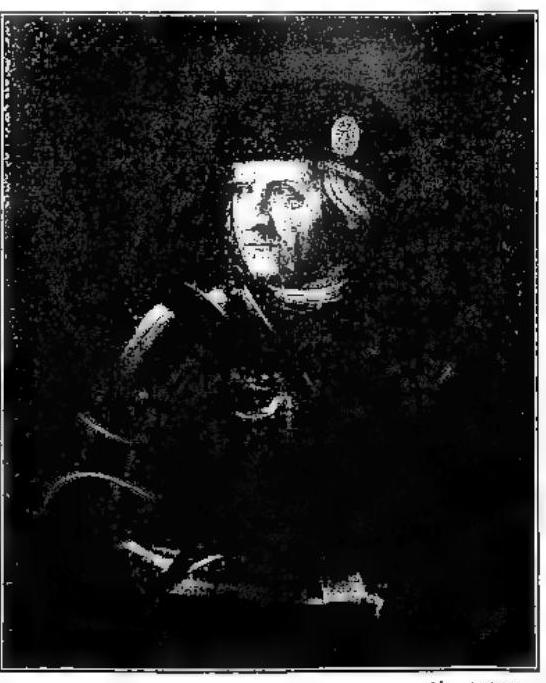
ESTE, FAMIGLIA d' - Portrait of Ercole I d'E. Painting by D. Dossi (early 16th century) - Modena, Pinacoteca Estense.
Giulio, together with Count Albertino Boschetti and others, hatched a conspiracy to kill Alfonso and Ippolito and give the duchy to Ferrante. But in Alfonso's absence, Ippolito, having discovered the plot, had its authors arrested. Boschetti was executed along with other accomplices. The two Este princes, their lives spared, remained in prison: Ferrante died there in 1540; Giulio emerged from it, very old, in 1559 and died two years later.
Ippolito kept a very large court, and among his gentlemen were Celio Calcagnini, Annibale Collenuccio son of Pandolfo, Guido Postumo Silvestri and many others named in the last canto of the Furioso; but the most famous was Ludovico Ariosto, who entered his service in 1503 and was dismissed from it in 1517 for having refused to follow him to Hungary. Ariosto dedicated the Furioso to him; but the fact that the cardinal would not forgive him his disobedience, the poet's complaints in the Satires against the lord who had made him «a horseman» instead of «a poet», and the supposed mocking appraisal of the poem, have given Ippolito the reputation of a domineering and unappreciated prince. In reality, if he was of a violent and authoritarian character, he nonetheless had vast culture, a lively passion for music, and a love of the arts, as his cordial relations with Leonardo da Vinci attest. It is quite probable that the mocking phrase attributed to him is pure legend, because the earliest references are only in French authors of the seventeenth century, from whom the Italians reproduced it in the eighteenth.
BBL.: G. Bertoni, L'Orlando Furioso e la Rinascenza a Ferrara, Modena 1919, passim; M. Catalano, Vita di Ludovico Ariosto, Geneva 1931, passim.