
NIO. — He is the father of Italian historiography. B. at Vignola (Modena) on 21 October 1672 to a family of modest peasants, d. at Modena on 23 January 1750. His desire to devote himself to ecclesiastical life and study led him, as a young man (1685), to the Jesuit schools at Modena, where in 1694 he obtained a law degree. The influence of the Benedictine B. Bacchini, who was reorganizing the Ducal Library, awakened in him a passion for scholarly research. In 1695 Bacchini and other admirers recommended him to the Borromei of Milan as a doctor of the Ambrosian Library. He remained there until 1700, when Duke Rinaldo d’Este offered him the direction of the Ducal Archive and Library at Modena. He held this office until his death, rejecting every other offer, such as that of Vittorio Amedeo II of Savoy, who wanted him to teach at the University of Turin.
Endowed with a sound humanistic education—and having added, on his own initiative, knowledge of Greek to the Latin of the Jesuit school—he found, first at the Ambrosiana and then at the Estense, the greatest opportunity to satisfy his ever-growing scholarly curiosity, directing his research in various fields. As early as 1697–98 he published the two volumes of Anecdota latina at Milan; with another volume that appeared the following year he brought to light several unpublished poems by s. Paolino da Nola, and in the Commentarium de Corona Ferrea he decisively undermined the tradition current in Milan concerning that Lombard ornament.
During these years he devoted much attention to literature: he wrote verses, composed novellas, and in 1700 dedicated a volume to the Rime of C. M. Maggi; in 1706 he published the treatise Della perfetta poesia italiana. Disgusted by the vacuity of the Arcadia, in 1703 he published under the pseudonym Lamindo Pritanio the Primi disegni della repubblica letteraria d’Italia, that is, the plan for a society of men of letters who would concern themselves with learned and serious matters. In 1709 a volume of Anecdota graeca appeared, and in 1713 he completed the Anecdota latina with two new volumes.
His activity at Modena, however, was soon to take another direction. The dispute among the Este, the Empire, and the Holy See concerning rights over the Valli di Comacchio led him to investigate the problems of Este origins. In 1708 he published the Osservazioni sul dominio temporale della Sede Apostolica sopra la città di Comacchio; in 1712, the Piena esposizione dei diritti imperiali ed estensi sopra la città di Comacchio, and a new treatise appeared in 1720. The origins of the Este were extensively clarified in the Antichità estensi of 1717, whose first volume firmly established M.’s reputation as a historian. The second volume of the Antichità estensi was not to appear until 1740.
Meanwhile he had been reflecting on the plan for a collection of medieval Italian historians, a project that Apostolo Zeno had cherished for many years, as early as 1699. Thus, when Zeno went to the court of Vienna, M. adopted the project as his own and enthusiastically undertook the work. He succeeded in finding a group of Milanese patricians who agreed to form the Società Palatina in order to provide financial support for the enterprise; on 23 December 1721 M. signed a contract with Prince Teodoro Alessandro Trivulzio for the printing of the Corpo delle antichità d’Italia. M.’s diligent collaborators were Sassi, prefect of the Ambrosiana, and Argeliti, a Bolognese scholar; in 1723 the first volume of the Rerum Italicarum Scriptores already appeared, comprising all the historians between the fifth and the fifteenth centuries. The enterprise encountered much hostility. More than one owner of manuscripts refused him their loan or even the opportunity simply to view them; not a few governments closed their archives for fear that their rights might be compromised: the Holy See, the Republics of Genoa, Lucca, and Venice, and the Duchy of Parma. The Savoy government at Turin initially resisted, but eventually came to support M.’s research. These difficulties and oppositions were not without consequences for M.’s enterprise, although he found the support of many scholars who became his collaborators. In this way the Scriptores were brought to completion: between 1723 and 1738, 27 folio volumes appeared; the twenty-eighth was published posthumously in 1751. With the publication of the Scriptores, M. laid the foundations of modern Italian historiography. Certainly the Muratorian work presents considerable defects when measured against the requirements of modern criticism. M.’s program was to represent Italian history in its continuity through a series of chronicles arranged, as far as possible, in a certain chronological and geographical order. That one should not be overly demanding of M. is evident from the fact that the reprinting of the Scriptores, begun by G. Carducci and V. Fiorini around 1900, is not only still unfinished after half a century, but also reveals methodological deficiencies even more serious in relation to the requirements of historical criticism, both because of the differences in the methods adopted by the scholars who became its editors and because of the uncertainties and modifications introduced by those organizing the reprint during the course of the enterprise.
During the preparation of the Scriptores, M. had gathered a large quantity of medieval documents in order to illuminate particular questions and various problems, and he used them to write 75 dissertations, which appeared in the six volumes of the Antiquitates Italicae Medii Aevi, published between 1738 and 1743. The Antiquitates are a precious mine of documents and information on paleographical, diplomatic, numismatic, and legal questions; they also contain much concerning popular life and customs.
At the same time, between 1738 and 1743, the six volumes of the Novus Thesaurus veterum inscriptionum appeared, likewise of great importance. M. now felt strong enough to compile, as it were, an inventory of all the information that his research had yielded concerning Italian history: this resulted in the great work Annali d’Italia, from the beginning of the Christian era to his own day. He began printing it in 1743 and completed it in 1749, the year to which the narrative extends, in 12 quarto volumes. The Annali present the events of Italian history in chronological order, year by year, without concern for investigating the causes of events or establishing connections among them; nevertheless, the work is of great interest for the objectivity of its narrative and for the clarity, precision, and sobriety of its style. It was the first attempt at a comprehensive Italian history, transcending the particular interests of individual states: it was an ascertainment in fact of the substantial unity of Italian history.
riferite al Castagno dei mosaici nella cappella dei Mascoli in S. Marco a Venezia. Ridolfi speaks of a BERNARDINO DA M. as the author of an altarpiece of s. Elena, now in the Accademia of Venice. The artist there shows himself to be a follower of the late manner of Cima da Conegliano. Another BERNARDO DA M., who signed a Madonna con due santi of 1462 in the Museo Correr in Venice, is merely a mediocre painter of votive images (for glass artists, V. VETRO).
Nello di Carpegna
#### MURATORI,
LUDOVICO ANTONIO.
Around this gigantic undertaking, M., over the five decades of his activity, studied a great number of particular historical questions. After the youthful lives of Maggi and Da Lemene (1708), he wrote the life of Petrarca (1711), of Fr. Segneri junior (1720), of Castelverro (1727), of Sigonio (1732), of the marquis Orsi (1735), of Tassoni (1738), of Torti (1743), and of Benedetto Giacobino, holy provost of Varallo Sesia (1747). In the field of letters, after abandoning poetry, he continued to take an interest in questions of aesthetics: in the treatise Della perfetta poesia italiana (1706), then in the Annotazioni al Petrarca, in the Riflessioni sopra il buon gusto, and finally in the treatise Della forza della fantasia (1745), he investigated the nature of beauty, established that artistic truth is the probable, opposed good taste to bad taste, rejected Cartesian rationalism, but subordinated art to morality. M. devoted still greater attention to the study of philosophy and morality. Notable is the treatise La filosofia morale esposta e proposta ai giovani (1735): rigorously faithful to Christian orthodoxy, it presents a serenely optimistic vision of life and urges young people to devote their activities to social life; in the treatise Delle forze dell'intendimento umano he battled against Locke and sensationalism; in the treatise Della pubblica felicità, his last important work, of 1749, he pointed out to princes their duty to procure the good of their peoples through wise reforms (as he had already taught in the Rudimenti di filosofia morale written for Prince Francesco d'Este); in the Difetti della giurisprudenza (1742) he criticized modern legislation, demonstrating the necessity of reforms—to be carried out by princes—for the general welfare. In these writings M. appears as the theorist of enlightened absolutism.
(photo Bandierà - Modena)
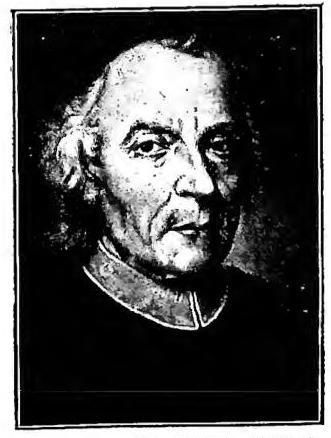
MURATORI, LUDOVICO ANTONIO — Portrait attributed to Giuseppe Maria Crespi (location unknown).
He considered and defended the merits of the active life. He collaborated ardently in the missions of Fr. Segneri junior in the Modena area, organized courses of spiritual exercises for priests, and took pleasure in visiting and assisting prisoners; for the care of the sick and unfortunate he founded the Compagnia della Carità in Modena. M.’s religiosity is attested by several writings of great merit on piety, such as the treatise Della regolata divozione de' cristiani (1747) and the treatise Della carità cristiana (1723). Very widely read in the eighteenth century was Il Cristianesimo felice nelle missioni dei Padri della Compagnia di Gesù nel Paraguay (1743–49), in which, on the basis of the missionaries’ reports, he reconstructs and extols the Jesuits’ work of Christianization and «communitarian» organization in South America. In the treatise De ingeniorum moderatione in religionis negotio (1714), he examines historical-religious problems publicly debated at the time; he criticizes opinions and beliefs lacking a historical basis, censures exaggerations in the popular cult of the Virgin and the saints, yet declares that he believes in the possibility of a dogmatic definition of the Assumption of the Virgin (l. I, cap. 17). The treatise De superstizione sitanda, published under the pseudonym Antonio Lampridio (1742), aims to combat every form of superstition, false ecstasies and revelations, and false miracles.
His profound religious feeling, simple and modest, and his reverence for the Church of Rome, toward which he felt profound obedience, did not stifle in M. the critical sense of the severe and dispassionate historian. He judged the history of the Church as a historian; he stigmatized the bad conduct of certain popes, observing that criticism did not constitute an offense against the Church; writing to Tanucci, he acknowledged the necessity of limiting the number of ecclesiastics and monks; he noted the decline of the Mendicant Orders, for which he showed little sympathy, whereas he had great sympathy for the Jesuits. His tendencies toward reform of the Church were very moderate: he knew human weakness, feared reforms that were too serious, and still more radical ones, and was never deluded by the mirage of a return to the origins. Although on occasion his demands coincided with those of the Jansenists, he never had anything in common with Jansenism, whose doctrines he rejected.
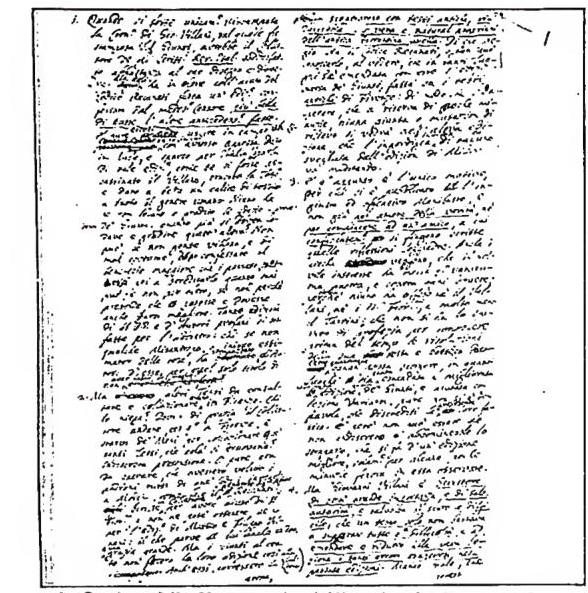
(from Catalogo della Mostra storico bibliografica dei Rerum Italicarum Scriptorum, edited by E. Oser, Modena 1858, fasc. 3)