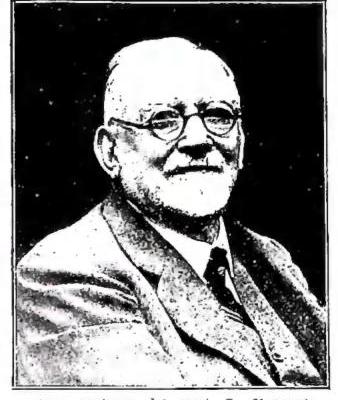
VENTURA di RAULICA, GIOACCHINO. — Publicist, orator, and Theatine philosopher, born in Palermo on 8 December 1792, died at Versailles on 2 August 1861. A pupil of the Jesuits, he entered the Theatines in 1818.
After moving to Naples, he began his activity with an Apologia of the religious Orders (Naples 1820) and with the journal L'enciclopedia cattolica (5 vols., ibid. 1821–23). A follower of Lamennais and of the French ultramontanists, he disseminated their works in Italy through his translations of the Essai sur l'indifférence (ibid. 1821), Du Pape, and La législation primitive (ibid. 1823). In 1824 he went to Rome, where he continued his many-sided activity. Appointed by Leo XII to the chair of ecclesiastical public law at the Sapienza, he published his lectures in De iure publ. eccl. commentaria (Rome 1826), which, together with De methodo philosophandi (ibid. 1828), constitutes an essay in “Christian philosophy.” He was superior general of his Order (1830–33), examiner of the clergy, ecclesiastical censor, and consultor of the Rites; and four times, between 1841 and 1848, he preached the Lenten course in the Vatican Basilica (Il Tesoro nascosto [the Passion of Jesus Christ], 2 vols., ibid. 1841; La scuola dei miracoli, 3 vols., ibid. 1843; Omelie sulle parabole evangeliche, 4 vols., ibid. 1862). In 1839 he published Le Bellezze della fede (3 vols., ibid. 1839–1842), followed by La Madre di Dio Madre degli uomini (ibid. 1841), which inaugurated modern Mariological literature on Mary’s spiritual motherhood. His funeral oration for D. O’Connell (28–30 June 1847) met with great success, but the one for those who fell during the siege of Vienna (27 November 1848) was placed on the Index; his submission was edifying.
Ardent and generous, V. actively followed the events that, in Rome, prepared the turbulent year of 1848. He advised Pius IX to grant his States a constitution; drafted a proposal for an electoral law and for a chamber of peers, and even devised a plan for establishing the Papal railways. In a series of pamphlets (La questione sicula nel 1848, ibid. 1848; Memoria pel riconoscimento della Sicilia come Stato sovrano; Menzogne diplomatiche, Palermo 1848, and others, for which V. CULDEI, 5 [1949], p. 138) he defended the independence of Sicily, which had risen against Naples, and from that government he received the office of plenipotentiary minister in Rome. During Pius IX’s exile in Gaeta, he remained in the City, mistakenly believing that he could thereby better serve the Church and the Pontiff. Although he refused to take a seat in the Constituent Assembly, he submitted to it a bill intended to safeguard the Pope’s rights; as commissioner for Sicily, he recognized the Roman Republic as a de facto State and attended in St Peter’s, without directly taking part in it, the Easter ceremony sponsored by the Triumvirate. These were political errors that he would expiate through voluntary exile. As the fall of the Roman Republic approached, after having worked in vain to prevent the French troops from attacking the city of the popes, he took refuge in Montpellier (1849), then in Paris (1851), where he resumed his oratorical and scholarly activity. In his conferences at La Maddalena and the Assumption (La raison philosophique et la raison catholique, 4 vols., Paris 1851–64) he expounded the dogmas of the Catholic faith, while in his conference at the Tuileries, attended by Napoleon III (Le pouvoir politique chrétien, ibid. 1858, followed by Essai sur le pouvoir public, ibid. 1859), he illuminated, with bold freedom of spirit, the relations between Church and State. His works La Tradition et les liens de la philosophie (ibid. 1856), Essai sur l'origine des idées (ibid. 1853), and La philosophie chrétienne (3 vols., ibid. 1861; Italian translation in 5 vols., Genoa–Milan 1863) express the full maturity of his philosophical thought.
Of irreproachable private life, and comforted during his final illness by the blessing of Pius IX, who, even in exile, always held him in esteem, he ended his days at Versailles with an edifying death. His remains were transported to Rome by the Theatines and buried in S. Andrea della Valle, where a marble monument was erected to him.
The thought. — V. traditionalism (v.), a system that he continued to defend even after Lamennais’s defeat. There is, however, a certain development in his thought. At first he seemed to adhere to De Bonald’form (v.), but as early as 1829 he pointed out the untenability of certain principles of the system and attempted to strengthen its foundations by reconnecting it with scholastic metaphysics (Osservazioni sulle opinioni filosofiche dei sigg. De Bonald, De Maistre, De La Mennais..., Rome 1829; Schiarimenti sul fondamento della certezza, ibid. 1829). He therefore fell back on the positions of a mitigated traditionalism, which limits the incapacity of human reason to the discovery of supernatural and natural truths of a religious and moral order, while affirming reason’s ability to demonstrate, defend, and develop those truths once they have been acquired through Revelation or social teaching (La raison philos., cit., II, pref. p. XLVIII; La Tradition, cit., pp. 24–29, 117 ff.). V. was never invited, as were his contemporaries Bautain and Bonnetty (Denz U, 1622–27, 1649–52), to subscribe to any proposition on the matter. On the contrary, through his distinction between natural faith and theological faith, he reacted decisively against the adversaries who confronted him with the recent clarifications of the Church’s magisterium—namely, that reason precedes faith; likewise, he rejected the accusation of fideism and abandoned, especially after Gregory XVI’s Mirari vos (1832), common sense (v.). Nevertheless, the First Vatican Council—always after the Theatine’s death—proscribed, as is known, not only V.’s rigid traditionalism but also his mitigated form (cf. H. Pinard, Création, in DThC, III, col. 2192). What nevertheless remains of V.’s philosophical activity is above all the merit of having advocated and anticipated the restoration of scholastic philosophy.
Il pensiero politico del V. che, peraltro, riflette il suo tradizionalismo, s'ispira ai suoi grandi ideali: Chiesa, popolo, libertà. Da giovane, egli era stato favorevole alla monarchia e al legittimismo, e aveva combattuto la rivoluzione in politica come il razionalismo in filosofia. Rousseau (v.) aveva difeso l'origine storico-naturale del potere, con tendenza verso una forma di teocrazia medievale; ma in seguito alle mutate condizioni dei popoli, egli abbandonò l'intransigenza autoritaria per aderire alla democrazia, «questa matrona selvaggia» (D. O'Connell, Roma 1847, p. 104) che egli sperava di rigenerare con la fede cristiana. Accolse, quindi, la teoria cara a non pochi scolastici: il potere da Dio al popolo e da questo al principe. Si dichiarò per una partecipazione diretta, ma imparziale, del clero alla vita politica (L'attitude politique du clergé, lett. a mons. Sibour, ivi 1847). Gioberti (v.) ROSMINIANI (v.) e sebbene avverso alle tendenze neoguelfe del primo e alle mire unitarie del Piemonte, pure aderì col roverismo a una confederazione degli Stati italiani sotto Pio IX; patrocinò, per la Sicilia, l'indipendenza e il regime repubblicano. Con un regime libertario che, garantendo il potere, consenta una più larga autonomia ai diversi organismi dipendenti dallo Stato, con la Camera dei pari che reintegra il collegio cardinalizio nel suo tradizionale compito di sorvegliare l'amministrazione politica e con una Camera dei deputati scelti in base a una legge elettorale fondata non sul censo ma sul diritto naturale della paternità, egli invocò da Pio IX una costituzione tipo a cui s'ispirassero gli altri Stati. Patrocinatore sincero delle giuste rivendicazioni dei popoli, dimostrò nel forte discorso funebre per D. O'Connell che non ci può essere opposizione tra religione e libertà; ma un anno dopo, trascinato dalla sua generosa indulgenza, fece un passo innanzi: tentò l'alleanza tra Chiesa e democrazia, e in un momento d'infelice esaltazione lirica inneggiò ai caduti di Vienna.
Si è voluto da taluni scorgere una opposizione tra la politica del V. e la sua filosofia tradizionalista. L'opposizione non è che apparente. Il V. vide nella democrazia l'attuazione concreta di principi naturali, patrimonio di tutte le genti e garantiti dal Vangelo. Nelle riforme invocate per gli Stati pontifici egli mirò alla restaurazione delle libertà comunali che resero un tempo fiorenti le Repubbliche guelfe del medioevo. La rivoluzione stessa gli parve talora «lo sforzo cieco e disperato di una nazione cristiana per far rientrare il potere nei limiti che il cristianesimo gli aveva posto» (Disc. pei morti di Vienna, Roma 1848, p. 11). La politica del V. si presenta così come l'applicazione della sua filosofia alle storiche contingenze del potere e della società. Senza giustificare gli errori dell'uomo e del pensatore, non è stato, sembra, lungi dal vero chi ha definito il V. «l'uomo d'una sola idea: l'idea cristiana; e l'uomo d'un sol libro: la Bibbia» (Rastoul [V. BIBLICA.], p. 181).