
RIARIO, FAMIGLIA. – The family’s fortunes began with the marriage of Paolo R. to Bianca, sister of Francesco della Rovere, the future Sisto IV.
Of their two sons, Pietro and Girolamo, the former, PIETRO, having become a Friar Minor, taught in Venice; by his uncle, immediately after the latter’s election as pontiff, he was appointed bishop of Treviso on 4 Sept. 1471, and then created cardinal of S. Sisto on 16 Dec. 1471, although he was only 26 years old. He led the sumptuous life of a great lord and patron, thanks to the benefices with which he was endowed, and left Rome only for journeys to Florence, Milan, and Venice. At his premature death, on 5 Jan. 1473, he was administering the patriarchate of Constantinople (from 23 Nov. 1472, after the death of Bessarione), the bishopric of Valenza-Die (from
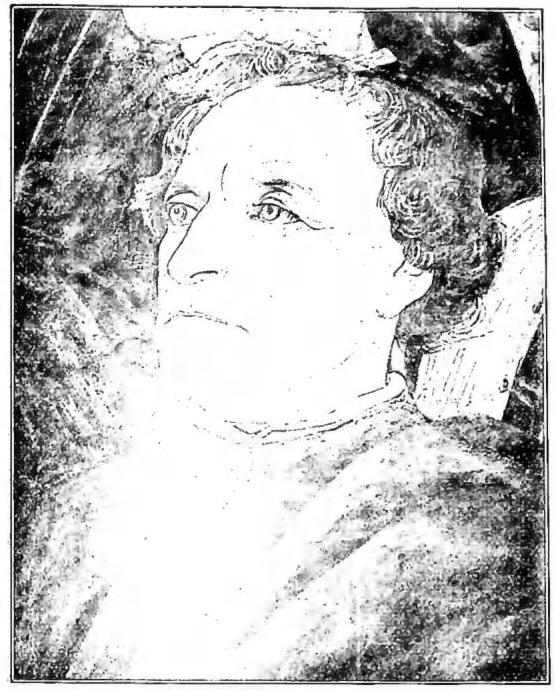
GIROLAMO, with the financial assistance of his brother, aimed to make himself powerful in the secular state. Created Count of Bosco by Galeazzo Maria Sforza, he married Caterina, his natural daughter; the Pope invested him with the lordship of Imola, which he had redeemed from Galeazzo himself for 40,000 scudi, and obtained for him from Louis XI the county of Valenza.
The Roman people granted him Roman citizenship on 15 Dec. 1477, and Girolamo conducted himself in the city as « Ecclesiae imperator », governing it according to his own will. In order to diminish the power of Lorenzo de' Medici in Florence, he took part in the Pazzi conspiracy and in the murder of Giuliano (26 Apr. 1478), and thereafter in the war that followed, as well as in the other Italian political struggles of those years. Lord of Forlì from 4 Sept. 1480 and captain general of the Church from 8 Sept., he sided with the Orsini against the Colonna, whose head, the protonotary Lorenzo, he had executed (30 June 1484). He was finally killed at Forlì on 14 Apr. 1488. His widow Caterina briefly succeeded in saving the lordship for her son Ottaviano, until she was overcome by Cesare Borgia.
RAFAELE, son of Valentina R., sister of Cardinal Pietro and wife of Antonio Sansoni; he is better known by the surname of the R. than by his paternal surname. Through his great-uncle he was created cardinal deacon of S. Giorgio at the age of 17, on 10 Dec. 1477.
He was a guest of the Pazzi when the conspiracy against Lorenzo de' Medici broke out in Apr. 1478, and he ran the risk of losing his life in the reaction that followed. He held the bishopric of Cuneo in commendam (from 13 Aug. 1479 to 1482) and the archbishopric of Pisa from 17 Sept. 1479,
which he retained until 1499, when he ceded it to his brother Cesare; the bishopric of Salamanca (1482–83), that of Tréguier (1480–83), and that of Osma (1483–93); from 1483 he was also camerlengo of the Holy Church. In the meantime he was legate to Perugia (1478) and to the Marches (1480–81).
Alexander VI gave him the bishopric of Viterbo in commendam on 24 Aug. 1498 (which R. held until 1506); but Rafaele left Rome on 21 Nov. 1499 and did not return until the Pope’s death. From Julius II, his uncle, he received Arezzo in commendam (7 July 1508–11) and then Savona (5 Dec. 1511–16). Under Leo X, having in some way become implicated in the conspiracy of Cardinal Petrucci, he was confined in the Castel Sant'Angelo (3 June 1517) and subjected to trial; he was not released until he had paid a large sum and renounced certain benefices (24 June). He had been bishop of Ostia since 20 Jan. 1511 when he died in Rome on 9 July 1521 and was buried near his relatives at SS. Apostoli. Through his efforts the great Palazzo arose, incorporating the church of S. Lorenzo in Damaso; it was later assigned to the Apostolic Chancery.
ALESSANDRO R., of the Bolognese branch, auditor of the Apostolic Camera, was appointed patriarch of Alexandria on 8 Nov. 1570 and then created cardinal on 21 Feb. 1578 by Gregory XIII; on 23 March 1580 he was sent as legate to Philip II, king of Spain; in 1581 he was legate to Perugia and Umbria; he was prefect of the Segnatura of Justice; he died in Rome on 18 July 1585.
The last of the Bolognese branch was a FERDINANDO, who in 1662 appointed the R.-Sforza of Naples as his heirs; from this branch came TOMMASO, born in Naples on 8 Jan. 1782; he governed Forlì and then Pesaro-Urbino, and was master of the household of Pius VII, who created him cardinal deacon on 10 March 1823; as first among the deacons he announced the election of Pius IX to the people; he was cardinal camerlengo and died in Rome on 17 March 1857. - Vedi tav. XLIV.