
ATHOS MONTE
TAV. XXV
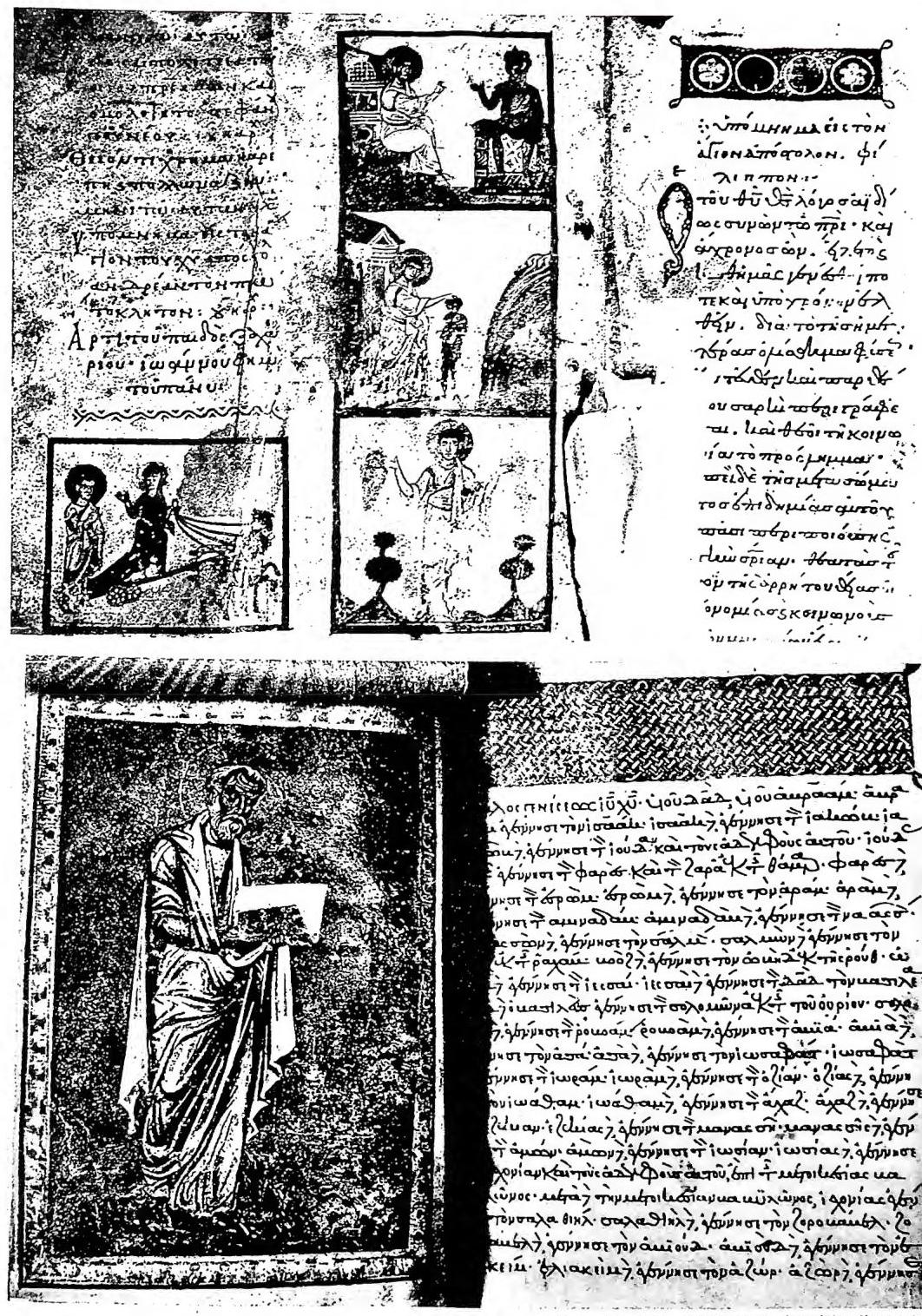
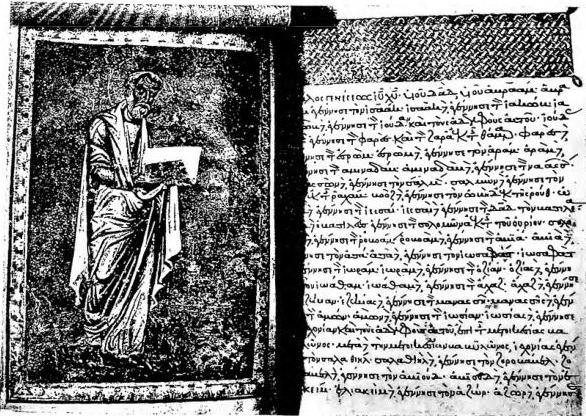
Bottom: NEW TESTAMENT No. 8 of the Monastery of Dionisiu. Beginning of St. Matthew (1133).
Carlo Diano
II. A. IN THE BIBLE. - Around 163 B.C., A. is mentioned as a free city (II Macc. 9:15).
(photo Alinari)
Gaetano M. Perrella
III. CHRISTIANITY IN ATHENS
Among the first converts in Athens was St. Dionysius the Areopagite, who became the first bishop of that city according to the testimony of St. Dionysius of Corinth and Hegesippus, and was martyred like his successor Publius. The bishop Quadratus addressed an Apology to the Emperor Hadrian in 123-124 or 129 in defense of Christianity; the philosopher Aristides of Athens presented another to the same emperor; and the philosopher Athenagoras, a native of Athens, presented a plea for the Christians to Marcus Aurelius and his son Commodus, defending Christians against pagan accusations. Under the Emperor Decius, Bishop Leonidas died for the faith. Still in the 4th century, whenSt. Basil and St. Gregory of Nazianzus were studying in that city, paganism was predominant there. Theodosius II began to give a Christian imprint to Athens, ordering crosses to be raised above the pagan temples. Justinian I closed its school, a center of pagan influence. Alongside ancient monuments transformed into churches such as the Parthenon, the Erechtheum, and the Propylaea, new churches arose such as the great basilica on the site of the martyrdom of St. Leonidas. The first monastery of Daphni near Athens was probably built in the first half of the 5th century.
The bishopric of Athens previously depended on Corinth and, like it, belonged to Eastern Illyricum, which was directly subject to the Pope. The measure of Theodosius II annexing this ecclesiastical province to the Patriarchate of Constantinople in 421 was soon revoked following the protests of Pope Boniface and the admonitions of Theodosius's uncle, namely the Emperor Honorius. But Leo the Isaurian detached Eastern Illyricum from the competent authority of the Pope (732), and the protests of the Popes in subsequent centuries could not change that unjust situation. Thus Athens had to follow the historical destiny of Constantinople, even in the fundamental question of religious unity with the Catholic Church; nor did Latin rule (1204-1458) succeed in permanently establishing the bond of union with Rome. For two centuries the Greek metropolitan see was vacant; however, certain monasteries persisted, protected by the Holy See, and the clergy and even the faithful remained. The Metropolitan Michael Choniates (1182-1204, d. 1217 on the island of Ceos), a man of high culture, was able to preserve the
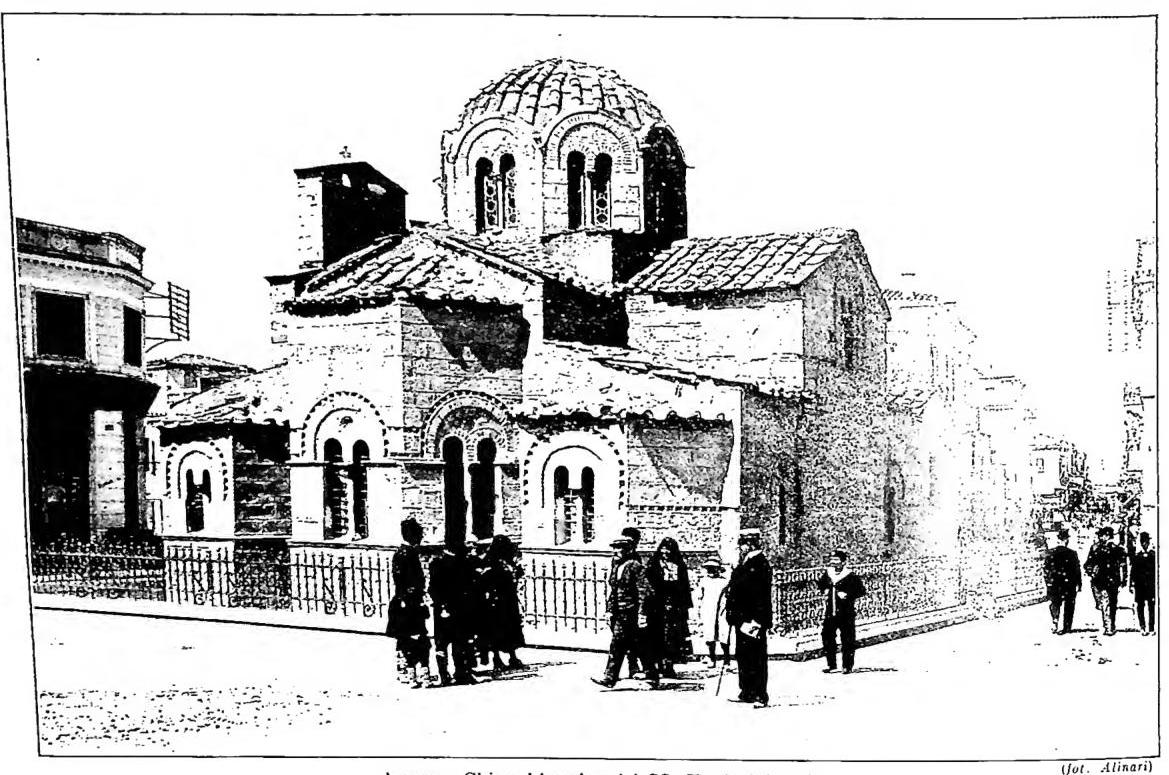
(photo Alinari)
Among the Greek bishops of the Turkish era, several of whom were deposed by the Turkish government or even by the Synod of Constantinople, few emerge for special merits, e.g., Sophronius (1565-70) notable for his practical sense, Neophytus II (1596-1602) who twice became patriarch of Constantinople, Anthimus III who signed the decree of the Synod of Jerusalem (1672) against Calvinism, James I who submitted the surrender of the city of A. and the request for protection against the Turks to Morosini; the leader of the Venetian expedition entered the city on Sept. 29, 1687, but remained there a short time. In the times of Turkish rule several Greek monasteries could be founded; however, vexations and even killings of monks were not lacking, though caused by pirates. The founder of the female convent of St. Andrew, Venizelos, who had also become a nun, was beaten by Muslims because she had saved four young women driven by threats to embrace Islam; dying in 1589, she was canonized by a synodal sentence ten years later.
The independence of Greece followed by ecclesiastical independence (July 27, 1833), the proclamation of A. as the capital city of the new Hellenic kingdom (1834), the immigration of many, especially refugees from Asia Minor, gave an eminent place at least of honor (president of the synod) to the Greek metropolitan of A. Currently there are more than 80 parishes in the two cities of A. and Piraeus, and more than two-thirds of the population subject to the metropolitan is found there.
lita. Seven monasteries depend on him. The first dissident metropolitan of new Greece was Neophytus Metaxas (d. 1861), recognized also by the patriarch of Constantinople after a 17-year refusal. His successor Misael Apostolides (1861-62) had been commissioned to negotiate the autocephaly of the Greek Church with the patriarch, before becoming bishop of Patras in 1852. Theophilus Vlachopapadopoulos (1862-71) had very great difficulties with the monks and laity in matters of the catechetical instruction of the people and the material improvement of the secular priests.
Procopius Georgiades (1874-89) was very zealous, but strongly opposed by the government. On the other hand, Procopius Economides (1896-1901) enjoyed royal favor, but he dragged into his disgrace Queen Olga, who had favored him in the question of the translation of the Sacred Scripture into the vernacular, then considered by some a crime against the spirit of pure Hellenism. Theoclitus had various vicissitudes in the civil struggles between 1902 and 1922; he had pronounced the anathema against Venizelos in Dec. 1916, and the latter, having become head of the nation, had Meletius Metaxakis (the future patriarch) elected metropolitan; however, under King Constantine, Theoclitus was able to return only to be overthrown with him in 1922. Chrysostom Papadopoulos (1923-38), writer of many articles and historical books, earned merits in promoting the sciences (he is the founder of the journal Θεολογία) and the catechetical instruction of the people, but showed himself several times as a violent adversary of the Catholic Church. For the intellectual life of A. in modern times, preponderance was held by the faculty of theology of the local University, founded in 1837, whose professors were trained abroad and underwent its influence even for their work at home, not always for the good of orthodoxy. The initiative for the first congress of Orthodox theology in A. from Nov. 29 to Dec. 4, 1936, was taken by the professor of canon law at the University of A., Hamilcar Alivisatos.
IV. CHURCHES AND MONASTERIES OF ATHENS
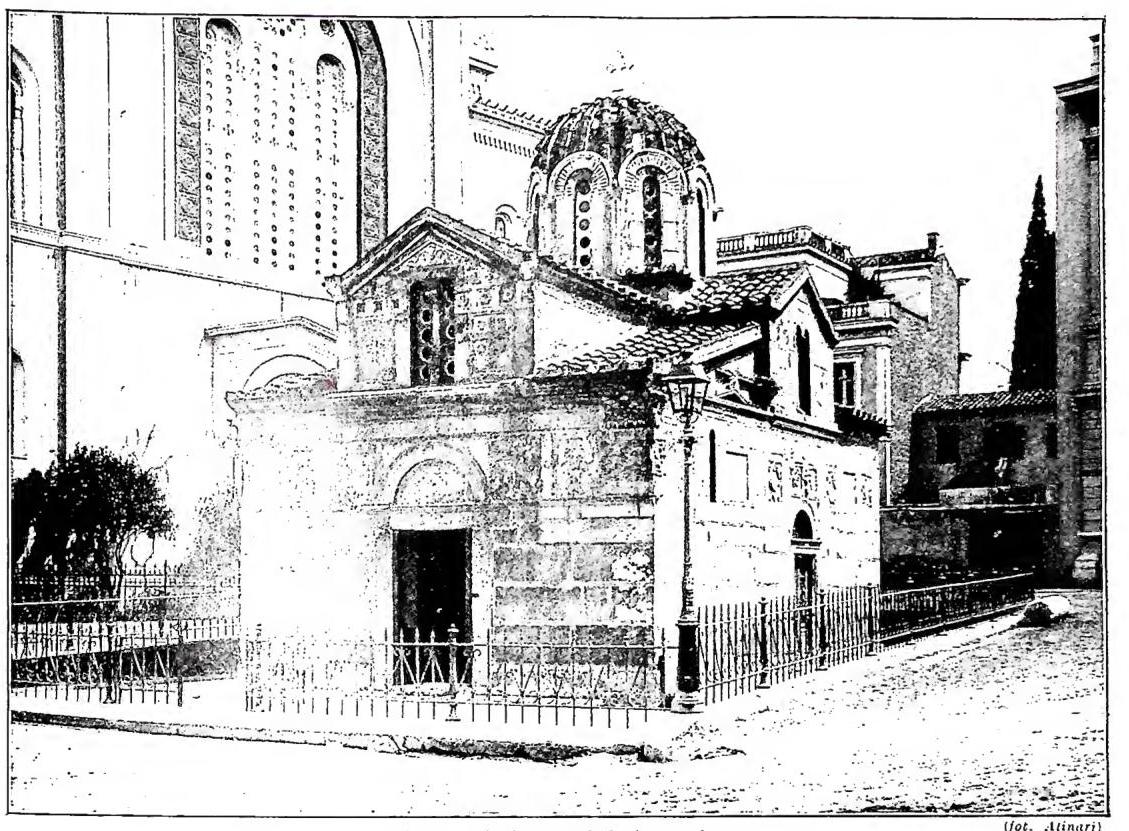
Gregory of Nazianzus, who frequented Athens with St. Basil, tells us that there were various churches there in the 4th century. Many Christian inscriptions from this period have been found, some of them quite noteworthy. By a law of November 14, 439, Emperor Theodosius II decreed that the pagan temples of the city should be replaced by Christian sanctuaries. Perhaps from this time the slow transformation of pagan temples into Christian places of worship began, while some entirely Christian constructions of the 5th century are also found, such as the domed basilica discovered in 1916 near the Ilissos and dedicated to St. Leonidas. Near the Areopagus, the remains of an ancient church dedicated to St. Dionysius were discovered. In the 6th century, the temple of Athena on the Acropolis (Parthenon) became the Haghia Sophia (later dedicated to the Theotókos); this church was later decorated with paintings, traces of which were still visible in 1848. The fragments of an inscription belonging to the water basin (cantaro) originally located there have been reassembled and studied by D. I. Pallas (Ἡ φάλη τοῦ φαστλανῶς παρβενῶνος, in Byzantinische Neugriechische Zeitschrift, 16 [1933], pp. 185-98). Chapels were set up in the Propylaea of the Acropolis and in the Temple of Athena Nike; the Theseum was dedicated to St. George and the Olympieion to St. John the Baptist; a cave in the Theatre of Dionysus became the Panaghia Speliotissa; the Choragic Monument of Thrasyllus became the Panaghia Chrysospeliotissa; the Library of Hadrian became the church of the Megali Panaghia; the church and convent of Daphni (v.) were erected within the area of the Temple of Apollo, and so on.To the Justinianic period belong several churches and monasteries, such as the old cathedral or Catholicon; the churches of the Asomatoi or incorporeal beings (the Angels), and of the Apostles (domed), built on the site where the precinct of the Twelve Gods once stood; and the church of SS. Theodore, rebuilt in 1049 (domed with three apses), the best preserved of the ancient churches of Athens. Between the end of the 9th century and the beginning of the 13th century, other Christian buildings arose, such as, for example, the churches of the Haghia Triada, of the Most Holy Savior (now St. Nicodemus), of the Panaghia Kandeli on Tripodon Street, of St. John the Precursor, of St. Nicodemus or Panaghia Lykodemon on an octagonal plan, dating prior to 1044, of the Panaghia of the Great Monastery (Monastiraki), of St. John Manoutis (year 871), of the Small Metropolis (or rather the ancient private chapel of the bishops, also called Panaghia Gorgoepikoos, a domed church of the 9th century, today St. Eleftherios, with decorative panels on the exterior), of the SS. Anargyroi (Cosmas and Damian), today the Metochion of the Holy Sepulchre, of the Kapnikarea, dating to the 12th century and later remodeled; two churches dedicated to St. Athanasius, one in the Payré district, and the other called St. Athanasius Chalkouri to the northwest of Athens; the churches of St. Demetrius Loumbardiaris near the Pnyx, of SS. Simon and George (Anaphiotica), of St. Cyriacus (on Athena Street), of St. Elijah (on Eponymon Street), and the now-destroyed churches of St. Paraskevi and St. Nicholas.
The church of the Parthenon was enriched with gifts in 1019 by Basil II after his victory over the Bulgarians (Cedrenus, Hist. compend.: PG 122, 208; Zonaras, Annal., 17, 9; PG 135, 168), and later by Michael Choniates (1182-1220), who established his residence near there; at the beginning of the 13th century Archbishop Berardo took possession of it, while the Latin clergy officiated in the church of the Virgin in the Parthenon. In the Middle Ages, this sanctuary became a destination for incessant pilgrimages, so much so that in 1291 Pope Nicholas IV enriched it with abundant indulgences. At the end of the 14th century, Neri Acciaiuoli provided in his will that the doors of this church should be covered in silver and that all the looted treasures should be restored.
To this period also belongs the largely ruined chapel called Hypapantou or of the Presentation, built at the foot of the Acropolis on the site of the temple of the Magna Mater.
Travelers who visited Athens during the Turkish domination still reported 300 to 130 Christian churches in Athens, a number that steadily decreased following demolitions or archaeological exploration work, reducing the count to about 50. The modern Latin Catholic cathedral located near the Academy is dedicated to St. Dionysius the Areopagite; the Greek-rite Catholics have their church near a monastery.
The Grand Metropolis or new Cathedral of the dissidents is a modern building constructed in the mid-19th century using the remains of many demolished churches and chapels.
Among the ancient monasteries, the most famous is the one that stood at Daphni (v.), 10 km from Athens toward Salamis. Also worthy of mention are the monasteries of St. John on Hymettus, that of the Beautiful Church near Patissia, and that of Kaisarianie with its adjoining Small Church of the 10th century (J. Arnott Hamilton, The Church of Kaisariané, Aberdeen 1916).
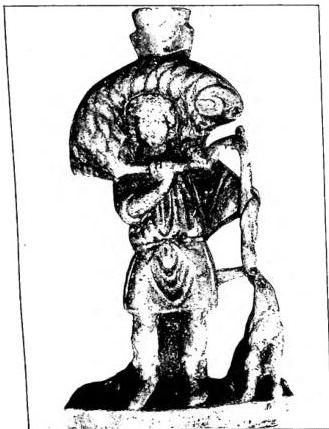
A room in the central museum has been designated for the few Christian sculptures, among which is the statuette of the Good Shepherd known as the Patissia statuette; the other antiquities are gathered in the restored church of Daphni, which has been turned into a museum. In 1892, the praiseworthy Christian Archaeological Society was founded in Athens.
V. L'ARCIDIOCESI DI A
Under Latin rule (1204-1458), Latin archbishops resided in A. The first was Berardo, confirmed by Pope Innocent III on November 27, 1206. Especially important is the papal letter of February 13, 1709 [translator's note: 1209], which established the constitution of the Latin Church of A.; in it, besides confirming ecclesiastical donations, the Pope extended the archbishop's jurisdiction over eleven bishoprics that had belonged to the Greek metropolis. Around 1207, Cistercians were installed in the monastery of Daphni, and the Popes entrusted various commissions to their abbots. When the Greek metropolitan returned to A. in 1387, the dominant situation of the Latin Church did not change much, although it still counted, as before, very few Catholic faithful. The Latin archbishops were largely members of religious orders. The last one, Niccolò Protimus, retired to Euboea; on August 4, 1461, the church of Lepanto (Naupactus) was united with that of A. After the death of Protimus (1484), the Latin see of A. became titular and remained so until 1875, when Pius IX re-established the Latin archbishopric, associating with it the Apostolic Delegation of Greece, which had already been established by Gregory XVI in 1834 and entrusted to the bishop of Syros. The new archbishopric developed with the help of the Orders, which founded secondary schools and charitable institutes in A. and Piraeus; the statistics of the Congregation of Propaganda indicated for the year 1934 the number of Catholics as 25-26,000 of the Latin rite; 3,000 of the Armenian rite; 1,000 of theGreek rite, subject to their respective prelates. Since 1929, the Latin archbishop has also been apostolic administrator of Thessalonica. The Assumptionist archbishop Ludovico Petit (1912-26, d. 1927) acquired international fame among scholars.
VI. THE ORDINARIATE OF ATHOS
A residential see in Greece. The origin of the Catholic ordinariate of the Byzantine rite in Greece is due to the immigration of Greek-rite Catholics from Turkey to Greece, and to the esteem of the Greek government for the charitable work carried out in favor of Greek refugees by the Catholic bishop of the Greek rite, Giorgio Calavassy, who was able to settle in Athens, while still remaining ordinary of the Greek-Catholic community of Constantinople. The Holy See extended his jurisdiction to the whole of Greece on Dec. 21, 1925. Under him, after the creation of a new Catholic ordinariate of the Greek rite in Constantinople, there are about 1,000 faithful with various works, e.g., a seminary and a female convent of a new congregation founded by the bishop, namely the Sisters of the Pammakaristos; the ordinariate encountered some storms stirred up by currents of intolerance and fanaticism. A special merit of the ordinariate in favor of the Catholic cause in Greece is the weekly magazine Κεθολική.ATENEO URBANO « DE PROPAGANDA FIDE » (PONTIFICIO). - The A. U. d. P. F. owes its origin to Propaganda Fide (v.). Pope Urban VIII (Barberini) in fact, in erecting the College with the bull Immortalis Dei Filius on Aug. 1, 1627—a college which perpetuates his memory also in its name—wished to grant it its own schools with all the privileges and immunities of the « Archigymnasium Romanum » (University of Rome La Sapienza) and with the faculty for the Rector « pro tempore » to confer on its students a doctorate in Philosophy and Sacred Theology.
The classrooms, in which important chairs flourished—the chair of Controversies, which was later established in all the pontifical athenaeums of the City, was famous—were located, together with the premises of the College, in the Palazzo Ferratini (Piazza di Spagna), later enlarged by the work of Bernini and Borromini and which also became the seat of the Sacred Congregation of Propaganda. In 1772 Clement XIV confirmed to said schools the right to confer « lauream magistralem seu doctoratam, iuxta consuetudinem et cum privilegia in Archigymnasio imperitiri solitis », specifying that the conferring of it with the relative insignia be done by the Secretary of the Sacred Congregation of Propaganda Fide.
After having gone through stormy days due to the sad political events of the times of Napoleon I, the Athenaeum resumed a new life, and students from the Irish, Greek, Maronite, Armenian, North American, Canadian, Bohemian Colleges and other Institutes were admitted to attend II. Leo XIII endowed it with larger and more convenient classrooms, moving its seat to the Palazzo Mignanelli on the piazza of the same name. In 1928 it was transferred to the Gianicolo Hill, where, thanks to Card. G. van Rossum (v.), a magnificent building was constructed, which on April 24, 1931, was visited by Pius XI, who came to inaugurate the new building of the Collegio Urbano.
To the faculties of Philosophy and Theology was added, by decree of the Sacred Congregation of Seminaries and Universities of Studies, dated Sept. 1, 1933, the « Institutum missionale scientificum », which grants a degree in missiology and gives young people the opportunity to follow special courses in ethnology, medicine, philology, history, and missionary geography. This institute is the logical development of the chair of missiology, erected within the theological course in 1919. Finally, in 1943, by a rescript of the same Sacred Congregation, a juridical section was incorporated into the missiological institute with the power to grant to those who attend it a doctoral degree in law « in locis missionum ».
In its three centuries and more of life, the Athenaeum Urbanum was illustrated by talented professors and saw pass within its walls students of every color and every race, who rendered distinguished services to the missionary cause in the world.