
POPULAR TRADITIONS. — They are also designated by the term folklore, coined by the English archaeologist William J. Thoms (1803–85, better known by the pseudonym Ambrose Merton), and appearing in the London journal Athenaeum (22 Aug. 1846). It is composed of two words of Saxon origin: folk = people, and lore = knowledge: hence, literally, knowledge of the people. It signifies both the study of popular traditions and the traditions themselves. But the term did not spread without opposition. Thus, the Germans adopted Volkskunde and claim for Germany priority for the term, which first appeared in 1808, in Arnim and Brentano’s well-known work The Boy’s Magic Horn. In France, the term folklore has prevailed, but traditions populaires has also been, and continues to be, widely used, as has, by some, traditionnisme; in Spain, alongside folklore, we find saber popular, in Greece λαογραφία, etc.
In Italy, various substitutions have been proposed and tested, such as demopsychology (Imbriani, Carducci, and especially Pitrè), ethnography (Loria), popular literature, demology (Vidossi), popolaressa (Tolomei), laography, etc. But the term popular traditions has prevailed with regard to the subject matter, and history of popular traditions to designate the science concerned with them. Naturally, the use of the various terms is connected with the problem of the concept and limits of this science.
However, the study of the traditional life of the people began as the simple “discovery” of the world of the humble, in which artists and men of letters took part from the second half of the sixteenth century and throughout the following century; it developed in the eighteenth century as a form of curiosity and erudite inquiry, finding in certain precursors its first broad theoretical outlines, until, with Romanticism, genuine comparative studies of a scientific character emerged from this interest and admiration. It is a European phenomenon, and in Italy, to restrict ourselves to the literary field, the most significant signs of the “discovery” as an artistic interest are provided by popular fairy tales adopted as narrative material by prose writers, such as those appearing in Piacevoli notti by Straparola (first half of the sixteenth century), or those told in an individual style but with perfect adherence to the spirit of the Neapolitan women of the seventeenth century, which make up the Pentamerone of G. B. Basile (1575–1632), the first systematic collection of fairy tales to appear in Europe, and still one of the most important in the history of popular fiction. Only sixty years later, the celebrated collection Contes de ma mère l’oye by Charles Perrault (1697) appeared in France: interest in fairy tales then triumphed in eighteenth-century Paris, until it became a literary fashion.
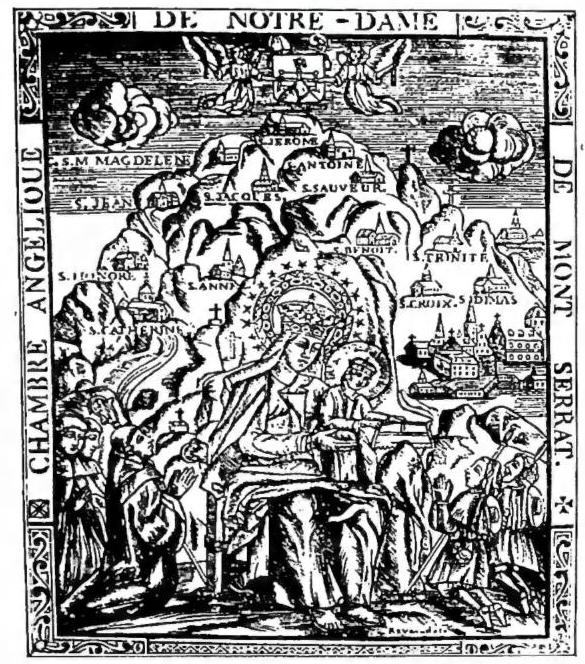
(courtesy of Mons. A. P. Fruzz)
TRADIZIONI POPOLARI — The Madonna of Monserrato, a popular print of the sixteenth century, exhibited at the Exhibition of Tolosan Images, at the Musée national des arts et traditions populaires.
Some, indeed, such as those concerning the character of the mentality of primitive peoples, anticipated views and achievements of contemporary thought. Also noteworthy in Vico is the breadth of his comparisons, for which he drew upon material collected from the most varied countries and periods, as well as his acute intuition of the value, including as an ethnographic document, of what he called “fragments of antiquity.” In Italy, too, the erudite historical school prepared the development of the science of popular traditions: through the merit of Muratori, with several chapters of the Antiquitates Italicae, the treatise De superstitionem vitanda, etc.; of Fr. Michelangelo Carmeli, with the Storia dei costumi sacri e profani (Padua 1750); of Nicola Valletta, with the Cicalata sul fascino volgarmente detto jettatura (Naples 1787); and of G. L. Marugi, with the Capricci sulla jettatura (ibid. 1788). Various other short treatises could also be added, such as the De Praeficis of Gerolamo Baruffaldi (Ferrara 1713) and the Pratica agraria of Giovanni Battarra (1788), etc.
There was also widespread interest in the various aspects of popular traditions in France, expressed in Thiers’s Traité des superstitions (Paris 1679), Fontenelle’s Histoire des oracles (1686) and Origine des fables (1794 ed.), as well as in the contribution made by the ideas and some works of Lafitau, Helvétius, Montesquieu, and Voltaire.
In Great Britain, much information concerning popular customs and beliefs is already found in the work of the seventeenth-century physician Thomas Brown, Pseudodoxia epidemica, also translated into Italian under the title Saggio sopra gli errori popolareschi. It represents one of the many manifestations of the struggle that the Church on the one hand and the Enlightenment on the other waged against superstition. Of direct interest are the works Antiquitates vulgaris, or the Antiquities of the common people by H. Bourne (1725), and Observations on popular antiquities by J. Brand (1777). In eighteenth-century England, particular importance was assumed by the interest in popular poetry, which anticipated and prepared the exaltation of this poetry by German Romanticism. At Addison’s urging, the Collection of old ballads appeared in London (1723–25) in three volumes; but the greatest influence on the literary tastes of the period was exerted by Percy’s Reliques of ancient English poetry (1765), followed by other collections, culminating in Walter Scott’s The minstrelsy of the Scottish Border (1802–1803).
But it was German Romanticism, and especially Herder, Goethe, and Bürger, that raised popular poetry and literature to the highest aesthetic, political, and moral values and symbols, fostering collections and investigations of an increasingly scientific character. The methodological study of popular traditions is generally considered to have begun with the work of the brothers Wilhelm and Jacob Grimm, Kinder- und Hausmärchen (vol. I, 1812; vol. II, 1813; vol. III, 1810–22, repeatedly printed and translated into the principal languages), which, besides the collected texts, contains a comparative investigation and a general interpretive theory. It is not surprising that the impulse given by Romanticism made itself felt chiefly in the study of popular literature, songs, and tales: this impulse continued throughout the first half of the nineteenth century and beyond, producing in the principal nations of Europe, including those of Slavic speech, a rich flowering of collections and studies that served to shed ever greater light on the importance of popular life and its poetic expressions.
For Italy, the most significant work is due to Tommaso, with the great collection of Canti popolari toscani, corsi, illirici, greci (4 vols., Venice 1841–42). The spirit of nationality, which played so large a role in nineteenth-century European history, contributed to it as an animating element, especially in those countries lacking an ancient and rich literary tradition, and it also revived interest in customs and usages. In France, during the Napoleonic period, an official inquiry was promoted, whose questionnaires were prepared by the Académie celtique of Paris, especially through the efforts of J. A. Dulaure (cf. the Mémoires of that Academy, vol. I, 1808, pp. 72–86). The inquiry, conducted through the prefects of the various departments, continued even after Napoleon, producing a copious and valuable collection of folkloric materials, published in official annals and statistical reports. This inquiry was also extended to the first Kingdom of Italy in the years 1800–11, with significant results. Michele Placucci’s work, Usi e pregiudizi dei contadini della Romagna (Forlì 1818), should be regarded as one of its effects: it was one of the first works, not only in Italy, to offer a systematic and precise picture of the popular traditions of a particular region. The study of popular traditions developed during the nineteenth century, acquiring an increasingly systematic character, also because, in all that concerns popular poetry and tales, it came to be included within the framework of one of the more advanced sciences, philology. Oral tradition was supplemented by literary texts, and theories were formulated concerning the origin of tales: the mythological theory of the brothers Grimm and Max Müller (Essay on comparative mythology, Oxford 1856), and the Indianist theory of Benfey (1809–81), both of which were developed by numerous followers. From the Romantic phase, characterized by enthusiasm and somewhat fanciful theorizing, there was a transition to the positivist phase and the historical method, in which the search for sources and documents became a fundamental condition and served the work of historical reconstruction and interpretation. For Italy, it is enough to recall C. Nigra, D. Comparetti, and A. D’Ancona, with their numerous disciples and collaborators.
In the second half of the nineteenth century, the horizon of popular traditions broadened, and in the various nations the collection and processing of data became more intensive. The first societies of scholars were established—the Folklore Society of London in 1878—the first specialized journals were published, and collection and organization of materials became increasingly active. In Italy, the representative of Pitrè (v.), whose multifaceted work reflects the principal orientations and constructive results, within a sphere that is not merely Italian but European. The study of popular traditions received an impetus decisive for its definitive scientific establishment from the development of ethnography, especially through the work of the English anthropological school, which, despite its predominantly naturalistic orientation, also encompassed the moral and cultural manifestations of primitive peoples. It was precisely through the investigation of the relationships and correspondences between the customs, usages, and beliefs of primitive peoples and those of the common people of civilized nations that folklore received valuable illumination and fully revealed its character. Among the most significant works of this school may be recalled: Primitive culture (1st ed.
1871) by E. B. Tylor; Myth, ritual and religion (1887) by A. Lang; and The golden bough (“The Golden Bough”) by J. G. Frazer (1st ed. 1890: 3rd ed., in 12 vols., 1911–15; Italian translation, in 2 vols., 1950). The beliefs of primitive peoples, though interpreted differently according to the authors, are also explained with the aid of the correspondences they display with the t. p. still living in the various nations. The investigation extends to the origin of folktales and especially to the similarity of motifs and themes among tales from very distant countries, bringing to light the close affinity between the conceptions and customs of primitive peoples and the fundamental identity of the human spirit, manifested in their shared gifts of imagination and inventiveness. The development of the English anthropological school, which stamped scientific activity in this field even outside England, especially in America, was prepared and accompanied by the works of several German scholars, such as Mensch in der Geschichte by A. Bastian (1859) and Antike Wald-und Feldhulte (1876) by W. Mannhardt. Bastian’s doctrines concerning the “elementary ideas” common to all peoples and the “ethnic” ideas proper to individual peoples led to the admission that identical forms of culture can arise anywhere, and resulted in the evolutionist thesis of an almost inevitable development of primitive civilizations, independent of any historical connection” (Vidossi). These doctrines have been superseded thanks to the objective investigations conducted by numerous researchers belonging to different scientific currents, above all that associated with Fr. W. Schmidt; their findings, although concerned with ethnology, are also fruitful in their application to the field of t. p.
A considerable impetus has also come from the development of sociology, because t. p. has its natural element and its raison d’être in the life of organized communities. Folklore, therefore, is understood by certain scholars, such as the Frenchman A. Van Gennep and the Belgian A. Marinus, within a sociological system. The fruitful aspect of this approach consists in establishing tradition as a unitary and essential element of folklore and in conceiving it as a perennial activity, not as mere survival or a fragment of antiquity. It is Marinus who formulated “le folk-lore est immortel,” while Van Gennep, with his Manuel de folklore français contemporain (in publication since 1937: 8 substantial volumes have appeared to date), offers a model of the complete systematic collection and comparative interpretation of the t. p. of a great nation. Even if remnants of now-outdated naturalistic conceptions are found at the foundation of his theoretical principles, in its actual execution this monumental work demonstrates the importance and value of folkloric science.
We have thus arrived at the various, and at times conflicting, currents that confront or complement one another in present-day folklore. The revision of the concept of t. p., the recognition of the influence exercised by the culture of the upper classes, and the asserted need to distinguish, within folklore, “decayed learned material,” of individual origin, from that other material which he considers primitive and therefore collective, are due principally to the German scholar F. Naumann, Grundzüge der deutschen Volkskunde (1921). In this way Naumann believes that he reconciles the conflict between naturalistically understood ethnology and the history of culture—a conflict that is instead overcome and nullified in the modern historical-cultural conception of ethnology. Following the path he opened, the Swiss scholar E. Hofmann-Krayer advances by critically examining and consequently modifying certain aspects of Naumann’s theories, emphasizing the fundamental importance of creations and innovations due to individual persons even among the humblest strata, and characterizing the phenomenon whereby a community assimilates a given form of life.
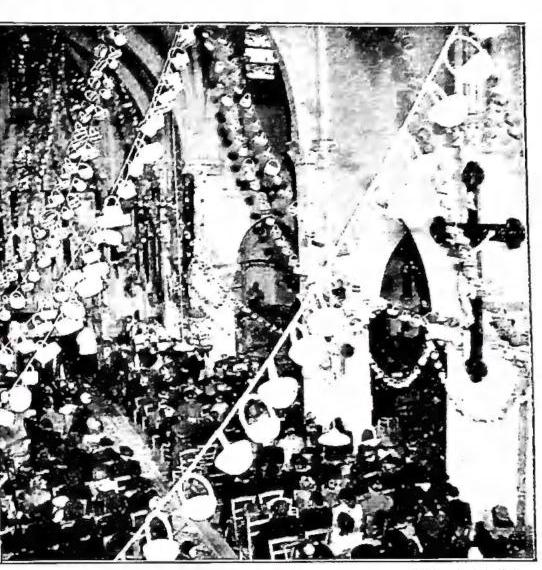
(phot. A. D. P.)
TRADIZIONI POPOLARI — Feast of St Paul, patron saint of the basket-makers of Origny. The village church during the pontifical Mass is entirely decorated with garlands of small baskets, according to a thousand-year-old tradition.
…tions of the individual members of the community begin to exist as tradition only when they are assimilated by the community itself through a perpetual process of selection and elimination, which is not a mere passive mechanism but a creative activity. The theories of the two scholars just mentioned agree only in part with those that prevail today, almost with official sanction, in the USSR, and which emphasize the social function of folklore, regarding it not so much as an echo of the past but as the voice of the present, an expression of the soul and life of the popular classes. It should be noted that in Russia folklore has the restricted meaning of popular literature, excluding customs and traditions, which are subsumed under ethnography: this is in strange contrast with the official conceptions of the character of literature, which is assigned a precise task of maintaining a practical relationship with social life—the very relationship that consistently distinguishes popular poetry. In any case, folkloric science, which already counted Vesselovski among its nineteenth-century representatives, now includes M. Azadovski, E. Kazarov, B. and J. Sokolov, and V. J. Propp.
To complete the picture of current positions in the study of popular traditions, mention should be made of the trend which, in Germany, in accordance with the political interests of Nazism, sought to make the characterization of Germanness in its specific racial qualities the fundamental object of folkloristic research. Yet, apart from its deviations and exaggerations, the substantial contribution made by German and Austrian scholars must be acknowledged: through works of systematic investigation and broad synthesis, through the organization of research centers, and through the production of the Atlante demologico tedesco and the Handwörterbuch des deutschen Aberglaubens (from 1928, in 10 volumes, edited by E. Hoffmann-Krayer and E. Bächtold-Stäubli). Suffice it to recall the names of J. Meier, A. Spamer, P. Geiger, W. Pessler, A. Harmjanz, and, for Austria, M. and A. Haberlandt and L. Schmidt.
As for Italy, the last thirty years have seen a vigorous revival, to which philological and aesthetic currents have contributed together with ethnological ones. Through the efforts of Michele Barbi and his pupils, including Vittorio Santoli, the problems of the history of popular poetry and of the critical editing of popular songs—collected by Barbi over fifty years of research—have been placed on new and rigorous methodological foundations. Dialectologists, too, have made a notable contribution: Luigi Sorrento conceived and directed a “Collection of
The principal orientations and results of international folkloristic science have been assimilated, through critical evaluation, and employed in original studies by several eminent scholars, among them Giuseppe Vidossi and Raffaele Corso. The latter, through his treatise Folklore (1st ed. 1923; 4th ed. 1953), his journal Il Folklore italiano (from 1925 onward), his university teaching of ethnography, and important works, gave powerful impetus to the study of popular traditions on ethnographic foundations. But a new generation is asserting itself, aided in its work by the recent establishment of chairs in the history of popular traditions at the Universities of Rome (Toschi), Palermo (Cocchiara), and Catania (Naselli). A course on popular poetry is also taught, through a bequest from Barbi, at the Scuola Normale Superiore of Pisa (Santoli and Vidossi), where the edition of the “Raccolta Barbi” is being prepared.
As for the scope of folklore, apart from the Russian school, which restricts it to “oral literature,” the Finnish scholars adopt a similar position, although their activity is so meritorious; the American A. Haggerty Krappe (The science of folk-lore, London 1930) likewise approaches this view. The English school conceives folklore, in accordance with evolutionary-anthropological doctrines, as the primitive history of humanity, reducing that history to certain primordial psychic attitudes, and thus does not delimit its field in relation to ethnography. A recent school that arose in France under the leadership of A. Varagnac makes it a branch of the new science called archeocivilisation, situated within prehistory and archaeology.
On the other hand, there are also divergences concerning the meaning and extent of the word “people,” folklore being regarded as more properly belonging to the humble classes, to the common people,
whence Hoffmann-Krayer’s formula “vulgus in populo,” and the name laography given to the science, with reference to laos = the common people, rather than to demos = people. Consequently, folklore is also conceived as a chapter of ethnography, that is, as “ethnography of the common people” (Corso), or as the “study of the common people within modern civilized nations” (Pettazzoni). But it has been pointed out, especially by German scholars, that folklore is found in every social stratum, that it is impossible to draw clear divisions among the various classes, and that therefore the formula “vulgus in populo” appears inadequate, uncertain, and too narrow. An attempt is consequently being made to use as a delimiting principle a particular mentality defined as “associative,” corresponding to Croce’s concept of psychological tone.
Also on the basis of this principle, the majority of the most qualified scholars, in France as in Italy, in Germany as in Switzerland and elsewhere, have always included within folklore both popular literature and the complex of usages and customs, beliefs, and prejudices. The bond that unites folkloric phenomena in the reality of life—“oral literature” and “objective traditions”—as an inseparable whole is constituted by the functional character of popular poetry, which is always indissolubly connected with the forms of life of the common people and ordinarily used for practical purposes. This unitary character finds its first and profound basis in the fact that all aspects of popular traditions are manifestations of a single spiritual force proper to associated human life and necessary for the preservation and development of civilization. Accordingly, considered in its essence, popular tradition reveals itself as a perennial spiritual force of associated groups which, through the agency of the most capable individuals, creates, preserves, and transmits those forms of practical, aesthetic, and moral life that are necessary and congenial to the groups themselves, while gradually renewing or eliminating those that have died out and become obsolete.
The study of the manifestations of these forces and the search for the norms governing them constitute the object of the science of popular traditions and confer upon it complete autonomy. Far from being a mere chapter of ethnography, it thus appears, alongside the history of language, religions, legal institutions, and so forth, as a branch of the history of human civilization.
Its principal manifestations may be indicated in Pitrè’s words: “Fairy tales and fables, stories and legends, proverbs and sayings, songs and melodies, enigmas and riddles, spectacles and festivals, usages and customs, rites and ceremonies, practices, beliefs, superstitions, notions, a whole manifest and hidden world of reality and imagination moves and stirs, smiles and groans for whoever knows how to approach and understand it.” From what has been said above, the relations between the study of popular traditions and other sciences are evident: with linguistics, for problems of a general order and for that branch which considers “words and things” together; with the history of religions, insofar as all traditional life is permeated by religiosity; with psychology, for certain manifestations of the mentality and psychological tone of the common people; with prehistory and archaeology, literary history, the history of art and music, law, the natural sciences, pedagogy, and so forth, because of their constant reciprocal influences.
As for the method of study, it may be reduced to two principal moments: the first involving collection and description, the second interpretation. For collection, one of the working instruments which, if properly used, renders valuable service consists of questionnaires, lists of questions prepared and arranged in relation to the purpose of the research. Very many have been compiled by societies and committees as well as by individual scholars; those of Van Gennep may be cited as models. For the documentation of customs, festivals, scenes of everyday life, and so forth, the broadest possible use of modern technical means is recommended: photography, cinema, sound recording, and sound film. An effective supplement is provided by cartographic representation (Van Gennep), which reaches its most complex and perfect form in demological atlases, where the principal folkloric phenomena are represented by the same methods as those used in linguistic atlases. The atlas for the folklore of Germany has already been completed; that of Switzerland is being compiled; for Italy …
a systematic program was outlined by Vidossi. Such atlases are also an extremely valuable instrument for comparison and interpretation. The finnic method, so called because it was devised and applied by Finnish scholars, among whom the first were Julius and Kaarle Krohn, has rendered notable services to the study of popular literature. Based on geographical-historical research, this method seeks to trace fairy tales (and, similarly, popular songs and other folkloric phenomena) through their complicated development, to establish the forms proper to each area of diffusion, and, through the forms proper to each area, to arrive at the archetypes presumed to be compositions attributable to a single author. The application of folkloric geography to popular song received new impetus from R. Menéndez Pidal: this line of research also includes the transfer of the linguistic areal norms formulated by Matteo Bartoli into the field of popular poetry and folklore in general. The interpretative investigation of a folkloric phenomenon, carried out through comparison and historical documentation, aims to establish its original character, its areas of diffusion, and its innovations and adaptations through time and space, in form and meaning, in order to reach a full understanding that places it within the general conceptions from which it draws inspiration and within the current of social life in which it moves.
Folkloric and ethnographic museums established in various countries on a national and regional basis, especially in northern Europe, have also provided valuable assistance to the development of studies of popular traditions. In Sweden, the Nordiska Museet was founded as early as 1872: the open-air Museum of Stockholm, founded in 1908 by Azelius, is distinctive and of great cultural and social importance. According to the same principles, the Norsk Folkemuseum of Oslo was established for Norway, as well as that of Arnhem in Holland and others. Notable for the richness of their collections are the National Museum of Helsinki, the Museum für Völkerkunde and the Museum of Industrial Art in Berlin, the Deutsches Museum of Munich, and the Museum für Völkerkunde of Vienna; Antwerp and Liège possess museums of great interest in Belgium; Basel in Switzerland; Warsaw and Krakow in Poland; Prague, Lubalovice, and Brno in Czechoslovakia; Ljubljana, Zagreb, and Split in Yugoslavia; Cluj in Romania; Thessaloniki and Athens in Greece; Madrid in Spain; and Lisbon in Portugal. In Italy, the Museum of Italian Ethnography, founded by Lamberto Loria and his collaborators, contains valuable collections of more than 35,000 objects (temporarily housed at the Villa d’Este in Tivoli). Among the regional museums, the Museum of Sicilian Ethnography in Palermo, founded by Pitrè and reorganized by Cocchiara, is pre-eminent; others have been established in Forlì, La Spezia, Tolmezzo, and Bolzano. Of capital importance are also the specialized journals, the principal ones being, in England: Folklore (since 1889); France: Mélusine (1877–87, revived, but only briefly, in 1897), La tradition (1888–98), Revue des traditions populaires (1886–1923), and Nouvelle revue des traditions populaires (recently revived); Germany: Zeitschrift für Volkskunde (since 1891); Poland: Lud (since 1895); Austria: Österreichische Zeitschrift für Volkskunde; Switzerland: Schweizerisches Archiv für Volkskunde (Basel); Spain: Revista de dialectología y tradiciones populares; America: Journal of American Folk-lore (Philadelphia), Western Folk-lore (Los Angeles), and, of an international character, Folk-liv (Stockholm) and Journal of international Folk-music Council (London); for Italy: Archivio per la raccolta e lo studio delle t. p., edited by Pitrè and S. Salomone-Marino (1882–1907); Rivista delle t. p. italiane, edited by A. De Gubernatis (1893–95); Lares (1st series, edited by Loria and Novati, 1912–13; 2nd series, edited by P. Toschi, since 1930); Il Folklore italiano, edited by R. Corso, since 1925, later reissued under the title Folklore; in addition to other minor and regional journals: Il Giambattista Basile, Ce fastu, La Piè, etc.
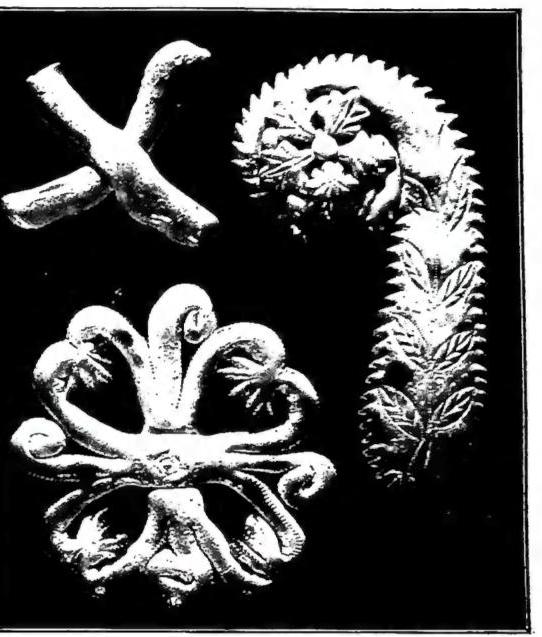
TRADIZIONI POPOLARI - Pane sardo confezionato per speciali ricorrenze. (per cortesia di P. Toschi)