
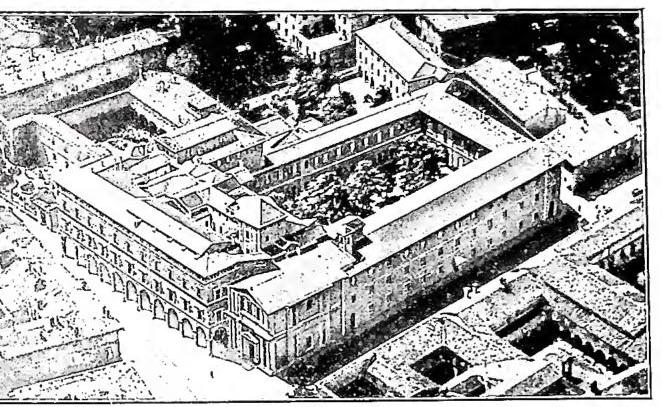
CONGREGATION OF SAINT PAUL (BARNABITES). - Founded in 1530 in Milan by St. Anthony M. Zaccaria (v.) together with Giacomo Morigia and Bartolomeo Ferrari, Milanese patricians. Their first residence was near the church of St. Augustine, and they were approved by Clement VII on 18 February 1533; there too the first Angeliche of St. Paul (v.) gathered. From September 1533 they were at St. Catherine of the Fabbri at Porta Ticinese, whence, after three years, they moved to the vicinity of St. Ambrose, into the house left vacant by the Angeliche, who had settled in their convent of St. Paul. The true mother house, however, remained St. Barnabas, where they settled definitively in 1545 and from which they took the name Barnabites. Strengthened in spirit by the "spiritual collations," they went out through the streets of Milan to preach, more than with the deliberately unadorned word, by the example of rigorous and even public mortifications. Then came the "missions" outside Milan.
Opposition soon arose: famous was the first instance, in 1534, provoked by the mortifications, denounced as hypocritical and heretical novelties before the Senate and the archiepiscopal Curia: but the bull of Paul III of 1435, confirming and extending the concessions of Clement VII, placed the new Congregation under the immediate jurisdiction of the Holy See. The founder, however, mitigated its external austerities. Other persecutions followed, more serious, in the Veneto, stirred up by malicious rumors because of the close collaboration, before the Council of Trent, between the Barnabites and the Angelics, and given weight by the misconduct of the Angelic Paola Antonia Negri and by the condemnation of the works of Fra Battista da Crema (v.), the inspirer of Zaccaria. As a result of this the Barnabites were expelled from the Venetian dominion, and two of the most venerable among them, Fr. Besozzi and Fr. Melso, were shut up in the prisons of the Inquisition in Rome (1551); but their virtue and the intervention of Roman friends, among them St. Ignatius and Card. Ghislieri (St. Pius V), commissioner of the Holy Office, freed them from prison and from every accusation. A protector was given to them on that occasion, and he was succeeded (1560) by Card. Serbelloni, the first in the Order's "Book of Benefactors"; but when the latter came to die (1591), no one succeeded him, because by then the new constitutions had established a procurator general who represented the Barnabites in Rome. These constitutions, compiled by a commission of fathers and put into elegant Latin by Fr. Bascapè, promulgated by St. Charles in the General Chapter of 1579, and approved by Gregory XIII with the bull of 7 Nov. of the same year, replaced those in Latin by Fra Battista, already dispersed in 1552, and those in an almost dialectal Italian by the holy founder, drafted by him on a first outline or in collaboration with Fr. Da Crema and published by Fr. Premoli (op. cit. in bibl., I, p. 424-55). To the constitutions must be added the Regulae Officiorum and the Decreta et Monita of the General Chapters, besides the Rules of the Lay Brothers and the Regulae Novitiorum. From 1608 the Order was divided into provinces. The provincials are elected for three years; the local superiors for one year; the general provost for six years. It is for the General Chapter alone to establish new constitutions. The habit is that of the clerics of the 1500s; the beard was abandoned in 1726.
They do not have an ascetical school of their own: but their soul and doctrine are Pauline (cf. Doctrina s. Pauli in libros cost. distribut. by Fr. Gobio, Milan 1863), with a preference for St. Francis de Sales, secondary patron. Nor do they assert a true pedagogical school, although their institutes have an unmistakable physiognomy and perhaps a method in the "simple lordliness of a well-ordered family" (I. Clerici, L'educazione della gioventù, private ed. 1942, p. 250); and neither are they bound to a philosophical school, preferring a broad syncretism inspired nonetheless by St. Thomas. It is, in short, in their spirit, the fulfillment of the Pauline suggestion Omnia probate, quod bonum est tenete.
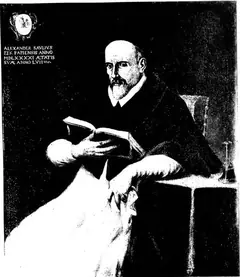
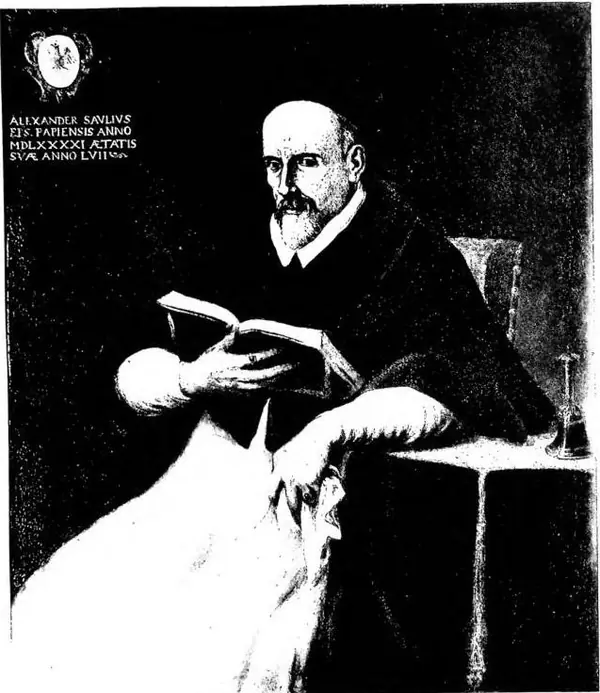
The premature death of the founder (1539), the particular character of the first persecutions, and the rigor of admissions, by which even to St. Charles, the General his confessor and friend, St. Alexander Sauli (v.) denied the fusion with the Humiliati and the consequent acquisition of their 90 wealthy convents, brought it about that the Order did not have a broad and rapid development. In 1557 came the first foundation at S. Maria di Canepanova in Pavia, followed by others in Italy, France and Austria. In 1600 there was also the fusion with the few priests of the Annunziata of Pescia and the beginning, long contested, almost contrary to the letter of the constitutions, intended for a more directly sacerdotal ministry, of the instruction of youth in public schools. Before that time only by exception had Bascapè permitted the admission of outside clerics into the private schools of the Order, and had accepted from St. Charles the direction of the seminary of Arona, soon abandoned. Then almost simultaneously boarding schools were opened for nobles in Milan and in other cities, for which the General Chapter of 1662 decreed the compilation of the Regulae (Externarum scholorum disciplina, by Fr. Gorino, Milan 1665). Greater resistance, and never entirely extinguished, was met by the boarding schools until 1689, when a three-year experiment was granted, then confirmed, at Montargis, followed in 1723 by the college of Nobles in Milan and subsequently by others.
In the 1700s the Barnabites are also among the infidels. Five fathers, among the forty who offered themselves at the request of Clement XI (1715) to accompany Msgr. Mezzabarba on the legation to the emperor of China for the question of the Chinese rites; that mission having failed, they preferred, rather than leave the field, to scatter across it: Fr. Cesati in Cochinchina, Fr. D'Alessandri in Tonkin, Fr. Rasini in Canton, Fr. Ferrari in Peking, a philosopher at the imperial court, and Fr. Calchi in the kingdoms of Ava and Pegu, in Burma, which Benedict XIV in 1740 definitively entrusted to the Barnabites. And it was a wonderful page of history, written for almost a century (until 1832) by the blood and sweat of a handful of heroic priests and scholars of languages and natural sciences. The 1700s were also the century of greatest literary splendor.
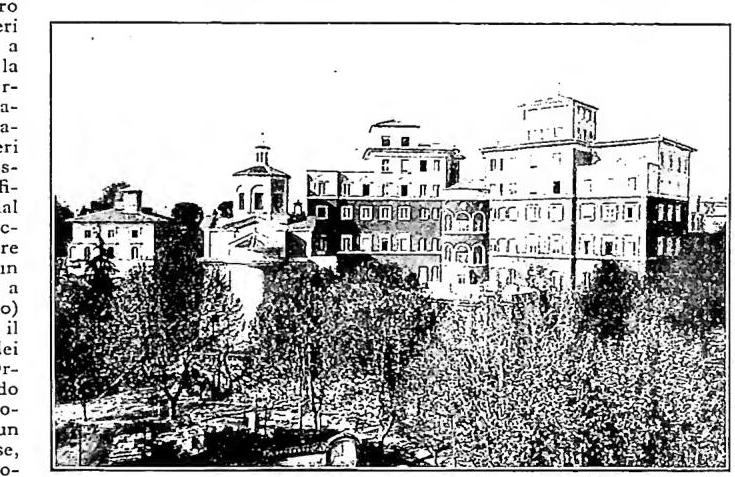
Toward the end of the century and in the early 1800s the Barnabites followed the fate of the other religious institutes. With the Napoleonic suppression of 1810, only S. Alessandro in Milan remained. Through the work of the fathers, later cardinals, Fontana and Lambruschini, the Order was re-established in Rome (1814); in 1825, at the initiative of Fr. Mantegazza, and through the generosity of Count Andreani and Marquis Arconati Visconti, S. Barnaba and the Carrobiolo were redeemed from the treasury. Worthy of particular mention in the 1800s are the work of Frs. Redolfi and Villoresi for the oratories, and of the Apostleship of Prayer introduced into Italy by Fr. Maresca and directed for 50 years, until 1916, by the Barnabites, with the magazines Il Messaggero and Il Devoto. The restoration in France, in 1857, links back to the work of Fr. Schouvaloff, inherited by Fr. Tondini, for the conversion of Russia, and of Frs. Moro, Tondini and Almerici for the missions in Sweden and Norway (1864-80). The new expulsion because of the Waldeck-Rousseau laws (1901) opened the way to foundations in Belgium and Brazil. At present the Order has houses in Italy, France, Belgium, Brazil, Chile, Argentina, divided into provinces, to which must be added the mission of Guamà (Upper Brazil) and the chaplaincy of the Italian legation in Kabul (Afghanistan). It devotes itself to the sacred ministry in parishes and sanctuaries, but especially to the education of youth in oratories, associations of Catholic Action, boarding schools and day schools (At the Querce of Florence, S. Luigi of Bologna, Carlo Alberto of Moncalieri, B. Bianchi of Naples, etc.).
Many were the religious illustrious for holiness: St. Anthony M. Zaccaria, St. Alexander Sauli, Bl. Francesco Saverio Bianchi (v.); the venerables Castelli and Canale; the co-founders, Bascapè, Dossena, Pagni, Recrosio, Redolfi, etc.; for ecclesiastical dignities: the cardinals Gerdil, Fontana, Lambruschini, Bilio and others; the bishops: C. Bascapè, "the St. Charles of Novara," Guérin, friend and successor of St. Francis de Sales, Giarda, martyr of obedience to the pope, Nerini, martyr of chastity in Burma, Recrosio, apostle of Nice, together with many others; for diplomatic posts: Boerio, Mazenta, Corona, Paravicini, Pentorio, Asinari, Gorini, Boldoni, Rossi, Gattinara, Grandi; for sciences, letters and art: Bellarini, Venerio, Rossignoli, Rotario, Giribaldi, Gerdil, Semeria, Canale, Griffini, Quadrupani, Teppa, writers of ascetics; Corio and Vercellone, biblicists; Tornielli, historian, and Gavanto, liturgist, in whose memory, by pontifical privilege, a Barnabite sits by right among the consultors of the S. Congregation of Rites: Baranzano, Pini, Gerdil, philosophers; Asquini, Caronni, Ungarelli, Bruzza, archaeologists; De Regis, Frisi, Mariano Fontana, Configliacchi, Cavalleri, Denza, Bertelli, physicist-mathematicians; Rosasco, Corticelli, Branda, Venturini, Notari, Niceron, Boffito, men of letters and bibliographers; Sacchi, musician; Mazenta and Binago, architects.
The coat of arms of the Barnabites consists of three mountains surmounted by a cross flanked by the initials of Paul the Apostle with, below, at times, the sword and the palm intertwined and the Pauline motto: An gladius? The principal archives are in Milan, S. Barnaba (Mother house) and in Rome, S. Carlo ai Catinari. In the latter is the iconographic collection in the two largest Atlases gathered by Fr. Vercellone. - See plate XIV.
Bibliography6 works
Virginio M. Colciago