
CATHOLIC MISSIONS. - The Lord, before ascending into heaven, said to his disciples: «Pax vobis. Sicut misit me Pater et ego mitto vos» (Jn. 20:21; 17:18), sending them to teach and baptize all nations. Thus from the words of Jesus was born the name and the concept of m., from which missionaries, and apostles from the corresponding Greek verb. M., therefore, derives from the Latin verb mittere, that is, to send. Considered in its common sense, it means the act of sending someone to carry out an office.
Until the 17th century, however, in ancient documents missionary activity as well as the missionary were called in various ways. Toward the middle of the 16th century the word m. began to be used in a sense ever closer to the technical one, which it assumes at the beginning of the 17th century.
I. THEOLOGICAL AND JURIDICAL CONCEPT.
Theologically the m. is linked to the words of Sacred Scripture, according to which the Son is said to be sent by the Father and the Holy Spirit by the Father and the Son (Jn. 6:57; 14:16; 16:7; Gal. 4:4).
The m. which the Word, image, witness, source of light and of divine life, carries out with a direct and extraordinary work upon men, continues in a way ordinary way through his Church, which is the prolongation of his Incarnation. Christ, in fact, could have bestowed upon the whole human race the divine fruits of the Redemption by himself, but he willed to do so through a visible Church in which all men might gather to cooperate with him in the salvation of men themselves. Christ and his Church thus come to form that supersensible, hidden and mysterious entity which lives and survives in souls and which St. Paul called the Mystical Body of Christ (v.). The term very well synthesizes the two aspects of the Church, presented as an organism with its two elements, visible and spiritual: the body and the soul. Its m., therefore, requires that it be present throughout the whole world in its two aspects, interior and exterior, by virtue of that intimate tension of humanity assumed by the Word to unite itself to all men and incorporate them as vital members of its new mystical organism. It thus becomes the ordinary and official means of salvation, and the more compact and universal the visibility of the Church as an external organism, the more radiant and glorious is the manifestation of Christ, that is, the external glory of the Lord. Consequently the doctrine of the Mystical Body defends the necessity of the apostolate both with regard to individuals and with regard to peoples, because by reason of its social character it requires that individuals, even insofar as they form social groupings, enter into membership of the Mystical Body of Christ, which in the course of the centuries continues to develop not only through the spiritual perfection of the faithful but also through the acquisition of new members. At the end of the ages its development will be complete and the missionary work will be finished, thus contributing to the final triumph of Christ, as is described in the Apocalypse. The m., therefore, of the Church is that of giving life to and developing and perfecting the Mystical Body of Christ among all peoples, preaching the Gospel to them.
According to the juridical concept, the m. of the Church must also be considered under the contingent aspect of the activity it carries out to realize it. History tells us that such activity, while always remaining the same in its theological elements, has assumed different forms and characteristics. Especially from the 12th century onward the apostolic activity of the Church in some regions is directed rather to preserving and perfecting the life of faith and love among Christians, and in other regions to spreading and propagating it among those who do not know it. In the first case there is a perfecting of the Mystical Body, that is, an internal development of it; in the other case, instead, the Mystical Body develops externally through the conquest of new members and new peoples. Thus there are internal missions and external or foreign missions (can. 252 § 3). The one and the other do not differ from the dogmatic point of view, but their methodological characteristics and the juridical prescriptions that regulate them lead to a distinction that is very important for studying them in their development. With this juridical distinction, however, there is no intention of contradicting the dogmatic element of m., but only of circumscribing its territory and determining the norms of methodology and organization and establishing its two specific differences.
II. FOREIGN MISSIONS.
I. NOTIONS
They are that part of the ecclesiastical ministry directed at planting and establishing the Church among non-Catholics. In this definition, by now defended by almost all missiologists, all the required elements are found. Indeed, from it one gathers that the missions are a specific activity of the Church, which has as its object baptized or unbaptized non-Catholics to be converted to the true faith for the purpose of firmly founding the Church in their midst. The discussions among authors have brought out the various stages of the great work of the planting of the Church in territories of new conquest. The
Schmidlin maintains that the missions are ordered solely to the conversion of non-Christians; Lange holds that the motive of the missions is not the salvation of souls, which is possible even outside the Church, but the catholicity of the Church; Grentrup, basing himself on juridical elements, thinks that the missions are ordered to extend the kingdom of Christ; Charles defends the theory of the planting of the Church; for Glorieux the motive of the missions is the fullness of life of the Church herself; and for De Lubac the missions are necessary for the collective, not individual, salvation of men; Hugueny replies to Glorieux by affirming that the missions are a matter of life and death for unbelievers; for van der Mensbrugghe the missions are ordered to subordinate all men to Christ.
Durand's opinion is closer to what is now more accepted among missiologists, because he affirms that just as the Church is a normal, but not indispensable, means for the salvation of souls, so too the missions are a normal, but not necessary, means for the salvation of unbelievers. Capéran says the same, for whom the missions are ordered to bring to unbelievers the ordinary means of Grace, with which the visible Church has been enriched.
Of the elements presented above, some precede and others follow the planting of the Church, and therefore they are not mutually exclusive, and the pontifical documents emphasize now one and now another, often for particular needs. The expression "planting of the Church" is already found in some of the Holy Fathers and recalls the Gospel parables, where the Lord compares the preaching of the good news to agriculture, considered now as the work of sowing and transplanting of shoots and trees, now as the cultivation of the vineyard, which extends its branches from one sea to the other; or else he compares it to any other work concerning the earth that can be brought into relation with the nascent Church.
The distinction between foreign missions and internal missions also carries with it a territorial division, because according to can. 252 foreign missions exist in territories dependent on the S. Congr. de Propaganda Fide. This principle has an exclusive value, because in the other canons, which deal with the dicasteries of the Roman Curia, there is no mention of foreign missions, and therefore can. 1350 § 2 must be understood in relation to can. 252. The territories dependent on the S. Congr. Orientale up to the motu proprio of 25 March 1938 (Sylloge, S. Congr. de Propaganda Fide, Rome 1939, n. 206 ter) cannot be such, nor can those under the jurisdiction of the S. Congr. Concistoriale. The current state of some territory does not justify an expansion of the territory of foreign missions, because it also has repercussions in the field of the competence of the S. Congr. de Propaganda Fide itself.
Bibliography8 works
II. CENTRAL AND PERIPHERAL ORGANIZATION
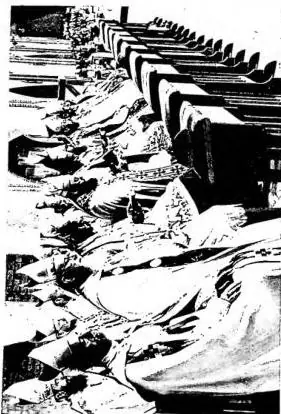
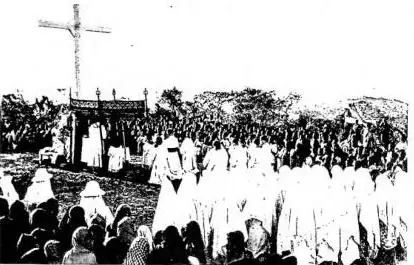
The task of spreading Christianity in the Far East in the 13th-14th centuries, entrusted to the initiative of the two great mendicant Orders, was directed in the following age to the dissidents of the nearer East and then to the heretics of central and northern Europe, without any special dicasteries being instituted for the purpose. It was with the great overseas discoveries that the missionary problem became more acute, and the popes granted in this regard to the crowns of Portugal and Spain ample privileges that gave rise to true patronages in the missions (v. PADROADO and PATRONATO), which immediately received an enormous impulse. The first dioceses were erected, with the right for the sovereigns to appoint bishops and with the burden of all expenses; they considered themselves, and were normally considered, delegates of the pope. All missionaries had to pass by way of Spain or, respectively, Lisbon, and had to be approved by the respective Councils of the Indies and of Portugal, which also provided for the normal government of the missions. Abuses created by the intrusion of political interest made the situation of the missions progressively difficult as the economic and political difficulties of the Catholic nations grew. To take back into its hands the direction of the missions, with the bull Inscrutabili the new Congregation de Propaganda Fide (v.) was created in 1622, which from its very beginnings championed the independence of the missions, protected the natives, supported the formation of a "national" clergy and episcopate, founding colleges and taking over the direction of those already existing. The special privileges of the religious in this regard were abolished in the founding bull (in fact, however, only in 1643 and even later), and the missio of Propaganda was made necessary for them. In 1633 the obligatory route via Lisbon was abolished and freedom of entry was granted to all religious. Discalced Carmelites, Augustinians, Theatines and Capuchins placed themselves entirely at the disposal of the Congregation.
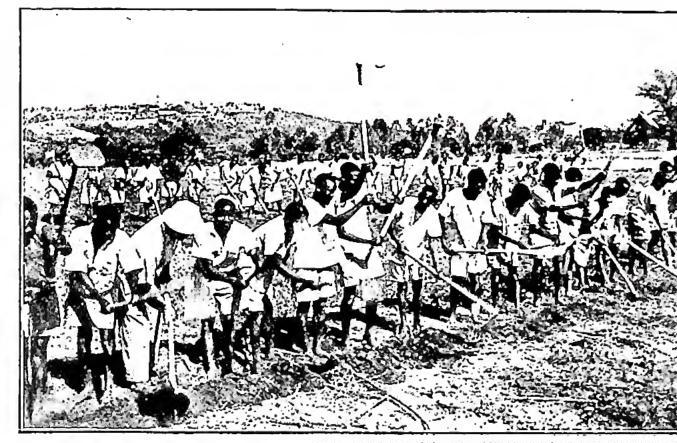
To avoid the patronages, Propaganda implemented the institution of apostolic vicars and delegates, on the model of those already existing in the Netherlands, England and Scotland. It developed with the creation of apostolic vicariates in Canada (1653), in China (1659), Indochina (1669), Siam (1678), and went on extending to almost all the missions. The apostolic vicars, ordinarily invested with episcopal character, depended directly on Rome, from which they received their faculties. Thus there arose in the overseas territories, alongside the jurisdictional dualism of bishops and religious, which relatively soon declined, the jurisdictional dualism of Rome and of the patronages, with repercussions in mission lands between residential bishops and apostolic vicars: a dualism that gradually weakened, until it almost disappeared in our own days, with the decline in the East of the colonial power of the two Catholic kings to the advantage of the Protestant nations of England and Holland and of Catholic France.
To make the central organism more effective, Propaganda set up within itself certain particular Congregations: in 1633 the Congregation of Faculties, which in 1637 it obtained the approval of the fivefold formulary, which remained in force until our own days; in 1640 the particular Congregation for doubts, for their resolution at least in urgent cases, absorbed by the Holy Office; in 1665 the particular Congregation for China and in 1671 the ecclesiastical Conference for the study of the most controversial points of ecclesiastical history. Important was the Congregation for the correction of liturgical books of the Eastern rite instituted by Urban VIII. Pius IX on 6 Jan. 1862 instituted the S. Congr. de Propaganda Fide for affairs of the Eastern rite, with its own secretary and archive; which in 1917 became the S. Congr. for the Eastern Church.

The economic problem constituted from the beginning one of the greatest preoccupations of Propaganda, because it opened the way to a greater detachment of the missions from the colonial powers. Proceeds from the cardinalitial rings (500 scudi), inheritances, offerings of private individuals, extraordinary grants from the pontiffs and from princes, constituted the first funds. From the beginning Propaganda passed on to the Ordinaries annual allowances and subsidized the missions with extraordinary subsidies. Agents and correspondents, especially in the maritime ports, were charged with the delivery, with subsidizing missionaries in transit and with facilitating their travel arrangements. Once the patrimony was dispersed with the Revolution, Pius VII assigned to Propaganda part of the proceeds of the Apostolic Chamber. From the end of the 18th century until 1908 there was a stable "Prefettura dell'economia", whose cardinal prefect presided over the economic congresses. From 1908 the pro-secretary of the Economy presides over the office of administration and participates in the economic congresses, of which two cardinals are members, presided over by the cardinal prefect.
Until 1666 the cardinals composing the Congregation, to each of whom was attributed a territorial sphere to be handled, assembled coram Sanctissimo twice a month; from that year the meetings were held in the house of the prefect or of the eldest of the cardinals, and the secretary went periodically to report to the pope. For about two centuries the cardinal prefect was not furnished with special faculties of his own, being only the executor of the plenary [Congregation]. Subsequently a list of personal faculties was granted to the prefect, "ad quinquennium", and finally "durante munere". Under Leo XIII there was a further expansion of the faculties of the S. Congregation.
Without substantial internal changes the organization of the Congregation has maintained itself until our own days. It should only be noted that the Congregation has been able to perfect the methods of apostolate, among which should be pointed out the ever vaster increase of the indigenous clergy, above all the increase of apostolic delegations and therefore the impulse to periodic episcopal conferences; and the coordination of the apostolate in the missions existing in the works of the individual delegations. Its competence was much changed following the constitution of Pius X Sapienti consilio of 1908 and numerous territories were withdrawn from its original competence.
The legislative power and the supreme direction and handling of affairs belongs to the plenary Congregation of the cardinals composing the S. Congregation. The deliberative power is subordinate to the approval of the pope, to whom must be referred the deliberations of the plenary congregation, whose execution is carried out in the normal way through the cardinal prefect. In the exercise of his duties, the latter is assisted by the secretary, by the undersecretary and by the pro-secretary of the Economy, of free pontifical appointment, and by some study assistants, with well-determined duties. The S. Congregation is assisted by a body of consultors, of particular competence, chosen from both clergies. Within it, the pre-existing particular congregations having been suppressed, there currently functions only a commission for the revision of the Constitutions of missionary religious Institutes, of national synods, of the regulations of the regional seminaries dependent on it and of the "Statuta pro missionibus". Special duties belong to the secretary: he intervenes at the plenary sessions without a vote and on them he then reports to the pope; he is part of the weekly congresses together with the undersecretary and the minutanti, as well as of the economic congress. To the secretary belongs the legal representation of the S. Congregation and the high direction of the Urban College of Propaganda Fide. A general historical archive preserves the documents of Propaganda from 1622.
The general jurisdiction of Propaganda extends to some countries of Europe; to Asia, except Goa-Damao, Macao and the Eastern circumscriptions of Malabar; to Africa, except the Portuguese territories, the archdioceses of Tunis and Carthage, the dioceses of Constantine and Oran, Egypt, Eritrea, Ethiopia; to various territories of the Americas and to Oceania. The ecclesiastical circumscriptions are variously constituted: archdioceses, dioceses, apostolic vicariates, apostolic prefectures and missions "sui iuris" (of these only two now exist); the apostolic prefectures, ordinarily not governed by bishops, represent the beginning of the development of the mission, while the apostolic vicariates and the dioceses are constituted taking into account the ascertained development and other particular factors. The S. Congregation communicates directly with the Ordinaries; however, between them and the Congregation there functions the intermediate organism of the apostolic delegations, embracing either entire nations or divided according to criteria that may be called geographic-political, which have proved to be of great interest.
Currently the ecclesiastical circumscriptions dependent on Propaganda are about 600; of these 88, among archdioceses, dioceses and apostolic vicariates, are entrusted to the native clergy. Ten apostolic delegations depend on Propaganda: Southern Africa (1922) with its seat in Pretoria; British West and East Africa (1930), with its seat in Mombasa; French Africa (1948) with its seat in Dakar; Albania (1920) with its seat in Tirana; Australia and New Zealand (1914) with its seat in Sydney; the Belgian Congo (1930) with its seat in Léopoldville; Japan (1919) with its seat in Tokyo; Indochina (1925) with its seat in Hué; Korea (1949) with its seat in Seoul. There are furthermore the three internunciatures: China (1947), with its seat in Nanking; India (1948) with its seat in Delhi; Indonesia (1950) with its seat in Djakarta. Moreover, from the nunciatures of Yugoslavia and of certain South American republics depend missions subject to the Congregation. Some territories in Africa (Angola and Mozambique, Portuguese Guinea) and in Asia (Goa and Damao, Timor, Macao) depend on the Sacred Congregation for Extraordinary Ecclesiastical Affairs. According to the agreement of 7 May 1950 between the Holy See and Portugal, the dioceses of Cochin and of St. Thomas of Mylapur passed under Propaganda. The Sacred Congregation of the Holy Office retains for mission territories its specific competence. The Sacred Consistorial Congregation has relations with the missions only when a territory must pass from one jurisdiction to another. Even in mission lands the universities of studies depend on the Sacred Congregation of Seminaries and Universities of Studies.


Bibliography4 works
Lino Pedot
III. SACRED ART IN THE MISSIONS
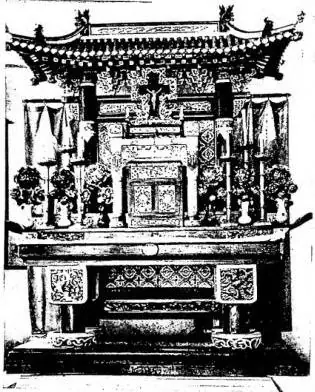
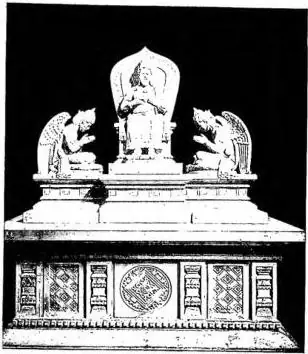

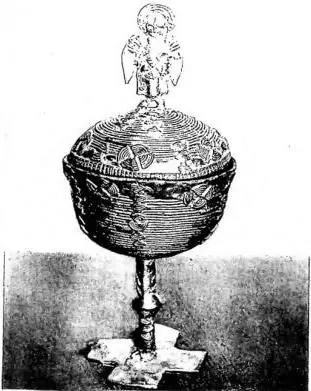
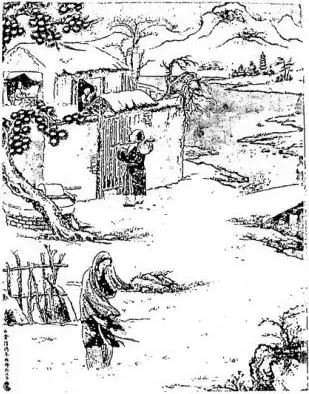

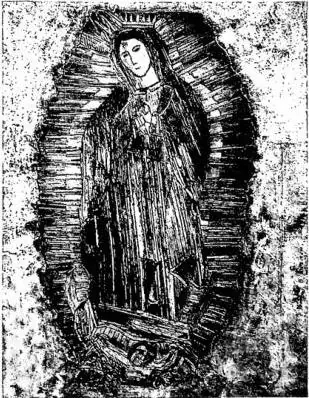
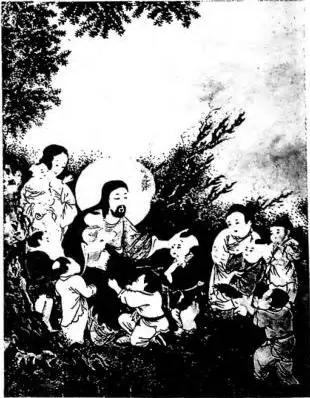
Ancient Christian art (v.) had been taking shape by modeling itself on the manifold expressions of a highly evolved civilization and according to practical criteria proper to the individual evangelized regions. Having then developed according to new forms through the following ages, it succeeded in forming almost a spiritual patrimony of the Church, from which it seemed impossible to depart. When, in the 13th century, through the missionary wanderings of the Franciscans and Dominicans, an attempt was made to come into contact with the mysterious civilizations of India and the Far East, it was not possible to initiate an artistic movement in their relations; the contacts were too brief for that time.
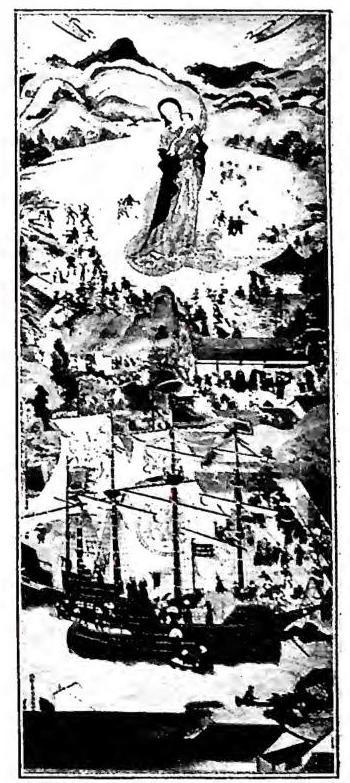
With the age of the great discoveries, the missionaries inserted themselves into the exploits of the Spanish and Portuguese conquistadores. Little account was taken of indigenous art even where it existed, and the canons of metropolitan art were imported into the colonies and therefore also into the missions. And it is a natural affirmation of the imperialism of the colonizing nations. Portugal built castles, dwellings and churches in Ethiopia, India and Brazil according to the models of Portuguese art. Spain transported its own Baroque to Latin America, which, influenced by indigenous art, created the super-Baroque, which was called mission style.
From this work the missionary movement had a notable expansion also in the Far East. But the problem of missionary art was not raised. Following the example of Portuguese and Spanish colonization in America, Western styles were imported into India and the Far East.
In Japan a painting school founded by the Jesuits and directed by Fr. H. Nicolao flourished, but it drew its inspiration from Italian models. In China, under the inspiration of the Jesuits, the compositions of the Gospel published in Europe by Fr. Natale were translated into Chinese forms. There were some other attempts at Chinese Christian composition (Madonna of the British Museum and of the Chicago Museum, etc.). The painter G. Castiglione (v.; 1688-1766), a Jesuit, under the emperor Cheng Lung transformed his own European style according to the Chinese character. And in the interior of China there were some examples of adaptation of the local style. But all this represented sporadic and exceptional elements. The churches of the major missionary centers reproduced, often with little taste, Western models.
In Indochina one encounters a most noble example, D. Luca

Tran (1825-99), man of letters, architect, hydraulic engineer, governor of a province. "He was — says Lysutey — one of those humble heroes, who raise up everything they touch, born for a great stage, and who, lacking one, form a great one from their own small one." His buildings in a fine and pure Annamite style are admired in Phat-Diem (Tonkin). Other fine manifestations occurred in the 19th century in North Africa, where certain churches of Algiers, the temple of St. Augustine at Hippo and the cathedral of Carthage, the latter two due to Abbot Pugnet, are conceived in an Arab-Byzantine style.
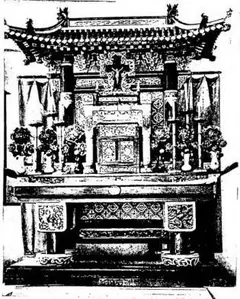
But these rare examples had no following. In the countries of the missions the importation of Western art prevailed, which was esteemed Christian art in opposition to the local pagan art. In 1923, when the foreign missions were by then ripe to be transformed into native churches, the apostolic delegate thought that in a country which possesses the dignity of a great and ancient art, Christian art too had to associate itself with the new missiological directions, that is, to become Chinese; and in a letter to two heads of mission he raised ex professo the problem of missionary art, observing: a) that Western art in China represents an error of style; b) that the foreign character of the art helps to maintain the prejudice by which the Catholic religion is considered a foreign religion; c) that the great tradition of Christian art teaches us to adopt the styles of different times and different places; d) that Chinese art offers various and beautiful possibilities of adaptation.
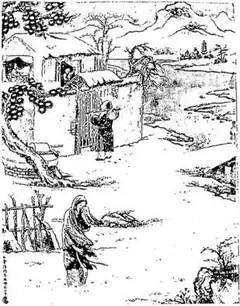
It was necessary, however, to reinforce theory with practice. Therefore the delegate in 1925 called to China the Benedictine artist d. Adalbert Gresnigt. He penetrated into the spirit of Chinese art, gave the plans and directed the construction of the beautiful Catholic University of Beijing, of the regional Seminaries of Hong Kong and Kaifeng, of the church of the Disciples of the Lord of Suahnwafu, and attended to other minor works. A Chinese painter, Cheng Suan-Tu, of most refined artistic sensibility, composed in a pure Chinese style sacred subjects, which had great success for their freshness and spiritual grace. The painter was baptized and took the name Luke. Appointed professor of art at the Catholic University of Beijing, he created around himself a family of Christian painters, in whom shines the candor of the primitives. Chinese art has offered to the sacred subject a form full of delicate spirituality and the sacred subject has offered to Chinese artists a new theme, elevated, luminous, such as to create a true renewal of Chinese art. To be remembered are the painters: Pu-Chin, Chang-San-Tse, Wang-Su-Ta, Lu-Hung-Niuen, Lo-Hong-Nie, Koang-Chao-Ko.
The movement of Christian rebirth of Chinese art inspired and encouraged a beautiful artistic-Christian flowering in Japan, Indochina, India and Indonesia. In Japan there shone the painters: Luca Hasegava, Shunkyo, Okayama, Keiji Kondo, Furuya, Takaiho Toda, Yoshimatsu, madama Nakamura, Shimibu, Sadaka, Teresa Kimiko Koseki. In Indochina the painter Celso Le-Vandé distinguished himself; in India the painter Da Fonseca and the painter Trindade; in Indonesia the sculptor Iko. The S. Congregation de Propaganda Fide approved with various letters this artistic reform of missionary art. Also in Africa, and especially in the Belgian Congo, the new direction obtained most beautiful successes.
In 1939 Pius XI had convened in the Vatican an exhibition of the art of the mission countries. That initiative, interrupted by the war, was taken up again by Pius XII, who for the Holy Year 1950 willed that there be organized, among other exhibitions, that of the Christian art of the missions. This corresponds to the principles proclaimed by the Holy Father in the first encyclical Summi Pontificatus on missionary adaptation.
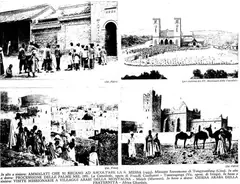
For the history of the missions, v. PROPAGAZIONE DEL CRISTIANESIMO. - See plates LXXII-LXXV.
Bibliography2 works
Celso Costantini
III. INTERNAL MISSIONS.
Internal missions are carried on within the limits of the dioceses of the Church already founded and are regulated by the Ordinaries, and from the times of St. Vincent de Paul and then through the work of St. Alphonsus Maria de' Liguori they, under the name of sacred missions (can. 1349 § 1) or parochial missions, are ordered both to preserve the faith and good morals among the faithful and to convert the non-Catholics who may still be there (can. 1350 § 1).
To the pastors of souls the Church imposes the obligation of catechetical instruction for the preparation of children for the Sacraments of Penance, Confirmation and the Eucharist (cann. 1329-36), of homiletic and Lenten preaching, and in particular of the explanation of Christian doctrine (cann. 1337-48). Finally it admonishes the Ordinaries to take care that at least every ten years all parish priests, including religious, procure missions for the flock entrusted to their care (can. 1349).
Such missions, not to be confused with the customary Lenten preaching, which however is often given in the form of missions or spiritual exercises for the people, are ordinarily held outside the Lenten season by religious specialized in this kind of preaching, such as, for example, the Passionists, the Redemptorists, or by priests oblate or gathered in a missionary association, such as, for example, that of the Oblates of Rho (Milan), of the Missionaries of St. Maximus of Turin, or the so-called Imperial Missionaries of Rome.
These internal missions, suitably prepared with frequent appeals in the Sunday preaching, with propaganda on parish bulletins or on sacred notices, conducted with spiritual unction and with various aids, almost always succeed in healthily shaking consciences and in effecting conversions and true reforms of morals.
In recent times immoral and atheistic propaganda, using all possible means (press, cinema, radio, advertising, rallies, conferences, etc.) and exploiting the general economic hardship created by two world wars, has drawn away from the Church and from Christian practice a great part of the working and agricultural masses, throwing them into the arms of atheistic and materialist communism, denier of God, of the immortality of the soul, of the future life and of human dignity and freedom. To the atheistic propaganda there has been added in recent times a more intensified Protestant propaganda which continues to infiltrate among the Catholic masses.
Consequently, since the sharing of the word of God in the usual traditional forms had become impossible, other forms of preaching had to be devised in order to go and seek the masses, who were deserting the church, in the places where they are wont to gather either for work or for amusement. Hence various forms of preaching which have taken the appearance of a true mission; and others which, under the guise of social work or the figure of social and moral assistance, aim at the preservation of the faith and of morals.
Thus there arose various works of moral assistance by category: ONARMO, Apostolato del mare, Assistenza delle mondariso, etc.; the chaplains of industrial establishments: the Opera di S. Paolo, the Pro Deo, etc.; congregations of lay religious, living in the world, and other similar female congregations with the purpose of assisting workers and the poor, etc. All this movement and all this flowering of Catholic works has as its purpose above all the moral and religious assistance of those to whom they are addressed, in order to bring the word of God and the light of the Gospel to those who have lost the way of the Church and to lead them back to the true faith and to the practice of Christian life. Nor should the temporary peregrinaciones Mariae be forgotten, which are a true mission that shakes awake consciences grown drowsy or gone astray.
Bibliography3 works
Andrea Gennaro