
Non-Christian Religions
Religioni non cristiane · 413 articles · Principal contributors · All subjectsSection editor, 1948–54: Nicola Turchi







Most cited sources Acts 10Genesis 10Deuteronomy 9Isaias 93 Kings (1 Kings) 8Numbers 8Exodus 7Leviticus 7
Related subjects Geography & DiocesesSacred ScriptureHistory & BiographyDogmatic TheologyPhilosophyEcclesiastical Hierarchy
Principal entries
All entries, A to Z
-
Abba Areka, Rabbi, called Rab (ABBA AREKA, RABBI, DETTO RAB)
Jewish doctor, b. in Palestine around 160, d. at Sura in 247. A disciple of Judah the Holy (v.), he was the first of the Amoraim (v.), and… -
Abbaḥu, Rabbi (ABBĀHŪ, RABBI)
A learned Palestinian Amorite, of the "college of the doctors of Caesarea," who lived at the end of the 3rd century and the beginning of… -
Acca Larentia (ACCA LARENZIA)
According to various ancient authors, but principally Macrobius, she was a woman who lived in the time of Ancus Marcius. The guardian of… -
Acerra
The ancients designate two instruments of sacrifice by this name: a small box for incense (ascula turaria; turalis) that was used in… -
Adapa
In Assyro-Babylonian mythology A. is the son of the god Ea and is "the seed of humanity," that is, the first man. From his father he… -
Adi Granth
"The fundamental book," also called simply Granth, "Book" (par excellence, in a religious sense: Bible) or Granth Sahib, "The holy… -
Adonis (ADONE)
Mythical hero, lover of Aphrodite, whose legend, despite various divergences, is summarized in the following cycle: 1) death during the… -
Aegean, Religion of (EGEA, RELIGIONE)
The conventional name "Aegean" is given to the civilizations of the countries washed by the Aegean Sea (Greece, the islands, Anatolia) from… -
Aesma Daeva
Among the Persians he is the spirit of wrath and strife, and has as his constant epithet "of the bloody club." He is given over to… -
Agli-Bol
A deity worshipped at Palmyra, where archaeology attests to the existence of a college of priests, of altars and of sacrifices dedicated to… -
Agni
The god of fire, Agni (pron. agnni), shares with Indra the primacy among the gods of ancient India. The Rgveda dedicates ca. 200 hymns to… -
Agnostos Theos (Unknown God) (ÁGNOSTOS THEÓS (DIO SCONOSCIUTO))
Pausanias (I, 1, 4) knows at Phaleron βωμοί θεῶν ὀνομαζομένων ἀγνώστων, that is, "altars of gods called unknown" (thus Weinreich, in Archiv… -
Agonalia (Agonia) (AGONALI (AGONALIA, AGONIA))
Roman festivals that recurred four times a year: on 9 January, 17 March, 21 May and 11 December. We derive these dates from the calendars… -
Ahriman
In the Mazdean religion he is the evil principle, the one from which every evil originates, also called in older forms angro mainyush. The… -
Ahura Mazda (AHURAMAZDÀ)
It is the name of the supreme deity in the doctrine of Zarathustra (in recent times transcribed Ormazd), from which the religion takes the… -
Aissaoua
French form of the name of the Muslim brotherhood of the 'Isawiyya (in Maghrebi pronunciation Aisawiyya), founded in Morocco in the 16th… -
Allah (ALLĀH)
Arabic name for God, formed, as is generally believed, from the article al and the word ilāh, which means "God, divinity," and is still… -
Allvater
This is an expression introduced into the proper language of ethnology and the history of religions by the English explorer A. W. Howitt… -
Aloe ('ΑΛῺΣ, from ἌΛΩΣ "Let it be") (ALÒE ('ΑΛῺΣ, DA ἌΛΩΣ «SIA»))
A festival of the Athenian calendar, which fell in the month of Posideon (December 15 – January 15), dedicated to Demeter and celebrated… -
Alteca Boteca (ALTECABOTECA)
Corrupted form of 'Al tēhl ha-'abhōtēhā ("Be not like your fathers"): the opening words by which is usually cited the anti-Christian work… -
Amaterasu
For Shintoists, she is the "great, august divinity that shines in the sky," that is, the sun goddess. At the time when Shinto was still a… -
Amazons (AMAZZONI)
A mythical people of warrior women with customs and habits that the Greeks considered barbaric. Legend called them daughters of Ares and… -
Ambarvalia (Ambarvales) (AMBARVALI (AMBARVALIA))
A Roman conceptiva festival, that is, one of those that were proclaimed year by year by the pontiffs in relation to the seasonal cycle, and… -
Ambrosia
Greek word meaning "immortal": it is used together with "nectar" to indicate the nourishment of the gods. In the Iliad it has a broader… -
Amenti (AMENTI)
It is the name borne by the region of the dead in ancient Egypt (Plut., De Is., 29). A very ancient concept in Egypt is that the sun which… -
Amesha Spenta (AMEŠA SPENTA)
Under the Persian name A. is understood a group of entities, which appear frequently, now one, now another, or several together, in almost… -
Amitābha (Amitāyus)
One of the countless buddhas of Mahāyāna Buddhism, "the Great Vehicle," systematized, several centuries after its first appearance, by the… -
Ammon (AMMONE)
Egyptian deity, worshipped at Thebes (v.). The name was interpreted as "creator of all things," then falsely as "he who hides his name"… -
Amphidromies (Ἀμφι-Ἄβρωμα) (ANFIDROMIE (ἈΜΦΙ-ἌΒΡΩΜΑ))
An Attic family festival, whose purpose was to purify the newborn child and all those who had come into contact with it from the ritual… -
Amphitrite (ANFITRITE ('ΑΜΦΙΤΡΊΤΗ))
Greek sea deity. The name must be the same as that of other marine beings in which the element trit appears: the etymologies from Greek… -
Amrta
The a., which in the Rgveda (v.) is the drink of the gods, able to confer immortality, has its earthly counterpart in soma, "the pressed… -
Amulet (AMULETO)
A word of uncertain etymology (from Latin amoliri "to remove"?; from Arabic himālah "pendant, hanging ornament"?) that refers to objects… -
Ancient Jewish Cemeteries (CIMITERI EBRAICI ANTICHI)
The typical Jewish tomb in Palestine is one hewn out of the rock with a burial chamber whose entrance was closed by a large recessed stone… -
Anna Perenna
Ancient Roman divinity, about whose festival, which fell on the Ides of March, we are amply informed by the Fasti (V, 523-695) of Ovid, who… -
Antenati, Cult of the (ANTENATI, CULTO DEGLI)
The cult of the a. is distinguished from the simple cult of the dead, in that it is directed to the progenitors of one's own lineage taken… -
Antesteria ('Ανθεστῆρια) (ANTESTÈRIE ('ΑΝΘΕΣΤΗ͂ΡΙΑ))
Festivals common to all Ionian peoples; about the Attic ones we are, naturally, better informed. They lasted three days and took place on… -
Anu
Babylonian deity who personifies the sky, as his name also indicates (Sumerian An "sky"). In any case his domain is the sky, and the… -
Anubis (ANUBI (EGIZ. INP.VO « SCIACALLO »))
He is the jackal, often confused with the warlike wolf of Asyut, which the Greeks believed to be a dog, whence the name of Kynopolis given… -
Apaturia (Ἀπατούρια) (APATURIE (ἈΠΑΤΣΎΡΙΑ))
The etymology is certainly from ἀ copulative and πάτορες, that is, festival of those who have ancestors in common. It was in fact common to… -
Aphrodite (AFRODITE)
Greek goddess of love. Various scholars derive her name from the Indo-European languages and see in A. a Thessalian goddess who later… -
Apis (API)
The bull Apis (in Egyptian h'p'j, meaning "the runner") was the most popular sacred animal of the Egyptians. It was honored above all at… -
Apollo
God of Greece, among the most popular of the Hellenic religion. His origin is uncertain and the name resists the efforts of philologists to… -
Apollonius of Tyana (APOLLONIO DI TIANA)
What relates to this figure is the product of the reaction that Eastern-Hellenistic religious syncretism opposed to the advent and spread… -
Apsaras (APSÀRAS)
This name means "she who moves in the water" and designates an Indian divinity of the waters, akin to the Greek Nereid. Already in the… -
Apsu
It is a Semitized Sumerian word, which in Sumerian was written ZU-AB and read abzu, with the meaning of "house of wisdom" (?). This… -
Aquaelicium
A Roman sacro-magical ceremony, public, since the pontiffs and magistrates took part in it in expiatory attire, that is, without the… -
Ara
It is a limited space, at least ideally, on which sacrifice is offered to the deity, that is, on which the offerings destined for the deity… -
Ara
Greek personification of the curse (ἀρά), hence a goddess of vengeance, not unlike the Erinyes. A temple of A. in Athens is mentioned by… -
Arallu
Among the Mesopotamians it was equivalent to the Sheol of the Hebrews and the Hades of the Greeks; an infernal dwelling, called irsìt la… -
Archigallus (ARCIGALLO)
Priest of Cybele, of a rank superior to the simple galli. From the rather abundant epigraphic material that has come down to us, it appears… -
Ares
"Αρς, Greek god of war. For some the name would mean "the destroyer," but the etymology is disputed. For the ancients he was Thracian and… -
Aretalogy (ARETALOGIA)
The meaning of this word is manifold, as a consequence of the imprecise sense of ἀρετή, commonly translated in dictionaries as virtue… -
Argei
In Roman worship this name denoted two different things: 1) shrines, 27 (or 24) in number, distributed throughout the Rome "of the four… -
Arinna, Goddess of (ARINNA, DEA DI)
A. was a great city of the kingdom of the Hittites, identified with the present-day Kara-Sehir-Hujuk, near the thermal springs of Ujuz… -
Armilustrium (ARMILUSTRIO (ARMILUSTRIUM))
A festival of the oldest Roman calendar, which fell on 19 Oct. The name defines it as a festival of purification of arms; the guild of the… -
Arpocrates (ARPOCRATE)
One of the numerous forms under which the Egyptian god Horus was worshipped, and specifically Horus the child: A. is in fact the Hellenized… -
Artemis (Ἀρτεμις) (ARTEMIDE ('ΑΡΤΕΜΙΣ))
A Greek goddess who had a very widespread cult, as is also shown by the quite frequent use of the month name Artemisios, which was sacred… -
Arval Brothers (ARVALI, FRATELLI)
A Roman religious sodality of a collegial type, composed of 12 members, headed by a magister; patrician in recruitment, with members… -
Arya-Samaj (ARYA-SAMÁJ)
Properly "community, society of the Aryas"; one of the numerous religio-social movements of modern India, founded in 1865 by Dayánand… -
Asclepius (Ἀσκληπιός) (ESCULAPIO (ἈΣΚΛΗΚΤῸΣ))
Greek god of medicine. Numerous etymologies have been proposed to explain his name, both from Greek and from the Semitic languages; some… -
Ashura (AŠURA)
In the most ancient religious texts of India, the word A., which has its counterpart in the Iranian Ahura, means spirit, god (from asu… -
Ašipu
The A. ("conjurer, exorcist") is one of the major priests of the Babylonian-Assyrian religion. His task is, by means of magical acts, to… -
Assur (AŠŠUR)
1. DEITY. - National god of the Assyrians, who gave his name to the capital of the kingdom. He is one of the few gods who did not penetrate… -
Astarte
It is the Greek name of the principal goddess of the Chaldeans. In the Hebrew text of the Old Testament she is called 'Aštoreth instead of… -
Astral Deities (ASTRALI, DIVINITÀ)
The natural tendency to animate things has also populated the sky, in its planetary and astral manifestations, with divine beings, and… -
Astrology (ASTROLOGIA)
It is the art of knowing the future by observing the aspect, position and influences of the planets and the constellations. 1. HISTORY. -… -
Aśvaghoṣa (AŠVAGHOŠA)
Indian poet — lyric, epic, dramatic — as well as philosopher and, according to his Tibetan biographer, musician, musical composer and… -
Aśvin (AŠVIN)
To the "lords of horses" (Aśvin) and horsemen, who, awakened by the Dawn, appear together in the morning sky, the Rgveda (v.) dedicates 54… -
Atargatis
She is the principal goddess of the Arameans (Syrians). The name is composed of two elements: the Semitic 'Aytar-Astarte-Ishtar and 'ata.… -
Athena (Ἀθήνη) (ATENA ('ΑΘΉΝΗ))
Goddess of Greece. The name, probably pre-Hellenic, must perhaps be connected with that of the Greek city that venerated her most, Athens… -
Aton
From itu "the disk," this was the proper name of the sun disk, which Amenhotep IV (v. AMENOPHIS IV) adopted as the sole divinity of Egypt… -
Atum (ATŪM)
In ancient Egyptian: jtm. vocalized as 'atōm, for now without etymology, was the primordial god of Heliopolis: the "Heliopolitan." His… -
Augurium Canarium
One of the feriae conceptivae (movable feasts) of Roman paganism. It was fixed from year to year by the pontiffs at a determined period in… -
Augurs (ÀUGURI)
Roman priests expert in divination, who from the species, flight, number and song of birds interpreted the divine will, both for private… -
Auspicio
From Latin auspicium, from avis bird and spe(i)cio I see. Among the Romans the announcers of the divine will were above all birds (ex… -
Avalokiteśvara
He is one of the great Bodhisattvas, that is, a Buddha in potency, who has renounced entering Nirvāṇa (v.) until all beings have been… -
Avatāra
Sanskrit term from the root tar with the prefix ava "to descend": literally "descent," used particularly to indicate the descent, the… -
Avesta
The collection of the sacred and canonical books of the Mazdeans, that is, of the followers of the religion of Ahuramazda, is called the A.… -
Avidyā
A-vidyā is non-knowing, ignorance, but not in the sense commonly given to this word, rather in the philosophical-religious sense of… -
Axe, Cult of the (ASCIA, CULTO DELL')
The axe, whether simple or double-bladed, has influenced the religious beliefs of humanity. From ancient and modern writers it has been… -
Ba
Name that the ancient Egyptians gave to the soul understood as the capacity to survive by assuming different forms and which in the plural… -
Baal (BAAL)
A deity worshiped by almost all the peoples of the Near East and in Africa. In the Bible it is designated with the article (hab-ba'al)… -
Babism (BABISMO)
A new religion, arisen in a Shiite Islamic milieu through the work of Sajjid 'Alī Mohammed of Širāz, called the Bāb. The word bāb (in… -
Bacchanalia (BACCANALI)
Name of a cult that was celebrated in Rome (Livy, XXXIX, 8 ff.), in the lucus Similae (Livy XXXIX, 12, 4; cf. CIL, VI, 9897; Schol. ad… -
Bacchantes (BACCANTI)
Minor Greek female divinities in the retinue of Dionysus. They were represented with loose hair, a fawnskin (nebrid) over a long robe and… -
Bahā'īn Paqueda (Pāqūdā)
Spanish Jewish religious philosopher, also called Bechaie and Bechai. His life (11th century) is unknown to us. He left a treatise on… -
Bahaism (BAHĀ'ISMO)
A religion that developed from Babism (v.). Its followers believe that the mysterious "he whom God shall manifest," of whom the Bāb spoke… -
Bajram (Bayram) (BAJRĀM (BAYRAM))
In Turkish, "feast". The Muslim religious calendar knows two great feasts: the 'id al-adhā, which falls on the 10th of the Muslim month of… -
Bărů
BĂRŮ. - Name of an important class of Babylonian and Assyrian priests, whose main function was to establish the will of the gods, that is… -
Bel (Babylonian "Lord") (BĒL (BABILONESE «SIGNORE»))
Name corresponding to the Canaanite Ba'al (v.), of the Babylonian god Marduk (v.). The god Enlil, "lord of the earth," held the title of B.… -
Bellona
Originally connected with Mars, by the middle of the 4th century she was already a war deity in her own right (Livy, VIII, 9, 6), to whom… -
Bendis and Bendidia (BENDIS (ΒΕΝΔΊΣ) E BENDIDIE (ΒΕΝΔΊΔΕΤΟ))
Bendis is a Thracian goddess, identified by the Greeks with Artemis; Thracian women offered her ears of grain. She was also worshipped in… -
Bērakhōth (BĚRĀKHÖTH)
First treatise of the Mišnah (v.), of 9 chapters, contained in both the Babylonian and Palestinian Talmud. As the title "Blessings" (v.)… -
Berberi, Religion of the (BERBERI, RELIGIONE DEI)
The present-day B., on whose origin scientists do not agree (Asiatic origin according to some, African or mixed according to others), are… -
Betilo (BETĪLO)
Current etymology from the Hebrew bēth-ēl "house of El (God)," rendered in Greek as βατθαός, βατθάλον, in Latin as baetilos. This name is… -
Bhagavadgītā (BHĀGAVADGĪTĀ)
The "Song of the Blessed One" is a didactic poem of 700 stanzas, inserted in Book VI of the Mahābhārata, chaps. 23-40 according to the… -
Bhakti
From the Sanskrit root bhaj ("to adore"), it is in Brahmanical and Hinduistic India the attitude of mystical devotion toward a particular… -
Blood (SANGUE)
The contact of blood, which the experience of primitive peoples considers as the organic element closely bound to life (cf. Lev. 17:14… -
Bogazköy (BOGHAZKÖY)
It is the Turkish name of a small village east of Ankara in Turkey, very well known among scholars of the civilizations of the ancient… -
Bon
Also Bonpo: it is the name of the autochthonous religion of the Tibetans, before the introduction of Buddhism into the country. It is also… -
Bona Dea
Originally an epithet of a goddess who protected pastures and woods, she was identified, after the conquest of Taranto (271 B.C.), with… -
Book of the Dead (LIBRO DEI MORTI)
Name by which the first Egyptologists designated a collection of formulas, prayers and religious hymns written on papyrus rolls which, from… -
Brahma (BRAHMĀ)
The faith in B., the masculine personification of Brahman (v.), after having been alive in India throughout the entire epic age (4th… -
Brahman
The word occurs in the Veda, with different gender and accent, in two different meanings. Brahman, neuter, is first the "prayer," endowed… -
Brāhmaṇa
This adjective, derived from Brahman (v.), means "concerning worship or the priesthood," but when used substantively it takes on a… -
Brahmanism (BRAHMANESIMO)
B. derives from brahman, as Christianity derives from Christ, but while a Christian is one who professes the religion of Christ, a brahman… -
Brāhma Samāj
The name means "congregation of Brahman," that is, "of God." From the attempt to reconcile Christianity with Hinduism, this B. S. was born… -
Brauronia (BRAURONIE (ΒΡΑΥΡΌΝΙΑ))
Festivals in honor of Artemis, celebrated at Brauron on the eastern coast of Attica and particularly intended for women. The priestesses of… -
Breasted, James Henry
Egyptologist, b. 27 Aug. 1865 in Rochford (U.S.A.), d. 2 Dec. 1935. From 1905 to 1925 he was professor of Egyptology and Egyptian… -
Buddha
The historical reality of the B., contested by E. Senart, who sought to make of him a solar god, ceased to be called into doubt when… -
Buddhism (BUDDHISMO)
The word is broadly comprehensive, and designates not only the philosophical-religious doctrine preached by Gotama Buddha, but also the… -
Bushidō (BUSHIDÔ)
The name means "the way of the knights." Chivalry was held in honor in Japan from the earliest times. Already from the Middle Ages, under… -
Cabbalah (CABBALA)
A term originally referring to the prophetic books of the Bible, which from the 12th century A.D. designates esoteric Jewish doctrine. The… -
Cabiri
Minor Greek divinities, according to some of Phoenician origin, according to others Phrygian. Their nature is debated: sea gods who protect… -
Caliph and Caliphate (CALIFFO E CALIFFATO)
The Arabic title halifah means "successor," "lieutenant," and appears frequently also in the Qur'an, but never in the technical sense it… -
Callinteria (Καλλυντήρια) (CALLINTERIE (ΚΑΛΛΥΝΤΉΡΙΑ))
Ancient Athenian festivals in honor of Athena, generally mentioned together with the Plinteria (v.). Nothing has been handed down to us… -
Carmenta
C., or Carmentis, is an ancient Roman goddess: her two festivals, the Carmentalia, on January 11 and 15, appear in the oldest Roman… -
Carna
C. is a Roman goddess who had a sanctuary on the Caelian Hill; her festival fell on June 1st, a day sacred to Juno and popularly called… -
Casta
From Latin castus in the sense of "(pure) breed"; a term adopted in the 15th century by the Portuguese colonizers of Malabar and… -
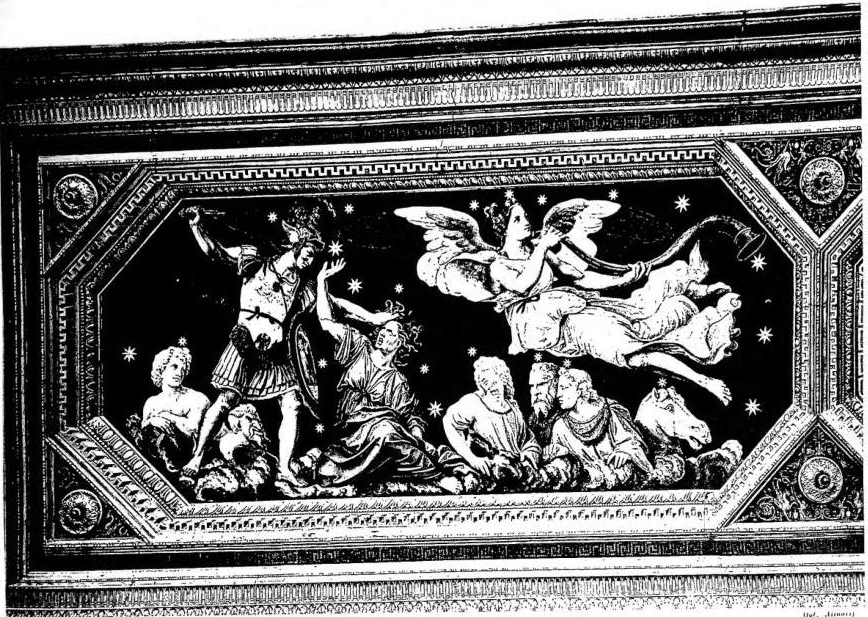
Catasterism (CATASTERISMO)
It is the transformation of human beings or mythological heroes into stars. Catasterism is therefore part of astrological doctrines (v.… -
Celeste
The name Caelestia designates, in the Roman religion, the principal goddess of Carthage who, evoked from the enemy city, appears to have… -
Celts (CELTI)
With this name the Greek sources designate a group of peoples of the Aryan-European family, who, settled probably as early as the Neolithic… -
Cerealia
Festivals in honor of Ceres, celebrated on April 19. It is not known how they were conducted in the primitive indigenous cult, to which the… -
Ceres (CERERE)
Roman divinity of cereal vegetation, akin to Tellus; with whom she is associated both in the feriae sementivae, celebrated in January at… -
Chaos (CAOS)
A notion found in the cosmogonic process (v. COSMOGONY) of civilized and primitive peoples, and which intends to represent the elementary… -
Chronos
He is the personification of time among the ancient Greeks. He had no importance either in mythology or in cult; he was instead exploited… -
Chronos (CRONO)
A Greek god, for some pre-Hellenic, or originating from Asia Minor where he would be identified with Baal, but every hypothesis about his… -
Chthonic Deities (CTONICHE, DIVINITÀ)
In Greek religion the epithet chthonic was given to numerous deities who, in contrast to the Olympian gods who dwell in the sky, lived in… -
Circumambulation (CIRCUMAMBULAZIONE)
A rite consisting in walking around the boundaries of a piece of land, a building, or an object. This circuit is performed for two reasons… -
Clemen, Karl
Protestant, historian of religions, b. at Sommerfeld (Leipzig) in 1865, d. on 8 July 1940 at Bonn, where he was professor of his… -
Compitalia (COMPITALI)
The Compitalia, one of the three conceptive festivals celebrated at the close of the sowing cycle, fell between December 17 (Saturnalia)… -
Confarreatio
Among the Romans this was the sacred nuptial rite par excellence (Pliny, Nat. hist., XVIII, 14), which originally must have consisted in… -
Confucianism (CONFUCIANESIMO)
This is the name given to the whole body of religious, ethical and political doctrines that Confucius (v.) gathered from antiquity… -
Consenti, Dei
Although it differs in part from the Greek one, where Poseidon or Hermes is associated with Athena, and is not as important as the Etruscan… -
Consus (CONSO)
Ancient Roman god: his two festivals, called Consualia, on August 21 and December 15, are marked in the oldest Roman calendar. His cult was… -
Corybantes (CORIBANTI)
Minor Greek divinities, perhaps pre-Hellenic, originally from Phrygia. The Greeks called them either autochthonous, or sons of the Idaean… -
Cosmogony (COSMOGONIA)
It is the body of doctrines that explain the origin and formation of the universe. The problem of the origin of the world and of man has… -
Creuzer, Friedrich
Philologist, b. in Marburg on 10 March 1771, d. on 16 Feb. 1858 in Heidelberg, where for over 40 years he taught philology and ancient… -
Cronie
Festivals in honor of Cronus in which social distinctions were abolished. We know of them in Attica, in Thebes, with a musical contest, and… -
Cult of Fire (FUOCO, CULTO DEL)
The importance of fire for human life explains the formation and development, among many ancient and modern peoples, of a copious mythology… -
Cult of Stones (PIETRA, CULTO DELLA)
The cult of the stone is universal and is found either in practice or in a state of survival in every latitude. A stone can assume for… -
Cult of the Sovereign (SOVRANO, CULTO DEL)
In primitive groupings the head of the community holds the double function of king and priest (magician, sorcerer), as one who, being in… -
Cumont, Franz-Valéry-Marie
Archaeologist and historian of religions, b. at Alost (Belgium) on 3 Jan. 1868, d. at Woluwe (Brussels) on 20 Aug. 1947. He began his… -
Curetes (CURETI)
Minor Greek deities; believed to be autochthonous or sons of Zeus, worshipped especially in Crete, where they were said to have been the… -
Cybele (CIBELE)
Under the name Κυβέλη, Κυβήβη, Κυβηλίς and similar forms, there appears in Greece, as early as the times of Hipponax of Ephesus and of… -
Dactyli (DATTILI)
Minor deities of Greek religion, in the retinue of Cybele and Rhea, probably pre-Hellenic, Phrygian or Cretan. They were mythical dwarfs… -
Damia (Δαμιά) (DÀMIA (ΔΑΜΊΑ))
Greek goddess worshipped together with Auxesia. They had a cult at Aegina, at Troezen, where the festival of the Lithobolia was celebrated… -
Daphnephoria (DAFNEFORIE)
Festivals in honor of Apollo, celebrated in various cities of Greece. At Thebes a procession was held, preceded by a boy whose parents were… -
Dasam Granth
It is an addition to the Adi Granth, the sacred book of the Sikhs (v.), compiled by Govidh Sing (1657-1701), the tenth and last in the… -
Day of Atonement (ESPIAZIONE, GIORNO DELL')
Solemn day of penance in the religion of Israel, called hippâr. There is disagreement of views on the meaning of the verb hipper, which… -
Dea Dia
A very ancient Roman divinity, as can be deduced from certain elements of her cult, such as the absolute prohibition against using iron… -
Déet (DÉET (DÉET))
An archaic Egyptian form (d.t.; Coptic tē) designating the underworld. In the primitive age the Egyptians, seeing the stars rise and set at… -
Defissione
From de-figere "to fasten down" (in Greek κατάδεσμος from καταδεῖν "to bind down") it is the magical action that intends to procure harm to… -
Deisidaimonia
A Greek word meaning "respectful fear, piety toward the gods" (Xenophon, Aristotle), but it is also used with an unfavorable meaning for… -
Delphi, Oracle of (DELFI, ORACOLO DI)
It is the principal oracle of Greece, situated in Phocis, at 573 m. above sea level, on the southern slope of Parnassus, near the Cassotis… -
Demeter (DEMETRA)
Greek goddess. For Homer and Hesiod she is the goddess of farmers, of fields and of harvests; bread is her gift, and agricultural labors… -
Demonology (DEMONOLOGIA)
D. studies the beliefs concerning spirits or demons. Primitive peoples imagine that everything lives insofar as it is endowed with an… -
Dervishes (DERVISCII)
The word d., from the Persian darwāf, is commonly explained as "beggar" (from dār = "door"), but its etymology is in reality rather… -
Dharma
This Sanskrit word, etymologically connected with the Latin firmu-s, is one of the richest in meanings: statute, custom, law, duty, virtue.… -
Dharma-Śāstra
These are "treatises of law," sacred and profane, composed in verse, ordinarily śloka. They derive for the most part from more ancient… -
Diana
Goddess of the ancient Roman and Italic religion. A large number of scholars hold that she is an originally Italic divinity who only under… -
Diasie
An ancient Athenian popular festival celebrated on the 23rd of Anthesterion (March) in honor of Zeus Meilichios. The victims offered were… -
Dionysus (Diónysos, Diónysos) (DIONISO (ΔΙΌΝΥΣΟΣ, ΔΙΌΝΥΣΟΣ))
Greek divinity: "the god of ecstasy and terror, of frenzy and exhilarating intoxication, the mad god whose appearance drives men mad."… -
Dioscuri (Didachúra) (DIOSCURI (ΔΙΔΑΧΟΎΡΑ))
Greek divinities: they were twins, Castor and Pollux, young and very beautiful, sons of Zeus and of Leda, brothers of Helen, but, according… -
Dipolie (Διπύλια) (DIIPOLIE (ΔΙΠΎΛΙΑ))
A festival of the Athenian calendar that fell on the 13th day of the month Scirophorion (= June 29). It was dedicated to Zeus Polieus… -
Dis Pater
A figure of Roman religion of very slight interest. Son of Saturn and Ops, he received as his lot the underground kingdom, when it was… -
Divalia
It is the name of the festivals, known to the most ancient calendar, in honor of the very ancient goddess Angerona, which fell on December… -
Dodona (ΔΩΔΏΝΗ), Oracle of (DODONA (ΔΩΔΏΝΗ), ORACOLO DI)
In Epirus, in the present-day valley of Olytsika. Certainly the most ancient oracle of Greece. From the rustling of the leaves of a sacred… -
Doppio
With this term the Egyptologist G. Maspero designated an incorporeal entity, called ka by the ancient Egyptians, which accompanied a person… -
Druids and Druidism (DRÚIDI E DRUIDISMO)
From the Celtic druis (dru- intensive and "vids" seer: "he who is very wise"; cf. Irish sui, Welsh syw with the same meaning), according to… -
Druzes (DRUSI)
A people inhabiting Lebanon and Anti-Lebanon, the surroundings of Damascus and the Hawrān massif. The D. are distinguished by a religion of… -
Dryads (DRIADI)
Minor Greek divinities. They are the nymphs of trees; they play with Pan, the satyrs and the fauns. Generally they were not considered… -
Dupuis, Charles-François
French scholar and politician, b. at Trie-Château (Oise) on 16 Oct. 1742, d. at Is-sur-Tille (Côte d'Or) on 29 Sept. 1809. Professor of… -
Durga (DURGÀ)
D. "the Inaccessible," is one of the most common names of Umā, the consort of the god Śiva, also called Devī, the goddess par excellence… -
Dusares (DUSARES)
A deity of the ancient Arabs, especially venerated by the Nabataeans of Petra: the inscriptions of Petra and of the region of the eastern… -
Dyāuṣ Pitā (DYĀUŠ PITĀ)
The idea of Heaven as father, d. p., which anticipates that of the heavenly Father, goes back to Indo-European unity, as is shown by the… -
Ea
E A. - One of the principal male deities of the pantheon of the Sumerians, the Babylonians and Assyrians and of other nations of the… -
Écaté
Minor divinity of Greek religion; according to some, of Carian origin. Homer does not know her; Hesiod calls her daughter of the Titan… -
Eileithyia (ILITIA (ΕἸΛΕΊΒΩΣ))
In Crete Ἐλεύθυια, in Laconia Ἐλέθυια, in literature Ἐλεύθυια, perhaps from the root ελυθ meaning "to come (to light)"; Latin Ilithyia. She… -
Eleusinian Mysteries (ELEUSINI, MISTERI)
They were celebrated at Eleusis (today Lefsina), a village 22 km. north-west of Athens. They were dedicated to Demeter, the "mother earth"… -
Elisi, Fields (ELISI, CAMPI)
The place to which the ancient Greeks imagined certain favorites of the gods, of whom they were often descendants or relatives, were… -
Enlil
Second god of the Mesopotamian divine triad, composed of Anu, god of the sky, of E., and of Ea, god of water. He was the principal god of… -
Enuma Elish (ENUMA ELIS)
Title of the greatest religious and mythological poem of the Babylonians and Assyrians, thus named from its first two words, which mean… -
Eos
For the Greeks she was the personification of dawn. She dwelt in the Ocean or in the unknown and distant East. She is represented as she… -
Epiphany (EPIFANIA)
The Greeks called "epiphany" the manifestation of a god in person or in a dream or by miracle, or his return after an absence. An epiphany… -
Equirria (EQUIRRIE)
Due feste del più antico calendario romano, il 27 febbr. e il 14 marzo, portano questo nome a sono rispettivamente l'ultima e la prima del… -
Erechtheus (ERETTEO)
Attic hero, mythical king of Athens, born from the Earth and raised by Athena in her own temple. The ancients and some moderns identified… -
Erinnyes (ERINNI)
Minor Greek divinities, whose nature and the etymology of whose name are obscure and uncertain: they would be personifications of storm… -
Eschatology (ESCATOLOGIA)
From ἔσχατος, "last," and λόγος, it is the doctrine concerning the final end of humanity. It is generally distinguished into individual and… -
Eshmon (ESMÓN)
Dio principale della città fenicia di Sidone, identificato dai Greci costantemente con il loro Asclepio. L'etimologia del nome E. non è… -
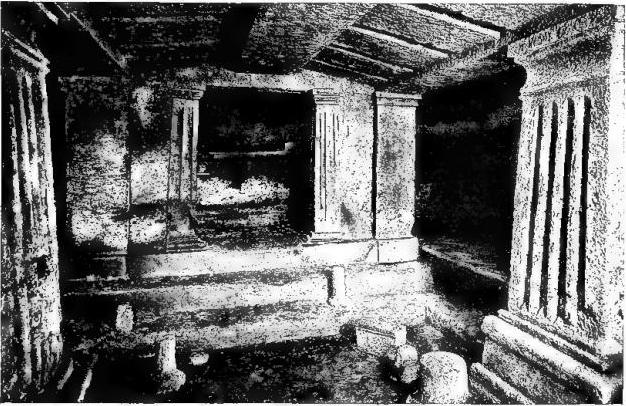
Etruscans, Religion of the (ETRUSCHI, RELIGIONE DEGLI)
The religion, and in particular the religious thought, of the Etruscan people - which flourished in central Italy during the 1st millennium… -
Eumenides (EUMENIDI)
Minor Greek divinities identified with the Erinyes (v.), although some of the ancients considered them different. They are benevolent, they… -
Evil Eye (MALOCCHIO)
A superstitious popular belief suggested by instinctive impression or by chance unfortunate coincidences, by which it is held that certain… -
Evocation (EVOCAZIONE)
From Lat. evocatio: a magical rite by means of which either a soul from the underworld or a deity from its seat is summoned. Evocation… -
Exorcism (ESORCISMO)
I. AMONG PRIMITIVE PEOPLES. - A lustratory rite by which, using formulas, gestures and objects, and the invocation of a being endowed with… -
Fatiha (FÂTIHAH)
In Arabic "the opening," "the initial." It is the first chapter (sûrah) of the Quran, and the only one that makes an exception to the… -
Faunus (FAUNO)
A very ancient Italic deity, later identified with the Greek Pan. He was the beneficent spirit of the mountains, the countryside and the… -
Feng Shui (FENGS SHUI)
The term f. s. (lit. "wind and water") designates in China a "pseudo-scientific system that is supposed to teach how and where to build… -
Feralia
It was the last day of the Parentalia, which consisted of a week dedicated to the dead of the family, or it fell on February 21 (Varro, De… -
Feziali
In Rome they constituted a priestly association of Latin origin, composed of twenty members, which recognized Jupiter as its patron and was…