
CINEMATOGRAPH. - I. MORALS AND PEDAGOGY. - Having appeared only in 1895, the cinema was able in a short time to rise to true heights of art, passing from silent films to talking and sound films, to color films and films in relief; and from very simple visions and actions to the most complex dramatic representations, to scenes and visions of splendid panoramas, of historical and scientific events, of fairy tales known since childhood. Thus it has become the pasture of millions of people, the most popular form of entertainment; a true "lesson in things," more effective for most men than abstract reasoning, because it is received without difficulty or effort, but with lively enjoyment and interest, accompanied as it is by the succession of concrete images that attract and enchant. The word, moreover, the dramatic action, the music, the color and the relief do nothing but strengthen its value, its power and its charm.
To observe how broad and deep the influence exercised by the cinema is, is easy, because one sees it at work in all the various sectors and phases of life; from private habits (mimicry of dress, of hairstyle, of manner, of bearing) to the variously orientable education of character and feeling, to the situation of the family nest, to social living. An influence that can be good or bad. Good, because, besides recreating, the representations of the cinema can awaken noble ideals of life, spread precious notions, provide broader knowledge of the history and beauties of one's own country and of others, present truth and virtue under an attractive form, also foster understanding among nations, social classes and races, reawaken the call to virtue and to natural and supernatural beneficent heroism, contribute with positive help and encouragement to the material and social improvement of the world. Bad: because often the representations of the cinema turn into an occasion of sin; they lead youth into the ways of evil, because they glorify the passions or at least seek to create around them an atmosphere of indifference, of compassion, of excuse; they expose life under a false light; they cloud the ideals; they destroy pure and faithful love, respect for marriage, affection for family life; they present to Christian modesty a surrogate of carefree casualness, which is a prelude to worse situations. When, moreover, with the so-called "variety shows", with the shamelessness of costumes, gestures and innuendoes, they do not turn outright into deplorable lessons of vice and corruption.
It goes without saying that, faced with such grave dangers and harms, the Church feels the duty to intervene in defense of the sound principles of civil and religious living, indicating the means useful to preserve from evil, and at the same time, to bend so beautiful a conquest of human ingenuity to the service of good. The Magna Carta of this intervention can be considered the encyclical of Pius XI, Vigilanti cura, of 29 June 1936 (AAS, 28 [1936], pp. 249-63), comforted and continually updated to current needs by Pius XI himself and by Pius XII for the universal Church and by individual bishops for their dioceses.
1. Negative means
a) The first and principal is the formation of a sound moral conscience in matters of spectacles in general and of the cinema in particular, which, while showing itself understanding, prevents the formation and spread of that scant moral sensitivity, which does not see or seeks not to see the danger, or skims over it with unfounded pretexts. For this formation the word of the Gospel must serve as a basis: "If your eye causes you to sin, tear it out and throw it away from you" (Mt. 5:29); "Whoever looks at a woman with evil desire has already committed adultery with her" (ibid. 5:28); which, moreover, confirms the principles of natural ethics and pedagogy. - b) The cinematographic promise, renewed every year, to abstain from films that offend truth and Christian morality. Already promoted as early as 1939 by the bishops of the Veneto, it was extended in 1942 to all members of Catholic Action. A common front, in this respect, of all Catholics, and not only of them, but of all those who feel the responsibility of the education of their children, such as the Legion of Decency (v.) in America, would represent a warning and a signal also to film producers (cf. M. Barbera, L'autocensura dei produttori di cinematografia in America, in Civ. Catt., 1931, III, p. 215 ff.). - c) The institution of cinematographic ratings for the purpose of making known to the people which films are lawful for all, which instead require some reservation and which finally are harmful or positively bad. These ratings must be made accessible to all, by means of special bulletins and in general by means of the Catholic press, especially the daily press, because it is more timely and widespread. And since a single rating list for all the nations of the world is not possible, because the circumstances, customs and temperaments of each country are different, permanent national offices will be established (in Italy there is the Centro Cattolico Cinematografico [C.C.C.] with its periodical publications).
2. Positive means
Since it is not enough to remove bad cinema, but it is necessary to promote good cinema, the national centers, especially, must act with constancy and fervor according to these orientations: a) to make themselves initiators, according to their possibilities, of serious and artistic films; b) to influence artists and all those who participate in cinematographic production, so that they create masterpieces that raise the cinema to an educative mission and make it conform to the demands of the Christian conscience, applying themselves to it with the competence of technicians and not of amateurs; c) to show the industrial producers of films how their capital can very well and without harm be employed according to these precepts; d) the Catholic press, moreover, will support this work of improvement with its reviews conducted calmly, yes, but also accurately, condemning what is worthy of condemnation and recognizing and praising the efforts of all those (governments, producers, artists) who cooperate in this action of true apostolate.
The cinema in school teaching. — As a rapid and extensive means of instruction, the cinema has also entered the school environment, especially with short-length films. These are not limited to the documentary alone, but also enter the scientific, pedagogical and religious field (catechism, sacred history, Church history, liturgy, missions, lives of the saints). The importance of the fact and the consequences that derive from it are evident; the effects that were already obtained from the use of projections not only continue, but increase because of the greater attraction that the cinema exerts. For this reason too, however, the same vigilance and caution already mentioned for other films is required, all the more assiduously maternal the more the pupils feel the undertow of life.
Bibliography8 works
Celestino Testore
II. HISTORY
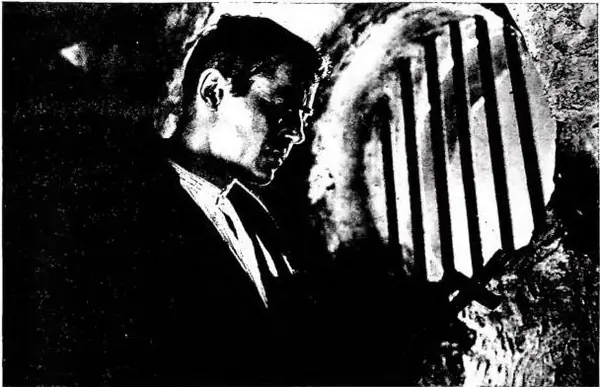
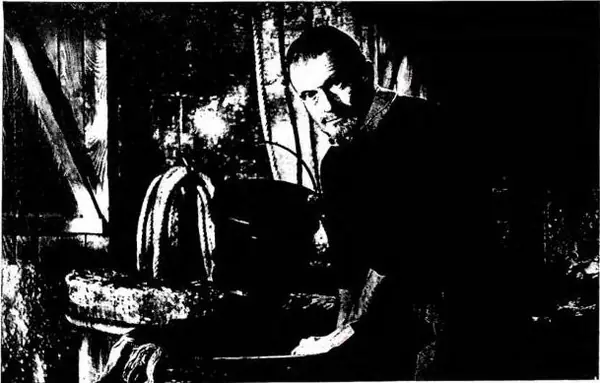
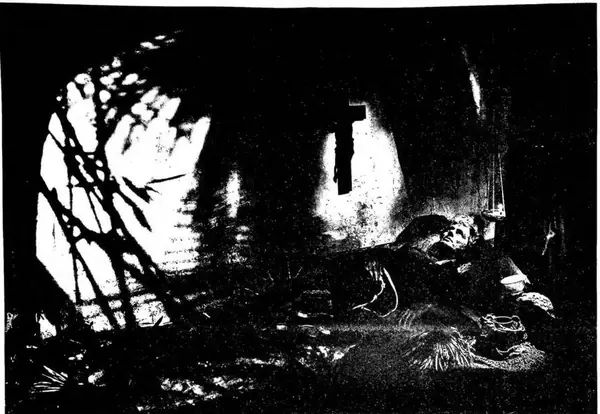
The history of the cinema begins on Dec. 28, 1895, when Louis and Auguste Lumière, amid the astonished interest of all, presented at the Grand Café on the Boulevard des Capucins, in Paris, a series of films, each of about 17 m. in a single shot, among them the famous l'Arroseur arrosé; and the history of Catholic cinema begins when, in the early days of Jan. 1896, Brother Basile, a professor at the St-Nicolas institute in Paris, staged, on the rue Jean-Coujon, a number of tableaux vivants drawn from the life of Christ and performed by his pupils. In Sept. 1897 an operator was sent by the Lumière brothers to Horitz, in Bohemia, to film the 13 scenes of the Oberammergau Passion (v.); the film reached 250 m. and constituted an exceptional event in which both Europe and America took an interest, where, the same year, R. Hollaman projected an identical one of 900 m.
Subsequently it was G. Méliès who gave the cinema means of expression, endowing it with tricks such as: the cross dissolve (the replacement of one image by another within the same shot, obtained by progressively blurring one as the other comes into focus); accelerated and reverse action. With F. Zecca the dramatic element entered the cinema.
Among the pioneers of the Italian cinema, mention must here be made, as a point of honor for Catholic cinema, of Msgr. C. Respighi, who, together with R. Kanzler, offered some interesting short films on the catacombs. In 1902 C. Pathé made the first Quo vadis? in France; then Ecce Homo, The Martyrdom of St. Sebastian and the excellent Christus; and Zecca, two years later, a Vie du Christ, in tableaux. F. Nihlo adapted H. Wallace's Ben-Hur (1907) in America, where the first feature-length film also appeared: Mose's life (1910), followed a year later by Jésus produced in France. Meanwhile in Italy S. Paolo (1910) and La Divina Commedia (1911) were filmed; U. Del Colle and E. Pasquali made I Promessi Sposi (1913); and E. Guazzoni presented a Quo vadis? that marked the triumph of the Italian cinema. In America there was also: Dalla mangiatoia alla Croce (1912), shot in Palestine; in Belgium Gesù di Nazareth (1923) by D. Buchowitzki; in France a great documentary by G.-M. Coissac, La petite sainte de Lisieux (1923) and L'agonie de Jérusalem (1924) by J. Duvivier.
Meanwhile D. W. Griffith appeared: with him the cinema attained a new spontaneity and rhythmic vivacity, which had been only hinted at in The Great Train Robbery (1903) by E. S. Porter; he succeeded in achieving a corresponding cinematographic expression of the most human and truest aspects of reality, investing, among other things, the technique of the dissolve with a strong poetic meaning and giving the cinema the great expressive means of the close-up. Of him one should remember Intolerance, convincing and humane, composed of 4 episodes, among them The Fall of Babylon, The Struggle of the Pharisees against Christ, The Night of St. Bartholomew. In 1917 E. Guazzoni filmed Cardinal Wiseman's Fabiola with a most faithful vision of the catacombs, according to Kanzler's reconstruction, and the Gerusalemme liberata. With G. Antamoro were produced Christus, S. Francesco and S. Antonio di Padova, the last very successful for the psychological solidity of the characters, despite the excessive rhetoric of the setting.
In Germany the so-called Kammer-spiel developed, which realized a murky inspiration with boldness of angles, violent investments of light, and specifically with staging in closed and concentrated settings.
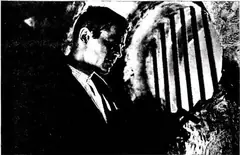
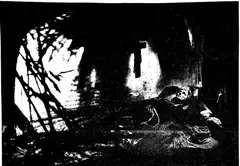
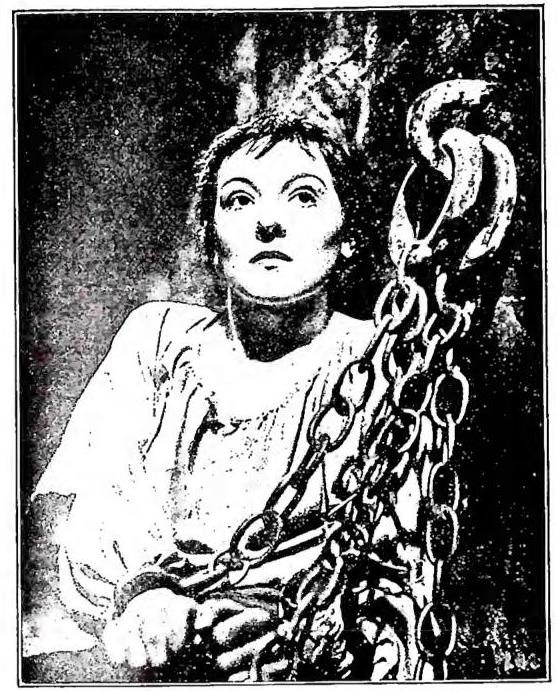
In Hollywood (U.S.A.) Cecil de Mille made The King of Kings (1925), where the figure of Christ was in a certain sense effective, but wrapped in too violent and tragic an atmosphere; likewise The Sign of the Cross, far from representing the sacrifice of the Christian martyrs. In Poland, on the other hand, The Mystery of the Black Madonna, very simple, full of religious emotion, marked a good success; likewise in France The Virgin of the Rock. In 1928 C. T. Dreyer succeeded in creating a splendid Passion of Joan of Arc which, closely following the trial records of the Saint, found its full language in an almost constant succession of close-ups of very tense rhythm, strongly cut by the light. In 1917 another Joan of Arc had been made with G. Farrar; two other works on the same subject were carried out in France by De Gaatyne and in Germany by Ucicky; this one by Ucicky, rather than verifying a page of history, had the aim "of importing a drama of characters: that of Joan, candid angel...". France boasted at that time La vie miraculeuse de Thérèse Martin (1929) by J. Duvivier, wholly suffused with Christian breath; and Germany I.N.R.I. (1929) by R. Wiene. For some time already the cinema had been looking with interest to S. M. Eisenstein and V. I. Pudovkin, who enriched their art with an extremely original syntax, succeeding in obtaining a stark dramatic quality by means of a montage that came to constitute an essential aesthetic connotation.
Through successive attempts and systems the cinema equipped itself with an expressive category: sound, which, felt as a necessity, had previously found expression in the extemporaneous accompaniment, usually the piano, during the projection; after an initial period in which its possibilities were tested, giving rise more than anything else to intrusive virtuosities, it assumed the character of an integral element when it was fused from the outset into the director's conception: an example of perfect sound commentary in which even the pauses of silence have a profound poetic reason is Stagecoach by J. Ford. At the transition from silent to sound came Hallelujah! (1929) by K. Vidor, performed by blacks, in which the mystical aspiration of a people toward Christian redemption was fused and blended with warm atavistic sensuality, flowing into an expression of orgiastic and at the same time mystical dance.
The first evident manifestations of a moral and didactic concern with regard to the cinema fall in this era with two international Catholic Congresses (The Hague 1928 and Munich 1929) which then established in Paris the Comité international pour la Cinématographie. It should be noted, however, that the Church had already been interested in the cinema for a long time.
A festival of the moral film was in fact organized in Milan (1910) by Cardinal Ferrari, who crowned it with the projection of S. Paolo. In the same year at the First International Congress of the cinema in Brussels, G.-M. Coissac called for energetic measures to guarantee the morality of the film. In 1912 Msgr. Couillié, archbishop of Lyon, warned against the licentious film and founded a league directed at preserving Catholics from it. Again, in 1927 Canon J. Reymond founded in Paris the Comité catholique du cinéma.
On June 29, 1936 Pope Pius XI dedicated the encyclical Vigilanti cura to the cinema, to which I had already alluded in 1929 in a passage of the Divini illius magistri, which meant a great event for the moralization of the cinema. Censorship offices were in fact established, in Europe, at the national directorates of Catholic Action, and to them, among other things, was entrusted the task of encouraging a morally healthy production. In Austria arose the Katholische Jugendzentrale, the Stella Maris Lichtspielgesellschaft and the Neurund Kinematographie; in Holland: the office Voor Er en Deugh; in Switzerland: the Vereinigung der Freunde der Kinoreforme. In America there was a very lively movement tending toward the moralization of the cinema, whose most typical expressions were the so-called "Hays code" (which limited and excluded in a rather mechanical way the representation of certain circumstances, scenes and displays), and the League of Decence which obtained truly substantial results.
In 1934 J. Duvivier made Marie Chapdeleine and the following year Golgotha, with a very personal and perhaps debatable vision of the relationship between the multitudes and Jesus. It is from this year (with The Wax Mask) that the official appearance, so to speak, of the color film dates: an expressive category which, unlike the other, sound, has not yet gone beyond the first phase of experimentation and virtuosity; attempts to "tune" colors are for now rare and embryonic: the director continues to feel the film in black and white, while the color technician limits himself to enriching the chromatic intensity of the costumes and the screenplays, so that the color ends up purely juxtaposed to the original conception.
In 1936 L. Poirier with L'Appel du silence brought to the screen the life of the apostle of the Sahara: Fr. C. de Foucauld. In 1939 in France there were several documentaries, among them: India sacra by the missionary Fr. Lhande and Monastero by R. Alexandre; the life of St. Vincent de Paul was also adapted for the cinema under the title Monsieur Vincent. In Italy: Abuna Messias; Don Bosco by G. Alessandrini, drawn from the episodes of the Saint's youth, and aimed at illuminating his unfailing faith in Providence in giving shelter to foundlings; then simple and beautiful: La porta del cielo.
In 1939 appeared Assisi by A. Blasetti, which represented an effort to sublimate nature and things in the Franciscan spirit; by the same director there was La tavola dei poveri. Mention should also be made of the Salesians' Jubilæum and the missionary documentary Conquistatori d'anime by R. Chiosso.
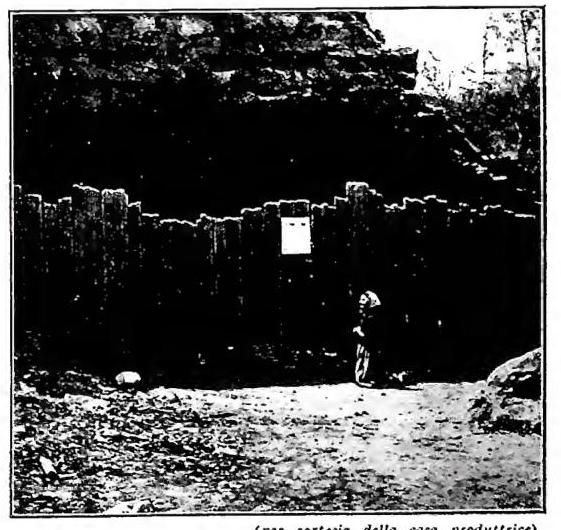
In recent years the American movement for the moralization of the cinema, and specifically the Catholic one, has passed from a critical and defensive attitude to a more properly active one, which has given rise to a series of films inspired by Catholic religious figures and their work: from the one on Fr. Flanagan (Boys Town, 1944), to Going My Way (1944), unfortunately not always free from an all too easy pathos; to The Bells of St. Mary's, The Keys of the Kingdom, Bernadette, and The Fugitive by J. Ford; of this last film, a very happy one, the brief final sequence is simple and intense, reaffirming the continuity of faith beyond persecution. In '49 there was then in America another Joan of Arc, directed by V. Fleming with the consultancy of Fr. Donceeur; and in Italy: St. Anthony of Padua, directed by P. Francisci, who well emphasized the Saint's combative temperament; and Cielo sulla palude, the film by A. Genina which won a fine success at the X International Film Exhibition in Venice for having feelingly evoked, in a climate of lyrical emotion, the human story of Bl. Maria Goretti. - See T'avv. CIX-X.
Bibliography11 works
Franco Costabile