
NIMBO. - A disk that, since the 4th century B.C., is found placed around the head of images of divinities or divinized beings.
In classical art, this attribute was given to the divinities of Olympus, especially those symbolizing light, such as Apollo-Helios-Sol; Artemis-Selene-Luna; Eos-Aurora; Phosphoros-Lucifer. In the vault of a pagan mausoleum, transformed into a Christian one, in the Vatican necropolis, the radiated and nimbate Sun is depicted on the racing quadriga (B. M. Apollonj-Ghetti, A. Ferrua, E. Josi, E. Kirschbaum, Esplorazioni sotto la confessione di S. Pietro in Vaticano, Città del Vaticano 1951, pp. 40-41, pl. B and C). There also a Phosphoros-Lucifer, with the n. surmounted by a star (ibid., p. 62, pl. E). The radiated n. was also given to the Phoenix (slab in the cemetery of Callistus [E. Josi, s. V. FENICE, in Enc. Catt., V, col. 1151] and a very recent fresco discovered in the so-called Greek chapel of Priscilla); the seasons also have the n. (cemetery inter duas lauros: Wilpert, Pitture, pl. 100), as do emperors (Hadrianic medallion in the Arch of Constantine [H. P. L'Orange and A. von Gerkan, Der Spätantike Bildschmuck des Konstantinsbogens, Berlin 1939, pl. 5]); on coins: medallion of Constantius II, Valens and Valentinian (F. Gnecchi, Medaglioni romani, I, Milan 1912, pl. 11, 1), silver missorium disk of Valentinian I (?) and Theodosius I from 388 (R. Delbruck, Spätantike Kaiserporträts, Berlin 1933, pl. 79), on ivories: diptych of Probus in Aosta from the year 406 (ibid., pl. 106). In cemetery art, the n. is given at first only to Jesus Christ, e.g., before Pilate in the mosaic in an arcosolium at Priscilla (G. B. De Rossi, Nuove scoperte nel cim. di Priscilla, in Bull. arch. crist., 4th series, 5 [1887], p. 12 f.); in scenes where He is judge, as in Bassilla (Wilpert, Mosaiken, pl. 247); in S. Lorenzo (ibid., pl. 206), among the wise and foolish virgins (ibid., pl. 241) and between two saints (ibid., pl. 205), as well as in Callistus (ibid., pl. 245), or among the Apostles, as in Bassilla (ibid., pl. 225) and in Domitilla, where ss. Peter and Paul also have the n. (ibid., pl. 155, 2). The angel protecting the three youths in the furnace in a fresco in the cemetery of Domitilla has the n. (Wilpert, Pitture, p. 332 and pl. 231, 1). In the cemetery of Vigna Cassia in Syracuse, Jesus Christ above the n. has the monogram ☒ (ibid., pp. 365-66, fig. 34); in the cemetery inter duas lauros He has the n. with the apocalyptic letters, like the divine lamb, which also has the monogrammatic cross ☒ (ibid., pl. 252-253); He has the cruciform n. in the paintings of Pontianus, Generosa, and Callistus (ibid., pl. 257-58, 260); in the mosaics of S. Apollinare Nuovo in Ravenna; on a marble slab (4th cent.) in the cemetery of Thraso, where He hands the law to s. Peter (R. Garrucci, Storia dell'arte cristiana, Prato 1873-81, pl. 484, 14). Saints have the simple n.
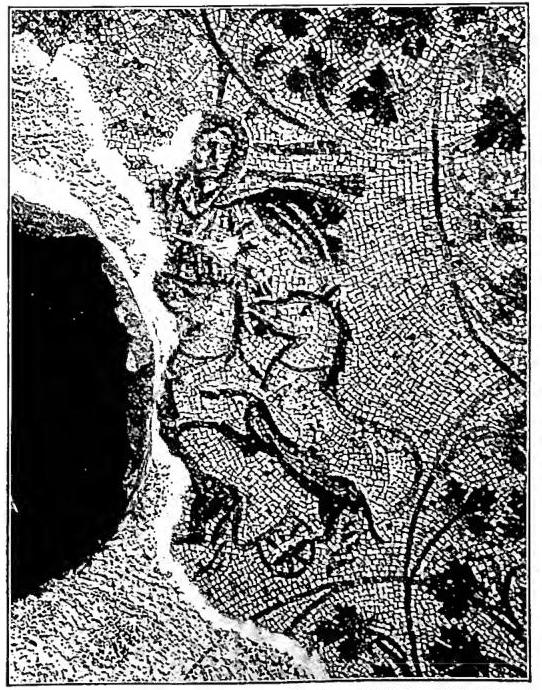
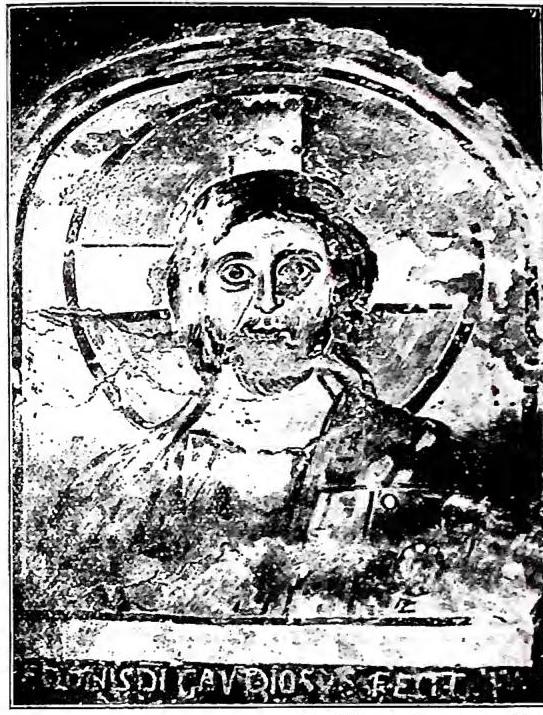
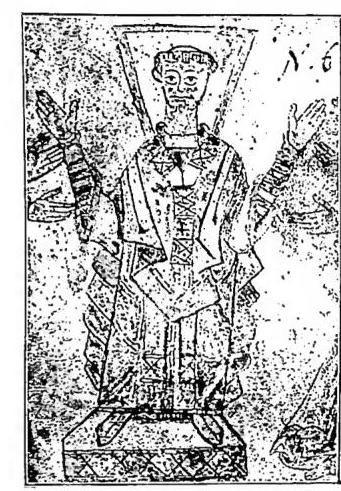
The n. or halo, in its most elementary form, had an extraordinary spread in all countries and was happily enriched with delicate ornamental motifs, executed with niello in Gothic art, during the flowering of which it also extended to sculpture, which due to execution difficulties had previously been devoid of II. A decisive change took place during the Renaissance, with the occasional suppression of the n. in painting or with the consideration of it as a real attribute, localized in space and perspective-orientable, not without virtuosic drawing. With Michelangelo and the great masters of the 16th century the archaic tradition of the n. was violently broken, arousing religious and iconographic protests. Nevertheless, the tradition continued in minor and popular art, and in the Baroque age was replaced by more or less violent flashes of light. Connected to the n. is the "mandorla", which includes within an ellipsoidal curve the entire person whom one intends to honor.
Current regulations regarding the n. or halo - Urban VIII in 1625 (decree of the Holy Inquisition de cultu publico Servis Dei non exhibendo, of March 13: CIC Fontes, IV, Rome 1926, pp. 3-5) and again in 1635 (constitution Caelestis Hierusalem, July 5: Bullarium Romanum, ed. Taurinensis, XIV, Turin 1868, pp. 463-40) prohibited the public or private display of images of deceased persons who died in the odor of sanctity and martyrdom «cum laureolis aut radiis, seu splendoribus». Such a prohibition is still in force today. The circular n. is now used only for canonized saints, while for blesseds a n. is used, formed in the manner of rays emanating softly from behind the head of the blessed. This special n. is mentioned for the first time in the brief of beatification of St. Francis de Sales by Alexander VII (Spiritus sanctus, Dec. 28, 1661: D. Cappelli, Contextus actorum omnium
in Byz. Zeitschr., 14 [1905], pp. 578-79), that the rectangular n. was intended to give the illusion of a true portrait, as, e.g., the head of the primicerius Theodore with the square n. in S. Maria Antiqua was painted on separate cloth and then applied to the fresco (v. DIACONIA; G. Wilpert, Beiträge zur christl. Archäol., in Röm. Quart., 21 [1907], p. 102, fig. 2). But the most ancient example is provided by a fresco in the Catacomb of Callixtus, in which a canvas with the effigy of the owner of the cubicle was applied to a bust (ibid., p. 103, fig. 3; id.,
in beatificatione et canonizzazione s. Francisci Salesi ep. Gebenensis, Rome 1665, p. 18). There one reads the expression: «Immagines quoque radiis, seu splendoribus exumentur», which is still repeated in the briefs of beatification (cf., e.g., the Brief of Pius XII, June 2, 1951, for the beatification of Pius X: AAS, 43 [1951], p. 467). A. Pietro Frutaz