
Philosophy
Filosofia · 752 articles · Principal contributors · All subjectsSection editor, 1948–54: Ugo Viglino
Most cited sources Summa theologiae 101Matthew 8Pascendi 5John 4Psalms 4Romans 4Aeterni Patris 4Humani generis 4
Related subjects Ecclesiastical HierarchyDogmatic TheologyGeography & DiocesesHistory & BiographySacred ScriptureApologetics
Principal entries
All entries, A to Z
-
Abelard (Abailardus, Abaelardus), Peter (ABELARDO (ABAELARDUS, ABAILARDUS), PIETRO)
French philosopher and theologian. 1. BIOGRAPHICAL NOTES. - Born in 1079 at Pallet (Palatium), a village in Lesser Brittany, about 20 km… -
Abraham ben David ha-Levi (ABRĀHĀM BEN DĀVID HA-LĒVI)
Jewish-Spanish philosopher and historiographer, b. at Toledo, d. around 1180. A notable figure in the history of medieval Jewish and Arabic… -
Absolute (ASSOLUTO)
A word derived from the Latin "absolutus," which corresponds, in part of its meaning, to the Greek terms ὅλος and τέλειος, and takes on now… -
Abstract, Abstraction (ASTRATTO, ASTRAZIONE)
1. In general, "a." is the qualification of mental contents, the universal ideas or concepts (v.), as opposed to things existing per se in… -
Absurd (ASSURDO)
From the Latin absurdus, which in its proper sense had the same value as absonus (from the privative ab and sonus, sound), out of tune… -
Abubacer (ABUBACER)
Arab-Spanish physician, mathematician and philosopher of the Islamic religion, b. around 1100, d. in Morocco in 1185. He is known… -
Acatalectic (ACATALESSIA)
From the Greek ἀκαταληψία (a priv. and καταλαμβάνειν, percipio, comprehendo), it is the impossibility of apprehending the true. In its… -
Accident (ACCIDENTE)
Etymologically a. (from Lat. accidere = to happen; Gk. συμβεβηκός) is that which can be said of something but not necessarily (logical… -
Acosmism (ACOSMISMO)
This name was used (by Hegel) to designate Spinoza's philosophical system concerning the nature and origins of the universe, insofar as he… -
Acri, Francesco
Philosopher, b. in Catanzaro on 19 March 1834, d. in Bologna on 21 Nov. 1913. He is commonly recognized as the most conspicuous… -
Act and Potency (ATTO E POTENZA)
The doctrine of a. and p., with the principles and applications deriving from it, constitutes the characteristic and the foundation of… -
Action (AZIONE)
In Roman law, this word (Latin actio) originally served to indicate any act performed in a trial; later, under the formulary procedure, it… -
Actualism (ATTUALISMO)
It is the form of idealism (v.) that Giovanni Gentile proposed and that, more than the other forms, spread in Italy. It is first of all an… -
Adam of Marsh (de Marisco) (ADAMO DI MARSH (DE MARISCO))
Born toward the end of the 12th century in Somerset, he completed his studies at Oxford, where he obtained degrees in the faculty of Arts.… -
Adam Wodeham (Godham, Goddham) (ADAMO WODEHAM (GODHAM, GODDAM))
English Franciscan, ardent supporter of the "via moderna" or nominalism. He taught at Norwich, London and Oxford, and in the controversy… -
Adelard of Bath (ADELARDO DI BATH)
English by birth, he completed his studies at Tours and taught at Laon. Dissatisfied with the "gallica studia", he undertook long journeys… -
Ad Hominem, Argument (AD HOMINEM, ARGOMENTO)
A form of indirect argument, by which one concludes against an opponent starting from his own assertions and principles (Aristotle, Analyt.… -
Aestheticism (ESTETISMO)
It is a designation, with fluctuating boundaries, of a way of feeling and thinking that subordinates reality and the values of life to art… -
Aesthetics (ESTETICA)
Science of the beautiful and of art. SUMMARY: I. Meaning of the term. - II. Historical synthesis. - III. The problems of a. I. MEANING OF… -
A Fortiori (understood Ratione) (A FORTIORI (SOTTINTESO RATIONE))
All the more reason. One of the forms of the argument from analogy. It occurs when from a certain affirmation x one concludes to an… -
Agnosticism (AGNOSTICISMO)
It is the spiritual attitude of one who suspends his judgment on the existence and nature of the Absolute and of the Divinity. 1) Notion.… -
Agostino da Biella
Augustinian theologian and philosopher, from 1495 onward he was a lecturer at Padua; he edited an edition of the Liber elenchorum of Giles… -
Agrippa of Nettesheim, Cornelius Heinrich (AGRIPPA DI NETTESHEIM, CORNELIUS HEINRICH)
Philosopher, b. at Cologne in 1486 into a noble family. After a wandering and adventurous life he died, it seems at Grenoble, in 1535. His… -
Alamanni, Cosimo
A renowned cultivator of Thomist philosophy, b. in Milan in 1559 and d. there on 24 May 1624. He entered the Society of Jesus young (1575)… -
Alano of Lille (ALANO DI LILLA)
Theologian and philosopher, scholar and poet, b. at Lille between 1115 and 1128, d. at the abbey of Cîteaux in 1202 or 1203 (not to be… -
Albert of Orlamünde (ALBERTO DI ORLAMÜNDE)
German Dominican of the 13th century, perhaps a disciple of St. Albert the Great. Modern critics (Grabmann, Geyer) claim for him the… -
Albert of Saxony (ALBERTO DI SASSONIA)
Ockhamist philosopher and student of the natural sciences, of the second half of the 14th century. Died in 1390. He studied at the… -
Alexander of Aphrodisias (ALESSANDRO D'AFRODISIA)
Peripatetic philosopher from Caria and celebrated commentator on Aristotle. He lived at the end of the 2nd century AD and the beginning of… -
Alexandrinism (ALESSANDRISMO)
A philosophical current inspired by the interpretation that Alexander of Aphrodisias (v.) gave of Aristotle's thought, especially as… -
al-Ghazali, Abu Hamid Muhammad ibn Muhammad at-Tusi (al-ĠAZZĀLĪ, ABŪ HĀMID MUḤAMMAD IBN MUḤAMMAD AT-ṬŪSĪ)
One of the greatest philosophers, mystics and theologians of Arabic-speaking Islam, well known to Latin scholasticism and especially to St.… -
al-Kindi, Abu Yusuf Ya'qub ibn Ishaq (al-KINDĪ, ABŪ JŪSUF JA'QŪB IBN ISḤĀQ)
Arab philosopher, theologian and encyclopedic man, known to medieval Latin scholasticism under the name of Alkindi or Alchindus, b. at… -
Allievo, Giuseppe
Philosopher and educationist, b. at S. Germano, a village in the Vercelli area, on 14 Sept. 1830, d. at Turin on 24 June 1913. He completed… -
Almeida, Theodoro de
Oratorian, b. in Lisbon in 1722, d. there in 1804. He taught philosophy and natural sciences, and published in 10 vols. his major work… -
Altmeyer, Jean-Jacques
Belgian philosopher and historian, b. in Luxembourg in 1804, d. in Brussels in 1877. Having earned degrees in philosophy and in law… -
Amalric (Amalricus, Almaricus, Amauricus), Di Bena (AMALRICO (AMALRICUS, ALMARICUS, AMAURICUS), DI BENA)
Celebrated French theologian and philosopher of the 12th century, a native of Bène (Bènes, Bennes) near Chartres. He completed his higher… -
Amari, Emerico
Politician and thinker, b. in Palermo in 1810, d. there in 1870. A complex personality as a scholar, patriot and believer. Imprisoned… -
Amiroutzes, George (AMIROÚTZES, GIORGIO)
Byzantine Aristotelian philosopher, b. at Trebizond at the beginning of the 15th century, d. suddenly after 1469. Since he belonged to one… -
Ammonius Sacca (AMMONIO SACCA)
Philosopher who lived in Alexandria between 175 and 242 A.D.: he is the founder of Neoplatonism. As a young man he earned his bread as a… -
Analogy (ANALOGIA)
Etymologically (from the Greek ἀνά "above" and λόγος "discourse, reason") analogy suggests the idea of a relation between two terms, hence… -
Analysis and Synthesis (ANALISI E SINTESI)
A. (Gr. ἀνάλυσις from ἀναλύειν, synonymous with ἀνάγειν = resolvere) and s. (Gr. σύνθεσις from συν-τίθημι = compono) designate two opposed… -
Analytics (ANALITICA)
Term derived from analysis. In Aristotle, the Analytics (Prior and Posterior) are the names of the two books of logic that deal with the… -
Anaxagoras (ANASSAGORA)
Greek philosopher, b. at Clazomenae ca. 499 B.C. He lived in Athens for 30 years and enjoyed the friendship of Pericles. In 432 he was… -
Andronico of Rhodes (ANDRONICO DI RODI)
Peripatetic philosopher of the 1st century B.C., tenth head of the Lyceum. His name is linked to the edition of Aristotle's school works… -
Animal (ANIMALE)
1. IN NON-CHRISTIAN RELIGIONS. - In all natural religions, whether primitive or evolved, a cult has been paid to certain animal species or… -
Animation (ANIMAZIONE)
I. WHAT BIOLOGY SAYS. - The philosophical and theological problem of animation, that is, the identification of the moment at which the… -
Anselm of Besate, called the Peripatetic (ANSELMO DA BESATE, DETTO IL PERIPATETTO)
Wandering master of the 11th century, one of the first representatives of the dialectic reviving in early scholasticism. Of his life it is… -
Anthropomorphism (ANTROPOMORFISMO)
A. (from the Greek ἄνθρωπος "man," and μορφή "form") is generally the tendency of man to project himself onto the things that surround him… -
Antinomy (ANTINOMIA)
From the Greek ἀντινομία (ἀντί against, νόμος law) it is the contradiction or inconsistency of a law, which gives rise to interpretations… -
Antithesis (ἈΝΤΊΘΕΣΙΣ) (ANTITESI (ἈΝΤΊΘΕΣΙΣ))
Opposition of meaning between two notions or judgments. The terminology is Aristotle's, in whose works "antithesis" has a generic scope… -
Apperception (APPERCEZIONE)
Term that came into use with Leibniz (v.), who, by distinguishing between perception and apperception, claimed to avoid the difficulties… -
Apprehension (APPRENSIONE)
In philosophical language, chiefly Scholastic, a. (from ad-prehendere, to take, to grasp) designates, in a broad sense, every perceptive… -
A Priori and A Posteriori (A PRIORI E A POSTERIORI)
Technical expressions of philosophical language, of varied meaning. Their origin goes back to Aristotle, who in the Analyt. Poster., I, 2… -
Apriorism (APRIORISMO)
A philosophical term derived from the expression a priori. In its most common meaning today, it designates any method of study and research… -
Arabs, Philosophy of the (ARABI, FILOSOFIA DEGLI)
The Arabs regarded as faylasūf, that is, philosopher in the exact sense of the term, not every thinker, but only those who occupied… -
Archetypal Idea (IDEA ARCHETIPA)
This designation refers to the supreme and primordial logical form of all things. Philosophers and theologians speak of it in order to… -
Ardigò, Roberto
Philosopher, b. at Casteldidone (Cremona) in 1828 to a modest family, d., by suicide, at Mantua in 1920. He completed, through financial… -
Aristotelianism (ARISTOTELISMO)
1. MEDIEVAL A. - An event of primary importance in the development of medieval thought, destined to produce first-rate consequences in… -
Aristotle (ARISTOTELF)
Encomia prefixed to the editio princeps, edited by Aldo Manuzio, Venice 1495. in its simplicity admitting no change, "possesses itself" in… -
Aristotle ('Αριστοτέλης) (ARISTOTELE ('ἈΡΙΣΤΟΤΈΛΗΣ))
The greatest Greek philosopher and one of the greatest of all time. SUMMARY: I. 1. LIFE. - 2. WORKS. - 3. Historical development of his… -
Aseity (ASEITÀ)
The property of a reality that does not derive its being from another. In Christian philosophy, aseity is a perfection exclusive to God… -
"As If," Philosophy of (COME SE, FILOSOFIA DEL)
Title of the principal work of Hans Vaihinger (v.) and summary formula (als ob or also vie senn) of the interpretation of Kantian… -
Assent (ASSENSO)
An essential moment of judgment (v.), consisting in the act by which the mind adheres to a proposition, that is, affirms the relation of… -
Association of Ideas (IDEE, ASSOCIAZIONE DELLE)
It is the fact that the images of consciousness, like ideas and cognitive contents in general, present themselves in connection with one… -
Atomism (ATOMISMO)
Philosophical and scientific theory that resolves reality into an aggregate of indivisible primary elements, called atoms (from the Greek… -
Attention (ATTENZIONE)
I. PHILOSOPHY. - From the Latin ad and tendere, it is the convergence or direction of consciousness (v.) upon some object of the world… -
Attribute (ATTRIBUTO)
In grammar it is an accidental element of the proposition and can be a pronoun, a numeral, a participle and, more often, an adjective. In… -
Augustinism (Augustinianism) (AGOSTINISMO (AGOSTINIANISMO))
Not only in the history of dogma did the bishop of Hippo exercise an influence of incalculable scope, but also upon the orientation of… -
Aureoli (Auriole, Oriole, etc.), Pietro (AUREOLI (AURIOLE, ORIOLE, ECC.), PIETRO)
Franciscan philosopher and theologian, b. in the diocese of Cahors ca. 1280 (?), d. at Avignon or Aix on 10 (?) January 1322. Nothing is… -
Autocitisi (Autos 'Self' and Ktisis 'Creation') (AUTOCITISI (ΑΥ̓ΤΌΣ «STESSO» E ΚΤΊΣΙΣ «CREAZIONE»))
Self-creation, positing of oneself. The word goes back to B. Spaventa; the concept is central to Gentile's actualism, which conceives… -
Autonomy (AUTONOMIA)
From the Greek αὐτονομία, it is, in general, the faculty of governing oneself by one's own laws. I. SOCIAL AUTONOMY. - The principle of the… -
Avempace (AVEMPACE)
Philosopher, mathematician, physician and cultivator of music, b. at Saragossa toward the end of the 11th century, d. at Fez in 1139. He… -
Avenarius, Richard
Philosopher and physicist, b. in Paris in 1845, d. in Zurich in 1896. He taught philosophy at the University of Zurich. His principal work… -
Averroës (AVERROË)
While in the East, after Avicenna, Arab philosophy rapidly declined, in Spain, through contact with Jews and Christians, the Arabs, from… -
Averroism (AVERROISMO)
From the second half of the 13th century through the whole of the 16th, those who, in the controversies over Aristotle's thought, gave… -
Avicebron
Jewish poet and philosopher of the 11th century. It is barely a century ago (1846) that, thanks to S. Munk, it became possible to identify… -
Avicenna
One of the greatest Arab philosophers, a celebrated physician, encyclopedic in his learning and therefore called the "chief sage" and "the… -
Axiom (Ἀξίωμα, from ἀξιόω «I esteem, judge well») (ASSIOMA (ἈΞΊΩΜΑ, DA ἈΞΊΩ «STIMO, GIUDICO BENE»))
In the sense current today, an axiom is a general principle of immediate evidence that does not need to be demonstrated; in particular, the… -
Baader, Franz Xaver Benedict von
Philosopher and theosophist b. in Munich on 27 March 1765, d. there on 23 May 1841. He studied medicine at the Universities of Ingolstadt… -
Babenstuber, Ludwig
Benedictine, b. at Deining (Upper Bavaria) in 1660, d. at Ettal in 1726. After making his profession in the monastery of Ettal (1682) and… -
Bacon (Bacon, Bachon), Roger (BACONE (BACON, BACHON), RUGGERO)
Doctor mirabilis, Franciscan, a complex figure of an English philosopher, philologist and scientist, b. at Ilchester in the county of… -
Bacon, Francis (BACONE, FRANCESCO)
Philosopher and statesman, b. 22 Jan. 1561 near London, son of Nicholas, keeper of the great seal to Queen Elizabeth and nephew of the… -
Baconthorp, John (BACONTHORP, JOHN)
Philosopher and theologian, b. in the last decades of the 13th century in Baconthorp (Norfolk). As a young man he entered the Carmel of… -
Baeumker, Clemens
Philosopher and historian of ancient, patristic and medieval philosophy, b. in Paderborn on 16 Sept. 1853, d. in Munich on 7 Oct. 1924. In… -
Baillie, James
English philosopher, b. Oct. 24, 1872, d. at Weybridge on June 9, 1940. From 1902 to 1924 he was professor of moral philosophy at the… -
Bain, Alexander
Scottish philosopher and educationist, b. at Aberdeen in 1818, d. there in 1903. He taught at the Universities of Glasgow, London and… -
Baldinotti, Cesare
Philosopher, of the Benedictine Olivetan Order, b. in Florence on 12 July 1747, d. in Padua on 23 Dec. 1821. He was abbot of S. Miniato al… -
Balmes, Jaime
Philosopher, apologist, sociologist and politician, b. at Vich, in Catalonia, on 28 Aug. 1810, and d. there on 9 July 1848. Having… -
Baranzano, Redento Giovanni Antonio
Barnabite philosopher and scientist, b. at Serravalle Sesia (Biella) in 1590, and d. at Montargis (Loiret) on 23 Dec. 1622. He… -
Barberis, Alberto
Neo-Scholastic philosopher, of the Congregation of the Mission, b. in Monferrato on 14 Jan. 1847, d. in Piacenza at the Alberoni College on… -
Barbo, Paolo
Philosopher and theologian, b. at Soncino (Crema) and therefore also called Soncinas. Having entered the Dominicans while still young, he… -
Bardili, Christoph Gottfried
German philosopher, b. at Blaubeuren in Württemberg on 18 May 1761, d. at Mergelstetten on 5 June 1808. He wrote on philosophy and on the… -
Barthélemy-Saint-Hilaire, Jules (BARTHELEMY-SAINT-HILAIRE, JULES)
Philosopher and politician, b. in Paris on 19 Aug. 1805, d. there on 24 Nov. 1895. He was a conformist in politics and collaborated with… -
Barzellotti, Giacomo
Philosopher, b. in Florence in 1844, d. in Rome in 1917. He taught at Pisa and at Rome. A pupil of Mamiani, in part a follower of Kant… -
Bassolis, Giovanni de
Franciscan theologian, b. probably at Bassoles in France in the last decades of the 13th century, d. 4 July 1333. He studied in Paris and… -
Bautain, Louis-Eugène-Marie
Philosopher and theologian, b. in Paris on 17 Nov. 1796, d. there on 15 Oct. 1867. He studied from 1813 at the "École Normale," where his… -
Bayle, Pierre
Protestant philosopher and man of letters, b. at Carla (Ariège) on 18 Nov. 1647, d. at Rotterdam on 28 Dec. 1706. In 1669 he left Calvinism… -
Becher, Erich
German philosopher, b. in Reinshagen (Remscheid) on Sept. 1, 1882, d. Jan. 5, 1929 in Munich, where he had been a professor since 1916.… -
Becoming (DIVENIRE)
In the strict sense it is the coming into being of a being or of any of its determinations, as opposed to perishing or falling apart; in… -
Behavior (COMPORTAMENTO)
It may be defined as the practical attitude that the animal and man assume in the concrete situations of life. It therefore consists of a… -
Being, Entity (ENTE, ESSERE)
In ordinary language they can be synonyms. In philosophical reflection they are usually taken as concrete and abstract: "ente" is said of… -
Beneke, Friedrich Eduard
Philosopher, b. in Berlin on 17 February 1798, d. there on 1 March 1854. B.'s work, spiritually connected with that of G. F. Fries (v.)… -
Bentham, Jeremy
Philosopher and jurist, b. in London on 15 Feb. 1748, d. there on 6 June 1832. He was of a very precocious intellect, so much so that at… -
Berdyaev, Nikolai Alexandrovich (BERDJAEV, NIKOLAJ ALEKSANDROVIČ)
Contemporary Russian philosopher, b. in Kiev on 6 May 1874, d. in Paris on 23 March 1948. After completing his studies at the university of… -
Bergson, Henri
Philosopher, b. in Paris on 18 Oct. 1859 to a Jewish family of Irish origin, d. there on 4 Jan. 1941. A pupil of Ollé-Laprune and of… -
Berkeley, George
English philosopher and Anglican bishop, b. 12 March 1685 at Dysert, in County Kilkenny in Ireland, to an immigrant Anglican family, d. at… -
Bernard de La Treille (De Trilha) (BERNARD DI LA TREILLE (DE TRILIA))
Dominican philosopher and theologian of the 13th century. Born at Nîmes, he taught theology in Paris (1284-88), died at Avignon in 1292. He… -
Bernard of Auvergne (BERNARDO DI ALVERNIA)
Dominican philosopher and theologian of the 13th century. He obtained the baccalaureate in theology at the University of Paris, and was… -
Bernard of Chartres (BERNARDO DI CHARTRES)
Philosopher, active between the end of the 11th century and the beginning of the 12th, erroneously identified for some time, owing to the… -
Bertoldo of Moosburg (Moosburg, Maisberch) (BERTOLDO DI MOSBURG (MOOSBURG, MAISBERCH))
Dominican scholastic of the first half of the 16th century. Perhaps a disciple of Dietrich of Freiberg (de Wulf), he taught at Cologne. In… -
Biester, Johann Erich
Philosopher, b. in Lübeck on 17 Nov. 1749, d. in Berlin on 20 Febr. 1816. He belonged to the circle of Mendelssohn and Nicolai, and was… -
Billia, Lorenzo Michelangelo
Philosopher, b. at Cuneo on 1 Dec. 1860, d. at Florence on 10 Apr. 1924. Having joined Morando in defending the condemned Rosminian… -
Blondel, Maurice
Philosopher, b. at Dijon on 2 Nov. 1861, d. at Aix-en-Provence on 5 June 1949. From 1897 professor of Philosophy at the University of Aix… -
Blount, Charles
English deist, b. in 1654, d. in 1693. A rigidly rationalist critic, he devalued every criterion of apologetics of the supernatural… -
Body (CORPO)
In general, a body is a sensible material reality. In experimental science, a body is a portion of matter with determinate specific… -
Boethius, Anicius Manlius Torquatus Severinus (BOEZIO, ANICIO MANLIO TORQUATO SEVERINO)
I. LIFE. - B. was born in Rome of the noble stock of the Anicii, around the year 480, when the kingdom of Odoacer was about to succumb… -
Boethius of Dacia (BOEZIO DI DACIA)
Scholastic philosopher of the 13th century about whom very little is known. He was not a Dominican, nor a religious, nor a priest, but a… -
Böhme, Jacob
Protestant theosophist, b. at Altseidenberg in 1575, d. at Görlitz in 1624. A shoemaker, at first a wanderer, he settled in Görlitz in… -
Bolingbroke, Henry Saint John, Viscount of (BOLINGBROKE, HENRY SAINT JOHN, VISCONTE DI)
Politician and philosopher, one of the most advanced representatives of English deism. B. on 1 Oct. 1672 at Battersea (London), d. there on… -
Bonatelli, Francesco
Spiritualist philosopher, b. at Iseo on 25 April 1830, d. on 13 May 1911 at Padua, where he taught at the University. He opposed positivism… -
Bonnet, Charles
Psychologist and naturalist, b. in Geneva on 13 March 1720, d. there on 20 June 1793. A complex figure whose works reflect the influence of… -
Bonnetty, Augustin
French philosopher and historian, b. at Entrevaux on 9 April 1798, d. at Paris on 29 March 1879. In 1830 he founded the Annales de… -
Borrelli, Pasquale
Philosopher, b. at Tornareccio (Chieti) on 8 June 1782, d. at Naples in 1849. He had a very eventful and adventurous life. Around the age… -
Bosanquet, Bernard
Philosopher, b. in Northumberland on 14 June 1848, d. on 8 Feb. 1923 in London, where he lived continuously from 1881 onward, except for… -
Boström, Christopher Jacob
Swedish philosopher, b. at Piteå in 1797, d. at Uppsala, where he was a professor, in 1866. Though following Bibert and Grubbe, he… -
Boutroux, Étienne-Émile-Marie (BOUTROUX, ETIENNE-EMILE-MARIE)
French philosopher, b. at Montrouge (Seine) on 28 July 1845 and d. at Paris on 23 Nov. 1921. After completing his studies, part of which he… -
Bovio, Giovanni
Thinker and politician, b. at Trani in 1837, d. at Naples on 15 April 1903. In his time he was one of the most prominent and admired… -
Bradley, Francis Herbert
English philosopher, b. at Glasbury (Wales) on 30 Jan. 1846 and d. at Oxford on 18 Sept. 1924. He is the last representative of that… -
Brentano, Franz
Philosopher, b. at Marienberg near Boppard on the Rhine on 16 January 1838 into a Catholic family of Italian origin, d. at Zurich in… -
Bruno, Giordano
Philosopher and man of letters, in the world FILIPPO, b. at Nola (Naples) in 1548, d. at Rome in 1600. Having completed his early studies… -
Büchner, Ludwig
German philosopher, b. in Darmstadt on 29 March 1824, d. there on 1 May 1899. A physician, he came under the influence of Moleschott to… -
Buridan, Giovanni (BURIDANO (BURIDANUS), GIOVANNI)
Philosopher and scientist, b. at Béthune at the end of the 13th century or the beginning of the 14th. Rector of the Sorbonne for the second… -
Burlergh (Burley, Burlarus), Walter
English Scholastic. The facts of his life are uncertain and contradictory. Born in 1275, he is considered a disciple of Scotus at Oxford.… -
Busnelli, Giovanni
Writer, born at Cassina Ferrara (Milan) on 16 March 1866, died at Rome on 31 March 1944. Having completed his sacred studies in the… -
Buzzetti, Vincenzo
First and principal promoter, at the beginning of the last century, of the revival of Thomistic philosophy in Italy. Born at Piacenza on 26… -
Čaadaev, Pjotr Jakovlevič (ČAADAEV, PIOTR JAKOVLEVIĆ)
Russian thinker, the "first Westernizer." Born between 1793 and 1796 into a noble family, he was educated in admiration for Western… -
Cabanis, Pierre-Jean-Georges
Physician and philosopher, b. at Cosnac (Corrèze) on June 5, 1757, d. at Rueil on May 5, 1808. He began his studies at the college of… -
Caird, Edward
English philosopher, b. at Greenock (Scotland) on 22 March 1835, d. at Oxford on 1 Nov. 1908. He held the chair of moral philosophy at the… -
Caird, John
English philosopher and theologian, brother of Edward, b. at Greenock, in Scotland, on 15 Dec. 1820, d. on 30 July 1898. He studied at the… -
Campailla, Tommaso
Naturalist and philosopher, b. at Modica (Ragusa) in 1668, d. there in 1740. > (by courtesy of Dr. D. Degenhart) > CAMPAGNOLA, GIULIO - St.… -
Campanella, Tommaso
Life and works. - Giovanni Domenico C. was born at Stilo, in Calabria, on 5 September 1568; he entered the Dominican Order, changing his… -
Canella, Giulio
Neo-Scholastic philosopher, b. in Padua on 5 Dec. 1881, missing in action in Macedonia on 25 Nov. 1916. He studied in particular the… -
Cantoni, Carlo
Philosopher, b. at Groppello Cairoli (Pavia) on 12 April 1840, d. at Pavia on 11 September 1906. He studied at Turin and in Germany… -
Carabellese, Pantaleo
Philosopher, b. at Molfetta (Bari) on 6 July 1877, d. at Genoa on 19 Sept. 1948. First a professor at the University of Palermo and then… -
Cardano, Girolamo
Physician and philosopher, b. at Pavia on 24 Sept. 1501, d. at Rome on 21 Sept. 1576. A typical representative of the versatility and… -
Caro, Edmé-Marie (CARO, EDME-MARIE)
Philosopher, b. at Poitiers on 4 March 1826, d. at Paris on 13 July 1887. A brilliant mind and a forceful polemicist, he was one of the… -
Case (CASO)
Those rare events are attributed to chance which, although unforeseen and unforeseeable, nevertheless display a certain finalistic value in… -
Category (CATEGORIA)
Originally it was the "accusation," that is, the judicial action opposed to "apology," according to Aristotle (Rhet., I, 3, 1358b 11), who… -
Catharsis (CATARSI)
Greek word (κάθαρσις, synonym καθαρμός), meaning "purification", which, originally proper to religious language, was used by the… -
Cause (CAUSA)
I. NOTION. - According to the most reliable etymology, the first scientific application of the concept of c. would have been in the… -
Celesia, Paolo
Biologist and thinker, b. in Genoa on 3 April 1876, d. in Rome on 12 June 1916. Having graduated in natural sciences, he founded and… -
Certainty (CERTEZZA)
From cernere, to sift, to discern, certainty is, in the proper sense, the mental state of firm adherence to a proposition. St. Thomas… -
Cesalpino, Andrea
Philosopher and naturalist, b. at Arezzo in 1519, d. at Rome on 23 February 1603. He taught medicine at the University of Pisa, directed… -
Chamberlain, Houston Stewart
Philosopher and musicologist, b. at Portsmouth on Sept. 2, 1855, d. at Bayreuth on Jan. 9, 1927. He studied science, philosophy and music… -
Chiappelli, Alessandro
Philosopher, b. at Pistoia on 20 Nov. 1857, professor at Naples from 1887 to 1908, d. there in 1931. A Neo-Kantian, freer than others of… -
Chinazzi, Giuseppe
Philosopher and politician, b. at Oviglio in 1839, d. at Genoa in 1897. He was first an officer in the Piedmontese army and took part in… -
Christian and Neoplatonic Cynicism (CINISMO CRISTIANO E NEOPITAOORICO)
Of the existence of Christian Cynics we have testimony from Julian the Apostate (Or., VI and VII), who combats them, from St. Augustine (De… -
Christian Spiritualism (SPIRITUALISMO CRISTIANO)
One of the main currents of contemporary Italian philosophy. It is called "s." because the concept of "spirit" (v.) is essential to it… -
Cicero, Marcus Tullius (CICERONE, MARCO TULLIO)
Roman orator, politician and philosopher, b. 3 January 106 B.C. at Arpino, d. by the hand of Antony's assassins near Gaeta on 7 December… -
Clarembald of Abras (CLAREMBALDO DI ABRAS)
A disciple of Thierry of Chartres (v.), of whom there is known so far an extensive commentary on Boethius' De Trinitate, written around… -
Clarke, Samuel
Anglican theologian and philosopher, b. in Norwich on 11 Oct. 1675, d. in London on 17 May 1729. His writings were edited by Hoadly, The… -
Clauberg, Johann
Calvinist, b. in 1622 at Solingen (Westphalia), professor of philosophy at Herborn, then at Duisburg, where he d. in 1665. He was the first… -
Claudius Severus (CLAUDIO SEVERO)
Rhetorician and Peripatetic philosopher, teacher of Marcus Aurelius, who makes honorable mention of him in his Meditations (1, 14). He must… -
Coconnier, Thomas
Dominican philosopher and theologian, b. at Grazay near Mayenne in France, 26 Aug. 1846, d. at Toulouse 8 March 1908. He was a professor at… -
Cogitativa
In Thomist psychology the c. is that one among the internal senses which collaborates most directly with the intellect; and whose object is… -
Cohen, Hermann
German philosopher, b. at Goswig on July 4, 1842, d. at Berlin on Apr. 4, 1918. He taught from 1879 to 1912 at the University of Marburg… -
Coimbra, Leonardo
Portuguese philosopher and politician, b. in the district of Felgueiras on 30 Dec. 1883, d. in an automobile accident in the Serra de… -
Colecchi, Ottavio
Philosopher, b. at Pescocostanzo (Aquila) on 18 Oct. 1773, d. at Naples on 25 Aug. 1847. Ordained a priest in the Dominican Order, he later… -
Collier, Arthur
English philosopher and priest of the Anglican Church, b. in 1680, d. in 1732. A contemporary of Berkeley, with whom he agrees in the… -
Collins, Anthony
English deist, b. at Heston on 21 June 1676, d. in London on 31 Dec. 1729. A friend and disciple of Locke, he defended "free thought."… -
Common Sense (SENSO COMUNE)
The expression has two principal meanings in philosophy, one psychological, the other epistemological. In psychology, common sense is the… -
Compound (COMPOSTO)
A compound is that reality in which parts can be distinguished. It can be an aggregate of several ontologically distinct and independent… -
Comte, Auguste
Philosopher, b. at Montpellier on 19 Jan. 1798, d. at Paris on 5 Sept. 1857. From a Catholic and royalist family. In 1806 he entered the… -
Concept (CONCETTO)
Etymologically from concipere, cum-capere, to conceive, to comprehend, the c. is the intellectual expression of reality in thought, the… -
Conceptualism (CONCETTUALISMO)
It is the doctrine that denies to general ideas (universals) an objective correspondence in reality, affirming them as pure concepts or… -
Concrete (CONCRETO)
In opposition to abstract (v.), which is the mental universal, concrete is the real singular, above all the individual of material… -
Condillac, Étienne Bonnot de (CONDILLAC, ETIENNE BONNOT DE)
Philosopher and educationist, b. at Grenoble on 30 Sept. 1715, d. at Flux in the Orléanais in 1780. He was ordained a priest in Paris. A… -
Condition (CONDIZIONE)
A very vague term, usually used in relation to that of cause (v.). While the cause has a positive influence in the production of the… -
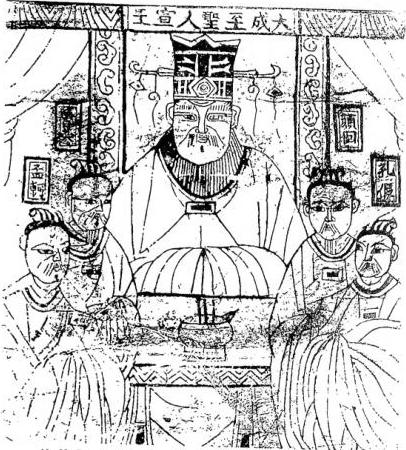
Confucius (CONFUCI)
Italianized form, from the Chinese Ccomfuze [K'ung Fu-tzu] meaning "The Master (or Philosopher) Ccom," later accepted by almost all Western… -
Conimbricenses
This is the name given to those Jesuits, professors of philosophy at the University of Coimbra who, between the last years of the 16th… -
Conscience (COSCIENZA)
I. PHILOSOPHY. - In its etymological meaning (from Lat. cum-scientia, conscience συν-εἰδησις = common knowledge, corresponding to judgment)… -
Constantine the African (COSTANTINO AFRICANO)
Carthaginian Benedictine, converted from Islam, translator of Arabic and Greek works, d. 1087. For 39 years he traveled through the East… -
Conti, Augusto
Man of letters, historian, philosopher and politician, b. at S. Pietro alle Fonti, near S. Miniato al Tedesco, on 6 Dec. 1822, d. at… -
Contingency (CONTINGENZA)
In its generic meaning, c. is the happening "both necessary and not necessary or possible" (Aristotle, Anal. Pr., I, 3, 25 a 37). In… -
Continuous (CONTINUO)
The notion of the continuum is connected with that of extension, which is a primitive concept not susceptible of a true definition.… -
Contradiction (CONTRADDIZIONE)
The relation of opposition existing between the affirmation and the denial of one and the same predicate in relation to one and the same… -
Cordemoy, Géraud de
French philosopher and historian, b. in Paris ca. 1620, d. there, 8 Oct. 1684. In the work Discernement de l'âme et du corps (Paris 1666)… -
Cornoldi, Giovanni
Jesuit, one of the principal restorers of Thomism in Italy, b. in Venice on 29 Sept. 1822, d. in Rome on 18 Jan. 1892. Disgusted with the… -
Correctors (CORRETTORI)
Polemical writings of Franciscans and Dominicans concerning the doctrine of St. Thomas in the 25 years after his death. The Franciscan… -
Cosmology (COSMOLOGIA)
From the Greek κόσμος (world) and λόγος (discourse), it is the part of natural philosophy that studies corporeal being in general, and the… -
Cousin, Victor
Philosopher, b. in Paris on 28 Nov. 1792, d. at Cannes on 14 Jan. 1867. He taught at the École Normale from 1814 to 1820, at the Sorbonne… -
Cowton (de Couton), Robert
English philosopher, Franciscan. The life and doctrine of C. are too little known for one to have an exact conception of his importance in… -
Credenza
In its general and broadest meaning, to believe is to accept a proposition, a fact, a doctrine, not on account of their intrinsic evidence… -
Cremonini, Cesare
Philosopher, b. at Cento in 1550 or 1552, d. in 1631. After having taught at Ferrara, he was a colleague of Galileo at the University of… -
Criterion (CRITERIO)
From the Greek κριτήριον, it is generally a norm or rule for recognizing, discerning (κρίνω = "I judge, I discern") a thing, a fact, a… -
Criticism (CRITICISMO)
In a general sense, "criticism" denotes any philosophical system or tendency that, before constructing a metaphysics of the objects of… -
Crusius, Christian August
Protestant philosopher and theologian, b. at Lenau (Saxony) on 10 Jan. 1715, d. there on 18 Oct. 1775. In philosophy C. is famous for his… -
Cumberland, Richard
English philosopher, b. in London on 15 July 1631, d. there on 9 Oct. 1718. C., an Anglican bishop of Peterborough, is known for the… -
Cusanus, Nicolaus (NICCOLÒ CUSANO)
Cardinal, humanist philosopher and scientist, b. at Cues (Trier) in 1401, d. at Todi on 8 Aug. 1464. His real name was Nicolaus Criffis… -
Cynics (CINICI)
A Greek philosophical sect, founded by Antisthenes, one of the four that arose from the teaching of Socrates. The name means "followers of… -
Cyrenaics (CIRENAICI)
Greek philosophical sect, founded by Aristippus of Cyrene (hence the name), one of the four that arose from the teaching of Socrates. Its…