
IMPOSITION OF HANDS. — A liturgical rite rich in symbolism and frequently used in the Church. In Greek, the technical term for it is
χειροτονία (from the verb χειροτονεῖν), which replaced the generic expression ἐπίθασις τῶν χειρῶν. The original meaning of the terms χειροτονεῖν and χειροτονία is: “to elect by raising the hand”; later they were used as equivalents of “to appoint, to establish someone in an office”; only subsequently, in ecclesiastical language, did they come to signify both the election of sacred ministers, and ordination through the i. d. m., and both acts together. A similar conceptual development occurred with the other term χειροθεσία (from the verb χειροθεστῆν). It, however, came rather to indicate the i. d. m. other than that performed by the bishop in conferring Holy Orders.
SUMMARY:
I. The rite and its origin
II. The i. d. m. in the Old Testament. — III. The i. d. m. in the New Testament. — IV. The i. d. m. in the ancient liturgy. — V. i. d. m. in the modern liturgy. —VI. Doctrinal discussion
VII. The i. d. m. in Christian archaeology.I. THE RITE AND ITS ORIGIN
Although the expression « i. d. m. » suggests an application or a material and physical contact of both hands, the evidence shows first of all that it was not always both hands that were imposed. Latin writers more often speak of the hand in the singular: cf. Tertullian, De Baptismo, 8: « Dehine manus imponitur »; s. Stefano to s. Cipriano, Epist., 74, 1: « Ut manus imponatur in poenitentiam »; whereas the plural is more commonly used both in the New Testament documents (cf. Mt. 19, 13, 15; Mc. 10, 16; Act. 8, 17; 19, 6; Hebr. 6, 2; I Tim. 4, 14; 5, 22; II Tim. 1, 6) and among Greek writers. As for physical contact, it is ordinarily presupposed or explicitly indicated by New Testament, patristic, and liturgical texts. Thus in Lc. 18, 15 it is openly stated that the children were brought to Jesus « ut eos tangeret »; and in the Statuta Ecclesiae antiqua, with regard to the consecration of bishops, it is prescribed: « Manibus caput eius tangant »: PL 56, 887. There are, however, cases in which this contact is absent, the i. d. m. being reduced to a simple extension of the hands. Such, for example, is the imposition for the dismissal of the catechumens as described by the Peregrinatio Etheriae (ed. C. Geyer [CSEL, 39], p. 72), which is performed by the bishop by extending his hands only once over all those present.The i. d. m. is usually accompanied by a prayer. This serves to indicate the particular meaning intended for the rite, the specific purpose that it is meant to achieve. This prayer is already mentioned in certain New Testament texts as associated with the i. d. m.: cf. Act. 6, 6; 8, 15-17; 13, 3. Tertullian, moreover, De Baptismo, 8, writes: « Manus imponitur per benedictionem advocans et invitans Spiritum Sanctum »; s. Cipriano, Epist., 73, 9: « Per nostram orationem ac manus impositionem »; Eusebio, Hist. eccl., I, 13, 18; VII, 11, speaks of χειρῶν εὐχαί; and s. Agostino, De Baptismo, 3, 16, 21, defines the i. d. m. precisely in these terms: « Manus impositio... quid est aliud nisi oratio super hominem ? ». It is from this prayer, considered in its primitive meaning as a formula of blessing (cf. Mc. 10, 16: « Imponens manus super parvulos, benedicebat eos »), that there arose the practice, frequent in Christian antiquity, of designating the i. d. m. by the term « benedictio », as a part standing for the whole. Thus, with regard to Holy Ordination, s. Leone Magno, Epist., 9, 1, writes: « A ieiunantibus sacra benedictio conferatur »; and the Statuta Ecclesiae antiqua prescribe, for the consecration of the bishop: « Uno super eum fundente benedictionem »; for the ordination of the priest: « Episcopo benedicente et manus super caput eius tenente »; and for the deacon: « Episcopus qui eum benedicti »: PL 56, 887-88.
Concerning the origin of the rite of the i. d. m., recent students of the comparative history of religions, having observed its use in various pagan religious settings, have believed that they found its origin in the Greco-Roman ceremonial; from there the i. d. m. would have passed first into the Jewish religion and then into the Christian religion (cf. F. C. Conybeare, Myth, magic and morals. A study of christian origins, Londra 1910, pp. 32-25). However, from the acknowledged universality of the use of the i. d. m. among various religions, it is not legitimate to conclude that there were necessary influences or mutual dependence, unless this is historically demonstrated. The rite’s readily intelligible symbolism is sufficient to explain the spread of the practice, analogously to what occurs with the rite of ablution, which many religions use to signify inner purification. For, as the Angelic Doctor writes, Sum. theol., 3ᵃ, q. 84, a. 4, ad 1: « Cum manus sit organum organorum, ut dicitur 3 De Anima, omnia opera attribuantur manibus ». It is therefore obvious that the i. d. m. is the spontaneous and consequently commonly adopted symbol for indicating either the transmission of a virtue or the application of power; and it is to this fundamental symbolism that the uses made of the i. d. m. in the various religions are related. Nevertheless, it is historically certain that the Church derived the rite of the i. d. m., enriching it with new meanings, from the Jewish ceremonial, through the use made of it by Jesus and the Apostles.
II. THE IMPOSITION OF HANDS IN THE OLD TESTAMENT
It is found used: a) as a rite of blessing: Gen. 48:14-20, Jacob thus blesses Ephraim and Manasseh: « Extendens manum dexteram, posuit super caput Ephraim... sinistram autem super caput Manasse »; Lev. 9:22 it is said of Aaron: « Extendens manus ad populum, benedixit ei... »; b) as a rite of consecration to God, either of persons: Num. 8:10 it is prescribed with regard to the Levites: « Cumque levitae fuerint coram Domino, ponent filii Israel manus super eos »; or of victims for sacrifice: Ex. 29:10-11: « Imponent Aaron et filii eius manus super caput vituli, et mactabis cum in conspectu Domini »; Lev. 16:20-21, for the sacrifice of the scapegoat it is prescribed: « Offerat hircum viventem, et posita utraque manu super caput eius, confiteatur omnes iniquitates filiorum Israel »; other examples ibid. 1:4; 3:2; 4:4.24.29.33; 8:14.18.22; 16:21; Num. 8:12; II Par. 29:23, etc. This imposition of hands upon the victim, according to the nature of the sacrifice, was performed either by the high priest (cf. Lev. 16:21), or by ordinary priests (cf. ibid. 4:4; 8:14.18.22), or by the Levites (cf. Num. 8:12), or by the elders of the people (cf. Lev. 4:15), or by the entire assembly present (cf. II Par. 29:23), or generally by the person at whose initiative and for whose benefit the particular sacrifices were offered (cf. Lev. 1:4: holocaust; ibid. 3:2.8.13: peace offering; ibid. 4:4.24.29.33: sin offering). c) As a rite of investiture or conferral of power: Num. 27:18-20, when God commands Moses to appoint Giosuè as his successor, He says to him: « Tolle Josue... et pone manum tuam super cum »; and in fact Moses, obeying the divine command, did so: « Impositis capiti Josue manibus... ». It is also known that the members of the Sanhedrin were ordained by the imposition of hands (cf. J. Z. Lauterbach, Ordination, in The Jewish encyclopedia, IX, pp. 428-29). d) As a rite of oath-taking, it is indicated in Dan. 13:34, where it is said that, before pronouncing their accusations against Susanna, the two judges « posuerunt manus suas super caput eius ».III. THE IMPOSITION OF HANDS IN THE NEW TESTAMENT
During the years of his public life Jesus often imposed his hands. First of all, to heal the sick: Mc. 6, 5 says in general terms that during his stay in Nazareth the Lord « paucos infirmos impositis manibus curavit »; likewise in Lc. 4, 40, regarding the various sick people brought to Jesus on the occasion of his visit to Capernaum, it is said in general terms: « At ille singulis manus imponens curabat eos ». There are also many particular cases, reported by the Evangelists, in which Jesus performs the healing by imposing his hands: cf. ibid. 13, 13: the healing of a woman who was bent double; Mt. 8, 3; Mc. 1, 41; Lc. 5, 13: the healing of a leper; Mc. 5, 23, Jairus thus prays to Jesus concerning his sick daughter: « Filia mea in extremis est, veni, impone manum super eam ut salva sit »; likewise those who bring a deaf-mute to the Lord so that he may heal him (ibid. 7, 32) ask Jesus « ut imponat(from Wilpert, Sarcofagi, vol. 28, 3)
IMPOSIZIONE DELLE MANI — I. d. m. in the administration of Baptism (4th century). Sarcofagus della Lungara — Rome, Museo delle Terme.
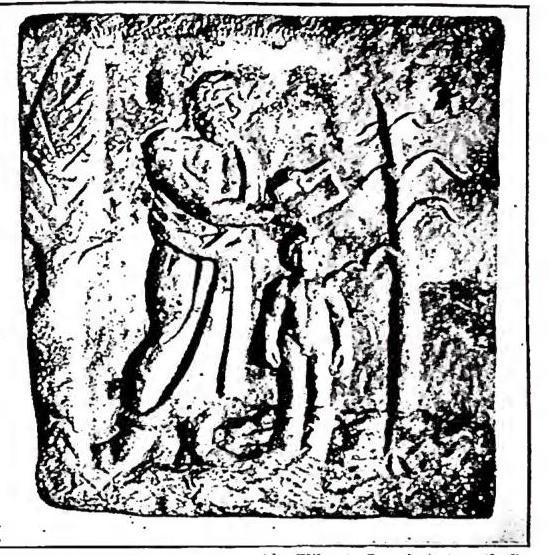
But Jesus also used the imposition of hands in blessing: Mt. 19, 13 says that children are brought to the Lord « ut manus eis imponeret et oraret ». And, receiving this request, Jesus, as we read in Mc. 10, 16, embraces the little ones « et imponens manus super illos, benedicebat eos »; according to Lc. 24, 50, before ascending into heaven Jesus blessed the Apostles by stretching out his hands over them: « Elevatis manibus suis, benedixit eis ».
Following Jesus’ example, and in accordance with the promise he had made, the Apostles too used the imposition of hands to heal the sick: in Act. 9, 12.17, it is related that Ananias restored Paul’s sight « imponens ei manus »; ibid. 28, 8 states that Paul healed the father of the governor of Malta « cum... imposuisset ei manus »; ibid. 5, 12 says, in general terms, that many wonders were performed among the people « per manus Apostolorum »; ibid. 19, 11 records that God worked extraordinary miracles « per manum Pauli ».
But it is especially as a rite of blessing or consecration that the imposition of hands is used by the Apostles. It is by imposing hands that they give the Holy Spirit to the newly baptized; cf. ibid. 8, 17.19: the communication of the Holy Spirit to the Samaritans by Peter and John; ibid. 19, 7: Paul gives the Holy Spirit to the converts of Ephesus. It is by imposing hands that they ordain the ministers who are to be their assistants or successors in the administration or governance of the new Church: cf. ibid. 6, 6: the ordination of the first deacons; ibid. 13, 3: the consecration of Paul and Barnabas; I Tim. 4, 14; II Tim. 1, 6: the consecration of Timothy as bishop. And it is this use of the imposition of hands, practiced from the beginning by the various Apostles, in different places and at different times, yet without the slightest trace of discussion or doubt, that already sufficiently demonstrates that, in giving the Holy Spirit (Confirmation) and constituting ministers for the governance of the Church (Orders), the Apostles used the rite of the imposition of hands in obedience to an explicit will of Jesus.
It also seems that the Apostles imposed hands for the reconciliation of sinners (Penance). This view is based on the words of St Paul in I Tim. 5, 22: «Manus cito nemini imposueris, neque communicaveris peccatis alienis»: words which are referred not to the Ordination of sacred ministers, since the Apostle had spoken of them in chapter 3, but rather to the reconciliation of sinners, whom chapter 5 discusses for the most part, in connection with the procedure Timothy was to employ in repressing the various disorders or abuses that had arisen in the Church. Finally, it is held, on good grounds, that for Extreme Unction, according to the text of Iac. 5, 14, the Apostles used the imposition of hands together with the anointing. This hypothesis is confirmed by the fact that Origen, In Lev., hom. 2, 4, in place of «orent super eum» in the text of St James, reads «imponant ei manum».
IV. THE IMPOSITION OF HANDS IN THE ANCIENT LITURGY
Transmitted by Christ to the Apostles, and frequently used by them, the imposition of hands assumes particular importance in the ancient liturgy, in which it performs a function of the highest order. Indeed, it is employed as a frequent gesture of blessing, so that, as has been said, the term “blessing” in antiquity was very often synonymous with imposition of hands. It is also used for exorcisms: thus Origen, In librum Iesu Nave, hom. 24, 1, speaks of “exorcistarum invocationes, orationes, ieiunia... et exorcistarum manus impositione vehementius imposita super immundos spiritus”. But its importance is manifested especially in the use made of the imposition of hands in the administration of all the Sacraments, to the point that in Christian antiquity it was considered the liturgical gesture par excellence.Indeed, with regard to Baptism, it was through the imposition of hands that admission to the catechumenate was first of all effected: “Imposita universis manu, catechumenos fecit”, writes Sulpicius Severus of St. Martin, Dial., 2, 4. It was through the imposition of hands that the catechumens were dismissed at the end of the first part of Mass: cf. Canones Hippolyti, can. 99: “Doctor imponat catechumenis manum antequam illos denuttat”. During the days of immediate preparation for Baptism, impositions of hands were frequent: “Manus impositione crebra examinati”, state the Statuta Ecclesiae antiqua, can. 23. Finally, the imposition of hands was renewed in the very act of administering Baptism; this is noted in the Traditio Apostolica of Hippolytus (ed. R. Connolly, The so-called Egyptian Church Order and derived documents, Cambridge 1916, p. 185), where it is said that for each of the questions concerning faith in the individual Persons of the Trinity, and during the triple immersion, the priest “manum suam capiti baptizando imponat...; manum habens in caput eius impositam baptizet semel...”.
Confirmation, continuing the practice of the Apostles, was conferred through the imposition of hands. Thus Tertullian writes, De Baptismo, 8, that after Baptism “manus imponitur per benedictionem invocans et invitans Spiritum Sanctum”; and De resurrectione carnis, 8: “Cero manus impositione adumbratur ut et anima Spiritu illuminetur”.
An anointing was soon added to the imposition of hands; but at first only in order to render more evident and perceptible the effect of the communication of the Holy Spirit proper to Confirmation, given the well-known biblical symbolism of oil and anointing as an indication of the Person and action of the Holy Spirit, already noted by St. Augustine, Contra Maximum Arianum, 2, 16, 3: “Spiritum Sanctum Scriptura, nomine olei exultationis, figurata ut solet locutione, significat”.
The imposition of hands in the celebration of the Eucharist is attested by the Traditio Apostolica of Hippolytus (ed. cit., p. 176) and by the writings deriving from II. In that work, in fact, with regard to the bishop who is consecrated, it is stated that he must recite the Eucharistic prayer “imponens manum in oblationem...”.
In Penance, the imposition of hands was the rite that customarily accompanied the absolution of penitents. In the correspondence of St. Cyprian, frequent mention is made of this rite on the occasion of the controversy concerning the reconciliation of the lapsi: Epist., 16, 2: “Cum in minoribus peccatis ingant peccatores poenitentiam iusto tempore... et per manus
(du F. Leioponis, Les pontifices nos. des bibl. de France, Paris 1917, inv. 61)
IMPOSIZIONE DELLE MANI - I. d. m. in the ordination of priests. Miniature from the pontifical of Arles (second half of the 14th century) - Paris, Bibliothèque nationale, ms. lat. 9479, f. 38v.
impositionem... ius communicationis accipiant, nunc... ad communionem admittantur... nondum manu eis ab episcopo et clero imposita»; Epist., 17, 2: «Nec ad communionem venire quis possit nisi prius illi ab episcopo et clero manus fuerit imposita»; cf. Epist., 15, 1; Epist., 18, 1; Epist., 19, 2, etc. S. Girolamo, Adv. Luciferianos, 5, thus describes the priest’s ministry of reconciliation: «Sacerdes imponit manum subiecto... atque ita eum... altario reconciliat». Moreover, for those subjected to public penance, the i. d. m. was the gesture by which they were dismissed after participating in the portion of the Eucharistic liturgy allotted to them: cf. s. Agostino, Sermo 232, 7, 8: «Abundant hic poenitentes: quando illis imponitur manus, fit ordo longissimus». Also in the particular reconciliation of heretics, Pope s. Stefano, Epist. Cypr., 74, 1, in the 3rd century, presents the i. d. m. as a traditional rite: «Si qui a quacumque haeresi venient ad vos, nihil innovetur nisi quod traditum est, ut manus illis imponatur in poenitentiam».
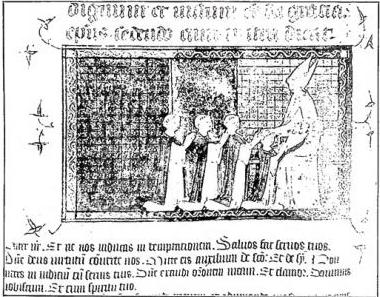
With regard to the sacrament of Orders, it is well known that the i. d. m. was, in Christian antiquity, the rite of Ordination for bishops, presbyters, and deacons. It was only in the early Middle Ages that, in order to express more clearly the power conferred by the individual Orders, the Church added to this rite the so-called handing over of the instruments, that is, the delivery of those objects which were to serve the newly ordained in the exercise of the power received in Ordination.
In Matrimony, although there are no formal testimonies concerning the use of the i. d. m., many authors are inclined to admit it, on account of the noted equivalence of the terms « benedictio » and « impositio manus ». In the celebration of Matrimony, in fact, according to Tertulliano, Ad uxorem, 2, 9, such a « benedictio » was required, as he writes: « Unde sufficiamus ad enarrandam felicitatem eius Matrimonii, quod Ecclesia conciliat, et confirmat oblatio, et obsignat benedictio? ». The equivalence of the two terms, in relation to Matrimony, is further confirmed by the fact that the Statuta Ecclesiae antiqua (PL 56, 887-89) use the word « benedicere » not only for the rite of sacred Ordinations, which certainly require the i. d. m., but also for Matrimony; whereas for the minor Orders, for which the i. d. m. is not used, this word does not occur.
V. L'I. D. M. NELLA LITURGIA MODERNA. — The evolution of the liturgical rites over the centuries has seemed to diminish the ancient importance of the imposition of hands. In fact, in some rites it has now disappeared altogether; in others it has been rendered less evident by the introduction of new ceremonies. In reality, the imposition of hands is still in use, besides certain blessings (cf. Pontificale Romanum, Benedictio Abbatis), also in some exorcisms; the formula, however, used by the bishop when ordaining exorcists—« Habete potestatem imponendi manus super energumenos »—is rather a vestige of the ancient Ritual for the performance of exorcisms.
With regard to the Sacraments, in Baptism the Rituale Romanum retains the imposition of hands in the preparatory rites; it occurs twice in the order for the Baptism of children (cf. Ordo Baptismi parvulorum, nn. 5, 9), while for adults it is also employed in the exorcisms preceding the administration of the Sacrament (cf. Ordo Baptismi adultorum, nn. 17, 19, 21).
In Confirmation, besides a first imposition or extension of the hands at the beginning of the rite, there is a second, performed together with the anointing of the forehead, according to what is prescribed in the new edition of the Rituale Romanum, Appendix, De Confirmatione: « Imposita manu dextera super caput confirmandi, producit pollice signum Crucis in fronte ».
In the celebration of the Eucharist today, there is an imposition of hands before the Consecration, at the prayer « Hunc igitur oblationem », which the priest, according to the rubric, must recite « tenens manus expansas super oblata ». In some way, it recalls the ancient imposition of hands used in the consecration of the Eucharist.
The imposition of hands in the ancient liturgy for the administration of Penance is recalled in the prescription of the Rituale, Absolutionis forma communis, n. 2, that the priest must hold his right hand raised: « Dextera versus paenitentem elevata », while reciting the prayer « Indulgentiam, absolutionem ecc. ».
In the administration of Extreme Unction, the ancient gesture of the imposition of hands in the Rituale Romanum, Ordo ministrandi sacramentum E. U., n. 7, is merely recalled in the prayer preceding the anointing of the sick person, in which it is said: « Extinguatur in te omnis virtus diaboli per impositionem manuum nostrarum ».
The imposition of hands is still in use in the ordination of deacons, priests, and bishops, although it is associated with several other rites, among which the rite of the « tradizione degli strumenti » holds greater historical and doctrinal importance.
In the ritual for the celebration of Matrimony, no imposition of hands is now found.
VI. DOCTRINAL DISCUSSION
Theologians generally admit that the laying on of hands, although of very ancient usage in the administration of the Sacraments, has never constituted an essential element of their rite, with the exception of Confirmation and Orders. Some have wished to extend this exception also to Penance, as though, in this Sacrament, the laying on of hands had in antiquity been an essential part of the rite. This, however, is easily denied, both on the basis of the historical argument, which shows that at times the ancient Church reconciled sinners without the liturgical rite of the laying on of hands, and on the basis of the theological argument, founded on the judicial nature of the sacrament of Penance, which does not require such a liturgical rite.With regard to the sacraments of Confirmation and Orders, however, it is debated whether the laying on of hands found in their administration has or has not preserved, through the centuries and to the present day, that character of an essential element of the rite which it had in the apostolic age and in the early days of the Church, when, together with the accompanying prayer formula, it constituted the entire material form of the sacramental rite. For many centuries the question has deeply engaged scholars. Since, in fact, in the third century an anointing with oil was added to the laying on of hands in Confirmation, and in the ninth to eleventh centuries a « handing over of instruments » was added to the laying on of hands in Orders, it is debated whether, by the will of the Church, these new rites prevailed to such an extent as to claim for themselves the role of the sole essential element of the sacramental sign, or shared that role with the continuing laying on of hands, or whether they were instead merely accidental rites. The discussion broadens because of the controversial theological positions to which it gives rise, both concerning the manner in which Christ determined the sacramental rites and concerning the Church’s power with regard to these rites.
For a fuller treatment of the controversy, refer to the entries ORDINE; SACRAMENTI; here it will suffice to note that, as regards Orders, following Pius XII’s constitution Sacramentum Ordinis, dated 30 November 1947, it must be held that the laying on of hands, irrespective of the historical question concerning the earlier significance of the « handing over of instruments », is now the sole essential element which, together with the prescribed prayer formula, constitutes the entire rite of Ordination. In Confirmation, the laying on of hands still remains, as before, an essential element of the sacramental rite, together, however, with the subsequently introduced anointing with chrism. This laying on of hands is understood not as that which takes place at the beginning of the liturgical function for the administration of Confirmation, since it is not required for the validity of the Sacrament, but rather as that which is associated with the anointing with chrism, according to the ancient teaching of the Church, renewed in the current prescription of the CIC, can. 781 § 2, according to which, in the administration of Confirmation, « unctio ne fiat aliquo instrumento, sed ipsa ministri manu capiti confirmandi rite imposita ».
VII. THE LAYING ON OF HANDS IN ANCIENT CHRISTIAN ICONOGRAPHY
In theological or liturgical works on the laying on of hands, taking into account the gesture’s various uses, five distinct rites have been distinguished: blessing, healing, ordination, Confirmation, and reconciliation. Following partly its own course, that is, employing the gesture as a figurative sign of particular concepts, ancient Christian art uses it as a rite of blessing, healing, the bestowal of supernatural graces, the Holy Spirit, and reconciliation.Thus the laying on of hands appears in the traditional representation of the patriarchal blessings, from which it derives its precise and fundamental significance of blessing, and in scenes of the various healings performed by
Christ (paralytics, the lame, the blind, the woman with an issue of blood; Wilpert, Sarcofagi, pl. 212, 2). It is never employed, however, on behalf of the possessed, who are freed by the simple gesture of a word or command. The laying on of hands is found in scenes depicting the creation of man elevated to supernatural life, in various representations with Eucharistic significance (the feeding of the crowds in the desert, the blessing of the loaves and fishes—the only objects touched by Christ’s hand!—Habakkuk with food for Daniel; id., ibid., pls. 113, 1; 115, 2; 212, 2) or alluding to immortality. As a rite of the Holy Spirit, it is encountered in scenes of Baptism, where it should be regarded as a post-baptismal rite. As a judicial rite or rite of absolution, it is clearly illustrated by scenes of Susanna falsely accused (Wilpert, Pitture, pl. 14, 2), or, with the opposite meaning, of the faithful before the divine tribunal after death. In representations of Christ’s miracles, the laying on of hands, in addition to the gesture of the word, found a counterpart in the use of the thaumaturgic rod; the latter, however, is never employed on behalf of living beings.