
SORDOMUTI. — Those who lack the faculties of hearing and speech. In the congenital form, or one that develops during the very earliest years of life, although it may depend on defects of the peripheral organs, deaf-mutism is often linked to “verbal deafness” resulting from cortical and subcortical lesions of the temporal lobe (sensory audimutism).
Damage to these cerebral regions may be produced through a germinal mechanism, in connection with hereditary factors (genotypic or idiotypic alterations), or through traumas suffered during gestation and childbirth, or through infectious diseases (meningoencephalitis) that affected the individual during intrauterine life or in the first years after birth. Many hold that s. are frequently the children of blood relatives (particularly cousins); not rarely, deaf-mutism is linked to cretinism. The defect may be complete or only partial, so that more or less substantial remnants of auditory capacity remain. True deaf-mutism must be distinguished from mutism due to developmental delay (S. De Sanctis), which usually does not persist beyond the third year of life and is of familial origin; nor should it be confused with motor audimutism, in which, although the auditory apparatus is intact and verbal audition preserved, the individual is incapable of speaking spontaneously.
Deaf-mutism, if not amenable to education
or if abandoned to itself, leads to an arrest of the psychic faculties and to a serious deficiency of intellectual endowment.
I. EDUCATION
From a pedagogical standpoint, the s. may be regarded as sensory anomalies; in fact, they possess the capacity to express their thoughts and desires in other ways than, at least initially, spoken language—for example, through gestures and facial expressions, by varying the position and interlacing of the fingers, or through writing. Hence, encouraged by the development of the experimental sciences, there arose the study of discovering and gradually perfecting methods and means of overcoming, as completely as possible, the anomaly of deaf-mutism.1. History. The occasion for the intense modern movement, so broad and effective, on behalf of the s. dates back only to the beginning of the sixteenth century. The distinguished humanist Rodolfo Agricola (1443–85) had mentioned having seen, to his great surprise, an s. exchange conversations and arguments with others by means of writing (De inventione dialectica, I, III, chap. 16); the physician Girolamo Cardano (1501–76) responded to this marvel by observing that writing is associated with speech, and speech with thought; but that written characters can also be associated with one another without the intervention of sounds, so that an s. can hear by reading and speak by writing (Paralipomena, III, chap. 8: De surdo et nuto litteras edacto). From this came the conclusion that speech is in no way necessary for the development of intelligence, although it is its most effective and adequate means, and that, by substituting sensory stimuli, the s. can be brought to the visible expression of thought through signs that appeal to sight, given that appeals through other channels remain inaccessible and insurmountable.
It now remained to find a practical way of implementing this established possibility of instructing the s. The first attempt was undertaken by the Benedictine monk Pedro Ponce de León (1520–84) of the monastery of S. Salvador at Oña. Proceeding from the principle that spoken language is not merely an auditory phenomenon but also a visual one, he thought of inducing the s. to imitate the movements made by the vocal organ in the very act of pronouncing a particular letter of the alphabet, syllable, or word; thus, by imitating the visible element, it was possible to achieve, on the part of the s., the production of the audible element as well. Using writing as the initial means, he succeeded in having the s. pronounce all the letters of the alphabet, then the various syllables and finally the various words; to name the various objects represented by them, perform calculations, recite prayers meaningfully, and confess orally. He left nothing in writing concerning his method; but not long afterward the Aragonese priest Juan Pablo Bonet, who followed his procedures, also set them forth in a theoretical and practical treatise: Reducción de las letras y arte para enseñar a hablar los nudos (Madrid 1620), the first treatise on special teaching for the s. He made use of a manual alphabet, invented a system of visible signs representing the sounds of words, and also provided a description of the position of the vocal organs in pronouncing individual letters, adding effective suggestions that are still used by modern specialists in vocal articulation and lip-reading.
The Jesuit physicist Francesco Lana Terzi (1631–87), after mentioning several examples of the highly successful outcome of the oral method, goes on to describe its art as «true-
española de surdo-mutos (2 vols., Madrid 1795), in which he dwells especially on the method of teaching deaf persons the meaning of abstract words and of terms belonging to philosophy, theology, sociology, etc.
Meanwhile Bonet’s method was spreading in England and Scotland through the work of Kenelm Digby (1603–65), followed by several members of London’s Phonosophical Society, above all John Bulwer (1600–69), who, in his works Chirologia e chironomia (London 1644) and Philocophus (ibid. 1648), set out to demonstrate that the acoustic phenomenon of speech is transformed, for the deaf person, into a visual phenomenon, in which lies the essence of lip-reading; this makes articulated speech usable in social life, with or without phonation, in reciprocal relations among deaf persons and between deaf persons and hearing speakers. In this way he completed Bonet’s theory, which had neglected lip-reading in order to concentrate on communication with the pupil by means of a manual alphabet. Other members followed him: John Wallis (1616–1703), William Holder (1616–1698). All these men treated the subject in separate works, recognising the instructors of deaf persons as occupying an eminent place in the history of phonetics. Along the same lines, for Scotland, mention should be made of Giorgio Delgarno (1626–87) of Aberdeen, who published Ars signorum in 1661 and Didacalocophus or Deaf and dumb man's tutor in 1680, inventing a dual manual alphabet; and, for Holland, G. B. von Helmont (1618–99), with his dissertation published in 1682, Surdus loquens, and Giovanni Corrado Amman (1669–1724), originally from Switzerland, who published Dissertatio de loquela in 1700, a work occupying one of the foremost places in the educational literature of deaf-mutism.
Germany created nothing original in this field, but translated several of the works mentioned and effectively put them into practice. Samuele Heinicke (1729–90) distinguished himself above all; he was called the great champion of the oral method (against the sign method of Abbé de L’Epée), founded the first public institute for deaf persons in Germany at Leipzig in 1778, and gave a more logical application to the principles established by Bonet, Wallis and Amman. He had been preceded in this endeavour by Guglielmo Kerger (1620–85), Giorgio Raphel (1673–1740) and Ferdinando Arnoldi (1737–83). He was followed, instead, by Federico Maurizio Hill (1805–74), regarded as the true founder of the so-called «German method», in opposition to the «French method».
The latter was proclaimed and disseminated by Abbé Carlo Michele de l’Epée (1712–89). Moved by compassion for the sad condition of deaf persons, he wished to remedy it; and having observed how, even before receiving any instruction, they communicated with one another during play and other occupations by means of a kind of pantomime, using natural gestures signifying objects and their qualities and powers, he settled upon the idea of using sign language as a means of instruction. If words are conventional signs of ideas, why should natural gestures not be so as well? He therefore familiarised himself with the not very numerous gestures he had observed, added others of his own invention, and in 1760 opened the first school for deaf persons in Paris, directing it until his death and leaving as his successor Abbé Ambrogio Sicard (1742–1822), who introduced important improvements to complete the unfinished work of his predecessor.
The Paris school soon rose to European and worldwide fame, both because the sign method was easier and could be extended to a larger number of deaf persons, and because educators from every nation were invited there; these educators later succeeded in persuading their respective governments or groups of benefactors to establish other schools in various countries, where the methods learned at de l’Epée’s and Sicard’s school could be applied. Thus from Rome came the priest Tommaso Silvestri, who in 1784, through the interest of the consistorial advocate Pasquale di Pietro, who had sent him to Paris, founded the first Italian institute for deaf persons in Rome; from Austria came the priests F. Stork and G. May, who subsequently opened an institute in Vienna in 1779; and from Switzerland, the parish priest Keller (1728–1802). Nor did America lag behind in the movement that had by then begun. The institute for deaf persons established in Edinburgh in 1760 through the work of Tommaso Braidwood had already attempted in 1812 to establish other schools in Virginia, New York and Baltimore, but without success. The priest Tommaso Hokins Gallaudet was therefore sent to Europe; after meeting Abbé Sicard, he visited his school in Paris, studied its methods and obtained from him, as assistance for his future undertaking, the best of the pupils, Lorenzo Clerc. Returning to his homeland, he founded the first American institute for deaf persons at Hartwood (Connecticut) in 1817.
Thus, after a sufficiently slow and arduous course, one enters the nineteenth century, which may rightly be called, for all civilised nations, the golden age of assistance to those impaired in hearing and speech, both because of the number of institutions established and because of the decisions adopted at various congresses in favour of the oral method and the integration of deaf persons into ordinary social life.
Nor should it be left unmentioned that this was due in a very particular way to the initiatives and efforts of the secular and regular clergy and of the numerous women’s religious Congregations, which included among their activities the comprehensive education of deaf persons, guiding them both towards acquiring speech through increasingly perfected scientific methods and apparatus, and towards learning a trade for life through craft schools.
In Italy, the flourishing was truly remarkable. Following, as evidence, the Guida D. Annuario della Scuola e della cultura, published by the National Educational Centre of Florence (Florence–Rome 1951, pp. 788–97), the following Institutes are listed:
a) State Institutes — Rome, State Institute for deaf persons, founded in 1841 by the Papal government; Milan, National State Institute for deaf persons, established in 1805 as a private school through the efforts of the Lyonnais Antonio Eyraud and declared a government institute by imperial decree in 1818; Palermo, State Institute for the Deaf of Sicily, founded in 1834 by Ferdinando II of Bourbon.
b) Recognised Institutes — Alessandria, Institute for deaf persons, founded in 1893 on the initiative of the priest Federico Sbrocca; Assisi (Perugia), Seraphic Institute for deaf persons, founded in 1871 by Fr Ludovico da Casoria; Bari, Pious Institute «Filippo Smaldone», founded and directed by the Salesian Sisters of the Most Holy.
Cuori, instituted by the priest F. Smaldone; Bergamo, Institute for the deaf of both sexes, established through the charitable initiative of the city in 1843, entrusted to the Canossian Sisters, who left it in 1860; Bologna, “Gualandi” Institute, founded in 1850 by the priestly brothers Cesare and Giuseppe Gualandi, also founders of two religious Congregations, one male and one female, specifically for the education of the deaf, under the name “Little Mission for the Deaf”; Brescia, “Pavoni” Pious Institute, founded in 1827 by Canon Ludovico Pavoni; Cagliari, Institute for the deaf, founded on the initiative of Ignazio Argiolas in 1882 and entrusted to the Daughters of Charity; Catanzaro, Provincial Institute for the deaf, founded in 1859 by the priest Luigi Aiello; Catania, “Maddalena di Canossa” Institute, founded by the Canossian Sisters; “Tito Minniti” Educational Circle, state orthophonic school, operated in 1949–50; Crema, Work for the Poorest Deaf, founded by Blessed Maddalena di Canossa in 1840; Cremona, Boys’ School for the Deaf, founded in 1847 by Mons. Antonio Padovani and entrusted to the Canossian Sisters; Canossian Sisters’ Institute, founded by them in 1947; Cuneo, Institute for deaf boys and girls, founded in 1902 by the local Congregation of the Sisters of St. Joseph; Fano (Pesaro), “Palazzi Zavarese” Institute for deaf girls, founded by Mons. Pietro Bonilli and entrusted to the Sisters of the Holy Family; Firenze, National Institute for the Deaf, established in 1899 through the work of the Florentine Society for the Welfare of the Deaf; Genova, National Institute for the Deaf, established as a private school in 1801 through the work of the Piarist Father G. B. Assarotti (v.) and made an official school in 1805; State School for Speech-Impaired Persons, founded in 1934–33 by the Municipality; Contubernio d’Albertis Institute, founded in 1866 by Mons. G. B. d’Albertis, with a welfare organization for former pupils; Giulianova (Teramo), “Gualandi” Institute, a branch of the one in Bologna, founded in 1903; Gorizia, Provincial Institute for the Deaf, founded in 1940 by Mons. Valentino Stanig; Lecce, “Filippo Smaldone” Institute, established in 1885 through the care of the priest F. Smaldone; Licea (Agrigento), School for the Deaf (orthophonic), closed in 1947–48; Milano, Pious Institute for Poor Deaf Persons, created on the initiative of Count Paolo Taverna and the priest Eliseo Ghislandi. The priest Giulio Tarra subsequently devoted to it all his gifts as a minister of God and as a scholar of problems in psychology, pedagogy, and teaching; dependent on this house are: the “Work House” of Vedano Olona for former female pupils, and the House for the Deaf-Mute of Milano for the re-education of young deaf persons and as a meeting place for former pupils; “Giulio Tarra” Special School, opened by the Municipality in 1910 for persons with otological and speech disorders; Molfetta (Bari), “Apicella” Provincial Institute, established in 1863 through the care of the priest Luigi Aiello; Modena, Institute of the Daughters of Providence for Deaf-Mute Girls, “Severino Fabriani,” established in 1822 on the initiative of the priest S. Fabriani; Mogliano Veneto (Treviso), Provincial Institute for the Deaf; Mompiano (Brescia), Canossian Institute for Deaf Girls, founded in 1856 by the Canossian Giulia Fantasia; Monte Olimpico (Como), Provincial Institute for Deaf Girls, run by the Canossian Sisters and recognized as suitable in 1936; Napoli, Institute for the Deaf, founded in 1778 by the priest Benedetto Cozzolino and reorganized in 1890 by Prof. Ernesto Scuri; Archiepiscopal House for Deaf Boys and Girls, established in 1856 through the work of the priest Luigi Aiello and now directed by the Salesians; Noventa Padovana (Padova), Institute for the Deaf, together with the Elena Vendramini Calergi Foundation, widow Valmarana, entrusted to the Canossian Sisters; Oneglia (Imperia), Institute for the Deaf, founded in 1852 by the Piarist Father G. B. Negri; Posia, Pious Institute for the Deaf, established in 1850 through the care of Mons. Angelo Ramazzotti; Roma, “Gualandi” Institute (a branch of the one in Bologna), established in 1884; “Filippo Smaldoni” Institute, a branch of the one in Lecce, founded and directed by the Salesian Sisters of the Sacred Hearts; Saliceto (Modena), “Tommaso Pellegrini” Educational Institute for the Deaf; Sassari, Institute for the Deaf, created by the provinces of Sassari and Nuoro in 1925; Siena, “Pendola” Institute, founded in 1828 by the Piarist Father Tommaso Pendola; Sondrio, Institute for the Deaf, founded by the priest Emilio Citterio; Spoleto (Perugia), Nazareno Institute for Deaf Girls, founded in 1887 at Cannaiola by Mons. Pietro Bonilli and transferred to Spoleto in 1898, entrusted to the Sisters of the Holy Family; Torino, Institute for the Deaf, founded in 1835 by the priest Francesco Bracco di Acqui; “Lorenzo Prinotti” Institute for the Deaf, established in 1881 on the initiative of the priest L. Prinotti; Trento, Institute for the Deaf, founded in 1853 by Bishop Giovanni de Tschiderer; Trieste, Provincial School for the Deaf, established in 1882 by the teacher Federico Camus; Verona, “Provolo” Institute, founded in 1829 by the priest Antonio Provolo, who introduced singing among the subjects taught, with satisfactory results.
c) Private institutes not recognized by the State — Chiavari (Genova), “Ottavio Assarotti” Institute, founded in 1878 by the Piarist G. B. Ottavio Assarotti; Piacenza, “Madonna della bomba” Institute for the Deaf, established in 1903 on the initiative of Canon Francesco Torta; “Scalabrini” Institute for Deaf Girls, founded in 1880 by Bishop Mons. G. B. Scalabrini; Salerno, “Filippo Smaldone” Institute, opened in 1908 by the Salesian Sisters of the Sacred Hearts, founded by the priest F. Smaldone.
As is evident from this brief list, most of the 54 institutes mentioned were founded and are directed by the clergy or by nuns.
d) School of method — For the preparation of specialized teachers for the education of the deaf: Milano, “Girolamo Cardano” School of Method, attached to the State Institute for the Deaf; Roma, “Tommaso Silvestri” School of Method; Siena, “Tommaso Pendola” School of Method.
2. Methods and congresses
The nineteenth century witnessed not only the rapid flourishing of institutions for those impaired in hearing and speech, but also the reasonable triumph of the oral method over that of signs, that is, of the so-called German school over the French. This resulted from the heated controversies that arose from the outset between S. Heinicke, advocate of the old method of spoken speech, and the Abbé de l’Epée, originator of the mimetic or sign method, which spread almost everywhere outside Germany. The latter, although simpler and more rapid in teaching a greater number of signs representing things and actions (in grammar: nouns and verbs), nevertheless tended toward a kind of agrammatism, because it neglected the parts of speech that represent the logical connections of thought. Deprived of careful instruction through discursive and conversational practice, the s. tended toward the least effort, that is, toward the most accelerated expression of thought, for which nouns and verbs were sufficient. The other method, on the contrary, accustomed the s. to perceive spoken speech and to read it from the lips, whether spoken or written, with such rapidity as to follow the entire discourse with the eyes, as though hearing II. A common effort for the revision of the methods was therefore initiated, fostered by Davide Hirsch, director of the Rotterdam Institute, and subsequently by Maurizio Hill, and in Italy by Prof. Pasquale Fornari of the R. Institute of Milan and, even more, by the priest Giulio Tarra, all of them in favor of a return to the oral method. Among the many national and international congresses convened to discuss the problems of the new direction, the one of historical importance was the International Congress held at Milan in 1880, presided over by Tarra, where the return to the method of spoken speech was decided; the decision was favorably received by all nations. From then on, the aim was to make the method ever simpler in practice, but also ever more up to date with scientific advances. Moreover, efforts were made to study means of solving the old and new problems concerning the medical, pedagogical, and social assistance of the s. and their civil and juridical status in relation to the legislation of individual States, as well as their entry into the law common to all citizens.3. The new vibratory method
Having observed the joy of the s. when perceiving vibrations within themselves, and their greater ease in reading their teachers’ lips when simultaneously receiving vibrations through a conducting medium, Prof. T. Rutten of the University of Nijmegen introduced music and organ-accompanied dance into his schools for the s. By this means he succeeded in enabling the s. to associate various vibrations perceived within themselves with the different notes and tones, and even with the slightest nuances, with different colors and the different positions of the limbs and body, in order to weave the most harmonious dances (cf. U. Piazza, Musica per ricostruire la vita, in Ecclesia, 10 [1951], pp. 94-96).4. Blind s
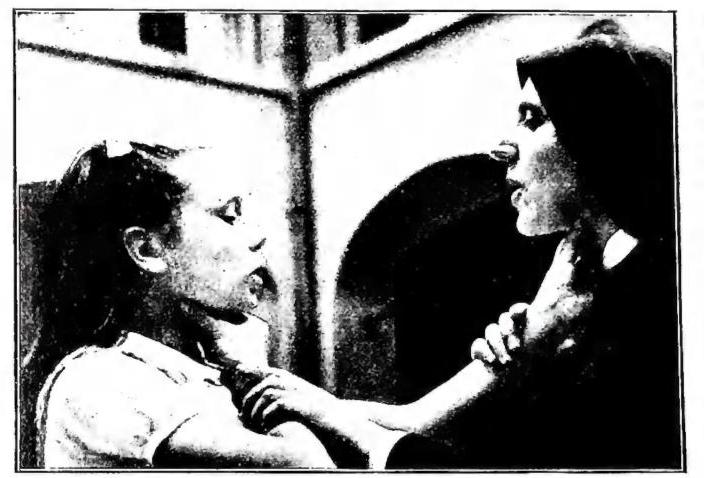
The theory of the vicarious nature of stimuli in the perception of speech made it possible to seek a method also for the education of blind s. The initiative for these procedures is owed to the founder of the Institute for the Blind in Boston, S. G. Howe (1891-76), who achieved complete success in caring for the s. Laura Bridgman. Howe’s technique and practice led to analogous results in the case of Elena A. Keller, educated by Anna Sullivan, herself blind and in turn educated in Boston; Keller succeeded in attending university courses and learning foreign languages; likewise in the case of Clarence Selby, poet and writer, educated by Sister Dositea of the Congregation of S. Maria; and in that of Lottie Sullivan, educated by Mrs. G. W. Veditz, etc. (cf. American annals of deaf, edited by E. A. Fay, Washington June 1900). Fundamentally, the method uses touch in its two forms of sensory perception, namely contact-pressure and form-movement. In these procedures touch becomes so refined that, as in the case of E. Keller, it can perceive the speech of the lips of the person uttering it by resting the three fingers of the right hand lightly on his face.BIBLI: T. Pendola, Le istituzioni dei s., in Italia, 3ª ed., Siena 1867; G. Monsci, Notizie storiche sul R. Istit. dei s. di Genova, Genova 1881; G. Ferreri, Il s. e la sua educazione, III, Siena 1896; id., Le istituzioni americane per l'educazione dei s., Palermo 1903; id., Documenti per la storia della educazione dei s., 2 voll., Siena-Milano 1903-21; id., Disegno storico dell'educazione dei s., 2 voll., Siena 1917-20; id., Contributi pedagogico-didattici della R. Scuola di metodo «Girolamo Cardano», 2 voll., Milano 1927-30; E. Scuri, Heinicke e de l'Epée nella controversia intorno ai metodi d'insegnamento dei s., Napoli 1906; S. Heinicke, Del modo di pensare dei s., vers. it., Siena 1914; A. Gaddi, Contributi pedagogico-didattici della R. Scuola di metodo «Girolamo Cardano», 2ª serie, 2 voll., Milano 1934-38. In addition: F. A. Moeller, Education of the Deaf and Dumb, in Cath. Enc., V (1909), pp. 315-21 (with bibliography); H. Fieth, Taubstummbildung, in Lex. der Pädagogik, V (1917), coll. 48-61 (with bibliography). For the education of blind s., cf. Maud Howe — Fl. Howe Hall, Laura Bridgman, Dr Howe's famous pupil and what he taught her, Boston 1903; H. Keller, The story of my life, Boston 1902, Italian translation, Firenze 1907; id., The Word I Live in, ivi 1910, Italian translation, Milano 1910; H. Fieth, Taubstummbildung, in Lex. der Pädagogik, V (1917), coll. 44-48. Celestino Testore
II. THE ETHICAL PROBLEM
In the ethical sphere, the problem of the moral and juridical capacity of deaf-mutes is of primary concern. 1) With regard to imputability, the CIC contains no specific regulations; the principles governing human acts apply, as restated in can. 2201, which speaks of incapacity for crime when there is a total lack of the use of reason, and of a proportionate diminution in cases of partial impairment. They are certainly not responsible in the same way as those who are sound; and even if fully educated, their psychic conditions may entail a diminution of imputability, to be determined by experts on a case-by-case basis. 2) The Italian Penal Code (arts. 96, 141, 219, 222) excludes all imputability in deaf-mutes who are incapable of understanding or willing; it admits diminished imputability in cases of illness of a lesser degree, subject to judicial proceedings, while nevertheless requiring admission to care facilities. The Civil Code, on the other hand (art. 415), recognizes juridical capacity if the deaf-mute has received sufficient education; with particular precautions, he may make a will (arts. 603-605) and testify in court (Code of Civil Procedure, art. 124). 3) With regard to the Sacraments, the general rules concerning the capacity to understand apply; in cases of total or almost total incapacity, they are to be treated as infants (Baptism and Confirmation). If they are capable of at least venial sins, or if there is doubt, they may receive (conditionally) Extreme Unction and absolution in danger of death; whereas for Communion and Confession, when they are of sound mind, a certain capacity to understand the value of the Sacrament is required. If their psychic capacity is established, for example through the education they have received, they may approach the Sacraments like everyone else: Orders is excluded on account of irregularity ex defecta (can. 984, n. 2); for marriage, the principles governing defect of consent and ignorance apply (can. 1081 ff.), so that if the deaf-mute is incapable of consent or is unaware of what is indispensable for the validity of the act (can. 1082), the marriage is null. For Confession in particular, V. CONFESSIONE. Can. 936, derogating from can. 934, facilitates the gaining of indulgences also for deaf-mutes, insofar as, for the recitation of any prescribed prayers, it is sufficient for them to join with others with the proper interior dispositions, or, by reciting them privately, to manifest their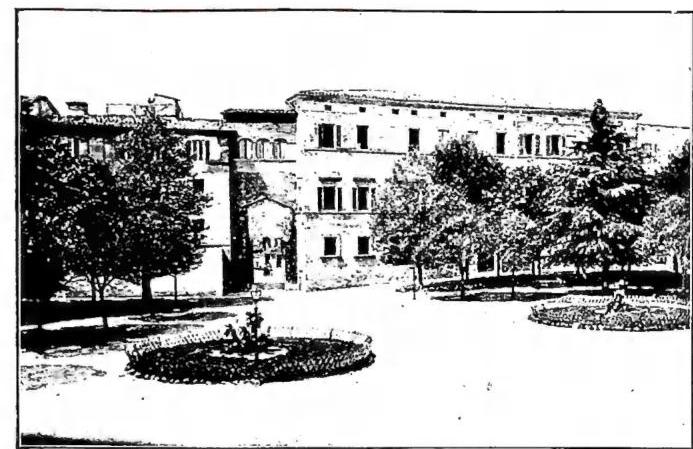
- Vedi tav. LXIV.