
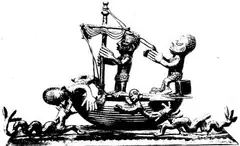
AFRICA. - One of the five largest continents.
# I. GEOGRAPHY.
1. GEOGRAPHY
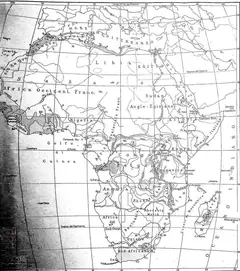
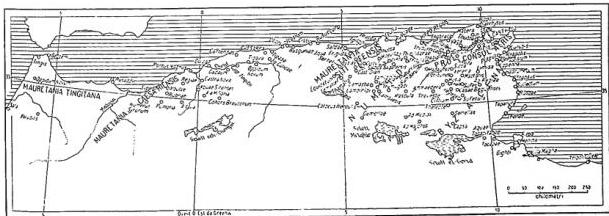
a) Physical geography, relief, inland waters. - A. extends between the Atlantic and the Indian Ocean, isolated on every side except to the N., where the Mediterranean brings it close to southern Europe (Strait of Gibraltar, Channel of Tunis) and the isthmus of Suez, today crossed by an oceanic canal, joins it to Asia, which repeats its characteristics in certain regions (Arabia, India). Of its 30 million sq. km. of surface (3 times Europe) barely half belongs to the islands (Canaries, Cape Verde, and Madagascar, which alone accounts for 9/10 of them). Being entirely lacking in true peninsulas, A. is, among the continents, one of the poorest in articulations: 98% of it consists of a continental trunk, in which for every 1000 sq. km. of area there are only 8 km. of coast (32 in Europe, 12 in Asia).
Its shape recalls that of a trapezoid, welded, along roughly the 5th parallel N., onto a triangle. Between the two extremes N. (Cape Blanc) and S. (Cape Agulhas), which lie at practically the same distance from the Equator, there is a span of 8300 km.; the width diminishes from a maximum of 7500 km. (Cape Verde-Cape Guardafui) to less than 200 (on average) in southern Africa. Therefore the greater part of the continent lies in the northern hemisphere.
The simplicity of the outline is matched by the general uniformity of the relief. The framework of the continent is provided by an immense block of ancient, un-folded rocks, forming broad tablelands, spread out in plateaus which from the 400-600 m. (on average) of the Saharan region rise to 1000-1200 in central and southern A. and to over 3000 in eastern A. The plateaus are often cut and dismembered by long fractures which have determined the formation of several series of lakes (Rudolf, Albert, Edward, Kivu, Tanganyika, Nyasa), or which were invaded by the sea (Red Sea). Mountains are formed, on the edges of these fractures and along the coasts, by the raised rims of the plateaus, which descend to the sea with steep fronts and spread out in more or less broad terraces. Of true mountain systems constituted by folded rocks one cannot speak except for the region of the Atlas, or Maghreb (bounded to the S. by the Cape Nun-Gulf of Gabes line), where a complex of reliefs develops which rejoins those peri-Mediterranean European ones (Sierra Nevada, Alps, etc.) of analogous origin. The highest peaks of A. generally correspond to volcanic masses: toward the east these rise to about 6000 m. (Kilimanjaro), allowing the development of glaciers right below the Equator (Kenya and Ruwenzori).
The coasts of A. are almost everywhere difficult of access, scantily articulated and lacking in harbours, and even where the major rivers empty into them with great deltas (Nile, Niger) or estuaries (Congo, Gambia), these cannot be ascended directly from the sea except for limited stretches, interrupted as they are by waterfalls, rapids and cataracts even in their lower course. Less than half of the African territory (48%) drains to the sea; 2/5 are without outflow (Sahara, Kalahari), 1/8 empties into internal basins (Chad). The regime of the African rivers is substantially or exclusively pluvial; they are therefore subject to seasonal floods: famous are those of the Nile, the longest river on earth (6500 km., basin 2.8 million sq. km.), used since the remotest times for irrigation purposes (Egypt). The Congo (4200 km. of course), whose basin (3.7 million sq. km.) straddles the Equator, has a constant and copious discharge (minimum 50,000 cu. m.
per second) in every season; its numerous and long tributaries (Cuanza, Cunene, Ubangi, Kasai) form an extensive network of waterways, in a zone (virgin forest) where communications are particularly difficult. Considerable basins and courses are also presented by the Niger (4.2 thousand km., basin 2.1 million sq. km.), the Zambezi (2.7 and 1.3), the Orange (1.9 and 1.0), the Senegal (1.7 and 0.5), etc.
A. hosts, especially in the intertropical zone, a good number of lakes, among the largest and deepest on earth. Lake Victoria (68.8 thousand sq. km.) is the third in the world by extent; characteristically elongated, as mentioned, are lakes Nyasa (30.8) and Tanganyika (31.9), the latter with the deepest terrestrial cryptodepression (1435 m.) after Baikal. Of the other lakes, the largest (Chad, Ngami) lie in the most depressed zones of the closed basins, have little depth and great seasonal variations of level.
b) Climate. - Almost 4/5 of the African territory (77%)
are included in the intertropical zone (47% of all the intertropical regions of the earth belongs to A.); therefore hot climates predominate on the continent, with the exception of the elevated zones; but the climatic types are characterized rather by the behavior of the rains than by that of the thermal regimes. In the two hemispheres the succession of these climates presents itself with evident symmetry. The regions close to the Equator (Congo basin, Guinea) have a uniformly humid and hot climate, with rains in every season, and are therefore covered by the typical equatorial forest (with mangroves along the coasts); a zone that adapts poorly to the residence of whites. To the N. and S. of it the temperatures remain high, indeed they reach at about 20° N. (approximately) maxima determined by strong continentality (35° and even more), but the humid period alternates with one or two periods of drought, the longer the farther one moves from the Equator: a behavior that is reflected in the vegetation, where the savanna, or grassland of tall grasses, replaces the forest and is in turn replaced by the steppe, as soon as aridity becomes prevalent. One thus passes by degrees to the desert steppes and to true deserts, of which A. possesses the largest and most typical (Sahara) of all the Earth. Subtropical thermal and pluviometric regimes (Mediterranean, with winter rains) are realized only in lesser A. to the N., and to the S. (over more restricted areas) in the extreme southern strip of the continent.
c) Population. — The population of A. is today calculated at 175 million inhabitants in round figures (but perhaps excessive). The density, which on average does not reach 6 inhabitants per sq. km., oscillates between extremes that are not very far apart. Setting aside certain islands (Madeira, Canaries, Mauritius, Zanzibar, Réunion), the greatest concentrations are found in Egypt (almost 500 inhabitants per sq. km.), in lesser A., in the western Sudan, in the Cape region, in Ethiopia, in some zones of the lake plateau, etc.; in general, however, the density only slightly exceeds 15-20 inhabitants per sq. km. over somewhat vast areas. On the other hand, vast regions are entirely or almost devoid of inhabitants, and not only in the desert, but (for opposite reasons) also in the equatorial forest. A very expressive index of the conditions of the continent's settlement, and of its diversity from the settlement, for example, of Europe, is given by the fact that in all of A. the number of urban centers exceeding 100,000 inhabitants is little more than twenty (23 in 1940), with only one reaching a million (Cairo): that is to say, fewer than what occurs in Europe in Italy alone.
More than 5/7 of the African population consists of Africans of the negrid group, with varieties and crosses no less numerous than among whites and yellows. They inhabit the continent to the S. of the Sahara, while northern A., to the N. of the line from the mouth of the Senegal to the mouth of the Juba, is populated by Europid Mediterranids, and Orientalids (Hamites and Semites of tradition). Among the latter the Arabs, after conquering the Maghreb in the 7th century, imposed their language and their civilization on all of North A. The Jews are numerous especially in the coastal centers, where they appear settled as a rule in special quarters. Europeans probably amount to a little more than 4 ½ million, of whom half are in southern A. and slightly fewer in the Maghreb and in Egypt (the zones best suited to white settlement), but nowhere do they have numerical predominance over the natives, unless one takes account of restricted areas or urban islands.
Unlike the members of the other races, the Negroes appear divided into a very great number of separate groups: to the S. of the Sahara no fewer than 800 different languages are spoken, many of which are used and understood only by a few thousand individuals. All these populations have, on the whole, absorbed and assimilated very little of our civilization: A. is, in this regard, the most conservative of the continents. The hostility of the aborigines toward European penetration has nevertheless given way almost everywhere to a more or less peaceful collaboration. Only the Islamized populations of northern A. have assumed a clearly antagonistic position toward their present rulers.
d) Religious confessions. — Religious contrasts operate in the same sense: even on this terrain the reflection of racial differentiations is transparent. Islamism, introduced and spread by the Arabs, dominates the Semito-Hamitic environment in the N.: the Mohammedans count in A. no fewer than 55 million proselytes (35% of the total), and, although the area of their prevalence stops at about 10° N., they are gaining ground among the mass of the Negro and negroid populations, who in their great majority practice animistic cults. Christians number around 24 million souls: of these about 8 are Catholics, 7 Protestants and 9 among Orthodox and Copts. Their area of diffusion corresponds to the marginal territories of European penetration and to the Ethiopian plateau, where Christianity has distant roots and was able to resist the Islamic onslaught. The Israelites slightly exceed ½ million (numerous especially in the cities of northern A.), and around 150,000 are Hindus (eastern A.).
e) Colonization. — Classical antiquity and the Middle Ages knew in substance, of the continent, only the northern extremity, cis-Saharan, and the lower and middle valley of the Nile. Beyond these regions they had vague and confused notions of the remaining A., where (Sudan) the penetration of Westerners had been sporadic or occasional. In the second half of the 15th century Portuguese expansion began along the Atlantic coasts, followed (16th century) by Dutch, French and English expansion. At the end of the 16th century the contour of the continent had been entirely surveyed, but since the purpose of the expeditions was essentially trade with the Indies, knowledge and colonization were limited almost everywhere to the coastal zone, in which supply stations, ports and trading posts were established (on the western coast also for the slave trade). Although Dutch colonists (Boers) had already settled from the early years of the 17th century in the most favorable regions of the southern hinterland (Cape), the exploration of the interior is, at bottom, the work of the 19th century; therefore the most recent of all the continents.
The massive shape of the territory, its difficult penetrability, the presence of an immense desert zone on the southern border of the ancient world, the rapid and fortunate colonization of the new world, and the long disputes over European predominance account for this delay. But the discovery and taking possession of the interior regions of Africa were then favored by the concomitant operation of the religious fervor of Christian missionaries, by the scientific zeal of explorers and scholars, and by the interests of commerce, which opened the way to the expansion of the European powers. Once Holland had disappeared and Spain and Portugal had declined, the struggle saw France and England above all in the field and (later) Germany and Italy. The Berlin Conference (1884) regulated the partition of Africa, recognizing the independence of a few states, some of which were later absorbed into the English (Boers) or French (Morocco) sphere of influence, while it saw the end of Turkey's nominal sovereignty in northern Africa (Libya, Egypt). Today the European powers control almost the entire continent. Great Britain and France alone dominate over 2/3 of the territory (32 and 36% respectively) and of the African populations (38 and 26%); the share belonging to the independent states, reduced to three (Egypt, Ethiopia, Liberia), is minimal (1/14 of the territory and 1/8 of the population). We give below the statistical table of the subdivision of the continent: it should be noted that the fate of the Italian colonies is still (1948) uncertain. The territories (formerly mandates) of Togo, Cameroon (French and English), Ruanda-Urundi (Belgian), Tanganyika (English), and South West Africa (South African Union) represent the old German colonies lost as a consequence of defeat in the First World War. The form of dependence of the colonial territories on the mother country is quite varied: from the regions that are an integral part of it (Algeria for France, the Canaries for Spain, the four Libyan provinces for Italy) one descends, by degrees, to simple protectorates. Consequently the political map sometimes expresses conditions of law rather than conditions of actual possession.
I. 1) Statistical table.
| Territories | Area in sq km | Population |
|---|---|---|
| Kingdom of Egypt | 935,300 | 19,090,000 |
| Empire of Ethiopia | 1,120,000 | 10,000,000 |
| Republic of Liberia | 95,400 | 2,200,000 |
| Independent Africa | 2,150,700 | 31,290,000 |
| International Territory of Tangier | 583 | 106,000 |
| Algeria | 2,204,863 | 7,600,000 |
| Tunisia | 125,130 | 2,730,000 |
| Morocco | 398,627 | 8,993,000 |
| French West Africa | 4,701,575 | 15,938,000 |
| French Equatorial Africa | 2,370,000 | 4,004,000 |
| Somali Coast | 21,963 | 45,000 |
| Madagascar and dependencies | 592,200 | 4,227,000 |
| Réunion | 2,511 | 240,000 |
| Cameroon (mandate) | 422,000 | 2,615,000 |
| Togo (mandate) | 56,500 | 918,000 |
| French Africa | 10,895,369 | 47,310,000 |
| Libya | 1,759,540 | 930,000 |
| Eritrea | 119,472 | 640,000 |
| Italian Somaliland | 506,573 | 1,030,000 |
| Italian Africa | 2,385,585 | 2,600,000 |
| Madeira | 782 | 212,000 |
| Cape Verde Islands | 4,033 | 182,000 |
| Portuguese Guinea | 36,125 | 350,000 |
| São Tomé and Príncipe | 964 | 60,000 |
| Angola | 1,246,700 | 3,738,000 |
| Mozambique | 771,125 | 5,085,000 |
| Portuguese Africa | 2,059,729 | 9,627,000 |
| Canaries | 7,496 | 761,000 |
| Presidios | 213 | 120,000 |
| Spanish Morocco | 20,427 | 800,000 |
| Spanish Sahara and Ifni | 285,000 | 65,000 |
| Spanish Guinea | 26,649 | 200,000 |
| Spanish Africa | 339,785 | 1,946,000 |
| Belgian Congo | 2,336,892 | 10,500,000 |
| Ruanda and Urundi (mandate) | 54,172 | 3,800,000 |
| Belgian Africa | 2,391,064 | 14,300,000 |
| Gambia | 10,536 | 205,000 |
| Sierra Leone | 72,362 | 2,121,000 |
| Gold Coast | 203,704 | 3,572,000 |
| Nigeria | 876,654 | 20,900,000 |
| South African Union | 1,223,854 | 11,258,000 |
| Basutoland | 30,344 | 580,000 |
| Bechuanaland | 600,000 | 284,000 |
| Swaziland | 17,366 | 186,000 |
| Southern Rhodesia | 389,384 | 1,777,000 |
| Northern Rhodesia | 751,908 | 1,675,000 |
| Nyasaland | 123,795 | 1,686,000 |
| Kenya | 582,636 | 4,045,000 |
| Uganda | 243,406 | 3,930,000 |
| British Somaliland | 176,113 | 700,000 |
| Socotra | 3,579 | 12,000 |
| Mauritius and dependencies | 2,096 | 425,000 |
| Seychelles and dependencies | 404 | 33,600 |
| Zanzibar and Pemba | 2,642 | 250,000 |
| St. Helena and Ascension | 210 | 5,000 |
| Togo (mandate) | 30,776 | 391,000 |
| Cameroon (mandate) | 88,266 | 925,000 |
| South West Africa (mandate) | 822,875 | 318,000 |
| Tanganyika (mandate) | 932,400 | 5,545,000 |
| British Africa | 7,189,000 | 60,823,000 |
| Anglo-Egyptian Sudan | 2,462,925 | 6,591,000 |
| TOTAL AFRICA | 29,875,000 | 174,593,000 |
g) Economic conditions, products, communications. — The stage of Africa's economic evolution corresponds to the recent date of its colonization and its barely incipient development: the continent is, in substance, still a reserve of raw materials, whose utilization appears far too distant from its immense possibilities. The occupations of the natives remain, at bottom, the traditional ones: hunters and gatherers in the forests, herders in the steppes, herder-cultivators on the highlands, cultivators in the savannas. Fishing is limited to the coasts of Guinea, South West Africa, Mozambique and Madagascar. Leaving aside the Mediterranean and southern countries, all agriculture is still native. Among agricultural products the only one for which the African market holds the lead is cocoa (65% of the world total; coming almost entirely from the coasts and islands of the Gulf of Guinea); but peanuts also have considerable importance (18.3%; from the countries of the western Sudan), cotton (9.1%; chiefly from Egypt, Sudan and Uganda), vegetable oils (Guinea palm, sesame, castor), cane sugar (6%; from the Mascarene Islands), vanilla (40%), bananas, dates, alfa, esparto, etc. The equatorial forest supplies rubber, precious woods (ebony, mahogany, rosewood), copal, copra, etc.; the temperate countries supply grapes and wines (10% of world production, chiefly from the Maghreb, Madeira), olive oil, fruit, cork, etc.
Among animal products, ivory, which was of great importance in the past, is today much diminished (elephant hunting); but livestock raising, very widespread in temperate Africa and in the Sudan, has a large place in the economy of the continent, which counts 5 million camels (83% of the world total), 160 million goats and sheep (16%), 67 million cattle (9%; in central Africa livestock raising is hindered by the spread of the tsetse fly), etc. The wool produced represents 9.4% of the world total; hides too constitute an article of broad export.
However imperfect our knowledge of them may be, the mineral reserves are undoubtedly substantial; but their exploitation is barely beginning. Certainly Africa has, one might say, the monopoly of diamond extraction (99% of the world total) and the first place in that of gold (65%; both are localized in southern Africa). Phosphates too (38%; northern Africa), chromium (33%; Rhodesia, South African Union), manganese (20%; South African Union, Congo, Morocco), copper (19%; Belgian Congo, Rhodesia), and tin (13%; chiefly Nigeria, Belgian Congo) yield notable quantities. Production of coal (South African Union), petroleum (Egypt) and iron (Algeria, Katanga, South African Union) is instead scarce, not the least cause, together with the unsuitable climate and the insufficiency of labor, of the absence, in Africa, of modern large-scale industry.
European commercial dominance is essentially limited to the coastal regions, beyond which it penetrates inland only along the course of the major rivers (Nile, Congo, Niger). Africa's share of the world total is modest: imports rose from 3.7 to 5.2% and exports from 2.6 to 4.7% of that total between 1900 and 1937. In the past the most flourishing traffic was that of slaves, whose procurement, organized especially in the Sudan, aimed to supply the tropical countries of America with the manpower necessary for the exhausting work of the plantations. The slave trade came to an end in 1889. Internal and foreign trade long suffered from the natural obstacles which, as has been seen, make the development of communication routes difficult in Africa, but especially after the middle of the last century progress was fairly rapid. Good ports were provided at various points along the coast, even where it appeared least suitable (Dakar, Durban); on the rivers and lakes steam navigation was introduced and spread, linking by other means (tracks, canals, roads) the stretches interrupted by rapids and waterfalls. Railways began there around 1860, and moved, as in Asia, from the periphery toward the interior, but in relation to the development of the individual regions, thus leading to independent networks, isolated from one another, and often built with different gauges. On the whole Africa today has 75,000 km. of railways, which amounts to barely 5.7% of the world network, and to 0.2 km. of line for every 100 sq km. of territory, which is the minimum value among those referable to the individual continents. Of the 5 main groups of lines — the Maghrebi, comprising NW. Africa; the Egyptian-Sudanese; the western, or that of the French-British colonies, in the western Sudan; the eastern, or that of Kenya, Uganda and Tanganyika; and the southern or austral — the most important is the last, which grows denser toward the south and pushes north as far as the Congo basin. This network, to which the only already completed trans-African line is connected (from Lobito to Beira via Elisabethville and Bulawayo), is integrated by a suitable combination of mechanical means (motor vehicles, river and lake transport), which makes it possible to reach the Nile valley and hence the Mediterranean, realizing the great trans-African Alexandria-Cape Town route. In recent years, moreover, and also as a consequence of the recent conflict, air services have greatly developed, almost all of which operate in connection with European links (France-England). The railway network is still too sparse, and all the other means of transport too far from being able to meet the need, for the traditional systems to disappear which, in harmony with the climate and the forms of the terrain, have served the purpose since time immemorial.
One of the characteristics of Africa in this regard is the lack of vehicles, except in the southern regions, where the Boers introduced the great ox-drawn wagons. Northern Africa and Ethiopia use the horse, the mule and the donkey for the transport of goods; Egypt, the Sahara and Somalia the camel; for the rest, that is for almost all of equatorial Africa, men and goods are transported on human backs (since none of the usable domestic animals withstands here the deadly sting of the tsetse fly), with caravans as a rule of 40-60 porters, who take turns at determined stages. The spread of the automobile and the multiplication of tracks have somewhat reduced, but not eliminated, these very slow and often precarious systems of locomotion.
If Africa perhaps can never be, because of its environmental conditions, a territory everywhere suitable for white colonization, a rational enhancement of its very extensive resources will certainly lead it to a more intimate insertion into the world economy. The most prudent calculations of its capacity for settlement assign it, as possible, a human load about 10 times greater than today's; and no account has been taken of what the ever more advanced technique of production will be capable of achieving.
Bibliography5 works
Teil, Berlin 1925; F. Jaeger, A. in Allgemeine Erdkunde by W. Siewers-H. Mayer, Leipzig 1928; F. Klute, A. als Erdteil, in Handbuch der Geographischen Wissenschaft hrsg. von F. Klute, Wildpark-Potsdam [1930]; A. Mori, A. in Terra e Nazioni della Casa Editr. F. Vallardi, Milan 1936; A. Dardano-R. Riccardi, Atlante d'A., Milan 1936; A. Bernard, A., in Géogr. universelle by P. Vidal de la Blache and L. Gallois, XI, Paris 1937.
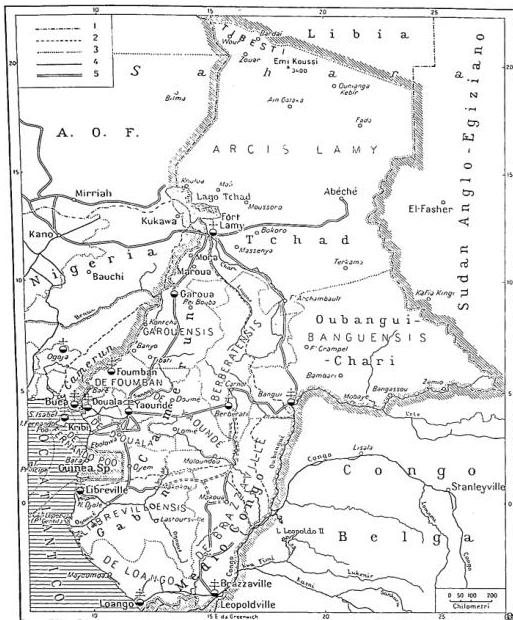
2. FRENCH EQUATORIAL AFRICA (A.E.F.)
Formerly French Congo; acquired by France between 1875 and 1916. It is governed by a governor, represented by a military commander in Tchad and by a vice-governor in the other colonies:
| Tchad | 1,120 thousand sq km. | 1,902 thousand inhabitants |
|---|---|---|
| Oubangui-Chari | 558 | 1,062 |
| Gabon | 277 | 385 |
| Middle Congo.. | 415 | 685 |
In total 2.4 million sq km. (more than 4 times the mother country) with 4 million inhabitants (fewer than in Paris); the density (1.7 inhabitants per sq km.) is very low. The colony extends from the Equator to the Tropics, from the Sahara to the Congo and therefore in conditions quite different from zone to zone. More than in the forms of the soil, however, the differences become evident in the climate and vegetation: from the lean steppes of Tchad and Tibesti one passes gradually, through the savannas of the Chari basin, to the great and dense rain forest of Gabon and the Middle Congo.
The population consists predominantly of Sudanese in the north and Bantu in the Congo basin; decimated by endemic diseases (sleeping sickness, typhus, tuberculosis), by inadequate nourishment and by abuse of alcohol. Europeans number fewer than 9,000, Catholics 88,000.
The economy is backward, communications scarce, mostly by river (512 km. of railways). The most notable products are those of the forests: timber (okoumé), rubber, palm oils and nuts; the cultivation of cotton, peanuts, cocoa, etc. is developing promisingly. Copper and gold are extracted from the subsoil; the presence of iron has been ascertained.
The only notable inhabited center is the capital Brazzaville (25,000 inhabitants), on the Lower Congo.
Bibliography2 works
3. FRENCH WEST AFRICA (A.O.F.)
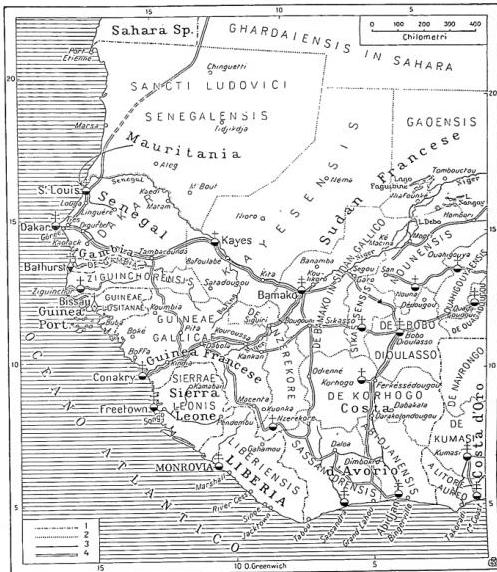
It is the largest colonial territory of France (4.7 million sq km, more than 8 times the metropole); it was constituted between 1855 and 1900. It consists of 7 administratively autonomous units, each governed by a governor and dependent on a single governor-general who resides in Dakar. It embraces the two depressions of the Senegal and the Niger and the mountain groups of Futa Jallon and Atakora, from which one descends to the Gulf of Guinea. The climate passes by degrees from extreme aridity (Sahara) to extreme humidity (equatorial belt); therefore, from N. to S., in parallel strips, desert, steppe, savanna and virgin forest follow one another. The population (15.9 million inhabitants), made up of nomads of the white race in the N., of sedentary Sudanese negroes in the S., is settled especially in the zones near the coasts (4 inhabitants per sq km); the rest, that is the great majority of the country, is almost empty. Europeans number over 37,000, three-quarters of them French; Catholics number over 150,000. Communications, everywhere difficult and scarce (40,000 km of tracks, 4,000 of railways), also because of the poor harbor facilities of the coast, make arduous the work of developing the natural possibilities, which are varied and considerable. French West Africa produces and exports above all peanuts (700,000 tons), palm nuts and oil, timber (okoumé), cocoa, coffee, bananas and cotton; mineral resources, though not lacking, are still modestly exploited (gold in Guinea).
Dakar, with over 100,000 inhabitants, has become not only the port of Sudan and Senegal, but also the most important stopover on the route between A. and South America.
Here is the statistical table:
| Colonies | Area | Inhabitants |
|---|---|---|
| Mauritania . . . . . | 835,000 sq km. | 497,000 |
| Senegal . . . . . | 201,000 | 1,871,000 |
| Ivory Coast . . . . . | 477,000 | 4,022,000 |
| Guinea . . . . . | 251,000 | 2,125,000 |
| Dahomey . . . . . | 112,000 | 1,458,000 |
| Sudan . . . . . | 1,531,000 | 3,797,000 |
| Niger . . . . . | 1,294,000 | 2,168,000 |
Bibliography4 works
4. FRENCH WEST AFRICA (A.O.F.)
A German colony until 1917; then transferred as a mandate to the Union of South Africa. It is a vast territory (850,000 sq km.; more than 2 ½ times Italy), cut through the middle by the Tropic of Capricorn, with a harborless and desolate coast and a steppe-like and almost entirely desert interior. Both are characterized by a typically hot-arid climate.
The population slightly exceeds 300,000 inhabitants, of whom about 1/10 are Europeans (and of these 1/3 are Germans).
Livestock raising predominates in the country (in millions of head: 3.5 sheep; 1.1 goats; 1.3 cattle), which has given impetus to the refrigerated meat industry and to that of dairy products (butter is exported). The fishing resources are substantial (crustaceans and snoek, or pike of the southern seas), and the mineral resources are notable (copper, silver, zinc, lead, gold, iron, vanadium, tungsten and above all diamonds [½ in value of exports]).
The interior of the country is crossed by a railway that connects it to the neighboring Cape Colony; on this line is Windhoek, the capital (10,000 inhabitants, of whom 5,000 are white). The main port is Walvis Bay
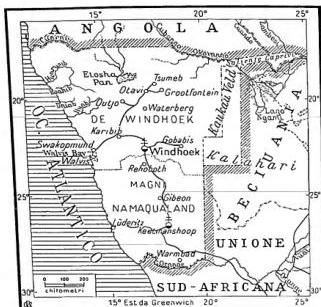
(Walvis Bay; 2,500 inhabitants; formerly territory of the South African Union, and from 1922 passed to the administration of A. of the SW.), which has supplanted the nearby port of Swakopmund.
The so-called Caprivi salient (10,000 sq. km., 10,000 inhabitants), which put German A. of the SW. in direct communication with the Zambezi near the famous Victoria Falls, has been almost entirely annexed to the South African Union (Bechuanaland).
Bibliography3 works
Giuseppe Caraci
II. ETHNOGRAPHY.
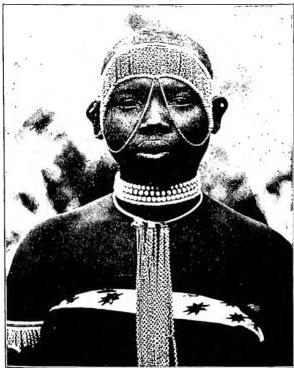
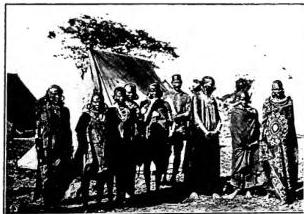
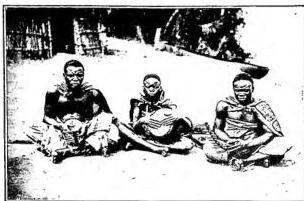
1. - Anthropologically, the following are represented in A.: 1) the pygmy race, which presents characteristics of great antiquity: of very small stature, mesocephalic, of a dark-red skin color; its present habitat is the equatorial forests; 2) the Khoi-San race, which includes the Hottentots (Khoi-Khoin) and the Bushmen (San); of small stature, dolichocephalic; of a yellowish-dark skin color; steatopygia in the woman is typical; its habitat is the western part of southern A.; 3) the negrid race, which is divided into the groups of the Nilotics, Bantoids, Sudanids; it is of large build; dolichocephalic; it has black skin; it extends from the extreme eastern edge of A. to the line of the Equator, occupying the whole central trunk of the continent, the southern part of western A. and the zone of the upper Nile; 4) the Ethiopian race, to which corresponds the linguistic term Semito-Hamitic; it is of large build, of a reddish-brown color and generally of nobler forms; its habitat, with infiltrations below the equatorial line, covers all of eastern A. to the north of that line, pushing as far as the Mediterranean toward all of western A.
2. - Linguistically, mention must also be made of the remains of a Old-Pygmy language, akin moreover to the group of the Khoi-San languages, Hottentot and Bushman. There follow: the group of the Bantu languages, which is the most widespread and is also proper to the present-day Pygmies; the Nilotic group; the Sudanese group; the Semito-Hamitic group.
3. - Ethnologically, the picture is among the most complete. It comprises: 1) the culture of the Pygmies, whose economy is based on hunting and the gathering of the fruits of nature; 2) the culture of the hunters of the steppes, which is not everywhere compact, but in very many places presents itself as a base culture; 3) the culture of the Hamitic (eastern) pastoralists; in the western part of southern A. this culture is represented by the Herero and the Hottentots; 4) the properly Nigritic cultures, such as the Bantu matriarchal culture and the Old-Nigritic patriarchal culture, in which agriculture predominates; these two types, variously interwoven with one another, represent the characteristic culture of the black populations of A., and while the first shows itself especially in the so-called western-African cycle, the second prevails in the Old-Nigritic culture; 5) the Neo-Sudanese culture, with typically eastern infiltrations, to which the Rhodesian culture is very akin; 6) the Old-Mediterranean culture, or according to others Syrtic and Atlantic; 7) to all these cultures, which, more or less, can be traced in their present crystallization back to our late Middle Ages, must be added the more recent cultural infiltrations, Islamic, Neo-Arabic, and finally those due to European colonization. For the religion of the primitives of A., v. PRIMITIVI, religione dei.
Bibliography9 works
Bernardo Bernardi

### III. ANCIENT CHRISTIAN HISTORY
Precise data on the introduction of Christianity into A. are lacking, and the first historically established notice does not go beyond 180. But the writings of Tertullian, only slightly later, show that by this date the Christian religion had already struck firm roots on African soil. Today the current opinion traces the beginning of Christian evangelization in A. to the first half of the 2nd century. Whence was Christianity imported? The prevailing idea is that the first contacts with the Gospel came from the East. Liturgical coincidences between Asia Minor and Carthage in force at the time of Cyprian certainly reveal ancient relations. But the organization of the Christian community seems to be the work of Rome, where the African filiation was affirmed in explicit terms as early as the times of Innocent I.
Throughout the 2nd century Christianity in A. has no history, until the martyrdom of the Scillitan Martyrs, killed for the faith at Carthage in July 180, by order of the proconsul Vigellius Saturninus, the first, according to Tertullian, to take up the sword against Christians. Until then, therefore, there was freedom to organize, and in 197 the African polemicist could speak of the crowds of Christians who filled the forum, the senate, the cities, the municipalities, the countryside. The first bishop remembered is Agrippinus of Carthage. At the end of the 2nd century the Christian religion became the object of repressive measures by the Roman governors, incited by popular reaction hostile to Christianity, and a great number of its adherents were imprisoned and subjected to torture. Tertullian encouraged them to sustain the struggle (Ad Martyres), while he addressed the pagans to vindicate the rights of conscience (Apologeticum, Ad Nationes). The victims increased at the beginning of the 3rd century with the edicts of Septimius Severus. The most illustrious are those of Tuburbo not far from Carthage: Felicity and com-

panions, of whom there remains a first-rate document, the acts of their martyrdom attributed by some to Tertullian. After a truce of some years, the persecution resumed in 212, partly provoked also by the intransigent attitude of some extremist groups of the community won over to Montanism (v.), which had meanwhile insinuated itself into A. Tertullian himself ended by adhering to it, and this led him to break off his relations with Rome, where Pope Zephyrinus had condemned the Cataphrygian novelties. Meanwhile other heresies afflicted the internal peace of the community: those introduced by innovators such as Hermogenes, Marcion, Praxeas, against whom Tertullian took up his pen.
Once calm had supervened, the African Church profited from the peace that lasted until the time of St. Cyprian, elected bishop of Carthage on the eve of the persecution of Decius (249), to make new progress. Already the Council of Carthage of 225, convened by Agrippinus, numbered 70 bishops of Proconsular Africa and Numidia; another of the time of bishop Donatus (236-48) counts 90. The Gospel was preached in the two Mauretanias, not only to the Roman populations but also to the Berber tribes of the Gaetuli and the Mauri. But the persecution of Decius revealed how superficial was the faith of numerous sympathizers who had entered the communities. Faced with the alternative of renouncing the faith or exposing themselves to the rigors of the law, many Christians preferred martyrdom, others evaded it by flight, many apostatized (lapsi). The persecution ended in 251, but the consequences were grave for the principle of unity.
Cyprian, having returned to his see, examined the question of the lapsi, who now demanded readmission into the Church, and a line of conduct inspired by prudence was decided. There was a clash, however, with the opposition of the extremists led by the priest Novatus (v.) and of the partisans of Novatian (v.), the first supporters of a rehabilitation in mass of the renegades, the latter determined on the utmost rigor. Hence the first schism. A conflict, perhaps even more serious, though external to A., arose shortly afterwards with the controversy over the validity of baptism conferred by heretics, affirmed at Rome, denied by the whole of the African episcopate led by Cyprian. He upheld his thesis in three successive Councils of Carthage (255-56). We still possess the minutes of the 3rd synod (1st Sept. 256): it brings us face to face with a compact group of 87 episcopal sees, representing however only a part of the African episcopate, which suggests that the number of sees was more than a hundred.
The breach between Rome and A. was ended by the death of Pope Stephen and the persecution of Valerian, in which Cyprian (258), several bishops and a considerable number of Christians ("Massa Candida") fell as martyrs of the faith. The edict of toleration of Gallienus (260) allowed the Church to resume its march during forty years of relative tranquillity, so that by the end of the 3rd century, when the severities of Maximinus aimed at restoring military discipline claimed some victims among the soldiers (Marcellus the Centurion, Fabius the Standard-bearer, Cassian of Tangier, Maximilian the conscript, etc.), the number of episcopal foundations had increased by about a hundred. The persecution of Diocletian (303-304) left lasting traces, because if martyrs and apologists bore witness to the faith with blood and word, numerous were the groups that denied it, including priests and bishops who handed over the sacred books or sacrificed. When the moment came to give successors to the deceased bishops, at the Synod of Cirta (305) the jealousies of the bishops of Numidia and the insubordination of the priests were revealed, which determined the struggle against Caecilian, bishop of Carthage, giving rise to the schism of Donatus of Casae Nigrae (v. DONATISMO), during which the centrifugal tendency of some groups of the community became more pronounced. The rigorous measures of the emperor Constans, who from 347 imposed unity by force, did not bring the desired fruits, because the policy of toleration of Julian the Apostate (362) allowed Donatism to revive and consolidate itself under the leadership of the new head Parmenian (v.).
At the end of the 4th century catholic A. is divided into 6 ecclesiastical provinces: Numidia, Mauretania Caesariensis, Mauretania Sitifensis, Proconsularis (Zeugitania), Byzacena and Tripolitania, over which the primate of Carthage always makes his supremacy felt.
However, the lack of capable leaders did not give the Church the possibility of effective action against the schism, except for the apologetic work of Optatus of Milevis (v.). But it was precisely then that Augustine of Hippo and Aurelius of Carthage arose to raise the fortunes of Catholicism. Aurelius restored conciliar assemblies to honor, in which a common action against Donatism was decided, supported by imperial authority (401-408) and by the campaign waged by Augustine with treatises and propaganda among the masses. Once Donatism had fallen (411), another grave danger appeared: Pelagianism (v.), which found a dangerous champion in Caelestius, excommunicated at the Carthaginian Synod of 411-12. The rehabilitation of Pelagianism at the Council of Diospolis in Palestine (415) drove the African bishops to request the intervention of Innocent I, who supported them resolutely. Their struggle gave the heresy no respite, until the "tractoria" of Zosimus and imperial intervention definitively defeated it (418). Ten years later Prosper of Aquitaine, alluding to these events, could write: "O Africa, what you decree is approved by Rome and followed by the empire."
The edifice built by Augustine and Aurelius over thirty years was almost destroyed by the Vandals. Led by Genseric, in 429 they landed in Africa, coming from Spain, spreading terror everywhere. After 14 months of siege Hippo fell; in 435 Carthage met the same fate. In the following years it was the turn of Tripolitania and Mauretania. When Genseric died, in 477, the Vandals were masters of Africa from Ceuta to Tripoli and were able to enjoy their conquest for almost a century, until the day when Belisarius, sent by Justinian (523), put an end to it in two battles, reducing the Vandals to slavery. During this time the Church was reduced to a wretched state, and Victor of Vita has drawn a gloomy picture of the terrible persecution that lasted almost a century, in the Historia persecutionis Africanae provinciae. The interrupted tradition was nevertheless restored under the guidance of the primate of Carthage, Reparatus; but the raids of the Berber tribes, which followed the victories of Belisarius, did not allow the episcopate any unified action. The situation was aggravated by Byzantium's attempts to subjugate it to its plans, because Africa, sincerely orthodox, always offered tenacious resistance to the dogmatic innovations of Justinian. This was clearly seen in the affair of the "Three Chapters" (v.) (543-55), which marked the beginning of vexatious measures on the part of the Byzantine authority against the recalcitrant bishops recalcitrant and other opponents of Monophysitism such as Reparatus of Carthage, Primosus of Hadrumetum, Theodore of Cabarsussi, Victor of Tunnuna, Facundus of Hermiane.
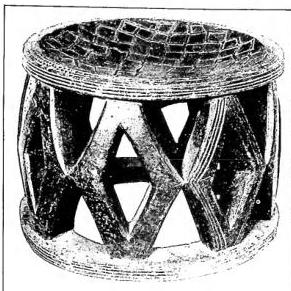
(Gab. Fot. Naz.)
The situation changed with the advent of Justin II, and this state of affairs remained unchanged under his successors. The creation of the exarchate under Maurice (582-602) halted the decline, but increased the interference of civil power in ecclesiastical affairs, and the bishops, by then deprived of strength, had no other defender than the Pope. It is the time of the providential action of St. Gregory the Great. The Byzantine influence in A. persisted still in the 7th century although the process of dissolution of those provinces from the Byzantine empire was underway, accelerated in 638 by the "Ecthesis" of Heraclius, which caused scandal among the Africans attached to orthodoxy. The last manifestation of faith occurred in the provincial synods of A. of 646, in which the episcopate, urged also by the preaching of St. Maximus (v.), condemned Monothelitism (v.) introduced by groups of Easterners forced by the Muslim invasions to take refuge in A.
From this moment events plunge the country into a series of disasters: in 643 the Arabs take advantage of the revolt of the exarch Gregory to penetrate into Byzacena. The assaults are renewed in the following decades and lead to the fall of Carthage (697) and of all A. (710) into the hands of the infidels. During the last half century destructions and massacres began the ruin of that already flourishing Church, of which in the following centuries only groups scattered here and there remained, almost a testimony of a faith that never wished to die.
Bibliography17 works
Mario Scaduto
IV. THE GENERAL COUNCILS OF AFRICA.
The first two African councils of which we have memory are those of 251 and 252, held by St. Cyprian at Carthage, to settle the question of the schism of Felicissimus and that of the lapsi. Bishops from many dioceses took part, even quite distant from Carthage.
While St. Cyprian was still alive, Carthage was the seat of three general councils (autumn of 256, spring of 257, Sept. of 257) in which the necessity of the baptism of heretics was discussed, a thesis upheld openly by the bishop of Carthage, but which met with the resolute opposition of Pope Stephen, who threatened excommunication. Given the inflexibility of St. Cyprian, the consequences would have been grave for the communion between the two Churches. But the death of the Pontiff forestalled any sentence, and unity was not broken.
After the suppression of Donatism, carried out by force by the emperor Constans in 347, the African Church devoted itself to a work of reorganization and restoration, especially of ecclesiastical discipline weakened in the preceding years. Each ecclesiastical province, among which Byzacena which was headed by Hadrumetum, had its own particular assemblies, in which many questions of worship and discipline were resolved in the same sense. The acts of the Synod of Hadrumetum have been lost, but express mention is made of it in the general African Synod of 348 or 349 in which canon 13, against usury, was a confirmation of that of Hadrumetum (cf. P. Monceaux, Histoire littéraire de l'Afrique chrétienne, III, Paris 1905, pp. 213-14).
Council of 349. - General synod assembled at Carthage, under the presidency of the African primate Gratus, in 349 or the year before, to celebrate the end of the Donatist schism and the re-establishment of religious unity, but above all to confirm the decisions of the various provincial synods that had preceded it with the aim of restoring ecclesiastical discipline, greatly decayed during the preceding troubles. Hence two kinds of measures which they sought to address with the 14 canons decreed. The first two and the last concern Donatism directly, suppressed in appearance, but always ready for revolt. The other statutes, on the other hand, resolve questions of worship and discipline. They have been preserved almost in their entirety down to our own days.
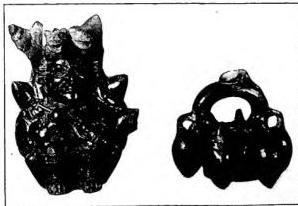
(Gab. Fot. Naz.)
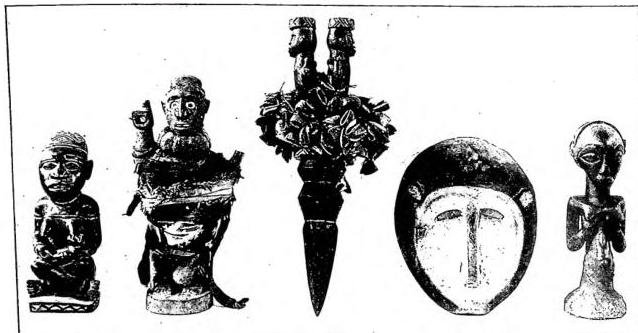
(Gab. Fol. Nac.)
Bibliography5 works
Council of 386. — It seems to be connected with the decisions adopted by the Roman Synod of the same year, in which the question of the Donatist schism was also discussed. The nine canons approved by the synod were communicated by Pope Siricius to the African Church, which adopted them, including can. 8, which required that schismatic clerics be reconciled with the imposition of hands.
Bibliography3 works
Council of 646. — Its purpose was the condemnation of Monothelitism. Urged on by St. Maximus the Confessor, champion of Dyothelitism, the African bishops of Numidia, Byzacena and Mauretania gathered at the beginning of 646 in three provincial synods. Shortly afterwards the Proconsular province too, where the see of Carthage was vacant, associated itself with the decisions taken by the African episcopate. Of these synods three synodal letters survive, the first of which is a collective document of the three ecclesiastical provinces addressed to Pope Theodore, asking him to intervene at Constantinople and make the patriarch Paul desist from the Monothelite error. The second is a letter of the bishops of Byzacena, addressed to the emperor Constans II; the third is the synodal letter to the patriarch Paul; lastly, a letter of the new metropolitan of Carthage, Victor, to Pope Theodore, with the request to deliver the aforementioned synodal letter to the patriarch Paul.
Bibliography3 works
Mario Scaduto
V. CHRISTIAN MONUMENTS
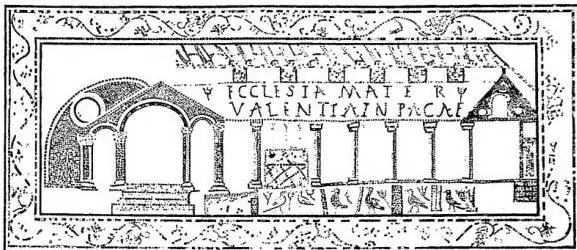
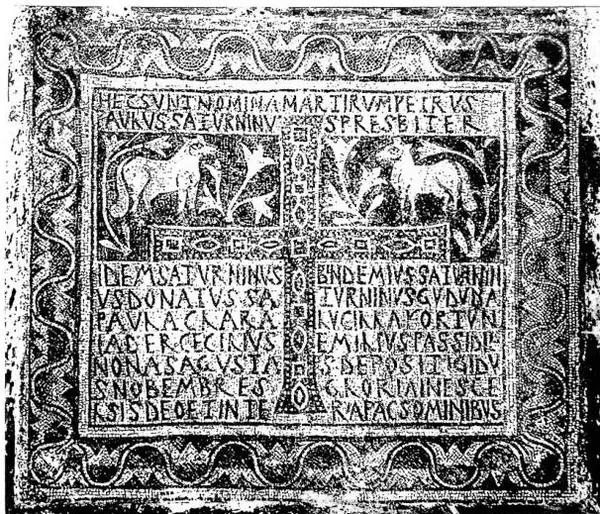
The monumental vestiges of Christianity form two imposing groups: buildings of worship and sepulchral monuments, both rich in inscriptions. But none of the buildings of worship is earlier than the Constantinian peace.
Nothing has remained, for example, at Cirta of the domum in qua Christiani conveniebant, containing a triclinium and a library, as the official record of the year 303 reveals to us in the Gesta apud Zenophilum (CSEL, XXVI, pp. 185-97). However, the African monuments have the merit of having come down to us as they were at the time of the Arab conquest, that is, at the end of the 7th century A.D. The buildings of worship were for the most part of the usual type: «oblongam habeat quadraturam, lateribus longioribus, brevioribusque frontibus, sicut pleraeque basilicae constituuntur» (Augustine, Quaest. in Heptat., II, 177, 5). Nevertheless they presented a great variety in their details.
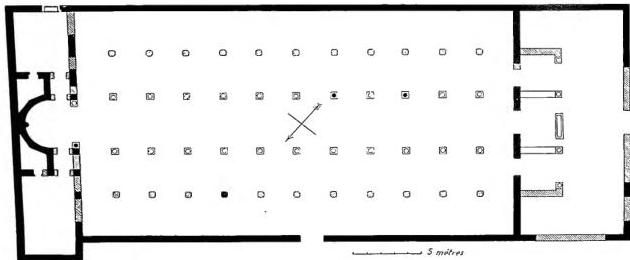
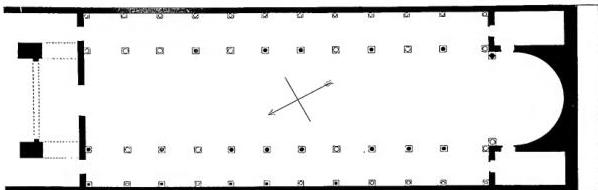
Churches with a single nave are rare (Bir-Ben-Zir in Algeria); for the most part they have three naves, but not a few have five (Bir-Oum-Ali, Orléansville, Carthage, Sbiba, Thelepte); some have seven (St. Perpetua at Carthage, one at Tipasa later enlarged) or even nine, like that of Damous-el-Karita at Carthage. In general the size and development were facilitated by the low cost of the land and of labor, or else by the proximity of raw materials. The construction is rarely in brick, more often in small-format stones, sometimes in large blocks of local stone.
In some cases, pre-existing constructions were converted into buildings of worship, as at Maktar a Punic temple (basilica of Ksar-el-Amar) and the mausoleum of Q. Julius Piso (Bull. arch. du Comité, Feb. 1945, p. xx) or three civil basilicas at Madauros, at Tipasa, at Dougga. Usually the Christian basilicas of A. do not have a true atrium, but a simple vestibule; a true atrium with a portico is found at Tebessa, at Ksar-el-Zit and in one of the basilicas of Thelepte. The rear wall may also terminate in a quadrilateral form, sometimes semicircular with a diameter as wide as the entire space, even in churches with three naves; one group presents the apse with two side rooms (prothesis and diaconicon) forming a separate part; in general the apse is deeper than in Roman churches. The naves were not always divided by columns; but sometimes by pillars, or in part by columns and in part by pillars. Access to the presbytery was given by a single wide stair, as at Kherbet Guidra, Lambaesis, Sidi Mabrouk, or by two small stairs at the sides, as at Benian, Matifou, Morsott, Tipasa.
On the columns and pillars there remain traces of cancelli, and an inscription of Mascula recalls the cancellus virginum. Cancelli also surrounded the memoriae of the venerated martyrs: «Habent honorabilem locum martyres sancti» (August., Serm. 273, 7). On the tombs of the martyrs or on their relics the altar was placed in the raised presbytery; for the most part in the middle of the choir, immediately in front of the apse or in the apse itself («mensa Christi est illa in medio constituta»: August., Serm. 31: PL 38, 735). The altar was often of wood (Optatus, De schism. Donatist., II, 21; August., Contra Crescon., III, 47; Confer. of 411: PL 11, 1316), and traces of it have been found in the basilica of Morsott and in the principal one of Timgad.
Crypts or other cavities beneath the altars contained relics, recalled by the inscriptions which often also give us important details about the martyrs themselves. For example one from Rouffach, near Constantine: «Depositio cruoris sanctorum martyrum qui sunt passi sub preside Floro in civitate Milevitana in diebus turificationis» (CIL, VIII, 1935). Florus was governor of Numidia in the year 303. An inscription of Ammedera recalls a group of martyrs «qui persecutionem Diocletiani et Maximiani divinis legibus passi sunt» (Bull. arch. du Comité, Feb. 1934, p. xi). The reliquaries are of every kind; of about a hundred found, there are some of silver (G. B. De Rossi, Capsella argentea Africana, Rome 1889), of alabaster, of stone, of clay, of glass. Sometimes they contain relics also of non-African martyrs, especially Roman ones. In Numidia the formulas Reliquiae and Mensa martyrum are frequent; the latter then spread also into Mauretania Sitifensis and the western part of the Proconsular province.
Above the altar rose the ciborium supported by four columns (Sbeitla, Dermech, Siagu). Beneath the apse sometimes is the crypt (Gemila, Dougga, Benian, Maktar). In the apse there is no evidence of the existence of windows; while the apses of Announa and of St. Salsa at Tipasa demonstrate that there were none. At Sicca Veneria the basilica of Dar-el-Kous, dedicated to St. Peter, presents inside the apse five semicircular niches with their respective columns.
Upper galleries in the naves have been found only in the inner church in the citadel of Ammedera. At Oum-el-Abnab there is a basilica with two concentric apses. The walls of the naves were sometimes covered with paintings: indeed St. Augustine recalls the representation of the martyrdom of St. Stephen (Serm. 316: PL 38, 3434) and of the sacrifice of Abraham, which he says is «tot locis pictum» (Contra Faustum, 22, 73: PL 42, 446), as well as «Petrus et Paulus cum Christo in pictis parietibus» (De consensu Evangelist., I, 10, 16: PL 34, 1049).
Singular is the architectural decoration in the basilica of Tigzirt on the capitals, on the pulvini, on the cornices and on the arches.
The floor of the basilicas was in some places of simple beaten earth, or of terracotta, and paved with stones; elsewhere, however, it spread over the entire surface like a rich Oriental fabric, entirely in mosaic and with the richest colors obtained by means of local stones, limestones and even fragments of brick, but of admirable effect and freshness, with medallions, palms, vine shoots, acanthus tufts, craters filled with flowers and fruit, fish, birds, peacocks, web-footed birds, gazelles, deer, crosses, lozenges. Among the most notable are the floors of the basilicas of Gemila, Orléansville, El Mouassat, Tigzirt, Timgad, Tipasa, Rusguniae, Sidi-Abich, Fourna, Taparura. A wall decoration characteristic of some basilicas of Tunisia was offered by a series of terracotta squares, of about 0.27 m per side, with biblical scenes impressed in relief.
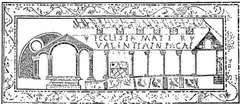
Two representations merit particular mention: that of a basilica (ecclesia mater) in a mosaic of Tabarca (2.20 m × 1 m), and the other of the bronze lamp found near Orléansville in 1850, which then passed into the Basilewski collection.
Notable is the series of baptisteries found near the churches, with basins of the most varied forms, to which one descended by means of steps, mostly three. There are some in the form of a Greek cross, hexagonal, octagonal, with rosettes, and also others of square form. Of an entirely singular form, that is, of a ship, is the one near a se-
A second basilica at Sbeitla, richly covered with mosaics, as indeed were many of the preceding ones, and still with the four columns that supported the tegurium, a feature also offered by the baptisteries of Henchir Deheb, Announa, Henchir Joubria.
The Christian buildings of A. have suffered more in recent times from the construction of new population centers and railway lines than during the Arab domination. The same holds for the funerary monuments, of which a great number have survived, given the density of the Christian population. Most were above ground; only where the conditions of the terrain permitted were chamber tombs cut into the rock, or small hypogea (Cherchell, Tipasa, Carthage); underground cemeteries of the Roman type were used only at Hadrumetum.
in pace, memoria, hic iacet; for the most part these are inscriptions of the 5th and 6th centuries. In Numidia epitaphs with memoria, hic requiescit, and reditio are frequent; memoria and mensa in Mauretania Sitifensis. In Mauretania Caesariensis (corresponding roughly to the present-day departments of Algiers and Oran) Christianity spread first along the coasts, then along the military line not far inland, and finally along the more southerly military line established by Septimius Severus.
It is precisely the eastern part of Mauretania Caesariensis that has revealed the oldest Christian inscriptions; these are small stelae of local dry-stone. One from Tipasa bears the date 238 (CIL, VIII, 20856). One from Tigzirt is from 299 (Bull. arch. du Comité, 1896, p. 217). The oldest inscriptions discovered in the western zone are those of Altava, which range from 302 to 320
Areae was the name given to the Christian cemeteries of A. from the time of Tertullian (Ad Scapulam, 3: PL 1, 701). Area was the name of the place where St. Cyprian was buried, area ad sepulchra that of Cherchell, containing a cella offered Ecclesiae sanctae by the senator Marcus Antonius Julius Severianus (CIL, VIII, 9585). But we also find the name coemeterium (Tertullian, De anima, 51: PL 2, 738), coemeteria memoriae gentis Lepidiorum (G. B. De Rossi, Roma sott., I, Rome 1864, p. 85) and accubitorium in an inscription that recalls how the presbyter Victor "hunc locum cunctis fratribus fecit" (CIL, VIII, 9586).
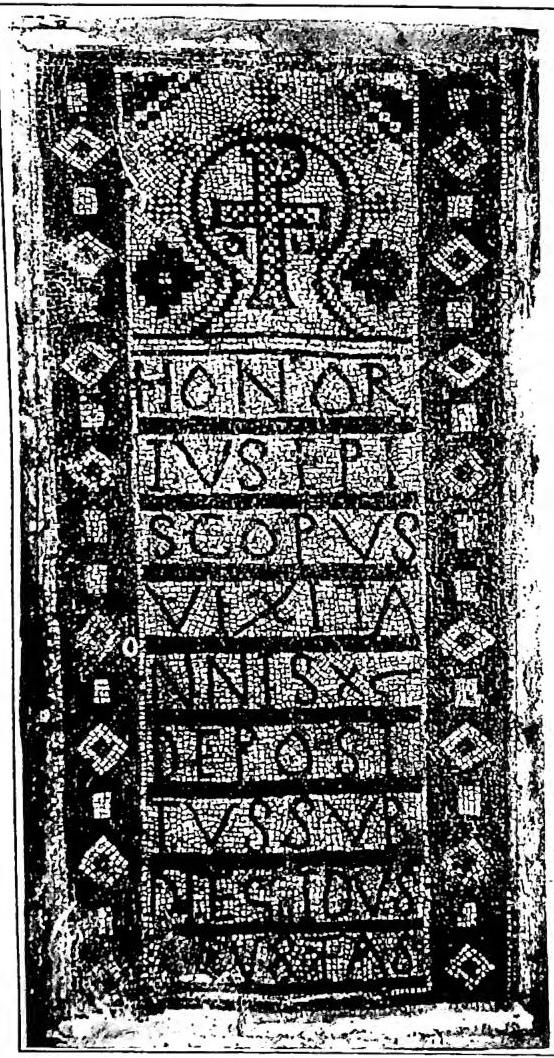
In these cemeteries sarcophagi of marble, of local stone, and of terracotta were used. Some sculpted ones come from Cherchell, Lambaesis, Tipasa, Dellys, Carthage, Philippeville, Tebessa; other tombs are of masonry, others of tiles arranged in the cappuccina style; others consist of simple amphorae. Many tombs are encrusted with mosaic containing inscriptions, portraits of the deceased, biblical scenes, monograms of Christ and symbols, flowers, birds, etc. The most notable examples are at Tabarca, at Uppena, at Thibari; at Hadrumetum some are also found in the subterranean cemeteries.
Christian sepulchral epigraphy is imposing for its number, if not for the antiquity of the inscriptions. In Proconsular A., especially at Carthage, the formulas used are fidelis, fidelis in pace, praecessit
(CIL, VIII, 9862, 9885, 21734, 9892, 9855, 9890). Then comes the famous inscription of Renault, of the year 329 (CIL, VIII, 21517) which commemorates a group of four local martyrs, among whom two appear under the same day in the Hieronymian Martyrology.
At the conference of Carthage of 411 many bishops of this region were present, Catholics and Donatists. The sister of one of them was Robba, "caede traditorum vexata" on 25 March 434 at Ala Miliaria (Benian). Over her tomb the Donatists erected a basilica with a crypt.
At the end of the 5th century, in 495, at Mouzaiaville a bishop was buried who, after having been several times in exile, was killed "in bello Maurorum" (CIL, VIII, 9286), who had rebelled against Vandal domination, and in 508 a certain Masuna styles himself "rex gentium Maurorum et Romanorum" (CIL, VIII, 9835).
Even after the Arab conquest that took place in 683, Christianity in A. left its monumental traces; Christian communities in small groups withdrew into the interior both of Mauretania Caesariensis and of Byzacena; there is a memory of a bishop at Gafsa still in the 9th century; and according to Edrisi of the Latin dialect in the 12th century. At Kairouan, in the center of Tunisia, an epitaph was found of a lector who died in 1030, perhaps contemporary with an already known fragment that had been attributed to the Byzantine period (CIL, VIII, 23128; Bull. arch. du Comité, 1928, p. 370 ff.).
For Carthage, Cherchell, Gemila, Lambaesis, Madauros, Orleansville, Sbeitla, Sicca Veneria, Tebessa, Tigzirt, Timgad see the individual entries.
Bibliography5 works
R. Cagnat - P. Gauckler, Monuments historiques de la Tunisie, Paris 1898; S. Gsell, Monuments antiques de l'Algérie, 2 vols., Paris 1901; J. Mesnage, L'A. Chrétienne, Paris 1912; P. Gauckler, Basiliques chrétiennes de la Tunisie, Paris 1913; S. Gsell, Inscriptions latines de l'Algérie, I, Paris 1922; J. Sauer, Der Kirchenbau Nordafrikas in den Tagen des hl. Augustinus, in M. Grabmann-J. Mausbach, Augustinus Festschrift, Cologne 1930, pp. 243-300; Atti del III e IV Congresso Int. di Arch. crist., Vatican City 1934, pp. 387-427; 1940, pp. 145-244; A. Berthier, Les vestiges du Christianisme antique dans la Numidie, Algiers 1943; A. Merlin, Inscriptions latines de la Tunisie, Paris 1944.
Enrico Josi
VI. MEDIEVAL AND MODERN CHRISTIAN HISTORY.
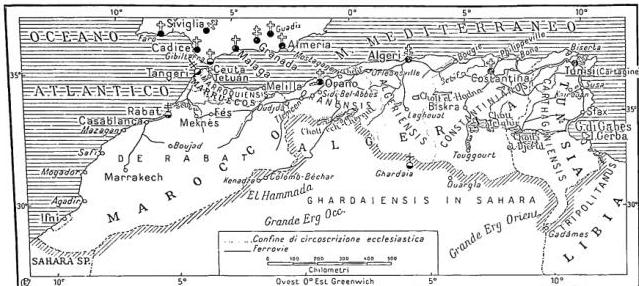
The first Christian A., that is the Roman-African Church, the Church of Tertullian, of Cyprian, of Augustine, was irremediably submerged beneath the overwhelming waves, first of the Vandals (5th century), then the Congo to the west, then the Cape of Good Hope, finally, to the east, Mozambique and Madagascar. In Guinea worked the Jesuits, then the Carmelites and the Capuchins, with results at first very modest and then gradually more respectable. The mission of the Congo knew periods of a certain splendor, under the converted native king Alfonso, to whose son, Henry, Pope Leo X granted an ecclesiastical dignity (perhaps that of apostolic protonotary; others hold that he was elected bishop); but, in spite of everything, the mission, itself implicated in the slave trade, dragged on with little personnel, and declined even before the death of its "Constantine" (1546). Resumed in the course of the following century by the Jesuits, it did not have much fortune; it was revived by the Capuchins in the 17th century, with alternating fortunes. On the eastern coast, from south to north, four missions were created, in four native regions or "empires": at Inhambane, where in three weeks the whole country, with its king, was converted and baptized (1560), but where after two years it returned to its primitive state; at Monomotapa (the "kingdom of Islam (7th century). The Christian Churches of Egypt and Ethiopia, fallen into the Monophysite heresy, imprisoned by the Arab-Muhammadan world, survived somehow, dragging on to the present day, but in a state of moral servitude and without any ferment of vitality. Africa was cut off from Christian Europe. In the Middle Ages there is no mention of Christian life in Africa except on the northern coasts, first with the chaplaincies that arose there for the spiritual assistance of the Italian colonies, founded by the maritime republics (Genoa, Pisa, Amalfi, etc.); then with the first attempts at a true apostolate directed to the natives, especially in Tunis and Morocco, on the part of the Order of Franciscans, whose own founder journeyed no fewer than three times to those missions. The Dominicans too, like the Franciscans, encouraged by the Pontiffs, had a part in these first missions to the Saracens; martyrdom halted neither the one nor the other.
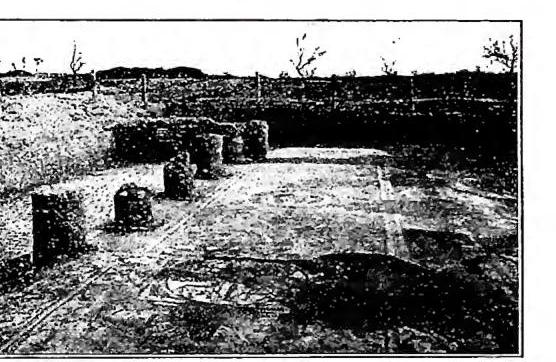
AFRICA - Ammaedera. A basilica located at the western extremity.(from Atti del II Congresso internazionale di Archeologia cristiana)
It is at the time of the geographical discoveries made by Portugal that African missions may be said to begin, though without going much beyond the coastal regions, no more and no less than colonization; unfortunately the Portuguese, once they had found the route to the Indies, turned their covetous commercial aims thither, the primary reason for the failure of that apostolate, which was too superficial and not sufficiently supported from Lisbon. In any case the missionaries touched all the points reached by the Portuguese traders: Guinea and of gold, to which the Portuguese captain paid a tribute), where there was the same rapid conversion and an equally rapid end, since after only one year (1561) Islam gained the upper hand over the king, the missionary was killed, and Christianity disappeared. In the following century both these missions were resumed, and the whole region of Mozambique (1612) was erected into a "perpetual vicariate" and detached from the jurisdiction of Goa. At Mombasa — the third mission — the Augustinians converted the king and the country, but in 1630 both fell back into Islam, the missionaries were massacred and Portugal lost the colony. The last mission, begun at the time of the discoveries, Madagascar, had more or less similar vicissitudes, but a greater continuity of apostolate from 1540 to 1667; afterwards, however, the catastrophe occurred in Madagascar as well.
The mission of Ethiopia, the only mission in a country that was not pagan but Christian-Monophysite, had two distinct periods: the first (1557-77) directed by Bishop Oviedo, and concluded with the relegation of the missionaries (Jesuits) to their residence; the other more fortunate, directed from 1604 to 1622, the year of his death, by Fr. Paez, a man of great worth, who led the mission to triumph; in 1626 the king Susenyos made a profession of the Catholic faith together with a large part of the nobility and the people. In 1629 the Catholics were reckoned at 130,000. But King Fasiladas, who succeeded Susenyos in 1632, and already before that head of the opposition, instigated by the monks and also irritated by the not always prudent tactics of Mendez, successor of Fr. Paez, sent the missionaries into exile; everything returned to what it had been before, or nearly so, and for two long centuries the mission could not be resumed.
The general decline of the missions, which occurred from about the middle of the 17th century to the end of the following century, under the influence of various factors (v. MISSIONI: storia), made itself felt in the African missions as well. Local causes were added to these. Under Gregory XIII the Jesuits (1382-95) and later the French Capuchins under Urban VIII had attempted the conversion of the Copts of Egypt - 1630, at Cairo - followed at the end of that century by others, who reached as far as the mouths of the Nile; while the Friars Minor, from the Custody of the Holy Land, had sent chaplains to the ports of Alexandria and Cairo, whence they also went on to concern themselves with those condemned to the galleys of Suez and Alexandria. The Jesuits too - end of the 17th century - were to be found at Cairo. Despite sporadic results (in 1713, the profession of the Catholic faith of the Greek patriarch Samuel Capassull), so much so that Benedict XIV erected a bishopric in Jerusalem for the converts, the Copts nevertheless remained generally hostile to Westerners. From Egypt, encouraged by the Congregation of Propaganda, the Capuchins and the Friars Minor attempted the resumption of the mission of Ethiopia; but this undertaking failed; of the former, Fathers Agatangelo and Cassiano were hanged at Gondar as soon as they set foot in the forbidden empire (1638), and the Friars Minor, to whom the mission, erected into an apostolic prefecture, was entrusted, obtained no more encouraging results in their renewed attempts to enter and stay in the country; the difficulty of access, first, then the instability of the kings (of whom only a few seemed to show themselves favorable) and especially the opposition of the monks rendered those heroic attempts at resumption fruitless down to the end of the 18th century. At this same time in Algeria and Morocco there was no lack of priests and religious (besides the Franciscans also the Trinitarians and the Mercedarians), but their activity remained limited exclusively to the care of European merchants and to the redemption of slaves, to which work, in Tunisia, the new congregation of the Lazarists of St. Vincent de Paul also devoted itself.
In Morocco various expeditions were attempted with a particularly missionary intent (especially on the part of the Capuchins), but all failed in their purpose. Propaganda attempted the resumption of the missions of Guinea, the Congo and Angola, moribund in the middle of the 17th century, availing itself above all of the zeal of the Capuchins; but because of the hostility of Portugal, the unhealthiness of the climate and the persecution of the Dutch, toward the end of the 18th century all those missions present a decline that seems incurable. Less unhappy were the fortunes of the mission of Madagascar, first with the Carmelites, then with the Lazarists, but then this too came to an end by reason of the discontinuity of the missionaries and of internal strife; the French Revolution ended by cutting off every possibility of apostolate overseas. Toward the end, therefore, of the 18th century the African Church, despite the attempts made, was in progressive decline and very close to extinction; besides the causes already mentioned, environmental and methodological, Islam, which Portugal had deluded itself into having defeated by outflanking it, reappeared and again manifested itself ever more overbearing.
The Church of A. begins its true rebirth only with the first half of the 19th century. Several were the factors of this rebirth: the rediscovery (it is fitting to call it so) of A., through the initiative of explorers; its colonial partition among the different European nations; the general awakening of the missionary spirit (v. MISSIONI, storia: sec. XIX), which for A. received a particular impulse from the anti-slavery propaganda; the flourishing of new missionary institutes, specialized for A. (Society of the Holy Spirit, Society of the White Fathers, African Missions of Lyon in France, African Missions of Verona and Consolata in Italy). Science, politics and faith seemed to launch their assault on A. at one and the same time, and the Berlin Conference of 1885 in a certain sense sanctioned this taking of possession, officially opening the African continent to the missions, whether Catholic or Protestant. In this way the evangelization of A. truly began, extending to all regions and penetrating into the most interior areas, among all peoples, studying them, elevating them, evangelizing them.
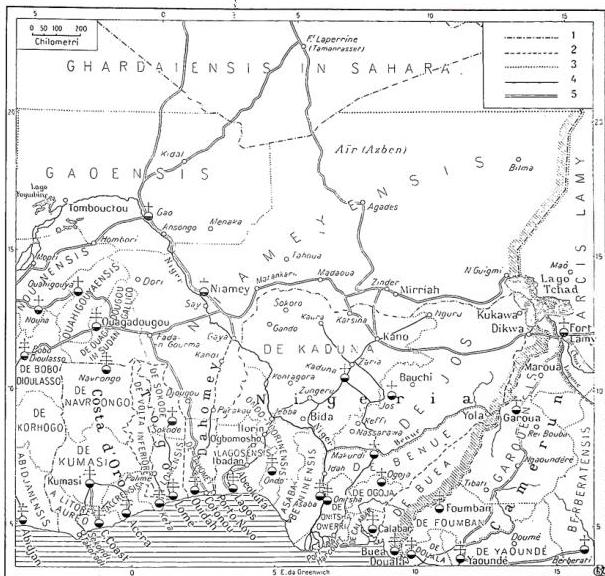
Northern A., colonized by France (Algiers was the first gateway toward the interior), by Spain and by Italy, was thus opened to European immigration, which brought about the disappearance of the slave trade and obtained the right of citizenship for Christianity, which, if it did not eliminate the numerical superiority of Islam, did weaken its overbearingness. The inclemency of the climate, it is true, barred the way to the interior, but the apostolate did not yield and finally invaded the western-equatorial part (1841), creating the mission of the Two Guineas, which extended from Senegal to the Cape. There labored, in successive waves, distributed gradually into new minor territorial subdivisions - Sierra Leone, Dahomey, Nigeria, Gold Coast, Ivory Coast, Gabon, Ubangi, etc. - the Missionaries of the Holy Spirit and those of Lyon, who caused the first native Christian communities to be born there. Togo and Cameroon, having passed to Germany, were evangelized by the Pallottines and by the Fathers of the Divine Word, and the Congo, having become Belgian, by the missionaries of the mother country, belonging to the various religious societies and congregations, favored by a wise colonial legislation.
Almost the same process unfolded in central-eastern A., with its starting point at Zanzibar (1868), the slave-trade emporium, which only a few years earlier had an annual movement of 65,000 slaves. Apostles of this difficult region are the Fathers of the Holy Spirit, who created successive centers (Bagamoyo, Kilimanjaro, etc.), among them Kenya, which would later be almost entirely the heritage of the Missionaries of the Consolata. The White Fathers of Lavigerie occupied instead - and still occupy - the region of the Great Lakes: Nyanza, Tanganyika, Nyassa, from which the first missions took their name (1878); a toilsome apostolate, tragic too (1886: martyrs of Uganda, v.), but exceedingly fruitful, especially in Uganda itself, and, after the war of 1914-1918, in the very fine mandates of Urundi and Ruanda, which constitute today, with Cameroon and Madagascar, the most prosperous missions in the world.
In north-eastern A., with the 19th century the missions take up again the threads of an almost buried past, as in Egypt and Ethiopia, and attempt the first difficult steps in the sterile Anglo-Egyptian Sudan. In Egypt the apostolate increasingly takes on a European physiognomy, in conformity with the ethnic physiognomy of the country, while the Muslim natives remain almost inaccessible and only the Copts are somewhat approachable. Ethiopia, following the Italian occupation (1936) and the reorganization of its missionary network, could seem set on the way to a more intense and coordinated evangelization; but then everything returned to its former state, and indeed worse. The Sudan - the ancient mission of Central A. - the field of toil of Comboni, still sterile in its Muslim part in the north, has however given origin to new and more recent filiations in the south, where the Fathers of Verona gather modest fruits.
The missions of southern Africa, on the other hand, are more backward, both because of the priority of the care of souls demanded by the imposing immigrant European element, and because of the predominance of Protestantism, already master of the field beforehand, and also because of the not infrequent legislative hostility toward the Catholic Church and the acuteness of the social question, given the strong racial opposition. The ostracism against Catholicism came to an end only in 1868. Nevertheless, through the persistent work of the missionaries, especially of the Oblates of Mary and of the Fathers of Mariannhill, good results were gathered, and, what matters greatly, Catholicism succeeded in making itself esteemed and respected.
Insular Africa, despite the serious initial difficulties, the struggles and persecutions by the Protestants and later those of the sects prevailing in the government, represents today one of the most fortunate fields.
VII. PRESENT STATE OF THE MISSIONS.
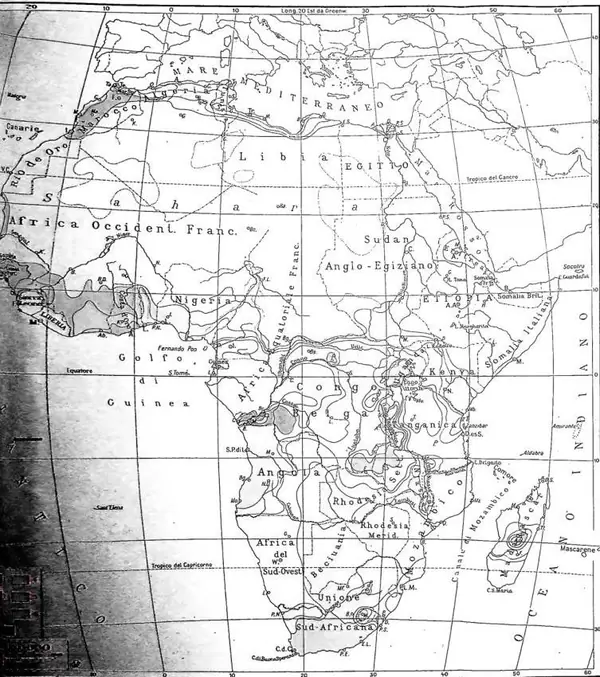
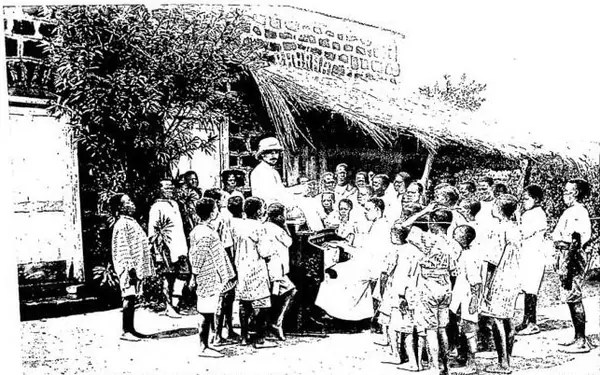
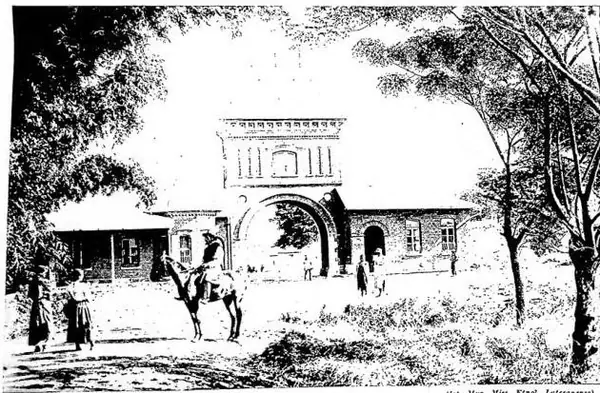

At present the statistics of the African mission report 10 million Catholics, of whom more than seven and a half million represent the strictly missionary contribution of this last century of evangelization, among the true children of Africa; the rest is accounted for by the regions with an ordinary hierarchy and not dependent on the Congregation of Propaganda (Algiers and its suffragans, Carthage and the eastern territorial units). More precisely, in 1939 — the last general statistics available — the missions of Propaganda had 7,608,580 Catholics, a total which in these last years must certainly have increased; the catechumens, again in '39, were 2,291,606; the missionaries 5,330, the coadjutor brothers
2,698, and the sisters 10,672; the lower indigenous auxiliaries or catechists 58,583.
The geographical distribution of the Christian nuclei marks out as the regions most densely populated with Catholics those of central-eastern A., which, out of the total of seven and a half million baptized, alone account for just under five million. The regions instead with the fewest Catholics are those of northern and north-eastern A. with 477,880, those of the south with 536,505, and those of the west with 821,053 Catholics. Among the most prosperous missions (simple territorial units), no fewer than eleven deserve note, whose Christian communities exceed 100,000: Duala (Cameroon), Masaka, Ruwenzori, Uganda, Upper Nile (Uganda), Shiré (Nyassa), Tananarive and Fianarantsoa (Madagascar), Lisala (Belgian Congo), Basutoland (South Africa) and Onitsha-Owerri (Nigeria). Four even surpass 200,000: Yaoundé (Cameroon), Upper Kassai (Belgian Congo), Cubango (Angola) and Ruanda (Belgian mandate); finally the apostolic vicariate of Urundi even exceeds 300,000, having precisely a Christian community of 326,027. The most numerous, most compact and best organized Christian agglomerations are the Belgian Congo with 2,139,933 Catholics, Uganda with 652,429, Nigeria with 307,699, Cameroon with 355,542 and Portuguese Angola with 441,310; by their central position, together with the Coptic-Ethiopian agglomeration, further to the east, they constitute a kind of barrier to Muslim encroachment, which presses upon the 5th parallel north for the conquest of southern A.
No general characteristic can be given for the whole territory of Africa, since it is not a homogeneous continent. In the absence of a single index under which to set out the physiognomy of the African mission, one may note — in order to understand Africa's "reaction" to Christian apostolate — that, from an ethnic-religious standpoint, it must be distinguished, from north to south, into three zones: the first, which reaches the 10th or even the 5th parallel north, is made up of predominantly Muslim populations; the second, in the center of the continent, from the 6th to the 10th or even 15th parallel south, of indigenous races, generally Bantu, with pagan religions; the third embraces southern Africa, where the ancient European immigration has established, in a certain sense, its predominance of race and religion (Protestant). Hence it is clear what the greatest difficulties of this apostolate are, namely Islam and Protestantism; another of a different nature is constituted by the policy of the colonizing nations, both in the scholastic sector, because of the endless obstacles placed in the way of teaching in the missions
(England and France), and, in many regions, by exclusivist protectionism (zones of influence in favor of Islam or Protestantism) in the English colonies.
All this helps to assess the progress achieved in recent decades and to explain several aspects of the various measures implemented by the Holy See for the consolidation of those missions. Among these measures and these more recent advances, the most significant are: the perfected organizational structure of the missions themselves; the creation of the first indigenous circumscriptions and the enrichment of apostolic effectiveness through the first appreciation of the elements of indigenous art. The missions are today grouped into 3 great ecclesiastical units (delegations), each directing a group of missions having a certain homogeneity: these are that of southern Africa (1922), of British eastern and western Africa (1930), of the Belgian Congo and Ruanda-Urundi (1930), dependent on the Sacred Congregation of Propaganda Fide. These delegations represent a coordinating, directing and propelling element, and, although they do not have a diplomatic character, they nevertheless serve usefully, in given circumstances, as an intermediary between the missions and the colonial governments, for common interests, such as, for example, that of the school. The appointment of the first two indigenous bishop-vicars apostolic and of the first indigenous apostolic prefect (for the apostolic vicariates of Masaka and Miarinarivo and the apostolic prefecture of Ziguinchor), which took place in 1939, was greeted with satisfaction by the Catholics of Africa; in Eritrea, in 1930, an indigenous bishop had already been appointed for the Catholics of the Eastern Coptic rite. A happy agreement between the government and the Holy See reorganized the missions in Portugal's African colonies. On September 4, 1940, the archdiocese of Lourenço Marques was erected with the suffragan Nampula, and that of Loanda with the suffragans Nova Lisboa and Silva Porto. By the Holy Father Pius XII the archbishop of Lourenço Marques was created cardinal in the consistory of February 18, 1946. The apostolic delegation of Egypt was erected into an Internunciature in 1947.
For the individual missions see the relevant entries.
Bibliography19 works
We give below a prospectus of the missions currently (May 1, 1948) existing, indicating for each of them the ecclesiastical grade (apostolic vicariate [V. A.], apostolic prefecture [P. A.] or mission [M.]), abbey nullius [A. N.] and the locality.
| ABIDJAN (V. A.) | Ivory Coast |
|---|---|
| ACCRA (V. A.) | Gold Coast |
| ADDIS ABEBA (V. A.) | Ethiopia |
| ALIWAL (V. A.) | South Africa |
| AMBANJA (P. A.) | Madagascar |
| ANTSIRABE (V. A.) | Madagascar |
| ASABA-BENIN (V. A.) | Nigeria |
| BAGAMOYO (V. A.) | Tanganyika |
| BAHR EL GEBEL (P. A.) | Anglo-Egyptian Sudan |
| BAHR EL GHAZAL (V. A.) | Anglo-Egyptian Sudan |
| BAMAKO (V. A.) | French Sudan |
| BANGUEOLO (V. A.) | Rhodesia |
| BANGUI (V. A.) | French Equatorial Africa |
| BASANKUSU (V. A.) | Belgian Congo |
| BASUTOLAND (V. A.) | South Africa |
| BAUDOINVILLE (V. A.) | Belgian Congo |
| BENGASI (V. A.) | Libya |
| BENI (V. A.) | Belgian Congo |
| BÉNUE (P. A.) | Nigeria |
| BERBÉRATI (P. A.) | French Equatorial Africa |
| BETHLEHEM (V. A.) | South Africa |
| BIKORO (P. A.) | Belgian Congo |
| BOBO-DIOULASSO (V. A.) | Ivory Coast |
| BOMA (V. A.) | Belgian Congo |
| BONDO (V. A.) | Belgian Congo |
| BRAZZAVILLE (V. A.) | French Equatorial Africa |
| BUEA (V. A.) | Cameroon |
| BUKORA (V. A.) | Tanganyika |
| BULAWAYO (V. A.) | Rhodesia |
| BUTA (V. A.) | Belgian Congo |
| CALABAR (V. A.) | Nigeria |
| SUEZ CANAL (V. A.) | Egypt |
| CAPETOWN (V. A.) | South Africa |
| PORTUGUESE CONGO (P. A.) | Angola |
| COQUILHATVILLE (V. A.) | Belgian Congo |
| GOLD COAST (V. A.) | Gold Coast |
| DAHOMEY (V. A.) | French West Africa |
| DAKAR (V. A.) | Senegal |
| DAR-ES-SALAAM (V. A.) | Tanganyika |
| NILE DELTA (V. A.) | Egypt |
| DERNA (V. A.) | Libya |
| DESSIÉ (P. A.) | Ethiopia |
| DIEGO SUAREZ (V. A.) | Madagascar |
| DODOMA (P. A.) | Tanganyika |
| DOUALA (V. A.) | Cameroon |
| EGYPT (V. A.) | Egypt |
| ENDEBER (P. A.) | Ethiopia |
| ERITREA (V. A.) | Eritrea |
| ESHOWE (V. A.) | South Africa |
| FERNANDO POO (V. A.) | Spanish Guinea |
| FIANARANTSOA (V. A.) | Madagascar |
| FORT DAUPHIN (V. A.) | Madagascar |
| FORT JAMESON (P. A.) | Rhodesia |
| FORT LAMY (P. A.) | French Equatorial Africa |
| FORT VICTORIA (P. A.) | Rhodesia |
| FOUMBAN (V. A.) | Cameroon |
| GAMBIA (M.) | Gambia |
| GAO (P. A.) | French Sudan |
| GAROUA (P. A.) | French Cameroon |
| GHARDAIA NEL SAHARA (P. A.) | Algeria |
| GIBUTI (P. A.) | French Somaliland |
| GIMMA (V. A.) | Ethiopia |
| GONDAR (P. A.) | Ethiopia |
| GRAN NAMAQUALAND (V. A.) | South Africa |
| FRENCH GUINEA (V. A.) | French West Africa |
| PORTUGUESE GUINEA (M.) | Portuguese Guinea |
| HARAR (V. A.) | Ethiopia |
| HOSANNA (P. A.) | Ethiopia |
| IPAMU (P. A.) | Belgian Congo |
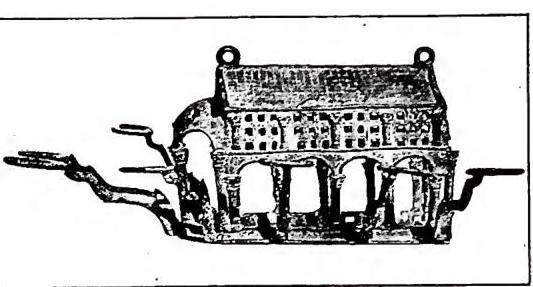 | IRINGA (V. A.) | Tanganyika |
|---|---|---|
| JOHANNESBURG (V. A.) | South Africa | |
| JOS (P. A.) | Nigeria | |
| KADUNA (P. A.) | Nigeria | |
| KAREMA (V. A.) | Tanganyika | |
| KASSAI SUP. (V. A.) | Belgian Congo | |
| KATANGA (V. A.) | Belgian Congo | |
| KATANGA SETT. (V. A.) | Belgian Congo | |
| KAYES (P. A.) | French Sudan | |
| KEIMOES (V. A.) | South Africa | |
| KHARTUM (V. A.) | Anglo-Egyptian Sudan | |
| KIGOMA (V. A.) | Tanganyika | |
| KILIMANJARO (V. A.) | Tanganyika | |
| KIMBERLEY (V. A.) | South Africa | |
| KISANTU (V. A.) | Belgian Congo | |
| KISUMU (V. A.) | Kenya | |
| KIVU (V. A.) | Belgian Congo | |
| KOANGO O KWANGO (V. A.) | Belgian Congo | |
| KODOK (P. A.) | Anglo-Egyptian Sudan | |
| KOKSTAD (V. A.) | South Africa | |
| KORHOCO (P. A.) | Ivory Coast | |
| KROONSTAD (V. A.) | South Africa | |
| KUMASI (V. A.) | Gold Coast | |
| LAGO ALBERTO (V. A.) | Belgian Congo | |
| LAGOS (V. A.) | Nigeria | |
| LA RÉUNION O St.-DENIS (D.) | Island of La Réunion | |
| LÉOPOLDVILLE (V. A.) | Belgian Congo | |
| LIBERIA (V. A.) | Liberia | |
| LIBREVILLE (V. A.) | French Equatorial Africa | |
| LISALA (V. A.) | Belgian Congo | |
| LOANGO (V. A.) | French Equatorial Africa | |
| LOLO (P. A.) | Belgian Congo | |
| LOMÉ (V. A.) | French Togo | |
| LULUA E KATANGA C. (V. A.) | Belgian Congo | |
| LUSAKA (P. A.) | Rhodesia | |
| LWANGWA (V. A.) | Rhodesia | |
| LYDENBURG (P. A.) | South Africa | |
| MAJUNGA (V. A.) | Madagascar | |
| MARIANNHILL (V. A.) | South Africa | |
| MAROCCO (V. A.) | Spanish Morocco | |
| MASAKA (V. A.) | Uganda | |
| MATADI (V. A.) | Belgian Congo | |
| MBULU (P. A.) | Tanganyika | |
| MERU (P. A.) | Kenya | |
| MIARINARIVO (V. A.) | Madagascar | |
| MISURATA (P. A.) | Libya | |
| MOGADISCIO (V. A.) | Italian Somaliland | |
| MORONDAVA (P. A.) | Madagascar | |
| MUSOMA MASWA (V. A.) | Tanganyika | |
| MWANZA (V. A.) | Tanganyika | |
| NATAL (V. A.) | South Africa | |
| NAVRONGO (V. A.) | Gold Coast | |
| NDANDA (A. N.) | Tanganyika | |
| NDOLA (P. A.) | Rhodesia |
| NEGHELLI (P. A.) | Ethiopia |
|---|---|
| NIAMEY (P. A.) | French West Africa |
| NIANGARA (V. A.) | Belgian Congo |
| NILO EQUATORIALE (V. A.) | Uganda |
| NILO SUPERIORE (V. A.) | Uganda |
| NOUNE (P. A.) | French West Africa |
| NYASSA (V. A.) | Nyassa |
| NYASSA SETT. (P. A.) | Nyassa |
| NYERI (V. A.) | Kenya |
| NZÉRÉKORÉ (P. A.) | French Guinea |
| OGOJA (P. A.) | Nigeria |
| ONDO ILORIN (V. A.) | Nigeria |
| ONITSHA (V. A.) | Nigeria |
| OWERRI (V. A.) | Nigeria |
| OUAGADOUGOU (V. A.) | Ivory Coast |
| OUAHIGOUYA (P. A.) | Ivory Coast (French Sudan) |
| OUDTSHOORN (P. A.) | South Africa |
| PERAMIHO (A. N.) | Tanganyika |
| PIETERSBURG (A. N.) | South Africa |
| PORT ELIZABETH (V. A.) | South Africa |
| PORTO LUIGI (D.) | Mauritius Islands |
| PORT VICTORIA (D.) | Seychelles Islands |
| PRETORIA (V. A.) | South Africa |
| QUEENSTOWN (P. A.) | South Africa |
| RABAT (V. A.) | French Morocco |
| RUANDA (V. A.) | Belgian Mandate |
| RUWENZORI (V. A.) | Uganda |
| SAKANIA (V. A.) | Belgian Congo |
| SALISBURY (V. A.) | Rhodesia |
| S. LUIGI DEL SENEGAL (P. A.) | French West Africa |
| SASSANDRA (V. A.) | Ivory Coast |
| SHIRÉ (V. A.) | Nyassa |
| SIERRA LEONE (V. A.) | Sierra Leone |
| SIKASSO (P. A.) | French Sudan |
| SOKODÉ (P. A.) | Togo |
| STANLEY FALLS (V. A.) | Belgian Congo |
| SWAZILAND (V. A.) | South Africa |
| TABORA (V. A.) | Tanganyika |
| TAMATAVE (V. A.) | Madagascar |
| TANANARIVE (V. A.) | Madagascar |
| TANGANYIKA (V. A.) | Tanganyika |
| TIGRAI (P. A.) | Eritrea |
| TRIPOLI (V. A.) | Libya |
| TSHUMBÉ (V. A.) | Belgian Congo |
| TUKUYU (P. A.) | Tanganyika |
| UBANGHI BELGA (V. A.) | Belgian Mandate |
| UGANDA (V. A.) | Uganda |
| UMTATA (V. A.) | South Africa |
| URUNDI (V. A.) | Belgian Mandate |
| VICTORIA FALLS (P. A.) | Rhodesia |
| VOLTA INFERIORE (V. A.) | Gold Coast |
| WINDHOEK (V. A.) | South Africa |
| YAOUNDÉ (V. A.) | Cameroon |
| ZANZIBAR (V. A.) | Kenya |
| ZIGUINCHOR (P. A.) | Senegal |
Giovanni B. Tragella
VIII. THE PROTESTANT MISSIONS.
The Protestant missions in Africa do not go back beyond the 18th century. The first missionaries belonged to the Moravian Brethren (v. MISSIONI PROTESTANTI), who made the attempt in South Africa, first in 1737, then, more successfully, in 1792. They were followed, again in South Africa (1789), by those of the L. M. S. (London Missionary Society) together with the Wesleyans (1815), who worked much for the elevation of the oppressed Hottentots (1834, abolition of slavery in South Africa). Western and equatorial Africa, however, still remained closed to them. The period of the true taking possession of African territory by the various Protestant societies was the fifty years running from 1835 to 1885, accelerated, after that date, not only by the successes granted to the earlier missions, but also by the freedom granted to any philanthropic and religious activity at the Berlin Conference. All the societies and all the confessions entered the lists: the C. M. S. (Church Missionary Society), representative of the Low Church, in Uganda, Egypt, Mauritius, etc.; the already mentioned L.M.S., of independent tendency, in Madagascar and in the region of the Great Lakes; the S.P.F. (Society for the Promotion of Faith), representative of the High Church, in southern and south-eastern Africa and in Guinea; the Basel society (Basler Missionsgesellschaft) in Liberia, Guinea, the Gold Coast, etc.; that of Berlin (Berliner Missionsgesellschaft) especially in southern Africa (Natal, Transvaal, Orange), and the Rhenish one (Rheinische Missionsgesellschaft) in the south-west; that of Paris (Missions Évangéliques de Paris) in Gabon, Senegal, the Zambezi, Madagascar, and so on, so that by 1891 the African Protestant missions were distributed among 55 societies, of which 22 were English, 14 American, 10 German, and the others of various nationalities. And their contribution to the civilization of Africa was neither small nor negligible — setting aside now any dogmatic evaluation — achieved through the spread of education, the improvement of agriculture, the struggle against alcoholism, slavery and the exploitation of the native.
The Protestant missions were in full development when, because of the world war of 1914-18, the activity of the German societies, fervent especially in the colonies of the Reich, was almost totally interrupted by the expulsion of the German pastors: only in 1924-25 were they able to return to the field. It was then that indigenism took greater development in the African Churches, with a tendency toward autonomy. In 1925 the World Atlas recorded a total of 1,015,683 communicant Christians, directed by 6,289 foreign missionaries (men and women) and 43,181 natives, including in the designation of "missionary" all personnel, that is, evangelist, medical, teacher, etc.
As of 1938, the date of the last general statistics, as many as 300 missionary societies were working in Africa, of which 253 were European and 47 native or local, with an effective European personnel of 8,447 and native personnel of 81,625; of the latter, 42,455 were engaged in Christian preaching, 38,843 in works of education and 327 in works of health care. The total of communicant Christians, in 1938, was 2,163,301; with the baptized non-communicants, who rose to 1,430,291, the general total came to 3,593,592 baptized.
The missionary work of the various Protestant societies shows progress almost everywhere; particular mention should be made of educational activity, which has recorded important initiatives in the field of secondary and higher education, on a collective financial basis of several societies (Fourah Bay College in Sierra Leone, Achimota College on the Gold Coast). But these results of "cooperation" have as their counterpart the exaggerated multiplication of societies or Churches, representing ever more centrifugal tendencies, so that one is then obliged to resort to mergers; thus, in 1931, after twenty years of negotiations, the "Wesleyan Methodist Church of South A.", the "English Methodist Church" of the Transvaal and Swaziland district, and the "Primitive Methodist Mission of the Union of South A." merged into a single "Methodist Church of South A."; in Madagascar, recently, as many as six Churches of different confessions and European nationalities merged into the single "Protestant Malagasy Church". Another characteristic of the African Protestant missions is given by the frequent and sometimes even extensive separatist movements with a religio-political basis, such as the famous one of "kibangism", whose harmful influence has not yet been halted. In any case, Protestantism represents, today, in A. a religious force that is anything but negligible. - See Plates XXVII-XXX.
Bibliography4 works
Giovanni B. Tragella