TOMB. – The tomb is of interest to the history of civilization as very often an irreplaceable testimony to the creative aptitudes of ancient peoples, constituting in itself an autonomous artistic entity, like the temple and the private dwelling. For more recent civilizations it likewise offers equally compelling evidence, being a complex to which architecture, sculpture, and painting contribute in an interesting dialectic of exchanges.
The purpose of the tomb, expressing one of the spiritual needs most deeply rooted in the human soul, is held in great honor by almost all religions and generally determines the allusive or symbolic orientation of its particular forms. Consequently, the monument’s meaning varies according to the prevailing ideas and the force and purity of the religious sentiment that imbues it, in the various epochs and cultures. Since it was always a point of honor for the representatives of the ruling classes, in every period of history, to indicate the degree of their power and excellence through the sumptuousness, grandeur, and beauty of their tombs, these became in certain epochs and civilizations genuine commemorative monuments, in which homage to the deceased was transcended by the intention of affirming his presence as a symbol of dynastic or genealogical continuity, or of the idea embodied in him (one need only think of the tombs of the Egyptian, Babylonian, Aztec, and Inca kings; the mausoleum of Pergamum, the tombs of Augustus and Hadrian, and finally the contemporary mausoleums of Lenin and Stalin).
The most evident differentiation of Christian civilization from other ancient and modern civilizations, on the other hand, appears from the very beginning in the adaptation of funerary monuments to religious buildings, according to a clear principle of subordination, both for tombs erected outside and for those placed inside churches. Thus the Christian mausoleum (that of Costanza in Rome, and that of Galla Placidia in Ravenna), as well as the various family chapels that constitute its equivalent in the modern period, were conceived as places of worship, in which homage is rendered to God, while human remains are piously sheltered there. This clear organizing principle, which never failed until laws prohibited burial in churches, did not prevent the greatest variety and originality of forms, since the Church did not thwart the patrons’ ambitions, but contained them within the limits of tolerability and decency.
Funerary art in the periods of greatest splendor of Christian civilization was, moreover, not the preserve of artisan workshops (as very often in Greece and Rome), but of supreme artists, who not infrequently left their masterpieces in chests, tombs, and sarcophagi. This is the principal reason why every classification based on similarities of profiles and outlines ultimately proves inadequate, since it does not permit an exact progression even in chronological distinctions. Nevertheless, for the sake of brevity, some schemes will be followed here that allow for a general orientation (for the early Christian period, and for particular forms and customs, V. the respective entries, such as ARCA; CIMITERI; SARCOFAGI, etc. V. BIZANTINA, ARTE, ARTE; ITALIA, ARTE).
In the pre-Romanesque and Romanesque periods, tombs were arranged inside churches and in cloisters: beneath the pavement—distinguished by inscriptions and sometimes by graffiti and bas-reliefs reproducing the image of the deceased on the slab—or, already with monumental intent, set against the walls, enclosed within clear and sober frames (niches, entablatures, pilasters), or covered with plutei and screens, especially in areas of persistent Byzantine influence (the tomb of the dogaresa Michiel in the atrium of S. Marco in Venice). Very often, reused chests (Greek or Roman) were adapted for this purpose, with the inscription altered and bases and carved supports constructed, sometimes decorated with mosaic (the Cosmatesque tombs of the Savelli, in S. Maria in Aracoeli, Rome). Even tombs standing free of the walls assumed similar characteristics. They consisted of a plinth, with or without a canopy (the latter formed by four columns supporting a low pitched roof). Decoration was limited to some frieze or to representations on the lid or sides of the chest (the tombs of the Norman kings in the cathedral of Palermo). In the open air, some imitated the ancient monuments along the consular roads (the so-called tomb of Boemondo at Canosa), but the most common type was the canopied tomb, even in the blending of Romanesque and Gothic forms (the tombs of the Bolognese glossators).
(phot. Franceschi)
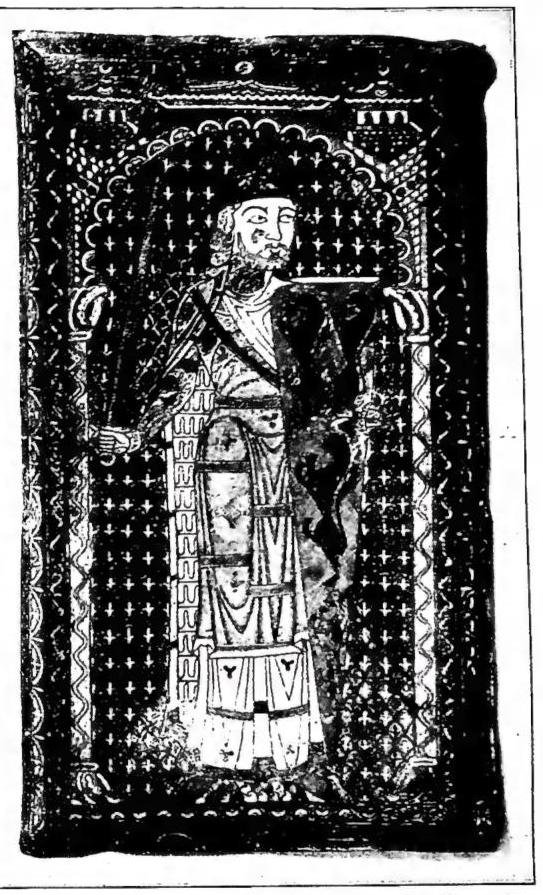
TOMBA – Enamel tomb slab of Goffredo Plantageneto (12th century) – Le Mans, Museum.
(the same figure of the deceased is generally shown two or three times, in the attitudes of life and death).
The beginning of these solutions is represented by the masterpieces associated Giovanni Pisano (v.), Arnolfo di Cambio (v.), and Tino da Camaino (v.). The most complex example of this system in Italy is perhaps the tomb of King Roberto d’Angiò in S. Chiara in Naples, half-destroyed during the war, by the two Florentines Pacio and Giovanni Bertini (1343). In the tomb of Bishop Tarlati in the cathedral of Arezzo, by the Sienese Agostino di Giovanni and Angelo di Ventura, documentary and celebratory bas-relief appears in areas arranged in superimposed registers.
In the Cosmatesque tombs in Rome (monuments to Luca Savelli and to Onorio IV in S. Maria in Aracoeli), the influence of Gothic culture is instead always tempered by a need for clarity and compositional coherence induced by classical models. The canopies retain their primary and fundamental function as spatial divisions. Painting (fresco or mosaic) is used to supplement the backgrounds and at times the adjacent walls themselves (monument to Cardinal d’Acquasparta in S. Maria in Aracoeli): a practice also found outside Rome (monument to Tommaso Pellegrino in S. Anastasia in Verona), and one that would be transmitted to the early Renaissance (Brenzoni monument in S. Fermo in Verona, with frescoes by Pisanello). Here painting takes the place of the bas-relief, which is instead the preferred form of decoration in the late Gothic period and the Renaissance.
(photo by Garcia Garrabella)
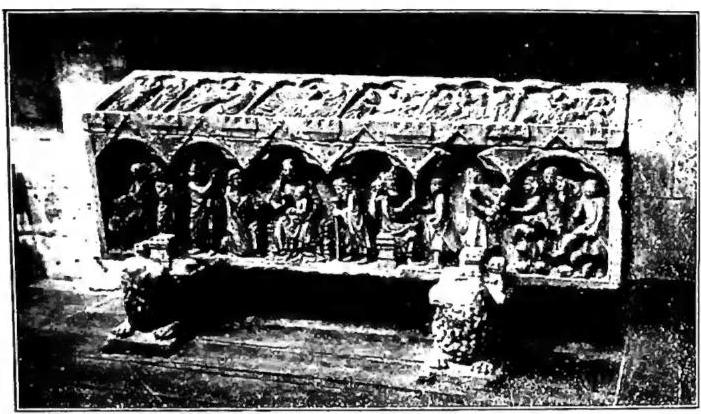
TOMBA - Tomb of the infanta Donna Berenguela (d. 1246) - Burgos, Monastery of Las Huellas.
More austere are those resting against the walls, out of a natural deference to the mass of the religious building (tombs of Falconi and adjacent arks outside the church of S. Margherita in Bisceglie; tombs in the façade of S. Giacomo Maggiore in Bologna; on the sides of S. Maria Novella in Florence; those of the Doria in the cloister of S. Fruttuoso at Capodimonte Ligure).
The most striking innovation of the late Gothic period is the revival of the equestrian monument, usually placed on the ark (the Scaliger tombs in Verona; the monument to Bernabò Visconti, by Bonino da Campione, now in the Archaeological Museum of Milan [1380]; that to P. Savelli in S. Maria dei Frari in Venice, with horse and rider in wood [1401]; the Cantelmi tomb at Badia Morronese [1412] and the Camponeschi tomb in S. Biagio at L’Aquila [1432], with wooden statues by Gualtiero d’Alemagna).
However complex and articulated the Gothic constructions of central and southern Italy may be, they do not attain the complications in which artists beyond the Alps, and also Lombard artists, delighted (the ark of S. Agostino in S. Pietro in Ciel d’oro at Pavia, by the Maestri Campionesi [1360–80], derived from the more unified ark of S. Pietro martire in S. Eustorgio at Milan, by Balduccio da Pisa, etc.).
A recurring compositional theme is the curtain, which often constitutes the architectural framework (the tomb of Cardinal Petroni at Siena; that of Margherita di Durazzo, in the cathedral of Salerno, by Baboccio [1402]; the monument to Tommaso Mocenigo in S. Giovanni e Paolo in Venice, by Pietro di Nicolò Lamberti and Giovanni di Martino da Fiesole [1422]; the ark of Azzone Visconti in S. Gottardo at Milan, by Giovanni di Balduccio; the Brenzoni monument in S. Fermo at Verona, by Nanni di Bartolo). Through the already considerable success it enjoyed during the Renaissance (the monument to Maria d’Aragona in Monteoliveto at Naples, by Antonio Rossellino and Benedetto da Maiano; the tomb of the diva Isotta in the Tempio malatestiano at Rimini, by B. Ciuffagni), it reached an age of unchallenged triumph in the Baroque, which would derive from it its most fantastic variations.
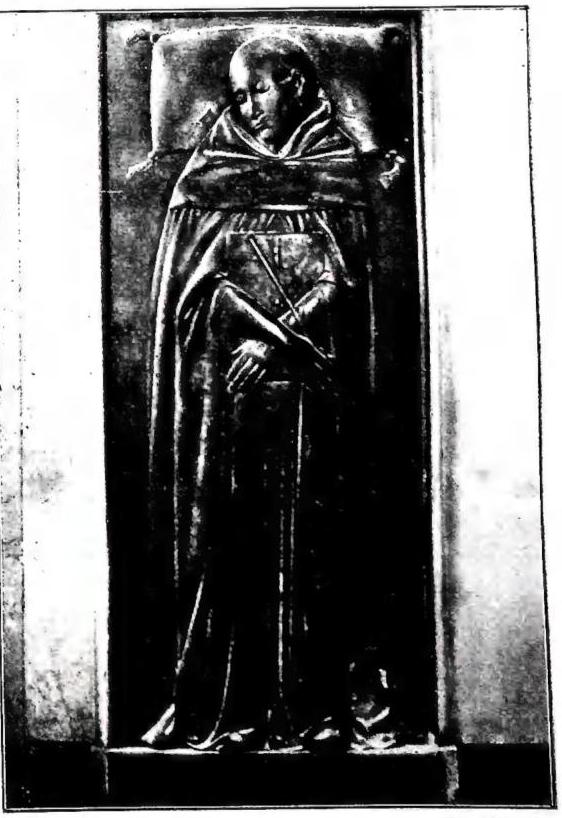
Until the fifteenth century, the ground tomb developed more linearly; it was generally covered by a marble or bronze slab, initially raised above ground level and later brought flush with II. Since these commissions were almost always entrusted to anonymous workshops, or involved monuments so worn that they could no longer be deciphered stylistically, artistic interest in them is rare. We may nevertheless recall the slab with its extremely delicate pattern of Byzantine ornament at S. Cumiano in Bobbio (seventh century); the slab with the mosaic portrait of Muñoz de Zamora in S. Sabina in Rome; and the other with the equestrian portrait of Beccadelli, by Bitinio da Bologna (1341), in the museum of that city.
They returned to prominence in the fifteenth century, thanks to artists of high renown (the tomb slab of fra’ Leonardo di Stagio Dati, in S. Maria Novella at Florence, by L. Ghiberti; that of Giovanni Crivelli in S. Maria in Aracoeli in Rome [1432] and the bronze of Bishop Pucci in the cathedral of Siena [1427], both by Donatello; the slab with marble inlay of Bishop Bartoli in the cathedral of Siena, by Federighi [1444]).
A natural development of the ground tomb, the tomb on a socle consisted of an ark on a podium detached from the wall, with the portrait of the deceased lying on the lid. It was generally erected in side chapels or in the arms of the transept, and enjoyed considerable success, especially in France. The most famous examples in Italy belong to the early Renaissance, which understood the sculptural value of a monument isolated within an architectural setting (the tomb of Ilaria del Carretto in the cathedral of Lucca, by Jacopo della Quercia [1406]; the double tomb with the portraits of Ludovico il Moro and Beatrice d’Este side by side, in the left arm of the transept of the charterhouse of Pavia, by Cristoforo Solari [c. 1497]). This type, preferred by ruling dynasties (the double tombs of the French kings in S. Denis; of the Swedish kings in the cathedral of Uppsala; of Enghelberto II in the cathedral of Breda, etc.), is probably related to the liturgical ceremonial of aristocratic funerals. Between the tomb slab and the type on a socle stands the bronze tomb of Sisto IV in the Vatican grottoes, a masterpiece by A. POLLAIOLO, PIERO (v.), who was also responsible for the wall tomb of Innocenzo VIII in S. Pietro. Essentially, the fifteenth century did not produce any significant departures from the iconography of the preceding period, adapting it to principles of structural unity and division into precise geometric patterns. In Florence and Tuscany the field was dominated by Donatello and Michelozzo, Antonio and Bernardo Rossellino, Desiderio da Settignano, and Mino da Fiesole.
In the tomb of Giovanni XXIII in the baptistery of Florence, Donatello, together with Michelozzo and Pagno di Lapo Portigiani, introduced elements of clearly classical morphology into the decoration, while preserving the Gothic arrangement of the wall tomb with its lofty ark and canopy. Likewise, in the Brancaccio monument at S. Angelo in Nilo in Naples (with Michelozzo), the Renaissance manifests itself only in the substitution of the Corinthian column for the pillars of the canopy.
A place apart is occupied by the tomb of the jurist Varj in S. Domenico at Bologna, by Jacopo della Quercia, who freed the sarcophagus from the canopy and fixed it to the wall with powerful brackets. More typical of the new figurative culture in all the details of its decoration, especially in the plastically simplified divisions contained beneath the broad arch, is the monument to Leonardo Bruni in S. Croce at Florence, by Bernardo Rossellino, which preserves the portrait of the deceased reclining on the ark. From this tomb derive the facing monument to Marsuppini, by Desiderio di Settignano, and others by A. Rossellino and Benedetto da Maiano in Naples, by Mino da Fiesole, by A. Rossellino in Florence, by Matteo Civitelli in Lucca, by Simone Ferrucci in Forlì, etc. In the so-called tabernacle tomb, a more assured balance between horizontal and vertical lines is achieved in the square façade. It is the type preferred by the marble-workers active in Rome during the fifteenth century (the tomb of Eugenio IV in S. Salvatore in Lauro, by Isaia da Pisa; REGNO (v.) and his school).
Through the influence of A. Rossellino and Mino da Fiesole, the scheme was soon enriched with decorative elements and busts placed in niches (the monument to Cardinal Albret in S. Maria in Aracoeli, by Bregno). A similar arrangement, with the variation of a frame composed of colored maiolica panels, is found in the Federighi tomb in S. Trinita at Florence, by Luca della Robbia. Mino da Fiesole was responsible for disseminating another scheme destined to enjoy considerable success: the ark, supported by brackets and without architectural framing, rests against a bichrome background of marble slabs, with the bust of the deceased beneath the ark (as in the monument to Bishop Salutati in the cathedral of Fiesole), or above it (the tomb of Mantegna in S. Andrea at Mantua, with a medallion by M. Cavalli, 1506). Capponi adapted the bust portrait to the Bregnesque scheme (the monument to the Bonsi brothers in S. Gregorio al Celio in Rome).
The most tenacious infiltration of the Gothic style into northern Italy stimulated artists to produce compromise solutions.
Typical examples are the tombs by Amadeo, graceful and sensitive to Tuscan models in the Colleoni chapel at Bergamo, but unrestrained in the unbalanced, exceedingly tall, yet suggestive ark of S. Lanfranco at Pavia (1498). The masterpiece of Venetian funerary architecture (which has a Tuscan prototype in the aforementioned monument to Tomaso Mocenigo) is the mausoleum of Doge Nicola Tron in the church of the Frari, by A. Rizzo and assistants, dating to around 1473. Overcrowded with statues in the five registers of its tall and imposing façade, it would influence all the funerary art of the lagoon.
Pietro Lombardo and his son Tullio, too, although influenced by Rizzo’s teaching, created a masterpiece (the tomb of Doge Pietro Mocenigo, in S. Giovanni e Paolo, 1485). Among the finest examples, moreover, are the tomb on a socle of Cardinal G. B. Zeno in S. Marco at Venice, cast in bronze by P. Savin; the Roccabonella monument in S. Francesco at Padua, with bronze bas-reliefs by B. Bellano (1498); and the Onigo monument in S. Nicolò at Treviso, with frescoes by L. Lotto (about 1502).
Derived from Gothic models is the arcosolium tomb (the sepulchre of T. Pepoli in S. Domenico at Bologna), preferred by L. B. Alberti (also on the exterior of the Malatesta Temple at Rimini, and, inside it, the monument to Sigismondo Malatesta). The bare sarcophagus is set into the wall, beneath a vault, or in rectangular niches. A masterpiece of this type, in a variant determined by the use of bronze, is the tomb of Giovanni and Piero de’ Medici, in the sacristy of S. Lorenzo at Florence, Verrocchio (v.).
In the sixteenth century, the funerary monument, too, adapted itself to that concept of the “grandiose” which would dominate all the art of the century, chiefly through Michelangelo’s influence. The first decisive innovation is the triumphal-arch structure, articulated by subordinate lateral members (imitating the smaller archways). The definition of the type is owed initially to Andrea Sansovino (the tomb of Cardinal Ascanio Sforza, 1505, and that of Cardinal Girolamo Basso della Rovere, 1507, in S. Maria del Popolo at Rome). The use of strongly projecting columns becomes constant; and the contrasts of light and shadow produce the pictorial vision proper to the Mannerist language. The tombs of Cardinal Michiel and of his nephew, Bishop Orso (with the two sarcophagi and their corresponding superimposed portraits), in S. Marcello al Corso in Rome (1503–11), derive from this scheme; as does the monument to Adrian VI in S. Maria dell’Anima, by B. Peruzzi; as do also many others dedicated to popes and eminent personages, down to those of Pius V and Sixtus V, in the lateral chapels of S. Maria Maggiore at Rome, respectively by D. Fontana and F. Ponzio, which mark the point of transition to the Baroque. Sansovino also renews the conception of the funerary portrait. The deceased, still lying upon the sarcophagus, is nevertheless raised on his elbows and turns his face, resting on his hand, toward the spectator, as in Etruscan sarcophagi. Soon every allusion to death would be abandoned, and the occupants of the tombs would be presented in their characteristic attitudes as living personages, as already in Pollaiuolo’s tomb of Innocent VIII in S. Pietro. The liveliest and most fantastic of the monuments of this type is that of Luisa Deti, in S. Maria sopra Minerva (with sculptures by Nicolò Cordier), in which elements of polychrome Baroque decoration already abound. The scheme also has examples in other Italian regions, where, however, the fifteenth-century tradition offers more tenacious resistance (the monument to M. Ferdinando and F. D’Afflitto in S. Maria Nuova at Naples; that to Giacomo Medici, in the cathedral of Milan, by Leone Leoni). In Venice it was introduced by Jacopo Sansovino (v.) (the monument to Francesco Venier, in S. Salvatore, where, nevertheless, the deceased still lies in the traditional attitude).
Characteristic sixteenth-century monumental structures, developed according to the dominant ideas of the century, even outside this scheme, are the sarcophagus of the Saint in S. Antonio at Padua (on which A. Briosco, called il Riccio, Minelli dei Bardi, J. Sansovino, Falconetto, and Tiziano Aspetti, the author of the altar, worked throughout the sixteenth century); and, in another vein, the tomb of Queen Bona of Poland in S. Nicola at Bari, occupying, with its columned divisions, the great curve of the apse. The queen appears at the center, turned toward the high altar in an attitude of prayer, according to a scheme that would be widely employed in the following century in Italy and abroad (the tombs of Charles V and Philip II at the Escorial, by Pompeo Leoni). Alongside these grandiose monuments, private tombs of small format multiplied in the sixteenth century, with a façade-like arrangement. The fundamental element here is the painted bust or portrait medallion, around which elements of classical entablature, frames, brackets, volutes, pediments, caryatids, festoon-bearing putti, and so forth are joined together. The scheme would later be given its definitive form by G. L. Bernini with the monument to Pietro Montoya in S. Maria di Monserrato at Rome (with bust), from which the others of the seventeenth and eighteenth centuries derive, in an unbroken filiation that, through the Baroque and Rococo, would reach Neoclassicism. A fine example of this type, with a painted medallion, is the tomb of V. S. Maria sopra Minerva. At times the façade is purely architectural and frames an urn (the Ponziani tomb in S. Andrea at Mantua) or an hourglass (the monument to G. Sforzani, in the cathedral of Reggio Emilia, by P. Clementi).
Here it will suffice to recall the Carafa Chapel in the cathedral of Naples, by Malvito (1497–1507), and the sumptuous and complex Spinelli Chapel in S. Caterina a Formello.
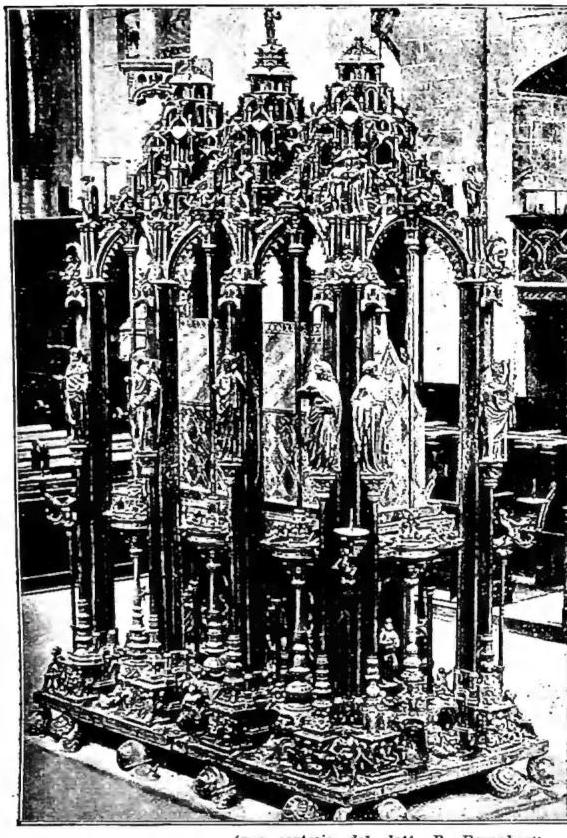
(courtesy of Dr D. Degenhart) TOMBA - Reliquary tomb of s. Sebaldo, work of Peter Vischer the Elder (1908–19) - Nuremberg, church of S. Sebaldo.
To Mich. Jangelo, for his tombs in the sacristy of S. Lorenzo, belongs the authorship of the scheme that would prevail in the monumental constructions of the Baroque, receiving its official consecration in the tomb of Paolo III in S. Pietro, the work of Guglielmo della Porta. The pyramidal theme brings the compositional centre back to the square outline of the arca, abolishing every superfluous motif and exalting the plastic rigour of the few allegorical statues and of the portrait of the deceased, placed upon the arca. No new invention of subject matter (unless perhaps the architectural one of the Avila monument in S. Maria in Trastevere in Rome, which reveals the Borrominian source) characterizes the Baroque, which takes pleasure in complicating, at times with skilful scenographic effects, the already elaborate iconography of the Sansovinian schemes (monument to Doge Pesaro by A. Longhena and M. Barthel, 1699, in the church of the Frari in Venice), or the Raphaelesque ones (chapel of S. Severo with the mausoleum of the di Sangro family, in Naples, begun in 1590 and brought to its present form through enlargements and additions in 1610 and 1799), or else distorts the Michelangelesque ones through the intrusion of picturesque elements, such as the Gothic curtain and the complicated draperies (monument to Gregorio XV in S. Ignazio in Rome, by Pietro Le Gros and Stefano Monot).
The most sumptuous monuments of the seventeenth and eighteenth centuries are the tombs of the popes in S. Pietro (monument to Gregorio XIII by C. Rusconi; to Leone XI by A. Algardi; to Urbano VIII and Alessandro VII, both by G. L. Bernini; to Clemente X by M. de Rossi, with sculptures by E. Ferrata, G. Mazzuoli and L. Morelli; to Innocenzo XI by C. Maratta and S. Monet; to Alessandro VIII by A. di San Martino, with sculptures by F. della Valle; to Benedetto XIV, with sculptures by A. Bracci and G. Sibilla), and in other Roman churches (monument to Innocenzo X in S. Agnese, by G. B. Maini; to Clemente IX in S. Maria Maggiore, by F. Rainaldi; to Benedetto XIII in S. Maria sopra Minerva, by C. Marchionni and P. Bracci; to Clemente XII in the mausoleum chapel of the Corsini family in S. Giovanni in Laterano, architecture by A. Galilei, sculptures by G. B. Maini and G. Monaldi, a masterpiece of Italian funerary art in the transition from the Baroque to Neoclassicism).
Rome was therefore, in this period, the city that held an unrivalled primacy in the number, quality and variety of funerary monuments. All the leading artistic personalities working there contributed to establishing this primacy; but the influence exerted by G. L. Bernini—which does not depart from the great Michelangelesque model, but enriches it through the polychromy of the marbles and through marginal devices and inventions—is certainly more resonant than that of P. Borromini (Falconieri monument in S. Giovanni dei Fiorentini in Rome; arrangement of various tombs in the side aisles of S. Giovanni in Laterano) PIETRO DA CORDOVA (v.) and C. Maratta, and would remain authoritative for monumental ensembles until the appearance of Canova. One of Bernini’s most successful inventions is that of the Cornaro chapel in S. Maria della Vittoria, in which members of the family are represented as they look out from two lateral balustrades.
The late Baroque is characterized by the extravagance of its ornamental motifs and by the often arbitrary layout of the same Renaissance and Baroque schemes (monument to Maria Clementina Sobiesky in S. Pietro; to Maria Flaminia Odelscalchi Chigi in S. Maria del Popolo in Rome). Flying angels appear, supporting the portraits of the persons commemorated high above the urn (monument to Cardinal Imperiali in S. Agostino, by P. Posi, with sculptures by P. Bracci); or it is the Virtues that perform the same function (sculptures by D. Guidi in the aforementioned Falconieri monument in S. Giovanni dei Fiorentini); but the most substantial innovation is the extensive application of macabre motifs, already introduced by the Berninis in the tombs of Alessandro VII and Urbano VIII; here, however, they are executed in a material so precious and resounding in its chromatic harmonies that they lose all allegorical efficacy.
In the tombs of the princes of Zagarolo in S. Francesco a Ripa, by G. Mazzuoli, 1713–14, a skeleton in black marble presents the medallions of the persons commemorated, white cameos standing out against the pink of the Raphaelesque pyramid in the background and against the cold, mottled jasper, framed by arabesques in gilded metal, of the architectural panels and the arcae; in the Ghisleni tomb in S. Maria del Popolo, a skull of yellow marble appears in the half-light behind a grating.
The most extravagant example of this inclination of taste is offered by the cemetery of the Capuchin church in Rome, where the entire decoration is fashioned from genuine human bones. We are, as can easily be inferred, outside the realm of art; but this singular ensemble provides the clearest indication of a mentality that would have manifold effects on works of art, fostering the search for clamorous effects, of debatable taste and essentially empty, which would generate the saturation of the Baroque and the rigid Neoclassical reaction. Outside Rome, especially in Naples and Venice, cities that could boast flourishing schools of painting, funerary art competed with them in the search for chromatic effects (as in the enormous light-coloured curtain covered with arabesques of the monument to Patriarch Francesco Morosini in the church of the Tolentini in Venice, by F. Parodi), or in a virtuosity that became an end in itself (as in the sculptures of Sanmartino, Corradini and Queirolo, in the chapel of S. Severo in Naples). The Neoclassical reaction brought about, first with A. Galilei and subsequently with Canova, a return to the essential character of the architectural structures and the motifs of the plastic decoration, entirely abandoning polychromy.
Even while respecting the Michelangelesque scheme of the pyramidal composition, Canova succeeded in producing personal inventions (monument to Clemente XIV in the SS. Apostoli and to Pope Clemente XIII in S. Pietro), in the manner of arranging the groups in articulated cadences, restoring the dignity of symbols to the statues adjacent to the arcae; while the portraits retain, in their oratorical gesticulation and simulated inner recollection, a realistic vigour not unaware of the Berninian lesson. To achieve these results, Canova definitively abandoned the motif of the background curtain and set the compositions out in sharply squared planes directly on the walls, or made them project against the Raphaelesque pyramid (monument to Queen Cristina, in the church of the Augustinians in Vienna).
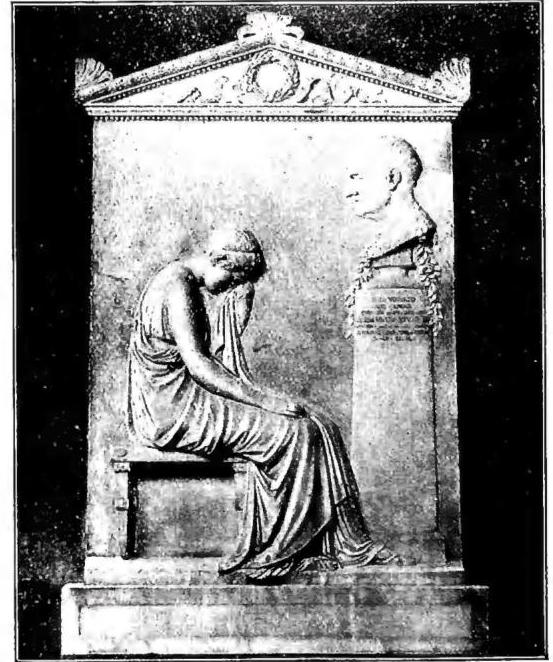
Neoclassicism also revived the Greek funerary stele (Canova’s monuments to the Stuarts in S. Pietro; to Giovanni Volpato in the atrium of the SS. Apostoli in Rome), which soon became the preferred scheme.
All funerary art of the early nineteenth century proceeded in Canova’s footsteps; but the epigones translated the master’s suggestions into rigid formulas, by then emptied of every vibration of feeling. At no moment would monumental funerary art appear so chilled and vacuous in its composed and peremptory forms, even when its executors were the most highly regarded masters of the period (monument to Pio VIII by P. Tenerani; to Gregorio XVI by L. Amici: both in S. Pietro). Along the path of this cold and insignificant academicism, it would proceed down to the present day (monument to Pio IX in S. Lorenzo fuori le mura, by C. Cattaneo; to Leone XIII in S. Giovanni in Laterano, by A. Tadolini; to Pio X by P. E. Astorri and F. di Fausto; to Pio XI by P. Canonica: both in S. Pietro).
The tombs of private individuals are gathered in the large suburban cemeteries, many of which feature grand scenographic façades (by V. BISIGNANO, in Rome, 1862; by C. Maciacchini in Milan, 1866; by C. Partini, in Florence). The most stylistically dignified is the Staglieno cemetery (Genoa), by C. Barabino (1835).
The funerary monuments gathered in these complexes have not yet been adequately studied, and at first sight they give an impression of inarticulate disorder, piling up the most disparate forms of incongruous imitation (from the Romanesque- or Gothic-type mausoleum, to the great Renaissance frontispieces, to the Neoclassical stelae, etc.). Al-