
CALENDAR OF THE UNIVERSAL CHURCH. — One can speak of a c. of the Universal Church only from the year 1568 onward, that is, from the time when Pius V imposed the reformed Breviary, with its appended c., on the entire Latin Church. The identical c. is then found in the Roman Missal, likewise reformed and prescribed by Pius V for the entire Latin Church in 1570. The Pope permitted only those Orders and dioceses that had used them for two hundred years to retain their own Breviary and Missal. This faculty was exercised by all branches of the Benedictine Order, the Dominicans, Carmelites, Premonstratensians, Carthusians, and a few dioceses (Milan, Aquileia, Paris, Lyon, etc.), almost all of which subsequently adopted the Roman Missal and Breviary, so that nearly the entire Latin Church makes use of a single c., into which the individual churches and Orders insert their own feasts. Every change to this c., such as the insertion of new feasts, alterations of rite, transfers of feasts, etc., belongs exclusively to the Holy See, which carries out this activity Sacred Congregation of Rites (v.).
This is not the place to sanctoral (v.), or of the origin and development of the feasts (v.); suffice it to say that the basis of this c. was constituted by that of the liturgical books called “of the Curia,” that is, of Rome, but with a prudent reduction of feasts and rites, so as to restore, to a large extent, the ferial liturgy. Indeed, the c. of Pius V had only 120 feasts, of which 30 were semidoubles, 57 doubles, and 33 commemorations. The great feasts numbered 20 of the first class and 17 of the second class. Clement VIII, in 1602, on the occasion of the new edition of the Breviary, introduced a new class of feasts, the greater double (16 feasts). sanctoral (v.) temporal (v.), together with the uninterrupted insertion of new feasts, increases in rites, and ever more refined distinctions among the individual categories of the liturgical gradation. By the time of Benedict XIV, the number of feasts had already risen to 228. There were also 36 feasts “ad libitum,” that is, a church or an order could insert them in the c. or not; once inserted, however, the feast had to be celebrated; the total number of feasts was therefore 264. Leo XIII, in 1893 and 1895, established a further distinction of rank, primary and secondary feasts. The reform of Pius X in 1911 perfected the entire system of gradation, definitively codifying it; but it did not in any way halt the addition of new feasts. At present, we have reached a total of 338 feast days, of which 50 are movable (including the days of privileged octaves) and 288 fixed feasts.
What follows is the c. of the Universal Church in its current state, with an indication of the rite (D 1 = double of the 1st class, D 2 = double of the 2nd class, DM = greater double, D = lesser double, SD = semidouble, S = simple, C = commemoration), OTT. = octave (P. privileged; c. common; s. simple), and of all the changes that have taken place from s. Pius V (1568) through the year 1949. The dates indicate the changes made: the date of the session of the Congregation of Rites has not been noted, but only that of papal approval.
Genu. —
1. Circumcision and octave of the Nativity, D2
2. octave of s. Stephen, D (1568), S (1914). — 3. octave of s. John, D (1568), S (1914). —4. octave of the Innocents, D (1568), S (1914)
5. vigil of the Epiphany, SD; c of s. Telesphorus pope (1602). — 6. Epiphany, D. OTT. P. — 7–12: days within the octave, SD (1914); 11, c of s. Hyginus pope (1568). —13. octave of the Epiphany, D (1568), DM (1914)
14. s. Hilary, SD (1568), D and Doctor of the Church (10 Jan. 1852); s. Felix, priest and martyr, C (1568). — 15. s. Paul the First Hermit: SD (1568), D (18 Aug. 1722); s. Maurus, abbot, C (1568). — 16. s. Marcellus pope, SD (1568). — 17. s. Anthony, abbot, D (1568). — 18. Chair of s. Peter at Rome, D (1568), DM (1602); c of s. Prisca, virgin and martyr (1568). — 19. ss. Marius, Martha, Audifax, and Abachus, martyrs, S (1568); s. Canute, king and martyr, SD ad lib. (10 Aug. 1670), reduced to C (1914). — 20. ss. Fabian and Sebastian, D (1568). — 21. s. Agnes, D (1568). — 22. ss. Vincent and Anastasius, SD (1568). — 23. s. Emerentiana, S (1568); s. Raymond of Peñafort, SD (23 Mar. 1671); s. Emerentiana, reduced to C. — 24. s. Timothy, S (1568), SD (1602), D (18 May 1854). — 25. Conversion of s. Paul the Apostle, D (1568), DM (1602). — 26. s. Polycarp, S (1568), SD (1602), D (1914). — 27. s. John Chrysostom, Doctorof the Church, D (1568). — 28. s. Agnes the Second, S (1568); s. Peter Nolasco, D (from the 31st: 25 Mar. 1936); s. Agnes reduced to C. — 29. s. Peter Nolasco, SD (22 July 1664); s. Francis de Sales, SD (21 Oct. 1666); s. Peter Nolasco transferred to the 31st D (24 Nov. 1691), Doctor of the Church (26 Sept. 1877). — 30. s. Martina, SD (1635). — 31. s. Peter Nolasco, SD (transferred from the 29th: 1666); D (13 July 1672); s. John Bosco, D (25 Mar. 1936); s. Peter Nolasco transferred to the 28th).
Pebbr. — 1. s. Ignatius martyr, SD (1568), D (Pius IX). —
2. Purification of Mary Most Holy, D2 (1568)
3. s. Blaise, S (1568). — 4. s. Andrew Corsini, SD ad lib. (21 Oct. 1666), SD (31 Aug. 1697), D (3 Jan. 1731). — 5. s. Agatha, SD (1568), D (26 Aug. 1713). — 6. s. Dorothy, S (1568); s. Titus, D (18 May 1854); s. Dorothy reduced to C. — 7. s. Romuald, D (1602), SD (1631), D (16 Feb. 1669). — 8. s. John de Matha, D (31 May 1694). — 9. s. Apollonia, S (1568); s. Cyril of Alexandria, Doctor of the Church, D (28 July 1882); s. Apollonia reduced to C. — 10. s. Scholastica, D (1 Feb. 1729). — 11. ss. seven Founders of the Servants of Mary, D (20 Dec. 1888); apparition of the Immaculate One at Lourdes, DM (1 Jan. 1908); Founders transferred to the 12th). — 12. ss. seven Founders, D (8 Jan. 1908, from the 11th). — 14. s. Valentine, S (1568). — 15. ss. Faustinus and Jovita, S (1568). — 18. s. Simeon, S (1568). — 22. Chair of s. Peter at Antioch, D (1568), DM (1602). — 23. s. Peter Damian, Doctor of the Church, D (1 Oct. 1828). — 23 or 24 (according to whether the year is a leap year or not), vigil (1568) — 24 or 25. s. Matthias the Apostle, D2 (1568). — 27 or 28. s. Gabriel of Our Lady of Sorrows, D (13 Apr. 1932).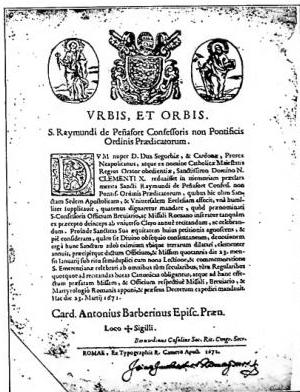
(phot. Enc. Catt.)
CALENDARIO DELLA CHIESA UNIVERSALE - Decree inserting the feast of s. Raimondo da Peñafort into the c. of the Universal Church (23 March 1671) - Vatican City, archive of the S. Congregation of Rites.
Forty on the following day (21 Aug. 1649). - 10. ss. Quaranta martiri, SD (1649, from the preceding day). - 12. s. Gregorio Magno, Doctor of the Church, D (1568). - 17. s. Patrizio, C (1631), SD (7 Sept. 1685), D (12 May 1859). - 18. s. Cirillo di Gerusalemme, Doctor of the Church, D (28 July 1882). - 19. s. Giuseppe, D (1568), D2 (6 Dec. 1670), D1 (8 Dec. 1870); movable feast, assigned to the Sunday after 19 March, D1 OTT. C. (2 July 1911); restored to the 19th: D1 without OTT. (24 July 1911); D2 (28 Oct. 1913); D1 (12 Dec. 1917). - 20. s. Gioacchino, SD (1584), D (18 May 1623); transferred to the Sunday after the octave of the Assumption (1738). - 21. s. Benedetto, D (1568), DM (5 July 1883). - 24. s. Gabriele arcangelo, DM (26 Oct. 1921). - 25. Annunciation of Maria S.ma, D2 (1568), D1 (27 May 1895). - 27. s. Giovanni Damasceno, Doctor of the Church, D (19 Aug. 1890). - 28. s. Giovanni da Capistrano, SD (19 Aug. 1890).
April. - 2. s. Francesco da Paola, D (1585), SD (1602), D (4 May 1613). - 4. s. Isidoro, Doctor of the Church, D (25 Apr. 1722). - 5. s. Vincenzo Ferreri, SD ad lib. (29 Nov. 1667), SD (25 March 1706), D (5 Apr. 1726). - 11. s. Leone Magno, D (1568), Doctor (15 Oct. 1754). - 13. s. Ermenegildo, SD (1631). - 14. ss. Tiburzio, Valeriano, and Massimo, S (1568); s. Giustino m., D (28 July 1882); the martyrs reduced to C. - 17. s. Aniceto, pope, S (1568). - 21. s. Anselmo (an attempt under Innocenzo XI, 1688, was unsuccessful), SD (with the Mass of the Doctors: 21 Jan. 1690), D (8 Feb. 1720). - 22. ss. Sotero and Caio, popes, SD (1568). - 23. s. Giorgio, SD (1568). - 24. s. Fedele da Sigmaringa, D (16 Feb. 1771). - 25. s. Marco, D2 (1568). - 26. ss. Cleto and Marcellino, popes, SD (1568). - 27. s. Pietro Canisio, Doctor of the Church, D (24 Nov. 1926). - 28. s. Vitale, S (1568); s. Paolo della Croce, D (14 Jan. 1869); s. Vitale reduced to C. - 29. s. Pietro m., D (13 Apr. 1586), SD (1602), D (26 July 1670); s. Caterina da Siena, C (8 May 1597); transferred to the 30th (1628). - 30. s. Caterina da Siena, SD (7 Aug. 1628, from the preceding day), D (9 Oct. 1670).
May. - 1. ss. Filippo and Giacomo App., D2 (1568). - 2. s. Atanasio, Doctor of the Church, D (1568). - 3. Finding of the S. Cross, D (1568); D2 (1602); ss. Alessandro, Evenzio, Teodulo, and Giovenale, C (1568). - 4. s. Monica, S (1568), SD (14 July 1669), D (26 Aug. 1730). - 5. s. Pio V, pope, SD (17 Feb. 1713), D (26 Apr. 1775). - 6. s. Giovanni a porta Latina, D (1568), DM (1602). - 7. s. Stanislao vesc. m., SD (22 Nov. 1594; 21 Feb. 1595; he was raised to D. but the SD remained in force), D (13 March 1736). - 8. Apparition of the archangel s. Michele, D (1568), DM (1602). - 9. s. Gregorio Nazianzeno, Doctor of the Church, D (1568). - 10. ss. Gordiano and Epimaco mm., S (1568); s. Antonino, SD ad lib. (17 Aug. 1683), SD (16 Apr. 1707); the martyrs are reduced to C, D (12 Sept. 1845). - 12. ss. Nereo, Achilleo, and Pancrazio, S (1568); with the addition of Domitilla (1597), following the discovery and translation of the bodies into the titular church of Baronio SD (1602). - 13. s. Roberto Bellarmino, Doctor of the Church, D (6 Jan. 1932). - 14. s. Bonifacio, m., S (1568). - 15. s. Giovanni Batt. de la Salle, D (1904). - 16. s. Ubaldo, S (17 Dec. 1605), SD ad lib. (18 Feb. 1696), SD (10 Dec. 1713). - 17. s. Pasquale Baylon, D (13 March 1784). - 18. s. Venanzio m., SD (11 Nov. 1670); D (23 July 1774). - 19. s. Pudentiana, S (1568); s. Pietro Celestino, SD (21 July 1668); s. Pudentiana reduced to C, D (10 March 1681). - 20. s. Bernardino da Siena, SD (15 Nov. 1657). - 25. s. Urbano, pope, S (1568); s. M. Maddalena dei Pazzi, SD (29 Nov. 1690); s. Urbano reduced to C; s. Gregorio VII, D (25 Nov. 1728); transferring s. Maria Maddalena to the 27th). - 26. s. Eleuterio, pope, S (1568); s. Filippo Neri, SD ad lib. (6 Nov. 1625), SD (under Aless. VII); s. Eleuterio reduced to C, D (8 June 1669). - 27. s. Giovanni, pope m., S (1568); s. Maria Maddalena dei Pazzi, SD (from 25 Nov. 1728); s. Beda, venerable, Doctor of the Church, D (1899); transferring s. Maria Maddalena to the 29th); s. Giovanni reduced to C. - 28. s. Agostino di Canterbury, D (28 June 1882). - 29. s. Maria Maddalena dei Pazzi, SD (1899, from the 27th). - 30. s. Felice, pope, m., S (1568). - 31. s. Petronilla, S (1568); s. Angela Merici, D (11 June 1861, with c of s. Petronilla).
June. - 2. ss. Marcellino, Pietro, and Erasmo, S (1568). - 4. s. Francesco Caracciolo, D (5 Aug. 1807). - 5. s. Bonifacio vesc. m., D (11 June 1874). - 6. s. Norberto, SD (16 Nov. 1620), transferred to the 11th (1623), returned to the 6th (1631 or 1634), D (7 Nov. 1677). - 9. ss. Primo and Feliciano, S (1568). - 10. s. Margherita ved. regina di Scozia, SD ad lib. (2 Dec. 1673), transferred to 8 July (9 Feb. 1678), restored to the 10th (4 March 1693). - 11. s. Barnaba, D (1568), DM (1602). - 12. ss. Basilide, Cirino, Nabore, and Nazario, S (1568); s. Giovanni da S. Facondo, D (19 Nov. 1729), C of the ss. Martyrs. - 13. s. Antonio di Padova, D (14 Jan. 1586), SD (1602), D (18 June 1670), Doctor of the Church (16 Jan. 1946). - 14. s. Basilio Magno, Doctor of the Church, D (1568). - 15. ss. Vito, Modesto, Crescenzia, S (1568). - 18. ss. Marco, Marcellino, S (1568); s. Efrem Siro, Doctor of the Church, D (14 Oct. 1920, with c of the martyrs). - 19. ss. Gervasio and Protasio, S (1568); s. Giuliana dei Falconieri, SD (15 March 1738, with c of the martyrs), D (11 Dec. 1762). - 20. s. Silverio, pope, S (1568). - 21. s. Luigi Gonzaga, D (23 July 1842). - 22. s. Paolino, S (1568), D (18 Sept. 1908). -
23. vigil (1568)
24. Nativity of s. Giovanni Batt., D1 OTT. C. (1568), transferred to the Sunday preceding the feast of the App. Pietro and Paolo (28 July 1911), restored to its day (28 Oct. 1913). - 25. day within the octave (1568); s. Guglielmo ab., D (24 Aug. 1785). - 26. ss. Giovanni and Paolo, SD (1568), D (21 May 1728). - 28. s. Leone II, SD (1568); s. Ireneo, D (26 Oct. 1921, transferring s. Leone to 3 July). - 29. ss. Pietro and Paolo, D1 OTT. C. (1568). - 30. commemoration of s. Paolo Ap., D (1568), DM (1602).July. - 1. octave of s. Giovanni Batt., D (1568); feast of the Most Precious Blood of Jesus, D2 (1914), D1 (25 Apr. 1934). - 2. Visitation of Maria S.ma, D (1568), DM (1602), D2 (31 May 1850), C of ss. Processo and Martiniano (1568). - 3. day within the octave of ss. App. Pietro and Paolo (1568); s. Leone II, SD (26 Oct. 1921, transferred from 28 June). - 4. day within the octave of ss. App. Pietro and Paolo (1568); s. Elisabetta queen, widow, SD ad lib. (1631), transferred to the 8th (19 Jan. 1695). - 5. day within the octave of ss. App. Pietro and Paolo (1568); s. Cirillo and Metodio, D (25 Oct. 1880); s. Antonio Maria Zaccaria, D (11 Dec. 1897, transferring ss. Cirillo and Metodio to the 7th). - 6. octave of ss. App. Pietro and Paolo, D (1568), DM (1914). - 7. ss. Cirillo and Metodio, D (11 Dec. 1897, from the 5th). - 8. s. Margherita queen of Scotland, SD ad lib. (9 Feb. 1678, from 10 June), SD (16 Nov. 1691), restored to 10 June (4 Mar. 1693); s. Elisabetta queen, widow, SD (19 Jan. 1695, transferred from the 4th). -
10. the seven holy brothers, Rufina and Secondina, martyrs, SD (1568)
11. s. Pio I, pope, S (1568). - 12. ss. Nabore and Felice, martyrs, S (1568); s. Giovanni Gualberto, C (21 Feb. 1595), SD ad lib. (21 Feb. 1671), SD (10 Dec. 1679), and C of the martyrs, D (18 Jan. 1680). - 13. s. Anacleto, pope, SD (1568). - 14. s. Bonaventura, SD (1568), D and Doctor of the Church (14 Mar. 1588). - 15. s. Enrico, emperor, S (1631), SD (13 June 1668). - 16. commemoration of Our Lady of Mount Carmel, DM (24 Nov. 1726). - 17. s. Alessio, S (1568), SD ad lib. (18 Dec. 1637), SD (31 Aug. 1697). - 18. s. Sinforosa and her seven sons, martyrs, S (1568); s. Camillo de Lellis, SD (15 Dec. 1762 and C of the martyrs), D (16 Nov. 1767). - 19. s. Vincenzo de' Paoli, SD (11 Dec. 1737), D (12 May 1753). - 20. s. Margherita, S (1568); s. Girolamo Emiliani, D (1769), S. Margherita reduced to C. - 21. s. Prassede, S (1568). - 22. s. Maria Maddalena, D (1568). - 23. s. Apollinare, SD (1568), D (25 May 1675); s. Liborio, C (15 July 1702). - 24. vigil (1568); s. Cristina, C (1568). - 25. s. Giacomo Ap., D2 (1568); s. Cristoforo, C (1568). - 26. s. Anna; D (28 Apr. 1584), DM (3 Dec. 1738), D2 (1 Aug. 1879). - 27. s. Pantaleone, martyr, S (1568). - 28. ss. Nazario, Celso, Vittore, and Innocenzo I, pope, SD (1568). - 29. s. Marta, SD (1568); ss. Felice II, Simplicio, Faustino, and Beatrice, martyrs, S (1568). - 30. ss. Abdon and Sennen, S (1568). - 31. s. Ignazio di Loyola, SD ad lib. (1623), SD (Innocenzo X), D (27 Nov. 1667), DM (1922).Aug. - 1. s. Pietro in Vincoli, D (1568), DM (1602); C of the Maccabees (1568). - 2. s. Stefano, pope, S (1568); s. Alfonso Maria de' Liguori, D (18 Nov. 1839, s. Stefano reduced to C), Doctor of the Church (7 July 1871). - 3. Finding of s. Stefano, protomartyr, SD (1568). - 4. s. Domenico, D (1568), DM (1914). - 5. dedication of Maria S.ma ad Nives, D (1568), DM (1602). - 6. Transfiguration of Our Lord Jesus Christ, D (1568), DM (1602), D2 (1914); ss. Sisto II, pope, Felicissimo, and Agapito, martyrs, C (1568). - 7. s. Donato, martyr, S (1568); s. Gaetano Thiene, SD (8 Mar. 1673), C of s. Donato, D (4 Aug. 1685). - 8. ss. Ciriaco, Largo, and Smaragdo, SD (1568). - 9. vigil (1568); s. Romano, martyr, C (1568); s. Giovanni Maria Vianney, D (9 May 1928). - 10. s. Lorenzo, D OCT. C. (1568), D OCT. S. (1914). - 11. day within the octave of s. Lorenzo; ss. Tiburzio and Susanna, C (1568), S (1914). - 12. day within the octave of s. Lorenzo, C of s. Chiara (1568); s. Chiara SD ad lib. (Innocenzo X), D (27 May 1670). - 13. day within the octave of s. Lorenzo; ss. Ippolito and Cassiano, C (1568), S (1914). - 14. day within the octave of s. Lorenzo; vigil C, and s. Eusebio, C (1568); Vigil, C. s. Eusebio (1914). - 15. Assumption of Maria S.ma, D OCT. C. (1568). - 16. day within the octave of the Assumption and of s. Lorenzo, C (1568); s. Giacinto, D (1 Feb. 1625); C of the two octaves; s. Gioacchino, D (1914), transferring s. Giacinto to the 17th. - 17. octave of s. Lorenzo, D (1568); C of the octave of the Assumption (1568); s. Giacinto, D (1914), from the 16th, with C of the octaves. - 18. day within the octave; C of s. Agapito, martyr (1568). - 19. day within the octave of the Assumption (1568); s. Giovanni Eudes, D (9 May 1928, with C of the octave). - 20. s. Bernardo, D (1568), C of the octave; Doctor of the Church (20 Aug. 1830); s. Stefano, king, C (1631), transferred to 2 Sept. (19 Apr. 1687). - 21. day within the octave (1568); s. Giovanna Francesca Frémiot di Chantal, D (2 Sept. 1769, with C of the octave). - 22. octave of the Assumption, D (1568), DM (1914); s. Timoteo and companions, martyrs, C (1568); feast of the Immaculate Heart of Maria, D (4 May 1944; C of the holy martyrs). - 23. vigil (1568); s. Filippo Benizi, SD ad lib. (1609), SD (26 Aug. 1693), D (2 Oct. 1694). - 24. s. Bartolomeo Ap., D (1568). - 25. s. Luigi, king, S (1568), SD (29 Nov. 1618). - 26. s. Zefirino, pope, S (1568). - 27. s. Giuseppe Calasanzio, D (19 Aug. 1769). - 28. s. Agostino, Doctor of the Church, D (1568), s. Ermete, C (1568). - 29. Beheading of s. Giovanni Batt., D (1568), DM (Pio VI); C of s. Sabina (1568). - 30. ss. Felice and Adauto, martyrs, S (1568); s. Rosa da Lima, D (28 July 1727); C of the holy martyrs. - 31. s. Raimondo Nonnato, SD ad lib. (13 Aug. 1669), SD (7 Dec. 1676), D (10 Mar. 1681).
Sept. - 1. s. Egidio, abbot, S (1568); the twelve holy brothers, martyrs, C (1568). - 2. s. Stefano, king, SD (19 Apr. 1687, transferred from 20 Aug. and raised to S SD). - 3. s. Lorenzo Giustiniani, SD ad lib. (16 Dec. 1690), SD (12 Sept. 1759). - 8. Nativity of Maria S.ma, D OCT. C. (1568), OCT. S. (1914); s. Adriano, martyr, C (1568). - 9. day within the octave of the Nativity; C of s. Gorgonio (1568); s. Gorgonio, S (1914). - 10. day within the octave (1568); s. Nicola da Tolentino, D (22 Dec. 1585), SD (1602), D (Clemente IX). - 11. day within the octave; C of ss. Proto and Giacinto (1568); ss. Proto and Giacinto, S (1914). -
12. day within the octave (1568); Name of Maria, DM (1914)
13. day within the octave (1568); feria (1914)
14. Exaltation of the Holy Cross, D (1568), DM (1602)
15. octave of the Nativity of Maria; C of s. Nicomede, martyr (1568); the seven Sorrows of Maria S.ma, D (1914). - 16. ss. Cornelio and Cipriano, SD (1568); ss. Eufemia, Lucia, and Geminiano, C (1568). - 17. Impression of the Stigmata of s. Francesco (feast removed from the calendar by Pio V), D (Sisto V), removed (1602), without determination of rite (28 Aug. 1615), SD ad lib. (2 Oct. 1627), SD (13 Aug. 1669), D (11 Aug. 1770). - 18. s. Tommaso da Villanova, SD ad lib. (17 June 1659), SD (11 Sept. 1694), D (9 Oct. 1694); s. Giuseppe da Copertino, D (8 Aug. 1769); s. Tommaso transferred to the 22nd. - 19. ss. Gennaro and companions, martyrs, S (1 Feb. 1586), SD (1602), D (7 Dec. 1676). - 20. vigil; C of s. Eustachio and companions, martyrs (1568); ss. Eustachio and companions, SD (24 Nov. 1625, with C of the vigil), D (26 Jan. 1671). - 21. s. Matteo Ap. D (1568). - 22. ss. Maurizio and companions, martyrs, S (1568); s. Tommaso da Villanova, SD (8 Aug. 1769, from the 18th, with C of the holy martyrs), D (4 Dec. 1801). - 23. s. Lino, pope, SD (1568); C of s. Tecla (1568). - 24. feast of Maria S.ma della Mercede, D (18 Feb. 1696), DM (22 Mar. 1727). - 25. ss. Cipriano and Giustina, S (1568). - 27. ss. Cosma and Damiano, SD (1568). - 28. s. Venceslao, SD ad lib. (26 July 1670), SD (14 Mar. 1729). - 29. dedication of s. Michele Arcangelo, D (1568), D (1917). - 30. s. Girolamo, Doctor of the Church, D (1568).Oct. – 1. St. Remigius, s (1568), sd ad lib. (26 Nov. 1668), sd ad lib. or s of the preceding day (1884), s (1914). – 2. Holy Guardian Angels, d (20 Sept. 1670), DM (5 July 1883). – 3. St. Teresa of the Child Jesus, d (13 July 1927). – 4. St. Francis of Assisi, d (1568), DM (5 July 1883). – 5. Saints Placidus and Companions, martyrs, s (13 Nov. 1588). – 6. St. Bruno, sd ad lib. (17 Feb. 1623), d (14 Mar. 1674). – 7. St. Mark, pope, s (1568); Saints Sergius and Companions, martyrs, c (1568); St. Brigid, sd (8 Apr. 1623, with c of St. Mark and the holy Martyrs); (1628 restoration as in the time of Pius V, St. Brigid transferred to the 8th); Rosary of Most Holy Mary, d (1914, with c of St. Mark and the holy martyrs). – 8. St. Brigid, sd (1628, from the 7th), d (2 Sept. 1724). – 9. Saints Dionysius, Rusticus, and Eleutherius, martyrs, s (1568); St. Edward, king and confessor, sd (29 May 1679; 6 Apr. 1680, transferred to the 13th); St. John Leonardi, d (3 Apr. 1940, with c of the holy martyrs). – 10. St. Francis Borgia, sd (1 Sept. 1688). – 11. Maternity of Most Holy Mary, d (6 Jan. 1932). – 12. St. Edward, king and confessor, sd (from the 9th, 6 Apr. 1680). – 13. St. Callistus, pope, sd (1568), d (2 Sept. 1808). – 14. St. Teresa, sd ad lib. (25 Aug. 1636), sd (29 Oct. 1644), d (11 Sept. 1668). – 15. St. Hedwig, sd (26 Apr. 1929, from the 17th). – 16. St. Hedwig, sd ad lib. (17 Sept. 1680), sd (20 Mar. 1706); St. Margaret Mary Alacoque, d (26 Apr. 1929, transferring St. Hedwig to the 16th). – 17. St. Luke, d (1568). – 18. St. Peter of Alcantara, sd (9 Aug. 1670), d (20 Apr. 1701). – 19. St. John Cantius, sd (8 Sept. 1770), d (23 Feb. 1782). – 20. St. Hilarion, abbot, s (1568); c of St. Ursula and Companions, martyrs (1568). – 21. St. Raphael the Archangel, DM (26 Oct. 1921). –
22. Saints Chrysanthus and Daria, s (1568)
23. St. Evaristus, pope, s (1568). – 24. St. Evaristus, pope, s (1568). –25. vigil (1568)
26. Saints Simon and Jude, Apostles, d (1568)
27. vigil (1568).Nov. – 1. All Saints, d OTT. c. (1568). –
27. Commemoration of the Dead, c of the octave of All Saints (1568); proper office for the celebration of the Commemoration of the Dead (1914)
3. day within the octave, c of the holy martyrs Vitalis and Agricola (1568); St. Charles Borromeo, sd ad lib. (6 Dec. 1613), sd (10 Sept. 1634, with c of the holy martyrs), d (3 Aug. 1659). – 4. s. 6, 7: days within the octave (1568). –8. octave of All Saints, d (1568), DM (1914); the Four Crowned Saints, c (1568)
9. Dedication of the Lateran Basilica, d (1568); c of St. Theodore, martyr (1568). – 10. Saints Tryphon, Respicius, and Nympha, martyrs, s (1568); St. Andrew Avellino, sd (18 Aug. 1725, c of the holy martyrs), d (1 Feb. 1864). – 11. St. Martin, d (1568); c of St. Menna, martyr (1568). – 12. St. Martin, pope, sd (1568); St. Diego, without designation of rite (7 July 1588), sd (1602); c of St. Martin; restoration of St. Martin, sd, transferring St. Diego to the 17th (27 Feb. 1671). – 13. St. Diego, sd (from the 12th; 27 Feb. 1671). – 14. St. Josaphat, d (28 July 1882). – 15. St. Gertrude, d (19 May 1739); St. Albert the Great, Doctor of the Church, d (6 Jan. 1932, transferring St. Gertrude to the 16th). – 16. St. Gertrude, d (6 Jan. 1932, from the 15th). – 17. St. Gregory Thaumaturgus, sd (1568). – 18. Dedication of the Basilicas of St. Peter and St. Paul, d (1568), DM (1914). – 19. St. Pontian, s (1568); St. Elizabeth, sd ad lib. (13 Sept. 1670), d (29 Mar. 1671); c of St. Pontian. – 20. St. Felix of Valois, d (31 May 1694). – 21. Presentation of Most Holy Mary (feast removed by Pius V), d (1 Sept. 1585), DM (1602). – 22. St. Cecilia, sd (1568), d (6 Dec. 1670). – 23. St. Clement, pope, sd (1568), d (1 Sept. 1804); c of St. Felicity, martyr (1568). – 24. St. Chrysogonus, s (1568); St. John of the Cross, sd 5 Oct. 1738; c of St. Chrysogonus, d (9 Sept. 1769), Doctor of the Church (24 Nov. 1926). – 25. St. Catherine, d (1568). – 26. St. Peter of Alexandria, s (1568); St. Sylvester, abbot, d (19 Aug. 1890, with c of St. Peter). – 27. vigil; c of St. Saturninus, martyr (1568). – 28. St. Andrew, Apostle, d (1569).Dec. – 2. St. Bibiana, s (1568), sd (1628). – 3. St. Francis Xavier, sd (6 Sept. 1663), d (4 June 1670), DM (1914). – 4. St. Barbara, s (1568); St. Peter Chrysologus, Doctor of the Church, d (10 Feb. 1729); c of St. Barbara. – 5. St. Sabbas, abbot, s (1568). – 6. St. Nicholas, sd (1568), d (6 Dec. 1670). – 7. St. Ambrose, Doctor of the Church, d (1568); vigil of the Immaculate Conception (30 Nov. 1879). – 8. Conception of Most Holy Mary, d (1568), DM (1602), D OTT. c. (15 May 1693); holy day of obligation (6 Dec. 1708); Immaculate Conception of Most Holy Mary (1855, with a new office, due to the Jesuit Fr. Passaglia; another new office, the present one, 25 Sept. 1863), D1 with vigil (30 Nov. 1879). – 9, 12, 14: days within the octave.
the octave (1693). —
28. St Melchiades, pope, c (1568)
29. St Damasus, pope, sd (1568)
30. St Lucy, d (1568)
31. St Eusebius, s (1602); octave of the Conception of Mary, d (1693, with c of St Eusebius); St Eusebius transferred to the following day (1728); the octave DM (1914)
32. St Eusebius, sd (1728, from the preceding day)
20. vigil (1568)
33. St Thomas the Apostle, D2 (1568)
24. vigil (1568)
25. Nativity of Our Lord Jesus Christ, D1 OTT. (1568, the octave was in fact privileged); OTT. P. (1914). — 26. St Stephen, d (1568); the three feasts after Christmas were defined by Pius V simply as “double”; the liturgists long disputed their rank and almost all agreed in defining them as D2, as was later expressed in the calendars; they had a common octave; D2 OTT. S. (1914). — 27. St John the Apostle, D2 OTT. S. (1914). — 28. Holy Innocents, D2 OTT. S. (1914). —34. St Thomas, bishop and martyr, sd (1568), d (1914)
31. St Sylvester, pope, d (1568).We shall now briefly indicate some dates of interest concerning the better-known movable feasts, whether currently or for a certain period. — Guardian Angels, D ad. lib. (27 Sept. 1608), on the first free day after the feast of St Michael, d (20 Sept. 1670), the feast being fixed on 2 October. — Sacred Heart of Jesus, DM (26 Aug. 1856), on the Friday after the octave of Corpus Christi, D1 (28 June 1889), D1 OTT. P. (26 June 1929). — Corpus Christi, D1 OTT. C. (1568), on the Thursday after the feast of the Trinity; fixed on the Sunday after Trinity (2 July 1911); returned to Thursday (24 July 1911); the octave was equated with that of the Epiphany (priv. 2) (28 Oct. 1913). — Holy Family, DM (26 Oct. 1921), on the Sunday after the Epiphany. — St Joachim, DM (3 Oct. 1738), fixed on the Sunday after the octave of the Assumption, from the fixed date of 20 March; D2 (1 Aug. 1879); transferred to 16 August (28 Oct. 1913). — St Joseph, D1 OTT. C. (2 July 1911), from 19 March fixed on the following Sunday, a measure revoked immediately (24 July 1911). — Patronage of St Joseph, D2 (10 Sept. 1847), on the third Sunday after Easter; D1 (8 Dec. 1870, when St Joseph was declared Protector of the Church); D1 OTT. C. (24 July 1911); assigned to the Wednesday after the Second Sunday of Easter (28 Oct. 1913). — Name of Jesus, D2 (20 Dec. 1721), for the Second Sunday after the Epiphany; assigned to the Sunday occurring between 2 and 5 January, or to 2 January when there was no such Sunday (1913). — Name of Mary, DM (5 Feb. 1694), for the Sunday between the octave of the Nativity of Mary Most Holy; fixed on 12 October (1913). — Christ the King, D1 (12 Dec. 1925), for the last Sunday of October. — Rosary of Mary Most Holy, DM (13 Oct. 1716), for the first Sunday of October, D2 (11 Sept. 1887), fixed on 7 October (1913). — Most Precious Blood of Jesus, D2 (10 Aug. 1849), for the first Sunday of July; fixed on 1 July (1913). — Seven Sorrows of Mary, DM (22 Aug. 1727), for the Friday of Passion Week. — Seven Sorrows of Mary (autumn), DM (18 Sept. 1814), for the third Sunday of September; D2 (13 May 1908); fixed on 15 September (1913). — Most Holy Trinity, D2 (1568), D1 (28 July 1911).
Anyone who carefully examines these lists, with their continual increases in feasts, rank, or rite, will readily become convinced that the liturgical year, in its fundamental broad outlines, is now almost completely occupied by the feasts of the saints. The increase in canonizations in our own times makes the situation still more difficult. It is clear from what we have written that in the time of Pius V there was a fine balance between the sanctoral and the temporal, or ferial, part. Clement VIII opened the way to the unlimited introduction of feasts of the saints. In the time of Clement X, the Sacred Congregation of Rites was concerned about this state of affairs; thus originated the decree of 20 June 1671, by which it was forbidden to consider the introduction of any feast for the following 50 years. The decree was renewed for another 50 years by Clement XI (4 May 1714); however, it was not possible to keep it in force. On the one hand, the continual canonizations, especially of founders of religious Orders, pressure from Catholic princes for the insertion of feasts, and other particular circumstances inevitably led to the decree’s non-observance. Benedict XIV recognized the continual increase of the feasts of the saints as harmful to discipline, and the reform of the Breviary that he had envisaged would have placed a limit upon II. But it was especially from the second half of the last century that new increases and variations in rite occurred. From this arose the keen desire for a definitive liturgical reform, already initiated by Pius X, which also yearns for a revision of the calendar. — Vedi Tavv. XXII-XXIII.