
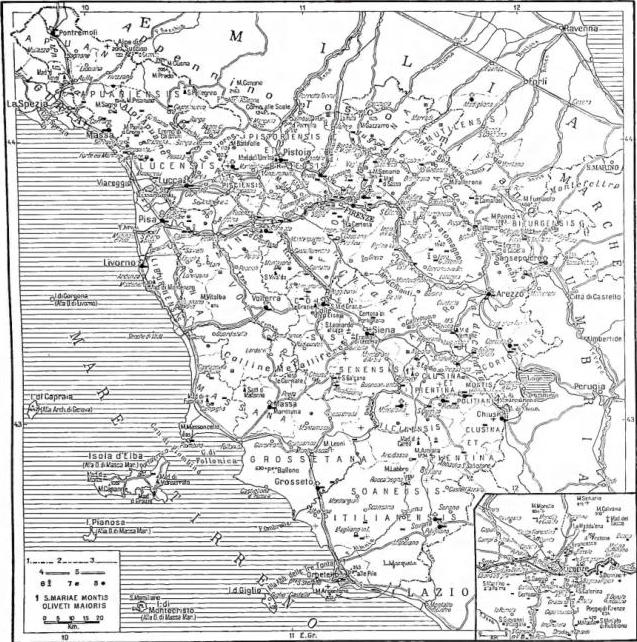
TUSCANY. - I. GEOGRAPHY. - It is the largest of the historical regions of peninsular Italy (23,000 sq. km.).
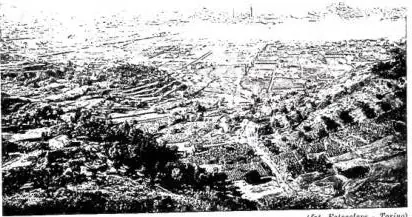
As such it comprises terrains of very different nature and appearance: a coastal strip partly well cultivated and flourishing (between the mouths of the Magra and the Arno) and partly, to the south, recently reclaimed (Maremma); a mountain complex (the southern slope of the Apennines) in which fertile basins open up (Lunigiana, Garfagnana, Mugello, Casentino) and which is covered, in its higher parts, by woods and chestnut groves; and, between the one and the other, other mountains and hills, which enclose some of the most intensely inhabited zones, along the courses of the Serchio, the Arno and their tributaries (Monti del Chianti), and, by contrast, stretches of land that are little fertile and sparsely populated, but endowed with notable mineral resources (metalliferous hills). On the whole, Tuscany, despite the modest extent of its plains, is a predominantly agricultural country, and its population lives for the most part on the farms, which the tenant farmers hold as a rule under sharecropping, except in the southern districts (Maremma), where instead large landed property and large centers prevail. Among the crops, those of the olive and the vine stand out, for which Tuscany occupies a place of the first rank in Italian production, especially when account is taken of quality; but those of wheat, sugar beet, pulses and fruit trees, etc., are far from negligible. Of lesser importance, on the other hand, are the exploitation of the forests (though the yield of chestnuts is considerable) and livestock raising.
The sub-Apennine zones make a large contribution to the extractive industry, carried on since pre-Roman times: marble in the Apuan Alps, iron pyrites in the Grosseto area, mercury at Monte Amiata, the boracic soffioni of the Volterra area (Larderello) and above all the iron minerals of Elba, which feed the blast furnaces of Piombino. Nevertheless the processing industries have had and still retain, in Tuscany, a rather modest development, as is shown by the fact that local handicraft, strong moreover in a long artistic tradition, has been able substantially to survive. For all that, Tuscany nonetheless counts, among other things, a conspicuous number of metallurgical enterprises (Piombino, Livorno, Elba, S. Giovanni Valdarno), an efficient woolen mill (Prato), renowned shipyards (Livorno, Viareggio) and numerous smaller establishments in several branches of industry. Commerce too occupies a notable place there: a transit zone between the North and the South of Italy, Tuscany is crossed by the two main lines of peninsular railway traffic, the coastal one that has its terminus at Pisa, and the inland one that passes through Florence, while the sea plays a rather modest part in its trade, because of the narrow extent of its hinterland along an already fairly extensive coast.
The population (3.2 million inhabitants in 1951) has a density somewhat below the Italian average, which must be related to the sparse settlement of the mountain areas and the still incomplete transformation of the Maremma: to the maximum densities of the provinces of Florence and Livorno there are opposed in fact the minimums of those of Siena and Grosseto. By contrast, the scattered population has a higher proportion there than in Italy as a whole; but notwithstanding this, and in relation to its vigorous municipal history, the large and medium-sized urban centers in Tuscany are fairly numerous: 2 cities with more than 100,000 inhabitants, 8 (besides the provincial capitals, Prato) with more than 50,000; 13 with more than 20,000 inhabitants.
| Province | Area sq. km. | Population in 1000s | Density per sq. km. | Capitals and population in 1000s |
|---|---|---|---|---|
| Arezzo | 3,232 | 329.3 | 102 | Arezzo (66) |
| Florence | 3,880 | 917.8 | 239 | Florence (376) |
| Grosseto | 4,496 | 211.5 | 49 | Grosseto (38) |
| Livorno | 1,220 | 281.0 | 230 | Livorno (141) |
| Lucca | 1,772 | 364.9 | 206 | Lucca (87) |
| Massa e Carrara | 1,156 | 203.4 | 176 | Massa (50) Carrara (62) |
| Pisa | 2,448 | 348.5 | 142 | Pisa (77) |
| Pistoia | 962 | 219.1 | 228 | Pistoia (77) |
| Siena | 3,821 | 277.0 | 72 | Siena (52) |
| Tuscany | 22,986 | 3,152.5 | 137 |
Bibliography5 works
Giuseppe Caraci
II. HISTORY
The unitary character that Etruria had possessed in the Etruscan period was lost in 90 B.C., when it was included in Roman citizenship. Under Augustus Etruria was the VII region of the Empire. The Romans also called it Tuscia (whence Tuscania), a name that became official under Diocletian.
The information on the evangelization of T. is uncertain. It may be held that the first penetration of Christianity occurred already in the 1st century, even though positive proofs are lacking in support of the tradition that makes St. Linus pope be born at Volterra, and names St. Frontinus bishop of Florence and St. Paulinus bishop of Lucca. In the 4th century St. Felix was probably the first Florentine bishop and Gaudentius of Pisa. The most ancient dioceses were those of Fiesole, Lucca, Pisa, Arezzo, Siena, Chiusi, Florence and Pistoia. From the 5th century the barbarian devastations made even ecclesiastical conditions difficult.
A certain unity was restored to T. by the Lombards, who constituted it a duchy with its center at Lucca, which became a county under the Franks, until Adalbert in the 9th century held the title of marquis. Toward the middle of the 11th century the marquisate passed to the Attoni, and under Matilda (1046-1115) it played an important part in the struggle over investitures. In this period there ascended to the papal throne Nicholas II bishop of Florence, Alexander II bishop of Lucca, and a century later the Sienese Alexander III. At the beginning of the 11th century St. Romuald extended there the Order of the Camaldolese and St. John Gualbert founded that of the Vallombrosans.
After the death of Matilda there became clear in the marquisate that centrifugal movement which accompanies the rise of a new civilization: the rural economy progresses and is transformed, and in the cities the new industrial and mercantile classes bring down the power of the feudal lords. The Communes, aided by the active collaboration of the bishops, fight for their own liberty, without any longer having a consciousness of regional solidarity, and lean rather on distant sovereign authorities such as the Papacy and the Empire, hastening the fragmentation of the region, so that for centuries one can no longer speak of a history of T., but of that of the individual Communes that compose it henceforth only geographically. In fact independent, the Communes aim to expand, and each aspires to supremacy over its rivals. In the 11th and 12th centuries Lucca and Pisa are preeminent and finally the latter prevails; then, defeated by Genoa, it yields the primacy to Florence, which in turn subjects the neighboring Pistoia and Arezzo. The attempts of Uguccione della Faggiuola and of Castruccio Castracani are directed to territorial conquests without any intention of reconstituting a regional State.
In the first decades of the 13th century the Order of the Servants of Mary (v.) is constituted at Florence, and at Lecceto, near Siena, the Hermits of St. Augustine (v.) had one of their most important centers. In the first half of the 14th century some Sienese patricians gave origin to the Benedictine Congregation of Monte Oliveto. In 1367 the Sienese Order of the Jesuates was approved by Urban V. Among the Tuscan saints of this period are to be remembered Catherine of Siena, Andrea Corsini, bishop of Fiesole.
The political aspect of T. does not change with the veiled lordship of the Medici. Even while pursuing its plan of hegemony with the conquest of Pisa and of Volterra, the State, even though territorially it comprises all of T., nevertheless remains in law and in fact the Republic of Florence. In the 15th century T. gives the Church a pope, Pius II, and Sts. Antoninus bishop of Florence and Bernardino da Siena. At the death of Lorenzo de' Medici the unity of the region disintegrates again: the republicans cede Sarzana to Genoa, Pietrasanta to Lucca, while Pisa recovers its independence; separatist tendencies are rekindled, and in the war of 1530 Florence sees some of the cities already subject to it fighting in the opposing camp. The Medicean Principate during the lordship that the two Medici Leo X and Clement VII held there is still more Florentine than Tuscan. A Tuscan policy, barely sketched by Duke Alessandro, is carried out only by Cosimo I, who conquers Siena and after the Treaty of Cateau-Cambrésis brings down the last bulwark of the municipal Republic, Montalcino. With political, administrative and financial reforms Cosimo I gives new homogeneity to the principate; and in order to loosen the bonds that tie it to Spain, it leans also on the Holy See which in this century and the next will be in Italy, in proportion to its forces, the major center of resistance to foreign predominance. This unitary resurrection of T. is officially consecrated in 1569 by the concession that Pius V makes to Cosimo of the title of grand duke of T.
Of slight importance was the Protestant penetration, limited almost exclusively to Lucca, whence some families emigrated to Geneva, and to Siena, birthplace of Bernardino Ochino (v.) and of Lelio and Fausto Socini (v.).
The central power, sustained by the energy of Cosimo, who had completely deprived of authority the citizen aristocracy of mercantile and banking origin, creating a category of functionaries elected by the prince and no longer chosen by privilege of birth, weakens with his weak son Francis I (1574-87). It rises again with Ferdinand I (1587-1609), who protects men of letters and artists, enlarges the University of Pisa, begins the reclamation of the marshy zones, promotes the development of Livorno. He seeks to free himself from the Spanish protectorate by adopting a policy of understanding with France, and succeeds in inserting T. into European politics. A friend of Henry IV, he gives him his niece Maria in marriage; he impresses a vigorous impulse on the maritime activity of the knights of St. Stephen instituted by Cosimo I. With the 17th century T. becomes also, through the work of Galileo and his pupils, a center of scientific activity until in 1657 the Accademia del Cimento was founded. Cosimo II (1609-21) seeks to continue the policy of equilibrium between France and Spain, but very soon must yield to Spanish preponderance. With him the Order of St. Stephen carries out its last enterprises in the struggle against the Turks. The decline is accentuated in agriculture and in commerce, with the consequence of an acute demographic depression. But during the government of Ferdinand II (1621-70), who although he tries in vain, in the Thirty Years' War, to form a league of the Italian States, and draws no advantage from the forced participation in the war of Monferrato and that of Castro, the Tuscan economy has a spontaneous reawakening. Agriculture rises again, because the nobles return to invest their capital in the land, reclamations are attempted anew, the population resumes its upward rhythm.
In the 17th century are elected popes: Alessandro de' Medici archbishop of Florence, Leo XI; the Sienese Fabio Chigi, Alexander VII; the Pistoian Giulio Rospigliosi, Clement IX; the Florentine Maffeo Barberini, Urban VIII.
Under Cosimo III (1676-1723) the international discussions begin on the destiny of T., in anticipation of the approaching end of the house of Medici. And while Cosimo remains almost extraneous to the negotiations, the powers, with the Treaty of London of 1718, assign T. to Charles of Spain son of Philip V; but at the end of the war of the Polish succession, the grand duchy is assigned to Francis Stephen of Lorraine. Gian Gastone (1723-37) thus finds himself, without heirs, at the head of a State whose fate is already fixed. At his death there was a period of regency, formed by Francis Stephen; when he ascended the imperial throne in 1745, the autonomy of the grand duchy seemed to be annulled; but in 1762, with the marriage contract between his third-born son Peter Leopold and Maria Luisa of Bourbon, Francis undertook to detach Tuscany from the Empire and give it to his son. Three years later, upon the death of Francis, Peter Leopold was received in Florence with enthusiasm. A typical exemplar of an enlightened sovereign, he had the good sense to surround himself with the native elements that had given the best proof of themselves during the regency, and he began with fervor, indeed with excessive impetuosity, his reforming action, first of all in the field of agriculture, with the establishment for that purpose in 1766 of a Consulta of which Francesco Gianni and Pompeo Neri were members, with the collaboration of bishops and parish priests. The fruit of his activity was the cadastral survey. All real property, including that of the sovereign, was subjected to public taxes, lightening the tax burden of small proprietors. In order to increase their number, it was thought to encourage the fragmentation of large estates, and a middle class of free cultivators and small proprietors came into being. To the law that proclaimed the contractual freedom of all lands were added the land reclamations of the Sienese Maremma, of the Valdichiana, and of the Valdinievole. In economics Leopold developed the guidelines outlined by Bandini in his Discorso economico of 1737. Neri's Riflessioni on the grain trade disseminated free-trade doctrines. With the reform of 1775 absolute freedom was decreed for the importation of cereals and the trade in bread. The customs reform abolished all internal tolls, establishing a single customs barrier at the frontier of the State; capital flowed into cultivation and production increased rapidly; in the administrative field, the reform was based on criteria of decentralization entirely opposed to those of enlightened despotism. The municipalities enjoyed almost complete autonomy, and their magistracies were filled by lot from among the owners of land, the heads of families of colonists and artisans. The return of ancient names: priori and gonfaloniere, was not a restoration of the past, but an anticipation of the civic representations of the modern Commune as an autarchic entity. In the judicial field the new criminal legislation of 1786 abolished torture, suppressed the death penalty, and assured the accused the right of defense and the impartiality of the trial. A lively reaction, on the other hand, Leopold encountered in ecclesiastical matters, because, without taking into account the sentiments of his people, he relied exclusively on the anti-papal Jansenist tendency. He suppressed in fact many religious Orders and confraternities, devolving their property to poor parishes, introduced the placet and the exequatur, abolished the ecclesiastical tithe by subjecting all properties to the grand-ducal tithe, suppressed the tribunals of the Inquisition and of the Nunciature, caused the privilege of forum to disappear, and, intruding more deeply into the internal ordering of the Church, and the bond of dependence of the convents on foreign superiors, he modified their rules, fixing the norms of admission and subjecting them to the jurisdiction of the bishops; and while seeking to improve the economic conditions and the cultural level of the lower clergy, he provided that parish priests could appeal to the sovereign even in disciplinary causes. He established finally that bishops should convoke the diocesan synod every two years and subjected councils and ecclesiastical assemblies to state jurisdiction, in which he wished to be represented. In this activity Leopold was certainly inspired by the example of his brother Joseph II, but he was also driven in particular by the bishop of Pistoia and Prato, Scipione de' Ricci (v.). In 1790 Leopold, having become emperor, had ceded Tuscany to his son Ferdinand. Ferdinand's inexperience and weakness allowed his opponents to organize a movement that induced the grand duke, also under the pressure of popular demonstrations more or less provoked or tolerated, to revoke a good part of his father's legislation. The Catholicism of the Tuscans rebelled against Leopoldine ecclesiastical reforms, as it had risen in other States against Josephinism; it must be borne in mind, however, that many modern institutions were not foreign imports, but the fruit of the economic resurrection of Tuscany promoted by the Lorraine legislation. During the Revolution Ferdinand III maintained friendly relations with Paris, refusing, despite the pressures of the powers, to enter the anti-French coalition. Only when England threatened to occupy Livorno did he have to renounce neutrality and expel the French. But relations with Paris continued, and on 9 Feb. 1795 a separate peace was concluded. In 1798, despite his scrupulous neutrality, Ferdinand was deposed and departed for Vienna. Restored in 1799, he had shortly thereafter to leave Tuscany again, which after Marengo became, by the Treaty of Lunéville, the kingdom of Etruria and was assigned to Louis of Bourbon, son of the duke of Parma. Bonaparte respected its independence until, by the Treaty of Fontainebleau (1807), the king of Etruria received Lusitania and ceded Tuscany to Napoleon. Annexed to France, Tuscany was governed directly from Paris, even when, in 1809, Napoleon granted to Elisa Baciocchi the title of grand duchy of T. Occupied for a short time, in 1814, by Murat, the Convention of Parma restored it to Ferdinand. The Congress of Vienna enlarged it with the Presidii and the Principality of Piombino. Ferdinand relied on moderate ministers such as Corsini and Fossombroni: the return to the past was not a reaction, many innovations of the French regime were preserved. The abolition of conscription and the reduction of taxes favored the people's attachment to the restored dynasty. From freedom of commerce and industry came the revival of all productive activities. Agriculture flourished again and a middle class was formed, moderately progressive, averse to revolutionism and capable of understanding those who by peaceful means aimed at a civil renewal. The movement of ideas enjoyed in T. a favor that had no equal in other parts of Italy. Therefore in T. the secret societies did not take root. Even after the uprisings of 1820-21 there were no political persecutions, and T. offered asylum to exiles from all the States, while a group of intellectuals gathered to study agricultural, economic, and educational problems: among these, Gino Capponi, Cosimo Ridolfi, Raffaello Lambruschini. Leopold II's accession to the throne brought no changes at first; but from 1828 Austria induced the grand duke to change policy. The Antologia was suppressed, some exiles were expelled, but discontent did not provoke revolutionary attempts and there were no repressions. After 1830 there was a return for some years to criteria of tolerance that allowed the liberals to resume their propaganda. In 1839 there gathered at Pisa, under the auspices of the grand duke, the first of those Congresses of Scientists which in various cities of the peninsula contributed greatly to bringing together scholars from all regions and to forming a national consciousness. But after the death of Fossombroni and Corsini, Leopold began to withdraw, and at the beginning of 1848 the latent dissension between prince and subjects became more defined. Under pressure from the liberals Leopold granted the Civic Guard, opening the field to demands for greater reforms. Such movements took on a more revolutionary character at Livorno, where Guerrazzi fought reactionaries and moderates, demanding the Constitution. The long delays in organizing the Guard provoked riots that at Livorno ended with the arrest of Guerrazzi. Only on Feb. 17 did the grand duke, following the example of Naples, grant the Constitution. When the insurrections of Milan and Venice and the fall of Metternich gave the Italian princes the impression that Austria was no longer able to defend its hegemony, Leopold decided to participate in the war. In May the Tuscan battalions, composed largely of volunteer students, halting Radetzky's advance at Curtatone and Montanara, gave the Piedmontese army time to cross the Mincio and deploy in battle order, which led to the victory of Goito. After the failure of the federal war of 1848, the ministry presided over by Gino Capponi had to maneuver between two adversaries: the distrustful grand duke and the democrats who dominated at Livorno. Giuseppe Montanelli's proposal to convene an Italian Constituent Assembly at Rome threw a seed of dissolution into the national movement. The Capponi ministry resigned and was succeeded by a democratic government with Guerrazzi and Montanelli. The Grand Duke first signed a decree convoking the Constituent Assembly for the conclusion of a federal pact that would ensure Italy union and independence, respecting the existence and form of government of the individual States; then he changed his mind and left Florence for Siena and Porto Santo Stefano. The grand duke's departure paralyzed the activity of the ministry, which was replaced by the triumvirate Guerrazzi, Montanelli, Mazzoni, which dissolved the Chambers to replace them with a single assembly that would decide the form of government to be given to T. But after the Grand Duke fled to Gaeta on Feb. 21, the more heated elements prevailed, and Guerrazzi was given dictatorial powers. He attempted to draw closer to the moderates and to rely on the National Guard, which was opposed to the republic. It seems that he intended to prepare the Grand Duke's return, in the hope of saving, by a spontaneous gesture of recall, the constitutional liberties. But the Livornese volunteers, who had accompanied him to Florence and whom he now sought to send away, provoked riots with a serious blow to his prestige. When he wished to proceed to a regular convocation of the assembly, so that the legitimate representatives of the people might proclaim the restoration of the constitutional monarchy, the National Guard did not second him, and the liberal municipality, in the illusion of winning the grand duke's favor, gave free rein to the most reactionary elements and had Guerrazzi arrested. Leopold had meanwhile already come to an agreement with Vienna, and Austrian troops, having crushed the resistance of Livorno, entered Florence on May 25, followed on July 28 by the Grand Duke: from this moment Leopold was considered by the Tuscans a foreign prince who held power with the aid of foreign arms.
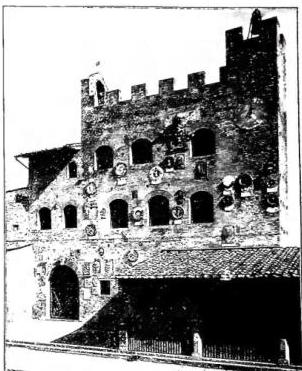
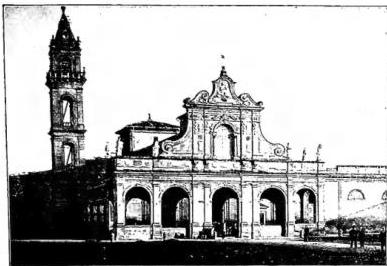
In 1852 Leopold revoked the Constitution and stooped to conclude a Concordat with the Holy See. There followed a Mazzinian penetration and there were political attacks hitherto unknown. Trials and perpetual banishments struck a good number of patriots, and Tuscan policy was directly regulated by Austria, which maintained the military occupation there until 1855. Before the war of 1859 began, Cavour offered the grand duke of T. the guarantee of Piedmont in exchange for an alliance. Leopold's refusal aroused disappointment and discontent in the army and drove the liberals to action. On Apr. 27 the grand duke had to leave the State. A provisional government was formed presided over by Ubaldino Peruzzi, which offered Victor Emmanuel II the dictatorship for the duration of the conflict. Napoleon III's veto forced the King to limit his consent to a temporary protectorate, sending as his commissioner in T. Carlo Boncompagni (v.). But the Tuscan government, directed by Bettino Ricasoli, kept the unitary principle alive, also thwarting a plan of Napoleon III intended to constitute a kingdom of central Italy to be assigned to his cousin Jerome; and when the armistice of Villafranca obliged Victor Emmanuel to recall his commissioner, it convoked a representative assembly that voted union with the Kingdom of Sardinia, a union validated by the plebiscite of March 15. Thus at the opening of the new session of the Subalpine Parliament, on Apr. 2, the representatives of T. also took their seats.
Bibliography30 works
Roberto Palmarocchi
III. CONCILIAR REGION OF TUSCANY
It is one of the regions into which Italy was divided by measures of the Sacred Congregation of the Consistory of 15 Feb. and 22 March 1919, and 29 Sept. 1933 (AAS, 11 [1919], pp. 72-74, 176; 25 [1933], p. 466) for the purpose of celebrating regional councils in place of provincial councils (v. CONCILIO, IV).
It comprises the territories of the ecclesiastical provinces of Florence, Pisa and Siena, and furthermore the archdiocese of Lucca, the dioceses of Arezzo, Cortona, Montalcino, Montepulciano, Pienza and the abbey nullius of Monte Oliveto Maggiore.
In the chief town of the region (Florence) is located the regional tribunal for cases of nullity of marriage; it also serves as a tribunal of appeal for cases judged in the first instance by the tribunals of the Umbrian (Perugia) and Marche (Fermo) regions. Appeal against the sentences of the Tuscan regional tribunal must be brought before the tribunal of the Romagna region (Bologna) or before the Sacred Rota (cf. Pius XI, motu proprio Qua cura of 8 Dec. 1938, in AAS, 30 [1938], pp. 410-13).
Pio Ciprotti
IV. ART
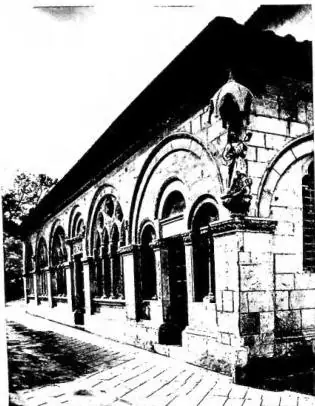
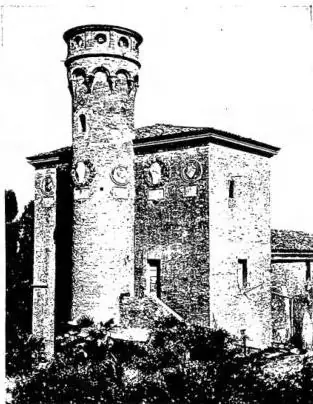
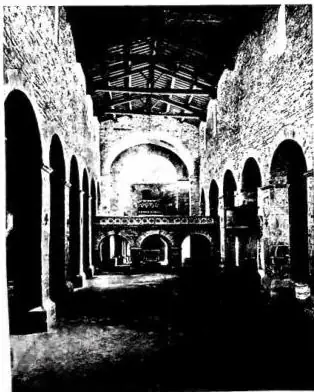
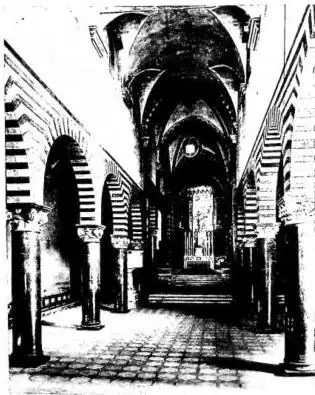
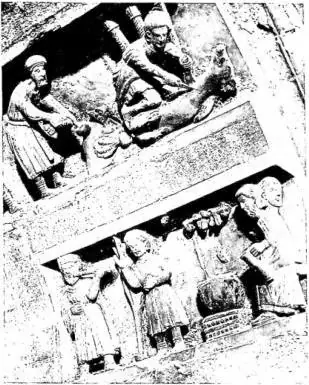
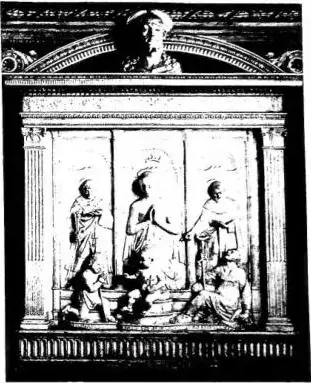
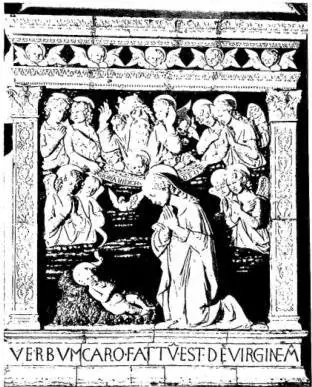
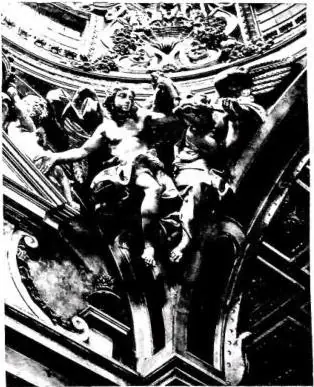
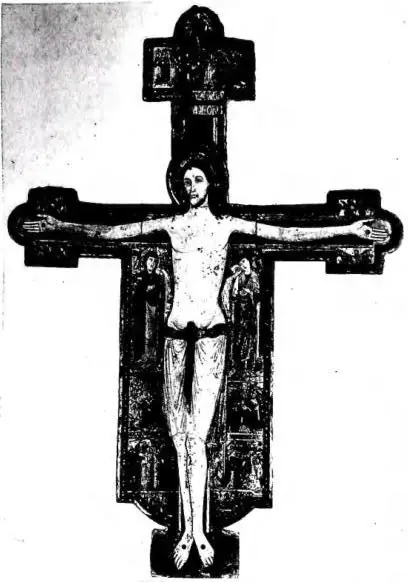
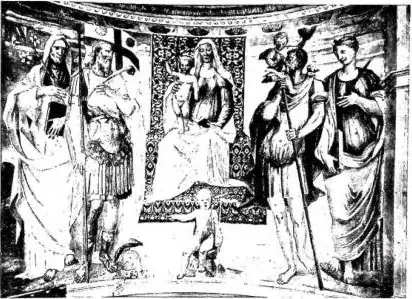
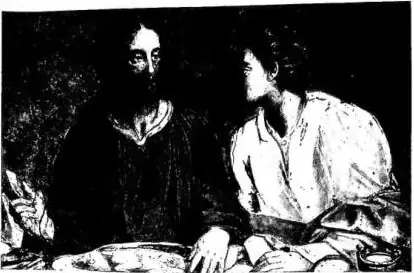
The artistic importance of Tuscany has been preponderant in the peninsula since antiquity. Indeed, it is a singular privilege of this region to have had, at two different moments many centuries apart, the capacity to rise to an incontestable primacy of culture, creating two original civilizations, endowed with great power of expansion and penetration.
Thus, in antiquity, the forms of Etruscan art were adopted by primitive Roman artistic production; and even the most evolved imperial art remained faithful to that substratum, preserving - despite undergoing Hellenistic influence - the caustic sense of psychological characterization that distinguishes indigenous portraiture from Greek. Likewise in the 14th century - having risen, through the impulse of its industrious cities, to a preeminent economic position in Europe - Tuscany would express in the Giottesque language a heritage common to several generations of painters, from one end of the peninsula to the other, not without reflections within the sphere of refined Byzantine culture itself. In parallel, through Simone Martini, interpreter of Sienese linear sensibility, it would influence the Gothic idiom. But it is the Renaissance, foreshadowed by these painters, that is the age destined to consecrate the primacy of Tuscany, bringing about one of the most important turning points in European civilization and manners. It may well be said that modern culture, in its most diverse creative manifestations, has its origin in Tuscan Humanism; and it depends on it directly or indirectly even in the very fundamental conceptions that governed human affairs for several centuries. As is logical, the most conspicuous results were achieved in Italy; so much so that it would be altogether impossible to trace a profile of the artistic history of our country without taking into account the Tuscan contribution (see the entry ITALY, VI. Art).
In the field of the figurative arts, the concept of Tuscan culture does not consecrate, as in literature, the primacy of one city over the others. If the few testimonies prior to the year 1000 (the cathedral of Chiusi, the Pieve of Arliano, the crypts of S. Antimo, S. Salvatore al Monte Amiata, S. Baronto, S. Salvatore in Agna) do not allow a sure judgment of a period that appears generically dominated by the activity of the Comacine masters; subsequently every province had flourishing schools clearly characterized and distinct as to conceptions, forms and results; nor can it be affirmed that Florence held preeminence before the appearance of Giotto.
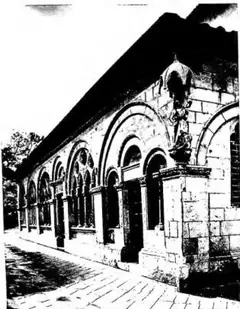
Florentine Romanesque architecture (v. FIRENZE), faithful to the spirit of paleochristian forms in its prototypes (the Baptistery, S. Miniato al Monte, SS. Apostoli), had in fact a rather limited expansion (no farther than Empoli and its Pieve); while the modes of Pisan-Lucchese architecture (v. PISA; LUCCA), reconciling Lombard premises with Oriental decorative suggestions, spread rapidly throughout all Tuscany from Pistoia to S. Quirico d'Orcia and influenced even beyond the limits of the region, directly in Sardinia (v.), indirectly in other parts of Italy (the question of a Pisan mediation for some interesting constructions of the Capitanata, from Manfredonia to Troia, is controversial).
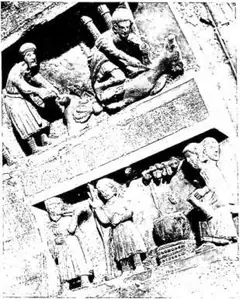
Similarly, sculpture had its major centers among Lucca, Pisa and Arezzo, cities in which the Lombard-Emilian influence was at first very strong, owing to the presence on site of artists from those regions (Guglielmo and Bonamico at Pisa; Biduino at Lucca, Gruamonte and Guido da Como at Pistoia; Giroldo da Como at Massa Marittima; Marchionne at Arezzo); but a true plastic renaissance would originate in the milieu of the Pisan masters, through the work of Nicola (v.), who may rightly be considered Tuscan, whatever his place of origin may have been, inasmuch as in the conditions of Tuscan culture he found the ideal terms for expressing his message.
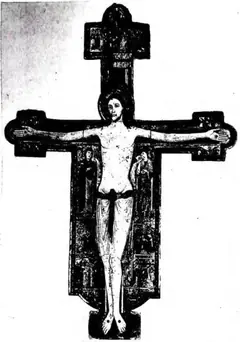
Thus in painting Pisa, which boasts in Giunta (v.) a a very strong personality, as is demonstrated by the wide diffusion of his manner in central Italy; Lucca with the Berlinghieri and Arezzo with Margaritone already stood out in the 13th century as centres of a figurative expression still outwardly bound to the Byzantine humus in its iconographic layout, but already set upon the conquest of a new plastic-pictorial sensibility, even before Florence, Coppo di Marcovaldo (v.), and Cimabue (v.), built the foundations for the affirmation of Giotto. It is quite true that Pisa, Lucca, Arezzo, Pistoia would soon yield before Florentine pre-eminence, but Siena, by contrast, slower in her rise, initially tributary to Pisa and even to Florence, would later succeed in putting forward her own claim to regional supremacy, which would vanish only with the triumph of the Renaissance.
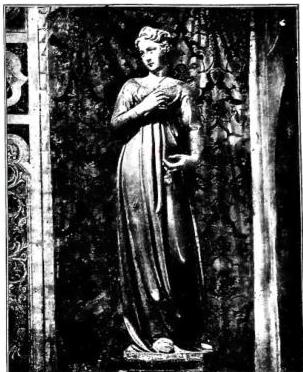
What capacity for reaction the Tuscan environment now possessed, through an acquired consciousness of value, is amply demonstrated by the process of transformation undergone by Gothic architecture both at Pisa and at Lucca and Siena, but above all at Florence, where in T. the ultramontane Gothic imported by the Cistercians remains an episode limited to a few peripheral abbeys (S. Galgano, S. Salvatore at Settimo); while the inflections of its language determine new characteristics in the structures of the strong local Romanesque tradition, also establishing certain fundamental aspects of Renaissance art.
Nor does the situation of the other arts appear dissimilar, even if the dramatic quality of a Giovanni Pisano seems to adhere with more willing commitment to the lesson of transalpine Gothic. To the Pisan-Sienese school, which has its greatest champions in the sculptors who were followers and pupils of Nicola, from Tino da Camaino (v.), to Nino Pisano (v.), there now stands opposed a Florentine school, with Arnolfo di Cambio and Andrea da Pontedera, intent on accentuating the detachment from Gothic linearism, inducing forms of more substantial plasticism. The pictorial vision of Giotto, like that of Ambrogio Lorenzetti or of Maestro Stefano, takes into account a rediscovery of human proportion, to define which the term "naturalism" was already proposed. But the followers (v., for example, under the entries GADDI
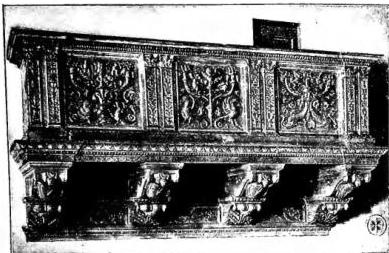
TADDEO; DADDI BERNARDO, etc.) strive to interpret it in ever more discursive and graceful forms, sapping that essential and rough manner which had been Giotto's greatest achievement. So that the second half of the 14th century seems to mark a triumph of Sienese grace bursting into the Giottoesque iconography by then widespread everywhere. This eclecticism, encompassing sculpture and painting (from the Orcagna to Andrea di Firenze, Agnolo Gaddi, Spinello Aretino, Francesco Traini, Giovanni da Milano, Antonio Veneziano), would exhaust itself in ever more weary repetitions until the dazzling and revolutionary advent of Filippo Brunelleschi (v.), Masaccio (v.), Donatello (v.), who, each in his own artistic domain, would impose the new Renaissance vision.
The 15th century thus presents itself as the great century of Florence. The unitary coherence of the concepts informing the new culture (v. under the entries FIRENZE; RINASCIMENTO; UMANESIMO, etc.) had an affirmation of extraordinary effectiveness, because it was able to express a numerous array of eminent masters; and it stimulated their most gripping and original outcomes, in a vertiginous press of commissions and works. We shall limit ourselves to recalling, for architecture, Michelozzo, Giuliano and Benedetto da Maiano, Andrea Cavalcanti, Simone Pollaiolo known as il Cronaca, Giuliano and Antonio da Sangallo the Elder, Ventura Vitoni, working in the orbit of Brunelleschi; then L. B. Alberti and Bernardo Rossellino; and, outside Florence, Antonio Federighi, Francesco di Giorgio Martini, both Sienese, Matteo Civitali, of Lucca; among the sculptors, Niccolò Lamberti and Piero his son, Bernardo Ciuffagni and Nanni di Bartolo, still uncertain between the ancient and the new; then Nanni di Banco, Brunelleschi, Lorenzo Ghiberti, Luca, Andrea and Giovanni della Robbia, disseminators of glazed terracotta, Bernardo and Antonio Rossellino, Desiderio da Settignano, Agostino di Duccio, Mino da Fiesole, Benedetto da Maiano, the goldsmiths and bronze-workers Antonio Pollaiolo and Andrea Verrocchio, besides the Sienese Jacopo della Quercia, Giovanni Turini, Antonio Federighi, Lorenzo di Pietro known as il Vecchietta, Francesco di Giorgio Martini, Neroccio di Bartolomeo, Giacomo Cozzarelli and the Lucchese Matteo Civitali, surrounded by pupils and provincial artists (such as Pagno di Lapo, Urbano da Cortona, Simone Strini, Bertoldo, il Bellano, Pietro Torregiani, etc.) capable of producing, in moments of inspiration, works not unworthy of the masters. Outside Florence there worked, in the transitional period, certain painters (Pisanello, Masolino da Panicale, etc.) important for the consequences that their presence had in the Renaissance beginnings of the local schools, for example in Lombardy and at Verona. But in Florence, from Paolo Uccello to the Beato Angelico, to Domenico Veneziano, the makers of the early Renaissance fell under the spell of the Masaccesque vision of the stories of the Carmine. There also drew from it artists of the stature of a Piero della Francesca, destined to be the disseminator of the new language in Umbria, the Marches, Emilia and Latium; as well as tasteful and brilliant illustrators such as Benozzo Gozzoli and, at Siena, Domenico di Bartolo. Meanwhile Filippo Lippi, Andrea del Castagno, and on a lesser note Alessio Baldovinetti, steered Florentine painting toward those solutions of dynamic linearism that characterize the second half of the century, in the work of Antonio and Pietro Pollaiolo, Andrea del Verrocchio and above all Sandro Botticelli. The detached composure of the early Renaissance was being replaced by a restlessness and dramatic anxiety, especially in the figurative cycles of Luca Signorelli, of Cortona, which prepared the ground for the terrible investigations of Michelangelo. The move toward the "grandeur" of 16th-century conceptions takes place, meanwhile, at the close of the century, through contacts and exchanges that broaden the horizon of Florentine culture, when Flemish artifacts flow into the city and artists arrive there from every quarter, even the greatest
(such as the Umbrian Perugino, or the Marche painter Raphael), to learn the Florentine lesson and to contribute their own original solutions.
Siena meanwhile lingers in refined and precious chromatic researches, with Stefano di Giovanni, known as il Sassetta, Giovanni di Paolo, Sano di Pietro, engaged - as Brandi writes - "in a continuous struggle between an exuberant interiority and an antiquated culture." A misrepresentation of Florentine forms will be found in artists more attentive to the new, such as Matteo di Giovanni, Neroccio di Lando and Francesco di Giorgio Martini, the latter more receptive than the others to the teachings of Lippi and Baldovinetti.
The mediation between the 15th and 16th centuries is assigned in Florence to artists such as fra Bartolomeo, il Ghirlandaio, Filippino Lippi, Piero di Cosimo, Francesco Bugiardini; but it is certain that the enunciation of the new artistic language belongs to Leonardo and Michelangelo, typically Tuscan geniuses, to whom is added Raphael, at the apex of that parabola which had begun with Giotto. Leonardo's influence is not widely perceptible in Tuscany: his chiaroscuro is perhaps noticeable only in the works of Filippino Lippi and Piero di Cosimo. But through him Tuscan culture establishes itself first in Lombardy and then in France.
In the 16th century Florence yields its national primacy to Rome, which avails itself for its rise of the best Tuscan artists, inducing them to long and fruitful sojourns. But if the axis of attraction now shifts from the Arno to the Tiber, Tuscany remains active for a long time, expressing, in the first masters of Mannerism, another moment of happy prolificacy, to which contribute in architecture the prototypes of Michelangelo and Raphael, from which draw inspiration Mariotto Folfi, Bartolomeo Ammannati, Bernardo Buontalenti, Giovanni Battista Dosio, Giorgio Vasari, Baccio d'Agnolo; at Siena Baldassarre Peruzzi; at Lucca Francesco Marti.
Sculpture has its foremost innovator in Andrea Sansovino, while Benedetto da Rovezzano, Andrea Ferrucci, Baccio di Montelupo, Francesco Rustici are active; but Michelangelo's influence will soon become exclusive for Raffaello da Montelupo, Giovanni Angelo Montorsoli, and indeed overwhelming for Vincenzo de' Rossi. Other masters preserve, even in their intellectual eclecticism, a certain ease and independence of manner, such as Jacopo Sansovino, il Tribolo, Ammannati, Benvenuto Cellini, il Lorenzetto, Vincenzo Danti, Taddeo Landini, Francesco da Sangallo, Giovanni della Opera. The century will close on an active note with the production of Pietro Tacca and Giovanni Caccini and of the foreigners Pietro Francavilla and Giambologna. At Pisa Stoldo Lorenzi establishes himself; in Versilia the Stagi work; at Siena Lorenzo Marrina; at Arezzo Simone Mosca.
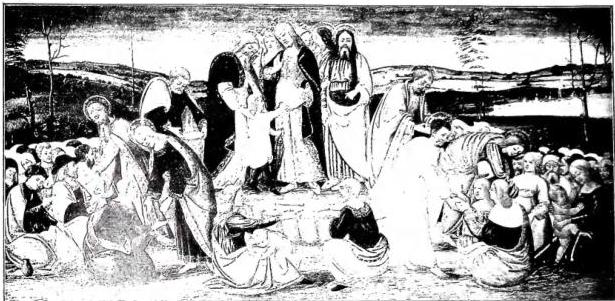
Among the painters, while Albertinelli remains faithful to the lesson of Fra Bartolomeo, and Francesco Granacci repeats the Ghirlandaio schemes, Andrea del Sarto attempts an approach to the tonal manners of Venetian painting. Pontormo and Rosso excel, original and disconcerting personalities of a positive Mannerism; before the Raphaelesque and Michelangelesque imitation brings about the labored academic Mannerism of Giorgio Vasari, Alessandro Allori, Francesco Bachiacca, il Francisbidio; from which only Francesco Salviati and Bernardino Poccetti as decorators, and Angelo Allori, known as il Bronzino, as a portraitist, are barely saved. At the end of the century Santi di Tito will attempt a return to the sources, with scant result.
Outside Tuscany, the best artist produced by the Michelangelesque school is undoubtedly Daniele da Volterra. In Siena there is an opening rather toward the Umbrians than in the direction of Florence. Its interpreters are Bernardino Fungai, Gerolamo del Pacchia, Andrea del Brescianino. Peruzzi brings there the Raphaelesque gospel, reaffirmed later triumphantly, in the Leonardesque conjuncture, by the Piedmontese Giovanni Antonio Bazzi, known as il Sodoma, who became a Sienese by adoption. Domenico Beccafumi, the most original artist of the Sienese 16th century, proceeds, apart, in a search for new expressive manners, which recalls Pontormo and Rosso. The Mannerism of Ventura Salimbeni prepares the local school, by now exhausted, for the irruption of the Baroque. With the end of the century the productive cycle of Tuscan art seems irremediably closed. The region, still a dispenser of creative energies in the 16th century, fails to preserve the same driving force, but, as if exhausted, moves irremediably toward becoming a tributary province, in the two following centuries, of the major centers of Baroque culture, Rome, Naples and Bologna. Among the architects there is a lack of outstanding personalities in the 17th century. From Matteo Nigetti, a pupil of Buontalenti, to don Giovanni de' Medici, to Gherardo Silvani, to Lodovico Cardi known as il Cigoli, to Zanobi del Rosso and Ferdinando Ruggieri, they do not go beyond the cultural positions of the late Mannerism, or they translate even the manners of the Berninian Baroque into academic formulas.
Sculpture is in an even more disastrous situation. The few artists of merit seek elsewhere, and especially in Rome, to adapt themselves to the new demands of taste (for example Agostino Cornacchini, and, in the 18th century, Filippo della Valle). The most fortunate, Francesco Fancelli, will become court sculptor in London. Only at the end of the 17th century and in the 18th century will artists such as Battista Foggini and the Roman Innocenzo Spinazzi, a teacher in the Florentine Academy, attempt to revive the fortunes of sculpture, without however emerging from a dignified eclecticism. Equally substantial is the exodus toward Rome of the best-equipped Florentine painters, such as il Cigoli, Domenico Cresti known as il Passignano, Giovanni da S. Giovanni, and then Luti, Conti, Redi. Some renown is acquired in their homeland by Jacopo Chimenti known as l'Empoli, Matteo Rosselli, Baldassare Franceschini known as il Volterrano, Carlo Dolci, Francesco Furini, Lorenzo Lippi. But Florence prefers to summon for the most demanding decorations the Veronese Jacopo Ligozzi, Pietro da Cortona, Luca Giordano, and, at the beginning of the 18th century, the Venetian Sebastiano Ricci. The situation of Siena is identical, from which the best pupils of the eclectic Salimbeni, such as Alessandro Casolani, Pietro Sorri, Ventura Salimbeni, Francesco Vanni, escape in the direction of Rome, Genoa, Pavia, Florence. More gifted than the others, in his Caravaggesque moment, appears Rutilio Manetti, active also in his homeland. From Lucca, where Pietro Paolini works, Giovanni Coli, Filippo Gherardi and Pietro Testa known as il Lucchesino come to Rome, in the following of Pietro da Cortona. The latter is also the animator of a lively school in his native city. Pistoia supplies Rome with Giacomo Giminiani and Lazzaro Baldi; and Pisa with Orazio Gentileschi and Orazio Riminaldi.
Neoclassicism, with Gaspare M. Paoletti, Pasquale Poccianti, and Gaetano Baccani, produces in Florence works not unworthy of the great local building tradition. In the second half of the 19th century, during the fervor of urban renewal that characterizes the period following the achievement of Italian unity, Giuseppe Poggi rises above the others, the planner of the passeggiata dei Colli and of Piazzale Michelangelo in Florence. In sculpture the Canovian imitation is the general rule throughout the region, until Luigi Bartolini imposes his discreet anti-classical reaction with the "return to nature" that inaugurates the Romantic season. His Tuscan pupils Luigi Pampaloni, Pio Fedi, Raffaello Romanelli are feeble; but his manner will have wide echo also in other regions, influencing above all Vincenzo Vela. The best Tuscan Romanticism is represented by A. Cecioni, a spontaneous artist, who fights a tenacious battle against the academy personified in Florence by G. Dupré. In painting Florence returns in the 19th century to being in the avant-garde, both in the first Neoclassical period, through the work of Pietro Benvenuti and Luigi Sabatelli, and in the moment of the fortunes of historical and genre painting, with Giuseppe Bezzuoli, Antonio Ciseri, Antonio Puccinelli and Stefano Ussi. But it is with the movement of the "Macchiaioli"
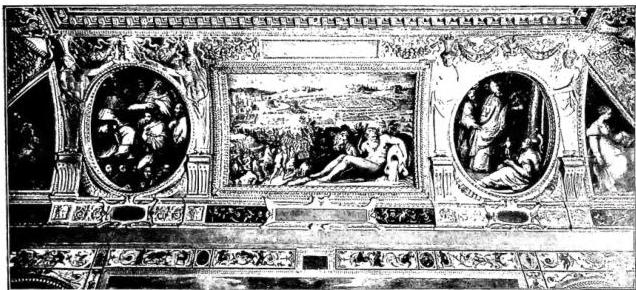
that Tuscany regains the national primacy. Masters such as the Livornese Giovanni Fattori, the Modiglianese Silvestro Lega, the Florentine Telemaco Signorini count among the most interesting personalities of the century, even beyond the national limit. Around them, carrying out the same program of fidelity to the intimate aspiration for the conquest of artistic freedom, which is in the first place awareness of the visual values of painting, in a climate akin to that of French Impressionism, work artists attracted from every part of Italy; but mainly Tuscans, such as the already mentioned Cecioni who was the theorist of the group, the Livornese Serafino de' Tivoli, the Florentines Cristiano Banti and Raffaele Sarnesi, the Pisan Odoardo Borrani. These artists prefer secular subjects, and their contribution to sacred art is therefore scant. The legacy of the Macchiaioli remains alive and operative in the region also in the period of Divisionism and then of Cubism and Futurism. Contemporary Italian painting sees in the front rank some Tuscan masters who passed through various avant-garde experiences, but remained substantially faithful to that engagement with reality and nature, which is proper to the Tuscan tradition. Let us name the Livornese Amedeo Modigliani, who lived in Paris, the Versigliese Lorenzo Viani, the Florentines Ardengo Soffici, Ottone Rosai, the Cortonese Gino Severini. In sculpture Libero Andreotti was an artist sensitive to the solicitations of modernity interpreted with a fragile and springy sense like that of the ancient Sienese masters.
Of modern urban renewal Tuscany possesses some prototypes that insert themselves in the midst of current polemics, such as the station of S. Maria Novella in Florence, due to a group of Florentine architects led by Giovanni Michelucci.
No profile of the minor arts is traced here, for which reference is made to the individual entries (ARAZZO; CERAMICA; FERRO BATTUTO; INCISIONE; MUSAICO; OREFICERIA; RICAMO; TARSIA, etc.); we shall limit ourselves to recalling how Siena, Florence, Lucca, Arezzo share the boast of having been able at every moment to nourish most flourishing schools, to whose growth even supreme artists contributed, and complexes of artisans of world fame.
Bibliography6 works
1936; A. M. Brizio, Ottocento e Novecento, ibid. 1939; P. d'Ancona, Il Rinascimento, ibid. 1939; G. Fiocco, La pitt. toscana del '300, Novara 1942; Pittura ital. del '200 e '300, catalogue of the Mostra giottesca of Florence of 1937, edited by G. Sinibaldi and G. Brunetti, Florence 1943; E. Cecchi, Trecentisti senesi, Milan 1948; C. Brandi, Quattrocentisti senesi, ibid. 1949; G. Galassi, La scultura fiorent. del '300, ibid. 1949; P. Toesca, Il Trecento, Turin 1951; G. Kaftal, Iconography of the Saints in Tuscan Painting, Florence 1952.
Riccardo Averini
V. FOLKLORE
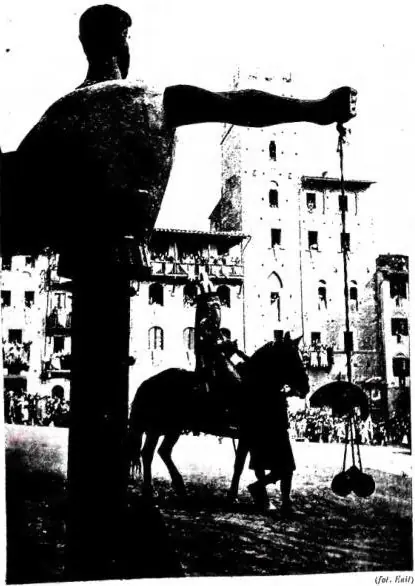
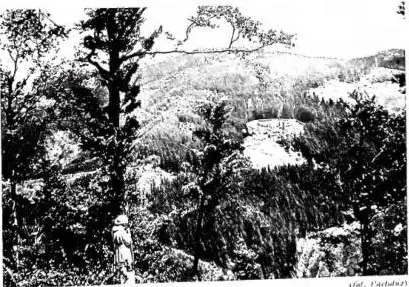
With regard to popular literature, Tuscany represents a very lively zone of production and irradiation. One of the most important forms of monostrophic lyric song, the rispetto, arose in Tuscany; although it has the same number and length of verses, it is distinguished from the Sicilian ottava by its rhyme and stylistic procedure: whereas in the canzuna (ab) the concept unfolds freely throughout the song, in the rispetto (ab ab cc dd) "it must be condensed in the quatrain with alternating rhymes, and then strike again, in the ripresas, on the particular that matters most; or else hint in the first part at external circumstances, in order then to reveal the true feeling in the second." The rondinella is, as regards the music, the most beautiful Tuscan rispetto. The stornello is likewise extremely widespread in Tuscany. Rispetti and stornelli are customarily sung interspersed with a refrain, also called rifiorito, consisting of a little stanza of two or four verses. Among the principal forms of Italian popular poetry that have flowed into Tuscany, the epic-lyric song appears as largely traditional, whether preserved in its original metric form of the French type (that is, "with verses ordinarily divided into two half-lines, equal or not; linked, by assonance rather than rhyme, into stanzas often rendered, in appearance, more or less complicated by the repetition of verses or hemistichs and by the refrain"), or profoundly transformed in meter, then diffused in this new form toward the Veneto on the one hand, and toward central Italy and Sardinia on the other. Besides the better-known songs of this kind, La donna lombarda, Cecilia, etc., the rarer ones are also documented, such as La fanciulla del mare, La sposa di Susa, L'innamorato timido and L'amante trascurata. From Piedmont there also descend into Tuscany epic-lyric songs on religious subjects (for example, Maria Maddalena, and, for the opening, S. Barbara), just as from central Italy come, and are poorly preserved, narrative religious songs in hendecasyllables: but more widely diffused among the people are the storie in ottava form. There are numerous testimonies of enumerative or iterative songs: La mosca mora, Bella che vai al mercà?, Chi l'ha mangiata la testa, la testa dell'anitra mia? An ample documentation of all this material is provided by the manuscript collection put together, with sure and precise criteria of inquiry and selection and with continuous examination of the problems of criticism and history, by Michele Barbi, which is generally designated by the abbreviation RB: an edition in several volumes is being prepared, edited by V. Santoli, P. Toschi and G. Vidossi.
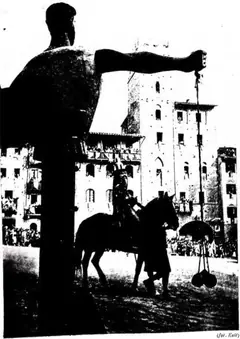
Of very notable importance is the Tuscan popular theater. There survive in it, rising to the level of true and proper spectacles, traditional dramatic forms sprung from popular feasts and ceremonies, such as the maggio, the bruscello, the befanata, the zingaresca, the testamento. Composed almost entirely in quatrains of octonarii are the maggi drammatici, which treat religious, historical and romantic subjects, and have remained confined to the countryside of Lucca, Pistoia, Pisa and Volterra; very brief and scanty in action are the maggi of Arezzo, which in this resemble the bruscelli rather, though offering a greater variety of meter. The bruscello, written in ottava or sestina, derives its name from a little tree or branch of laurel, holm oak or pine, adorned with ribbons and flowers, which, always carried in the hand by one of the company and then planted in the ground, constitutes the center of the popular performance: its subjects, besides that of the hunt (the origin of this farce goes back, according to some, to certain masquerades that took place in the Sienese countryside about four centuries ago, in which a kind of nocturnal hunt was mimicked with a lantern hung from a limed branch, which was called precisely bruscello), may be the contrast between a young man and an old man for the hand of a girl (this form is found, under various names, also outside Tuscany), or also legendary and historical episodes, such as the Distruzione di Troia, Pia de Tolomei, gl'Italiani in Africa, etc. The befanate, religious or profane, in little stanzas of four octonarii, mostly with interlocking rhymes, are sung, in the Lucchese countryside, by bands of young men, through the streets of the village before the houses of the wealthier, in one or two choruses, with accompaniment of violin or barrel organ. "Written in stanzas of four verses — three septenarii and one quinarius — with the second rhyming with the third, and the fourth with the first of the following stanza," the zingaresca and the testamento "resemble each other in the plot and in the character of the persons who take part in them; except that in the zingaresca the principal part is always sustained by a gypsy woman, who avails herself of magic art for the benefit of unhappy lovers, removing with her incantations the impediments that stood in the way of their marriage; — whereas in the testamento the [comic motif] is constituted by the ridiculous figure of the doctor (notary) and by the parody of wills or marriage contracts (Giannini). All these performances are connected with the feasts of carnival or of spring and have the meaning of rites of expulsion and propitiation. On the day of the Ascension fall two of the gayest feasts of the spring season: that of the grillo in Florence and that of the fiaschetta in Monte Amiata, the latter so called because many young men carry around their necks a fiaschetta full of wine. With great splendor are celebrated the patronal feasts, and calendar feasts in general, in which are almost always recognizable ritual elements proper to cyclical ceremonies: one recalls the feast of St. John in Florence, with pompous processions and allegorical floats, in which representatives of the various city guilds participate; that also Florentine one of the rificolone, dedicated to the nativity of Mary (Sept. 8); that of St. Ranieri in Pisa for the imposing illumination (luminara) along the Arno; that of St. Croce in Lucca "in which is exposed to the veneration of the faithful a very ancient image of Jesus crucified, which, according to the legend, would have been made by Nicodemus." Famous finally are the feasts held in Siena on July 3 for the Visitation and on Aug. 15 for the Assumption of Mary, on the occasion of which the traditional palio is run. Of this, on the basis of an ethnographic comparison with the ancient rites of the beginning of the annual and seasonal cycle, one of the principal being precisely the representation of a contest or struggle, race or armed duel, one succeeds in identifying the original ritual meaning and propitiatory character, which it has not entirely lost, even while historicizing itself and adapting to the new environment: thus the Carroccio, the procession of the 17 contrade with their respective military captains denounce the primitive sacred and warlike character of the festival, while the display of costumes, the waving of flags and the very decoration of the carroccio give the event a notable spectacular color. Other famous festivals show a similar ritualistic meaning and spectacular color, such as the giostra del Saracino which is run at Arezzo on the day of St. Donatus (7 Aug.), patron of the city, and the gioco del ponte at Pisa, which historically is traced back to the Lombard era. Also in the scene of the explosion of the cart, which takes place on the morning of Holy Saturday at Florence, one can recognize in the fire the most ancient ritual element, over which has been superimposed the legendary motif that links its origin to the Holy Sepulchre: Florentine tradition holds in fact that the first spark of the sacred fire was once struck from three little pieces of stone taken from the Sepulchre of Christ and brought to Florence by messer Pazzino de' Pazzi; and the rite becomes spectacle with the invention of the cart (common, moreover, to all sacred festivals) and the lighting of the fire by means of the dove which, as a symbol of the Holy Spirit, sets out from the high altar at the very moment of the Resurrection, running along a wire, and from the behavior of the dove and the manner in which the explosion of the cart occurs the Tuscan peasants, who flock to the piazza del Duomo in Florence, draw omens for the harvests, Easter too being a festival of seasonal beginning.
Among the customs that mark the cycle of man, some deserve particular mention either for the singularity of certain elements or for comparison with those of other regions. In a large part of Tuscany it was once customary, and still is in some villages, to hold a few days after the baptism an abundant meal, in which the woman in childbed takes part, called in the Florentine and Pisan areas scappanata because all the dishes were originally made of capon meat, in the Aretine area cicallo, at Pian di Lucca the impagliata and at Rosignano Marittimo the riconoscimento because, with gifts of eggs and poultry, the guests officially acknowledge the new social status of the woman in childbed. The marriage proposal (chiesta) is generally made through the cozzone or marriage intermediary. Picturesque in the Pisan hills and in the surroundings of Siena is the scene of the transport of the bride's trousseau, on the eve of the wedding, on a cart drawn by oxen adorned with ribbons and bells; no less picturesquely in the Barghigiano area the trousseau is transported in open baskets, carried on the head by young girls who advance in procession. In some villages there survives the custom of the serraglio or parata, once in force in almost all of Tuscany and consisting in barring the road to the newlyweds with ribbons which were then removed in exchange for money or a gift of confetti; in the Lucca area the serraglio was made only when the bride was going outside the village, and in that case the obstruction solemnized a rite of material passage. In the Sienese comedies and in various books of memoirs of the sixteenth century, in the Tuscan synodal constitutions and even in some almanacs of the last century, old customs of very notable ethnographic interest are documented, which are found alive and observed in the present tradition of the common people of other countries and regions; the toccamano, a ritual form well known in Italy (v. ROMAGNA) and very widespread in France; the kiss of the bride in church, to which corresponds in Sardinia the ceremony of the embrace of the bride by the groom and his companions; the breaking of the bowl, a vestige of a magical ceremony (potus et biberagium) practiced to consolidate the affective union, which in other places is replaced by the breaking of the nuptial flatbread, or even of a little cinnamon stick to confirm the nuptial oath before the notary; the blow to the groom during the nuptial celebration, and precisely at the moment of the blessing, when he declares his assent, which appears in many pictorial representations of the marriage of the Madonna (v., for example, the painting by Beato Angelico in the Galleria degli Uffizi and by Giotto in the Cappella degli Scrovegni): this last rite, which is traced back to the Roman emancipatio and manumissio, has so far in Italy a counterpart only in Romagna, and some trace in Lombardy, but it is perhaps not far from the truth to connect with it the very widespread custom of friendly greeting with a slap on the shoulder. In the contadi of Lucca and Pistoia there persists the custom of the scampanata for widowers who enter into marriage. Of the funeral rites, singular is the one in force, until not many years ago, in the Lucca mountains, of carrying to the cemetery children who died before the age of seven, in a basket adorned with ribbons and held on the head by a young girl.
Elements useful for characterizing Tuscany folklorically are offered by the life of the peasants and shepherds: their clothing, household objects and work tools, of which beautiful examples from the Lunigiana are preserved in the Museo civico della Spezia, constitute documents of notable ethnographic-comparative interest. The short trousers of the costume of Biassa, for example, the wool leggings used in the Pontremoli mountains and the two-colored wool cap, black inside and red outside, folded over the ear, closely recall details of the Sardinian-Corsican male costume. The buccina made from the tritonjum nodiferum, which at Montelungo, until a short time ago, was used instead of bells, from Holy Thursday to Holy Saturday, to call the faithful to church, and once by the Apuan shepherds to frighten the wolf with its sound, while today it serves for the scampanata (and in the upper Val di Magra the mugni use it to notify the peasants who have to grind), is found among the most common objects used by Corsican shepherds. Singular finally is the wine horn, a hollowed-out ox horn, closed at the base and pierced at the tip, which the peasants of Veppo carry slung across the shoulder. In the distribution of the principal forms of the rural house, the type with an external staircase, with the dwelling superimposed on the rustic part (cellar, storeroom, etc.), proves dominant, especially south of the Arno and on the island of Elba, and thus shows itself to be very ancient and to have had in the past a very wide diffusion. - See plates XXXV-XXXVIII.