
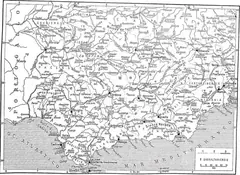
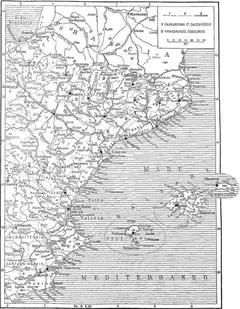
SPAIN. - The Spanish State embraces a little more than 8/10 of the territory and a little less than 8/10 of the population of the Iberian Peninsula. With 505,720 sq km of surface area (including the Canary Islands), it occupies, in terms of size, second place in Europe (excluding the U.S.S.R.), after France and at no great distance from it. As for population, however (28 million inhabitants in 1950), it stands in seventh place, slightly ahead of Poland. Its territory borders only two States: Portugal (989 km of frontier) and France (667 km), if one does not take into account the tiny Republic of Andorra (in the Pyrenean sector) and Gibraltar at the southern extremity.
I. GEOGRAPHY
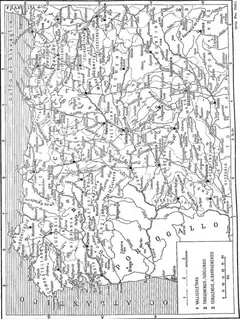
S. consists of a vast inner plateau (the meseta) which a series of median uplifts (sierras) divides into two parts (Old and New Castile) and which other peripheral uplifts cut off from maritime influence: the Cantabrian Mountains and the Pyrenees to the N., the Iberian Mountains to the NE., the so-called Catalan chain to the E., the Sierra Nevada to the S. This mountain barrier is reinforced locally by other more internal uplifts, separated from the former by depressions, which correspond to the basins of the Ebro to the N., between the Pyrenees and the Iberian Mts., and of the Guadalquivir to the S., between the Nevada and the Sierra Morena. The Pyrenees do not reach heights equal to the Alpine ones (Pico de Aneto: 3404 m.), but, compact and cut by few and high passes between the one and the other slope, they constitute a defensive wall that at all times has isolated the peninsula from neighboring western western Europe. The Sierra Nevada culminates in the Cerro de Mulhacén (3481 m.), the highest peak in all of Europe apart from the Alps: on it there is a small glacier, the southernmost among European ones. All the other mountain groups have far more modest dimensions and heights. Of the two parts that form the meseta, the northern one (Old Castile) is on average about 700-900 m. high: the southern one about 500-600; but both slope from their steep eastern edges toward the Atlantic, where they end in broad terraces. The morphological contrast between interior and periphery is accentuated by the climatic contrast that follows from it: to the oceanic climate of the latter, with abundant precipitation (to the N.) or even modest (to the E.), there is opposed, in the meseta and in the inner basins, a typical continental climate, with strong diurnal and annual variations and with a scarcity of rain almost everywhere. While thus the coastal or subcoastal regions present a landscape rich in local varieties and with more or less luxuriant vegetation, the plateau corresponds to an arid and mountainous steppe, which sometimes (La Mancha) passes over into outright desert.
Iberia, and all the more so S., is an essentially agricultural country, notwithstanding the broad possibilities that mineral resources offer for the development of industries: on the whole, moreover, the economic potential of the country is certainly far greater than appears from the current situation, in which are reflected the consequences of the recent civil war and, no less clearly, those of the long decline that preceded it. Arable land represents less than 1/5 of the territorial surface: about half of it destined for cereals. In reality, agriculture finds its optimum in tree crops: the olive (S. is at the head of world production of oil), the vine (14.3 million hl. of wine: S. is in third place in Europe), citrus fruits and fruit trees (figs and almonds), but this production concerns above all the peripheral regions (Andalusia for oil, Catalonia for the vine, the Levante for citrus fruits). The meseta and the inner regions are the domain of cereal growing: half of the land is destined for wheat (30-35 million quintals; above all the two Castiles), alongside which barley (10-15 million quintals), maize (5-6 million), rye, oats are important; and even more the potato (30-40 million quintals), sugar beet and legumes. Natural meadow, pasture and scrub occupy almost half of the territorial surface, but in livestock raising sheep (16 million head) prevail over goats (4.2) and cattle (3.3): the latter find more favorable conditions in the more humid northern regions, while sheep and goats adapt to the central and southern ones, and especially to the meseta. Sericulture and beekeeping are notable, and even more so fishing, which feeds a flourishing canning industry (Galicia). Forests are scarce, but cork is a very widespread species and used in industry.
The subsoil of S. is rich: coal (11 million tons: almost all extracted from the Asturian mines) covers internal demand, but is unequal to a processing industry that would want to treat the many available raw materials: iron (region of Santander, of Bilbao and of Oviedo), sulfur pyrites, copper (Sierra Morena, Rio Tinto), lead (Sierra Morena, Peñarroya), zinc (Santander), mercury (Almadén), tungsten (Salamanca), potash (Catalonia), rock salt, etc. For mercury, lead, zinc S. figures among the major European producers. Moreover the mining regions are almost all peripheral, and feed above all the export of raw material.
Of the industries the most developed are the textile ones (Catalonia); in the rest one is still far from covering internal demand, despite the great progress achieved in recent years, and the variety of branches represented there.
The Spanish population appears on the whole more compact from the religious point of view than from the ethnic one, because of the regional varieties due to its millennial history and to the many, different contributions of blood that have flowed into it and that are reflected, more than in the centrifugal tendencies of some of these regions (Catalonia), in the vigor of local traditions and of the literature itself of some of the best individualized groups (Catalans, Galicians, Basques, etc.). This population is very variously distributed: the maximum densities are found in the northern coastal regions (Biscay, Catalonia), the minimum in the interior, whose indices descend, over large areas, below 25 inhabitants per sq km.
The Spanish Constitution is that of an authoritarian State, at the head of which is now the Caudillo, who since 1942 has been assisted, in the government of public affairs, by the restored Cortes; a legislative body composed of 438 members, only partly elective.
| Historical regions | Area sq km | Pop. census 1948 (in 1000 inhab.) | Density per sq km | Capital (and relative population in 1000 inhab.) |
|---|---|---|---|---|
| Andalusia | 87218 | 5219 | 60 | Seville 383 |
| Aragon | 47609 | 1059 | 23 | Saragossa 267 |
| Asturias | 10895 | 837 | 77 | Oviedo 104 |
| Balearic Islands | 5014 | 407 | 81 | Palma 138 |
| Basque (Provinces) | 7260 | 956 | 131 | Bilbao 231 |
| Canary Islands | 7273 | 680 | 91 | Las Palmas 150 |
| Castile (New) | 72347 | 3129 | 43 | Madrid 1440 |
| Castile (Old) | 50221 | 1577 | 32 | Burgos 70 |
| Catalonia | 31940 | 2891 | 91 | Barcelona 1240 |
| Estremadura | 19940 | 511 | 30 | Badajoz 85 |
| Galicia | 28449 | 2496 | 86 | La Coruña 125 |
| León | 53338 | 1732 | 32 | León 53 |
| Murcia | 26179 | 1093 | 42 | Murcia 215 |
| Navarre | 10421 | 370 | 35 | Pamplona 73 |
| Valencia | 23304 | 2177 | 93 | Valencia 527 |
| Spain | 503061 | 25878 | 51 |
Bibliography15 works
Giuseppe Caraci
II. CIVIL HISTORY
1. Roman rule
When the Romans conquered the Iberian peninsula, they found a country in which a profound mixing of races had already taken place. The oldest stratum of the population was formed by Ligurians and Iberians: in the 6th century B.C. Celtic tribes had pushed, according to Herodotus, as far as the Gulf of Cadiz; the linguistic traces of the Celts stop at the Tagus. The mingling of these elements gave rise to the general term Celtiberians. On the coasts before 1000 B.C. the Phoenicians used the trading post of Cadiz for the tin trade of the Cassiterides and that of Tartessus (Tharsis) for the silver of Andalusia; from Massalia the Phocaeans had come down along the coasts. The Iberian mineral wealth, since prehistoric times, was important in the formation of Mediterranean civilization. The Carthaginian program of creating a vast Afro-Iberian empire met with opposition from Rome. In 210 the consul Gnaeus Scipio appeared in S.; in 206 Baetica was conquered, the first colony, Italica, was founded, and from that year the era of the Roman province of S. begins.
After Zama, the Roman legions began a bitter struggle with the rebellious Celtiberian tribes; amid these upheavals the two provinces called Citerior and Ulterior were organized (197). Violent repressions were followed by not a few insurrections, and only the destruction of Numantia after a heroic defense in 133 B.C. marked the definitive pacification. There was a revival with the rebellion of Sertorius, caused by the struggle between Marius and Sulla; the rebel leader was assassinated in 72 B.C.
The development of civil life in the provinces organized by the Roman proconsuls was long disturbed by the incursions of the independent tribes of the Astures and Cantabri, which only Augustus subdued during his stay in S. between 27 and 25 B.C. Then the provinces received their definitive arrangement: Tarraconensis (Citerior), Lusitania, Baetica. The vast peninsula found in the Roman occupation a notable political and civil unification.
The Roman colonies and the old centers reorganized as municipia were centers for the diffusion of the Latin language. Above all the southeastern cities succeeded in integrating perfectly into Latin civilization and became notable centers of culture; Latin letters had from S. not a few writers of great importance: Seneca, Lucan, Martial, Pomponius Mela, Columella, Quintilian; politics had various great emperors, Trajan, Hadrian, Marcus Aurelius, Theodosius I. During the imperial age, few political events are to be remembered for the Spanish provinces. In the Diocletianic reorganization of the Empire, S. formed a diocese of the prefecture of Gaul and was divided into five provinces: Lusitania, Tarraconensis, Baetica, Carthaginensis, Gallaecia.
2. Visigothic rule
In 409 some Germanic tribes that had invaded Gaul in 406 crossed the Pyrenees and began to plunder the Spanish provinces: Suebi and Asdingian Vandals in Galicia, Alans in Lusitania, Silingian Vandals in Baetica. The imperial government, in order to fight them, used as mercenary allies the Visigoths whom it had settled in those same years in Gaul around Toulouse. In 429 the Silingian Vandals abandoned S., and possession of the peninsula was disputed among Suebi, Alans and Visigoths. The Suebi attempted the conquest of all S.; the Visigoths under King Theodoric II drove them back from Lusitania into the mountains of Galicia. It is difficult to pinpoint the stages of Visigothic expansion: from 466 King Euric expanded into Tarraconensis, and after 484 Alaric II into Carthaginensis and Baetica. This period represents the maximum development of Visigothic power. Euric began Visigothic legislation, having the national customs written down; Alaric II collected in the Breviarium Alarici the laws of the Roman subjects. Against the danger of a Frankish advance, the young Amalaric, who succeeded Alaric II (d. 507), was protected by his relative Theodoric, king of Italy, who placed in S. as regent his trusted Theudis.
After Theodoric's death, the Franks again attacked the Visigoths: Amalaric was defeated at Narbonne (531). Theudis once more assumed the government, proclaimed himself king and drove back the Franks who had reached Saragossa. It seems that Theudis had his seat at Barcelona; he was succeeded by Theudisel and then by Agila, who established himself at Merida. The expedition against the Romano-Hispani of the Cordoba region provoked a rebellion against Agila: Athanagild was proclaimed king. The emperor Justinian intervened in the struggle; an imperial army landed on the southern coasts and began the occupation of Carthaginensis and Baetica, between the mouth of the Jucar and that of the Guadalquivir (554). After Agila was killed, Athanagild was master of the kingdom; he established himself at Toledo and began the struggle against the imperial forces. He formed an alliance with the Franks, giving his daughter Brunhilda in marriage to King Sigebert. In 567 the two brothers Liuva and Leovigild ascended the throne, and after 573 Leovigild remained sole ruler. A series of successful campaigns destroyed the Suevic Kingdom (585) and gave the Visigoths possession of the northwest. The still-independent tribes were subdued; thus the Byzantine aspirations to enlarge the imperial province were stifled.
In the family of King Leovigild grave discords now began: the eldest son Hermenegild (v.), under the influence of his consort, the Frankish Ingunthis, and of the bishop of Seville, St. Leander, converted to Catholicism and rebelled against his father; defeated, he was taken prisoner and killed (585). Leovigild was succeeded in 587 by his second son Reccared, who converted to Catholicism, forcing his subjects to follow him.
This fact favored the fusion of the two races: the abolition of the prohibition of marriage, in 583, is an indication of it. Reccared accelerated the equality of rights between Goths and Romans and published laws valid for both populations. After the death of Reccared (601), his son Liuva II fell victim to a rebellion of Arian nobles who, defending the principle of election, brought Witteric to the throne; after the latter was assassinated in 610, he was succeeded by Gundemar; in 612 Sisebut ascended the throne, and he was the first to be consecrated, thus introducing sacred unction into royal coronations. Sisebut obtained from the governor Caesarius the cession of Malaga and Cartagena, and the Empire retained the possession of the Algarve with the cities of Osonoba and Lacobriga, which were however also occupied after 620 by his successor Swinthila, son-in-law of Sisebut. Nevertheless, subsequent rebellions show how the Visigothic monarchy failed to subdue the excessively rich and powerful aristocracy; the episcopate too was bound to it by family ties and shared its interests.
King Chindaswinth strove to overthrow the aristocracy, putting to death all those suspected; in the Seventh Council of 646 he decreed exile and confiscation of property against lay and ecclesiastical rebels. But all his efforts were in vain. In the Eighth Council of 653 it was established that the king should be elected by the lay and prelate grandees; for the king a kind of moral code was drawn up: the obligation to defend the Catholic faith, to be moderate, not to extort money from his subjects, not to use the goods of the State for his own interest; every king before ascending the throne had to swear to these commitments under penalty of excommunication and loss of the throne. Under King Chindaswinth there was among the Visigoths a notable legislative activity: the Breviarium Alarici was abolished, and it was established that all subjects, whether barbarians or Romans, should be judged according to Visigothic law alone (Forum judicum or Fuero Juzgo) and by the same judges. The Visigothic monarchy was thus moving toward the fusion of the two societies, Roman and barbarian, under the auspices of the Catholic Church.
After the death of King Recceswinth in 672, civil strife began again. The court aristocracy proclaimed Wamba king, while in Septimania Hilderic, count of Nîmes, was proclaimed king. Duke Paul, after suppressing the rebellion, was in turn proclaimed king. The crisis was quickly overcome by Wamba: he defeated and subdued the rebellious Basque tribes; he reoccupied Tarraconensis and Septimania; he captured his rival Paul. However, it was not a true victory of the monarchy: it was a struggle between two groups of the aristocracy. Wamba's attempt to make military service obligatory for all subjects without distinction of race or status failed. In 680 Wamba retired to private life and designated Erwig as his successor; the latter was recognized at the XII Council of Toledo and abandoned Wamba's reforms. The nobles and bishops now openly dominated the monarchy: the councils appeared as the sole foundation of the State. However, a party loyal to Wamba remained, and Erwig was forced to give his daughter in marriage to Egica, Wamba's son, and then to leave him the throne. The State was now in complete disorder: conspiracies of nobles, rebellions of Jews in agreement with those of Africa. In 698 Egica associated his son Wittiza, who succeeded him in 701. The events of these years are unknown: in 711 it appears that Roderic violently replaced Wittiza. The civil struggle explains the intervention of a corps of Arab-Berbers sent in 711 by Mūsā ibn-Nusayr: in 712 the Visigothic forces led by King Roderic were destroyed in battle on the Rio Salado between Vejer de la Frontera and Conil. The conquest of Spain took place without difficulty. A new historical period was beginning for Spain.
3. Christian-Visigothic organization of northern Spain
Fleeing before the advance of the Arab-Berbers, Visigoths and Romans organized resistance in Asturia. Their leader was Pelagius, who carried the struggle into the Peñas de Europa mountains, and Asturia, Santander, Burgos, León, and Galicia formed the Christian occupation, while the invaders halted on the Duero; in between stretched a deserted, abandoned region over which both sides disputed. Pelagius was succeeded, also around 717, by an Alfonso I. The history of these princes amounts to repelling enemy attempts and suppressing rebellions of autonomist noble groups. In the age of Charlemagne the main center of the Christians was Oviedo; other centers were forming in Navarre and Aragon. Catalonia at the end of the 8th century was liberated from the Muslims by Charlemagne and formed the Spanish March within the framework of the Carolingian organization.
The life of the small Christian states unfolded in the 8th-9th centuries in great misery: the poverty and narrowness of the country, little suited to agriculture, drove the princes to conquer the fertile and rich Muslim territories. The advance southward provided the princes not only with the Mozarabs but also with the Mudejars, the defeated Muslims who remained under the rule of the Christian princes with their own laws and their own religion, a precious element for the economic life of the Christian states. Not only the princes, but also wealthy lords, churches and monasteries attended to the peopling of the conquered lands by virtue of the letters of settlement (cartas pueblas) which gave the right to possess the occupied lands, to hold in ownership the cleared lands with exemption from taxes. At the end of the 9th century the whole northern region from Galicia to Catalonia was free from Islam, but one could not speak of a systematic advance toward the south, nor was there any unity: at the death of Ordoño I (866) his sons divided the domains among themselves, but they suffered the predominance of 'Abd ar-Rahmān III; internal struggles facilitated the caliphs of Cordoba: Sancho, son of Ramiro II, in conflict with his brother Ordoño, took refuge in Cordoba and an Arab army restored him to the throne.
Only the decline of the caliphate at the beginning of the 11th century marks the beginning of the Christian reconquest, and the whole history of Spain for five centuries is dominated by this driving idea. It is true that among the Christian princes the struggles were continuous. León, Castile and Navarre were ruled by princes closely related by blood, but in conflict with one another; Sancho of Navarre succeeded in absorbing Castile and León; in 1035 his sons divided the domains among themselves; in 1037 Ferdinand reunited Castile and León and ruled over all the territories between the Douro and the Cantabrian Sea. Apart from these, Navarre and Aragon continued to exist.
Navarre and Aragon. Thus by the middle of the 11th century there were three principal Christian nuclei in S[pain]. The disintegration of the caliphate into the various small states of the kings of Taifas was exploited quite early by the Christian princes. Ferdinand I of Castile, between 1060 and 1065, subjected to tribute the Berber kings of Toledo, Badajoz and Seville and conquered the area between the lower Douro and the Mondego with Coimbra. At the same time Ramiro I began the expansion into the Gallego valley, and his son Sancho Ramírez fought with the king of Huesca. In 1065, on the death of Ferdinand I of Castile, his sons fought bitterly over the division. Of them, in 1085 Alfonso VI succeeded in occupying Toledo and pushed forward in a rapid advance as far as Seville and the sea; in his service was Rodrigo Díaz, called el Cid Campeador. The Christian threat stirred the Islamic world: the Almoravid emir Yusuf crossed into S[pain] and defeated the Christians at Sagrajas (Zalacca) in 1086. Fortunately Yusuf was unable to exploit the victory because the princes of Taifas, frightened, opposed the dangerous victor. Alfonso VI was able to keep Toledo.
Barcelona, Raymond Berengar IV. Thus the union of Aragon and Catalonia was brought about, so as to constitute a Mediterranean Iberian power.
In the west, on the other hand, the Kingdom of Castile-León suffered a weakening through the separation of Portugal (v.). Alfonso Henry in 1139 arbitrarily proclaimed himself king, then in 1143 vassal of the Pope; having reconciled with the king of Castile, he recognized him as his lord, but in 1179 he had himself released from every bond.
After the death of Alfonso VI of Castile, his daughter and heiress Urraca, having been left a widow by Raymond of Barcelona, married Alfonso I, king of Aragon. Thus for a moment, at the beginning of the 12th century, there was the union of Aragon and Castile; but the marriage was declared null by the Pope and the two Kingdoms returned to being separate. Urraca's son, Alfonso VII, in his ambition to dominate the whole of Spain, in 1135 assumed at León the title of emperor of Spain, imposing feudal homage on the various princes. He did not, however, forget the struggle against Islam: in 1146 he occupied Cordoba. In 1147 the leader of the Almohads, a new Islamic movement that had developed in the Maghreb, appeared in Spain. The new wave took back from the Christians many cities that had been conquered: the defense of Castile and of Aragon was hampered by the conflicts between the two kings. Only after 1147 was there an understanding between Castilians and Aragonese, and in 1179 the division of future conquests was established between Alfonso II of Aragon and Alfonso VIII of Castile. The Almohad caliph an-Nāṣir was defeated in the great battle of Las Navas de Tolosa (1212) by Alfonso VIII of Castile and Peter II of Aragon. Although the victory was not immediately exploited, it was evident that with the fall of the Almohads, Spanish Islam too had lost all its vigor and offensive capacity.
4. The balance between the Spanish monarchies in the 13th-15th centuries
If during the 12th century Castile had held supremacy among the various Iberian States, in the 13th century the Aragonese-Catalan State, further increased by the counties of Montpellier and Urgel, was able to rival victoriously with that of Castile. Peter II in 1204 visited Pope Innocent III and obtained from him the royal crown. After the battle of Las Navas the struggle against the Arabs paused; only James I in 1229 resumed the advance: he drove the Muslims out of Majorca and Minorca, then occupied the Kingdom of Valencia as far as Cape de La Nao. At the same time Ferdinand III of Castile occupied Andalusia, made the King of Murcia his vassal and imposed his alliance on the King of Granada. The two Christian Kings now concluded an agreement to divide the conquests: the boundary point was to be Biar near Alicante; the countries conquered to the south would belong to Castile. Castile and Aragon now had an independent life. Ferdinand III was succeeded in Castile by Alfonso X the Wise (1252-84). To the struggle against the Moors of Granada he dedicated an expedition against Cadiz and one against Cartagena.
Aragon, untouched by the Almoravid wave, resumed the struggle at the end of the century. Peter I in 1096 occupied Huesca, in 1101 Barbastro; Alfonso I conquered the cities of the Ebro, Tudela in 1110, Saragossa in 1117; in 1125, crossing by force the Kingdoms of Valencia and Murcia, he reached the Mediterranean, and in 1134 he died beneath the walls of Lerida. The successor of Alfonso I, his brother Ramiro, neither warrior nor politician, gave his daughter in marriage to the count of
His attention, however, was turned elsewhere. His juridical work Las siete partidas was inspired by Roman law, his political activity revealed an absolutist tendency against which the nobles of the Kingdom rose in arms. Taking up again old ambitions of his ancestors, he aspired to make Spain the center of European politics by conquering the imperial crown: in 1257 some Electors of Germany elected him king of the Romans, but he never dared to face the problem of a journey to Germany. Although he established as a principle the succession of the firstborn son and his descendants, since the son and heir Ferdinand de la Cerda had died, he was forced by the nobility to recognize as heir the second-born Sancho rather than the de La Cerda grandchildren; then he retracted and recognized the rightful claim of the grandchildren. The reign of Sancho IV was now troubled by the struggle against the La Cerda. The struggle worsened because of the intervention of the king of France in favor of the La Cerda, and only in 1308 was the question settled with an indemnity to the claimants. At the beginning of the 14th century there was military activity against Granada; once peace was restored, the Moorish King of Granada undertook to pay a tribute. After the death of Ferdinand IV (1295-1312), the long reign of Alfonso XI (1312-50) was troubled by long civil struggles over the claims of the various princes to the regency and then to the government. More violent struggles took place after 1350 between Peter the Cruel, son of Alfonso XI by his first marriage, and his illegitimate brother Henry of Trastámara, who had himself proclaimed in 1366. France and England intervened in the conflict and the war in Castile became a lively episode of the Hundred Years' War. With French help Henry of Trastámara prevailed, and he succeeded in ending the conflicts with the neighboring monarchies; his heir John I also reconciled with England by marrying his son Henry - who was the first to be called prince of Asturias - to an English princess. Henry III ascended the throne through a new phase of struggles among the princes for the regency: once peace was restored, he began a fine military activity, destroying the pirates of Tetouan and occupying the Canaries. The internal political life of the Kingdom of Aragon, which was forced to deal with Mediterranean problems, unfolded more tranquilly during this age.
Peter III, son and successor of James I, having married Constance, daughter of the Swabian Manfred, King of Sicily, in August 1282 landed at Trapani in aid of the Sicilians who had rebelled in March against King Charles of Anjou. The war between Anjou and Aragon was complicated by the intervention of the Pope and of the French monarchy. Boniface VIII in 1295 granted with the Treaty of Anagni to James II the islands of Sardinia and Corsica, but Frederick, James's brother, kept Sicily with the Treaty of Caltabellotta. The conquest of Sardinia occupied the reigns of Alfonso IV (1327-36) and of Peter IV the Ceremonious (1336-87): the Aragonese kings, forced to fight with the Republics of Genoa and Pisa, which had interests in the two great islands, sought the alliance of Venice. Under John I (1387-95) the question of Sicily arose again because of the extinction of that branch of the Aragonese dynasty: Martin, who had married the heiress of the Sicilian Kingdom Maria, dying in 1409, left the island to his father Martin I, who had succeeded his brother John in Aragon.
5. The internal organization of the Spanish States in the 14th-15th centuries
Having been formed slowly through successive conquests over various centuries, the Spanish States had all the character of a conglomerate of different regions with different organizations and customs. The kings who had led their warriors to war against the infidels had gained privileges and riches. They gave lands to those who helped them in the conquest, but feudalism of the Frankish type did not form in Spain, with the exception of Catalonia, a Carolingian march.
Beside the kings were the ricos hombres, who in the 13th century formed the mayorazgos to guarantee the indivisibility of the family patrimony; below them were the hidalgos, ancient nobility, and the caballeros, a noble class open to anyone who could procure a horse and arms. In Aragon Catalan feudalism was gradually introduced. The cities had a special situation because of the liberty or privileges obtained with the conquest and recorded in their fueros given by the king. The Spanish burgesses could organize hermandades to defend themselves against the violence of the nobles and the princes; in the 14th century they had statutes, assemblies, and officials; they gathered under arms to punish serious crimes (somatent). In the Catalan State, Barcelona held exceptional importance, where a wealthy bourgeoisie of merchants and shipowners held command. The Cortes were general assemblies derived from the development of the king's Curia and included: the ricos hombres, the ecclesiastics, and the procurators of the cities. They met by order of the king, to hear the proclamation of royal decrees and the imposition of taxes; they swore fidelity to the new king; they participated in the formation of regencies; they presented petitions, and in the 14th century they exercised a certain control over revenues and expenditures. The Cortes of Castile were dominated by a sense of monarchical loyalty, of devotion and of collaboration with the kings. In Aragon there were no general Cortes, but rather the particular ones of Aragon, Catalonia, and Valencia, and they dealt with the affairs of each individual kingdom. Despite local varieties, Castile and Aragon offered a typical unity of institutions and of race, and for that very reason were countries destined to unite.
6. The Castilian-Aragonese unification
The 15th century saw in the Iberian peninsula the conclusion of medieval political history with the unification of the principal Christian kingdoms and the definitive destruction of Muslim domination. The two dominant States were by now Castile and Aragon. Navarre, between the influence of Castile and that of France, lost every possibility of acting actively in the peninsula. In Castile, King John II, by marrying his cousin Maria of Aragon in 1418, already established a bond of great importance between the two Kingdoms. The weakness of the King permitted a revival of civil strife, poorly controlled by the constable Alvaro de Luna in his attempts to bend the overbearing nobility. The government of King Henry IV (from 1454) was feeble and full of agitation: the struggles now concerned the succession; the King, forced to acknowledge the legitimacy of his daughter, recognized as heir his sister Isabella, who undertook to marry her cousin Ferdinand of Aragon (1468). In Aragon, the old dynasty having died out with Martin I (1410), the Cortes, among the various claimants, elected as king Ferdinand of Antequera, a Castilian, who nevertheless had to fight against his rival, the count of Urgel. Alfonso V, who succeeded his father in 1416, soon threw himself into the struggles in Italy for the conquest of the Kingdom of Naples and was a king more Italian than Spanish; of the 42 years of his reign, he spent 29 in Italy. In Aragon his consort Maria governed for him, and then his brother John, king consort of Navarre, who succeeded him in 1458. Now Aragon entered a long period of struggles due to the conflict between the King and his son by his first marriage, Charles of Viana. Only in 1472 did Aragon find peace again; John was succeeded in 1479 by his son Ferdinand II, who had married Isabella, queen of Castile since 1474.
The organization of the dual Kingdom of Castile-Aragon was regulated by the pacts established in the marriage contract (capitulationes) and by the arbitration pronounced between the two monarchs in 1474 by Card. Ximenes: justice was administered by both and by each separately; royal documents were signed by both; the coins bore the effigy of the two kings; the seal, the coats of arms of the two Kingdoms. The principle of absolute equality emerges from the famous formula: «tanto monta, monta tanto Isabel como Ferdinando». The Castilian-Aragonese union determined the resumption of the struggle against the Muslims of Granada, which had been at rest since 1431, when Alvaro de Luna had defeated the Moors at La Higuera and imposed a tribute; it resumed in 1482 with the advance of the Castilians against Granada. The struggles that broke out within the family of King Abū l-Hasan facilitated the occupation of all the castles around Granada: in 1487 Malaga fell, in 1489 Almeria as well, and the capital itself, Granada, was besieged and forced to capitulate on 2 June 1492; the Muslim inhabitants had their lives and property spared and the faculty of departing.
7. The age of the Catholic Monarchs
The reign of Ferdinand and Isabella represents for S. an epoch of great glories. In the same year in which the Christian reconquest was completed, Christopher Columbus, on the basis of the contract agreed with the queen at Santa Fe (17 Apr. 1491), set out from Palos with the three caravels that on 12 Oct. touched the island of Guanahami in the Bahamas (S. Salvador, Watling). Thus began that series of geographical discoveries that were to make S. within a few decades the most important European colonial State until the 19th century. The conflicts with Portugal, which was also engaged in voyages of exploration and colonization toward the East, were settled by the bull of Alexander VI that established a line of demarcation (4 May 1493) and by the Treaty of Tordesillas (7 June 1494). Free from every internal preoccupation, the two Monarchs followed European political events with the greatest interest. With the Treaty of Barcelona (1493) Ferdinand recovered from France the Cerdagne and the Roussillon lost by John II; then the conquest of Naples by Charles VIII reopened the conflict. Participating in the anti-French coalition, Ferdinand drove back from Naples Charles VIII and established his predominance over the Aragonese of Naples; the new invasion of Louis XII brought about the Franco-Spanish agreement for the division of the Kingdom of Naples (Treaty of Granada, 1500); but in the end the French were driven out and Ferdinand was master of the whole Kingdom (1503). Spain now became one of the fundamental pillars of the European political system, participating in the League of Cambrai against Venice (1508), in the Holy League of Julius II against France (1511), and made definitive its predominance in the Italian peninsula. In domestic politics, under the Catholic Monarchs the monarchical power gained in strength. The agitations of the aristocracy no longer had any possibility of imposing themselves. The centralization of government made progress: royal officials were created to conduct inquiries. The nobility found itself having lost a great part of its political authority, but it preserved its social privileges and set about becoming a court nobility. The authority of the Cortes also weakened considerably: in Castile the queen convoked them nine times; in Aragon, Ferdinand only seven, six in Catalonia, one in Valencia. Great were the reforms in the field of finances, reorganized, creating new taxes, as well as in justice. A permanent army was organized, in imitation of the Swiss companies, through the work of Gonzalo de Córdoba. Isabella died in 1504 and the government felt the loss greatly in its cohesion and political direction. The only daughter who could succeed her was Joanna, called the Mad (because she was mentally incapable): Isabella named her consort Ferdinand as regent. He sought to hold the direction of affairs with energy. He made a series of expeditions against the Barbary States (1508-11); in 1512 he attempted the annexation of Navarre. Ferdinand died on 23 January 1516.
8. The Habsburg monarchy
The Habsburgs reigned in Spain from 1516 to 1700: they truly created the unity of the Spanish State. Charles I, son of Joanna the Mad, wife of Philip of Habsburg, in 1516 assumed the regency for his mother, but soon considered himself truly king. He did not know Spain or the Castilian language, having been born in Ghent (1500). Having come to Spain, he surrounded himself with Flemish advisers, and when in 1519 he was elected emperor, he saw Spanish interests only within the complex of the interests of his various domains: the Netherlands inherited from his father, the Empire, the States of Spain and of Italy, inherited from his maternal ancestors. Charles I's government in Spain initiated a very rigid financial policy and soon aroused discontent; many cities rebelled: Toledo, Segovia, Ávila, Burgos, Zamora, and the movement of the bourgeois comuneros was directed by noble persons, among whom Juan de Padilla distinguished himself. The governor of the Kingdom, Cardinal Adrian of Utrecht, failed in the attempt to quell the uprising with the expedition against Segovia. The deputies of 15 cities on 29 July 1520 created the S. Junta, swearing to live and die in the service of the King and of the Comunidad.
The rebels protested their devotion to the King, but demanded reforms in finances and in justice; but then the movement took on an anti-noble character and lost strength. Already in 1521 the militias of the S. Junta were defeated; the leaders Juan de Padilla, Maldonado, Bravo were beheaded. Charles V, having returned to Spain in 1523, announced a general pardon, but with the reservation of many exceptions that masked a harsh repression. After the crisis the royal authority appeared fortified even more; the Cortes, however, preserved the right to complain and to vote the servicios. Agitations of a social character also occurred in Valencia and in Majorca, but they were harshly suppressed. The war that broke out between France and Spain in 1521 had a military phase also at the border, especially in Navarre. The comuneros seem to have attempted to reach agreements with Francis I against Charles V: the latter, because of the internal crisis, was in a condition of inferiority with respect to a compact France. From Navarre the Franco-Spanish war was transported to Italy: at Pavia the Spanish forces defeated, on 24 February 1525, Francis I, who was taken prisoner and brought to Madrid where on 15 January 1526 he signed the Treaty by which he renounced his aspirations over Italy and the Netherlands. After his liberation, the king of France organized a league against Charles V to take from him Naples and Milan. To punish Clement VII for having adhered to that league, Charles V organized the expedition that ended with the sack of Rome. The news of the terrible event made a great impression in Spain and embarrassed Charles V.
After the Peace of Cambrai with France (1529), the king of Spain was reconciled with the Pope, who crowned him emperor at Bologna. In 1535, on the death of Francis II Sforza, the Spanish forces occupied Milan, although juridically it belonged to the Empire. Now the struggle between Spain and France for predominance in Italy resumed: in 1544 there was a brief peace (Crépy) only to begin again and last until the Peace of Cateau-Cambrésis (1559). Constrained to occupy himself with the grave problems of Germany, Charles V after 1530 cared little for the affairs of Spain. He saw to defending its prestige in the Mediterranean with the expedition to Tunis in 1535 to repress piracy. A second expedition on the African coasts in 1541 was a complete failure. Spanish troops subsequently went to Austria to support Ferdinand of Austria, brother of King Charles, against the Turks. While the King used without sparing the financial and military forces of Spain to establish in Europe the primacy of his House, beyond the Ocean Spanish officials explored the American continent and created the great possessions of Central and South America: the discovery of the silver mines of Potosí served notably to strengthen the European policy of Charles V. In 1556 the King, tired (though not old) of a political life so tumultuous that it had lasted forty years, abdicated the throne of Spain in favor of his son Philip, who also received the Netherlands, the domains of Italy, the possessions of America; in 1558 he abandoned the Empire and the Habsburg domains to his brother.
Philip II reigned over Spain from 1556 to 1598. The program of his 42-year government was to establish over Europe the predominance of Spain, which for him was confounded with the triumph of the Catholic faith over heresy. Having ended the war after the battle of St. Quentin (10 August 1557) with the Treaty of Cateau-Cambrésis, which marked the humiliating surrender of France, Philip II had to direct his activity in various directions. The threats of the Turks against Malta and against Cyprus determined the League
Christian league, whose fleet, commanded by Don John of Austria, the King's brother, defeated the Turks at Lepanto (7 Oct. 1571), though it failed to save Cyprus. After 1565 he found himself facing the rebellion of the Low Countries, led by the Prince of Orange and the Count of Egmont. In 1580, when the House of Aviz died out in Portugal, the King of S. occupied the Kingdom by right of his maternal inheritance, thus achieving the complete unification of the peninsula. In the following years Philip II's relations with the Queen of England, who had taken the rebels of the Low Countries under her protection, reached a complete rupture, and after the condemnation of Mary Stuart the King of S. organized a great naval expedition to land in England, which however failed miserably (1588). He then threw himself into aiding the French Catholics who were fighting against the King of Navarre, Henry IV, claimant to the throne of France. The struggle, however, led to the triumph of Henry IV, who, having become a Catholic, was able to unite all his subjects around him: the Peace between France and S. came in 1598. All this policy of armed intervention throughout Europe weighed terribly on the internal life of S. Under Philip II absolutism took on its definitive form. He believed he could fuse the various Spanish Kingdoms into a single homogeneous whole. To better serve his political conceptions, Philip II created for himself a new capital in a central position at Madrid; his residence was in the great palace-monastery of the Escorial, 50 km from Madrid. His was a bureaucratic monarchy; he governed alone with his secretaries, who were at least in appearance pure executors of orders. The King did, however, heed the Council of State (Consejo de Estado), his private council, then the councils of the various States, Castile, Aragon, Italy, the Indies; then the technical Councils, of War, of the Inquisition, of the Orders, of the Hacienda. The Court, sumptuous because of the Burgundian ceremonial imported by Charles V, was complex, heavy and costly. The Cortes continued, but without real importance. The finances had to provide for ever heavier burdens and, despite the influx of precious metal from the Americas and direct and indirect taxes, it was never possible to obtain what was necessary. The deficit became constant: despite resorting to Genoese bankers, in 1557-60 the King had to endure a first bankruptcy; a more serious one in 1574.
Discontent in the country was severe, but under the pressure of the government it became a sad resignation. In the 17th century
(from Ars Hispaniae, II, Madrid 1917, fig. 201)
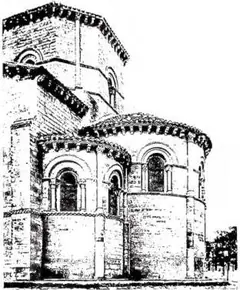
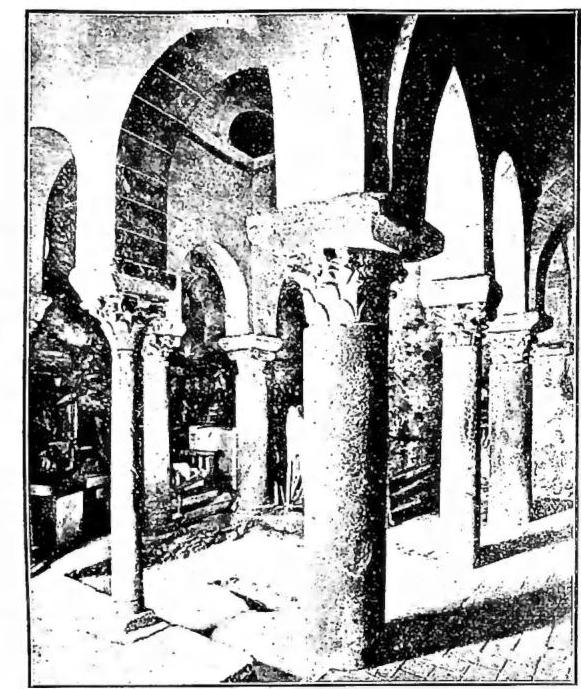
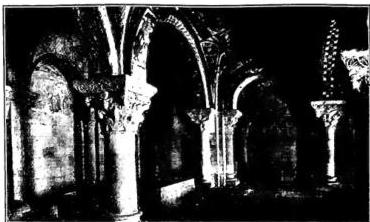
SPAIN - Apse of the church of St. Saviour of Valdediós (Asturias), consecrated on 16 Oct. 893.
economic conditions worsened. Agriculture was in full decline because of the growth of large landed estates, the ever greater formation of entailed estates, the organization of the Mesta in defense of grazing and the wool trade, the destruction of the mariscos, emigration to America and above all because of the marked disdain of the Spanish people (insurmountable for discoveries and conquests) for everything that was manual labor. The decline of Mediterranean commerce from the 15th century greatly struck Aragon and Catalonia: the great port of Barcelona emptied. Now, instead, the Castilian ports of Cadiz and Seville flourished because of relations with America, but protectionist legislation and the organization of commerce caused every benefit to pass into the hands of foreigners. Commerce in fact was not in the Castilian traditions and, despite the immense colonial empire, no impulse was felt toward a commercial activity that would determine the formation of a wealthy bourgeoisie. The feudal nobility in turn suffered the consequences of the price revolution, and to the decrease in landed incomes it remedied by entering the Court and drawing on the treasury. The consequence of this crisis was a decline in population: by the end of the 17th century it is calculated to have been reduced to seven million. This disastrous economic situation could no longer permit the monarchy in the 17th century to sustain that policy which was supposed to defend its dominions and prestige. After Philip II, Spain still participated in the great European conflicts, but under conditions of ever greater inferiority. In 1609 it had to recognize the existence of the Republic of the Seven Flemish Provinces with the Twelve Years' Truce.
In Italy it barely managed, between 1614 and 1618, to impose itself on Charles Emmanuel I of Savoy. The war for the Valtellina (1621-26) ended with the humiliation of the government of Madrid. The Mantuan succession saw once again the defeat of Spain (1627-31). In 1640 Portugal rebelled and became independent again. The Thirty Years' War, which concerned the predominance of the Habsburgs in Germany, forced the government of Madrid into a hard struggle for the defense of its dominions in Italy and the Netherlands; at the Peace of Westphalia it recognized the independence of the Seven United Provinces (1648); at the Peace of the Pyrenees it ceded to France Artois, Roussillon, and Cerdagne (1659). Then it became necessary to resist the attacks of Louis XIV's France: the War of Devolution took from Spain not a few cities of Flanders (Treaty of Aix-la-Chapelle, 1668); the Peace of Nijmegen gave France Franche-Comté and other cities in Flanders (1678). Spain no longer had money or men to resist; it held together more than anything else through the clash of the ambitions of the Great Powers.
9. The Bourbon monarchy
With the extinction of the Habsburg dynasty upon the death of Charles II (1700), the succession was contested by King Louis XIV of France, on the rights deriving from his mother Anne of Habsburg and from his consort Maria Theresa of Habsburg, and by Emperor Leopold of Austria, on the rights of his consort Margaret Theresa of Habsburg. From Vienna the emperor's son, Charles III, was sent to Spain, supported by the Anglo-Dutch, while Louis XIV installed his grandson Philip V in Madrid, in whose favor Charles II had made his will. The long War of Succession led to the Peace of Utrecht (1713): Philip V obtained the throne of Spain with the colonial possessions, but Spain lost its dominions in Italy and the Netherlands, and in addition Gibraltar and Minorca. But as soon as the Peace was signed, the Bourbons immediately resumed diplomatic activity to prepare the reconquest of the lost dominions. The soul of the new policy was Philip V's second consort, Elizabeth Farnese, anxious to preserve the Farnese inheritance for her sons, and supported by the minister Cardinal Alberoni. However, the attempt to rebuild Spanish power failed: Elizabeth Farnese succeeded only in having her son Charles recognized as heir to Parma and Piacenza, which then passed to her other son Philip, while Charles of Bourbon obtained Naples and Sicily by the Peace of Vienna (1738). The government of Madrid, in the wars of succession of Poland and Austria, ended up following the government of Versailles slavishly. Thus a family policy took shape that led Spain to fight against England, sacrificing its own colonial interests and damaging the program of internal reconstruction. The first act of this policy was the Family Pact of Fontainebleau (1743). The promises made to Philip V to give him Lombardy, Naples, Gibraltar, and Minorca vanished at the Peace of Aix-la-Chapelle. During the Seven Years' War Spain stood aside; a new Family Pact was renewed in 1761 by Charles III's minister, Grimaldi: the four Bourbon monarchies, France, Spain, Naples, and Parma, united in defense. Thus Spain entered the war against England, but at the Peace of Paris (1763) it lost Florida and received Louisiana from France in exchange. The Family Pact continued to dominate Spanish policy as the sole defense against British imperialism.
In the struggle for the independence of the United States, Spain joined the alliance with the rebels (Convention of Aranjuez, 1779), but the hopes of regaining Gibraltar and Florida failed at the Treaty of Versailles (1783). The loss of the European dominions was, rather than a harm, an advantage for the Bourbon monarchy, because it allowed it to devote itself to the country's internal problems. The need was felt to restore national wealth; industries and commerce, still entirely in the hands of the French and English, were reawakened. To carry out this action the Bourbons gave their government an even more pronounced absolutist and centralizing direction. Thus the fueros of Aragon, Catalonia, Valencia, and Majorca were abolished, and the administrative autonomies and particular laws of various regions disappeared. Under Charles III the political direction of enlightened despotism was imported into Spain. Agriculture felt the influence of new methods; land-reclamation works were begun; the privileges of the Mesta were reduced; associations of agrarian proprietors were authorized; the working lands of the communes were distributed among the peasants.
10. Spain and the French Revolution
The Family Pact lasted until 1790, when the Constituent Assembly declared it null and void. The Spanish Court made every effort to save Louis XVI, and after the King's execution it broke off diplomatic relations; on 7 March 1793 the Convention declared war on Spain. Fighting took place in the Pyrenees; the Spanish army advanced toward Perpignan, but in 1794 the French entered Catalonia. The war was popular in Spain because of the preaching of the clergy, although a serious economic crisis tormented the population. Those who sympathized with revolutionary ideas were forced to flee to France. After the defeats of the autumn of 1794, peace negotiations were opened: the Treaty of Basel of 22 July 1795 granted France the Spanish part of the island of Santo Domingo. Secretly, Spain became an ally of France for action against England. The war was ruinous: the Spaniards lost Minorca and Trinidad, and the French oppressed them with their high-handedness. The First Consul continued the policy of the Directory in this regard; he forced the government of Madrid to place its ports and fleet at his disposal. After the occupation of Portugal in 1808, Napoleon judged it necessary to bring Spain directly into his system; taking advantage of dynastic disputes, he imposed abdication on Charles IV and the renunciation of the throne on Prince Ferdinand, in order to give Spain his brother Joseph as king. The latter entered Madrid on 20 July 1808, but rebellion immediately broke out at Oviedo. Insurrectionary juntas formed everywhere; that of Seville proclaimed itself supreme and assumed the government. The struggle took on a character of extreme atrocity; the French burned villages and destroyed populations; the Spaniards killed isolated Frenchmen and prisoners. In Nov. 1808 Napoleon intervened with the corps of the Grande Armée and brought Joseph back to Madrid, but after his departure in Jan. 1809 Spain was again in full insurrection. The junta of Seville moved in Jan. 1810 to Cadiz and organized a Regency Council; the Cortes assembled there and created a government. This activity was, however, disjointed because of the discord among military and civil leaders and the discontent of the populations against conscription. It was never possible to have more than a hundred thousand men under arms, and the war against the French, waged by the guerrilla system, lasted until 1813. In 1812 the Cortes, dominated by a majority of liberal deputies who did not represent the conservatism of the populations, drafted a constitution that aped the French Constitution of 1791: abolition of privileges; proclamation of national sovereignty; separation of powers; the monarchy limited to executive power with a suspensive veto. Catholicism, however, was considered the state religion.
11. The struggles of the 19th century for the organization of the State
The French invasion had ruined the country; the American colonies that had risen against Napoleon remained under arms against the government. In 1820 the movement of the liberal officers broke out at the camp of Cadiz; at first suppressed, it resumed at La Coruña: an insurrectionary junta proclaimed the Constitution of 1812. King Ferdinand yielded and a constitutional government was organized. The intervention of the Holy Alliance and of French military forces restored absolute government: the repression was ferocious; likewise again after the liberal uprising of 1824. Then King Ferdinand's government inclined toward mildness and amnesty; the discontented gathered around the King's brother, Don Carlos.
Then the crisis changed character: King Ferdinand recognized the succession to the daughter of his fourth marriage, Isabella, to the detriment of his brother (1833). Now two parties contended for Spain: the Christians, partisans of the queen regent, Christina, and the Carlists: the latter conservatives, the former liberals. In 1834 the Regent granted a Statute, modeled on the French Charter of St-Ouen: a constitutional monarchy with an irresponsible ministry and with the Cortes divided into two estamientos that voted laws and taxes. Parliamentary life remained unimportant in Spain: the mass of citizens did not participate. The liberals, however, were divided into moderates and progressives; the latter harassed churches and monasteries in reprisal against the Carlists: who had risen in 1834 and were masters of the northern provinces, where Don Carlos had created a government of his own; the war was very harsh for several years.
After 1840, once Queen Christina had left Spain, the generals contended for the government around the young Queen Isabella. The dictator from 1840 to 1843 was General Espartero; overthrown, he was replaced between 1844 and 1851 by General Narvaez; then Bravo Murillo governed; in 1854 Narvaez reappeared, then Espartero. Queen Isabella, declared of age in 1843, married her cousin Francis of Assisi; in 1845 a new Constitution was proclaimed; another in 1855.
In 1868 a democratic party that demanded universal suffrage and the republic brought about a military insurrection of the generals Prim and Serrano. Queen Isabella fled. The provisional government decided to establish a new liberal monarchy. The Savoyard prince Amadeus, Duke of Aosta, was summoned to Madrid (1870), but, opposed by all the parties, he abdicated in 1873. Then the Republic was proclaimed, but the parties were divided between the unitary and the federal-cantonal conception. Through various military coups d'état, the generals in 1874 restored the monarchy, and Isabella's son, Alfonso XII, was recognized as king. Canovas del Castillo, however, governed in dictatorial fashion, while the Carlist war continued violently. Pope Pius IX, who had recognized Charles VII as legitimate king, was now induced to recognize Alfonso XII. The Constitution of 1876 established a liberal constitutional monarchy: inviolable king, responsible ministers, two chambers, one life-tenured and one based on a property franchise. A parliamentary government was organized, and constitutional monarchist parties formed — conservatives, liberals; then there were the Carlists and the republicans. The government was first that of the conservatives under Canovas, then that of the liberals under Sagasta and Martínez Campos. Alfonso XII died in 1885; his widow Maria Christina was recognized as regent for the unborn child, who later became Alfonso XIII. The long regency, until 1912, saw the disintegration of the old parties and the formation of new ones. The painful war of 1896 with the United States and the loss of Cuba and the Philippines, the last remnants of the colonial Empire, had repercussions in the country.
Alfonso XIII, after the republican insurrection of Barcelona in 1912, called the liberals to power. Grave problems presented themselves to Spain: the need to establish effective domination over the Moroccan zone granted to Spain by the European Powers; the attitude to be taken between the two blocs of Powers into which Europe was divided. When the European conflict broke out in 1914, Spain remained neutral although sympathies were with Germany. Neutrality was profitable because the country drew great advantages from supplying the belligerents, but Spain too emerged from the war period weary: the governing parties were corroded, while the extreme parties displayed new vigor. The war against the Moroccan rebels ended in 1921 in a grave disaster, the responsibility for which was attributed to the King. Alfonso XIII, after attempting to lean on the conservative elements, consented that General Primo de Rivera create a dictatorship in 1923 in connection with fascist Italy. There was a return to parliamentary government in 1930. But with the municipal elections in Apr. 1931 there was a clear predominance of the Republican Party, and to avoid a popular insurrection, Alfonso XIII abandoned Spain (14 Apr. 1931). The proclamation of the Republic, instead of bringing peace, marked the beginning of a continuous chain of strikes, riots, and burnings of churches and convents: indeed, the socialists and anarchists soon prevailed over the old-style bourgeois republicans. In 1933 an attempt was made to organize a strong moderate government, but Asturias and Catalonia were in grave insurrection. In the elections of 1936 the left-wing groups of the Frente popular won, and it attempted to impose a proletarian dictatorship on the country; it did not succeed, but it merely brought about a more vigorous phase of anarchy.
The reaction came through a military uprising directed by Generals Sanjurjo and Franco (July 1936). Spain now divided between the "democratic" government of Madrid and the revolutionary military government organized by Franco at Burgos. Between the two factions a civil war without quarter was unleashed. The Spanish problem immediately assumed great importance in European politics: Italy and Germany sided with Franco and helped him by sending volunteers and material. The Soviet Russia and, more covertly, France lined up for the "democratic" government. The civil war lasted until on 28 March 1939 General Franco occupied Madrid, and the red government took refuge in France. Thus began the work of restoration and of repression of the most extreme left-wing elements. The government assumed the character of a military dictatorship supported by the conservative elements. Italy and Germany sought to drag Spain into the European war, but Franco was a rigid and fortunate guardian of neutrality.
Bibliography42 works
XIII: S. Erskine, The reign of King Alfonso XIII, London 1931; J. Maurin, La revoluc. española, Madrid 1932; M. Fernandez Almagro, Hist. del reinado de Alfonso XIII, Barcelona 1933.
Francesco Cognasso
III. MUSLIM SPAIN
1. The occupation (710-36)
In 710 Roderic ascended the throne of the Visigothic Kingdom, defeating the supporters of Wittiza. The latter and the governor of Ceuta, Don Julián, favored the Arab invasion. After a small-scale landing by Tarif in 710, Tāriq b. Ziyād landed on the site of the future Gibraltar with troops that were mostly Berber in 711 and in the same year defeated Roderic at Lake Janda, pushing as far as Toledo. He was followed in 712 by Mūsā b. Nuṣayr, the Muslim governor of North Africa; the conquest continued very rapidly, halted only at Poitiers by Charles Martel (732). The moderate policy of occupation (v. ISLAM) reconciled the population with the Muslims; but internal struggles between Berbers and Arabs, southern and northern tribes, weakened them. The Berbers abandoned the northwestern provinces, where resistance and the first reconquest were organized around the Christian State of the Asturias. In 756 the Muslim frontier ran from Coimbra to Toledo and from there to Tudela and Pamplona in the Pyrenees.
2. The Umayyad emirate (756-929)
The Umayyad 'Abd ar-Raḥmān, having escaped the massacre of his family at the hands of the 'Abbāsids, arrived in S. in 755 and in 756 was recognized as emir in Cordoba, beginning the Spanish Umayyad dynasty. He firmly organized the State, suppressing a Berber revolt; at that time the episode of Roncesvalles took place (777). He was succeeded by Hishām I (788-96), under whom the power of the jurists (Juqahā') became established. These rose up against his son al-Ḥakam I (796-821), displeased with his free life, stirring up in Cordoba the renegados, that is, the converts to islām, who despite their conversion were treated as inferiors: the revolt was bloodily put down; and so too was an insurrection in Toledo. 'Abd ar-Raḥmān II (821-52) had to confront in Merida and Toledo the agitation of his Christian subjects ("mozarabs"); they met martyrdom under the leadership of St. Eulogius (v.). Their revolts continued also under Muḥammad I (852-86); moreover the renegados formed autonomous centers in Toledo, in Aragon, in Medina and in Bobastro ('Omar b. Ḥafṣūn). The crisis, after the emirate of al-Mundhir (886-88), came to a head with 'Abdallāh (888-912); 'Omar b. Ḥafṣūn extended his power, the Arab aristocracy rose up in Seville. It was 'Abd ar-Raḥmān III (912-61) who restored the situation. He assumed the title of caliph in 929.
3. The Umayyad caliph (929-1031)
'Abd ar-Raḥmān put an end to the civil wars among Arabs, Berbers and Spaniards; he counterattacked in the north the Christian kingdom of the Asturias, which in the meantime (910-24) had taken the name of León and had gained ground, stabilizing the frontier on the Duero; he extended his influence to North Africa, repelling the Fatimid threat. Under his son al-Ḥakam II (916-76) peace and culture flourished; with Hishām II (976-1008) military enterprises resumed, led by the famous al-Manṣūr (d. 1002), who at the head of an army of foreign eslavos, Berbers and Christian mercenaries carried out great incursions into Christian territory, pushing as far as Barcelona, León, Santiago de Compostela. After the death of al-Manṣūr a rapid crisis followed, amid internal struggles of the military elements. The caliphate broke up into small local kingdoms (reinos de taifas) and ended in Cordoba in 1031.
4. The "reinos de taifas"
The principal ones are the following: in the south, with a predominance of Berber elements: Malaga (Ḥammūdids) and Granada (Zīrids). In the east, with a predominance of eslavos: Almeria, Denia and Valencia. In the northeast: Saragossa. In the center: Toledo (Dū'n-Nūnids). In the west: Badajoz (Aftasids), Seville ('Abbādids). The Christian States took advantage of the fragmentation: in the northwest the Kingdom of León, which from 1037 became that of León and Castile; in the northeast Navarre. Aragon and other minor States, which established themselves after obscure origins in this period. Ferdinand I of León and Castile made Saragossa, Toledo, Badajoz and Seville tributary. The growing power of his son Alfonso VI induced the southern States to call in the Almoravids of Africa.
5. The Almoravids and the Almohads
Jūsuf b. Tāshufīn landed at Algeciras and defeated Alfonso VI at Zallāqah (1086). Having withdrawn to Africa, he returned in 1090 and conquered almost all of Muslim S. The Almoravids held the fuqahā' in honor and established a regime of religious intolerance, which alienated the Jews and mozarabs from them. In the north the Christians pressed: Alfonso I of Aragon defeated the Almoravids at Cutanda in 1120 and in 1125 carried out a great raid into Muslim S.; Alfonso VII of León and Castile pushed as far as Jerez and Almeria. The Almoravid State fragmented into new reinos de taifas, which provoked in 1145 the intervention of the Almohads, already established in North Africa. The Almohads progressively conquered Muslim S.; only Majorca resisted until 1202. For some decades they confronted the Christians, themselves troubled by internal discord. But in 1212 the Christian forces united and defeated them at Las Navas de Tolosa: while the Almohads fragmented into minor kingdoms (among them Valencia and Murcia), Ferdinand III of León and Castile conquered Cordoba (1256) and Seville (1248), subjugating Murcia (1241); James I of Aragon took possession of Majorca (1220) and Valencia (1238). By ca. 1270 only the Kingdom of Granada remained to the Muslims.
6. The Kingdom of Granada (1232-1492)
This State, which extended along the coast from Gibraltar to beyond Almeria, long maintained itself autonomously, following a policy of balance between the Christian States and the Marinids, who had supplanted the Almohads in Morocco in 1269 and occupied a few points on the Spanish coast (Tarifa, Algeciras, Ronda). The Christians, after having in vain attempted to defeat Granada in union with the Marinids (1309), succeeded in expelling the latter between 1340 and 1344. Gibraltar was taken in 1462. Finally the Catholic Monarchs, after their union into monarchies, they attacked the Muslims in 1481 and in 1492 completed the conquest by entering Granada. To the Muslims who remained under the Christian kings (moriscos) religious freedom was initially guaranteed; but very soon measures of persecution followed, the order of conversion or exile (1502) and finally expulsion, by decree of Philip III (1609).
Bibliography7 works
Sabatino Moscati
IV. ECCLESIASTICAL HISTORY
1. The origins up to the invasions of the Germanic peoples
The apostle St. Paul speaks of his intention to preach in S. (Rom. 15, 24, 28), and a few years later Pope St. Clement bears witness to it (Cor. 1, 5, 6), recalling the journey of St. Paul "to the ends of the West," an expression then used to indicate S.; the Fragmentum Muratorianum expressly asserts it; we lack, however, any detail about his work. On the other hand, the preaching of the apostle St. James is not historically proven, and there is no mention of it before the 7th century. Therefore with St. Paul, and not with St. James, the seven "apostolic men" must be connected, whose historical reality is increasingly accepted by criticism: Torquatus, Ctesiphon, Secundus, Indaletius, Caecilius, Hesychius and Euphrasius, who are said to have governed the first seven episcopal sees.
St. Irenaeus in the 2nd century (Adv. haer., I, 10) and Tertullian at the beginning of the 3rd century (Adv. Iud., 7) refer generically to the flourishing Christian communities of S. In 250 St. Cyprian concretely cites (Ep., 67) the dioceses of León-Astorga, Merida and Saragossa, and alludes to other episcopal sees; that of Tarragona appears in the Acts of St. Fructuosus. At the Council of Elvira (ca. 304) the sees of 19 bishops appear; of the 24 priests who attended it, at least some were delegates of bishops who had been unable to attend. It is well known that the persecutions raged in S. During that of Decius (250), Basilides and Marcialis, bishops of León-Astorga and Merida, apostatized, obtaining the "libellus pacis," and the Spanish Church reacted against them with energy; in that of Valerian (257-58) the bishop of Tarragona, Fructuosus (v.), suffered martyrdom with the deacons Augurius and Eulogius. From the persecution of Diocletian a long list of martyrs is preserved, attested especially by the hymns of Prudentius and by the acts contained in the Passionario ispanico; such are, for example, Emeterius and Celedonius of Calahorra, Justa and Rufina of Seville, the "innumerable" of Saragossa, the two Eulalias of Merida and Barcelona, Vincent, Sabina and Cristeta of Avila, etc. Of the 81 canons of the Council of Elvira, some still reveal an atmosphere of persecution.
The Spanish Church developed freely and extensively after the peace: 6 Spanish bishops attended the Council of Arles, in Gaul, in the year 314; the bishop of Cordova, Hosius (v.), presided in 325 over the ecumenical Council of Nicaea and in the year 343 took part, together with 5 other Spaniards, in that of Sardica. Writings were left by Gregory bishop of Elvira (v.), one of the supporters of the Luciferian movement, and by Potamius bishop of Lisbon (v.), compromised in the Arian controversy; by Juvencus and Prudentius, the most representative poets of 4th-century Christianity, by the cleric Bachiarius of the north-east of the peninsula and by St. Pacian of Barcelona, an anti-Novationist writer. The ascetic-heretical movement, led by Priscillian (v.), provoked a harsh crisis in the Spanish Church in the second half of the century; it spread more widely in the region of the north-east and provoked the energetic repression of the hierarchy. The movement and the repression continued into the first half of the 5th century until its extinction (first Council of Braga [561]); at the same time orthodox asceticism flourished.
2. The invasion of the Germanic peoples, Alans, Vandals, Suevi and Visigoths
The year 409 created in S. a climate of terror described by the chronicler Hydatius, bishop of Aquae Flaviae (Chaves), which partly paralyzed the life of the Church: part of the clergy, such as Orosius of Braga, fled to Africa, and some bishops did the same, but the majority endured all dangers for the defense and assistance of their faithful (St. Augustine, Ep., 168); the already mentioned Hydatius gave example of this. At the beginning of the 6th century the Visigothic Kingdom embraced Narbonensis and S., except for the north-east of the peninsula, occupied by the Suevi. These, at their entry into S., were pagans; in 448 they converted to Catholicism, with King Rechiar, perhaps through the preaching of St. Turibius of Astorga; but the successor Remismund dragged his people into Arianism (465) preached by the monk Ajax, who had come from the court of the Visigoths. They returned, however, to Catholicism at the time of Chararic or Theodemir (558-70), thanks to St. Martin of Braga, who had great influence at court and celebrated two very important councils. In 583 they were subdued by Leovigild and many once again embraced the official Arianism of the Visigoths, only to abandon it definitively at the Third Council of Toledo (589). The Visigoths, on the other hand, were Arians through the preaching of Ulfilas; from their sojourn in the Danube valley they were constituted as a national Church, organized probably according to the military divisions of the Visigothic people (Schubert). They were generally tolerant toward Catholics: Euric and Alaric II exiled some bishops, rather for political reasons; Leovigild (568/572-586) was the only one who harshly persecuted Catholicism: he punished some bishops and clerics with exile and confiscation of goods and facilitated the passage from Catholicism to Arianism, abolishing the obligation to be rebaptized (580); there were several apostates, among them Vincent bishop of Saragossa. One of the best defenders of the faith was Masona of Merida, who later presided over the Third Council of Toledo. In 583, through the influence of his wife Ingund and of St. Leander of Seville, Hermenegild (v.) converted to Catholicism; his rebellion against his father seems to have had a predominantly political character and was not approved by the Church; defeated, he was beheaded in 585 after refusing to receive communion from an Arian bishop; for this he is venerated as a martyr (St. Gregory the Great, Dial., III, 31). Reccared, successor of Leovigild, converted to Catholicism and with him, at least morally, the entire Visigothic people, as was officially proclaimed at the Third Council of Toledo (589). The merit of this conversion belongs to St. Leander of Seville.
The organization of the Church was already well defined by the beginning of the 5th century; it had five ecclesiastical provinces and at a certain period six, while, in the Suevic Kingdom, the two distinct provinces of Braga and Lugo were formed; throughout the Visigothic age 77 bishops are counted, including the twelve of Narbonensis. National, provincial and diocesan councils were celebrated, of a primarily disciplinary character: in the Second Council of Toledo (527) is found the first prescription on the education of the clergy in episcopal schools, which were later sanctioned in the Fourth Council of Toledo (633). A part of the province of Carthage, occupied by the Byzantines, could not follow the general course. Constant relations were maintained with Rome, the East and Gaul, and in the early period with Carthage. Christianity was already deeply rooted, although numerous traces of paganism were still preserved. With the conversion of the Visigoths to Catholicism, one of the most glorious centuries for the Church in S. begins. The national Councils acquired extraordinary importance, also from the political point of view. In the realization of the perfect unity between Church and State, the kings collaborated, who under Arianism had been supreme arbiters of religion, and great ecclesiastical figures, such as St. Leander and St. Isidore of Seville, St. Braulio, St. Ildephonsus, St. Julian of Toledo, influenced by the ideal of Byzantium.
There then arose that series of general councils which regulated ecclesiastical discipline with the participation also of the king, who convoked them and proposed in the "tomus" the civil and religious subjects to be treated, together with certain magnates. The bishops, as delegates of the kings, supervised the civil judges in the administration of justice, although the king himself intervened in their election, which a council defines as "sacra regalia" (599). The metropolitan of Toledo acquired the authority of primate, with the right to present to the king and consecrate the bishops of the whole kingdom, in the Twelfth Council of Toledo (681). The clergy had privileges and immunities. Monasticism also acquired great importance; St. Isidore wrote a rule for the government of monasteries and St. Fructuosus wrote two, who furthermore founded monasteries throughout the west of the peninsula. In the 7th century the double monasteries appear, which were to multiply in the following centuries. In the same period the liturgy was organized, which later received the name Visigothic or Mozarabic (v.), or better still that of Hispanic; in the Kingdom of the Suevi, at least until the annexation to the Visigothic Kingdom, the Roman liturgy was partly followed, communicated in the 6th century by Pope Vigilius to Bishop Profuturus of Braga. There was no important heresy; but the gravest error of the Hispanic-Visigothic Church was that of having exerted strong pressure to induce the Jews to embrace the faith. The legislation of the Spanish councils, collected in the canonical collection Hispana, had great influence in the Middle Ages, and especially in the Carolingian councils and capitularies.
3. The invasion of the Arabs in 717
It brought about new conditions of life for the Church. In the part dominated by them, there was generally tolerance: the organization was preserved in three provinces with 29 bishops, though not without Arab interference in the election of prelates and in the government of dioceses. 'Abd ar-Rahmān II and Muhammad I persecuted the Christians in the 9th century, provoked by the excessive zeal of some of them, which was a cause of divisions: St. Eulogius of Cordova, whose writings are the most important source for this age, was the most illustrious martyr. Another important figure was Alvaro Paulo, of whom part of his correspondence is preserved. In the Mozarabic Church there arose, in the 8th century, the Adoptionist heresy, defended first by Elipandus of Toledo and then by Felix of Urgel, and combated by Beatus of Liébana and Eleutherius of Osma, and definitively annihilated by the Frankish theologians, directed by Alcuin. In the same period there arose the error of Nigezius, who identified the three persons of the Most Holy Trinity with David, Jesus and St. Paul; it was combated by Elipandus of Toledo and by Saulus of Cordova and condemned by two Councils of Seville in 782 and 785. The Mozarabic Church continued in the same tolerance, without lacking a certain facility of communication with the Holy Christian Church and with the other Churches and preserving entirely the Visigothic structure and institutions, until the end of the "Reconquest," in the 15th century. The organization and internal life of the Church suffered more in the northern part of the peninsula. Many bishops and monks, fleeing from the invasion, passed into France, carrying there that Visigothic spirit and culture which had so much influence there in the cultural sphere; some of them became figures of the first order in the Carolingian Church, such as St. Pirmin and St. Benedict of Aniane, Claudius, bishop of Turin, Prudentius Galindo, bishop of Troyes, Theodulf, bishop of Orléans, and Agobard, bishop of Lyon. Many other bishops, clerics and faithful took refuge in the mountains of the north and collaborated effectively in the work of the "reconquest" and in the repopulation of the territories devastated by the Arab raids and by the battles with the Christian armies. The "reconquest" had from the beginning a well-defined national and religious character, which tended toward the political restoration of the vanished Visigothic Kingdom. The fundamental nucleus was the Asturian region, with the capital first at Oviedo and then (914) at León, where Ordoño I erected a bishopric. In giving a greater impulse to the religious character of the struggle, the devotion and cult of the apostle St. James of Compostela contributed very much, from the 9th century onward, when the news of the discovery of his tomb stirred spirits and caused it immediately to become a goal of pilgrimage, not only for Spaniards, but also for the other European nations; St. James became, in fact, the patron of the Holy Church and the inspirer of the liberation from the Moors, and "Santiago y cierra España" was the war cry in the crusade against the Muslims. The religious spirit invaded the Christian people as never before; while against the laxity of the clergy and simony the councils reacted, which assembled quite frequently, according to the Visigothic tradition, and the considerable number of saintly bishops and monks: those sacrificed by Almanzor (al-Manṣūr) in Cardeña and in S. Cugat del Vallès are considered martyrs. Having overcome the natural isolation in which the conditions of the reconquest placed them, contacts with the papacy begin to intensify in the 9th century and even more in the 11th century; from Alexander II onward the popes begin to consider the Spa-
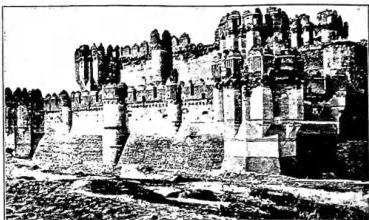
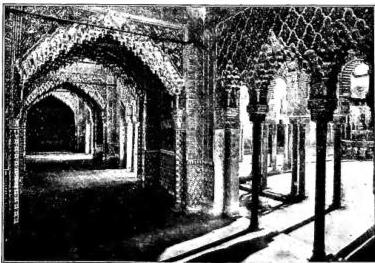
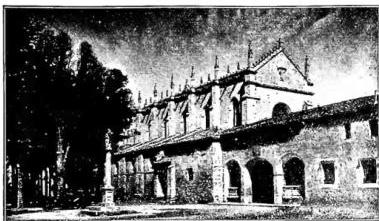
against the Moors as a matter of general interest for Christendom and thought of organizing crusades; Gregory VII extended to Spain his centralizing policy and aspired to place the Kingdoms of Catalonia, Aragon and Navarre under the sovereign dependence of the Holy See. However, his activity was directed above all to the reform of the Church and to liturgical unification with Rome, especially by means of pontifical legates and Cluniac monks, who entered first Catalonia and then Aragon and Navarre, Castile and León, where the monastery of Sahagún became the center of ecclesiastical reform, decisively supported by the kings.
All this was not achieved without great resistance on the part of the Spanish Church: the last to accept the reform were the inhabitants of Castile and León, who finally accepted it at the Council of Burgos in 1080.
In 1085, with the reconquest by Alfonso VI, the see of Toledo regained its primatial authority; its first archbishop was D. Bernardo, Cluniac abbot of Sahagún, who gave an extraordinary impulse to the reform; the bishops of Braga, Osma, Sigüenza, Zamora, Salamanca, etc., were also Cluniacs. In 1100 the bishop of Compostela, Diego Gelmírez, aimed to raise the prestige of his see and obtained that it become a metropolitan see, also encroaching upon the rights of Toledo, although these had been repeatedly confirmed by the Pope; this dispute lasted for centuries and in it Braga, Seville and Tarragona also intervened. The intervention of the popes, decisive from the 11th century onward, never ceased thereafter in order to strengthen the political power of Castile in the supreme effective direction of the "reconquest," in which the foreign military orders cooperated together with the Spanish ones, especially those of Santiago, Calatrava and Alcántara (12th century; v. ORDINI CAVALLERESCHI). Under the reign of St. Ferdinand in Castile (1217-52) and of James I in Aragon and Barcelona (1213-76), the Spanish ecclesiastical restoration was practically concluded with five provinces (Toledo, Compostela, Braga, Seville and Tarragona) and fifty dioceses, five of which were exempt. In the Western Schism the Spanish Kingdoms took the side of the popes of Avignon following the legation of Peter of Luna, who became Benedict XIII, but they turned away from him during the Council of Constance when his obstinacy became evident.
Religious life, however, had gained in extent and observance; in 1183 the Cistercian monks arrived in Castile and their monasteries were soon numerous, and some of them attained great importance and splendor with the favor of the kings, such as Veruela and "Las Huelgas" near Burgos; in 1218 St. Peter Nolasco founded the Order of Mercy for the ransom of slaves; at the same time the Franciscans were introduced, and the Dominicans founded by St. Dominic of Guzmán; these religious were appointed inquisitors against heresies by Gregory IX, who in 1232 introduced the Inquisition into Aragon, on the advice of St. Raymond of Peñafort, to repress the Albigensian movement. This made itself felt more strongly in León, but only briefly (1216-1232). The legislation against heretics was the same in Castile and in Aragon, but only in the latter Kingdom was it a tribunal proper to the Church, which later extended under the Catholic kings to all of Spain. Culture acquired a new splendor and at Toledo, under the direction of the archbishop D. Raimundo (1126-52), the famous "School of Translators" was organized, which made available to Christian scholars the treasures of the most flourishing Arab culture, with the collaboration of John of Seville, Dominic Gundisalvo, Hermann of Carinthia and Gerard of Cremona; Alfonso VIII established in 1212 the first Studium generale at Palencia, and brought there masters from France and Italy; Alfonso IX in 1220 founded on the cathedral school and on various monastic schools the Studium of Salamanca, which in 1254 was declared by Pope Alexander IV one of the four Studia generalia of the world. Alfonso X the Wise, then founded those of Seville (1254) and Alcalá (1293). Among the most glorious names of this epoch figure those of Rodrigo Jiménez de Rada, archbishop of Toledo (1247), fr. Pedro Nicolás and Alfonso of St. Mary, the archbishop of Toledo Gil Álvarez de Albornoz, pacifier of the Papal States, who founded at Bologna the College of St. Clement for Spanish students, etc. In the Kingdom of Aragon it was James I who gave the greatest impulse to culture; it suffices to recall Arnold of Villanova, encyclopedist and in part heretic, Raymond Lull, poet, theologian and missionary, Raymond Martín, Dominican, philosopher and apologist, and the canonist St. Raymond of Peñafort. James II founded the University of Lérida (1300), Peter IV those of Huesca and Perpignan (1354); later those of Gerona (1446) and Saragossa (1474) arose. In 1468 printing appears at Barcelona, in 1474 at Valencia. Spanish culture of this age is characterized by the translation and diffusion of Hispano-Arab authors, such as Algazel, Avicenna, Averroes and Maimonides, and, through these, of the ancient Greek classics, especially Aristotle and his school.
4. "The Golden Age." - Under the reign of the Catholic kings (1474-1516), with the reconquest finished and political and religious unity obtained, a vigorous and definitive reform begins in the Church, the evangelization of the New World is begun, and the humanistic-Renaissance movement flourishes in culture. In short, the marvelous unfolding of the golden century of Spain is being prepared. The religious reform began with the secular clergy and concretely with the hierarchy: for this purpose the Catholic kings decisively opposed the appointment of bishops by the pope without their presentation, and it is to their firm policy in this matter that we owe it if from then on the Spanish sees were generally governed by prelates of high moral worth and abuses were largely remedied. The kings had the right of patronage from 1483 for the Kingdom of Granada and from 1523 for all of Spain.
The national Council of Seville of 1478, convoked by the kings, and other later Councils laid down norms for the morality of the clergy; and Queen Isabella in a special way promoted the interests of the Church, advised by persons of worth such as card. D. Pedro González de Mendoza and by the confessor, Hernando de Talavera, later archbishop of Granada. More effectively came the help in reform of Ximenes de Cisneros (v.), Franciscan, confessor from 1595, who reformed first the convents of his Order and later those of the Dominicans, Augustinians and Carmelites, with powers obtained from the popes Alexander VI and Julius II. To provide for the integrity of the faith the kings decreed in 1492 the expulsion from Spain of the Jews, moved by fear of the influence of their doctrines; the expulsion of the "moriscos" came later: in the time of Philip II (1568-70) and of Philip III (1609-11). For the same theological motive the Catholic kings extended to all of Spain the tribunal of the Inquisition (v.) against heretics and Judaizers, which Sixtus IV established in 1478 in agreement with the laws of the ancient Roman Inquisition; it began to function in 1481 at Seville. In 1487 it was introduced into Catalonia, despite the opposition of the inhabitants; in 1490, at Majorca.
In 1492 Columbus discovered America, understood and taken up as a national enterprise by the Catholic kings, who in the New World, besides the conquest of new lands, also sought to spread the faith of Christ. The popes granted to the kings the right of universal patronage for the Indies, as a quasi-delegated power, with the grave obligation of sending missionaries and bishops and of providing in every sense for the Churches of America. This right lasted until the middle of the 19th century.
Cultural life too received a very vigorous impulse from the kings, which lasted through the succeeding reigns, giving Spain that hegemony in the theological and human sciences which it already possessed in the political order; the kings' best aid was, here too, Cisneros (d. 1617), who founded the University of Alcalá, the most powerful center of Spanish humanism, reproducing in its statutes those of the University of Paris, and bringing from that city the best masters of art and theology, all Spaniards; the most important work at that time was the Complutensian Polyglot (1502-1514); also very important was the printing of a great number of works by the best spiritual authors, a printing that influenced the splendid ascetico-mystical flowering of the golden century. But the renewal of theology was due to the school of Salamanca, headed, from 1526, by Francisco de Vitoria (v.); Melchor Cano (1546-52) made his doctrine systematic, and Domingo de Soto (1494-1560) continued his work; the depth of Spanish theology was attested at the Council of Trent and was manifested through the teaching of Spanish theologians in the European universities. From 1525 the first universities were being erected in America (Mexico, S. Domingo, Lima).
Meanwhile in Spain the reform of the religious Orders continued (St. Peter of Alcantara, St. Teresa, St. John of the Cross), and new ones were founded through the work of St. Ignatius of Loyola, St. John of God, and St. Joseph of Calasanz. The only two centers of Protestantism that had any importance, at Valladolid and Seville (1459-60), were soon crushed, as later were the ascetico-mystical deviations of the "alumbrados" (v.); meanwhile there flourished the ascetico-mystical schools of the Franciscans, with Bernardino de Laredo (d. 1565) and Francisco de Osuna (d. 1540), of the Dominicans, with Fr. Luis de Granada (d. 1582), of the Carmelites with the gigantic figures of St. Teresa (d. 1582) and St. John of the Cross (d. 1591), and of the Jesuits with St. Ignatius of Loyola (d. 1556), Alonso Rodriguez (d. 1616), Luis de la Palma (1614), Alvarez de la Paz (d. 1620), and Luis de la Puente (d. 1624); other important authors were also the Benedictine García de Cisneros, for his influence on St. Ignatius, the Bl. John of Avila, St. Thomas of Villanova, and Fr. Luis de León.
5. The decadence
With Philip III (1598-1621), together with political decadence, religious decadence begins. Those kings lacked that purity of religious ideal which had animated their predecessors down to Philip III, and the very broad privileges which those predecessors had used for the good of the Church became instead an instrument for hindering its activity and freedom. With the Bourbon dynasty the doors were opened in Spain to the ideas of the Encyclopedists and of the Enlightenment; the worst French literature also tainted a part of the clergy; most of the prime ministers and favorites who governed Spain, such as Macanaz, Roda, Aranda, and Urquijo, who carried regalist ideology to its ultimate consequences, were Encyclopedists. The bishop of Cartagena, Card. Belluga, obtained the signing in 1737 of a Concordat that died before being applied; only after many difficulties was the Concordat of 1735 obtained from Benedict XIV, which recognized royal patronage in its full extent, with insignificant concessions on the part of the State. Charles III, at the suggestion of the minister Aranda, Grand Master of Freemasonry, expelled the Jesuits in 1767, and it was the Spanish ambassador in Rome who most influenced Clement XIV to to wrest from him the brief of general extinction of the Society of Jesus in July 1773. The clergy continued to be very numerous and respected by the people, but the apostolate was little active, save for a few exceptions, such as that of the great popular missionary preacher, Bl. Diego of Cadiz, a Capuchin; the ecclesiastical sciences were in complete decadence, except in the field of ecclesiastical history, in which an immense work was accomplished by Fr. Burriel (d. 1762) and Fr. Flórez (d. 1775), who published the España Sagrada, continued later by others. A great part of the clergy, high and low, sided with the new Jansenist and regalist ideas.
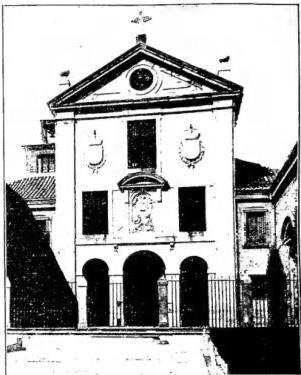
Nevertheless Catholicism continued to live in the people, who in the war of independence against Napoleon (1808-13) defended along with the homeland their religious ideas; meanwhile, however, the ideas of the French Revolution triumphed in the Cortes of Cadiz, thanks to the Constitution of 1812; more than half of the 2128 monasteries were suppressed, with 77,000 religious, and freedom of the press and the abolition of the Inquisition were proclaimed. These measures, completely unpopular, were repealed by Ferdinand VII in 1814, who established an exaggerated absolutism; a military revolution forced him to swear to the Constitution of Cadiz in 1820 with all its consequences; the Society of Jesus, restored by Pius VII and admitted into Spain shortly before, was expelled, and relations with the Holy See were broken. In 1823 the absolutist regime was restored with the intervention of France (the 100,000 sons of St. Louis). The dynastic war between Carlists and Liberals helped to inflame spirits: the latter renewed in 1835 the measures against the monasteries, aggravated those concerning ecclesiastical liberties and dictated the laws of disentailment, by virtue of which a great part of the Church's goods was confiscated; there are other proofs of the bloody persecution that the Church suffered: the convents burned, the religious murdered in Madrid in 1834 and in the following year in Saragossa, Murcia, Barcelona, etc., and the exile of various bishops. In 1851 it was obtained to be able to sign a Concordat by which the Catholic religion was declared the only one in Spain, a new division and circumscription of the dioceses was made, the Church renounced the disentailed goods, while the State bound itself to endow worship, the clergy, etc.; reserving for the king an unlimited right of patronage. In the years 1854-56 (the liberal biennium) the persecution becomes more cruel: the revolts of 1868 and the following years render the Concordat practically useless; in the reign of Alfonso XII (1874-85) freedom of conscience is proclaimed and the Protestants carry on active propaganda. In the following years, until the advent of the Republic of 1931, with the alternation in government of the liberal and conservative parties and with the consequent repercussions in the life of the Church, the situation becomes more difficult because of the division among the Catholic forces and the clergy itself in the politico-religious order (traditionalists and integristas), a division that not even the greatest thinkers such as Jaime Balmes (d. 1848) and Donoso Cortés (d. 1853) nor the good intentions of some rulers manage to heal. There is no lack of able apologists such as Menéndez Pelayo (d. 1912) and Vázquez de Mella (d. 1928), nor of great popular apostles, among whom Antonio María Claret (d. 1880) and the Jesuit Father Tarín (d. 1910), prototype of the popular missionary; institutes are founded such as the Ecclesiastical University of Comillas (1890) and the Spanish College of Rome (1892), which contribute to the revival of the Seminaries. In the first decades of the 20th century the great popular demonstrations of Catholic faith alternate with the acts of persecution by the liberal and Masonic governments. The military dictatorship of Primo de Rivera (1923-30) brought with it years of political and economic prosperity and of religious peace; in 1931 the Republic was established, whose sectarian character manifested itself after a few weeks with the convents burned (May 1931) in Madrid, Malaga and other cities; shortly afterwards a lay persecuting Constitution was voted, the Society of Jesus was dissolved, the cardinal of Toledo was expelled, all ecclesiastical goods were declared national property. In 1933 there was a brief Catholic reaction led by the deputy José María Gil Robles, but in Feb. 1936 the revolutionary forces returned to power, making disorder and assassination the norm of life.
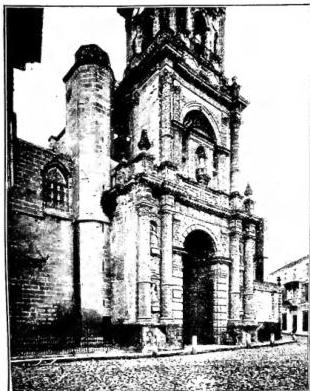
5. The religious restoration
The definitive reaction, anticipated by the assassination of Calvo Sotelo, leader of the monarchists, was the "National Movement," commanded by Generalissimo Francisco Franco: the war that lasted from 1936 to 1939 had the character not only of a military insurrection and a civil war, but of a religious reaction in defense of the Catholic religion and Christian civilization, as the majority of Spaniards felt it and as the Episcopate solemnly declared in the collective letter of 1937. There died, "martyrs in the true sense of this word," as Pius XI said, assassinated by the Reds, 11 bishops, about 4200 priests of the secular clergy and 2500 religious with 45 religious women and very many other laypeople led to death for the sole fact of being Catholics. The new State suppressed the persecution laws of the previous regime and replaced them with a clearly Catholic legislation; preparing a new Concordat with the Holy See, various particular agreements have been signed relating to the presentation of bishops, government subsidies to the Seminaries and the Pontifical Universities, restoration of the Tribunal of the Spanish Rota, military clergy and military exemption of the clergy.
Bibliography46 works
V. JURIDICAL CONDITION OF THE CHURCH
Before the advent of the Republic, the juridical condition of the Church and the relations between the Holy See and the Spanish government were regulated by the Concordat of 1851, and by a series of decrees issued to clarify various articles. The republican regime was unwilling to recognize the Concordat; indeed it issued laws hostile to the Church. As a consequence of this, the Concordat was considered by the Holy See to have lapsed.
After General Franco came to power, the Holy See maintained its point of view, and, while awaiting the conclusion of a new Concordat, several convenios were signed, which regulate some of the most important matters affecting the two parties.
The first of these was stipulated in June 1941 and concerns the provision of episcopal sees. The government is granted the exercise of the privilege of presentation, which differs substantially from the ancient right of patronage. The apostolic nunciature, after reaching an understanding with the Minister of Foreign Affairs, presents to the competent Roman Congregation a list of at least six candidates. From these the Congregation forms a panel of three, from which the head of State chooses the person he deems most suitable for appointment. Such appointment, as is natural, is made solely by the supreme ecclesiastical authority, since it alone is competent to judge the aptitudes of the candidates to govern a diocese. The newly elected take an oath to the head of State, with a formula analogous to that fixed in the Italian Concordat.
The convenio, moreover, contains the government's commitment not to issue laws on mixed matters or on matters that are of interest to the Church, without prior understanding with the Holy See; it establishes that proceedings be begun at once to lay down the norms to be observed in the provision of non-consistorial benefices; it brings back into force the first four articles of the Concordat of 1851.
By virtue of these, the Catholic religion «cum omnibus iuribus ac praerogativis quibus potiri debet iuxta legem Dei et canonicas sanctiones» is the religion of the State (art. 1); instruction in universities, colleges, public and private schools shall conform to Catholic doctrine, and the diocesan Ordinaries have the right to supervise this, including in public schools (art. 2); the ministers of worship shall have due assistance from the State in the fulfillment of their ministry (art. 3); bishops and clergy shall enjoy full freedom in all that concerns the right and the exercise of ecclesiastical authority (art. 4).
The convenio concerning the provision of non-consistorial benefices was signed on 15 June 1946. The provision of such benefices belongs to the ecclesiastical authority (art. 1). Some privileges, however, are granted to the State, inasmuch as, in the appointment of parish priests, notification to the government of the candidates is provided for, in order to ascertain whether there are difficulties of a general political nature (art. 2), and in the appointment of certain dignities of the metropolitan, cathedral and collegiate Chapters, of the chief chaplain of the royal chapels of Toledo, Granada and Seville and of the chaplains and minor beneficiaries of the same, the communication of panels of three to the head of State, by the Ordinary, for the choice and presentation to the Holy See of the person to be appointed (art. 3); for other benefices, moreover, the alternation for provision is established, and always by the method of the panel of three to be prepared by the ecclesiastical authority (art. 3 § 3; 5 § 3).
On 8 Dec. 1946 a third convenio was signed, by which the State's financial contributions to seminaries and to ecclesiastical universities are determined. Noteworthy in this agreement is art. 7, which recognizes the ecclesiastical universities erected by the Holy See.
A fourth convenio, finally, signed on 5 Aug. 1950, regulates the military jurisdiction and religious assistance to the armed forces. The appointment of the military vicar, who shall have the dignity of archbishop (art. 2), shall be made according to the norms in use for the appointment of bishops (art. 2); his jurisdiction, like that of the chaplains, who shall be appointed by the vicar (art. 5), is personal (art. 7), assimilated to that of a parish (art. 8) and is cumulative with that of the Ordinary (art. 9). The agreement further recognizes exemption from military service for clerics and religious, professed or novices, in accordance with the norms of Canon Law. Special norms regulate their military service in time of war (arts. 13 and 14). In addition to the four aforementioned agreements, there is a body of laws and ministerial ordinances that concern other aspects of the juridical condition of the Church in S.
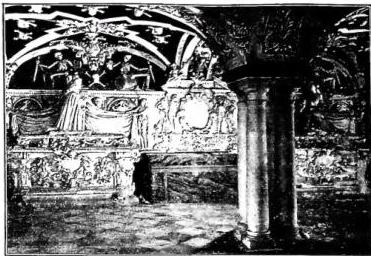
The government, in every circumstance, has proclaimed that, in conformity with the beliefs of the nation, it recognizes the Catholic Church as a perfect society, with the fullness of its rights, with its hierarchy, with its institutions, whose prerogatives and privileges it respects.
Bishops enjoy full freedom to publish whatever they deem opportune for the spiritual government of their faithful. Bishops and parish priests are ex officio members of special boards that concern important fields of activity, such as charity and education. The religious Congregations, suppressed by the republican government, were reinstated, by law of 2 Feb. 1939, with the rights and privileges pertaining to them. By a decree of 3 May 1938 the Society of Jesus was moreover re-established in S.
By an ordinance of the Ministry of the Interior, dated 9 March 1940, the Catholic calendar was again put into force and the observance was prescribed of the feast days fixed by the CIC, plus certain others particularly dear to the Spanish people. By a law of Dec. 1938, in derogation of the Republic's law on the secularization of cemeteries, the ownership of the same was devolved upon the Church and the parishes. The law of 9 Nov. 1939 re-established the budget of worship and clergy, relating to the financial aid that the State undertakes to give to the clergy for their support and for the needs of worship. Sums were allocated for the reconstruction of churches devastated by the civil war and for seminaries.
Particular economic facilities, such as postal, telegraphic and telephone franking and free travel on the railways, are granted to bishops. A ministerial ordinance of 17 Jan. 1940 deals with priests who have become incapacitated. Tax exemptions are granted to ecclesiastical property. Chaplains have been re-established in the prisons, having been suppressed under the Republic, broadening the field of their charitable work on behalf of inmates.
Various decrees and laws have been issued to re-establish the Christian dignity of Marriage, regulating it in harmony with the sacred canons. On 12 March 1938 an ordinance of the Ministry of Justice recognized the validity of canonical marriages, celebrated during the existence of the republican law, even if the civil rite had not preceded or followed them, authorizing their transcription in the civil status register; it declared null the civil marriages contracted by persons ordained in sacris or bound by solemn religious vows; it restored to force, until the issuance of new norms, the provisions established on matrimonial matters in art. 42 of the Civil Code, according to which there exist in S. two forms of marriage: the canonical, to be celebrated by all those who profess the Catholic religion, and the civil. To contract the latter, an ordinance of the Ministry of Justice requires documented proof of the non-Catholicity of both or one of the contracting parties, and, in the case where such proof cannot be had, the declaration of not having received Baptism, from whose accuracy do not depend the validity and the effects of the civil marriage.
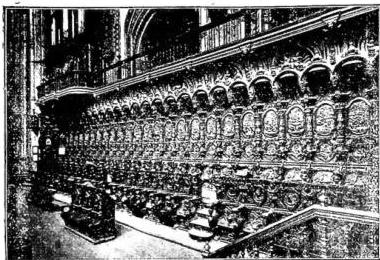
Divorce, introduced by the Republic with the law of March 2, 1932, was abolished by the law of Sept. 23, 1939. With it, the provisions of the Civil Code came back into force, which does not permit divorce even for marriages contracted in civil form. To supplement that law, various transitional provisions were promulgated, intended to safeguard the dignity of canonical marriage and the indissolubility of the bond. Noteworthy among them is the one that recognizes full juridical effect in the civil forum for decrees of nullity issued by ecclesiastical tribunals, and for pontifical resolutions of ratum et non consummatum, occurring during the existence of the divorce law or after it.
Spain maintains diplomatic relations with the Holy See, with the respective accreditation of an apostolic nuncio and an ambassador.
Ippolito Rotoli
VI. LITERATURE
Once the unity laboriously achieved in the Visigothic period had lapsed with the Arab invasion (711), while the Muslims dominated in the south of the peninsula materially and culturally, the subjected Hispani formed an intermediate civilization (Mozarabic civilization), fusing elements of the Latin-Hispanic tradition with those of the new rulers. Others, who had escaped the domination, instead continued the civilization of the Visigothic period and, organizing themselves also militarily, began the "reconquista." The language too slowly evolves: to the Mozarabic (a mixture of Vulgar Latin and Arabic) of the conquered zones there are opposed, in the free regions, or those less directly influenced by the Arabs, Leonese, Aragonese, Castilian; but very soon, because of the predominance assumed by Castile in the struggle of the reconquest and because of its greater and more important literary production, Castilian predominates over the other linguistic differentiations of the peninsula.
The production in Castilian opens with one of the masterpieces of Spanish literature, the Cantar de mio Cid, by an anonymous author, written around the middle of the 12th century and handed down to us through a manuscript that Menéndez Pidal considers to be from 1307. The meter of the poem is irregular, but verses formed of two hemistichs of seven or more syllables and with assonance predominate. There are narrated, in three cantos, the exploits of Rodrigo Díaz de Vivar, called the Cid Campeador, who, having lived in the time of Alfonso VI of León and Castile, was exiled by him and launched himself into the conquest of territories in the possession of the Arabs, until he made himself master of Valencia. The historical events are followed minutely and only a few legendary episodes are inserted, relating to the marriage of the Cid's two daughters to the infantes of Carrión. The story of the Cid, with time, became ever more legendary in the accounts of the chronicles (Crónica Najerense, Chronicon mundi, De rebus Hispaniae, Primera crónica general, etc.) to such a degree as to form a heroic legend, almost a myth of the Cid, whose historical existence was placed in doubt. Scientific and philological investigation began only in the 17th century with Fray Prudencio de Sandoval and may be said to be concluded with the recent studies of Menéndez Pidal. The figure of the Cid has been considered as one of the best expressions of the Spanish soul, and in the poem the Hispanic characteristics have often been emphasized. The historicity and the attentive care for detail, the concept of honor, fidelity to the king tempered by a certain spirit of independence, the celebration of the warrior life, the love of family, the sentiment of humanity, the religious spirit, the melancholy predominant in the hero have all appeared to be qualities that, detaching the Spanish epic from the French, brought out the national character.
Undoubtedly the epic flourished luxuriantly in S., but, beyond the poem of the Cid, there remain only fragments of two other poems (that of the seven infantes of Lara and that on King Rodrigo) and prose accounts handed down by the chronicles (Chronica Gothorum, Silense, Najerense, Crónica de Veinte Reyes, I and III Crónica general).
The heroes sung by the epic poems were also the subject of popular songs, brief poems that, through their oral transmission, went on growing ever shorter and being reduced to their essential parts, while the epic tone too was gradually transformed into the lyrical-romanesque. To these very brief poems was given the name romances, and their production continues throughout the whole development of Spanish literature. They are customarily grouped into two great categories, in turn distinguished according to the subject treated into ancient or popular and modern or artistic romances, including in this last category those produced from the 16th century onward and by authors (Lope de Vega, Góngora, etc.) who had a properly artistic intent. The romances were collected in various anthologies, constituting the famous Romancero español.
Almost contemporaneously there began the production of a religious literature which, deriving from the apocryphal Gospels and from legends, was reinforced by the numerous French and Anglo-Norman examples from which it also took the metrical structure of the enneasyllable (Libro dels Tres Reis d'Orient, Vida de s. María Egipciaca).
Thus too the production of the debates is parallel to the European one - and especially the French - of which, however, there are scanty examples (Disputación del alma y el cuerpo, Denuestos del agua y el vino) very closely tied to their models. A greater interest for its realistic and satirical motifs is presented only by the Disputa de Helena y María written in Leonese dialect. To this period belongs also the most ancient document of the Spanish theater: the Misterio or Auto de los Reyes Magos, a very simple scenic action of the visit of the Magi, in which faint realistic motifs and a certain liveliness are hinted at; with it we already find ourselves before a degree of theatrical evolution fairly advanced, which leads one to suppose a previous production, without any significant traces of it having been found so far in S.; however, the existence of a popular and lay theater seems certain, parallel to the religious one and which the law and the Church sought in vain to stifle. The popular world appears in this in opposition to the learned one, but it is inevitable to admit an influence of the second on the first. The problem is particularly important as regards the production, luxuriant in the 13th and 14th centuries, of the "mester de clerecia" and the "mester de juglaria."
The definition of mester de clerecia is to be understood as "employment, occupation proper to clerics," linking the word "employment" to the medieval concept of poetry according to which the art de trobar was considered a technique of verse and of the poetic image and not inspiration or a surpassing of reality. The poets of this "de clerecia" group considered themselves learned, refined, and if at times they addressed the people, they did so with a sort of condescension, knowing that they were directing themselves to an audience of inferior culture. Their works all have a foundation of culture and often arrive at a pedantic ostentation of erudition. The first production of the "mester de clerecia" is the Libro de Alexandre, recently dated to 1201-1202; others of historical-doctrinal interest follow (Libro de Apolonio; Poema de Yesuf; Vida de s. Ildefonso), among them all distinguished for their artistic value being the Miraclos of Gonzalo de Berceo (v.) and the Poema de Fernán González. A characteristic common to all these works is the use of the cuadernia vla (Alexandrines united in monorhymed tetrastichs). The Poema de Fernán González, written between 1250-66, has, like that of the Cid, a great historical fidelity (let one recall the details of the description of the battle of Hacinas), but it idealizes the figure of the heroic founder of the condado of Castile and spiritual heir of the Visigothic legacy. Of the "mester de juglaria" — as of every typically minstrel production due to improvisation or handed down orally — no monuments are preserved; some traces of it are seen in some part of the book of the Archpriest of Hita.
The whole cultural world of the 13th century gathers around the great figure of Alfonso X the Wise ([v.] 1221-1284), who from the anguished political situations created by his weakness took refuge in study and poetry.
The 14th century, convulsed by the fratricidal and dynastic struggles in which the ideal of the reconquest was foundering, expresses itself violently in the exuberance of the Archpriest of Hita (v. RUIZ, JUAN), in the skepticism of the infante Juan Manuel and in the harsh sarcasm of López de Ayala. Juan Ruiz, Archpriest of Hita, is considered the last representative of the "mester de clerecia," although he also comes close to the "mester de juglaria." Juan Manuel turns his irony into pessimism, but he still has faith in human intelligence. Through his works (Libro del caballero e del Escudero, Libro de los Estados, Conde Lucanor, etc.) he teaches the art of imposing oneself through a sure knowledge of the world; he ponders the religious problem and affirms the supremacy of Christianity over any other belief, but his spirit, far from evangelical charity, appears hardened by the pride of his caste and by the events that drove him to fight mercilessly. Pero López de Ayala (v.), who had also taken part in the struggles of his time, drew from his experiences an infinite disgust, a complete distrust of the world and of humanity. Meanwhile themes of chivalry that arrived from other nations were flowing in and becoming acclimatized. The Roman de Troie had already been translated, and all the legends of the Breton Cycle appear generally known; it is then that the Historia del caballero Cifar is written, with a broad influence of Christian didacticism; the Amadis is translated; but these are still sporadic examples and not a profound assimilation.
Lyric poetry lives precariously, taking refuge in an ideal dwelling and still pursuing troubadour ideals that in the Portuguese milieu and in don Denia found the realization of their dream of courtliness. Among the poets who wrote in Castilian (compositions collected in 1445 by Juan Alfonso de Baena in the songbook that takes its name from him) Villasandino and Imperial mark the tendency toward allegorical poetry and Dantesque imitation. The anonymous Danza de la muerte restores to allegory the macabre and disconsolate vision of life. Enrique de Villena, anticipating the humanists, fondly envisions the mythological world (Los doce trabajos de Hércules, translation of the Aeneid) but abandons himself to magic and the occult sciences, and his books are condemned.
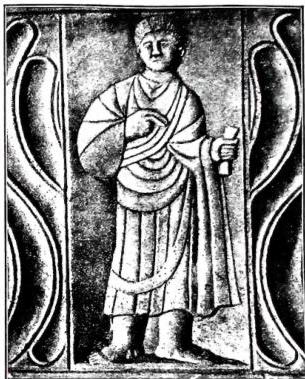
Life becomes even more violent and dramatic, and the most important authors of that age seem to shun it, aspiring instead to humanism. Juan de Mena (v.), writing his Laberinto, immerses himself in the memory of the humanistic milieu he frequented during his stay in Italy. Iñigo López de Mendoza, Marquis of Santillana, with the same intentions as Mena, achieves results of merit but not equal to his. Dante and Petrarch were his models respectively in the Comedieta de Ponza and in the Sonetos (ochos a lo italico modo and in works of lesser importance (Infierno de los Enamorados, Triumphete de amor, etc.), but interesting is his attempt to adapt Italian meters to Castilian. Fresh and lively, on the other hand, are his popularizing poems entitled Serranas. Besides Dante and Petrarch, Boccaccio too exercised a notable influence in S. His Fiammetta was the model for the Sierro libre de amor of Juan Rodríguez de la Cámara; the Decameron and the Corbaccio directly influenced Diego de S. Pedro, author of La Cárcel de amor, and the more famous Alfonso Martínez de Toledo, archpriest of Talavera, author of the Corbacho o reprobación del amor mundano. This is a cheerful, sprightly work, which seeks to teach how to flee sin but which wanders off, self-satisfied and ironic, into exemplifying what must be avoided. The chronicle, although it no longer numbers figures equal to López de Ayala, returns to having effective moments even in this century through a nephew of Ayala himself, Fernán Pérez de Guzmán (Mar de Historias), who, after describing the great figures of antiquity, seeks to point out, through more recent personages, venerable examples of virtue. Other chronicles (such as the famous one known as "of Juan II," due to various authors) deepen the historical approach, providing very rich material for the reconstruction of the life and customs of the age. During the reign of Henry IV, Alfonso de Palencia satirizes his contemporaries (La batalla campal de los perros y de los lobos); Gomez Manrique, on the other hand, seeks to construct an idealized poetic world and writes the second work of the Spanish theater, recalling the Passion in bold symbolizations. His nephew, Jorge Manrique, closes the anguish of his period in the desolate Coplas a la muerte del maestre don Rodrigo, in which with rare formal perfection he expresses the disheartening vanity of all human things and shows the stoic attitude of the strong man before the inevitable.
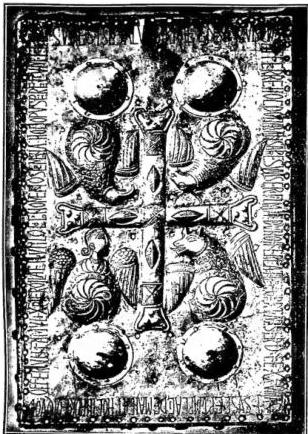
With the accession to the throne of Isabella the Catholic, after she overcame the bitter opposition of the opposing party at the battle of Toro (1476), a new period opens for literature as well. Humanistic studies flourish, having their greatest representative in Antonio de Nebrija, but they turn at once to religious subject matter. The major production of Spanish humanism is the Biblia Poliglota promoted by Card. Cisneros, founder of the University of Alcalá de Henares. The same aspiration to humanism begins to emerge and take shape also in poetic production (Iñigo de Mendoza and Ambrosio Montesinos), to become lively and genuine in Juan del Encina. To him is owed an interesting translation of the Bucolics, made with humanistic intentions and medieval preconceptions, and, even more, an elaboration of the auto which, from the ancient forms clothed in bucolic elements (Autos of the Nativity and of the Passion), through Renaissance influences arrives at the denser and freer manifestation of the Eglogia de Cristino y Febea and at the Italianate comedy Plácida y Victoriano. By now the new times seem to press in from every side, so that, despite the return of Lucas Fernández to the form of the debate and of the religious auto, the masterpiece of the Spanish Renaissance arises, the Celestina. The work, attributed wholly or in part to Fernando de Rojas, has come down to us through the 1499 edition in sixteen acts and, in the Seville edition of 1502, in twenty-one acts. Besides that of authorship, therefore, the problem of the work's performability, and of the purpose for which it was intended by the author, is much debated. If, however, the freedom of division and the lack of unity can recall the writer's almost certain ignorance of Aristotelian poetics, or can suggest a deliberate freedom of division, the intense dramatic quality of the whole work, which centers on the tragic resolution, is beyond doubt. The drama of Calisto and Melibea is immersed in a Neoplatonic idealization tinged and accentuated by the vivid reality of certain touches. The typically Spanish elements that appear in the tragicomedy do not affect the essence of the work, which is, together with the lyric poetry of Garcilaso, the only moment in which S. fully follows the path of the Italian Renaissance.
With the accession of Charles V to the throne, the parenthesis of serenity that had opened in the literature of the Catholic Monarchs continues for a short while longer with Boscán and Garcilaso, only to close completely. The era of the Emperor appears as the prelude to the golden age of Spanish literature; currents of thought, of passions and new literary tendencies stir within it in a complex and violent manner. Juan Boscán and Garcilaso de la Vega represent the triumph of Petrarchan and Renaissance lyric poetry. To the former — a man of limited artistic possibilities — is owed the adaptation of Italian meters (canzone, sonnet, octave, etc.) to the Spanish language in a perfect and definitive manner; to Garcilaso belongs the glory of having animated these forms with the breath of art. He was the prototype of the Spanish Renaissance and seemed to embody in himself all the qualities coveted by Baldassar Castiglione for his perfect courtier. His poetry pours forth in complete harmony of sounds and sentiments (one recalls the Eglogia I and III and the sonnets), without violent clashes, nor anguished passions, or thoughts of death, in a musical stylization in which every contour is softened. The imitation of Italian models is ennobled in personal reworking and in the perfect elegance of language and meters. This ideal oasis of the Renaissance contrasts with the dynamic and combative vitality of the other literary manifestations. Erasmus stirs violent polemics (the famous ones with Luis de Carvajal and Diego López de Zúñiga) and passionate followers (Alonso de Valdés, Alonso de Virués, Juan Vergara, etc.); St. Ignatius of Loyola founds his Company and writes the Spiritual Exercises and the Autobiography; the historians enthusiastically comment on the enterprises of Charles V (Pero Mexía, Luis de Avila y Zúñiga, etc.) and commemorate the conquests of the American lands (Francisco López de Gómara, Bernal Díaz del Castillo, Bartolomé de las Casas, Gonzalo Fernández de Oviedo). Antonio de Guevara seeks to compose every discord in a wise and mild stoicism adorned with rhetorical expressions (one recalls the very famous Reloj de los Principes) and aspires to a modest but human and cordial asceticism (Monte Calvario and Oratorio de Religiosos). The anonymous author of the Lazarillo de Tormes, with a vein of Erasmianism but without harsh polemics, also wishes for a better world in which man is revalued and in which earthly and divine values reach a harmonious equilibrium. The brief little work begins the genre that, from the type of its protagonist, was called picaresque. For the first time the anonymous author places the accent on a plebeian world that suffers and struggles, but he does not seek remedies for the ills he points out and closes himself in an affectionate and aristocratic understanding that exhausts itself in a smile and in wit. In the theater Torres Naharro still presents Erasmian attitudes (Comedia Jacinta), but shows that he has learned the lesson that the Italian theater could give him, of which he had experience during his long stay in Rome. Thus the Portuguese Gil Vicente introduces into his medieval world elements derived from the Renaissance environment.
The production of books of chivalry is very extensive, and they are usually grouped into two cycles: that of the Amadises and that of the Palmerins. They take up and renew the Breton tradition, and the most typical example is presented by Garci Rodríguez de Montalbo publishing the Amadis in 1508. The ancient legends offer the starting point and part of the material of the novella-like plot, but the spirit and the ideals are completely different. In the Amadis as in the Palmerín the epic attitude dominates, but it does not turn into sentiment. Amadis was the result of a series of adaptations to different places and circumstances, and at the same time it was the expression of its century, fanciful rather than realistic, agitated and restless. The various tendencies manifested during the reign of Charles V find their solution and their best expression in the "Edad de Oro," which is usually taken to comprise the period from the abdication of the Emperor (1556) to the end of the seventeenth century.
The pastoral poem is the last and weary expression of the Italianizing Renaissance, a forced fashion that quickly exhausts itself. It should be noted that the masterpiece of the genre — the Diana of Jorge de Montemayor — is by a Portuguese who writes in Castilian. A greater vivacity of representation is found in the Diana Enamorada of Gil Polo, animated by the enthusiasm of the author who takes pleasure in portraying certain landscapes.
Also in lyric poetry Fernando de Herrera takes up the Petrarchan models, but he fails to reconstruct the harmonious atmosphere created by Garcilaso. He cannot reconcile the Renaissance world with his religious tendency and ends by immersing himself in a violent contrast that generates an anguished and dark sorrow. La Torre, Figueroa, Aldana, Medrano repeat, even if with personal variations, the same attitude. At the same time, Luis de León (1527?-91) surpasses the dramatic position to reach the divine solitude of the just man, that which Vossler calls "nostalgia for eternal life" (cf. Noche serena). Luis de Góngora y Argote (1561-1627), although at times — especially in the Soledades — feeling melancholy, reacts to it not by taking refuge, like Luis de León, in religion, but by constructing an ideal world that dissolves in the exasperated perception of every element furnished by the surrounding nature. Góngora's new poetic form — called culteranism or cultismo — generated in his contemporaries a bitter opposition and few followers (chiefly Juan de Tassis conde Villamediana, Pedro Soto de Rojas, Sor Juana Inés de la Cruz). Later critics pointed to him as the prototype of seventeenth-century mannerism and of the most swollen and rhetorical Baroque, but at present Góngora's work has been revalued both in criticism (Dámaso Alonso) and in general poetic taste. The religious problem stirred in the era of the Emperor is resolved in the Edad de Oro with a powerful Catholic affirmation that finds its most open literary manifestation in the vast production of ascetic-mystical writing. This is usually grouped according to the principal schools (Augustinian, Dominican, Franciscan, Ignatian, Carmelite). The major representatives are Juan de Avila, Bernardino de Laredo, Francisco de Osuna, Luis de Granada, Juan de los Angeles and, exalted above all, St. Teresa of Avila (v.) and St. John of the Cross (v.).
In prose with more properly literary aims there dominates, as a synthesis of the Spanish genius, the figure of Miguel de Cervantes ([v.] 1547-1616).
Once the world of chivalry is shattered, attention brought back to human values, the wave of discouragement — sublimated by Cervantes — cannot maintain itself at the same height and falls toward pessimism. The picaro, negation of heroism and of the ideal, becomes the protagonist of this sad drama. The Lazarillo grows gloomy and closes himself in desolation, becomes Guzmán de Alfarache. Under this title Mateo Alemán published his work, a model of Castilian language and prototype of picaresque production. The account of the innumerable and dramatic vicissitudes of Guzmán alternates with moralizing disquisitions attributed to the protagonist himself, who is therefore presented as learned. The most disconsolate pessimism is barely softened in stoic and Christian resignation, but the work cannot free itself from the heavy nightmare of sorrow to which humanity seems condemned. The picaro becomes almost the pretext around which the entire spiritual and cultural world of the last years of the sixteenth century and the first half of the seventeenth century revolves. In the fidelity with which this world is portrayed consists the realism of the novela picaresca, more than in the description of settings and figures. There are therefore found in it the deference to Aristotelian and Renaissance theories,
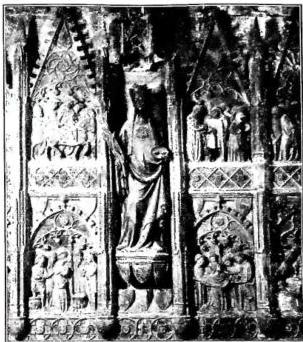
Senecan influence, the satirical tendency, the religious problem, while at bottom the premonitory symptoms of decadence stir anxiously. The genre was imitated by authors far inferior to Alemán (Espinel, Salas Barbadillo, Castillo Solórzano, Esteban González), declining rapidly toward the forms of a story, often prolix, of low-life adventures, or transforming itself into a ponderous cento of moral teachings barely held together by the adventures of a young servant (cf. El donado hablador Alonso by Jerónimo de Alcalá Yáñez), a strange version a lo divino of a now exhausted genre. It should be remembered, however, that even in the least happy period of the picaresque there was one of its best productions: El Buscón by Francisco de Quevedo y Villegas (v.), in which satire gains the upper hand and conceals the bitterness.
In Quevedo's style it is customary to see a model of the conceptist current which, opposing Góngora's culteranismo, sought to continue the classical tradition not by introducing violent innovations, but by concerning itself only of attending to its content. This tendency is in part defined by Baltasar Gracián (v.), who in the Arte y agudeza de ingenio formulates the "code of poetic intellectualism." Too absorbed in thought, he scorns the emptiness of images devoid of meditation and goes so far as to suggest a list of the various types of agudezas that can be applied in writing. If this genre is responsible for the exaggerations of the equivo-quotas, it must also be credited with one of the most original creations of the Spanish seventeenth century, the Criticón. In his earlier works Gracián had built his spiritual world and his hero rigidly, almost coldly logically. An individualist, confident in his own knowledge and in the foolishness of others, Gracián's man has no sentimental weakness, no illusion; he struggles against destiny and against the world, certain of achieving victory through his will and his art. For this reason he also has a treacherous politics that admits simulation and deceit. This harsh vision of the world seems to soften in the Criticón, where the héroe finally finds his consolation in the certainty of immortality. Gracián was caught up in the negating criticism of seventeenth-century art, until Schopenhauer undertook the revaluation of his work.
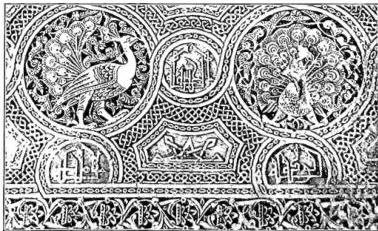
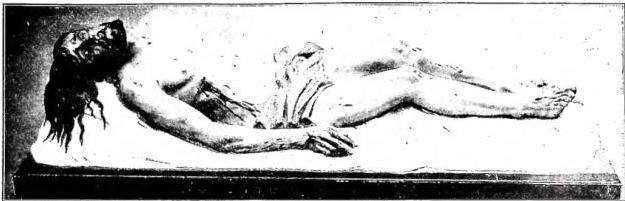
Compared with the exceptional figures that have been noted, the historiography of the Edad de Oro does not present excessively interesting productions, although one notes the works of the Jesuits Ribadeneira and Mariana (Historia eclesiástica del Scisma del Reino de Inglaterra and Historia de España), and, later, those of Saavedra Fajardo (Corona Gótica, Castellana y Austriaca, etc.). Far less distinguished is the epic, with the Araucana of Ercilla (in which, however, one can note merits of colour and descriptive vividness) and the poems of Balbuena and of Hojeda, the latter turning to a genre of sacred epic, treating the Passion of Christ in La Cristiada. The Edad de Oro, on the other hand, manifests itself with exceptional exuberance in the theatrical field. From the timid and uncertain attempts of Encina and Torres Naharro one passes to the great seventeenth-century theatre by very brief and very rapid stages, which can be noted in Juan de la Cueva, who continues to develop the classicizing tendency, and in Lope de Rueda, who reaffirms a tradition of frank and popular realism. With Cervantes we are already faced not only with works of notable merit (El trato de Argel, El cerco de Numancia, Ocho Comedias and above all Ocho entremeses), but also with the heat of the polemic over the theatre. The Spanish people participated as a whole in theatrical life; performances took place in the squares and later in the corrales, without any comfort and without stage apparatus, but commoners, nobility and royalty attended them with the same enthusiasm. In the age of Philip IV this passion triumphed thanks to the open protection of the King, so that personages of the Court did not disdain to take part in the performance as actors. In the theatre aesthetic and theological problems were discussed; the history of the past was brought on stage and above all that of the present, since even works whose subject refers to ancient events have the spirit and interests of the seventeenth century. In the theatre one also hears the most varied metrical forms, from the easy coplas of the romances to complete lyrical or epic compositions in complicated and solemn metres. In a word, the theatre of the seventeenth century is the whole life of Spain, which feels dramatically its political vicissitudes, its ideals, its religion, and which has the need to see itself, a little to admire itself and much to feel itself living in its intense reality. Perhaps the Renaissance had not produced a great theatre in Spain because it wished to remain bound to narrow concepts of classical imitation; nevertheless it served as a preparation. The classicists, giving the Aristotelian concept of mimesis the broadest interpretation, prepare the essential basis for seventeenth-century production. And indeed, when the polemic flared up in the face of the innovations of Lope de Vega and, even more, of his followers, it was not the principle of verdad humana sanctioned by Lope that was condemned, but the exaggerations that departed from that principle. Lope de Vega (v.) (1562-1635) summarized the principles of his theatrical reform in El arte nuevo de hacer comedias (1601). He understood that the preceding Spanish theatre had struggled between the erudite tendency toward classical forms and the need to remain close to the life of the people, and he decisively opted for the latter. He therefore admitted naturalness and spontaneity as the only rule, deriving from this the necessity of studying characters and setting and an interest in subjects and problems of the day. His enormous dramatic production (ca. 1500 works) can be divided into two great groups: works on religious subjects (autos and dramas sacras) and profane works or works of capa y espada, understanding this term in the broadest sense. The former do not particularly excel, since Lope's religiosity, fervent and unquestioned, does not generate deep conflicts and often resolves itself into lyrical attitudes suffused with tenderness. They nevertheless represent an interesting evolution of the genre, almost the preparatory and indispensable stage for reaching Calderón. The profane dramas and comedies are exuberant with vitality and constitute, as a whole, the most complete picture of Spanish life in the Edad de Oro. If certain elements and problems of the day recall very directly the author's epoch, one should not however forget the universality and humanity of certain characters that still today present themselves in all their spring-like freshness. In the wake of Lope is Gabriel Téllez, better known under the pseudonym Tirso de Molina (v.) (1584?-1648), who limits but deepens his field of interests. His comedies become acute and lively studies of character - especially feminine - while the social problems stirred up by Lope de Vega grow milder.
Two of the greatest works of the entire Spanish theatre are attributed to him: El Burlador de Sevilla (or Don Juan Tenorio) and the Condenado por desconfiado. Farinelli already noted how the two dramas reflect aspects of the same problem of free will: to Don Juan, condemned for excess of trust in divine mercy, corresponds Pablo, who is lost through distrust. In the two works the theological concept constitutes the thesis, but with it are interwoven profoundly human motifs that make the protagonists two archetypes of human nature. The contrast present in both between the demands of life and reason and those of the afterlife is resolved in Enrico, who knows in the end how to devalue the world and believe in eternity.
Tirso enters into the intimacy of the human soul, exploiting all the elements he had accumulated in his despised youth as a natural son, in his travels in the land of S. and of America, in courtly life and in the years of theological preparation and religious meditation. His dramas are at the culmination of that slow and gradual preparation that would allow the Spanish people to listen to the voice of Calderón. Pedro Calderón de la Barca ([v.] 1600-81) does not stop at the treatment of social problems nor at the description of milieus, but investigates the causes that produced those problems and those milieus and finds their solution in the religious sphere. But religion is presented not in the harshness of polemical debate, but rather with a sense of noble chivalry that can make one imagine Calderón as a paladin of Christianity. Decorative elements abound, the search for dynamism, the tendency toward personification and stylization, the musicality of the verse. In the numerous host of more or less direct followers of Lope de Vega, particular mention should be made of great playwrights and dramatists such as Guillén de Castro, Montalbán, Mira de Amescua, Vélez de Guevara and above all Juan Ruiz de Alarcón who, while considerably simplifying the development of the action, accentuates the study of characters (La verdad sospechosa, Las paredes oyen, etc.) and the attentive observation of detail, also availing himself of a refined and careful style. Among the followers of Calderón are to be counted Francisco de Rojas Zorrilla, who treats the problems of conjugal honor (Cada cual lo que le reea) and of duties toward the monarchy (No hay ser padre siendo rey) with a broader and more humane vision than that given by his contemporaries; Agustín Moreto y Cavaña, most refined, elegant, acute psychologist, who deepens and chisels his themes, underscoring them with musical devices and scenic effects (e.g., Lo que puede la aprensión, La confusión de un jardín); Brances Candamo, who carries reality into a field of pure fantasy. Quiñones de Benavente, most lively and burlesque, fertile in finding humorous touches and acute realistic strokes, continues and strengthens the tradition of the entremeses. The end of the Austrias (Charles II dies in 1700), the advent of the Bourbons with Philip V, break that sense of intellectual supremacy in which the S. of the Edad de Oro had been enclosed and bring the direct influence of French culture. The problem of the Enlightenment and of encyclopedism seems to revolutionize the S.; the bourgeoisie wants to assert itself; science becomes the center of every interest and shakes religious faith. The Benedictine Benito Jerónimo Feijóo ([v.] 1676-1764) tries to insert the movement into traditional culture, liberated from many widespread errors. Already a celebrated teacher, he publishes the Teatro crítico as the synthesis of an entire life of recollection and methodical study. A scientist more than a man of letters, he used literature to expound his doctrines; the style of his works, clear, incisive, proceeds with dignified sobriety and classical composure, indulging only in some brief aside that opens a new horizon in the effectiveness of an evocation or in the flash of an intuition. Exclusively critical and theoretical, on the other hand, is the work of Ignacio de Luzán (La poética o reglas de la poesía), in which the very broad vision that Feijóo had of culture is reduced to a cold and rigid subjection of poetry to ethics, even if at times the writer manages to manifest his refined taste and his sensibility in a sober, elegant style and in some acute observations. The major theatrical author of the Spanish eighteenth century, Leandro Fernández de Moratín, a convoluted figure of timid discontent and spite, an active partisan of the French during the Napoleonic period, refers to his aesthetics — inspired in large part by that of Boileau. He was the author of the fresh comedy El sí de las niñas, which remains as a model of balance and good taste and of a lively realistic sensibility. Iriarte and Samaniego are the satirists who, steeped in French culture, imitate La Fontaine with finesse and sensibility, also bringing some innovation. Juan Pablo Forner, on the other hand, gives his satire a much more violent and harsh tone, at times succeeding in being heavy and monotonous. He turns above all to literary criticism and in his Exequias de la lengua castellana hopes for the resurrection of Spanish literature, which he had passionately defended in the Oración apologética. To this critical current are linked Juan Francisco de Masdeu, Gregorio Mayans y Siscar, Juan Andrés, Arteaga, with Gaspar Melchor de Jovellanos standing out among them all, a mediocre poet and dramatist, but a lively art critic (Elogio de las bellas artes) who combines liberal ideas with a love for a solid Catholicism.
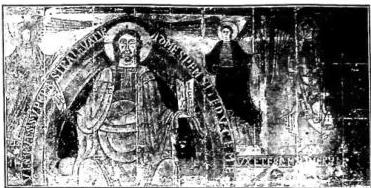
In this century the novela picaresca also reappears, in an elaboration presented by Torres Villaroel in his Vida, in which, almost a picaro himself, he describes many adventures and numerous characters with an amiable spirit. He adds to it the contribution of a tangled and capricious erudition and of an acute and biting satirical spirit. This also manifests itself in the Sueños morales, in which, with evident reminiscences of Quevedo, Madrid customs are portrayed. Similar tendencies are shown by the Jesuit José Francisco de Isla with his laughable and satirical Fray Gerundio. This is a picaro who offers himself smilingly to criticism, gathering in himself all the ills of his age and above all the defects of the worst baroque fallen into the ridiculousness of stale sacred preaching. With a technique of violent contrasts, seeking the best effects in the succession of scenes in which realism is exaggerated to the point of the grotesque and the fantastic, de Isla tries to fuse the best Castilian tradition with the new critical orientation of his time.
The influence of neoclassicism may be said to be concluded with Manuel José Quintana, an emphatic, solemn, cold singer of liberty and progress, but a sufficiently acute critic and a better evoker of the biographies of famous Spaniards. With Meléndez Valdés, Nicasio Alvarez de Cienfuegos, Alberto Lista comes Spanish pre-Romanticism, which forms the taste for a poetry more intimate and collected than the neoclassical and which favors the tendency toward melancholy, the dark, introspection. Slowly one moves toward Romanticism, but this acclimatizes itself poorly in S. and, although counting an abundant production, responds more to a loving but often emphatic revaluation of tradition than to a necessity for renewal of thought and therefore of artistic expression. While lyric poetry offers a decorous if not enthusiastic manifestation in the poetry of Espronceda, and narrative, on the other hand, disperses and debases itself in heavy novels inspired by Walter Scott or Alexandre Dumas, the theater presents the best production of Spanish Romanticism in dramas of undisputed fame such as La fuerza del sino by the Duque de Rivas, the Don Juan Tenorio by Zorrilla, El Trovador by García Gutiérrez. Much more modest in its intentions, but endowed with sound balance and a notable vis comica, is Bretón de los Herreros. With neo-Romanticism the theater too falls into the rhetoric of the dramas of Echegaray, nor does the realistic theater of Tamayo y Baus offer better fruits. The post-Romantic lyric poets (Bécquer, Campoamor, Núñez de Arce) do not raise themselves much above such decadence, for which an unjustified critical enthusiasm is now beginning to be tempered.
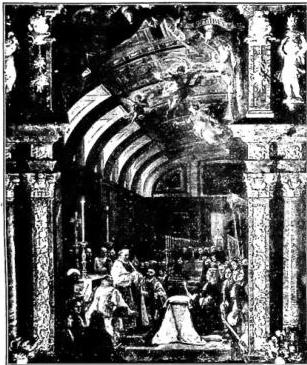
By now in its final years, the nineteenth century presents the novelist Pedro de Alarcón, with the spirited Sombrero de tres picos; the interesting, though uneven, Juan Valera (to whom the celebrated novel Pepita Jiménez is owed) and above all José María de Pereda, who in his principal novels (Peñas arriba and Sotileza) and in his short stories brought back the atmosphere of the Santander region, veiling it in the penetrating melancholy of one who greets a world that is vanishing. The figure of Pérez Galdós (v.), not yet sufficiently brought into relief by criticism, sums up the historical and spiritual vicissitudes of the century, from the epic struggle against Napoleon to the despondency of the last decade. A painter of Madrid, in his very numerous works he surveys the most varied and characteristic types, but above all the humblest and most sorrowful. The realism of his sober and vigorous art etches their faces, forming a gallery of unforgettable portraits, and while he affirms that the intimate essence of man is sorrow, he also upholds trust in human goodness, which that sorrow makes tolerable. Straddling the two centuries, but decisively reaching toward the twentieth, is the generation of the modernists, which, free of the religious preoccupations of the contemporary and homonymous European and North American movement, tends to renew poetry through the search for and evaluation of new formal elements. Rubén Darío, a Nicaraguan, is the initiator of the movement, and to him interesting metrical innovations are owed, but the personality of Ramón del Valle Inclán imposes itself upon all his companions of aesthetic faith (Manuel Machado, Ramón Jiménez, Villaespesa, Ardavín, Pemán) through the formal perfection of his works — especially those of his first manner, among them the famous Sonatas — and through the agitated and abnormal world of his dramatic works and his Esperpentos. Particular interest is offered by the men of the so-called Generación of '68. With this designation Azorín called the authors who, flourishing around the year of the Spanish disaster in Cuba, in the face of the general despondency, turned decisively, through an acute and often severe criticism, to the revaluation of their land and national characters. This name of Generación, now validated by usage, is nevertheless conventional and a posteriori, since the various writers, differing in artistic aims and spiritual interests, acted in a wholly independent and personal manner. Angel Ganivet is customarily seen as the precursor of the Generación, since he, in his Idearium Español, meditates on the national problem and hopes for rebirth. Miguel de Unamuno is the great philosopher of his group. In his most celebrated essays (En torno al casticismo, La vida de Don Quijote y Sancho, La agonía del cristianismo, etc.) he confronts the problem of religion (which he resolves in an existentialist manner) and that of his nation, affirming the value of infra-history. Antonio Machado, singer of Castile (Soledades, Campos de Castilla, etc.), creates a world fluid in its external sensations, but turned toward a dreamy intimacy that welcomes the faintest voices and dissolves drama into weeping. Pio Baroja brings into his novels consciences tormented by existentialism, but more often sorrowful characters, alive from his land, recalling in part Pérez Galdós. José Martínez Ruiz (Azorín), a brilliant essayist and describer of the Spanish landscape, then loses himself in an artificial search for formal novelty and in the desire — for him scarcely appropriate — to do philosophy. Still in the early years of the twentieth century the theater is renewed by Jacinto Benavente (La Malquerida, Señora ama, Los intereses creados, etc.); literary criticism by M. Menéndez y Pelayo and by R. Menéndez Pidal; essay writing with a philosophical background by J. Ortega y Gasset (Glosario).
The last twenty years appear exuberant with new forces. García Lorca has already obtained world fame for his theatrical works (Bodas de sangre, Verma, La casa de Bernarda Alba, etc.) and poetic works (Canciones, Romancero gitano, etc.), but alongside him Rafael Alberti, Pedro Salinas, Jorge Guillén, Vicente Aleixandre await and deserve a broader recognition than has so far been given them in Europe. The novel and the short story are renewed with Juan Antonio Zunzunegui (La Ulcera, Las ratas del barco, etc.), while new personalities of the very young appear also in lyric poetry, such as Valverde and Ridruejo, rich in interests and promises.
Bibliography3 works
Guido Mancini
VII. ARCHAEOLOGY
1. Early Christian period
Although the beginning and the development of the Christianization of S. from the very earliest centuries is well confirmed, the certain monumental documents do not begin before the 4th century. With the apostolic preaching (the coming of St. Paul is a historical fact) the Christian communities were formed and developed, and they were already numerous and well organized in the 3rd century, with the hierarchy, their churches and cemeteries; let us recall, for example, the martyrs of Tarragona (259), St. Fructuosus the bishop, and the deacons Augurius and Eulogius, in whose authentic Acts there is also mention of a lector and of a numerous community; moreover, the reproach of St. Cyprian (Ep., 67) against bishop Martial is well known, and it attests the existence of Christian cemeteries in the middle of the 3rd century; it also seems that the famous can. 36 of the Council of Elvira, where various dioceses were represented, confirms the earlier existence of sacred buildings decorated with paintings. However, no monumental trace of these times has been preserved. Some inscriptions of the 3rd century, with indifferent formulas, published as probably Christian, remain doubtful and bear no characteristic marks.
2. Architectural monuments
After the Peace of Constantine all the Christian centers must have had their churches, either adapted in earlier buildings or built on the basilical type, but unfortunately the traces of them that have come to light are scanty. The primitive Christian monuments of S. had to suffer much from the barbarian invasions, the first in 260 and the second in 414 attested by Paul Orosius after the Visigothic penetration of 409 (Hist. adversus paganos, VII, 22-28). The 49 Compositions of Prudentius (24 relating to the Old Testament and 25 to the New) were written to be placed as explanatory text for the corresponding scenes of the biblical cycle decorating one of the basilicas of S., probably in Saragossa (J. P. Kirsch, Le Dittochaeum de Prudence et les monuments de l'antiquité chrétienne, in Atti del II Congresso internaz. di arch. crist., Rome 1904, p. 127 ff.). Prudentius in the Peristephanon indicates some very sumptuous churches built over the tombs of the martyrs; of the basilica of St. Engratia of Merida (hymn III) he says that it had a mosaic floor like a meadow full of flowers, precious marbles in the atrium and a gilded ceiling; of this sanctuary, identified with the church of the martyr outside the walls of the city, perhaps nothing remains but two Corinthian marble capitals supporting the triumphal arch of the present church. Likewise, in hymn IV, he alludes to the golden coffered ceiling of the Basilica erected over the tomb of St. Fructuosus at Tarragona; the remains of this, brought to light in the excavation of the Christian cemetery, have revealed that it had three naves separated by columns, probably with a bema and with a semicircular apse, paved with mosaic of large marble tesserae and with tombs, some covered with mosaic; it measures 30 × 19 m.; around it were sepulchral monuments, one of which, next to the apse, communicates with the left side nave.
Traces of basilical churches, of later development and with evident relations to the African monuments, have been found in the Balearic Islands, near the locality of Manacor (Majorca); they have three naves separated by pillars, with a rectangular apse; two of them, of St. Mary and of St. Peretò, had floor mosaics; similar is that of Son Bou (Minorca), very recently discovered, but it has an internally semicircular apse. Other less solemn churches have a single nave; such is the one called "cella memoriae" of Ampurias (Gerona), dated to the 4th-5th century, which is a hall of 14 × 5.50 m. with a semicircular apse and with a narthex that has a lateral entrance; under the floor it had burials. Later are those of Elche (Alicante) and Jativa (Valencia), of square plan, the first with an apse inscribed in the construction, the second without an apse; they represent the Eastern influence, which came perhaps through the Byzantine dominion and which would develop in the Visigothic buildings. The so-called "house-basilica," with a double apsed hall at Merida, is probably adapted from an earlier building.
Particular attention deserves the architectural complex of Centcelles (Tarragona), without doubt the most important in S. and of funerary purpose; the ruins occupy an area of about 90 × 20 m. and the central nucleus is formed by two constructions joined together, externally square and internally circular the first and better preserved, quadrilobed the second; the first is covered by a dome decorated with mosaics, of which very interesting remains are preserved.
As for the cemeteries, they must have been areas above ground; ancient traditions speak of underground cemeteries at Gerona and Saragossa, but they have not been confirmed by any discovery. The open-air cemeteries had tombs and monuments of various forms, ranging from the simplest and poorest types to more or less monumental buildings. A characteristic example of this is found in the cemetery of St. Fructuosus at Tarragona (v.), discovered in 1923, well explored and studied.
3. Sculpture
Besides a small statue of the Good Shepherd of the 6th century, preserved in the Museum of Seville, S. possesses a relatively rich series of sarcophagi decorated with storied reliefs, whose importance consists especially in the fact that they point to workshops of local artists. The decorative schemes are not different from those of the Roman world: fields of vertical or wavy strigils alone or mixed with storied reliefs, or reliefs across the full width of the fronts, with the scenes in a frieze or separated by small columns or trees; there is no example with two superimposed registers. They can be grouped into various centers or regions. The most important and numerous group is that of Tarragona, with as many as fifteen pieces, complete or notable fragments. Besides that of the facade of the Cathedral, from the Theodosian period, and a similar fragment, the others, found in the excavations of the Christian cemetery, belong to the local workshop and are from the 5th century; almost all cut in the local limestone, like other earlier and pagan ones more or less decorated, they present a similar scheme: in the center, the panel for the inscription resting on a base, fields of strigils at the sides and figures at the ends; the strigils are broad and shallow, set in two opposite directions, forming a characteristic central knot; the scheme is comparable with the sarcophagi found at Carthage; the storied panels bear figures of orants, the sacrifice of Isaac and personages, perhaps Apostles, with a scroll in their hands and beneath a curtain. The style of the reliefs - elongated but correct figures, and folds in the garments tight and profuse - presents in its uniformity elements of different hands and of an interesting evolution.
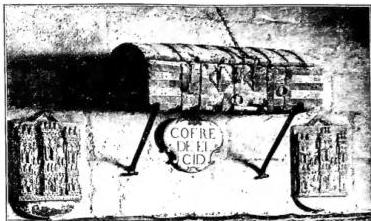
The group of the north-central region of Catalonia is completed by six sarcophagi from Gerona, one from Ampurias and two from Barcelona; in style they are rather akin to those of southern France. The six from Gerona are preserved in the church of St. Felix, outside the ancient walls of the city; it was probably built over an ancient cemetery from which the sarcophagi would come; among the themes, common to the reliefs of Christian sarcophagi, are to be noted the story of Susanna described in five episodes, which occupy the whole front; Christ above a lion, an allusion, perhaps, to the words of Psalm 90:13: "conculcabis leonem et draconem". That of Ampurias (in the Provincial Museum of Gerona) has the figure of the Good Shepherd among the representations of the seasons, winged genii and scenes of the vintage and olive harvest; for its date - 4th century like the earlier ones - it can be considered Christian, although the figure of the Good Shepherd is not certain. The two from Barcelona, one with two fields of strigils among the reliefs, and the other with a frieze, have the usual scenes.
The group of Valencia, with three examples in the city, one from Hellin (Albacete) and a fragment from Denia, is not so uniform; of those of Valencia, simple and with strigils, one has, in the center, the usual symbol of the Resurrection of Christ, but with some peculiarity; it is a gemmed cross with two doves on the arms and two lambs below, in place of the soldiers. The sarcophagus of Hellin (Academy of History, Madrid) has the scenes separated by pillars: in the three central spaces is Christ acclaimed by four Apostles; the fragment of Denia has a similar decoration.
The group of Saragossa is made up of the two sarcophagi of the crypt of St. Engratia, in that city, and one from Castiliscar. Of those of Saragossa, the most important has the scenes also on the side facades, and in the corners caryatids that support the cornice; in the center is seen a female figure between two Apostles, raised toward heaven by a divine hand; this scene has been interpreted by some as a representation of the Assumption of the Virgin, but it could be the soul of the deceased. Names inscribed on the various figures, in ancient letters, perhaps contemporary, intend to identify the personages, but often arbitrarily. The sarcophagus of Castiliscar (Saragossa), used as an altar, as also the other two, is a stylistically isolated and quite original example, coming from a Spanish workshop; in the scene of the multiplication of the loaves, the seven baskets have turned into amphorae, as if a confusion had occurred with the miracle of Cana.
The sarcophagi grouped around Toledo are three complete ones and two fragments, coming from four distinct localities and without stylistic affinities; the two fragments (from Erustes and Toledo, Puerta del Sol) belonged to fronts with fields of strigils and scenes between small columns, the others are with a frieze; two from Layos (Toledo), with the usual scenes coming, probably, from Spanish workshops, and one from Puebla Nueva (Toledo), more singular, with the twelve Apostles and Christ in the center, seated on a high throne, separated by columns, all with a strong inclination toward the right; they had the names written in the upper cornice in contemporary letters. In the north-western region is a sarcophagus from Astorba, similar to the first of Layos, and another from Villanueva de Lorenzana (Lugo) - with strigils in the shape of a 3 - from the 5th century. Of the region of Merida, so abundant in inscriptions and other Christian memorials, nothing is preserved but a fragment of a lid with the scenes of Noah and of a banquet, and a plain sarcophagus with a painted crown on the lid. Remains are also scanty in the region of Baetica; a sarcophagus at Martos (Jaén) with the scenes separated by columns, and that of Berja (Almeria) in which are seen the two Princes of the Apostles before a seated personage with a diadem on his head; two fragments from Palacios (Seville) and from Cordova have scenes, between the columns, the first, and fields of strigils and reliefs, the second. Three other sarcophagi, from the advanced 4th century, found at Covarubias (Burgos), Carteya (Cadiz) and Prado (Seville) could be Christian but have only profane themes.
4. Mosaics
No paintings with Christian themes are preserved, but the mosaics are relatively abundant; among the floor mosaics, the oldest have been found in non-sacred buildings, such as that of the villa of Fortunatus at Fraga (Huesca) and of Estrada (Huesca), the first with the monogram of Christ and the other, quite crude, with loaves, fish, swastikas, discs, flowers, etc. In the aforementioned churches of St. Peretó and St. Mary (Mallorca) and of Elche (Alicante), mosaics were found no earlier than the 5th century with geometric decoration and with scenes from the Old Testament, in that of Elche, with inscriptions indicating the place of the ministers and the faithful. In the dome of Centcelles (v. TARRAGONA) with mosaics preserved only in part, the themes are funerary: hunting scene, the seasons, Daniel among the lions, the ship of Jonah, the three youths in the furnace and perhaps Noah; the scenes are separated by columns as on a sarcophagus front: they are from the 4th century. Even more interesting is the series of tomb mosaics, confined to the eastern half of the peninsula and comparable to those of Christian Africa, with which they form a closed geographical ensemble. Three fragments are preserved at Tarragona, among which is very beautiful that of Optimus, with the figure of the deceased and a metrical inscription; a quite notable group from Montecillas (Huesca), the most similar to the African ones; one at Alafaro (Logrono), one at Denia (Valencia) and several at Menacor (Majorca), all of these with only the inscription and decorative themes.
5. Visigothic period
While the various Spanish provinces, almost all deeply Romanized, remained in relation with the Metropolis and in contact with the neighboring provinces, the native artistic traditions, especially of Africa, had only a slight influence on the monuments. But with the invasions of the barbarians, and above all from the 5th century with the Visigothic dominion, isolated centers remained, before, and afterward most of the regions were almost totally cut off from the classical heritage; Germanic influence, however, is notable only in the minor arts (eagle-shaped fibulae) and almost nil in architecture and sculpture: the influences of the indigenous tradition intensified (horseshoe arch, deeply cut geometric designs, cords, etc.) along with Oriental ones that arrived through Byzantine Africa. Thus centers of culture formed on the coasts of the Mediterranean, principally in Baetica, and also in Lusitania, from where Visigothic monumental art radiated toward Toledo and, later, throughout the whole peninsula.
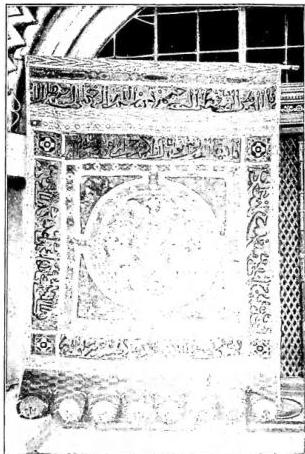
6. Architecture
This Oriental-African influence has already been noted in the basilical churches of the Balearic Islands: other similar ones have been pointed out at Terrassa (Egara) and at Cabeza de Griego (Cuenca), the latter with a nearly square plan, but with three naves, like that of Algezares (Murcia), with a semicircular apse, portico and baptismal pool. Those of St. Peter of Alcántara (Málaga), Alcacerejos (Córdoba) and Casa Herrera (Mérida) have two opposed apses and a side portico; the second with a large baptistery that has, at the entrance of the apse chapel, the horseshoe arch. Two more easterly ones, St. Cugat de Vallès (Barcelona) and Fraga (Huesca), have a single horseshoe apse.
From the advanced 7th century various churches survive, all built with well-cut stone blocks, with a square apse, horseshoe arches and abundantly decorated both inside and outside. There are two types of plan: basilical and cruciform; those of St. John de Baños (Palencia), which preserves the foundation inscription, of the year 661, St. Peter de Balsemão (in northern Portugal) and St. Mary de Quintanilla de las Viñas (Burgos) are of the basilical type, the latter with a transverse nave and rich decoration, including figured reliefs, but very crude, dated to the 8th century.
In parallel the cruciform type develops, such as the funerary chapel of St. Fructuosus of Braga (Portugal), from the middle of the 7th century, whose exterior facade strongly recalls that of the mausoleum of Galla Placidia at Ravenna; in the churches of St. Peter de la Mata (Toledo), dedicated in the time of Wamba (672-81), and St. Comba de Bande (Ourense) the cruciform plan is inscribed in a square plan, with cells, perhaps monastic, in the spaces between the cross and the square; this form is found again more developed in the church of St. Peter della Nave (Zamora), of the 8th century, in which the arms of the cross project outside the rectangle. The interior decoration of these churches is very rich, especially in the last, with two capitals in the form of an inverted truncated pyramid, adorned with the scenes of the Sacrifice of Isaac, Daniel among the lions and busts of Apostles, with an inscription.
7. Sculpture
In Visigothic sculpture the themes are predominantly decorative: geometric designs, corded patterns, interlace, undulating vine tendrils, flowers, fruits, animals, birds, fish, handled vases with doves, niches with crosses or monograms, with greatly widened shafts, and flanked by palms or even by angels; they are found, as already mentioned, on the walls of churches, cornices, chancel screens, doorjambs, pillars, bricks and other architectural elements. The principal centers of development are at Mérida, Toledo, Córdoba, from where the types spread almost everywhere, but less in the eastern part. On sarcophagi too there are historiated reliefs and sometimes on capitals and slabs. Among the sarcophagi, mention should be made of that of Briviesca (Burgos) and two others from the same region (Cameno and Poza de Sal), coming from the same workshop, with decoration on the four faces; and those of Écija and Alcaudete, in the southern region, all in Oriental style; almost all the scenes are from the Old Testament, not always identifiable because of their singularity; very famous is that of Écija (Seville), in which appear the Sacrifice of Isaac, Daniel among the lions, and, in the center, the Good Shepherd, with Greek inscriptions.
8. Minor arts
Besides the eagle-shaped fibulae and metal clasps, sometimes precious and inlaid with colored glass, imported by the Visigoths and from which similar Spanish jewels derive, of singular interest are the votive crowns and crosses, found in the famous Treasures of Guarrazar (Toledo) and Torredonjimeno (Jaén), of precious metals and with gems, sumptuous and very rich, all with inscriptions bearing the names of donors almost always accompanied by the word vitya. Interesting are the vases or small amphorae and the liturgical plates, often handled, in silver with similar inscriptions; they are identical to the Oriental ones, especially those of Egypt, from where they would have been imported, but others were evidently manufactured in S.
9. Epigraphy
Inscriptions earlier than the middle of the 4th century are very scarce; some from the 3rd century with indifferent text could be Christian, especially those with the formulas « memoria illius » or « posuit memoriam », which from the middle of the 4th century are found together with Christian symbols and expressions, such as « receptus », « recessit », with or without « in pace ». From the middle of the 5th century and throughout the whole Visigothic period, the formulas take on particular characteristics in the various regions. In the province of Tarraconensis, where inscriptions are very scarce, except for the city of Tarragona which is the richest and oldest center of S., Romanitas is preserved more constantly: there is no dating by the Hispanic era and only the consulate, in the 6 or 7 dated ones (the oldest of 393 and the others of the 5th century); the formulas are varied, more frequent « hic requiescit » or « quiescit », but also with examples of « hic iacet », « recessit », « perivit », « redivit in pace » (Carthaginensis), « depositus », « vixit in pace », « quiescet », « requiescet », « quiescat »; as notable formulas, 4 examples from Tarragona with allusion to the Resurrection should be noted: « sperans resurrectionem a Deo », and singular praises; in the tomb mosaics of Coscojuela is found the phrase « sepulchrum adornavit ». For western S. a common and frequent characteristic is dating according to the Spanish era and the use of the appellation « famulus Dei », brought by the Visigoths from France, and, from the 6th century, « famulus Christi ».
In Lusitania, with important centers at Mérida, Mértola and Beja, the proper formula is « requievit in pace », but not without examples of « recessit, receptus in pace », in the oldest ones, and « obdormivit » or « decessit in pace »; after the middle of the 5th century, the most general schema is: « N. Famulus Dei (Christi) — vixit annos (annis) tot — requievit in pace (Domini, Domini nostri Jesu Christi) die (from the middle of the 6th, sub die)... Era... ».
As decoration a crown surrounding the text with a monogram or cross in the upper part is frequent. As notable formulas, those relating to penance should be remembered: « N. penitens; accepta poenitentia, requievit... ».
Baetica, a region romanized very early and intensively, is the richest, although no single center has as many inscriptions as Tarragona or Mérida. The characteristic schema is, as in Lusitania, but with the formula « recessit in pace », instead of « requievit in pace »; it also has examples of « receptus in pace, quiescit — requiescit in pace, hic requiescit », etc.; « defunctus est, mortuus, obiit, migravit », etc.; the variant sub die for the date of death is only frequent in the Conventus Cordubensis, where the appellation « famulus Christi » is found more often. There are also allusions to penance: « in coena Domini accepti penitentiam... cum penitentia recessit », to the Resurrection: « credo quod Redemptor meus vivit... », and to Baptism. They are often decorated with monograms or crosses within crowns or circles and flanked by doves.
The metrical inscriptions are not very numerous, but they are important for history, because almost all of them belong to personages of the ecclesiastical hierarchy. The scanty inscriptions in Greek belong almost all to the provinces of Baetica and Lusitania. More interesting are the monumental inscriptions, especially on sacred buildings, different from the others of the Roman world; in these, mention is made of the construction, restoration or, as the case may be, the dedication of the building, but the relevant date is not noted in them; in the Spanish ones, on the other hand, are found the liturgical indications relating to the consecration, the name of the dedicator, and all of them have the day, which always falls on a Sunday. Also of great interest for the history of the cult of the saints are the lists of relics, deposited in the altar or kept in the church; they must be considered later than the year 600, because dated dedicatory inscriptions are not found before this date; the two groups are less abundant in the Christian East. The civil monumental inscriptions too have a religious character, both because of monograms and because of sacred expressions. Other groups are formed by the liturgical calendars, inscriptions on votive objects — almost always with the formula "ille offeret" — and on various jewels, with the name in the vocative and the words "vivas" or "vita"; similar inscriptions are also on bricks and tiles, or with the commemoration "salvo illo".
The system of dating by the Spanish era, which begins, as is well known, 38 years before the Christian era, and which is exclusive to the inscriptions of the western regions, is the same as is found from the 3rd century in some pagan inscriptions in the Asturica and Cantabra regions, indicated with the formula "aera cos."; in this region this system of dating would have been born and from here it spread to the neighbouring regions: at Merida, from the 4th century, to the provinces of Lusitania, Baetica and Gallaecia, from the end of the 5th century, and to the western part of Carthaginensis, from the middle of the 6th century.
A palaeographic peculiarity that is found in the western inscriptions and also in the manuscripts down to the 12th century is the numeral XL, with the letters in a special ligature.
Bibliography31 works
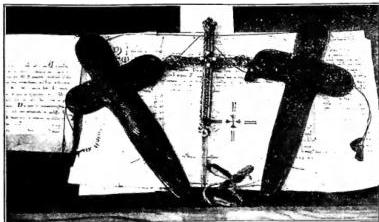
VIII. SACRED ART
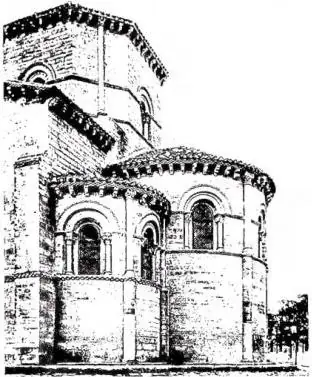
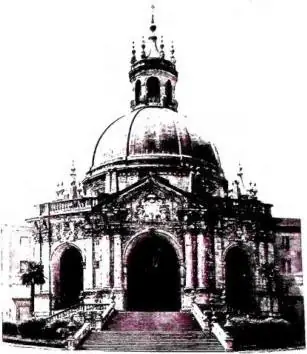
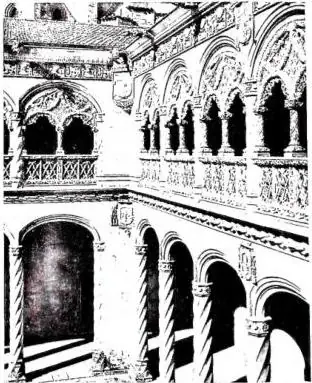
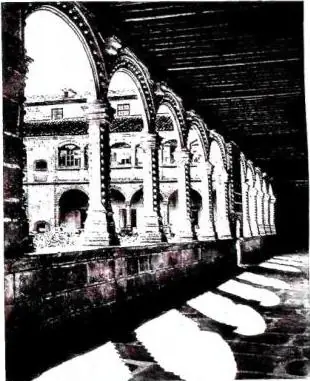
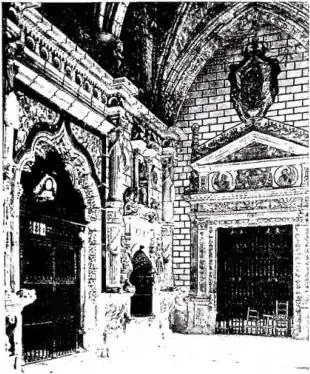
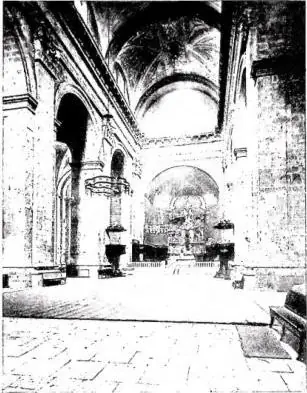
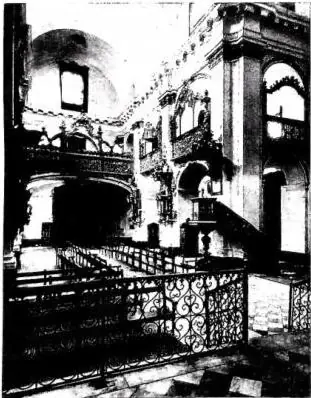
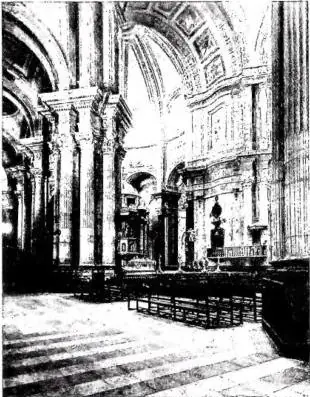
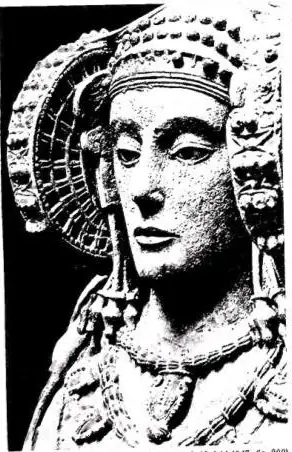
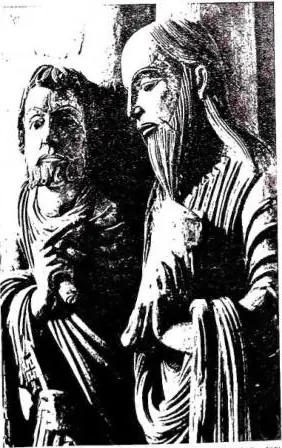
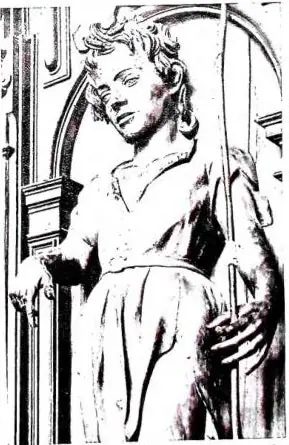
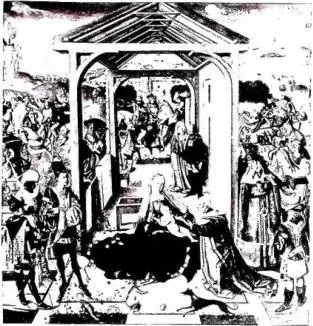
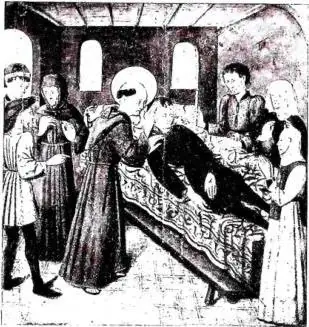
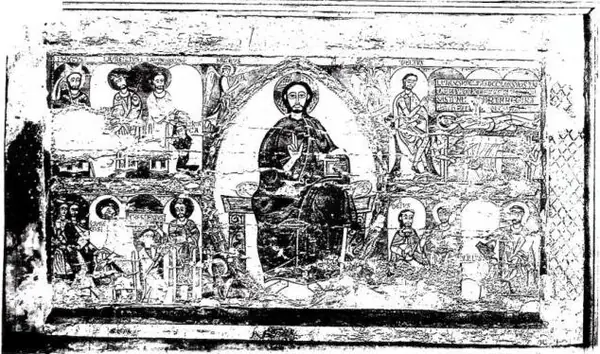
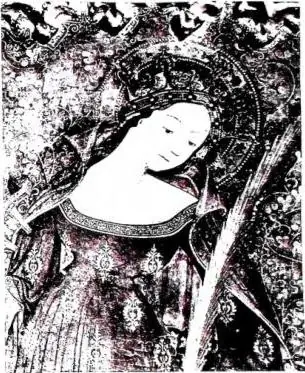
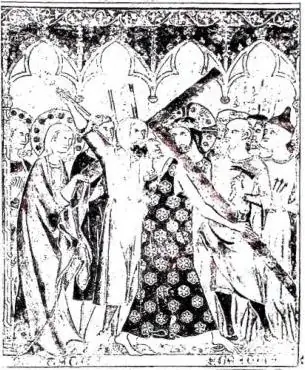
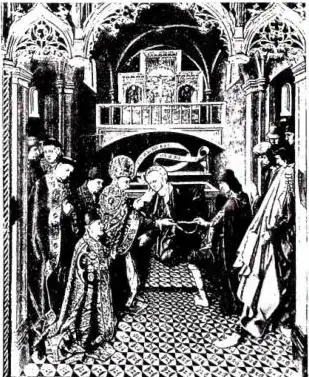
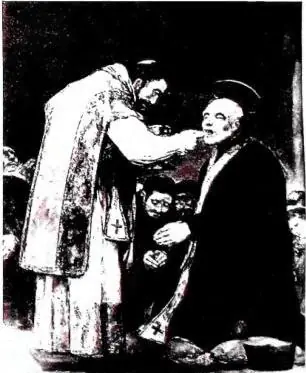
In the early Christian period, upon the dominant classical structures inherited from imperial Rome, Oriental and specifically Muslim grafts are discernible, such as the horseshoe arches that appear as early as the 2nd century on certain funerary stelae. But a typically medieval imprint was conferred upon religious building from the 5th to the 8th century by the work of the Visigoths, who enriched Roman forms with exuberant and polychrome ornaments. This is attested in particular by the basilican church of St. John of Baños (Palencia), consecrated around 660, where the plastic decorations, with obliquely cut stones, combine Byzantine influences with Visigothic motifs. Although recorded by St. Isidore of Seville, the pictorial decorations of that period have everywhere disappeared.
The precious goldsmith work of the Musée de Cluny in Paris, on the other hand, documents the Visigothic taste in applied art, among which are the votive crosses and crowns with hard stones and glass pastes, set in metal cells and coming from Guarrazar (Toledo). After the overwhelming invasion of the Moors, carried out in the 8th century, there arose in the north of the Iberian peninsula, and precisely in the Asturias, a center of fertile Christian activity, marked by two different types of church buildings, which present the common peculiarity of a chamber above the main chapel, used as a refuge and entered only through a high window. To the first type belong churches where the classical tradition is preserved, but with elements akin to the Carolingian taste, and in them one notes buttresses, counterforts and the transept nave (e.g.: St. John of Pravia [780] and Santullano of Oviedo). To the second type, which flourished under Ramiro I (842-50), belong buildings of Oriental model that foreshadow the Romanesque style, with their pronounced development in height, their semicylindrical vaults and their interior walls lightened by blind arches on slender columns. It will suffice to mention St. Mary of Naranco, near Oviedo, with a rectangular plan, St. Michael of Lillo and St. Christina at Lena. In both types of churches there appear characteristic reliefs, which assume a certain refinement, probably derived from goldsmith work and ivory sculpture, in the monuments of Ramirense origin. Although limited to a few decades, after the development of Islamic art in the caliphate of Cordova, that of the so-called Mozarabic art is to be remembered, from the Mozarabs or subjected Christians, which reached its greatest splendor in the region of León but also spread in Galicia, the Asturias, Castile, Aragon and Catalonia. Cordovan elements in the buildings of this style are the horseshoe arches and the vaults with intersecting arches, while the Corinthian capitals and the stone chancel screens in the windows recall Byzantium. All belong to the 10th century: St. Mary of Melque (Toledo), St. Michael of Celanova (Orense) and the highly ornate St. Michael of Escalada (Léon), which is the most conspicuous example. The plastic manifestations, in the absence of human figures, had their greatest employment in ivory carving, and the stylizations of animals in the series of codices, such as the Biblia Hispalensis (mid-10th century), appear admirable. To the beginnings of the 11th century belong the first Romanesque constructions, that is, the churches of Caserres, Tabernoles and Cardona. And a few years later, with the introduction of the Cluniac reform in the monasteries, due to the king of Navarre Sancho the Great (1925), the new European style spread rapidly also in S. Singular examples of it are, in the second half of the 11th century, the portico called the Royal Pantheon in St. Isidore at Léon, which shows Lombard, Byzantine and Norman influences and boasts stupendous figurations in the capitals, and the cathedral of Iaca, with three naves and a transept, with a most beautiful system of vaults and plastic ornamentations of a taste more classical than Byzantine.
Among the major monuments of the Romanesque age, not only in the peninsula, is the Castilian cathedral of Santiago de Compostela (1105), adorned with precious sculptures in the Puerta de las Platerias and in the Portico de la Gloria. Muslim influences are discernible in the ivories of the casket of St. Millán (Archaeological Museum of Madrid) and in the great ark of the Cámara Santa of Oviedo, in gilded silver. Among the pictorial documents of this period are remembered, in Castile, the biblical and hunting scenes at St. Baduel of Casillas de Berlanga and, in Catalonia, those of the Mozarabic church of Pedret. Later, in the paintings of the cathedral of Urgel and of St. Clement of Tahull, manifest stylistic relations with the sculpture of southern France appear.
Already in the aforementioned Portico de la Gloria at Santiago de Compostela, which was executed between 1168 and 1188, the first pointed arches of the Gothic appear, and in the same period there are analogous grafts of this style upon Romanesque members, above all through the initiative of the Cistercian order, at Poblet and at Santas Creus in Catalonia; characteristic, moreover, are the Gothic cathedrals, of military appearance, of Avila and of Tuy (Galicia). But it was through the work of the Franciscans and the Dominicans, under the reign of Ferdinand III the Saint, cousin of St. Louis IX king of France, that pointed architecture established itself, in the first half of the 13th century, with the cathedral of Burgos, reminiscent of French forms, and with the imposing one of Toledo with its faint Moorish accents; the later cathedral of León, with its tendency to render the masses almost ethereal, in the manner of that of Beauvais in France, is to be considered a sporadic example, and of a taste not at all Iberian. As in other parts of Europe, Gothic building in S. also continued during the 15th and 16th centuries, gradually losing its inventive impetus but not its technical perfection, as the cathedrals of Salamanca and Segovia demonstrate. The 13th-century sculpture, especially on church façades, rose to a high qualitative level, so as to rival that of France, declined in the 14th century and regained prestige in the following century also through the contribution of valiant French, German, Flemish and Italian masters, who did not take long to acclimatize themselves in the hospitable country. At Valencia, in the early 15th century, Giuliano Fiorentino, a follower of Ghiberti, was working; Juan de la Huerta collaborated with the famous Claus Sluter at Dijon, and at Pamplona is found the Burgundian Janin de Lome. Typical products of Spanish sculpture in this period were, moreover, the altarpieces (at Tarragona, at Burgos, in the charterhouse of Miraflores and, later, at Seville and at Toledo) and the choir stalls, among which memorable are those, in the Flamboyant Gothic style, of St. Thomas at Avila and of Cèlanova (Galicia) and the others, with figures, of León, Ciudad Rodrigo, Plasencia and Toledo. Painting still follows Romanesque archaisms in the 13th century, and the first Castilian master known to us is Antonio Sanchez of Segovia, who decorated in 1262 the chapel of St. Martin in the old cathedral of Salamanca. But toward the first half of the 14th century the Sienese painters brought a new figurative breath, followed by the Florentine Gherardo di Jacopo Starnina (his manner is visible in the cathedral of Toledo) and by the anonymous, thoroughly Italianate author of the polyptych of the charterhouse of Porta Coeli (now in the Museum of Valencia). And toward the middle of the 15th century Dello di Nicola, called Nicola Fiorentino, painted the altarpiece in the cathedral of Salamanca. A few years earlier, Flemish manners had also spiritually conquered S. through the work of the great Jan van Eyck, and, therefore, of Lluís Dalman, a Spaniard pensioned in Flanders, until Jaime Baço Jacomart, painter of King Alfonso V, achieved the fusion of the Italian style with the Flemish technique, opening new paths for the art of his land.
With the advent of King Ferdinand of Aragon and Isabella of Castile (1472), favored by the achieved national unity, a transitional tendency arose, called the Isabella style, which shows the influence of the flamboyant Gothic but is not lacking in Moorish motifs. Its architectural monuments are the church of St. John de los Reyes, in Toledo, the castle of the Real de Manzanares (Madrid) and the College of St. Gregory in Valladolid. Among the painters, even within the dominant Flemish taste, there stand out, at the Court of Burgos, the Italianizing Rodrigo de Osana, Bartolomé Bermejo of Cordoba, with his harsh Iberian realism; Alejo Fernández, more evolved and delicate, and Pedro Berruguete, a Castilian, who after working in Urbino, alongside Justus of Ghent, painted in Toledo and in Avila with robust color. Toward the end of the fifteenth century Catalonia too possessed an exquisite colorist: Jaume Huguet.
Although belatedly, the style of the Italian Renaissance found fruitful acceptance in Castile through the merit of Cardinal Pedro González de Mendoza, who founded the College of the Holy Cross in Valladolid in 1491. During the High sixteenth century Pedro Machuca, who erected the Palace of Charles V in the Alhambra of Granada, knew how to absorb brilliantly the classical rhythms derived from Italy.
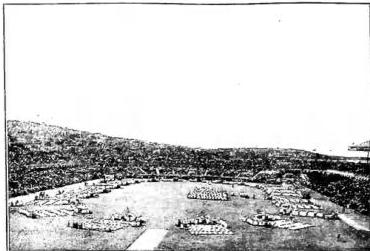
(Int. Felici)
In the field of sculpture, mention is made of the tomb of the aforementioned Cardinal Mendoza, in the cathedral of Toledo, and the others carved later by the Florentines Domenico di Alessandro Fancelli (at Avila, Granada, and Alcalá) and Pietro Torregiani, at Seville. The painters who came from Italy were of little importance at that time; fruitful, on the other hand, proved to be the Italian education for the aforementioned Pedro Machuca, who assimilated attitudes from Michelangelo and from Correggio, for the two followers of Leonardo, Fernán Yánez de la Almedina and Fernán Llanos, for Michelangelo's pupil Alonso Berruguete, who was above all a sculptor. Also to be mentioned, at Seville, is the follower of Correggio Luis de Vargas; at Valencia, the follower of Raphael Juan de Juanes, as well as the solitary, archaizing Luis de Morales, called the Divino, for his religious subjects, treated with pious tenderness.
During the 16th century there was no lack even of a flowering of art with evident national characteristics. Preceded by the so-called Ximénez style (in memory of Cardinal Jiménez de Cisneros who promoted it, with Italian elements, on a Gothic ground, and Moorish techniques and reminiscences), the plateresco style (from plateros = goldsmiths) is distinguished by the abundance of ornaments and minute refinements, to the point of stifling the purity of the architectural line. Its champion was another prelate: Don Alonso de Fonseca, archbishop of Santiago and of Toledo (d. 1534), to whom is due the erection of the Casa de la Salina and of the archiepiscopal College, at Salamanca, and of the façade and courtyard of the University of Alcalá. Among the architects of this tendency there emerged Alonso de Covarrubias, Pedro Gumiel and Diego de Siloe; among the sculptors, besides the most vigorous, dynamic and dramatic one, that is Alonso Berruguete, Vasco de Zarza, Damiano Forment and the Frenchman tending toward the Baroque, Juan de Juni. A vigorous revival of Italianizing classicism occurred under the reign of Philip II (1563-1584), whose aesthetic preferences, determined by an ardent spirit of Catholic reform, crystallize in the severe harmonies of the Escorial, built by Juan de Herrera. In it shine the bronze altar and the mausoleums of Leone and Pompeo Leoni and the pictorial treasures gathered there by that sovereign and owed to the great Venetian triad: Titian, Veronese, Tintoretto, and to the distinguished portraitist Alonso Sanchez Coello (1532-88), a disciple of Antonio Moro. At the death of Philip II (1598) the painting schools of Madrid, Toledo, Seville and Valencia were active, while sculpture flourished mainly at Valladolid and Granada.
Noteworthy are the realistic tendency, akin to Caravaggism, which Francisco Ribalta initiated at Valencia, and the Sevillian activities of the strong naturalist Francisco de Herrera the Elder, of the learned Francisco Pacheco and of the Venetianizing Juan de Roenas. But a far more vivid and lasting splendor radiated from the painting of Toledo, where the ingenious Domenico Theotocopuli, called El Greco, embodied the mystical soul of Spain, anticipating, in coloring and compositional details, the manifestations of modern expressionism. At Valladolid, once the classical tradition of the Leoni had languished, the realism of the illustrious Castilian school of sculpture took shape through the work of the Galician Gregorio Fernandez. This master, d. 1636, is known above all for his scenes of the Passion (paso), executed in groups of wooden figures that had a processional function. A more classical and gentle tendency was manifested in Andalusia by the other eminent sculptor Juan Montanes (d. 1649).
In the full Baroque period, the reign of Philip IV (1621-65) marked the greatest flowering of Iberian art, at least in the sphere of easel painting.
Conspicuous manifestations of that architectural taste, to which Sebastian Herrera Barunevo, Pedro de la Torre and Francisco Herrera the Younger contributed their work, remain the Pantheon of the Escorial, built in large part by the Italian G. B. Crescenzio, the chapel of St. Isidore in Madrid, the Sagrario of the cathedral and the Caridad of Seville, the nave of the charterhouse of Granada, etc. In sculpture Alonso Cano emerged, followed, in a similar style, by Pedro de Mena (d. 1688) and José de Mora (d. 1724). The painting school of Madrid was dominated by a true genius: Diego Velazquez, who nevertheless did not leave his most valid imprint in works of a sacred character. His activity was continued, maintaining its realistic accentuation, by G. B. Martinez del Mazo (d. 1667), who later became the master's son-in-law, Antonio Puga and Juan de Pareja; at Valencia flourished Francesco Ribalta, Gerolamo Giacinto Espinosa and the vigorous Giuseppe Ribera, before he moved to Naples, where he assumed the nickname of Spagnoletto; at Granada Alonso Cano distinguished himself, already mentioned among the sculptors, and in the school of Seville worked with tireless inspiration and a profound religious spirit, typically Iberian, Francisco Zurbaran.
National characteristics weakened in the second half of the 17th century, under the reign of Charles II; worthy of mention, nevertheless, are the exuberant and decorative architectural forms of José Churriguera, the emotive sculptures of Pedro Roldan, the pictorial works of Juan Carreño de Miranda, an excellent portraitist, called the Spanish van Dyck, Francisco de Herrera the Younger, already mentioned as an architect, and Claudio Coello, in Madrid, while to the Sevillian school belong the intense Juan de Valdes Leal and Bartolomeo Esteban Murillo, a realist in genre subjects and a creator in the sacred field of seductive typologies that enjoyed immense popularity throughout the Catholic world down to the threshold of the present century.
At the beginning of the 18th century, when Philip V of Bourbon ascended the throne, hosts of French artists, in particular architects and painters, installed themselves at the Court of Madrid, and there followed a general stagnation of genuine figurative virtues, which had a revival under Ferdinand VI and even better under Charles III (1759-88), with the erection of the new Royal Palace, on designs by the Messinese Filippo Juvara, and the arrival in Madrid of the Venetian G. B. Tiepolo and of the Bohemian Antonio Raffaele Menga. The neoclassical tendencies of the latter influenced the Aragonese painter Francesco Bayeu, master and then brother-in-law of the great colorist Francesco Goya, who knew how, among other things, to interpret almost all the ethnic inclinations of the Spanish soul, but not the religious spirit, although his few sacred works are not lacking in original expressive virtues. Neoclassical building had a notable representative in Ventura Rodriguez, author of the chapel of the Pilar at Saragossa and of the church of St. Victoria at Cordova, and the sculptors Luis Salvador Carmona and Ferreiro drew inspiration from the same tendency.
Still in the first decades of the 19th century Spanish art participated in the liveliest European innovative ferment, with the pictorial and etching creations of Goya, but, afterward, especially in the religious aspect, it remained closed within academic eclecticism, exploiting recent, 16th-century and Baroque motifs, although certain painters of the late 19th century, such as the Madrazo dynasty, Mariano Fortuny (d. 1874) and the more recent Ignazio Zuloaga and Gioacchino Sorolla y Bastida acquired international fame. To these is partly linked José Gutierrez Solana (b. 1885 and d. 1945), to whom one cannot deny singular narrative virtues and vigorous suggestions of Iberian mysticism.
Bibliography28 works
Alberto Neppi
IX. SCHOOL SYSTEM
Primary education was regulated by the law of 1945. It comprises the nursery school (from 2 to 4 years of age); the infants' school (from 4 to 6); the compulsory elementary school (from 6 to 12), which is optionally followed by the vocational initiation course (from 12 to 15). Secondary education is centered on the baccalaureate, divided into a lower course of four years and an upper course adding another two years. One reaches it through two respective examinations. There are also teacher-training schools, called normales, and schools for technical specialties (Institutos laborales). University courses are preceded by a year of preparation or entrance to be completed in the secondary-education centers. Such are the provisions of the new law of 1953. The university system follows the ordinances issued in 1943.
For more than a century the most absolute state monopoly reigned in Spanish education. The Church was indeed allowed to teach, but all its pupils had to submit to the examinations, textbooks and programs of the State. Only Franco's regime has introduced the equalization of the Church's centers, which still clashes with the mentality of some intellectuals, especially among state professors. Equalization is a fact in the primary school and in the baccalaureate. The examining board for the lower baccalaureate is composed of a chairman, a state teacher, two of the pupil's professors and two inspectors. For the upper baccalaureate the chairman of the board is a university professor. The Church's boarding schools for the baccalaureate must accept 10% of pupils subsidized by the State, whose admission, however, must be approved by the rector of the college.
At all levels of state education, including the universities, there is a compulsory religion class from which non-Catholics are exempted. Around the main universities there are the Colegios Mayores, that is, university residence halls in which the chaplain and moral and religious discipline are not lacking. Parish priests have the right to visit the primary schools located in their own parishes and to explain the catechism.
Ordinance 9 of the university system recognizes the Church's right to found its own universities; but so far equalization has been granted only to the Instituto Catolico de Artes e Industrias of Madrid, directed by the Jesuits. Other non-equalized university institutes are maintained by the Church in Madrid (Collegio Mayor de S. Pablo, Instituto de Foro XIII for social surveys); Bilbao (law and commerce); Barcelona (chemistry, biology); Escorial (law). The Church furthermore has its Pontifical Universities of Comillas (v.) and Salamanca. Since 1951 a national committee of bishops safeguards the Church's rights in education.
The statistics for 1951-52 gave the Church 2,890 primary schools with 507,651 pupils, of whom 261,834 were free of charge, as against 70,121 state schools with about 2,500,000 pupils. On the other hand, about 76% of baccalaureate pupils attend the Church's colleges, numbering about 120,000. - See plates LXVI-LXXI.
Bibliography3 works
Ignazio Ortiz de Urbina