
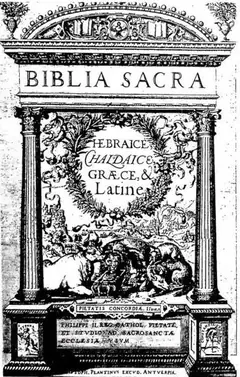
BIBLE. - Collection of books held sacred, in a number differing between the Hebrews and the Christians.
I. NAMES AND DIVISIONS
The term is the transcription of the Greek βιβλία (plural of βιβλίον) "books," meaning the books par excellence, the sacred books that form the aforementioned collection. In Vulgar Latin, as in analogous cases, it became a feminine singular, biblia, from which it further passed into the various modern languages: Italian biblia, French bible, Spanish biblia, English bible, etc. The same collection, by an analogous process, is also called the Scripture par excellence, or Sacred Scripture. This term corresponds to the Greek one of ἡ γραφή (αἱ γραφαί, αἱ ἱεραὶ γραφαί, etc.), which was already employed in antiquity and is still in use among the Greeks.
This collection of books differs in quantity among the Jews and among Christians, and among Christians it differs among Catholics and non-Catholics. Christians, without distinction, divide the collection into the Old (or Ancient) Testament, which is of Jewish origin, and the New Testament, which is of Christian origin; because of this origin the Jews reject the New Testament. In turn the Protestants agree with the Jews in the number and quantity of the books that constitute the Old Testament, dissenting from the Catholics.
The ancient Jews divided the books of the B. (Old Testament) into three groups: the Tōrāh "law," that is, the Pentateuch; the Nēbhī'īm "prophets," that is, their writings; and the Kēthābhīm, "writings (sacred)," that is, hagiographs. This grouping is very ancient, and already appears in the 2nd century B.C. from the prologue prefixed to the book of Ecclesiasticus by its Greek translator; it is the one most employed by present-day Israelites to designate the B., less frequently designated by them with the collective terms sēphārīm, "books (sacred)," kithbhē haq-qōdeš, "holy writings," and the like.
With reference to content, the books of the Old Testament can be grouped into legal, or historical-legal, books, which contain especially the sacred legislation of the Jewish people; into historical books, which narrate the history of that people; into prophetic books, containing writings composed by the Jewish prophets; into sapiential or didactic books, which impart especially practical norms for conducting oneself honestly and wisely.
As for literary form, the books of the Old Testament are prose or poetic: some, especially the legal books, use only prose; others, such as the book of Psalms, only poetry; others mix the one with the other at intervals, usually giving a greater or lesser predominance to poetry, such as Job and the prophetic books.
The New Testament, from the aspect of content, consists of historical writings, such as the Gospels and the Acts of the Apostles; of didactic writings, such as the various Epistles or Letters; and of one prophetic writing, which is the Apocalypse.
The term Testament, by which Christians designate the two parts of the entire B., has a historico-theological meaning, since it alludes to the two great periods in which the divine Revelation was accomplished. The term corresponds to the Hebrew bērīth, and to the Greek διαθήκη, indicating a "pact" or a "covenant" concluded between several persons, and more recently the "testament" made by a dying person regarding his goods. Thus, as Old Testament (cf. Hebr. 8, 13) was designated the ancient period of Revelation in which God had made a "pact" or "covenant" with the nation of Israel alone; as New Testament (cf. Mt. 26, 28; II Cor. 3, 6), on the other hand, was designated the second and last period, in which the old "pact" was replaced by the new and all nations were called without distinction to participate in the fruits of the redemption of Jesus Christ. And since such redemption is the effect of the death of Jesus Christ, the new "pact" is at the same time his "testament" (cf. Hebr. 9, 15-17).
Today all the books of the entire B. are divided into chapters, and each chapter is divided into short passages called "verses"; chapters and verses are numbered in progressive order, and according to this numbering they are cited: e.g., Gen. 3, 15, indicates verse 15 of ch. 3 of Genesis. This division into chapters was introduced at the beginning of the 12th century by the English cardinal Stephen Langton in the text of the Latin Vulgate B., whence it was subsequently carried over into the Hebrew and Greek texts; the Latin and Greek manuscripts prior to the time of Langton follow other criteria of division into chapters, while the Hebrew text is divided in relation to the public reading to be done in the synagogues and according to the norms of the rabbinic schools of the first centuries of Christianity. The division into verses also has the same origin for the Hebrew text; for the New Testament various divisions into verses were attempted over the centuries, until in the middle of the 16th century the one introduced by Robert Estienne (Stephanus) in the Latin B. prevailed. Often neither the division into chapters nor that into verses corresponds logically to the concepts of the text, and it would be easy to improve them in many points: but today they have an exclusively practical value, for citations and comparisons.
Here therefore is the list of the books that constitute the Catholic B. (the asterisk indicates the deuterocanonical ones, the asterisk in parentheses [] the books that have deuterocanonical passages):
OLD TESTAMENT: A) Pentateuch (Historical-legal books): Genesis; Exodus; Leviticus; Numbers; Deuteronomy. B) Historical books: Joshua; Judges; Ruth; I and II Samuel (or I and II Kings); I and II Kings (or III and IV Kings); I and II Paralipomenon (or Chronicles); I and II Esdras (or Ezra and Nehemiah); Tobit; Judith; () Esther; I and II Maccabees; C) Sapiential or didactic books: Job; Psalms; Proverbs; Ecclesiasticus; Song of Songs; Wisdom; Ecclesiasticus. D) Prophetic books: Isaiah; Jeremiah; Lamentations; Baruch (with the Letter of Jeremiah); Ezekiel; () Daniel; 12 Minor Prophets (Hosea, Joel, Amos, Obadiah, Jonah, Micah, Nahum, Habakkuk, Zephaniah, Haggai, Zechariah, Malachi).
NEW TESTAMENT: A) Historical books. Gospels: Matthew; Mark; Luke; John; Acts of the Apostles. B)
Didactic writings. Letters of Paul: Romans; I Corinthians; II Corinthians; Galatians; Ephesians; Philippians; Colossians; I Thessalonians; II Thessalonians; I Timothy; II Timothy; Titus; Philemon; Hebrews. Catholic Letters: James; I Peter; II Peter; I John; II John; III John; Jude. C) Prophetic book: Apocalypse.
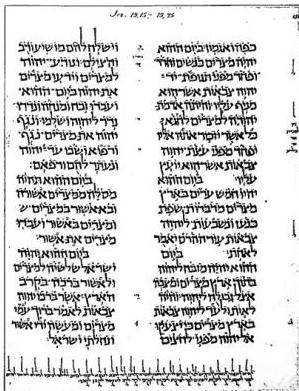
This is the series according to which, except for I-II Mach., the books of the B. are arranged in the present-day editions of the Latin Vulgate version. But, for the Old Testament, this series does not correspond to the one held in the Hebrew B. and, to a lesser extent, in the Greek version of the Septuagint, on which the Latin Vulgate depends. The series of the first five books (from Genesis to Deuteronomy) is constant, constituting in the Hebrew B. the first group, called Tōrāh ("law"); the second group, called Nēbhi'īm ("prophets"), is divided in the Hebrew B. into "former" and "latter": the former contain the books from Joshua up to all the Kings, the latter contain the 12 Minor Prophets, Isaiah, Jeremiah and Ezekiel; finally the third group, called Kēthābhīm ("writings," or hagiographs), contains in order Psalms, Proverbs, Job, Song of Songs, Ruth, Lamentations, Ecclesiastes, Esther, Daniel, Ezra and Nehemiah, Chronicles. The five books, from the Song of Songs up to Esther included, constitute a small collection of their own called the Five Volumes (or Scrolls: Heb. Mēgillāth).
The books of the Old Testament contained in the Hebrew B. are therefore 24; to these the Latin Vulgate B., in conformity with the Greek version of the Septuagint, adds the 7 "deuterocanonical" books (8, if the Letter of Jeremiah is separated from Baruch).
II. SACRED CHARACTER
At this point a fundamental question arises spontaneously: why did only the books just listed, and not others as well, come to form part of the collection called the B.? What was the criterion according to which they alone, unlike others, were chosen, or by what quality were they received into the collection called the B.?
The generic criterion of their selection was that ancient tradition, first Jewish and then Christian, recognized them as "sacred" books, unlike other books that were not recognized as such; the basis of this recognition, that is, the intrinsic quality by which a book was recognized as "sacred," was the "inspiration" of the book itself, by which it is not a human book but a divine one, and has God as its principal author and man as its secondary or instrumental author. But this quality of the books of the B. is so important, from both the historical and the theological point of view, that it must be studied separately (v. ISPIRAZIONE).
III. CANON
The Greek word "canon" (κανών), which means "rule," "norm," has been employed since the 4th century to designate the collection of the sacred books of the B. Since then one speaks of canonical books as opposed to non-canonical, depending on whether or not they form part of the aforementioned collection or canon. The terms protocanonical and deuterocanonical are, on the other hand, of recent formation: they go back to Sixtus of Siena (16th century), who in this way wished to distinguish, among the books that make up the canon of the Old Testament, those that were concordantly recognized by all as forming part of the collection, from those about whose inspired character some doubt had arisen over the centuries. This distinction is in use almost exclusively among Catholics, since Protestants and Jews call the deuterocanonical books apocryphal, excluding them from the biblical canon. These books, as is said above, are: Tobit, Judith, Wisdom, Sirach, Baruch, the two books of Maccabees, and certain passages of Daniel (3:24-90; 13; 14) and of Esther (10:4-16:24).
Since this is a supernatural character, only the Church, depositary of the doctrine of Jesus Christ, has the faculty to declare infallibly which book is endowed with the character of inspiration, and is therefore to be inserted into the biblical canon. Therefore the sure criterion for knowing whether a book must form part of this collection is tradition, going back to the apostolic age. In practice this criterion also reduces, in various respects, to that, championed by some Catholics, of the prophetic or apostolic origin of the books composing the B.
1. Canon of the Old Testament
It is undeniable that this tradition, even when its apostolic origin can be demonstrated with certainty, was not always free from every doubt, especially regarding the canon of the Old Testament. Among the Jews in the 1st century A.D. we find a notable divergence, which perhaps goes back to an even more ancient period.
The Jewish historian Flavius Josephus (Against Apion, I, 8-9) hands down, without explicitly naming the individual titles, a canon that excluded the deuterocanonical books; on the other hand the Greek version known as the Septuagint, made by Alexandrian Jews some centuries before Christ, also contains the deuterocanonical books, which demonstrates that these books were read in the synagogue assemblies and considered inspired. The divergence seems due to a rigorism of the Palestinian scribes and rabbis, who tolerated no book written originally in Greek, and who also showed themselves suspicious toward books composed originally in Hebrew or Aramaic when they did not present themselves as owing to an author invested with the prophetic charism (cf. 1 Macc. 4:46; 14:41); so that the indispensable requirements of a sacred book were almost fixed in the Hebrew language, in the prophetic quality of the supposed author prior to Ezra, and in the Palestinian origin of the book. This rigorism was not shared by the Hellenized Jews of the diaspora, who generally read the B. in the Greek version. Moreover, there is no lack of indications for supposing that even among the Palestinian Jews these books, especially the more ancient ones, were at first admitted. Suffice it to recall that the Jews of the diaspora must have originally received their canon from their coreligionists of Palestine, the center of all Judaism, and therefore received from there also the deuterocanonical books. When, however, later, the rigorism of the Palestinian scribes reduced the canon to the protocanonical books alone, the Alexandrians too accepted this judgment, rejecting the ancient Septuagint version. Regarding Jesus Christ and the Apostles, although they left no official catalogue of the inspired and canonical books, from their allusions preserved in the New Testament and from the frequent use of the Septuagint version, it results in practice that they regarded the deuterocanonical books too as inspired. Such is also the norm of the most ancient Fathers, who cite or use the two series of books indifferently (Clement of Rome, Hippolytus, Irenaeus, Tertullian, Clement of Alexandria, Cyprian). So that for the first two centuries no uncertainty results concerning the inspiration and authority of the deuterocanonical books. Only toward the end of the 2nd century, the frequent controversies with the Jews, who by then concordantly rejected the deuterocanonical books, led the apologists not to draw their arguments from these writings not admitted by the adversaries. It was a practical norm to be followed, rather than a theoretical principle; nevertheless true doubts soon arose, even among certain Christians. We find the symptoms of this in Melito of Sardis (ca. 160-80), who in a passage preserved for us by Eusebius of Caesarea (Hist. eccl., IV, 26) reports the Palestinian canon as the authentic one, stating explicitly that he is reporting information obtained on a journey of his to Palestine. The same canon is reported by Origen, who nevertheless uses the deuterocanonical books as inspired books. In subsequent times this opinion spread more perceptibly in the Greek Church; it was adhered to by Athanasius, Cyril of Jerusalem, Epiphanius, Gregory of Nazianzus, and certain others, in compiling the list of the sacred books, although even they in practice did not remain adherent to that opinion, since it is not difficult to find in their works citations of deuterocanonical books as of inspired books.
Then a threefold distinction of the books of the B. began to circulate among the Greeks: there was talk of books certain or admitted by all (ἀναλογοῦμεν), of controverted (ἀντιλεγόμεναι), and of spurious or apocryphal. By the second term our deuterocanonical books were understood. But how little the rejection of these books was rooted is confirmed by the unconditional acceptance of them on the part of numerous other doctors of the Church and by the decision of the Council of Constantinople of 692, called Trullan, which although in a form not entirely perspicuous reported the integral canon, always maintained uncontested in the Greek Church, at least until the rise of Protestantism.
In the Latin Church the first to adhere to the Jewish canon were Hilary of Poitiers, Rufinus of Aquileia and Jerome. The first two were induced by the example of Origen, of whom they professed themselves disciples: the third, who before going to the East seems to have held the complete canon, with his authority engendered doubts in later authors. Nevertheless the great majority of writers categorically maintained the inspiration and canonicity of the controverted books. A representative of this opinion was Augustine, who by his personal work and by conciliar proclamations promoted by him, preserved the genuine tradition of the Church. The Roman See already with Innocent I (405) pronounced itself decisively in favor of these books; some years later the Decree, erroneously called Gelasian, marked the constant norm of faith for the subsequent centuries, until the ecumenical Councils of Florence (1441) and Trent (1546) solemnly sanctioned it. Nevertheless the authority of Jerome, which had made certain people hesitate and go astray in the Middle Ages (Hugh of St. Victor, Nicholas of Lyra and a few others), is still felt in St. Antoninus, archbishop of Florence (d. 1459), and in Cardinal Cajetan (1532), who denied to the deuterocanonical books a binding authority in matters of faith.
Luther, although rejecting ecclesiastical tradition, showed a certain hesitation in repudiating the deuterocanonical books, and contented himself with relegating them to the end of his translation. However, Andreas Karlstadt already showed himself more resolute: in his book De canonicis Scripturis (1520) he adopted the Jewish canon, which soon became universal among Protestants, who thus excluded the disputed books from their editions of the Bible, labeling them apocryphal. The attitude of the Protestants was disavowed also by the schismatic Greek Church, which condemned some of its followers inclined to the opinion of the reformers (Cyril Lucaris and Metrophanes Critopulos); nevertheless in the 17th century hostility to the deuterocanonical books spread in Russia, in the Slavic countries, and also in Greece, where it numbers many representatives, the question of the canon having been declared a free and non-dogmatic question by ecclesiastical authority.
Among rationalist criticism, which denies inspiration, this question takes on a secondary character since all the books of Scripture are treated like any profane book.
2. Canon of the New Testament
The formation of the canon of the New Testament is better documented. Here, often, the inspired authors themselves indicate the occasion and other circumstances that caused the composition of the writing; we also find clear references to the formation of collections more or less extensive, containing at least a part of the apostolic writings. St. Peter speaks of the letters of St. Paul as if they enjoyed equal authority with the books of the Old Testament (2 Pt. 3:15-16). The Apostolic Fathers did not hand down a complete catalog of the books composing the New Testament; often also in their citations, made more by sense than literally, it is difficult to establish with exactness the book to which they refer; nevertheless the number ever more extensive of such citations, more or less direct, in the writings of Clement of Rome, Polycarp and Ignatius, allows us to hold that such authors, especially the last, possessed a complete corpus at least of the writings of St. Paul. Other authors testify to the existence of other books, such as Papias of Hierapolis for the Gospels, from which Tatian toward the end of the 2nd century composed his Diatessaron. One proof that among the first Christians a canon of the books of the New Testament was already in use is the reaction that arose against Marcion (v.), when he wished to draw up another one according to his own personal and heterodox principles. From the replies of Irenaeus, Tertullian and Hippolytus, it appears clear that Marcion was not the first to fix a collection of inspired writings, as A. Harnack would have it, but only a reformer of the common canon according to his own particular ideas. It may be, however, that his audacity induced the Church to manifest its own traditional thought in a more precise manner; indeed, from that time (ca. 170-80) there dates a document in the Roman Church of the greatest importance for the history of the canon of the New Testament, namely the Muratorian Fragment or Canon, discovered by L. A. Muratori in 1740: it testifies that 4 Gospels were recognized as inspired (the first does not appear, and of the second only a single mention survives, the document being mutilated at the beginning), 13 letters of St. Paul (it does not speak of the one to the Hebrews), the Acts, two or three letters of John, the letter of Jude, the Apocalypse, and perhaps two letters of Peter, one of which would have been disputed.
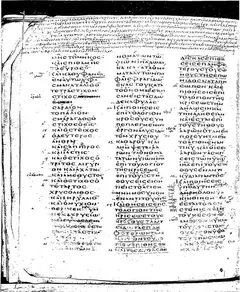
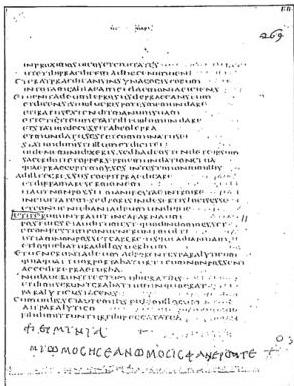
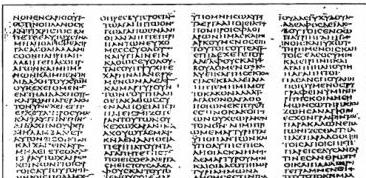 K. Lake, Oxford 1911 BIBLIA - Greek text. Sinaitic Codex (8), 4th century. II John 7b-13; III John; Jude 1-6." loading="lazy" />
From this document, almost official, there already appears the forming and the persisting of a slight doubt: some books are not named at all, some other can be read as indicated only if one accepts a fortunate correction of the text, as some scholars maintain regarding the letters of Peter. More explicit attestations of later authors confirm a real perplexity among some Churches in admitting certain books. Particularly contested were the letter to the Hebrews and the Apocalypse, for which the doubt was almost divided between the Western and the Eastern Church: the former showed reluctance to incorporate the Pauline letter, while the latter, on grounds especially literary, harbored a certain diffidence toward the Johannine Apocalypse.
If one adds the doubts and dissensions that manifested themselves here and there toward certain catholic letters, namely James, Jude, II Peter, II and III John, one can count also for the New Testament 7 disputed books (ἀντιλεγόμενα). But such disagreement, due to other reasons but in part also to the difficulty of originally getting the individual brief inspired writings to all the Churches, was less deep than that which occurred for the canon of the Old Testament.
Little by little the divergences were smoothed over, the doubts diminished; especially in the West the diffidence toward the letter to the Hebrews vanished, following the teaching of the great doctors who pronounced in favor of the disputed works. Jerome and Augustine, the Councils of Hippo (393) and of Carthage (397 and 419) upheld their admission in a decided manner; in the same sense Pope Innocent I expresses himself (405; Denz-U, nos. 92, 96). In the East, on the other hand, the doubts persisted longer; especially in the Church of Antioch, and among the Syrians who received their direction from it, the canonicity of the Apocalypse and of certain catholic letters (II Peter, II and III John, Jude) was recognized only with difficulty. At the time of Justinian every disagreement in the Byzantine empire had vanished. Among the Syrians recognition proceeded more slowly, since in their version the contested books were missing from the beginning; the Nestorians never admitted the Apocalypse, II Peter, II and III John, Jude, as Išō'dād of Merv (850) and Ebediesu (1318) testify to us.
Luther at first opposed in a particular way the letter of James, calling it the « straw » letter, because it was contrary to his theological cornerstone of salvation by faith alone. In practice, at the beginning of the Reformation there was great disagreement on this point among the most authoritative Protestants; afterward, little by little, they returned to admitting the disputed books, so that from the 17th century onward there was no difference for the canon of the New Testament between Catholics and Protestants.
For the writings not admitted into the biblical canon v. APOCRIFI.
IV. ORIGINAL TEXTS
An essential prerequisite in the study of any ancient writing is the fidelity and accuracy of the documents that have preserved it for us. From this point of view, no profane writing has had as many investigators into the history of its transmission as the B. can boast, especially the New Testament. The investigation, naturally, extends both to the original texts and to the most important ancient versions.
1. Old Testament
It was written for the most part in Hebrew (with some brief passages in Aramaic), and only some of its books, such as II Maccabees and Wisdom, were originally composed in Greek; likewise only in the latter language do we possess the other deuterocanonical books, originally written in Hebrew or Aramaic.
The history of the Hebrew text of the Old Testament is quite simple if we start from the first Christian centuries, when that text took on a precise form subsequently handed down almost perfectly unaltered. Of the earlier period, on the other hand, we know very little, when the text underwent significant modifications that today we can only vaguely assess. Biblical scrolls of the 2nd century B.C. found among the mountains of Judah are announced (1948). Many Hebrew codices, although not very ancient, since none goes back beyond the 10th century A.D., were patiently collated by scholars, among whom stands out, around 1800, Gian Bernardo De Rossi (v.); but such vast labor has yielded us a homogeneous Hebrew text, since the rare variants are entirely secondary and never profoundly affect the sense: so that this minute examination testifies to us a text that was already uniform at the time of the drafting of our most ancient Hebrew codices. Yet such certainty does not extend to the thousand and more years that separate our codices from the original writings. By resorting, however, to the comparison of the ancient versions and following the testimonies of ancient Jewish and Christian writers, one can still go back to the first centuries of the Christian era; and even for this period the most scrupulous investigations do nothing but confirm the faithful transmission of the text, protected by the meticulous "fence of the Tōrāh," as the vast work of the Masoretes (v.) was defined.
But going back to the pre-Christian period, the textual divergences appear as evident as they are important. For this period we possess the Samaritan Pentateuch, the Septuagint version, which is the most important and was made from a redaction of the Hebrew text earlier than the Masoretic one, the very brief Nash papyrus and the writings of Flavius Josephus; besides this, even the Hebrew text of the B. offers clear proof that in ancient times the transmission of the biblical text was not accurate and precise. We find in fact passages repeated several times, even within a single book (as in the Psalms), which often testify to differences of text that can hardly be attributed solely to copyists' oversights; moreover, the greater abundance of variants in the books that form the last two collections of the Hebrew B. (that is, the "Prophets" and the "Hagiographa") demonstrates that these collections arose at an epoch in which the activity of the scribes, begun in the Persian period, was still little effective. Yet such divergences of text, however serious in individual books such as Samuel, Ezekiel, Jeremiah, Proverbs, do not affect the overall substance of the individual works. The modifications, when they are not due to the carelessness of copyists or the freedom of redactors, sometimes depend on a misunderstanding of the text, which was often caused by the imperfections of the Hebrew script, which lacked vowels. The introduction, in fact, of special signs (around the 6th century A.D.) to indicate the Hebrew vowels contributed much, together with all the work of the Masoretes, to faithfully preserving the fixed text; it is the text that, as we have said, was transmitted with singular precision down to the invention of printing.
In 1525 the first complete Hebrew B. appeared in Venice, edited by Jacob ben Chajjim (rabbinic B.); from that one down to the critical editions of C. D. Ginsburg (London 1908-26) and of R. Kittel (Leipzig 1906; 3rd ed. by P. Kahle, completely revised on the basis of the most ancient codices, Stuttgart 1929) the printings have multiplied, always with the greatest fidelity. Therefore we can say that we today have in hand the Hebrew text as it was read in the 1st-2nd centuries A.D., that is, a substantially, but not literally, reliable copy of the lost original autographs. Comparison with the ancient versions, particularly with that of the Septuagint, can often suggest correct corrections; at other times a prudent and well-founded conjecture can restore the original reading.
2. New Testament
If for the Old Testament we have a large gap in the history of manuscript transmission, for the New Testament we are more fortunate. No ancient text, not even of the most celebrated classical authors, can boast codices as numerous and of such high antiquity as the New Testament can boast, whose codices amount to over 4000; some of them go back to the 4th century, while more or less fragmentary papyri (of Chester-Beatty, Egerton, etc.) take us back even to the 2nd century. The multitude of codices presents us, it is true, with an extraordinary number of variants, perhaps greater than that of the words, but such disagreement is much more apparent than real. And in fact most of the variants are either obvious oversights of copyists, or insignificant alterations due to particular spellings, in the Greek of the Koiné dominated by "iotacism."
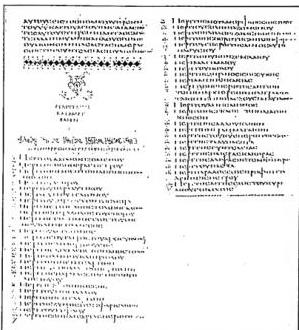
According to the reckoning of expert connoisseurs (Westcott-Hort), the part of the New Testament text that shows any divergence in the codices is only one eighth, as against seven parts literally identical; but the divergences of this eighth part are for the most part such as not to alter the sense, e.g. inversions in the order of words, conjunctions added or omitted, and the like. The divergences, moreover, that truly concern the sense of the text are about one thousandth part of the whole New Testament.
This singular abundance of codices has made the text of the New Testament, for over two centuries, the object of long and learned studies. After Erasmus of Rotterdam published in 1516 the first Greek edition, based on codices of scant value, that same text continued for a long time to be reprinted, pompously called the textus receptus; but from the time when scholars began to investigate and collate the best and most ancient codices, that text was increasingly discredited by critics, until it was definitively abandoned and replaced by others obtained through the aforementioned studies. Regarding these new texts proposed by critics, the almost perfect agreement to which the various scholars have come is symptomatic, despite the different criteria adopted.
One of the fundamental problems that critics have had to solve was that of determining the history of the transmission of the text, and for this purpose all the codices and other documents have been catalogued into different families. In this field H. von Soden worked in a particular way, and his results, although not definitive nor immune from doubts, greatly advanced textual criticism.
Among the first critics who attempted to restore a text better than the receptus, it suffices here to mention J. J. Wettstein (1751), to whom goes back the cataloguing of the codices according to a system still partly in use, namely the designation of the uncial codices by means of capital letters. Among the most recent critics, B. F. Westcott, F. J. A. Hort, C. von Tischendorf and the aforementioned von Soden excel. The first two offered a text based on codices which they called "neutral" (B and its companions); to Tischendorf is owed the discovery and the use of the important Codex Sinaiticus (s, or S, or o1), which naturally is the most represented in the text offered by his monumental Octava maior edition. Von Soden, finally, devised a new system for distinguishing the individual codices (a system, indeed, rather complicated and which for that reason has gained little acceptance) in the highly erudite work Die Schriften des N. T. (4 vols., Berlin-Cottbus 1902-12). Nevertheless, so much labor did not fully satisfy the learned; therefore a commission, headed by E. von Dobschütz, set out to offer a new critical edition of the New Testament.
Numerous manual editions have contributed to spreading the critically sifted text: such are the minor edition of von Soden (1913), the very widely circulated one of E. Nestle, based on the comparison of the three major ones (Tischendorf, Westcott-Hort, B. Weiss), and those of the Catholics M. Hetzenauer (1892-1900), E. Bodin (2nd ed. 1918), H. I. Volges (2nd ed. 1922) and A. Merk (1933, 6th ed. 1948).
Taking into account the works of von Soden and of other critics, there is today a tendency to group the codices into three or four classes according to the various books, distinguished by peculiar characteristics. The first of these classes, which von Soden designated with the siglum H (= Hesychius), is considered the best, because it is free of contaminations due to the influence of parallel passages and less retouched by the purists: the principal codices representing this class are the Vaticanus (B) together with the Sinaiticus (s). The second class, marked by von Soden with the siglum I (= Jerusalem) and represented by Cod. D (Beza), has various peculiarities of amplification, paraphrase, omission, etc., which characterize the so-called Western text. The third family, marked with the siglum K (= Koiné, "common"), has characteristics proper to the Antiochene school, due in particular to the influence of Lucian: this family is distinguished by purity of language and by a tendency to additions, and its principal representative is Cod. A (Alexandrinus). Finally, many codices, according to various scholars, depend on the school of Caesarea in Palestine, such as the Lake and Ferrar group, with particular notes. This classification, proper to the Gospels, undergoes slight variations when it is applied to the other books of the New Testament. Often a codex, according to the different books, is to be catalogued in various families and classes. Of all the classes the best is the first, proper to Egypt, on which the critical editions are principally based (v. CRITICA TESTUALE).
V. ANCIENT VERSIONS
Today the B. is the most widely diffused book in the whole world; but this diffusion was achieved over the centuries only to a minimal extent by its original Hebrew and Greek texts, and for the greatest part by the numerous versions in the various ancient and modern languages. Of the original texts, in fact, the Hebrew one could be read and understood only by a small number of persons, since the Hebrew language was understood by few among the Jews settled outside Palestine, and also by not many of those in Palestine already some centuries before the Christian era; the Greek texts, on the other hand, and among them the whole New Testament, were accessible to a far wider circle of persons, since Greek in the last centuries B.C. was the international language of the Roman Empire, including for the Jews of the diaspora. Nevertheless, as Christianity spread also into regions where the popular language was not Greek, and later as new idioms arose in regions already reached by Christianity, the B. was translated gradually into other languages so that during the liturgy the people might understand the content of the sacred books: in fact the common motive for which the various ancient translations were prepared, first among the Jews and then among the Christians, was that of understanding the B. in the public liturgical reading and secondarily in the private one.
The long series of versions comprises versions in ancient and modern languages. While certain ancient versions already began to arise when the canon of the Old Testament was not yet fixed and closed, the modern versions continue still today and will continue also in the future. The ancient versions enjoy particular importance as documents for the ascertainment or the critical reconstruction of the primitive biblical text, and their importance is usually greater the higher the antiquity of the version. The modern versions, in their more ancient period, are distinguished monuments of the respective languages, since the whole or partial translation of the B. into the vernacular is almost always one of the first products of the various European literatures; in their more recent period, the modern versions can have an exegetical value, as essays of interpretation of the biblical sense.
Since the ancient versions will all be treated individually separately, we give here a summary collective presentation of them, referring for each to its respective entry.
The first translations of the Old Testament were in the Greek language. The most ancient, the only one preserved entire, is that called the Septuagint (v.), whose beginnings go back to the 3rd century B.C. With the rise of Christianity this version was adopted by the Christians, who drew from it the biblical citations in their polemics against the Jews. This was the principal reason for which, throughout the 2nd century A.D., the Jews repudiated as unfaithful the Septuagint version (although previously they had surrounded it with particular veneration) and replaced it with other Greek versions, complete or partial, made by Jews and come down to us only in fragments (v. GREEK VERSIONS of the B.).
Almost contemporaneously with the translation of the Septuagint, likewise among the Jews, translations into Aramaic were being formed, which, after the Christian era, began to be put in writing, thus giving origin to that complex of versions called generically Targumim, that is "translations" (v. TARGUMIM).
Meanwhile in the West, with the spread there of Christianity, the necessity was felt of having the B. translated into Latin, and particularly into popular Latin. This necessity began to be provided for already in the 2nd century A.D. with one, or perhaps more than one, Latin version, made however not from the Hebrew text but from the Greek text of the Septuagint. Most complicated and until today little explored are the vicissitudes of these initial Latin versions, sometimes called collectively by the inexact term Itala; they were later in part supplanted and in part incorporated into the new version made from the Hebrew text by St. Jerome, and called today the Vulgate (v. LATIN VERSIONS of the B. and VULGATE).
Already in the 3rd century there began, for the use of the Christians of Egypt, the versions in Coptic, that is in that language formed from a mixture of ancient Egyptian and Greek which was spoken there by the lower classes. There are Coptic versions in the southern dialect, or Sahidic, in the dialects of middle Egypt, that is Fayyumic and Akhmimic, and in the northern dialect, or Bohairic, made from the Greek text of the Septuagint, and they have come down to us only in part (v. COPTIC VERSIONS of the B.).
In Syriac, the Old Testament began to be translated between the 2nd and 3rd centuries A.D. directly from the Hebrew text; then the translation of the deuterocanonical books was made from the Greek of the Septuagint, and the series thus completed was called the Peshitta version, "simple". The New Testament was translated several times and with various criteria: the most ancient translation is that of the Diatessaron of Tatian (v.), who in this work of his fused together the four Gospels, called for this reason "mixed"; a little later, but already in the 2nd century, the Gospels were translated each separately, called for this reason "separated", of which we have two different recensions, the Curetonian (from its discoverer W. Cureton [v.]) and the Sinaitic (from Mount Sinai, where it was found). In the 5th century a new version appeared, or radical revision, of the New Testament attributed to Rabbula of Edessa, which was united with the Peshitta of the Old Testament; to the text of Rabbula there were missing the deuterocanonicals of the New Testament, which were added later. Later Syriac versions are: the Philoxenian (6th century), from the text of the Septuagint according to the recension of Lucian; the Syro-Hexaplar (7th century), from the text of the Septuagint according to the recension of the Hexapla of Origen; and some other minor one (v. SYRIAC VERSIONS of the B.).
The Ethiopic or Abyssinian version was begun in the 5th century: made from the Greek text of the Septuagint, it was subsequently subjected to certain recensions. The Armenian version (v. MESROP), of the 5th century, was made from the Greek text of the Septuagint. The Gothic version was completed in the 4th century, from the Greek text of the Septuagint, by Ulfilas, Arian bishop of the Goths. The Georgian version seems to go back to the 5th century; it was made from the Greek text of the Septuagint, but it also retains influences of the ancient Armenian version. The ancient Slavonic (Paleo-Slavonic) version was begun in the 9th century by Sts. Cyril and Methodius; but subsequently it underwent numerous integrations and modifications. The Arabic versions, of various types, do not go back beyond the 9th century, and depend on the Hebrew or Greek texts according to the various authors.
VI. MODERN VERSIONS
Italian. - The first attempts to translate the B. into the vernacular in Italy go back to before Dante. Rather than true translations, they are usually amplificatory and explanatory paraphrases, made for devotional purposes, and limited to individual books or to mere extracts, especially of the Gospels. The vernacular employed is usually Tuscan, sometimes Venetian. The text from which they translate is normally the Latin of the Vulgate, in some cases represented by one of the recensions prior to the one fixed at the University of Paris at the beginning of the 13th century, which quickly spread to Italy as well: which would lead one to conclude that some of these vernacular translations go back to the early 13th century; exceptionally, translations were also made from French versions. These first attempts, almost all unpublished, have not yet been sufficiently explored and studied.
With the 14th century the first complete B.s in the vernacular begin to appear, arising from the union of previous partial translations, for the most part anonymous; so that, depending on the choice made by the various compilers, the complete copies could turn out to differ in the various books translated. These B.s, still transmitted in manuscript, are today quite rare and almost always, whether because of the incompleteness of the original collection or because of the ravages of time, lack some book. Sometimes individual books bear at their head the name of the translator: among the various names mentioned, the most worthy of mention is Fra Domenico Cavalca, to whom the translation of the Acts is attributed; this attribution is also found in isolated copies of that book, but the doubt may always remain that Cavalca was not the translator but only the authoritative reviser of a previous translation of the Acts, as seems to emerge from a comparison of the texts contained in the various copies. Other celebrated names put forward in connection with the 14th-century vernacular B., such as Iacopo da Varagine and Iacopo Passavanti, have no justification in the manuscript tradition. A celebrated exemplar of these complete B.s is the one that once belonged to Francesco Redi (today preserved only from Genesis up to part of the Psalms: Florence, Laurenziana Ashburnham 1102, of the year 1466); Redi made use of it for the annotations to his Ditirambo and the Accademia della Crusca for its Vocabolario.
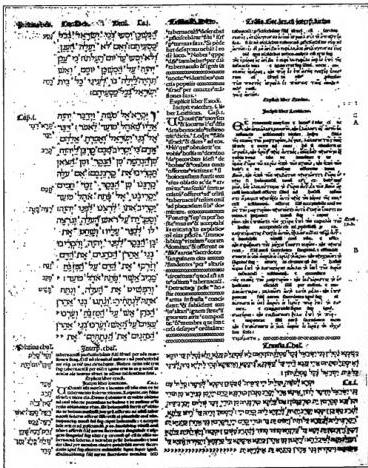
With the invention of printing, the complete vernacular B. soon came to the forefront with two editions in 1471, both in Venice. The first appeared on 1 August ("B. d'ag.") from the presses of the German printer Wendelin of Speyer with the title B. dignamente vulgarizzata per il clarissimo religioso duon Nicolao Malermi Veneziano..., 2 vols. in-fol., in 2 columns; the second appeared on 1 October ("B. d'ott.") with the title La B. sacra del Testamento Vecchio e Nuovo in lingua volgare tradotta, 3 vols. in-fol., in 2 tomes, without name of place and printer, but certainly issued from the presses of the French printer Nicolas Jenson (others attributed it to Adam of Ammergau). The Camaldolese monk Malermi (or Malherbi, Manermi) to whom the "B. d'ag." is attributed was, rather than a translator, a simple compiler; he employed various partial translations of the 14th century, among them the one of the Acts attributed to Cavalca, and touched them up here and there in accordance with the Latin text of the Vulgate, not without replacing Tuscan words and idioms with corresponding Venetian ones.
The complete B. thus obtained certainly showed a fidelity and uniformity that the individual partial translations could not have, but it also considerably spoiled their 14th-century language, thereby notably diminishing their almost unique merit. Great nevertheless was the favor met by Malermi's B., which had 11 editions in the incunabula period and nearly 20 throughout the 16th century; the edition that appeared in Venice in 1773, although it still bears Malermi's name, is in reality a reworking by the Paduan Alvise Guerra, of Jansenist leanings, who for the most part replaced the ancient translation with translations of his own or of others. The "B. d'ott.", that is, the Jenson one, employed 14th-century manuscripts without altering them — it seems — but perhaps supplementing them where they were lacunose with passages taken from the "B. d'ag.": it is certain that the two B.s agree almost word for word in the New Testament and also in the Psalms, while they are quite different in the Old Testament. Because it was so rough and of varied origin, the Jenson B. met with no favor and was no longer reprinted, so as to become extremely rare. It was instead published anew during the 19th century, out of the rekindled love for vernacular texts of the "good century" of the language: but a first attempt made by the Società Veneta dei Bibliofili stopped at the first volume (B. volgare, testo di lingua secondo l'edizione del 1471 di Nicolò Jenson, Venice 1846) because of difficulties that arose with the ecclesiastical authority and with the printer, and all the copies ended up destroyed in the print shop or scattered; Carlo Negroni, however, succeeded in preparing the complete edition (La B. Volgare secondo la rara edizione del 1 ott. MCCCCLXVI, 10 vols., Bologna 1883-87). The text of the Jenson edition has value not for biblical criticism, but only for the history of the Italian language, although even on this point there has been some exaggeration.
Many, then, are the editions of 14th-century versions, especially of the Psalms, printed during the 19th century out of love for texts of the language: which therefore interest philologists.
In the times of Protestantism, biblical versions of a new character also begin in Italy. Almost contemporaneously with Luther's German B., there appeared in Italy the version of the Florentine Antonio Brucioli, at first limited to the New Testament (Il Nuovo Testamento di Cristo Jesu Signore e Salvator nostro, di greco nuovamente tradotto in lingua toscana, Venice, Lucantonio Giunti, 1530, reproduced several times thereafter) and shortly afterward extended to the whole B. (La B., quale contiene i sacri libri del Vecchio Testamento tradotti nuovamente da la hebraica verità... Coi divini libri del Nuovo Testamento, in-fol., Venice, Lucantonio Giunti, 1532).
Brucioli had pronounced Protestant leanings, although officially he did not break away from the Church, and his version, which soon became common for the exiled Italian Protestants, was placed on the Index as early as 1559; as for its literary character, it is a rough and unpolished version, and its claimed derivation from the original texts was in reality achieved through assiduous use of Sante Pagnini's Latin version for the Hebrew text and of Erasmus's for the New Testament. It was reprinted several times, also with Brucioli's commentaries in which his Protestant leanings appear more clearly; a new edition with extensive modifications was prepared for the use of the Protestants of Geneva (there, at Francesco Durono's, 1562) by Filippo Rustici.
On the Catholic side, shortly after Brucioli's version, there appeared that of the Dominican of the Florentine convent of S. Marco, Sante Marmochino (La B. nuovamente tradotta dalla Hebraica verità in lingua Thoscana per Maestro Santi Marmochino, in-fol., Venice, Lucantonio Giunti, 1538).
This version, which the author says was completed in twenty-two months, was in reality based, more than on the Hebrew text, on the related version of Sante Pagnini, with frequent approximations to the Vulgate; for the New Testament it employs the version made shortly before by fra Zaccaria of the same convent of S. Marco, based on the Greek text (Il nuovo Testamento tradotto in lingua toscana dal v. p. fra Zaccheria, Venice, Lucantonio Giunti, 1536). Marmochino's version met with little favor, and was reprinted only in 1546.
During the same 16th century there were numerous partial versions, especially of the New Testament, some published even outside Italy, very many in verse. Almost all are devoid of any scholarly value, and those in verse also lack literary value: some betray Protestant tendencies. But how widespread the vernacular versions of the B. were in Italy, even before Protestantism arose, is evident from the preface that the canon regular Isaia, or "Esaya da Este Patavino," prefixed to his Esposizione sopra la cantica di Salomone printed in 1504 in Venice, "per Bartolameo de Zanni da Portese"; there he, justifying himself for having written that biblical Esposizione not in Latin but in the vernacular, affirms that it was "etiandio necessaria : impero che per la commodità del stampar li libri : tutta la sacratissima bibbia a questa bassezza era reducta : E da le donnezule fra le roche e fusi : fra il mulinelli da filar la lana: ne le compagne (compagnie, cracchi) de le vicine si se cantava, Ne la quale etiandio la cantica se contene." It is possible that the author, speaking of "tutta la sacratissima bibbia," is alluding to the two Venetian editions of 1471, the only complete ones that existed in his time, but he certainly means at the same time to refer to other partial editions that appeared here and there after those, and which, put together, constituted almost as many complete B.s: very important, moreover, is the fact that these versions were extremely widespread among the common people, so much so that they were sung "da le donnezule fra le roche e fusi."
Curious, furthermore, is the report offered by a biography of Sixtus V (preserved in an unpublished manuscript, consulted by the author of the present article), according to which the said Pope, shortly before his death (1590), "volle che si stampasse la Bibia in lingua Italiana nella quale lingua fosse notorio a tutti e che la potessero leggere, e questa sua volontà fu osservata nella stamperia di S. Santità": but since such a translation into the vernacular seemed inopportune to various cardinals and to Philip II king of Spain, the latter sent his ambassador from Rome to make remonstrances to the Pope, who however rebuffed the ambassador violently. Yet of this Roman edition no trace whatsoever exists (cf. on the matter J. Le Long, Bibliotheca Sacra, I, Paris 1723, pp. 357-58).
There follows a long period in which in Italy Catholics ceased to produce new translations or editions, because of the rule established in 1559 and reaffirmed in 1564 by the Index to halt the spread of Protestantism, a rule that required a special written permission to read the B. in the vernacular. In this period appeared the most important Protestant version, due to Giovanni Diodati (v.), published with notes in 1607 in Geneva.
At this time the vernacular B.s in Italy were practically represented only by Protestant texts; of this Benedict XIV took concern, who by a decree of the Index of 13 June 1757 modified the previous rule, permitting the reading of versions in the vernacular approved by the Holy See or published under the supervision of the bishops; moreover the same Pope, privately, recommended the preparation of a new Italian version made in conformity with such norms. This greater freedom immediately produced its effects, and within a few years three new Italian versions were published. The first was the one that appeared in 1773 as a reprint of Malermi, while in reality it was an almost entirely new work by Alvise Guerra, of whom mention was made above. The second depends on the French B. known as that of Port-Royal, due to Isaac Louis Le Maistre de Sacy, and appeared under the title Sacra Scrittura giusta la Volgata in lingua latina e volgare colla spiegazione del senso letterale e del senso spirituale tratta dai Santi Padri e dagli autori ecclesiastici dal Sign. Le Maistre de Sacy (Venice 1775-85): however, in the Italian edition, while the notes are those of Le Maistre de Sacy, the text is translated not from the French but very faithfully from the Latin of the Vulgate.
The third was the B. of Antonio Martini (v.), who produced a wholly new work and, for his times, a most worthy one. Of it there appeared first the New Testament (6 vols., Turin 1769-71), dedicated to King Charles Emmanuel III and soon reprinted, then the Old Testament (16 vols., ibid. 1776-81). Welcomed by most with praise, by some with such stubborn hostility that an attempt was even made to have it prohibited by the Church, Martini's version was praised by a brief of Pius VI, addressed to the author on 17 March 1778; the Tuscan Jansenists, however, sought to take possession of it by beginning a counterfeit edition, which nevertheless was limited to the New Testament and a minimal part of the Old (11 vols., Florence 1779-83). The very many editions, complete or me amassio: e rendidilio quia
ego a bro ruii «Sui a pè v uè
ni mùdi: veru rìnuquo mù-
dù: e uado ad pènu. Dùunt ri
bìgupnì rùu «Sè nùr palom
lùgnè: e purbù nùlù bìdo-
lùr tùm² qà tío onlìa: e nò
quos èl dii ut èe e iùrogr-la bor eròim²: qà a bro rìsì-
fùpùdi: rìo lùrùsò. Ilò do re-
bùsò: Sèe uòni bòra: e rìi uòf-
u bìgupnìnìi omòquìsì: in
propùa: iùr folù rìsìquano-
Sè nò fùm folùsò: qà pàre me-ni èl «Sè: lorune fùm uòbìo:
ut in me pàr habetào. In mù-
to pìlùrì habetào: sò nòfòlì-
rego uìa mùdù.
«Sè: lorune èl tùsùsò: e rì-
lùsò cunt. Nùnt cognouent: quì
a omnia quì bròchì mùdù abo
sè fùm «Sè: uòrò quì bròchì
mùdù tòlì: e rìpì anpènt
vognouent: uèe qà a rìuò:
e rebòtè: quìa nùr mùdù-
sò: pro rìo rogo. Nò pro mù-
to rogo: sò pro bìro qà bròchì
mùdù: qà a fùm «Sè: mùdù
nù fùm: e nùr mùdù: e rìsì
rìsìbùsò fùm in rìsì «Sè: nò fù
in mùdù: e rìpì in mùdù fùm: e
rìo a bè rìnò. Dùre fùmè:
sè: nòsì nòsì: e rìo qòsò brò-
bìchì mùdù: e fùm: e nòsì fùm: e
nòsì «Sè: nòsì: e rìo qòsò brò-
bìchì mùdù: e rìsì: e nòsì fùm: e
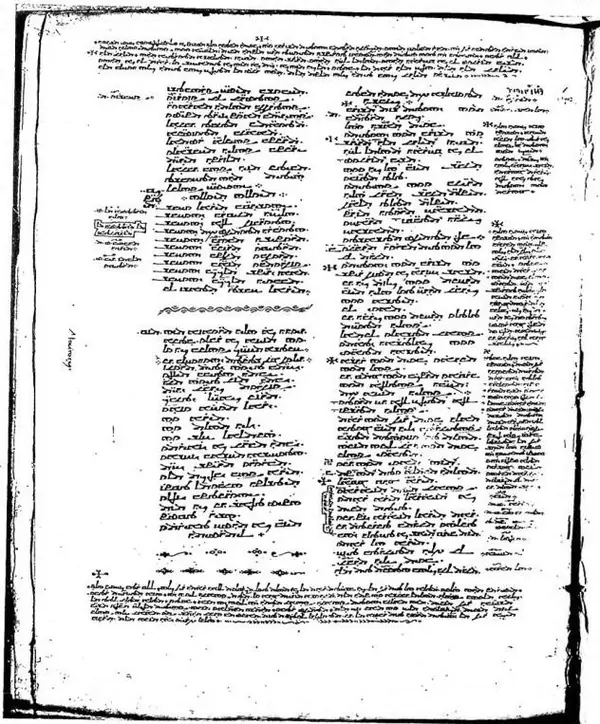
(by courtesy of Dr. X. Vian)
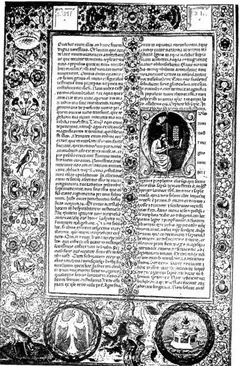
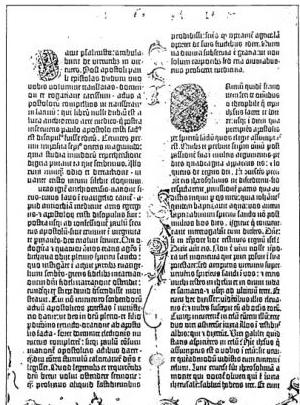
BIBLE - Page of the very rare B. of thirty-six lines, without rubrics and miniatures, as it came from the press. The work is attributed to Guenberg, who would have printed it around 1460. Copy from the Vatican Library.
partial ones, which Martini's version later had, usually depend on the one that he, having become archbishop of Florence in 1781, edited there for the Old Testament (17 vols., 1782-87) and for the New (6 vols., 1788-92); there are also editions of it edited by the London Bible Society. It was declared a "text of the language" by the Accademia della Crusca on 28 July 1885.
An excellent scientific version of the B. could have been prepared by Gian Bernardo De Rossi thanks to his singular expertise in the Hebrew language and literature; but he limited himself to publishing in Parma the versions of the Psalms (1808), of Ecclesiastes (1809), of Job (1812), of Proverbs (1815) and of the Lamentations (1823), accompanying with a few philological notes the translation made from the Hebrew text with rare penetration.
It seemed that the undertaking not assumed by De Rossi was to be carried out by the priest G. Ugdulena (v.), professor of Hebrew at Palermo; but of it, under the title La Sacra Scrittura in volgare riscontrata nuovamente cogli originali ed illustrata con breve commento, only two volumes appeared (Palermo 1859-62), containing the books from Genesis up to Kings. This published part is clear and faithful in translation, very rich in philological and historical scholarship in the commentary, which aims at the literal sense, and is up to date for the most recent studies of its time. Greatly praised by A. Manzoni and encouraged by Pius IX, Ugdulena instead allowed himself to be distracted by politics and abandoned his undertaking.
Translations from the Hebrew of the Old Testament were also made by Italian Jews from the 15th century onward, but they remained only in manuscript. In 1571 there appeared in Venice a translation of Ecclesiastes made by David de' Pomis, and in the same place in 1617 one of Proverbs made by Ezechia da Rieti. In Vienna in 1821 Isacco Samuele Reggio, rabbi at Gorizia, published a Hebrew-Italian Pentateuch, and in 1831 a poetic version of Isaiah. The celebrated Hebraist Samuele David Luzzatto proposed a new version of the whole Old Testament, but published only Job (Trieste 1853), Isaiah (Padua 1855), Esther (Trieste 1860) and the Pentateuch (ibid. 1861); struck by death in 1865, he left various other parts of the work unfinished. Some of his disciples, using these parts, brought the work to completion, and it appeared under the title La Sacra B. volgarizzata da S. D. Luzzatto e continuatori (4 vols., 1872-74). The translation is faithful, but harsh and servile, all the more so since explanatory notes are lacking; so that the work circulated, and scantily, only in Jewish circles. Among other Jewish versions of lesser importance, such as that of the Psalms by Lelio della Torre (Vienna 1845), of Job, Lamentations and Psalms by Beniamino Consolo (Florence 1874, 1875, 1885), etc., those of David Castelli concerning Ecclesiastes (Pisa 1866), the Song of Songs (Florence 1892) and Job (ibid. 1897; 2nd ed., Lanciano 1916) stand out for quality of language and philological apparatus.
In the Catholic field C. M. Curci (v.) published Il Nuovo Testamento volgarizzato ed esposto in note esegetiche e morali (3 vols., Naples 1879-80), and Il Salterio volgarizzato dall'ebreo ed esposto in note esegetiche e morali (Rome 1883), works that in their time met with wide circulation, but were soon forgotten. Of scientific value, on the other hand, are the Cento Salmi tradotti letteralmente e commentati (Rome 1875) of Fr. F. S. Patrizi. The version of the Gospels made, with a short commentary, by N. Tommaseo (Milan 1869) should not be forgotten.
From the last years of the 19th century onward, versions from the original texts began to appear in Italy, aiming to illustrate the text, translated critically, with the aids of philology, archaeology and historical geography. We recall here the principal ones.
Salvatore Minocchi, I Salmi (Rome 1895; 2nd ed. totally different, ibid. 1905); Le Lamentazioni di Geremia (ibid. 1897); Il Cantico dei Cantici (ibid. 1898; 2nd ed. totally different with Ecclesiastes, in Le perle della B., Bari 1924); I Vangeli (Florence 1900); Le profezie di Isaia (Bologna 1907). Giuseppe Ricciotti, Dalla B., antologia letteraria con introduzione e note (Bologna 1921); new ed. under the title: La B. dei letterati (Rome 1947); Il libro di Geremia (Turin 1923); Le Lamentazioni di Geremia (ibid. 1924); Il libro di Giobbe (ibid. 1924); Il Cantico dei Cantici (ibid. 1928); Le lettere di s. Paolo, Rome 1949. Luigi Constantini, Le lettere di s. Paolo, le lettere cattoliche e l'apocalisse, testo greco e versione italiana con note (Rome 1928). Leone Tondelli, Le profezie di Ezechiele (Reggio Emilia 1930). Giovanni Re, Il Santo Vangelo di Gesù Cristo (3rd ed., Turin 1946); S. Paolo, Le lettere (3rd ed., ibid. 1946). Primo Vannutelli, Gli Evangeli in sinossi (2nd ed., Rome 1938); Tutto S. Giovanni, testo greco latino e italiano con note (ibid. 1937).
Of total versions of the B., two on the Catholic side are being completed: one begun by Marco Sales, La Sacra B. commentata (Turin 1911 ff., so far 7 vols., from Genesis up to Isaiah, and the New Testament), which uses Martini's version retouched, with ample introductions and notes; the other promoted by the Pontifical Biblical Institute, translated from the original texts with brief notes, of which there have appeared so far the Pentateuch, the historical books (Milan 1923; new ed., Florence 1943; II and III, ibid. 1945 and 1948) and the Poetical Books (work of Alberto Vaccari, Rome 1925). Of a popular character is La Sacra B. (5 vols., Florence 1939-1940) translated from the Vulgate by various hands, with introductions and notes by G. Ricciotti. The most recent Italian translation with commentary of the B. is the one initiated under the direction of S. Garofalo, of which there have appeared so far Daniele (Turin 1947), Epistole cattoliche (ibid. 1947), Ezechiele (ibid. 1948), Introduzione generale (ibid. 1948).
On the Protestant side there exist the various partial translations (New Testament, Psalms, Job) of Giovanni Luzzi, later merged into his total translation La Sacra B. tradotta dai testi originali e annotata (12 vols., Florence 1927-30), which largely follows the theories of Lucien Gautier.
French. - Testimonies of partial translations of the B. in "langue d'oïl" go back to the 12th century: around 1100 a monk of Normandy translated the Psalms, surviving in two different recensions, and a little later the Apocalypse and the four books of Kings were translated; around 1250 King Louis IX had prepared for his use a translation of the entire B. which was reproduced in many copies. New versions, in imitation of the one ordered by Louis IX, were made by de Sy (ca. 1350), by Raoul de Presles (1380) by order of Charles V, and partially by others. Translations in "langue d'oc", or Provençal, are preserved for the New Testament in manuscripts of the 13th century; older, and extending also to the Psalms, were certain versions that arose among the first Waldensians of the district of Metz (end of the 12th century), which have not been preserved.
The first printed French B. is the Bible historiale, the work of Guyart des Moulins who, toward the end of the 13th century, had compiled a kind of Sacred History, taking as his basis the Historia scholastica of Peter Comestor, inserting into it the historical books of the B., and publishing this compilation as Livres de la Bible historiale. The biblical books missing from this work, that is, the books not of historical subject matter (Psalms, Prophets, Epistles, Revelation), were joined to it later, taken from the translation of Louis IX already at the beginning of the 14th century; this heterogeneous version found great diffusion, and with the invention of printing it had 12 editions from 1478 to 1542. The first, containing only the New Testament, appeared at Lyon, perhaps in 1478; the first complete edition came out in Paris in 1487 (2 vols. in folio) by order of Charles VIII and through the efforts of his confessor Jean de Rely.
An anonymous translation of the New Testament was printed in Paris in 1523; later supplemented with the other books, the whole B. appeared at Antwerp in 1530. Its author was the humanist Jacques Le Fèvre d'Étaples (Faber Stapoulensis), who translated from the Vulgate, rarely from the Greek of the New Testament, though having the Bible historiale at hand. Placed on the Index in 1546 for traces of Protestantism, it received a purged Catholic edition (Leovano 1550), which became the usual one of French Catholics until the 17th century.
In Switzerland at Sarrières, near Neuchâtel, in 1535 was published the first Protestant B. in French, the work of Pietro Olivétan, who had made great use of the versions of Sante Pagnini, of Erasmus, and also of that of Le Fèvre. Olivétan's translation had various editions, revised by Beza (1551), by Bertrand (1588) and others, and finally by J. F. Ostervald: this last became, with further retouchings, the usual text of French Protestants. Other Protestant versions were those of Sébastien Châtillon (Castello), rough and incorrect (Basel 1555), Le Clerc (Amsterdam 1703), Le Cène (ibid. 1741), and some other of lesser importance. There were several Catholic versions of the New Testament during the 17th century.
The most widespread of the French translations came from a Jansenist milieu and is the B. of Port-Royal, commonly known as the "B. of Sacy" from the name of its principal author (Sacy is the anagram of Isaac Louis Le Maistre). In the work of translation Isaac Louis was assisted by his brother Antoine and by Antoine Arnauld, while other Jansenists added the greatest part of the notes. The New Testament appeared first in 1667 at Amsterdam, hidden under the name of Mons (whence the appellation "B. of Mons"), and afterward the Old Testament (Paris 1672-95). Faithful and clear, this version found great favor also among Catholics, and was many times reprinted even without notes. Into the very text of this version Fr. Louis de Carrière inserted a kind of explanatory paraphrase (Commentaire littéral, Paris 1701-16): this text was then furnished with a prolix commentary, drawn from various authors, and constituted the so-called "B. of Vence" (Avignon 1767-73).
The translation of A. Godeau (Paris 1668) is made from the Vulgate in the manner of a paraphrase; that of N. Legros, which appeared first anonymously (Cologne 1739), had a new edition (1753) much improved. From the Vulgate translated E. de Genoude (Paris 1820-24), which is faulty in inaccuracy; J. J. Bourassé and P. Janvier (Tours 1865), an edition illustrated by Doré; J. B. Glaire (Paris 1871-73), which had wide diffusion; A. Arnaud (ibid. 1881); J. Verduinov (Dijon 1927-30). Still widespread today are those of the publisher P. Lethielleux (D. P. Drach, Trochon and others) in 27 vols. and of L. C. Fillion (8 vols., Paris 1903-1904). Above all prevailed, among Catholics, the translation made from the original texts with brief notes by A. Crampon, La S.te Bible (7 vols., Tournai 1894-1904), reprinted later also in a single volume (revised ed., Paris 1939). The collection Études Bibliques (ibid. 1903 ff.) has a rigorously scientific character, in which have appeared, translated and furnished with ample introductions and commentaries, some books of the Old Testament and almost all those of the New; likewise the series directed by L. Pirot (d. 1939) and A. Tricot, La S.te Bible (ibid. 1935 ff.) in the course of publication.
On the Jewish side mention should be made of the translations of S. Cahen (18 vols., Paris 1831-39), which carries the Hebrew text opposite and critical notes, and that edited by the French rabbinate under the direction of Zadoc Kahn (2 vols., ibid. 1899-1906), very exact in translation and faithful to traditional Jewish exegesis.
In the Protestant field the translation of E. Reuss (18 vols., Paris 1874-81) was intended as an attempt to introduce into practice the results of the German critical school, so that it overturned the traditional series of the biblical books in accordance with the presumed chronology of that school; it had no diffusion. The translation of L. Segond (Geneva 1874, Lausanne 1888, and reprints) met instead with a good reception. The Version synodale (Paris 1914 ff.), published under the care of the Société Biblique de France, has a popular character; of a scientific character is the Bible du centenaire (ibid. 1916 ff.) under the care of the Société Biblique de Paris.
Spanish. - Spain had quite early at least partial translations of the B. into Castilian: a decree of King James I of Aragon, of 1233, prohibits the use of the Holy Scriptures in the vernacular in order to oppose the propaganda of the Albigensians. Under Alfonso X the Wise (1252-86) other versions appeared, made partly from the Vulgate and partly from the Hebrew text, preserved in codices of the Escorial; Spain was in fact for the Jews in the Middle Ages a distinguished cultural center, and knowledge of the Hebrew language was widespread there. The B. was translated from the Hebrew by the rabbi Moses Arragel of Guadalajara (1430), preserved in the celebrated manuscript of the House of Alba, published recently (2 vols., Madrid 1920-22). The B. called "Ferrara" was also translated from the Hebrew by Jom Tob Athias and other exiled Jews, because it was printed at Ferrara in 1533.
At the time of Protestantism the severe restrictions imposed by the Spanish Inquisition meant that in the Catholic field only partial translations were prepared, usually of the Gospels and the Psalms, which moreover were published only later. In the Protestant field, instead, there appeared outside Spain the New Testament of Francisco de Enzinas (alias Dryander or Duchesne, Antwerp 1543), the New Testament with the Psalms of Juan Pérez de Pineda (Venice, in reality Geneva 1557), and finally the entire B. of Casiodoro de Reina, translated from the original texts but conforming to the version of Sante Pagnini, printed at Basel in 1569 and called, from its initial emblem, La biblia del Oso. This translation, retouched by Cipriano de Valera who published it under his own name (Amsterdam 1602), became the usual one of Spanish Protestants.
In more recent times Catholics published, besides some partial translation, the complete B. translated from the Vulgate by Felipe Scio de S. Miguel (Valencia 1790-93), several times reprinted, and the other, also better, by Felix Torres y Amat (Madrid 1823-25), reprinted also recently (1928). Two translations made from the original texts have appeared recently in Madrid: Nácar-Colunga (1945), J. M. Bover-F. Cantera (1947).
Catalan. - Translations of the B. into the language of Catalonia must have circulated from the 13th century, retouched or partially renewed in the following centuries, but they remained unpublished. The first printed edition was that of the whole B. translated by Bonifacio Ferrer, brother of St. Vincent, published with retouchings by Jacme Borrel (Valencia 1477), of which a single fragmentary copy remains. After this, there were only rare partial editions.
In the 20th century scientific translations from the original texts have been begun, still in the course of publication.
Portuguese. - The first Portuguese versions of which there is record are rather paraphrases and historical summaries. The Epistles and Gospels for the whole liturgical year were translated by Gonzalo García de S. María (Saragossa 1485), and the Acts and the Catholic Epistles by Bernardo de Brivega (Lisbon 1505). Of complete translations, a Protestant one appeared, begun by João Ferreira de Almeida and completed by others (New Testament, Amsterdam 1681; Old Testament, Tranquebar 1710-53), and a Catholic one by Antonio Pereira de Figueiredo (Lisbon 1778-90), the latter recently published with a new commentary by Santos Parinha (1902-1904). Other modern versions are paraphrastic or limited to the New Testament; new translations of the whole Bible have been begun both in Portugal and in Brazil.
English. - Already in the 8th century partial versions of the Bible in Anglo-Saxon arose in the British Isles, of which, however, almost everything has been lost. With the 14th century versions in the new English idiom were taken up again, the first specimens of which are the Psalms translated by William of Shoreham and those of Richard of Hanpole; around 1380 J. Wyclif translated the New Testament and immediately afterwards, completed by Nicholas of Hereford, also the Old: this translation, revised by John Purvey (1388), had wide circulation.
The first printed translation was that of the New Testament by William Tyndale (Cologne-Worms 1525), followed by the Pentateuch by the same author (Marburg 1531). Shortly afterwards (1535) the whole Bible appeared, translated by Miles Coverdale from Luther's German version and from the Latin of the Vulgate and of Santes Pagnini. A fusion of the translations of Tyndale and Coverdale is the Matthew's Bible edited by John Rogers (Antwerp 1537); which, with various revisions, gave rise to the edition edited by Richard Taverner, and to the other which, from its large format, was called The Great Bible (both in London 1539). The Geneva Bible (Genevan Bible), which appeared there in 1557-60, met with great success, even greater than that of the Bishops' Bible (Bishop's Bible), published in London (1568) under the care of a dozen Anglican bishops, and therefore with semi-official authority. All of them, however, were surpassed by the Bible of King James, called the Authorized Version (London 1611); it was prepared over 7 years by various committees totaling 50 members, who worked on the text of the Bishops'
Bible, comparing it with the original texts and emending it with great care in its linguistic aspect; for these conceptual and literary merits the Authorized Version acquired and maintained down to our own days an unsurpassed credit, and exercised a profound influence on English literature.
Emendations and improvements, demanded by the times and by the progress of studies, were proposed on several occasions for the Authorized Version; until, when a joint Anglo-American commission was appointed in 1870, it published the result of its labors for the New Testament in 1881, for the Old in 1885, and for the deuterocanonical books in 1895. This new revision was called the Revised Version.
In the face of all these Anglican versions, English Catholics produced the ancient translation prepared by the exiles in France and based on the Vulgate, of which the New Testament appeared at Reims (1582) and the Old at Douai (1609-10): it has its literary merits, and received several revised editions. A new excellent Catholic translation from the original texts (Westminster Version) is nearing completion.
Of the versions in English by Jewish scholars the most recent and important is The Holy Scriptures according to the Masonic Text (Philadelphia 1917), prepared by a commission of Jewish scholars especially with a view to synagogue worship.
Very many others, moreover, are the English translations, almost all Protestant, prepared either for popular or for scholarly purposes; the latter, accompanied by more or less extensive commentaries, form special series.
German. - Fragments of a version in the ancient Germanic, or theotisc, idiom go back to the 9th century and derive from partial versions. With the 14th century the attempts extend and multiply: thus numerous translations of the entire B. were formed, due to different authors and carried out with different methods and in various dialects, but always from the Latin of the Vulgate. The first printed edition, prepared by G. Mentel (Strasbourg 1466), reproduced one of such complete translations and was reprinted many times in the incunabula period; various editions also had another complete B. in a different dialect, and other partial translations.
At the rise of Protestantism, of which Luther's B. was a powerful vehicle, German Catholics hastened to publish translations in the vernacular as well, carried out from the Vulgate but inspired by Luther's translation and also keeping an eye on previous translations; thus appeared the New Testament of J. Beringer (Speyer 1526) and that of G. Emser (Dresden 1527), the complete B. of J. Dietenberg (Mainz 1534), that of J. Eck (Ingolstadt 1537), and later that of C. Ulenberg (Cologne 1630), which had various reprints with modifications. Other new Catholic translations were published from the close of the 18th century, among which the one by the Benedictine H. Braun (Augsburg 1788-97) met with much favor, subsequently revised by M. Feder (1803), by J. Fr. Allioli (1830-39) and by H. Arndt (1899-1901); the one by V. Loeh and W. K. Reischl (Regensburg 1851-66) also achieved notable diffusion, reprinted even recently (1914-15). Many are the Catholic translations made in the 20th century from the original texts: that of N. Schlögl (Vienna 1920-22) was placed on the Index; furthermore P. Riessler and R. Storr (Mainz 1924-34), E. Henne and C. Rösch (1934-40), and the series of scholarly commentaries on the Old Testament (Nikel-Schultz, at Münster) or on the New (Fr. Tillmann) or on both (Feldmann-Herkene, at Bonn).
Of the Protestant translations, Luther's had capital importance from every point of view. As early as 1521 Luther set his hand to the New Testament, and published it in 1522; from then on, for twelve years, he tenaciously continued working on the rest of the B., which he published in its first complete edition by Lufft at Wittenberg in 1534: Biblia, d. i. de gantze heilige Schrift, Deutsch. Luth. (Wittenberg, MDXXXIV). But even after this edition Luther continued to work on his translation, improving it through 9 successive editions, up to the last of 1545 which remained the standard one.
The success was enormous: from the press of Lotther at Wittenberg alone in the years 1534-84 no fewer than 100,000 copies of Luther's B. came out, not counting those of other presses. For the followers of the Reformation the German B. of 1534 was «the greatest gift» made by Luther to the German people. And in reality the merits of this translation were most singular from the linguistic and literary point of view, since with it Luther created, amid a great variety of local dialects, the single idiom that was later that of the German nation. Quite different, however, is the judgment that must be given on the scholarly and theological value of the work: Luther translated from the original texts, assisted by Melanchthon, Aurogallus (v.) and others, keeping before his eyes the Septuagint, the Vulgate, especially the translation of Sante Pagnini and the Postillae of Nicholas of Lyra (so much so that it was said Nisi Lyra lyrasset, Lutherus non saltasset); but his knowledge of Hebrew, of which he boasted so much, was not very great, and forced him several times to seek the opinion of the rabbis. Moreover, with his work he aimed above all at spreading his theological ideas, and this led him to be tendentious in certain points in order to attribute his ideas to the biblical text: the case of Rom. 3, 28 is well known, where he translates that man «is justified by faith alone», whereas the original text does not have «alone». Although it had become the classic book of Protestantism and of the German nation, Luther's translation appeared with the passing of time increasingly in need of emendations; which in fact were made in the innumerable editions that followed, with the drawback, however, that the Lutheran text was modified at the whim of individuals: a semi-official authoritative edition appeared in 1883, but although it had emended the Lutheran text in many points, it appeared inadequate to Protestant scholars, who therefore drew up lists of other passages that deserved emendations.
Of great importance outside Germany was the «Zurich B.» (1530), prepared by the Swiss Protestants and subjected over time to various emendations and updatings: it is still popular. On the other hand, numerous other translations prepared by the various factions of early Protestantism (anti-Trinitarians, 1527; Calvinists, 1579; Socinians, 1630) or by later philosophizing currents (Pietists, 1726-42; «rationalists», 1735) have disappeared from use. In the 19th century the great series of commentaries of a philological-critical character were begun and found good reception: among the most recent let us recall for the Old Testament that of W. Nowack (Handkommentar, Göttingen 1803 ff.), that of E. Sellin (Kommentar, Leipzig 1913 ff.), and that of O. Eissfeldt; for the New those of Th. Zahn (Kommentar, ibid. 1903 ff.) and of H. Lietzmann (Handbuch, Tübingen 1911).
Dutch-Flemish. — The Flemish-speaking regions had various paraphrases either of the Gospels or of the history of the Old Testament, which retain only a philological value. Catholic is the translation made from the Vulgate by Nicola van Winghe (Louvain 1548) and revised by Moerentorf (Moretus; Antwerp 1599). The translation begun by Th. Beelen (Louvain 1859) and left incomplete by him was brought to completion by various continuators and published at Bruges (1894-96) under the care of the Belgian episcopate. A new Catholic translation by various collaborators began in 1894; another is from 1935 ff.
Many were the Protestant translations, of which the first, limited to the New Testament, appeared at Antwerp in 1522. The first complete B. was published in 1526 by the publisher Liesveld («Liesveld B.»), reprinted many times with improvements. In 1558 appeared the one called, from its place of publication, the «Emden B.». All were surpassed by the Storzenbijbel, so called because its preparation, ordered by the Synod of Dort of 1619, was approved by the States General in 1637; it appeared in this year at Leiden, and was reprinted very often. Other complete versions appeared at the beginning of the 19th century; the version called «synodal», because ordered by the Synod of 1848, had among its various collaborators the radical critic A. Kuenen. There also exists a translation prepared by Jewish scholars (1826 ff.).
Other versions. — Of the versions in other languages a brief mention will suffice.
In Russian the oldest versions are in Old Slavonic: there are editions of isolated books at the beginning of the 16th century and the complete edition of Ostrog of the year 1581; subsequently other versions come ever closer to spoken Russian; with the 19th century new complete translations appear, favored by the Russian Bible Society and the London Bible Society.
In Polish, the first attempts at versions are contained in codices of the 14th-15th centuries; the first complete version is that of John of Lwów (Kraków 1561), which was followed by the better one of Jakob Wujek (ibid. 1593-99), reprinted many times, even with modifications; the Protestants had the "Bible of Danzig" (ibid. 1632), by various authors and often reprinted.
In Hungarian, the first attempts go back to the 14th century; with the introduction of printing, editions of parts of the New Testament began; the complete version of Gáspár Károlyi (Visoly 1590, revised in 1608) is used by the Protestants, and that of György Káldi (Vienna 1625, revised in 1862 and often reprinted) by the Catholics.
In Bohemian (Czech) there existed numerous partial versions in the 14th-15th centuries, from which the first complete edition arose (Prague 1488); of singular linguistic importance is the "Bible of Kralice" (ibid. 1579-93), the work of the "Bohemian Brethren" used by the Protestants, on which the Catholic "Bible of St. Wenceslas" (Prague 1677-1715) and that of Prochaska (1778-80) partly depend.
In Swedish, versions were already circulating in the time of St. Bridget of Sweden; the first complete translation is the "Bible of Gustav Vasa", prepared by Laurentius and Olaus Petri from Luther's German; the "Bible of Charles XII", prepared according to the same model, was the official text until 1917, when it was replaced by a new translation prepared by various commissions of scholars.
In Danish, the first complete translation is the "Bible of Christian III" of 1550, which subsequently received various revisions.
In Norwegian, partial versions existed as early as the 13th century; later, Danish translations were used in Norway
(owing to political dependence on Denmark), so that only in the 19th century were Norwegian translations published.
In Irish, various types of paraphrastic versions, which have come down to us in fragmentary form, must have circulated in the Middle Ages; Anglican is the version of the New Testament by W. O'Donnell (Dublin 1630); the Old Testament was translated by Bedell (London 1686), and partially by the Catholic Mac Hale (Tuam 1861).
VII. POLYGLOT BIBLES
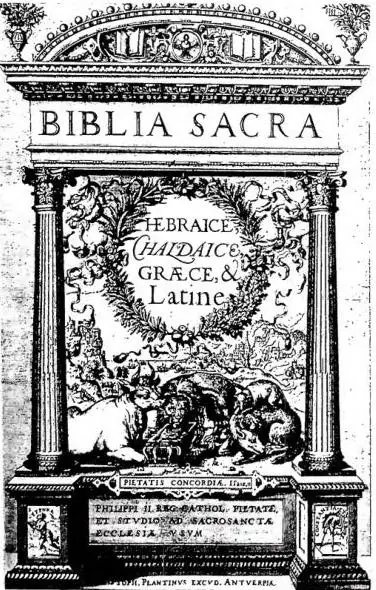
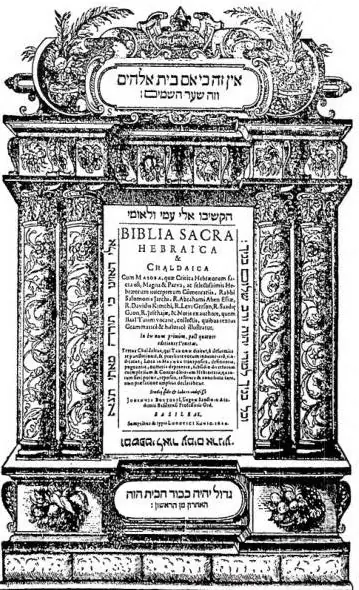
The quantity of biblical texts, both in the original languages and in the ancient versions, made the convenience felt early on of having these various texts arranged for each passage on a single page, in such a way that at a simple glance one could perceive the points of agreement and those of disagreement. This desire was already met in antiquity by Origen (v.) with his gigantic work of the Hexapla (v.). Other far more modest attempts were made in the late Middle Ages, from which some manuscripts of the Psalms have come down to us in which the text is arranged in various columns side by side, each corresponding to a different language. In print there first appeared the Psalterium octaplum (Genoa 1516) by the Dominican Agostino Giustiniani, containing in eight columns the Hebrew text and its version, the Vulgate, the Septuagint, the Arabic, the Targum and its version, and the annotations. After this partial attempt, the great polyglot editions of the whole Bible begin.
The first is the one financed by Cardinal Ximenes de Cisneros and printed in 1514-17 in Spain at Alcalá de Henares (Latin Complutum), called the "Complutensian": it was edited by Andrea di Creta, assisted by other scholars. It is in 6 volumes, containing the Old Testament in Hebrew (on the left), in the Vulgate (in the center) and in the Septuagint with a Latin translation (on the right); to the Pentateuch it adds the Targum of Onkelos with a Latin translation. For the New Testament it offers the Greek and the Vulgate. Vol. VI contains a Hebrew (and Aramaic)-Latin vocabulary, a Hebrew grammar and indexes. Only 600 copies were printed, at the price of 50,000 scudi.
The second is the Polyglot printed by Christopher Plantin at Antwerp in 1569-72, also called Regia because it was patronized by Philip II; it was edited by Arias Montano, in 8 volumes. For the Old Testament it offers the texts of the Complutensian, adding the Targum also for the books after the Pentateuch. For the New Testament it offers the Greek, Latin and Syriac texts. Vol. VI also contains the translation of the entire Bible by Sante Pagnini; vols. VII-VIII contain vocabularies, grammars and various treatises.
The third polyglot, more sumptuous than all the others, appeared in Paris in the years 1629-45, financed by Le Jay (Jaius) and edited by the Maronites Gabriel Sionita and Abraham Ecchelensis, by Jean Morin and a few others. It is in 10 volumes; to the texts of the Antwerp polyglot it adds the Samaritan Pentateuch and paraphrase, and the Syriac and Arabic versions (with Latin translations) of the protocanonical books of the Old Testament. Despite its typographic magnificence, the Paris polyglot, although it has its merits, is the least useful for scientific purposes.
The fourth polyglot, of scientific value superior to all the preceding ones, is that of London, which appeared in 1654-57, edited by the Anglican bishop B. Walton assisted by other scholars. It is in 6 volumes. To the texts of the Paris edition it adds the Pentateuch and the Gospels in Persian, and the Psalms, the Canticle and the New Testament in Ethiopic. Vol. I contains useful prolegomena by Walton, and vol. VI the critical apparatus. To this edition must be joined the Lexicon heptaglottum of E. Castellus, a distinguished monument of scholarship and expertise that still retains its value today.
Subsequent polyglots of lesser scope are: that of S. Bagster, also comprising versions in modern languages (2 vols., London 1831; 2nd ed., ibid. 1874); that of R. Stier and W. Theile (4 vols., Bielefeld 1847-55; 5th ed., 1900); that of Ed. de Levante (London 1890); all Protestant. The Catholic one is that of F. Vigouroux, La Sainte Bible polyglotte (8 vols., Paris 1898-1909), which offers the Hebrew, Septuagint, Vulgate and French texts, with introductions and notes.
VIII. INTERPRETATION OF THE BIBLE
The B. is a body of inspired books, that is, books that have God as their principal author and that are destined for man: for this reason certain Fathers called the B. a "letter from God to man." Man, then, is the recipient of this letter, which he must read and understand. But to understand this letter is not easy for many reasons, which arise both from its divine element (the sublimity of the revealed truths) and from its human element (the various authors with their particular mentalities, customs, etc.; the vicissitudes of the transmission of the text, etc.). The B., as inspired writing, is part of divine Revelation, and in it God has revealed mysteries, has included prophecies, has imparted norms of faith and morals; moreover, it was written in languages and in epochs that differ greatly, among peoples whose customs are quite different from those of today, in circumstances that vary from book to book, it alludes to historical facts and situations about which clear information is often lacking today, and frequently the individual books either depend on more ancient writings that have now disappeared or have undergone modifications of various kinds over the course of the centuries. All these facts must be kept in mind in reading the B. in order to avoid the danger of attributing to it meanings that in reality it does not have, that is, of making God say what he never said.
The body of rules of interpretation, both theological and philological-historical, constitutes a separate discipline, called hermeneutics (v.), that is, "(the art) of interpretation." The interpretation or exegesis (v.) of the B. has had many distinguished practitioners, some of whom gave rise to currents and "schools" of notable importance.
IX. READING OF THE BIBLE
The practice of reading the individual books of the B., even before they were gathered together, is very ancient both in Judaism and in Christianity. Among the Jews the Greek and Aramaic versions arose precisely to make the text of the Hebrew B. intelligible (see above: Ancient Versions). The synagogal reading led to a division of the biblical text into many parts, each of which was to be read on a Sabbath or feast day: at first the Pentateuch, the principal object of the reading, was divided into 167 orders (sēdhārīm), corresponding to the readings of a three-year cycle; later it was divided into 54 sections (pārālōth), corresponding to the reading of a single year. Subsequently, after the passage from the Pentateuch, a passage (haphṭārāh) from the "Prophets" began to be read; still later the reading of the Five Volumes or Mēghillōth was reserved for specific feasts, namely the Song of Songs at Passover, Ruth at Pentecost, Lamentations on the anniversary of the destruction of Jerusalem (ag.), Ecclesiastes at Tabernacles, and Esther at the feast of Pūrīm. From the usage of the synagogues there was transmitted to the first Christian assemblies the reading of passages from the Old Testament, which were chosen especially from the prophetic books, as those that had most clearly foretold the future Messiah; very soon, to these prophetic passages was added the reading of passages from the Gospels and the Letters. But there was no stable and uniform norm for the quality and quantity of the biblical passages to be read in the Christian assemblies, this depending on regional customs as well as on the judgment of the individual bishops who presided over those assemblies; nevertheless, later, especially from the 6th century, customs and laws took shape whose further development and fixing are bound up with the history of the various Eastern and Western Christian liturgies.
The private reading of the B. was also very widespread, both in Judaism and in Christianity. The rabbis, whose sayings are preserved in the Mišnāh, in the Talmud and in the other Jewish writings, concentrated their activity and that of their schools on the study of the Tōrāh (Law), understanding by this term especially the oral tradition, connected however with the written law, in the first place the Pentateuch; among others, a rabbinic norm teaches that "a man must not withdraw from the house of study (of the Law) and depart from the word of the Tōrāh even at the hour of death" (Šabbāth, 83 b), because "the study of the Tōrāh is greater than the building of the Temple" (Mēghillāh, 16 b). There were nevertheless, in the Judaism of the common era, certain prudent restrictions, which were provoked either by abuses that were spreading or by particular exegetical difficulties encountered in the reading of certain books; thus we know that the Song of Songs, and certain passages of Genesis and Ezekiel could not be read by a Jew who had not reached the priestly age, that is, 30 years (Jerome, Praef. libr. I in Ezech.: PL 25, 17), indeed that even the public reading of the Song of Songs was not yet permitted at the beginning of the 5th century (Theodore of Mopsuestia, in Mansi, IX, 227; cf. Origen: PG 13, 63).
Among Christians too the private reading of the B., much recommended and very widespread, became a field of abuses. Likewise at the beginning of the 5th century John Chrysostom recommended to his faithful not to limit themselves to listening to the reading of the holy books done in church, but to reread them at home in order to return to meditate on what had been heard fleetingly, and to deepen its meaning (PG 51, 90); on the other hand Jerome complains of the irreverent and plebeian character that discussions about Sacred Scripture have taken on in his time, Scripture which "is what the chattering granny, the doddering old man, the wordy quibbler, and in general everyone, claim for themselves, tear apart, teach, before having learned it" (Ep. 53, Ad Paulin.). But, despite such abuses, there are no traces of vement of Wycliffe (in Mansi, XXVI, 1038). For Italy there were no prohibitions of any kind; and how common the use of reading the Bible in the vernacular was there before the Lutheran movement is demonstrated, for the Veneto region, by the preface of Isaiah of Este quoted above, which reports that the whole Bible was sung in the gatherings of women spinning. In other regions of Italy too it is established that, before Luther, the reading of the Bible in the vernacular was customary (cf. Archivio Storico Italiano, Florence 1842, App. I, p. 334).
(Ist. Enc. Cutt.)
However, the religious revolution of Protestantism provoked, by reaction, restrictive measures on the reading of the Bible among Catholics. After local prescriptions issued in England, the Netherlands, France and elsewhere, the Roman See intervened for the first time in 1559, when the Index of Paul IV prohibited the printing and possession of Bibles in the vernacular without the permission of the Holy Office; the granting of this permission was then delegated to the local bishops by the Index of Pius IV of 1564 (rules 3 and 4), but afterwards it was again revoked to the Holy See. It seems, however, that the permission was granted with considerable liberality. Once the danger of Protestantism had become remote, the Congregation of the Index in 1757 permitted vernacular versions of the Bible approved by the Roman See or published under the supervision of the bishops with annotations drawn from Catholic authors; and the substance of this provision is still in force, having passed into the Codex Iuris Canonici, can. 1391. The decree of 30 April 1934 of the Pontifical Biblical Commission prescribes that vernacular versions of the Epistles and Gospels to be read in churches for the people be made, not from the original Hebrew and Greek texts, but from the texts approved for the liturgy of the Church; therefore, for the Roman rite, from the Latin Vulgate.
The frequent use of the Bible gave rise to various customs, often praiseworthy, sometimes strange, not rarely reprehensible. For the material volume of Holy Scripture itself Jews and Christians always had a particular veneration: just as in the synagogues the volume of the Law was and is kept in a special ark, so in Christian liturgy it is treated with special honors: in the Byzantine rite the honors paid to the book of the Gospels are equal to those for the Eucharist.
Likewise out of respect, biblical volumes worn out by use were not destroyed by the Jews, but deposited in an underground place near the synagogue, the so-called gēniẓāh, where they remained unused for centuries. In Christian councils, already from the 5th century, it was customary to place the volume of the Bible in the center, as on a seat of honor; the same was done in tribunals, especially with the volume of the Gospels. A devotional practice among the Jews was that of the "phylacteries" (v.) with certain passages of the Bible (Ex. 13:1-16; Deut. 6:4-9), applied during prayer on the forehead and on the left arm (cf. Deut. 6:8); other similar parchments were buried under the thresholds of Jewish houses (māzūcōth).
Among Christians it was customary to wear around the neck a small scroll on which passages of the Gospels were written: this custom is already attested in the 4th century, and finds its counterpart among Muslims in the passages of the Koran worn on the person likewise out of devotion. It was also customary to place the volume of the Gospels at the bedside of the sick, or to recite near them Jn. 1:1-14; this prologue was also recited on important occasions of life, or in grave dangers: for example, it is related that Christopher Columbus recited it when, while sailing, he was caught in severe storms. Other passages of the Bible, and especially of the Psalms, were held to be appropriate to various joyful or sorrowful circumstances of life. The Bible was also consulted to make some important decision, to know the future, to discover secret things, and for similar purposes: to practice these sortes dicinatoriae a whole formulary gradually took shape concerning the manner of opening the biblical volume, of reading it, of drawing conclusions from it, etc. Besides these abuses from superstition, there were also those from irreverence: among the ancient Jews the abuse is attested of humming the Song of Songs at banquets, like a profane little song (Tāsephthā, Sanhedhṛin, XII, 10); among Christians, especially in the age of the Renaissance, the custom spread widely of using passages of the Bible to compose jokes, parodies, pasquinades and similar things, always irreverent and often indecent: against which the Council of Trent took a stand (Sess. IV, De edit. et usu ss. librorum). But even later, oddities no less incongruous could still be heard from certain preachers, who twisted words and sentences of the Bible to apply them according to their own fantastic whim: as is related of that preacher contemporary with Galileo who, wishing to attack the latter's astronomical researches, applied to him the passage Viri Galilei, quid statis aspicientes in caelum? (Acts 1:11).
X. THE BIBLE IN LITERATURE
The influence exercised by the Bible on the various literatures and on the figurative arts is greater than the influence of any other book. Among the Jews, in reality, this influence was quite limited for particular reasons: in the literary field, in fact, Jewish production after Christianity and up to the Middle Ages was for the most part juridical-traditional, and from this aspect it may perhaps appear as a whole extensive work of biblical exegesis according to the norms of Pharisaism, but it offers none of those inventive elements that constitute art literature; in the field, then, of the figurative arts, a very grave obstacle for the Jews was always the ancient prohibition against producing images of a living being, whether of man or of animal (Ex. 20, 4; Deut. 4, 15-19), for which reason orthodox Judaism could not cultivate sculpture and painting, except for secondary ornamental purposes. This prohibition was often violated, and recent excavations have brought to light the ruins of synagogues, built in Palestine and outside it (Dura Europos) in the early times of the Christian era, in which paintings of biblical figures appear; but such cases always represent exceptions, which under the influence of the surrounding Greco-Roman culture will have been more or less tolerated, but were never approved by orthodox Judaism.
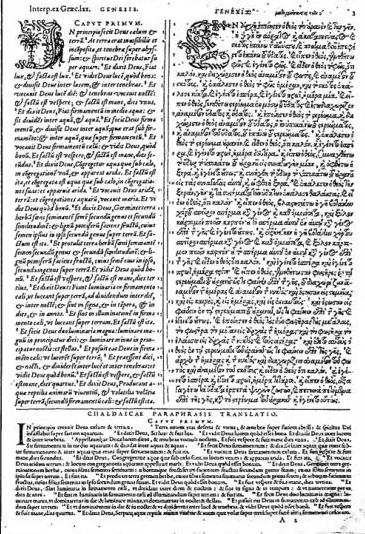
The first Christians, coming for the most part from paganism, while they did not have such a prejudice against artistic representations, turned spontaneously to the Bible also as a source of inspiration for literary compositions. But the Christian literature that has come down to us from the first three centuries, although made up of biblical themes, has an exegetical or homiletic character: poetic compositions are rare, some of them Gnostic. With the 4th century Christian lyric poetry flourishes fully: in the West Juvencus, Prudentius, Paulinus, Sedulius, Marius Victor and a few others draw on biblical subjects; in the East, worthy of mention among the Greeks is only Gregory of Nazianzus, while among the Syrians a poet of the highest stature is Ephrem the Syrian (v.). A broad synthesis of the vicissitudes of the human race from the biblical and apologetic point of view is the De civitate Dei of St. Augustine (v.). Of some importance later will be certain Latin poets (Arator, Venantius Fortunatus), while among the Greeks Romanos the Melodist, George the Pisidian and others will excel.
With the rise and formation of the various vernacular literatures in Europe, more or less dependent on classical forms and on the Christian tradition, the Bible appears at once as their principal animator: directly inspired by the Bible are the Anglo-Saxon poet Caedmon (8th century) in his productions, the Heliand and other compositions of early German poetry (9th century) and French poetry (10th century). Biblical subjects were very often treated by those "mysteries" and sacred representations, from which the modern theater in the various nations draws its first origins. Then comes, in Italy, Dante, whose Commedia depends for its concepts and for its expressions on the Bible much more than modern commentators are accustomed to make appear. With the Renaissance the Bible still exercises a broad influence, although its derivations are often distorted, clothed in extraneous classical expressions or paired with paganizing concepts. Protestantism, by virtue of its principles, brings about a total adherence to the Bible also in poetic compositions, which seem all the more faithful to the new doctrine the more they appear made of the Bible both in thought and in word: the religious poems of Luther and the Paradise Lost of Milton are typical productions of this tendency, among many other German, English and French writings. The Catholic Counter-Reformation contends with Protestantism also in this field, but in a piecemeal and occasional manner, taking from the Bible forms and concepts (employed especially in contemporary epic), but without producing representative works of particular importance. The Catholic Latin poems De partu virginis (1526) by Sannazzaro and the Christiad (1535) by M. G. Vida stand apart. Biblical is later the best production of Klopstock, not only for the Messiah (1772) but also for his dramas; his contemporary in Italy is Alfonso Varano, whose biblical Visioni were much appreciated in his times, especially by Monti. Who, with regard to the Bible as a literary work, expressed this judgment: "I love therefore David more than the other poets, and no one will wish, I believe, to condemn this partiality of mine. Homer, Pindar, Virgil are great and majestic: but David (without speaking of the Prophets, especially of Isaiah) David is something more. Whoever does not notice the difference that exists between this one and those, so much the worse for him. This is a matter of feeling, and whoever is not convinced by himself, it is useless for him to seek the reasons of others." Romanticism, by its very spirit, drew with full hands from the Bible, in Italy and outside it; biblical in inspiration, and in part also in expression, are the Inni sacri of Manzoni, which, in the judgment of Carducci, mark the highest level of nineteenth-century Italian lyric poetry.
Bibliography8 works
ENCYCLOPEDIAS AND SPECIALIZED DICTIONARIES
DB, 5 vols.; DBs, vols. I-IV so far. — T. K. Cheyne and J. Sutherland Bluth, Encyclopaedia biblica, 4 vols., London-New York 1899-1903; H. Gotthe, Kurzes Bibelwörterbuch, Tübingen 1903; C. Piercy, Murray's illustrated Bible Dictionary, London 1908; J. Hastings, Dist. of the Bible, 4 vols. with an extravolume, Edinburgh 1910; id., Dist. of Christ and the Gospel, 2 vols., ibid. 1906; id., Dist. of the Apostolic Church, 2 vols., ibid. 1918; J. Orr, The International Standard Bible Encyclopaedia, 5 vols., Chicago 1915; G. Kittel, Theologisches Wörterbuch zum Neuen Testament, 4 vols. so far, Stuttgart 1933-41; K. Galling, Bibliches Reallexikon, Tübingen 1937; E. Kalt, Bibliches Reallexikon, 2nd ed., 2 vols., Paderborn 1938.
CATHOLIC COLLECTIONS
Biblische Studien, Freiburg im Breisgau 1896-1930; Etudes bibliques, Paris 1903 ff.; Biblische Zeitfragen, Münster in Westphalia 1908-22; Alttestamentliche Abhandlungen, ibid. 1908 ff.; Neutestamentliche Abhandlungen, ibid. 1908 ff. — PROTESTANT COLLECTIONS. — Forschungen zur Religion und Literatur des A. und des N. T., Göttingen 1903 ff.; Biblische Zeitund Streitfragen, Berlin 1905-25; Beiträge zur Wissenschaft vom A. T., Leipzig 1908 ff.
CATHOLIC INTRODUCTIONS
R. Cornely, Historica et critica Introductio in utriusque Testamenti sacros libros, 2nd ed., 4 vols., Paris 1894; U. Fracassini, Che cosa è la B., Rome 1910; F. Kaulen - G. Hoberg, Einleitung in die Heilige Schrift, 5th ed., 3 vols., Freiburg im Breisgau 1911-13; J. Goettberger, Einleitung in das A. T., ibid. 1928; J. Renic, Manuel d'Ecriture Sainte, 6 vols., Lyon 1930-38; H. Lusscau-M. Collomb, Manuel d'Etudes bibliques, 7 vols., Paris 1930 ff.; L. Gramatica and G. Castoldi, Manuale della B., 2nd ed., Milan 1932; R. Cornely-A. Mork, Compendium Introductionis, 11th ed., 2 vols., Paris 1934; H. Höpfl-B. Gut, Introductionis in sacros utriusque Testamenti Compendium, 4th ed., 3 vols., Rome 1935-40; Institutiones biblicae, I, 5th ed., ibid. 1937 (Pontifical Biblical Institute); H. Simon-J. Prado, Propaedentica biblica sive Introductio in universum Scripturam, 3rd ed., 3 vols., Turin 1938; K. T. Schäfer, Grundriss der Einleitung in das N. T., Bonn 1938; A. Robert - A. Tricot, Initiation biblique. Introduction à l'étude des Saintes Ecritures, Paris 1939 (new ed. 1948); G. Boson, L'Antico Testamento, Casale Monferrato 1939; P. Cheminant, Introduzione alla B., Italian trans., 2 vols., Turin 1941; Le Clément de Saint Marcq, La Bible et son architecture mentale, Brussels 1941; G. M. Perrella, Introduzione generale, Turin 1948. PROTESTANT INTRODUCTIONS, H. L. Strack, Einleitung in das Alte Testament, 6th ed., Munich 1906; M. Goguel, Introduction au N. T., 4 vols., Paris 1922-27; G. F. Moore, I libri del Vecchio Testamento, Italian trans., Bari 1924; A. H. Mc Neile, An Introduction to the Study of the N. T., Oxford 1927; A. Jülicher - E. Fischer, Einleitung in das Alte Testament, 7th ed., Tübingen 1931; E. Sellin, Einleitung in das A. Testament, 7th ed., Leipzig 1935.
CANON
Th. Zahn, Forschungen zur Geschichte des neutestamentl. Kanons und der althöchlichen Literatur, 10 vols., Leipzig 1881-1929; id., Geschichte des neutestamentl. Kanons, 2 vols., Erlangen-Leipzig 1888-92; A. Loisy, Histoire du Canon de l'Ancien Testament, Paris 1890; F. Buhl, Kanon und Text des Alten Testaments, ibid. 1891; G. H. Dalman, Traditio rabbinorum veterrima de librorum V. T. ordine atque origine, 2nd ed., ibid. 1891; Th. Zahn, Grundriss der Geschichte des neutestamentl. Kanons, 2nd ed., ibid. 1904; E. Ryle, The Canon of the Old Testament, 3rd ed., London 1904; M. Jugie, Histoire du Canon de l'Ancien Testament dans l'Église grecque et dans l'Église russe, Paris 1909; E. Preuschen, Analecta, II. Zur Kanongeschichte, 2nd ed., Tübingen 1910 (Sammlung ausgewählter Kirchenund dogmengeschichtlicher Quellenschriften, edited by G. Krüger, VIII, 11); H. J. Holtzmann, Die Entstehung des N. T., 2nd ed., ibid. 1911; E. Jacquier, Le Nouveau Testament dans l'Église chrétienne, I, Paris 1911; id., Histoire des livres de Nouveau Testament, I (10th ed.), II (8th ed.), III (5th ed.), IV (9th ed.), ibid. 1921-28; L. Dennefeld, Histoire des Livres de l'A. T., ibid. 1929; M.-J. Lagrange, Histoire ancienne du Canon du N. T., ibid. 1933; S. Zeitlin, An Historical Study of the Canonization of the Hebrew Scriptures, Philadelphia 1933; S. M. Zarb, De Historia canonis utriusque Testamenti, 2nd ed., Rome 1934; id., Il Canone biblico, ibid. 1937; H. Oppel, Kavav. Zur Bedeutungsgeschichte des Wortes und seiner ist. Entsprechungen, Leipzig 1937; F. Grosheide, Algemeene Canoniek van het N. T., Amsterdam 1939.
TEXT
H. Hody, De Bibliorum textibus originalibus, Versionibus graecis etc., Oxford 1705; G. B. De Rossi, Compendio di critica sacra, dei difetti e delle emendazioni del sacro testo e piano di una nuova edizione, Parma 1811; E. Reuss, Bibliotheca N. T. graeci, Brunswick 1872; A. Loisy, Histoire critique du Texte et des Versions de la Bible, Amiens 1892; C. R. Gregory, Prolegomena alla N. T. graeca ed. VIII maior by C. Tischendorf, Leipzig 1894; C. D. Ginsburg, Introduction to the Manusertico-Critical Edition of the Hebrew Bible, London 1897; H. von Soden, Die Schriften des N. T. in ihrer ältesten erreichbaren Textgestalt, I, 1-3, Berlin 1902-10; I, 2nd ed., Göttingen 1911; T. H. Weir, A Short History of the Hebrew Text of the O. T., London 1907; C. R. Gregory, Die griechischen Handschriften des N. T., Leipzig 1908; A. S. Geden, Outlines of Introduction to the Hebrew Bible, Edinburgh 1911; E. Jacquier, Le N. T. dans l'Église chrétienne, II: Le texte de N. T., Paris 1913; N. Peters, Der Text des A. T. und seine Geschichte, 3rd ed., Münster 1921; A. Robertson, An introduction to the textual criticism of the N. T., New York 1925; G. Sacco, La Koiné del N. T. e la trasmissione del sacro testo, Rome 1928; G. Pasquali, Storia della tradizione e critica del testo, Florence 1934; M.-J. Lagrange, Introduction à l'étude du N. T., II: Critique textuelle, Paris 1935; C. H. Dodd, The present task in N. T. studies, Cambridge 1936; S. M. Zarb, Il testo biblico, Rome 1939; F. G. Kenyon, Our Bible and the Ancient Manuscripts, London 1939.
POLYGLOTS
A. Scheler, Geschichte der Entstehung der berühmten Plämtinischen Polyglotenbibel, in Serapeum, 6 (1845), pp. 241-51, 265-72; F. J. Delitzsch, Studien zur Entstehungsgeschichte der Polyglotenbibel des Kard. Ximenes, 3 vols., Leipzig 1871, 1878, 1886; E. Mangenot, Polyglottes, in DB, V, pp. 513-529; M. Revilla Rico, La Poliglota de Alcalá, Madrid 1917; E. Mangenot, La Polyglotte d'Alcalá, in Revue du clergé français, 101 (1920), pp. 102-14, 150-94, 254-72; D. Ramos Frechilla, La poliglota de Arias Montano, in Revista española de estudios bíblicos, 3 (1928), pp. 27-54.
CATHOLIC COMMENTARIES
Biblia sacra... cum selectissimis litteralibus commentariis, 28 vols., Venice 1745-49; La Sainte Bible avec iatrod. et commentaires, Paris 1875-94; R. Cornely and others, Curios scriptura sacra, ibid. 1888 ff.; Scripture manuals for catholic schools, London 1901 ff.; B. Schäfer, Kurzgefaßter wissenschaftlicher Kommentar, Vienna 1901 ff.; C. Fillion, La Sainte Bible commentée, 4th ed., 8 vols., Paris 1903-1904; J. Nikel, Exegetisches Handbuch zum A. T., Münster in W. 1912 ff.; F. Tillmann, Die heilige Schrift des N. T., Bonn 1914; F. Feldmann-H. Herkene, Die heilige Schrift des A. T., ibid. 1923 ff.; Verbum Salutis - Commentaire du Nouveau Testament, Paris 1924 ff.; L. Piot, La Sainte Bible, ibid. 1933 ff. PROTESTANT COMMENTARIES. - J. G. Rosenmüller, Scholia in Novum Testamentum, Leipzig 1815-31; E. F. Rosenmüller, Scholia in Vetus Testamentum, ibid. 1828-35; H. A. W. Meyer, Kritisch-exegetischer Kommentar über das N. T., Göttingen 1832 ff.; F. Keil and F. Delitzsch, Biblicher Kommentar, 16 vols., Leipzig 1862-75; H. L. Strack and O. Zöckler, Kurzgefaßter Kommentar zu den hl. Schriften des A. und N. T., Munich 1866 ff.; Speaker's Commentary, London 1871 ff.; The Cambridge Bible for School and College, Cambridge 1880 ff.; W. Nowack, Handkommentar zum A. T., Göttingen 1892 ff.; The International Critical Commentary, Edinburgh 1895 ff.; K. Marti, Kurzer Hand-Kommentar zum A. T., Tübingen 1898 ff.; The Century Bible, Edinburgh 1901 ff.; Th. Zahn, Kommentar zum N. T., Leipzig 1903 ff.; H. Liezmann, Handbuch zum N. T., Tübingen 1906 ff.; The Expositor's Greek Testament, London 1907 ff.; E. Sellin, Kommentar zum A. T., Leipzig 1913 ff.
MODERN VERSIONS
a) Italian: Poesie bibliche tradotte da celebri italiani, 3 vols., Milan 1832-34; C. Negroni, prefazione a La B. volgare, Bologna 1882; S. Minocchi, Italienes (Versions de la Bible), in DB, III, cols. 1012-38; A. Abbruzzese, Il Cantico dei Cantici in alcune parafrasi poetiche italiane, Trani 1904; E. Teza, Le bibbie italiane del Malermi e del Diodati racconciate nel Settecento, Padua 1905; M. Betts, Life of Giovanni Diodati, Genese theologian, translator of the Italian Bible 1907, London 1905; C. Confalonieri, Mons. Martini e la sua versione della S. Scrittura, Florence 1911; I. Carini, Traduzioni italiane della B., in F. Vigouroux and L. Bacocci, Manuale Biblica (Italian trans.), I, S. Pier d'Arena 1912, pp. 255-313; G. Luzzi, La versione diodatina della B. e i suoi ritocchi, in Bilychnia, spring 1916; G. Castoldi, Moderne versioni italiane della B., in Scuola cattolica, 1922, II, pp. 86-94; A. Vaccari, B. protestanti e B. cattolica, in La Civ. Catt., 1923, I, pp. 343-51; U. Cassuto, La tradizione giudeo-italiana per la traduzione della B., in Atti del I Congresso nazionale delle tradizioni popolari, Florence 1930. - b) French: S. Berger, La Bible française au Moyen-âge, Paris 1884; E. Mangenot, Françaises (Versions de la Bible), in DB, II, cols. 3346-73. - c) German: W. Walther, Die deutsche Bibelübersetzung des Mittelalters, 3 vols., Braunschweig 1889-92; id., Luthers deutsche Bibel, Berlin 1917; J. Gassar, Vierhundert Jahre Zwingli-Bibel, Zurich 1922; F. Schulze, Deutsche Bibeln. Vom ältesten Bibeldruck bis zur Lutherbibel, Leipzig 1934; A. Bea, Neue Bibelübersetzungen aus dem Uitsch, in Biblica, 20 (1939), pp. 73-81. - d) English: H. Pope, The Origin of the Douay Bible, in The Dublin Review, 147 (1910), II, pp. 97-118; A. W. Pollard, Records of the English Bible, Documents Relating to... the Bible in English 1525-1617, Oxford 1911; W. F. Moulton, The History of the English Bible, London 1911; B. F. Westcott, A General View of the History of the English Bible, ibid.-New York 1916; J. Keating, The Westminster Version of the Sacred Scriptures, in The Catholic World, 98 (1919), pp. 54-66; E. J. Goodspeed, The Making of the English N. T., Chicago 1925; J. Baikie, The English Bible and its Story, London 1928; C. M. Chavasse, The English Bible in English History, ibid. 1938; C. J. Callan, Some English Idioms in the English Bible, New York 1940.
READING OF THE BIBLE
J. B. Malou, La lecture de la Ste Bible en langue vulgaire, 2 vols., Louvain 1846; E. Ranke, Das kirchliche Pericopentystem, Berlin 1847; F. Fabi Montani, La lettura della S. B. in volgare, Rome 1857; S. Beissel, Geschichte der Evangelienbücher in der ersten Hälfte des Mittelalters, Freiburg im Breisgau 1906; id., Entstehung der Perikopen des römischen Messbuches, ibid. 1907; N. Peters, Kirche und Bibellenen, Paderborn 1908; A. Harnack, Über den privaten Gebrauch der heiligen Schriften in der alten Kirche, Leipzig 1912; A. Rahlfs, Die alttestamentlichen Lektionen der griechischen Kirche, Berlin 1915; B. D. Gorce, La lectio divina e des origines du cénobitisme à il Benoît et Cassiodore, I, Paris 1925; M. M. Förster, Abendländische Grahelaßphase für Psaltervulstagung, Heidelberg 1929; A. Vaccari, La lettura della B. alla vigilia della Riforma, in La Civ. Catt., 1933, III, 313-25; 420-40; 437, II, 231-43; H. Vollmer, Die Bibel im deutschen Kulturleben, Salzburg 1938; H. Rost, Die Bibel im Mittelalter, Augsburg 1939.
Giuseppe Ricciotti
XI. THE BIBLE IN THE DIVINE OFFICE
From the very earliest Christian times the Bible, together with the Eucharistic sacrifice, constituted the central part of the liturgy. It gave the Church the means of instructing the faithful and the words of praise to be addressed to God. Historians of the liturgy agree in acknowledging that the predominant place which the Bible holds in the liturgy in general and in the Divine Office in particular is due to the fact that both the one and the other derive in part from the use of the prayers of the Temple and from Jewish synagogal usage.
Jewish public prayer, besides the sacrifices, included the reading of the Bible, of which there is the command in Deut. 21:9 ff. and the solemn application in Eid. 8:2 ff. It began, it seems, with reading for each Sabbath the corresponding verses of Lev. 23, as is gathered from the Miñāh 4, and then to each Sabbath was also assigned a passage of the Pentateuch, which, divided into 167 sections, was read over three years (H. Thackeray, The Septuagint and Jewish Worship, Oxford 1921, p. 43 ff.). Following the Pentateuch a concluding prophetic passage was added (Heb. Haphifrāh) in the form of a reading or a canticle (op. cit. p. 45). Another biblical passage is the so-called Sēma, a profession of monotheistic faith, composed of Deut. 6:4-9; 11:13, 21; Num. 15:37-41, so called from the opening words Sēma Tisrā'el, and which goes back as a liturgical formula at least to the time of Christ and is probably earlier (W. O. E. Oesterley, The Jewish Background of the Christian Liturgy, Oxford 1925, p. 44 ff.). Another brief biblical text that soon became liturgical (2nd century B.C.?) is the so-called Qēdūfāh, that is, the Trisagion of Is. 6:3, with the addition of Ez. 3:12 and Ps. 146:10. An important part in the liturgy of the time and in the synagogal liturgy was played by the psalms, of which some (145-50) were recited daily (Talmud, Sōphērim 17, 11) and others were each assigned to a day of the week in this order (numbers of the Vulgate): 23, 47, 81, 93, 80, 92, 91, which bears the title: Psalm, canticle, for the Sabbath (Miñāh, Tāmīh VII, 4). Other psalms were distributed according to the feasts: 46 for the New Year; 76 and 117, 25 - end for the feast of Tabernacles, and 103 for the new moon, etc. (Talmud, Sōphērim 17, 11; 18, 2; 19, 2; etc.; cf. S. Bäumner, Geschichte des Breviers, Freiburg im Br. 1895, p. 36 ff.). However scanty the information about Christian worship in the earliest times of the Church, it is nevertheless known that the Apostles did not entirely abandon Jewish usages, which they only completed with specifically Christian worship: the Eucharist (Lk. 24:52 ff.; Acts 2:46; 3:1). It is not excluded, indeed it is probable, that the formal part of apostolic worship, including the Eucharistic worship, which was not held in the Temple, used the Old Testament from the very beginning as forms of prayer. Consider that the Apostles, in repeating in the Eucharist itself the last supper of Christ, will also have recited, for example, the so-called great Hallel (Ps. 115-
117). The use of psalms, hymns, canticles, and among these there may also be the biblical Psalms, is recommended by St. Paul (Eph. 5:19; Col. 3:16).
It must then be borne in mind that a great part of the apostolic preaching developed in the synagogal gatherings, in which, as Christ did (Lk. 4:16 ff.), so the Apostles, from the readings of both the Law and the prophets" (Acts 13:15; 15:21) drew material for Christian teaching. It is evident that they continued to follow the same method, even when the believers separated from the synagogue. In this way the Bible (for Christians also the New, besides the Old Testament) came to be the principal part of Christian worship. Justin, one of the first authors who describe the liturgy for us, expressly mentions the reading of the "memoirs of the Apostles" and of the "writings of the prophets" (Apol. I, 67: PL 6, 429). Tertullian, to the mention of the biblical readings in the liturgy, adds that of the singing of psalms: prout Scripturae leguntur aut psalmi canuntur (De An., 9). From this period the witnesses for the use of the Bible in the liturgy multiply: the homilies of the Fathers indicate the biblical readings and canticles that passed into the liturgy.
With the rise and development of monasticism, the forms of non-Eucharistic worship multiply during the day, and thus there occurs a further, more intense penetration of the Bible into the monastic liturgy, which is longer than the cathedral liturgy. According to the testimony of Egeria (P. Geyer, Itinera Hierosolym.: CSEL, 39, p. 71 ff.), a great development is taken first of all by the singing of psalms, which the monazontes and the parthenae sing in night vigils not only on Sundays but daily. The readings from the other biblical books have little prominence there, and only on Sunday is a single Gospel passage read by the bishop, which however may be followed by commentaries by more than one of the presbyters present (op. cit., p. 74). Both on Mount Sinai and in Egypt the practice is introduced of reciting even the entire psalter (St. Benedict, Regula Monachorum, 18), a practice imitated from Milan on the eve of certain feasts (M. Magistretti, Beroldus sive Ecclesiae Ambrosianae Mediol. Kalendarium, Milan 1894, p. 57 ff.).
The Nestorian monks went so far as to recite it even twice in 24 hours: once at the night vigils, once in the hours of the day. Little by little, however, more limited forms were reached, in the Pachomian system, which establish the first time 12 daytime psalms, 12 evening psalms and 12 for the night; St. Benedict (Reg., 9, 18) fixes the number of psalms at 12 for the night vigils, at 6 for lauds, at 3 for all the little hours, at 4 for vespers, and approaches the more mitigated forms of the Divine Office followed by the secular clergy. Outside Jerusalem the 12 readings of the Easter vigil form a precedent that becomes daily and is often extensively developed in the monastic centers of Syria and Egypt, as regards the biblical readings in the Office. After each series of psalms an entire book of Holy Scripture is often read (the abbot John and Sophronia on Sinai read after every 50 psalms one of the canonical letters of St. James, St. Peter and St. John). Little by little, however, there was a return to shorter forms, especially by reason of the lectio continua (v. below), yet in such a way as to read the whole of Scripture in the course of the year; and finally to very brief forms, when the Breviarium Romanae Curiae spread, through the work of the Friars Minor (v. BREVIARY).
When the cycle of the readings of the Mass was fixed, the biblical readings of the Office adapted themselves to its order. In the Easter period, for example, the most zealous read the New Testament at the night Office (Cassian, De Coenobiorum instit., II, 6: PL 49, 90) as it was read at Mass (St. John Chrysostom, In principio Actor., 4,5-6: PG 51, 105; St. Augustine, Sermo 315, 1, 1: PL 38, 1426).
Even today this concordance can be seen not only in the Easter period (though in a more summary way), but also on other days of the year, for example, on the Sunday before Lent, and always on Sundays and feasts as regards the Gospel reading. In general, however, the principle of the lectio continua was formed and prevailed, whereby the whole Bible, with the exclusion of the psalms, was read in passages over the course of the entire annual cycle, just as the psalter was recited entire in the weekly cycle. The Bible thus, divided into pericopes, replaced the so-called lectionaries.
With the rise of breviaries the order of the biblical readings remained, but often only the beginning of these was read and is still read, so that today only nominally is the whole of Scripture read in the canonical office.
The great importance attributed by the Church to the reading of Sacred Scripture in the Office has a profound reason. For the Church, the Bible is the written Word, just as Christ is the « Word made manifest among men », just as the Eucharist and the Sacraments are the presence of the Word in the Church (St. Leo the Great, Serm. 52, 1: PL 54, 314: « religiosis et piis cordibus non aliud sit audisse quae lecta sunt quam vidisse quae gesta sunt »).
Scripture, especially in monasticism, is interpreted as the true Christ, and therefore to read the Bible is, in some way, to receive the mystery of the Body and Blood of Christ (Evagrius Ponticus, Speculum Monachorum, nos. 118-20: ed. H. Gressmann, Mönchspiegel [*Texte u. Untersuch., 39], Leipzig 1913, p. 163; St. Jerome, In Eccles.*, 2 and 3: PL 23, 1033 and 1039: « hoc solum habemus in praesenti saeculo bonum, si vescamur carne eius et cruore potemur, non solum in mysterio [Eucharistia] sed etiam in Scripturarum lectione »).
In this sense cf. D. Gorce, La « lectio divina », I: St Jérôme et la lecture sacrée, Paris 1925, p. 336 ff.; O. Casel, Mysteriengegenwort, in Jahrbuch f. Liturgiemwissenschaft, 8 (1928), p. 208 ff.
Salvatore Marsili
XII. THE BIBLE IN ART
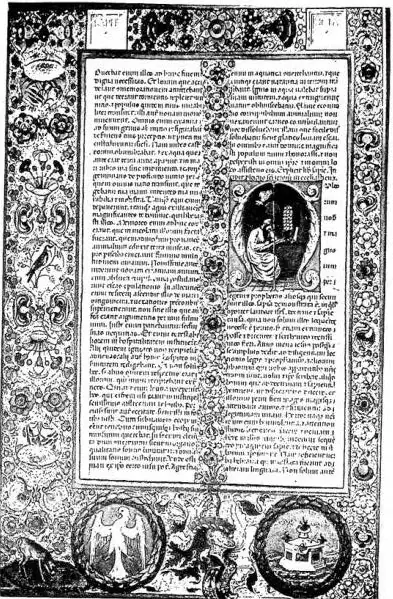
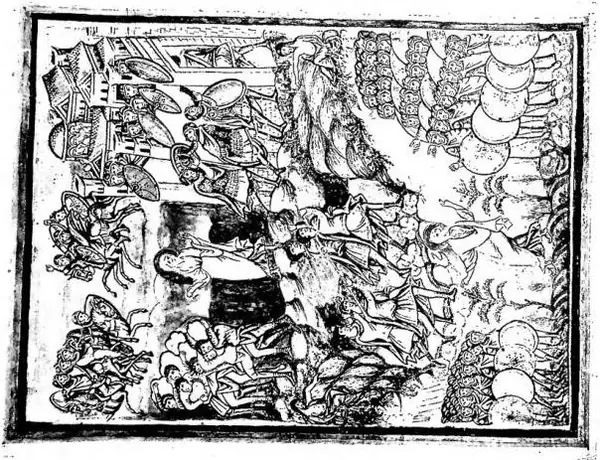
In the Bible, the divine book par excellence, artists have always found and will always find an inexhaustible source of inspiration.
The evolution of biblical iconography, from the earliest figurations in the catacombs and in the codices of the early Middle Ages, to the great works of the greatest geniuses of art from Michelangelo to Raphael to Dürer to Rubens to Rembrandt to Tiepolo, marks the very path traveled by art over centuries and centuries of figurative civilization.
1. Biblical scenes
That the sacred texts of both the Old and the New Testament should immediately present themselves as the principal source of inspiration for Christian artistic creations cannot cause wonder. Among the ways of using them, however, the new art had to choose between the purely illustrative and the symbolic or typological. Having matured in circles already long accustomed to finding the history of the life and death of simple mortals mirrored in the legends of gods and goddesses, it chose decisively the symbolic one. The new facts, introduced into the symbolic decorative ensemble inherited from the classical world, would serve as paradigms of the new faith. Although some chronological uncertainties still do not always permit a rigorous classification of the surviving figurative material, it can be said that for the painting of the catacombs, soon followed by the sculptures of the sarcophagi and even by the decoration of buildings of worship, this is, from its origin, despite the diversity of nuances and aspects, the principal purpose: to document with the accounts of the Old and New Testament the certainty of eternal salvation for the faithful follower of Christ.
Together with the primitive themes of Noah in the ark, Daniel among the lions, Jonah saved, in which the concept of liberation through divine intervention predominates, representations are created such as Moses striking the rock, the Baptism of Christ or baptism in general, the resurrection of Lazarus, etc. Alongside the sacrifice of Abraham, the three youths in the furnace, the story of Susanna, the first prophecies of the prophets are soon encountered, and the classic scene: the christological meaning of the Epiphany, as well as the conversation with the Samaritan woman. In the attic of a hypogeum beneath St. Sebastian, the parable of the Good Shepherd is flanked by the miraculous feeding of the crowds in the desert and by the healing of the demoniac near the sea of Tiberias. And even before the middle of the third century the so-called Christian chapel of Dura Europos gathers around the Good Shepherd the scenes of Adam and Eve, of the pious women at the tomb, of the paralytic, of Peter saved from the waves, of the Samaritan woman and of David and Goliath, a transparent series of themes alluding to the death of sin in the waters of Baptism on the day of Easter. Even when, with the end of the 3rd and in the first half of the 4th century, the biblical repertoire reaches its full development, the principal direction remains firm, that is, to illustrate, with eclectic groups of biblical events, the work of salvation prepared in the chosen people, elaborated by Christ working on earth and continued by means He instituted within His Church. The scenes relating to the creation and the sustenance of man, the offering of Cain and Abel, the blessings of the patriarchs, Moses untying his sandals and receiving the Law, the rain of manna and the fall of the quails, Job, Tobit with the fish, the three youths before Nebuchadnezzar, Habakkuk with food for Daniel, Daniel with the serpent of the Babylonians, Elijah taken up to heaven, the vision of Ezekiel, Balaam with the ass, amplify the cycle of the Old Testament. With the announcement of the Angel, the Magi in sight of the star, the nativity, the sermon on the mount, the christological cycle develops, and is completed with the first scenes relating to the Passion, such as the entry into Jerusalem and Jesus before Pilate. The miracles of Christ extend to the raising of the daughter of Jairus, to the healings of the blind man, of the paralytics, of the possessed, of the leper, of the woman with the hemorrhage, of the daughter of the Canaanite woman, of the lame woman, and a prominent place is occupied there, not without special intentions, by the blessing of the loaves and fishes and the miracle of Cana. To Peter, head of the Church, by now intimately associated with the figure of the Master, were reserved, with a manifest tendency to form a cycle, the prediction of the denial, the so-called "cathedra Petri", his arrest and the miracle of the spring, both of these events probably drawn from apocryphal sources.
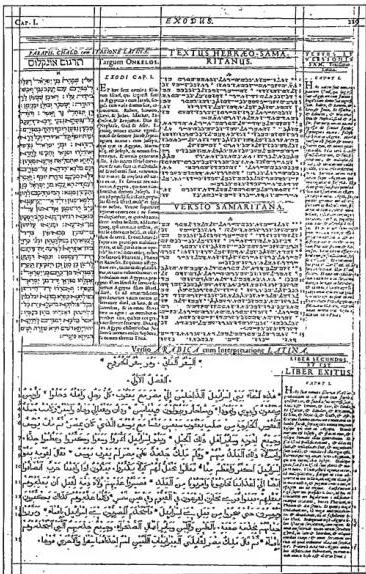
Despite the somewhat casual distribution of the scenes in many iconographic groups and although the frequency of certain ones is due to merely contingent causes, there is no lack of numerous cases in which a programmatic distribution of the themes is manifested, sought in order to concentrate attention around the principal spiritual realities: faith, the Eucharist, the Church. The same tendency, eschatological and mystical at the same time, continues and operates even when art, from the year 340 ca. onward, begins to turn to directions of a more typological and allegorical character. In this period, the penultimate of cemetery art, in which biblical scenes become rare, yielding their place to combinations of a monumental and representational character, the cycles of the Passion of Christ and of the princes of the Apostles are created, destined to give prominence by contrast to the idea of the triumph of the Savior and of the saved; Job, Isaac, Abel become prototypes of the suffering Jesus; the Hebrew Joseph is set against Christ both in the passion and in the triumph; the entry into Jerusalem leads beyond Calvary to glory in heaven. At the same time, groups of a more narrative nature are created, such as the crossing of the Red Sea and the sarcophagi with the cycle of the pool of Bethesda.
Such a wide and frequent use of biblical scenes in the most important branches of art could not fail to have reflections on all the genres of the "minor arts". These scenes receive a special direction where they are used as a mere figurative illustration of the manuscripts of the sacred books (the Itala of Quedlinburg, the Genesis of Vienna, the Cotton Bible, the Joshua Roll, the codex of Rabbula, the codex of Rossano, that of Sinope, etc.) in which, naturally, art seeks a realistic figuration, and therefore also a more extensive one and devoid of any symbolism, of the narrated events. It is very probable that the miniatures were not without influence, at least formally, on the biblical cycles that adorn the ancient buildings of worship, although these do not renounce typological intentions and there is no lack of examples of monumental creations composed on the spot itself. Thus, for example, the scenes on the triumphal arch of St. Mary Major in Rome and those of Abel, Abraham and Melchizedek at St. Vitale of Ravenna clearly go beyond narrative intentions. Even the compositions of the wooden doors seem to obey certain programmatic laws. Frequent on the walls of the central nave was the juxtaposition of a cycle of the Old Testament with one of the New Testament, both provided with legends or tituli; a custom that will lead to the "concordances" between the two Testaments.
Bibliography3 works
Luciano De Bruyne
2) Codices and editions. - The most ancient codices of the Old and New Testaments have as their essential ornament the beauty of the writing and the preciousness of the material. Nevertheless the great decorative cycles that appear in the churches of Rome and Milan as early as the 4th century suggest the existence also in Italy of illustrated codices (v. MINIATURE) of the Old and New Testaments, before that age to which, in any case, the Bible of Quedlinburg must be assigned, the work of an Italian master from northern Italy who does not seem to depend, for the illustrations, on earlier exemplars. The residual leaves of the Cotton Bible, which are in the British Museum in London, belong instead to the 6th century and to an undoubtedly Byzantine pictorial current. And to the various gradations of Eastern art, between the 5th and 6th centuries, belong also other biblical figurations such as those of the Genesis (v.) of Sinope, of the Evangeliary (v.) of the monk of Rabbula and of the purple codex of Rossano.
With the 7th century it would seem that in Italy any activity in this field died out, while beyond the Alps, especially in the British Isles, codices were produced with biblical figurations of great interest, such as the Bible known as the Amiatina (Florence, Laurentian Library, Cod. Am. 1) which Ceolfrid, abbot of Yarrow in England, offered to the Vatican basilica. Of particularly great interest is the complex group of Bibles illuminated in numerous centers in more or less direct relation with the imperial court of the Carolingians (v. CAROLINGIAN, ART), all reflecting, in varying degree, the elements of the renewed classicizing taste. Then, between the 8th and 9th centuries, in Italy the codices had as their exclusive decoration ornate initials, some echoing Eastern forms, others those in use in ultramontane circles.
During the Romanesque age the production of illuminated codices too was ever more active throughout Europe, assuming in the different centers different aspects according to the evolution of the local pictorial schools. This did not prevent many codices from continuing to repeat antiquated forms: thus in a Bible of the charterhouse of Calci and in another very beautiful one that is in Perugia (Municipal Library, cod. L. 59), the work of the 12th century. At Montecassino in the time of abbot Desiderius (1058-87) even in the miniatures of biblical texts the same characteristics of contemporary painting are affirmed (v. BENEDICTINE, ART).
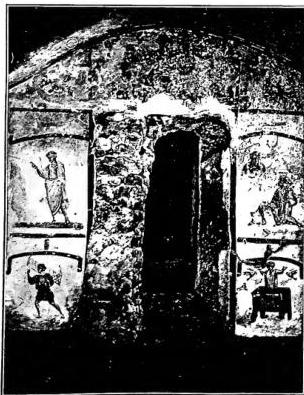
During the Romanesque age some workshops where illuminated codices were produced, near the monasteries of Rome, Farfa and Subiaco, must have been very active, because there is a notable group of Bibles whose miniatures reflect the modes of contemporary Roman painting. Thus the Bible of the monastery of St. Valentine near Amelia (Parma, Palatine Library, cod. 386), that of the cathedral of Todi (Vatican Library, cod. Vat. lat. 10405), another coming from S. Cecilia in Trastevere from the end of the 11th century (ibid., cod. Barb. lat. 587) and another coming from the Pantheon (ibid., Cod. Vat. lat. 12,958). These Bibles of maximum format, and therefore called Atlantic, have similarities among themselves also in the writing and in the frequent illustrations. Equally belonging to the Roman group and worked between the 11th and 12th centuries is the Bible that Henry IV (1111-34) donated to the abbey of Hirsau in Germany (Munich, Staatsbibl., Cod. 13001). In the Vatican Library there is also an Atlantic Bible coming from Farfa decorated by a Catalan illuminator (Cod. Vat. lat. 5629); others produced in the monastery of Grottaferrata repeat the characteristics of Byzantine codices. Among the Tuscan Bibles that reflect the various currents of the pictorial taste of that region, particularly interesting is one preserved in the municipality of Montalcino, perhaps coming from S. Antimo, whose initials have relations also with French Romanesque taste, and one in the Chapter Library of Lucca (Cod. 1) which has characteristics similar to those of the Pisan pictorial school of the 13th century. During the 1200s there are no Bibles of surely Roman provenance, but the one called of Conradin, formerly in the Spitzer collection, and especially the other in the Municipal Library of Catania, have Cavallinian characteristics. Among the Bibles worked between the 13th and 14th centuries are also to be remembered the Vatican one (Cod. Vat. lat. 36) almost certainly illuminated in Rome and the other in the library of the Rev. Fathers Franciscans of Fribourg.
During the period of Gothic art the production of illuminated Bibles intensified but with few changes in the method of the illustrations.
Very beautiful in any case is the moralized Bible said to be of St. Louis, today divided between the British Museum (Harley 1526-27), the National Library of Paris (Cod. lat. 11560), Oxford (Bodl. 270 B.) and the Treasury of the Cathedral of Toledo. It is the work of a French illuminator of the end of the 13th century and contains fully 5000 miniatures distributed within eight medallions per page that illustrate opposite each other the narrative and the allegorical sense of the verses of the Bible.
Among the 14th-century Bibles is to be recalled that of the Cantonal Library of Lausanne and that of Wenceslas, in German, which is in the library of Vienna (Cod. 2759-60). Very numerous are the Bibles splendidly illuminated during the 15th century. One recalls that of the Library of Geneva, the work of Guyart des Moulins, author also of the other that is in the Vatican (Barb. lat. 613) and among all most beautiful, besides that of the duke of Urbino worked by Attavante degli Attavanti, today likewise in the Vatican (Cod. Urb. lat. 1-2), that of Borso d'Este (Modena, Estense Library) illuminated between 1455 and 1462 by a group of Emilian illuminators sharing in the tradition of Pisanello and of Mantegna.
Also to be remembered is the Bible in 7 vols. that is in Lisbon in the archive, commissioned in Florence and worked by the illuminators of the workshop of Attavante. In the second half of the 1400s the production of splendidly illuminated codices was prodigious throughout Europe, among them some most precious Bibles, when the discovery of the art of printing was triumphantly affirmed. Between 1453 and 1455 Johann Gutenberg and his partner Johann Fust in Mainz composed their first book: a most beautiful Bible of which fully 45 copies are preserved, 12 of them on parchment, now almost entirely in public collections. One generally cites the copy that is in Paris (Mazarine Bible), decorated with miniatures by Henricus Cremer. In 1460 from the same workshop a second Bible was published. Then printing houses begin to arise everywhere, very many in the convents, which publish the Sacred Books in thousands of copies, some in editions decorated no longer with miniatures but with engravings sometimes colored, and the Bible spreads everywhere. And from the 16th to the 18th century its editions multiply, sometimes admirable. During the 19th century attempts were made to renew the iconography or at least to interpret the ancient texts with a modern spirit. Bida and Tissot, to illustrate the Old and New Testaments, went to paint watercolors in Palestine, and in Amsterdam a great Bible was published to whose illustration 26 of the major artists of the last century contributed, from Alma Tadema to Gérôme to Puvis de Chavannes and, among the Italians, from Michetti to Morelli to Segantini. In 1864 Gustave Doré (Strasbourg, 6 Jan. 1832; Paris, 23 Jan. 1883) published a notable series of engravings to illustrate the Bible. The work, carried out with a spirit marked by the veristic naturalism of the time, had very notable success and numerous editions. - See Plates XCIV-XCVII.
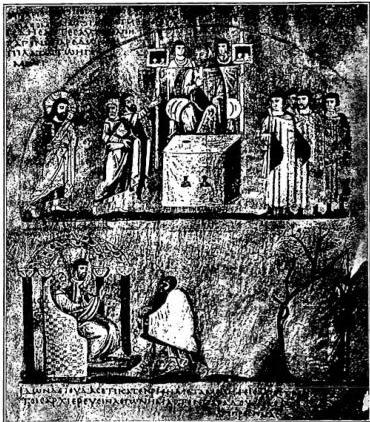
Bibliography5 works
Emilio Lavagnino